Category: GECs

  • News reports claim SPNI is close to acquiring TEN brand from Zeel

    News reports claim SPNI is close to acquiring TEN brand from Zeel

    MUMBAI: A new whisper campaign, which if true, could change the lay of the land in India sports broadcasting has been going on over the past few days. It began with the Mirror tabloid from the Times of India group announcing that Sony Pictures Networks India (SPNI) was close to acquiring the TEN sports brand from the Subhash Chandra owned-Zee Network.

    Of course when the Mirror breaks a piece of news related to business, you kind of keep it to yourself and on the shelf until a confirmation comes.

    Then this morning even The Economoc Times from the same group came out with a similar report. Again no confirmation from both the parties was forthcoming. SPNI sources told the ET that they do not comment on speculation. But the price mentioned in the news item for the transaction is Rs 2,000 crore.

    And when The ET does report something, you at least mention that it has reported it. The newspaper says that post the transaction, sports television in India will become a two horse race between the Twenty First Century Fox owned Star India and the Sony Japan owned SPNI.

    Observers, however, maintain that the enterprise value, if it the deal is indeed happening, of Rs 2,000 crore is too low. Reason: back in 2010, Zeel coughed up close to $44.155 million (Rs 270 crore) to acquire a 45 per cent stake in Taj Television Mauritius and Taj Television India. Prior to that, it had handed out $57 million (close to about Rs 360 crore) to snare a 50 per cent stake from the Bukhatir group. That means Zeel paid about Rs 630 crore to buy Ten Sports. Post that it has spent lots of money acquiring cricket rights and other sports rights, over the years.

    “Selling Ten Sports at 2x what it paid over nine years ago is not a great deal for Zeel,” says an investment banker close to Zeel. “I think the Essel group could be looking for at least 3x to 3.5x of the value. It’s not as if it is a troubled group that it has to resort to a fire sale like that. Zeel’s profitability, operating paramters, top line, debt, all are doing well. Hence, a 3x to 3.5x price is a better asking price.”

    Be that as it may, Indiantelevision.com will be reaching out to the two networks for a confirmation or denial later today. Until then, watch this space.

  • Sony SAB launches ‘Drive Gupp Chupp’ campaign

    Sony SAB launches ‘Drive Gupp Chupp’ campaign

    MUMBAI: Sony SAB launches ‘Drive Gupp Chupp’, a no-honking awareness campaign. The campaign is launched to spread awareness about nuisance of unnecessary honking and to curb noise pollution due to the same in the city. The upcoming new silent comedy show, Gupp Chupp is the base behind the launch of this campaign.

    Drive Gupp Chupp campaign will hit the city starting 4th Aug and will run for two weeks. There will be intensive communication through various types of message boards on ‘no honking’ at crucial traffic prone areas. The channel has also put out interesting witty hoardings at major junctions and also across the city urging motorists to drive safely without honking. SAB is the only channel in the television industry to offer silent comedies, with the launch of ‘Drive Gupp Chupp’, it also becomes the only channel to launch a campaign on ‘No Honking’.

    The initiative will also have an intensive 360 degree marketing campaign to promote ‘Drive Gupp Chupp’ in Mumbai. With interesting print and radio ads urging people to honk less to innovative outdoor mediums communicating the message, the channel has gone all out to make Drive Gupp Chupp a success.

    Sab TV senior EVP and business head Anooj Kapoor said, “We are all well aware of the excessive honking and the cacophony that it leads to on Mumbai roads. At SAB, we have always supported and stood for such social initiatives in the past too. We hope to contribute towards the campaign and make a difference with our Drive Gupp Chupp initiative.”

  • Sony SAB launches ‘Drive Gupp Chupp’ campaign

    Sony SAB launches ‘Drive Gupp Chupp’ campaign

    MUMBAI: Sony SAB launches ‘Drive Gupp Chupp’, a no-honking awareness campaign. The campaign is launched to spread awareness about nuisance of unnecessary honking and to curb noise pollution due to the same in the city. The upcoming new silent comedy show, Gupp Chupp is the base behind the launch of this campaign.

    Drive Gupp Chupp campaign will hit the city starting 4th Aug and will run for two weeks. There will be intensive communication through various types of message boards on ‘no honking’ at crucial traffic prone areas. The channel has also put out interesting witty hoardings at major junctions and also across the city urging motorists to drive safely without honking. SAB is the only channel in the television industry to offer silent comedies, with the launch of ‘Drive Gupp Chupp’, it also becomes the only channel to launch a campaign on ‘No Honking’.

    The initiative will also have an intensive 360 degree marketing campaign to promote ‘Drive Gupp Chupp’ in Mumbai. With interesting print and radio ads urging people to honk less to innovative outdoor mediums communicating the message, the channel has gone all out to make Drive Gupp Chupp a success.

    Sab TV senior EVP and business head Anooj Kapoor said, “We are all well aware of the excessive honking and the cacophony that it leads to on Mumbai roads. At SAB, we have always supported and stood for such social initiatives in the past too. We hope to contribute towards the campaign and make a difference with our Drive Gupp Chupp initiative.”

  • Indian media industry gives thumbs up to GST despite minor concerns

    Indian media industry gives thumbs up to GST despite minor concerns

    MUMBAI: Former Finance Minister of India P. Chidambaram dubbed the move “good sense triumphed” while commenting on the Goods and Services Tax (GST) Bill that was okayed earlier in the week by the Indian Parliament. And, probably, it is a good move, though lot of fine-tuning still needs to be done and Indian industry is still calculating the pros and cons.

    But a seven-hour debate in the Upper House (Rajya Sabha) on Wednesday is nothing compared to the discussions on the issue that have been going on for over a decade in India during which time several Finance Ministers have come and gone pitching in for tax reforms that have been mired in political discussions and fights.

    Now that the Parliament has given the green signal to GST to be ushered in the country the ifs and whys still need answering leading to more questions like ‘what’ and ‘how’ because the rate of taxation under GST regime is still to be firmed up though 18 per cent is an indicative figure that is being bandied around in political and industry circles.

    Here are a few reactions from the media and entertainment industry where execs are still trying to read the fine prints of political-speak.

    Minister of Information and Broadcasting (MIB) M Venkaiah Naidu termed the passage of GST Bill as “historic” adding that “it’s a victory of people” as “good days” beckon the country.

    MIB Junior Minister Rajyavardhan Rathore also said that it was a historic day for India and tweeted “a new era is about to begin as uniformity across markets in India would pave way for unity in diversity”.

    ZEEL, MD and CEO Punit Goenka:  GST will certainly bring in uniformity across businesses in the media sector. Especially for the film studios who can now lower their costs. Multiplex chains will also benefit a lot with uniformed taxes, resulting into reduction of the average ticket prices!

    Colors TV CEO & Advertising Club of India President Raj Nayak: I think it (proposition of GST) is the best thing that has happened to our country. I must congratulate the Finance Minister and leaders of all political parties for setting aside differences for a common purpose, which will help in the progress of the country. As Prime Minister Narendra Modi described it is `the best example of cooperative federalism.’ The passage of the Bill, along with a good monsoon, will usher in an overall positive business sentiment. I see this translating into advertising spends seeing an upward trend in the coming months, which will be good for broadcasting sector.

    Publicis India -South Asia CEO & AAAI President Nakul Chopra: Everyone is hopeful that in the long run this will benefit our economy. While right now we are concerned about its implications on our (advertising) industry as we are a multi-locational service providers. If GST positively impacts our client, it would eventually benefit us as well. Though there are some legitimate concerns that the advertising industry has over GST, we will try to address them as an association.

    Videocon d2h  CEO Anil Khera: GST is a welcome step. It will unify the indirect tax administration in India and help the country in two ways. First, it will simplify (the tax regime) and make it easy for the consumers to understand their tax split up. Second, it will significantly improve the ease of doing business in India. As a DTH operator, GST will help us to be more efficient in our business.

    Travelxp and  Media Worldwide CEO Prashanth Chothani: There won’t be much impact (on the broadcasters’ ad revenues). The current rate that stands at 15 percent may increase to 18 percent. This might mean that the advertising cost will go up but advertising is directly related to consumer needs. If people have money to spend and they are consuming products,  brands will market and advertise.

    From the reactions it seems that the media and entertainment industry, by and large, has reacted positively to the proposed tax reforms. As it is in all such cases there are some creases, but the media and entertainment industry is willing to look at the brighter side of GST and the promised economic growth.


  • Indian media industry gives thumbs up to GST despite minor concerns

    Indian media industry gives thumbs up to GST despite minor concerns

    MUMBAI: Former Finance Minister of India P. Chidambaram dubbed the move “good sense triumphed” while commenting on the Goods and Services Tax (GST) Bill that was okayed earlier in the week by the Indian Parliament. And, probably, it is a good move, though lot of fine-tuning still needs to be done and Indian industry is still calculating the pros and cons.

    But a seven-hour debate in the Upper House (Rajya Sabha) on Wednesday is nothing compared to the discussions on the issue that have been going on for over a decade in India during which time several Finance Ministers have come and gone pitching in for tax reforms that have been mired in political discussions and fights.

    Now that the Parliament has given the green signal to GST to be ushered in the country the ifs and whys still need answering leading to more questions like ‘what’ and ‘how’ because the rate of taxation under GST regime is still to be firmed up though 18 per cent is an indicative figure that is being bandied around in political and industry circles.

    Here are a few reactions from the media and entertainment industry where execs are still trying to read the fine prints of political-speak.

    Minister of Information and Broadcasting (MIB) M Venkaiah Naidu termed the passage of GST Bill as “historic” adding that “it’s a victory of people” as “good days” beckon the country.

    MIB Junior Minister Rajyavardhan Rathore also said that it was a historic day for India and tweeted “a new era is about to begin as uniformity across markets in India would pave way for unity in diversity”.

    ZEEL, MD and CEO Punit Goenka:  GST will certainly bring in uniformity across businesses in the media sector. Especially for the film studios who can now lower their costs. Multiplex chains will also benefit a lot with uniformed taxes, resulting into reduction of the average ticket prices!

    Colors TV CEO & Advertising Club of India President Raj Nayak: I think it (proposition of GST) is the best thing that has happened to our country. I must congratulate the Finance Minister and leaders of all political parties for setting aside differences for a common purpose, which will help in the progress of the country. As Prime Minister Narendra Modi described it is `the best example of cooperative federalism.’ The passage of the Bill, along with a good monsoon, will usher in an overall positive business sentiment. I see this translating into advertising spends seeing an upward trend in the coming months, which will be good for broadcasting sector.

    Publicis India -South Asia CEO & AAAI President Nakul Chopra: Everyone is hopeful that in the long run this will benefit our economy. While right now we are concerned about its implications on our (advertising) industry as we are a multi-locational service providers. If GST positively impacts our client, it would eventually benefit us as well. Though there are some legitimate concerns that the advertising industry has over GST, we will try to address them as an association.

    Videocon d2h  CEO Anil Khera: GST is a welcome step. It will unify the indirect tax administration in India and help the country in two ways. First, it will simplify (the tax regime) and make it easy for the consumers to understand their tax split up. Second, it will significantly improve the ease of doing business in India. As a DTH operator, GST will help us to be more efficient in our business.

    Travelxp and  Media Worldwide CEO Prashanth Chothani: There won’t be much impact (on the broadcasters’ ad revenues). The current rate that stands at 15 percent may increase to 18 percent. This might mean that the advertising cost will go up but advertising is directly related to consumer needs. If people have money to spend and they are consuming products,  brands will market and advertise.

    From the reactions it seems that the media and entertainment industry, by and large, has reacted positively to the proposed tax reforms. As it is in all such cases there are some creases, but the media and entertainment industry is willing to look at the brighter side of GST and the promised economic growth.


  • Indian Screenwriters’ Conference: Star Plus to stop 7-days-a-week soaps, says Gaurav Banerjee

    Indian Screenwriters’ Conference: Star Plus to stop 7-days-a-week soaps, says Gaurav Banerjee

    MUMBAI: What kind of content works on Hindi general entertainment channels? Content that reflects our society or the content that is simply driven by the ratings? Are TV producers making content for dumb audiences or content is making audiences dumb? Why we don’t talk about the economy or politics on TV shows? Why are we so much focused on saas-bahu sagas? And most importantly in today’s TV who is telling the story, a producer, writer, broadcaster or a programming team or a research team?

    The Film Writers’ Association had a session entitled Serial Killer during the ongoing fourth edition of the Indian Screenwriters Conference 2016 in Mumbai in a bid to get some answers.

    And to answer all these questions, you could not have had a better set of panelists than Star India deputy chief creative officer Gaurav Banerjee, Epic TV head of content Ravina Kohli, Balika Vadhu writer Purnendu Shekhar, Sasural Simar Ka and Saathiya writer Ved Raj and Sasural Genda Phool’s writer Zama Habib to get some answers.

    The session was moderated by Saurabh Tewari who runs a production house named after himself, but in earlier avatars had donned the hat of a fiction programmer when he worked at Colors and the now defunct Imagine TV.

    The highlight of the session was the admission on a public forum by by Gaurav on a public forum that Star Plus may have erred by starting the mad race of pursuing seven days of soap and drama every week from the five day formula earlier.

    He admitted: “I confess that it was a mistake because we reduced the ideation time of writers and of actors as well. We thought that we could manage the workload and it won’t affect the product that we deliver but unfortunately we were thinking of the TV industry as a pizza delivery service which was a big mistake.”

    He also that announced that from next month Star Plus would stop airing seven days a week programming.

    Tewari set the ball rolling for the session by appreciating the kind of work and content that both Star Plus and Epic were churning out. He spoke especially in reference to Epic TV as it had carved out its own identity. “TV ratings should not always be the only way to measure the content and the feel of channel,” he opined.

    “Epic, since its beginning had a particular DNA which was supposed to be followed and we tried to stick to that goal and it’s been a struggle,” expressed a hapless Kohli. “We have received great feedback, people appreciated our work but what we don’t have, are ratings.”

    Often it so happens that the content is strong and good but it fails to garner the desired ratings, hence the broadcaster has to yank it off.

    “We have a very fragmented audience, may be the data that we are getting is not addressing to that group. In Epic TV, I have not made anything that has been driven by TRPs,” explained Kohli.

    There are some channels that have a very niche audience, and they end up doing very well in that specific demographic. We also have shows on Doordarshan, which are doing well as they have a different set of audience, expressed Tewari.

    Getting to the crux of the matter, was Purnendu whose show Balika Vadhu was not only critically-acclaimed but has also done fabulously well commercially for Colors. “When I wrote Balika Vadhu, many said that it’s D Dish content and, on a satellite channel, rural backdrops will not work. But thanks to Ashwini (Yardi, the Colors programming head then) who had the courage to select the show,” shared Shekhar.

    Purnendu thanked Tewari (Tewari was at Colors for a period when Balika Vadhu was on air) and the entire channel team for giving him the freedom to work on the story as in most of the cases, the conflict between the writer and the broadcaster arises because both have different visions.

    Shekhar also expressed his agony that there were only two broadcasters present on the panel. “Only Gaurav and Ravina are representing the broadcaster side and both of them are doing good things with a vision. And the channels on which we see dumb content have no representation today,” he cried out.

    It’s really important to remember that when we talk about the TV content we shouldn’t forget that saas bahu dramas are the most important part of TV today, opined Raj as they are consumed by the masses. There has been a never ending debate on these shows but the truth is because of this, these are in demand.

    Contradicting Purnendu, Raj said: “We have all reached a conclusion that everything that has been happening on primetime is wrong. There is something good in this dumb content. TV is a mass medium and my first responsibility will be for them. I am not a police, teacher or judge and I am not even at that level from where my audiences look dumb to me.”

    Tewari then raised the question that quantity has subsumed quality over the past 10 years. From once a week, the channels have taken soaps and dramas to seven days a week. While this has meant money for all concerned, it is a dangerous trend. Though business is important and producers and broadcasters are in the business of creating content and if the content is suffering due to business pressures then how long will the business itself last? asked Tewari.

    Talking about the TV ratings, Gaurav elaborated: “Our measurement system is not that sophisticated. We have seen major changes in the TV industry when BARC came in and now we have to wait for next level of innovation in TV ratings. If every story is unique then the tool to measure that story should be different. You can’t compare Star Plus with Epic as both the channels serve a different kind of audience.”

    A lot has been said about the low quality of TV content but who is responsible for that, broadcaster, writer, producer or the audience, expressed Gaurav.

    “Saathiya is a very well-written show. There are two types of writing scientific and artificial. But I am totally against what Ved said that you give what audience demands. The producer and writer should create the market why do we follow the market. If you will give something new and different to them that has always worked and will work. Most producers don’t care about the story, all they want channel to approve to the show,” he added.

    Several varying perspectives ruled the well-moderated session. TV is essentially a two-way communication medium. However, innovation in TV content is essential was the conclusion as one needs to inject some amount of reality in the content that is churned out for the masses.


  • Indian Screenwriters’ Conference: Star Plus to stop 7-days-a-week soaps, says Gaurav Banerjee

    Indian Screenwriters’ Conference: Star Plus to stop 7-days-a-week soaps, says Gaurav Banerjee

    MUMBAI: What kind of content works on Hindi general entertainment channels? Content that reflects our society or the content that is simply driven by the ratings? Are TV producers making content for dumb audiences or content is making audiences dumb? Why we don’t talk about the economy or politics on TV shows? Why are we so much focused on saas-bahu sagas? And most importantly in today’s TV who is telling the story, a producer, writer, broadcaster or a programming team or a research team?

    The Film Writers’ Association had a session entitled Serial Killer during the ongoing fourth edition of the Indian Screenwriters Conference 2016 in Mumbai in a bid to get some answers.

    And to answer all these questions, you could not have had a better set of panelists than Star India deputy chief creative officer Gaurav Banerjee, Epic TV head of content Ravina Kohli, Balika Vadhu writer Purnendu Shekhar, Sasural Simar Ka and Saathiya writer Ved Raj and Sasural Genda Phool’s writer Zama Habib to get some answers.

    The session was moderated by Saurabh Tewari who runs a production house named after himself, but in earlier avatars had donned the hat of a fiction programmer when he worked at Colors and the now defunct Imagine TV.

    The highlight of the session was the admission on a public forum by by Gaurav on a public forum that Star Plus may have erred by starting the mad race of pursuing seven days of soap and drama every week from the five day formula earlier.

    He admitted: “I confess that it was a mistake because we reduced the ideation time of writers and of actors as well. We thought that we could manage the workload and it won’t affect the product that we deliver but unfortunately we were thinking of the TV industry as a pizza delivery service which was a big mistake.”

    He also that announced that from next month Star Plus would stop airing seven days a week programming.

    Tewari set the ball rolling for the session by appreciating the kind of work and content that both Star Plus and Epic were churning out. He spoke especially in reference to Epic TV as it had carved out its own identity. “TV ratings should not always be the only way to measure the content and the feel of channel,” he opined.

    “Epic, since its beginning had a particular DNA which was supposed to be followed and we tried to stick to that goal and it’s been a struggle,” expressed a hapless Kohli. “We have received great feedback, people appreciated our work but what we don’t have, are ratings.”

    Often it so happens that the content is strong and good but it fails to garner the desired ratings, hence the broadcaster has to yank it off.

    “We have a very fragmented audience, may be the data that we are getting is not addressing to that group. In Epic TV, I have not made anything that has been driven by TRPs,” explained Kohli.

    There are some channels that have a very niche audience, and they end up doing very well in that specific demographic. We also have shows on Doordarshan, which are doing well as they have a different set of audience, expressed Tewari.

    Getting to the crux of the matter, was Purnendu whose show Balika Vadhu was not only critically-acclaimed but has also done fabulously well commercially for Colors. “When I wrote Balika Vadhu, many said that it’s D Dish content and, on a satellite channel, rural backdrops will not work. But thanks to Ashwini (Yardi, the Colors programming head then) who had the courage to select the show,” shared Shekhar.

    Purnendu thanked Tewari (Tewari was at Colors for a period when Balika Vadhu was on air) and the entire channel team for giving him the freedom to work on the story as in most of the cases, the conflict between the writer and the broadcaster arises because both have different visions.

    Shekhar also expressed his agony that there were only two broadcasters present on the panel. “Only Gaurav and Ravina are representing the broadcaster side and both of them are doing good things with a vision. And the channels on which we see dumb content have no representation today,” he cried out.

    It’s really important to remember that when we talk about the TV content we shouldn’t forget that saas bahu dramas are the most important part of TV today, opined Raj as they are consumed by the masses. There has been a never ending debate on these shows but the truth is because of this, these are in demand.

    Contradicting Purnendu, Raj said: “We have all reached a conclusion that everything that has been happening on primetime is wrong. There is something good in this dumb content. TV is a mass medium and my first responsibility will be for them. I am not a police, teacher or judge and I am not even at that level from where my audiences look dumb to me.”

    Tewari then raised the question that quantity has subsumed quality over the past 10 years. From once a week, the channels have taken soaps and dramas to seven days a week. While this has meant money for all concerned, it is a dangerous trend. Though business is important and producers and broadcasters are in the business of creating content and if the content is suffering due to business pressures then how long will the business itself last? asked Tewari.

    Talking about the TV ratings, Gaurav elaborated: “Our measurement system is not that sophisticated. We have seen major changes in the TV industry when BARC came in and now we have to wait for next level of innovation in TV ratings. If every story is unique then the tool to measure that story should be different. You can’t compare Star Plus with Epic as both the channels serve a different kind of audience.”

    A lot has been said about the low quality of TV content but who is responsible for that, broadcaster, writer, producer or the audience, expressed Gaurav.

    “Saathiya is a very well-written show. There are two types of writing scientific and artificial. But I am totally against what Ved said that you give what audience demands. The producer and writer should create the market why do we follow the market. If you will give something new and different to them that has always worked and will work. Most producers don’t care about the story, all they want channel to approve to the show,” he added.

    Several varying perspectives ruled the well-moderated session. TV is essentially a two-way communication medium. However, innovation in TV content is essential was the conclusion as one needs to inject some amount of reality in the content that is churned out for the masses.
  • SPN India TV ad revenue & subscriber numbers rise: Sony Corp

    SPN India TV ad revenue & subscriber numbers rise: Sony Corp

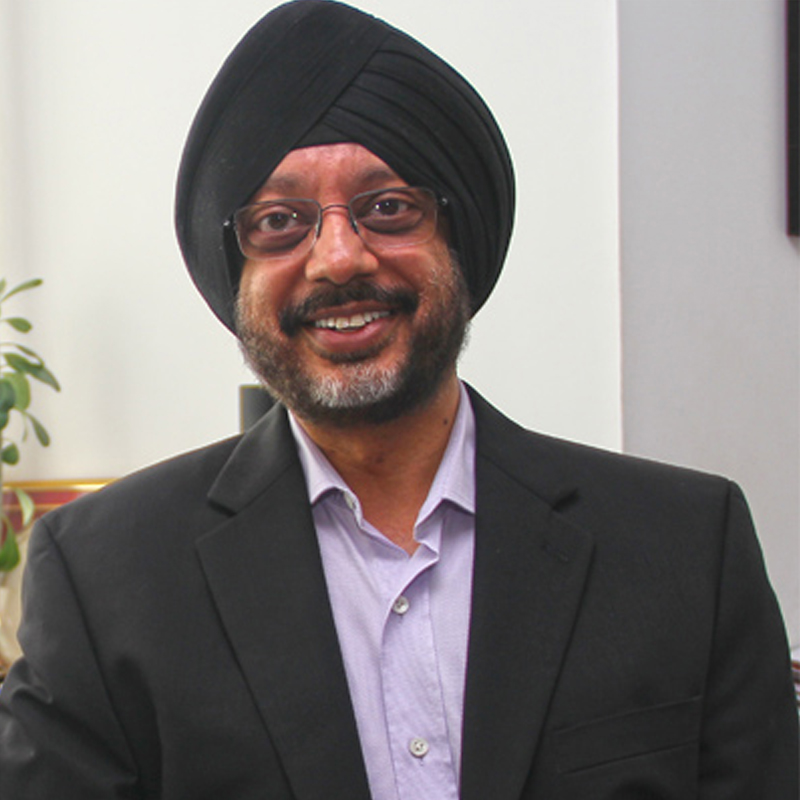
    MUMBAI: Sony Pictures Networks (SPN) India – led by CEO NP Singh – is doing well, if one goes by the numbers its Japanese parent Sony Corp announced last weekend.

    For one the Sony Corp presentation around its financial results for the quarter ending 30 June 2016 clearly states that it has been seeing “higher advertising revenues in Latin America and India” which has helped boost its media networks business in the period.

    Then SPN India’s subscriber numbers too are on the up, according to Sony Corp.

    It states in its notes to the financials that the India channel cluster (consisting of SET, MAX, SAB, Pix, Aatth, Mix, Six, AXN, PAL, MAX2, Sony ESPN, Wah and Animax India) has increased its subscriber number from 650.4 million on 30 June 2015 to 690.4 million on 30 June 2016 – a growth of about 6 per cent.

    The channels which are distributed over India, North America, Europe, the Pacific, South east Asia, Australia, west Asia and Africa reported an increase in international subscribers from 2 million to 2.3 million an increase of 15 per cent in the same period.

    Sony Pictures worldwide media network business – which covers all its TV channels – did a revenue of $588.418 million in the same period as compared to $576.04 million in Q1-2015. It clearly shows that business is on upswing.

    Sony Corp’s Pictures segment (including media networks revenue and theatrical box office income) reported a revenue of 183.3 million Japanese Yen ($1.8 billion) and an operating loss of 10.6 billion Japanese Yen ($103.84 million) in the quarter to 30 June 2016. In terms of the Japanese currency that tots up to a 6.9 per cent increase in revenues (Q1 2015 – 171.5 billion Japanese yen), and a 1 billion Japanese Yen reduction in its operating loss (11.7 billion Japanese yen in Q1 2015).

    Meanwhile, sales and operating revenue of the mother company Sony Corp decreased by 10.8 per cent compared to the same quarter of the previous fiscal year (year-on-year) to 1,613.2 billion yen ($15,662 million).

    This significant decrease was mainly due to the impact of foreign exchange rates, a decrease in Mobile Communications segment sales reflecting a significant decrease in smartphone unit sales, a decrease in revenues in the Financial Services segment due to the deterioration in investment performance in the separate account at Sony Life Insurance Co Ltd as well as decreases in sales in the Semiconductors and Imaging Products & Solutions segments due to the impact of the earthquakes in the Kumamoto region in 2016. This decrease was partially offset by an increase in Game & Network Services segment sales reflecting increases in PlayStation 4 software sales. On a constant currency basis, sales decreased 3 per cent year-on-year.

  • SPN India TV ad revenue & subscriber numbers rise: Sony Corp

    SPN India TV ad revenue & subscriber numbers rise: Sony Corp

    MUMBAI: Sony Pictures Networks (SPN) India – led by CEO NP Singh – is doing well, if one goes by the numbers its Japanese parent Sony Corp announced last weekend.

    For one the Sony Corp presentation around its financial results for the quarter ending 30 June 2016 clearly states that it has been seeing “higher advertising revenues in Latin America and India” which has helped boost its media networks business in the period.

    Then SPN India’s subscriber numbers too are on the up, according to Sony Corp.

    It states in its notes to the financials that the India channel cluster (consisting of SET, MAX, SAB, Pix, Aatth, Mix, Six, AXN, PAL, MAX2, Sony ESPN, Wah and Animax India) has increased its subscriber number from 650.4 million on 30 June 2015 to 690.4 million on 30 June 2016 – a growth of about 6 per cent.

    The channels which are distributed over India, North America, Europe, the Pacific, South east Asia, Australia, west Asia and Africa reported an increase in international subscribers from 2 million to 2.3 million an increase of 15 per cent in the same period.

    Sony Pictures worldwide media network business – which covers all its TV channels – did a revenue of $588.418 million in the same period as compared to $576.04 million in Q1-2015. It clearly shows that business is on upswing.

    Sony Corp’s Pictures segment (including media networks revenue and theatrical box office income) reported a revenue of 183.3 million Japanese Yen ($1.8 billion) and an operating loss of 10.6 billion Japanese Yen ($103.84 million) in the quarter to 30 June 2016. In terms of the Japanese currency that tots up to a 6.9 per cent increase in revenues (Q1 2015 – 171.5 billion Japanese yen), and a 1 billion Japanese Yen reduction in its operating loss (11.7 billion Japanese yen in Q1 2015).

    Meanwhile, sales and operating revenue of the mother company Sony Corp decreased by 10.8 per cent compared to the same quarter of the previous fiscal year (year-on-year) to 1,613.2 billion yen ($15,662 million).

    This significant decrease was mainly due to the impact of foreign exchange rates, a decrease in Mobile Communications segment sales reflecting a significant decrease in smartphone unit sales, a decrease in revenues in the Financial Services segment due to the deterioration in investment performance in the separate account at Sony Life Insurance Co Ltd as well as decreases in sales in the Semiconductors and Imaging Products & Solutions segments due to the impact of the earthquakes in the Kumamoto region in 2016. This decrease was partially offset by an increase in Game & Network Services segment sales reflecting increases in PlayStation 4 software sales. On a constant currency basis, sales decreased 3 per cent year-on-year.

  • Colors ropes in multiple brands for Jhalak Dikhhla Jaa season 9

    Colors ropes in multiple brands for Jhalak Dikhhla Jaa season 9

    MUMBAI: Colors is all set to flag off the ninth season of its most popular celebrity dance reality show Jhalak Dikhhla Jaa (JDJ). Produced by BBC Worldwide India, it will start airing every Saturday from 30 July 2016 at 10pm.

    Mondelez has decided to continue with its presenting sponsorship through its brand Cadbury Bournvita for JDJ while it is co-powered by Renault and Amazon.in. Ultratech Cement, Parachute Advanced Gold and Stayfree are the associate partners and UC Web browser is the trending partner.

    Turning the stage into a beautiful canvas, the 12 talented stars will flaunt their passion for dance in front of the celebrated panel of judges – Jacqueline Fernandez, Karan Johar, Farah Khan and Ganesh Hegde. The show will be hosted by Manish Paul.

    Commenting on the new season of Jhalak Dikhhla Jaa, Colors CEO Raj Nayak said, “What surprises me every year and pushes us as a channel to put together a show of such mammoth proportions is the enthusiasm of the celebrities who astonish us with their eagerness to participate in it and bring out their flair for dance in front of their zillion of fans. The platform is so huge that whether you win or lose, you take away something from the show which holds you in good stead for years to come. Along with Karan and Ganesh, we have on board this year the very dazzling Jacqueline Fernandez who has been keen on making her television debut through this show. Then there’s our favourite Farah Khan who oozes entertainment in everything that she does.”

    He further added, “Jhalak Dikhhla Jaa and Cadbury Bournvita, presenting sponsor, is a wonderful match – our five-year-long partnership is testimony of the strong relationship we share to not only create innovative brand integration avenues but also leverage our combined brand goals. Further, we would like to extend a warm welcome to Renault and Amazon.in as the show’s co-powered by sponsors and hope to strengthen our association with them through many such marquee shows.”

    Colors programming head Manisha Sharma said, “This season goes back to the basics of dancing, making the contestants showcase each performance striking a balance of uninhibited oomph, innate grace and a brilliant sense of rhythm. While the jury will share their expert opinions, the in-studio audience has the veto power to choose which contestants will stay or will be evicted. Each contestant will have one mission: to create a lasting impression with their dance moves.”

    This season of the show will bring together a perfect blend of contestants who will bring classic dance back in-vogue. From choreographer and challenger, Salman Yusuf Khan, Harpal Singh Sokhi, Surveen Chawla, Poonam and Priyanka, Chutki aka Gaurav Gera, Shantanu Maheswari, Helly Shah, Nora Fatehi, Karishma Tanna, Arjun Bijlani, Shakti Arora and Sidhanth Gupta will all ensure a weekly dose of entertainment for viewers.

    BBC Worldwide, India and Content Head Asia SVP and GM Myleeta Aga said, “We are very excited to see Jhalak Dikhhla Jaa, the Indian adaptation of BBC Worldwide’s acclaimed format Dancing With the Stars grow from strength to strength each season. There have been more than 270 series of strictly worldwide, in 51 countries ranging from Mexico to South Korea and it has been incredibly successful in India. This is our 9th season producing the award-winning series. More than ever, we are committed to deliver a high octane series with superior international production values. This year, the show’s lavish sets and its take on unprecedented hotness and dance promise to magnify the overall production value which will keep audiences glued to their television sets.”

    The channel is undertaking several marketing and digital initiatives to generate conversations around the hotness factor of the show. For traditional marketing, a focused outreach incorporating mediums including OOH and on-ground activations has been planned. To further drive contestant and audience engagement, a spate of digital activities is being sketched out under the hashtag #JhalakHottie.