Category: GECs

  • Vaishali Sharma takes charge of Sab, Sony Pal marketing

    Vaishali Sharma takes charge of Sab, Sony Pal marketing

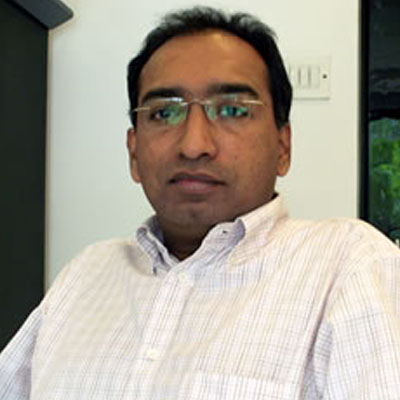
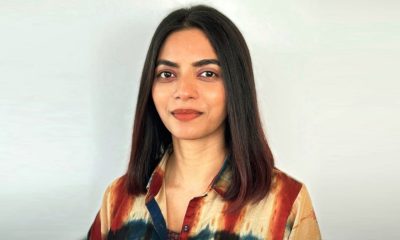
    MUMBAI: Vaishali Sharma, the marketing SVP for the Hindi movies cluster at Sony Pictures Network India (SPNI), is now taking a crack at comedy as she moves to handle marketing for Sab TV and Sony Pal. A source close to the development confirmed the news to Indiantelevision.com

    Sharma will replace Sab TV and Sony Pal SVP and head of marketing Chandramohan Mehra, who quit some weeks ago. Sharma was heading marketing for Sony Max, Max 2, and Wah.

    We tried to reach out to Sharma for but got no response from her at time of filing this story.

    As reported earlier by Indiantelevision.com, Mehra is serving his notice period and is slated to join a company in the financial sector.

    Sharma joined SPNI in 2013. Prior to this, she was working with Times Now as VP – marketing. She has also worked with BBC Global News, The Walt Disney Company, and J. Walter Thompson (JWT).

    Mehra joined Sony in July 2014 and was looking after the development of the brand, show launches, consumer engagement and digital initiatives. He led several activities and brand campaigns, including Digital Divides – SAB Unites and consumer engagement initiatives such as Fun-with-Family.

  • GUEST COLUMN: From Juggle To Juggernaut: Localising content for India

    GUEST COLUMN: From Juggle To Juggernaut: Localising content for India

    There is an unassailable advantage in being the first to do something – there is so much to do that one is spoilt for choices. Opportunities lie aplenty and the emotional response is that of a kid at a candy store. All of us, in the local factual entertainment space, are that kid staring at a world full of temptations and wondering not ‘what to do’ but ‘what ALL to do’.

    In many ways, we enjoy this beautiful predicament only because we are blessed to be here at a very opportune time. Television has come a long way from showing the world in graceful grayscale to this universe of 8K video, immersive 3D and augmented reality. From a box in the village enjoying divine status to being carelessly stuffed into jeans pockets, the medium itself has morphed from a product for mass consumption to a service available en-masse with the ability to deliver packets of content with extraordinary precision. The very dynamics of ‘what ALL can be made’ from a stand-point of both feasibility and viability has grown exponentially such that ‘local factual content’ is a business reality in an industry that made its bones by constantly reinventing the meaning of ‘massy’.

    The ground rules for factual entertainment were laid decades ago with media mammoths like Discovery, National Geographic and BBC introducing a world that was still not flat and borders were both political and geographical. One may argue that ‘what ALL to do’ is an exaggeration given their long shadow of achievements. Yet, when one takes the eye away from the keyhole that introduced us to factual entertainment and takes a step back, one realises that the door is no longer there! The wide furrow that seemed never ending is but a rut with the entire planet waiting to be tilled and that the narrative even in content has shifted from globalisation to localisation. From trying to stretch and squeeze the world into one commandment, we are thankfully exploring several narratives to experience the world.

    It is this shift, in the very fabric of factual entertainment, which has made a channel like Epic a reality. Where an ever-increasing audience is eager to participate in an exploration of their own country in their own language. The urge is to discover an India they grew up seeing through a filter designed for a global audience from a lens crafted especially for them. The journey of factual entertainment has evolved from concept to context.

    And in this bountiful harvest available to the local content producer flutters the original question – what is the Indian context? It is as much a cipher as it is rhetorical. The debates, points of views and nitpicking can be endless. It is a minefield that the producer will have to navigate at every step of his creation. But perhaps, it is in this exploration that those who prefer the journey to the destination will revel?

    What to create in an Indian context of factual entertainment is an endless potluck and many will indulge; however, give form to this creation is a question that requires us to take a pause and think. The pitfall of making it to the party late is that there is a lot to catch up. From craft and technology to training of personnel in them: the worldview of the producer is fraught with tough decisions and scarce resources especially since the market is global and the competition is with the very Goliaths who invented the game. It is a delicate scenario but with the silver lining that ‘necessity is after the mother of invention’ and jugaad is very much an Indian patent.

    For the optimistic local factual entertainment industry, the words ’What next?’ are sweet chimes that may sound the death knell. In a world where exponential progress arrives regularly by leapfrogging off the shoulders of giants, will this beautiful bubble be recorded in history as one of soap or silk?

    public://Akul.jpg

    ( The author is a programming head of Epic Channel. The views expressed are personal and Indian television.com need not necessarily subscribe to them. )

  • Viacom18 celebrations: Mukesh Ambani sets the roadmap for next 10 years

    Viacom18 celebrations: Mukesh Ambani sets the roadmap for next 10 years

    MUMBAI: Indian television channel owners better watch out. Mukesh Ambani is riding into town and he means business. He sounded his intent at Viacom18’s tenth anniversary celebrations which, were held over the weekend in Mumbai’s NSCI Dome. He came in for a bit post 9 pm. And he was there for a few minutes on the massive stage that was flanked by large LED panels all around the dome. However, what he said, as a joint venture partner of US network Viacom, is what should make other TV industry entrepreneurs sit up and take note.

    Clearly laying out the roadmap for the group for the next 10 years, Ambani, India’s richest man, said: “The digital industry in India and the entertainment industry is going to grow manifold. The next decade is going to be the golden period of the entertainment industry and all of you should contribute and learn from this opportunity. This is a once-in-a-lifetime opportunity. And for all of us–Sudhanshu (Vats, the group CEO of Viacom18) told us we are in the storytelling mode–I think collectively for all of us, the entire Viacom18 team, has the responsibility to win the hearts of 1.3 billion people. (With) the synergies that can come from the talent in the Viacom18 family and digital distribution, there is no limit to growth. It’s been over three years since Viacom18 is part of the Reliance group along with Viacom. But I have to tell you. I was, too, obsessed with Jio and I had told Sudhanshu that once I am done with it I’ll be there. The birthday gift I am giving you is I will give you some of my time and support.”

    Obviously, Ambani is looking at replicating the aggressive growth that he has got from his 4G enterprise Reliance Jio. “I think that what we have achieved in Jio in the last two years is take India from 154th in the world to number one in the world in mobile data consumption. Last month on Jio alone, the video viewing was 200 crore hours. And this is just the beginning,” he said.

    Ambani also extolled the young leaders – the average age at Viacom18 is 32 and he urged Sudhanshu to keep at it that over the next decade – “to have courage to dream big, the determination to realise their vision, to have curiosity and the ability to learn.You have to learn something new everyday. And I believe that empathy is required of everyone–to see and understand what the other feels. It is not about yourself, it is about everybody else. These are three principles, which have helped me. I believe for leaders and the team at the top, the job is to win the hearts of our people.”

    Ambani erred when he said that he remembered in 1997 when Colors was launched (he obviously meant 2008), there was skepticism if a third entertainment channel could succeed. “Today as you stand here, the success is all yours – the entire ViacomTV18 team,” he said. “Today is the day to remember the founders and founding team of Viacom18, which includes Raghav Bahl and others.”

    The tenth anniversary celebrations had performances from many artists associated with Colors’ entertainment shows right from Manish Paul to Malaika Arora Khan to Parthiv Gohil to Mouni Roy to Bharti Singh to Raghu Dixit to Kailash Kher, among many others. The party was attended by the crème de la crème of the industry, including Sony Pictures Networks India CEO NP Singh, Star India MD Sanjay Gupta, Dentsu Aegis CEO Ashish Bhasin, Madison World chairman Sam Balsara as well as actors, producers and directors.

    For many, it was an evening to remember.

  • ZEEL to revamp Big Magic, Big Ganga

    ZEEL to revamp Big Magic, Big Ganga

    MUMBAI: Zee Entertainment Enterprises Limited (ZEEL) still seems to be in a celebratory mood after its recent 25th year anniversary. After rebranding its entire Zee’s bouquet, the network is soon to revamp the Reliance Broadcast Network Limited’s (RBNL) television business that it acquired in November 2016.

    The channel is planning to rebrand Big Magic to Zee Magic and Big Ganga to Zee Ganga, a source close to the development confirmed the news to Indiantelevision.com. The revamp is slated to happen early next month.

    The television broadcasting business of the Reliance group entities currently comprises two operational general entertainment channels (Big Magic and Big Ganga) and four other TV licenses.

    Big Magic, which was earlier a comedy channel, positioned itself as a variety general entertainment channel (GEC). Taking its multi-genre league forward, the network added four new shows to it line up.

    The channel launched four shows that include, Shaktipeeth Ke Bhairav, which will depict the mythical story of 52 shaktipeeths from the perspective of one of the most powerful and raging forms of Lord Shiva – Bhairav, Kunwara Hai Par Humara Hai, Tera Baap Mera Baap, and Deewane Anjane.

    Big Ganga is the second GEC by RBNL and caters to Bihar and Jharkhand.

  • Sabido TV scriptwriting workshop in Mumbai on 23 November

    Sabido TV scriptwriting workshop in Mumbai on 23 November

    MUMBAI: A unique scriptwriting workshop is being organized by the Hong Kong based One Talk Production group in partnership with the indiantelevision.com group from 23-27 November and 29-2 December 2017 in Mumbai.

    The former is an Asian content TV producer, which has developed a specialized and unique methodology in TV drama content and storytelling, and is run by Hanno Hornbanger. 

    The workshop is to be conducted by entertainment education serial drama writing expert Kriss Barker. Vice-president for international programs at the US-based Population Media Center (PMC -an international organization that works with broadcast media to produce entertainment-education programs),  Barker  has trained numerous media and health communication professionals in the Sabido methodology for behavior change communication using  mass media. This apart she has assisted production teams worldwide to develop limited episode dramas which have been used to create awareness of social evils and also gradually rid society of them.

    The Sabido method was instituted by Televisa producer Miguel Sabido in the eighties and has been used in the production of telenovellas in Mexico and several other countries over the years.

    Says Indiantelevision.com group founder & CEO Anil Wanvari: “We are delighted to be working with One Talk and Kriss in bringing this unique methodology to Indian TV dramas and scriptwriters. While commerce (read ratings and advertising dollars) is at the heart of any TV  channel or OTT platform’s existence, it is important that the mediums are consciously used to bring about societal changes. Writing is at the core of any television show and we hope that exposure to the Sabido method will  help sensitise both young and experienced TV writers to this need whenever they are writing.”

     “We are a production company which seeks to produce socially relevant TV series across Asia using the Sabido method. We are already in production in Vietnam and the Phillippines with shows and films which were a result of the workshops we conducted there. And we are working towards a similar objective in India too,” says Hornbanger.  “What’s unique about the Sabido workshop methodology, is that it ends with stories, concepts, scripts which are then further developed to get into production for telecast following a channel mandate. The writers whose scripts will be selected will go on to write the complete show until its completion. “

    Adds Wanvari: “We are happy to say that three leading Indian Hindi GECs have evinced interest in partnering with us to telecast the shows that will emerge from the workshop and this unique methodology.”

    The One Talk group has conducted extensive research over India which has uncovered Indian society’s pain points. The research will be presented to participants, following which Barker will run them through the Sabido method to develop a character values grid,  story settings, character profiles, story arcs (and triggers and consequences), storylines, and plotting for a TV show.

    The workshop has limited seats which are filling fast. “ We are handpicking writers to be a part of this scriptwriting programme,” say Hornbanger and  Wanvari. “But we have some seats left for scriptwriters who are willing to commit themselves to learn the Sabido methodology. They can approach indiantelevision.com offices in Mumbai and send across their candidature. The best part about this workshop is that they can attend it for free.”

  • People are Viacom18’s strongest competitive edge, says Rajesh Kamat

    People are Viacom18’s strongest competitive edge, says Rajesh Kamat

    The mood is celebratory at Viacom18’s offices as it readies for its invite-only tenth anniversary bash at Mumbai’s NSCI Dome on the evening of 17 November. The Reliance-Viacom joint venture satellite TV network is ranked among the top five–and probably in the top three in the Hindi GEC space–in the country. It achieved this in a span of just a year of its launch in 2007  whereas others took longer and some even folded up trying to do so. It has maintained that position as it enters its second decade of existence under the leadership of CEO Sudanshu Vats.

    The genesis of Viacom18’s explosive growth lies with the birth of its Hindi GEC Colors in 2008.  The man who was tasked with conceiving it was Rajesh Kamat, by the then Network 18 promoter Raghav Bahl, and group CEO Haresh Chawla.  A Star India veteran, Kamat was heading global studio Endemol India when he was handpicked for the job in a genre that was already hyper competitive. Along with programming head Ashvini Yardi he used three Ds (disruption, differentiation and distribution) to blaze a trail for Colors, which it continues to do even today.  He left the network in 2011 to become a part of  CA Media, a  media fund with his former bosses at 21 century Fox that has invested in a handful of media ventures. He has since followed up with another one last year called Emerald Media.

    Indiantelevision.com reached out to the now Singapore-based Kamat to get his perspectives on the birth of Colors and what makes Viacom18 tick – even today.  He responded enthusiastically to our questions on the subject. Read on to share the excitement of one of the most in-demand TV and media executives from India.

    Raghav Bahl chose you to run Colors, the first brand under the Viacom18 umbrella. Why do you think he made that choice? What were the challenges at launch time and as the company grew?

    While there were many more capable professionals in the industry, I must admit that it was my good fortune that Raghav found me worthy of the challenge. I am thankful to Raghav and Haresh (Chawla) for having given me an opportunity to prove myself.

    It is always a challenge to launch a new product in a market where the established players have been around for a while. To launch in a year wherein one has to compete with established players and multiple new GEC launches was an uphill task. We were clearly the underdogs and underdogs need to give it their 200 per cent to just get noticed. We were up against media giants that had the financial muscle as well as the marketing reach of their network.

    While the journey was full of multiple challenges, the first was to put together an offering that we believed would get the sticky consumer to give up their loyal shows on competing channels. We had to disrupt the viewing pattern of a single TV household by offering every member of the house a reason to switch from their most watched show to ours. In a cluttered distribution environment, to get seen itself was one of the biggest challenges. And all of this had to be done keeping an eye on the budgets!

    While we did launch successfully, the bigger challenge following that was maintaining that success for the long run all of which we achieved with our 3D strategy of differentiation, disruption, and distribution and an incredible team that executed that strategy to perfection.

    What enabled Colors to achieve the success that it did?

    Colors’ success can be attributed to a mix of disruptive and differentiated programming, accompanied by aggressive marketing and distribution strategies. Right from the launch, Colors broke the mould with its programming with shows like Balika Vadhu and Uttaran, which were differentiated social dramas and Khatron Ke Khiladi and Bigg Boss, which were scale reality shows scheduled in daily prime time. These shows, put together, completely disrupted viewing habits across single-TV households. In the same vein, our distribution strategy, too, was not just about making the channel available but also ensuring that it was seen. Hence, for Colors, we applied a neighbourhood strategy, wherein we were tactically placed right before or right after a leading GEC channel.

    Our differentiated content, distribution and marketing catapulted Colors to the number 3 position in its very first week and the number 1 position, 9 months after launch, breaking Star Plus’ stranglehold on the position after nine years of unchallenged dominance. Colors continued its successful run for the next three years growing into a vibrant and well-recognised brand reaching 140 million households. But, in all this, the true measure of success for me was that Colors has been the only GEC to date to have reached a monthly operating break-even starting month 15 of launch.

    You were the first CEO, when Viacom18 launched its first Hindi general entertainment channel in 2008 for two years and later promoted as the COO of the group. How would you define those three years at Viacom18? What were the nostalgic moments of that journey?

    Viacom18 can be described as an organisation that breeds a spirit of entrepreneurship and believes in rewriting the rules of the game. It’s not always easy to offer complete freedom, an open culture, empowerment to people and yet continue to operate as a professional set-up with a high success rate. My three years at Viacom18 were amongst the best years of my professional life.

    As for the nostalgist moments on my journey at Viacom18 …I must admit that there are plenty–finalising the name Colors, the debate on whether to go ahead with an English name for a Hindi GEC channel, the launch press conference in Bangkok pulled off by Sonia, Sandeep and Gogate, the weekly 3am calls on Tuesday with Ashvini and Vivek after the ratings came in, the constant debate with Simran on the inventory-pricing strategy, the now popular channel ID and music presented for the first time by Monica, the disruptive marketing plan by Rameet and Iyer, Cheryl helping us ensure that we didn’t go black on air in spite of late tapes, leading  the company into its first distribution joint venture Sun18 with the help of Gaurav, Dhananjay ensuring we didn’t get arrested in spite of all the cases filed against us during Bigg Boss. Each of these are moments that still give me goose bumps.

    During your time at the company, Colors had a number of big-budget reality shows. In retrospect, do you think it was the way to go?

    Yes, absolutely that was the way to go. In a heavily cluttered space, if you have to make an entry and get noticed, then you really have to create an impact. It was the reality shows like Fear Factor and Bigg Boss that put Colors on the consumers’ radar. These shows were mounted on a huge canvas and were critical for us as they helped the channel to get into consumers’ homes and get their attention. These shows also paved the way for consumers to sample our other shows like Balika Vadhu and Jai Shri Krishna, which would eventually be the shows that they consumed on a daily basis. The fact that these reality shows are still airing on the channel and rating well is testament to the fact that it was the right decision.

    With the tenth anniversary of Viacom18 around the corner, what, according to you, keeps the company going?

    Viacom18 led by Sudhanshu (Vats) and Raj (Nayak) is a network of firsts and has been a thought leader on several counts. Colors has grown from strength to strength in the past nine years and has been a real asset for Viacom18. Brand Colors today has become one of the flagship brands for the company and has now extended to multiple regional languages as well as English. The network has always encouraged differentiated programming and that I think is what keeps it going. But their strongest competitive advantage and biggest strength is the people who work there; a team of exemplary professionals who are exceptionally creative and gets the pulse of the audience, which helps them create the magic we see across screens.  

    How did your experience at Viacom18 help you grow as a professional?

    In my journey first as the CEO of Colors and then as the COO for Viacom18, I have had all kinds of challenges thrown at me.  Each of these challenges have only helped me mature as a professional and as an individual. While I had managed teams before, Viacom18 was my first experience at managing a board with two shareholders. I had to quickly learn the fact that success is not only about launching a successful brand but more importantly about how that can be translated effectively into building shareholder value. This really helped me move into the next phase of my career of being an investor in media companies.

  • ‘Porus’ will alter the economics of the ecosystem, says SET’s Danish Khan

    ‘Porus’ will alter the economics of the ecosystem, says SET’s Danish Khan

    MUMBAI: Gone are the days when high budget would only indicate stellar Bollywood movies. Today, even the Indian television industry is not leaving any stone unturned to give its audience the same feel and quality.

    Letting viewers time travel to a centuries-old story, Sony Entertainment Television (SET) is all set to launch its latest mythological show Porus. Starting from 27 November, the show is produced, written and directed by Swastik Production’s Siddharth Kumar Tewary. With the intellectual property (IP) rights in the hands of Swastik, rumours are that it is one the most expensive TV shows at a production value of nearly Rs 400-500 crore.

    Speaking to Indiantelevision.com, SET EVP and business head Danish Khan says, “Sony is a big company and we could have bought the IP but big shows are not just made because you have big money. We underrated a large part of the money. The idea of giving the IP was to get Siddharth’s skin involved. It’s his show as much as it’s ours.”

    Shot in multiple global locations with an enormous set spread over acres of land in Umargaon, Porus will offer viewers a complete visual extravagance by recreating the different worlds of ancient India and Macedonia, in addition to water transport routes of the yore. Six months ago, shooting was on in Thailand and in the pipeline are Greece and Turkey.

    Porus was initiated two years ago with payments being doled out to actors and the production team even before the show was officially announced. “Considering the show’s ambition, we had to redefine certain things such as the structure and process. The show required creative investment two years prior to the launch. Unless you get the economics right you won’t get creativity,” he shares.

    Khan believes that this business model will be the future of television industry. He explained that in the US, a big production gets 40 per cent of revenue from the domestic market and the rest from global/ digital market. India also has to move in that direction to tell compelling stories while raking in profits.

    Four sponsors have bet their money on the show till now – Pantanjali Dantkanti as presenting sponsor, Raymond and Macho as co- powered by sponsors and PCJ as the jewellery partner. “There is huge amount of curiosity among advertisers. The response has been fantastic and we signed these sponsors long back. They are convinced with the product and wanted to be associated with us,” says Khan.

    A senior media planner says that the channel is likely to close more names just before launch but others will wait for initial viewership numbers. A 10-second slot for Porus is being pegged between Rs 1.5-2 lac per episode.

    The marketing strategy of before was to create show awareness but with the ascent of the digital platform, a new thing called ‘fear of missing out’ has crept in. “Our marketing presence is not just to be present in the media but focus on having conversations. Our digital push is very strong and we are pushing out content, character and the vision very strongly,” he shares. TV, print and radio ads are also included.

    The 30-minute show will be aired at 8.30 pm from Monday to Friday. It will depict the untold story of the greatest conqueror of the world, Alexander and the most spirited defender of India, Porus. Set in 350 BC, the story will trace its roots to a time when India was at its glorious best and Porus resisted the first attack on Indian soil by the Macedonian legend. The chronological narrative will trace the journey from birth to the epic battle between these two warriors born on the same day but raised with completely different upbringings.

    The star cast includes Laksh Lawani, Rohit Pareek, Rati Pandey, Aditya Redij, Suhani Dhanki, Praneet Bhatt, Vishal Patni, Amandeep Singh, Chirag Jani to name a few. National award winner Chinni Prakash has choreographed an intriguing dance sequence with 400 dancers, a first on Indian TV screens.  Renowned action director, Tinu Verma will not only train but also design the action sequences. International action director of Bang Bang and Ready movie fame, Nung will oversee action sequences shot abroad. Dialogues have been penned by Vinod Sharma while Kabir Lal is the director of production.

    “We spent a lot of time on pre-production such as diction, training and recreating the golden era. A lot is riding on us given that we own the IP entirely, a first in the history of Indian television,” says Swastik Production’s Tewary. Shooting commenced in May and a bank of 15 episodes is done.

    Recently, the production house also participated in the global market for entertainment content – MIPCOM 2017 where Tewary says the response was good.

    The production house is in the talks with some international broadcasters for Porus. An announcement is expected in the coming days. It is likely that there will be a battle to grab the digital rights for Porus too.

    Both the channel and the production house have gambled big amounts on this epic narrative and it is just a matter of days before we see the product and whether it manages to blow away the minds of Indian audiences.

  • Epic TV completes 3 years, launches new show ‘Sharanam’

    Epic TV completes 3 years, launches new show ‘Sharanam’

    MUMBAI: Commemorating the completion of three years on Indian television on 19 November, infotainment channel Epic TV will add a range of new shows starting with Sharanam, which will be narrated by Juhi Chawla.

    Epic TV MD Aditya Pittie said, “We are extremely delighted with the support the viewers have conferred on us. Three years of Epic have been exciting with a repositioned channel that showcases India and its many stories in the most unique way possible.”

    Chawla said that she is happy to join the Epic family during its celebration. She instantaneously agreed to host the show when the idea was presented to her. “India is an ancient civilization, with a rich history and deep culture of spiritualism. Our saints, seers and sages established places of worship, which are energy centres, geographical historical and architectural wonders. Over centuries, millions of people have come here for worship with deep faith and experienced miracles. Sharanam is truly different in every sense of the word as it highlights the faith and spiritual connection of India’s eminent places of worship, something that hasn’t been showcased on television before,” she said.

    Epic offers some of the most off-beat shows such as Raja Rasoi Aur Anya Kahaniyaan, Tyohar ki Thaali, Umeed India, Indipedia, Devlok with Devdutt Patnaik, Sanrachna, Stories by Rabindranath Tagore, Kahi Suni, Ekaant and more.

    Epic has cemented its position in the genre and has recently made its entry into the top five infotainment channels, according to Broadcast Audience Research Council’s all-India data week 35.

  • Kumkum Bhagya, spinoff, SaReGaMaPa help Zee TV dominate Hindi GECs across genres

    Kumkum Bhagya, spinoff, SaReGaMaPa help Zee TV dominate Hindi GECs across genres

    BENGALURU: Two family soaps and a homegrown reality show have been time and again propping up Zee TV’s ratings in 2017– one soap – Kumkum Bhagya did it for the channel in the previous calendar year also. The other soap, a spinoff of the same – Kundali Bhagya has been rocking the ratings for the channel right from the time of its launch on 12 July 2017. And Zee TV’s home grown reality show is the music talent hunt Amul Sa Re Ga Ma Pa Little Champs. These programmes, along with other programmes on the channel seemed to have done a fair bit in helping viewership stickiness/enhancement in week 44 of 2017 (Saturday, 28 October 2017 to Friday, 3 November 2017). So much so that Zee TV topped the ratings amongst the Hindi GEC in Broadcast Audience Research Council of India (BARC) weekly data for top 10 channels across genre: All India (U+R) : 2+ Individuals. Zee TV was ranked second after the Sun Network’s flagship Tamil GEC Sun TV in week 44 of 2017. This time around for Zee TV, it was the spinoff that had a larger viewership in the Hindi GEC HSM (U+R) and Hindi GEC HSM (U) market than the original.

    Three channels from Sony Pictures Network, two channels each from Network 18, Star India and Zee Entertainment Enterprises Limited (Zeel) and one channel from the Sun Network made up the top 10 channels list for week 44 of 2017. From the genres perspective, seven Hindi GEC channels and one channel each from the Hindi Movies, Tamil GEC and Telugu GEC space made it to BARC’s weekly list of top 10 channels across genre.

    In week 44 of 2017, Sun TV was the leader across genres with 1,014.077 million weekly impressions. All the five programmes in BARC’s weekly list of top 5 Tamil programmes (TN/ Puducherry (U+R) : NCCS All : Prime Time (1800 – 2330 hrs) : 2+ Individuals) were from Sun TV. Among Sun TV’s programmes that made it to the top five, Tamil programmes is a multilingual (Tamil, Telugu, Malayalam and Kannada) supernatural television drama – Nandini claimed to be the second biggest budgeted series on Indian television after Naagin and the biggest in South India.

    Sun TV was followed by Zee TV with 795.129 million weekly impressions at second place. Star India’s recently renamed and free to air (FTA) channel Star Bharat was at third place with 707.563 million weekly impressions. At fourth place was Zee TV’s FTA Hindi GEC sibling – Zee Anmol with 678.924 million weekly impressions followed by Network 18 (Viacom 18) flagship Hindi GEC Colors with 614.118 million weekly impressions.

    Women focused Hindi GEC Sony Pal from the Sony Pictures Network India (SPN) stable was at sixth place in week 44 of 2017 with 597.676 million weekly impressions. SPN’s Hindi movies channel Sony Max was at seventh place with 573.083 million weekly impressions followed by Star India’s flagship Hindi GEC Star Plus at eighth place with 565.534 million weekly impressions. The Network 18 associated Telugu GEC ETV Telugu was at ninth place with 537.726 million weekly impressions in week 44 of 2017. Helped along by the Amitabh Bahchan anchored Kaun Banega Crorepati or KBC was SPN’s flagship Hindi GEC Sony Entertainment Television (SET) with 491.791 million weekly impressions at tenth place in week 44 of 2017.


  • Balaji Telefilms reports improved results

    Balaji Telefilms reports improved results

    BENGALURU: Ektaa Kapoor-led Balaji Telefilms Limited (Balaji Telefilms) reported improved consolidated revenue for the quarter ended 30 September 2017 (Q2 2017-18) as compared with the corresponding quarter a year ago (y-o-y). Revenue from Balaji Telefilms’ recently launched OTT business, ALTBalaji, grew by 53 per cent to Rs 12.33 million in Q2 2017-18 from Rs 8.05 million in the trailing quarter. ALTBalaji was launched on 16 April 2017.

    Balaji Telefilms’ total income increased by 6.3 per cent y-o-y to Rs 1,165.71 million from Rs 1,096.6 million. Operating revenue grew by 3.7 per cent y-o-y to Rs 1,097.82 million from Rs 1,059.08 million mainly on higher realisation per hour from its television business or commissioned programmes. While the company reported the same number of commissioned programming hours–240 hours for the current quarter as compared with Q2 2016-17–the realisation per hour in the current quarter was Rs 3.2 million as against Rs 2.6 million in the corresponding quarter a year ago. Its other business besides ALTBalaji, the movies business, reported a decline of 28.8 per cent y-o-y in revenue in the current quarter to Rs 307.55 million from Rs 431.87 million as no films were released during the quarter.

    The commissioned programmes business had operating profit of Rs 103.55 million in the current quarter as compared with Rs 79.15 million in Q2 2016-17. The films business reported operating profit of Rs 60.20 million as against operating loss of Rs 259.98 million in the comparative quarter last year. ALTBalaji incurred operating loss of Rs 202.86 million as compared with operating loss of Rs 43.49 million in the trailing quarter.

    Balaji Telefilms reported consolidated loss of Rs 138.4 million in Q2 2017-18 as compared with loss of Rs 279.92 million in Q2 2016-17.

    Balaji Telefilms’ total expenditure for Q2 2017-18 reduced by 7.2 per cent y-o-y to Rs 1,251.88 million from Rs 1,349.7 million. Cost of production/acquisition and telecast fees in the current quarter increased by 23.6 per cent y-o-y to Rs 971.08 million from Rs 785.45 million. Employee benefits expense during the quarter increased by 23.7 per cent y-o-y to Rs 84.21 million from Rs 68.06 million. Marketing and distribution expenses in the current quarter reduced by 60.3 per cent y-o-y to Rs 77.65 million from Rs 195.47 million. Other expenses rose by 52.4 per cent to Rs 143.54 million from Rs 94.16 million.