Category: GECs

  • Sony Entertainment Television’s campaign for Main Maayke is winning hearts!

    Sony Entertainment Television’s campaign for Main Maayke is winning hearts!

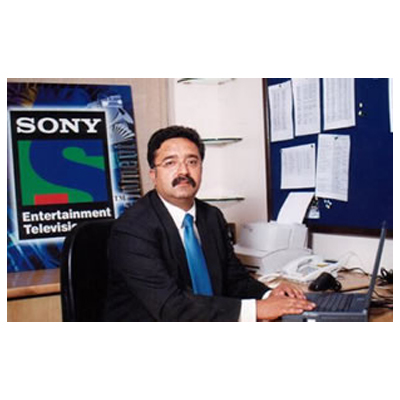
    MUMBAI: With the evolution of time and sensibilities, in today’s culture, the relationship between the parents and their daughters doesn’t change much pre and post marriage. Especially when it comes to being adequately involved in each other’s lives. However, in few cases, parental involvement can also turn into obsessive interference and this creates a new challenge for the married couple. Exploring one such mother-daughter relationship and the interference of this mother in her daughter’s marriage, Sony Entertainment Television launched a slice of life dramedy – Main Maayke Chali Jaungi Tum Dekhte Rahiyo. This mother strongly believes in beti ko bas vida kiya hai, alvida nahin, maintaining a strong presence in her daughter’s life post marriage much to the dismay of her son-in-law!

    With an interesting and relatable plot, the campaign highlighting the launch of the show was also distinct and striking! Taking cues from the refreshing concept of the show, the channel creatively used its show logo – a bedecked suitcase as a metaphor to highlight the thought of the show. This was used across mediums innovatively to engage with the consumers.

  • Digitisation leading to higher HD adoption in India

    Digitisation leading to higher HD adoption in India

    MUMBAI: High definition (HD) TV channels started launching in India years ago but it was only when digitisation happened on a large scale that the adoption of channels grew.

    According to Broadcast Audience Research Council (BARC), the total HD count in India has increased to 83 channels currently from 59 channels in 2016, witnessing a growth of 41 per cent since 2016. The first HD channel was National Geographic HD in 2010.

    Of the 83 HD channels, 34 are English, 13 channels are Hindi and 10 of them have multiple languages feed. On the other hand, 50 channels out of 83 have both SD and HD feed.

    While the number of channels has gone up by 41 per cent, the viewership share has grown by more than 160 per cent. The reason behind this viewership growth is most likely technology and distribution. There were 10-12 million subscribers availing HD services at the end of FY18, according to FICCI KPMG’s Media & Entertainment report 2018.

    The DTH players have been the front-runners in up-selling HD services to their customers, whereas MSOs only managed to garner about 1-1.5 million HD subscribers.

    KPMG partner and head – media and entertainment Girish Menon said, “The new television sets coming in the market are all HD-ready in some form or the other. Even the set top boxes which are coming out, sold by the DTH and cable operators, are all HD boxes. In that sense, from a hardware perspective, the market is steadily moving towards HD. The second trend which is happening from the content perspective is that all the television channels are now essentially converting and up-scaling their feed into HD. The content available in HD is also increasing. You will see more HD conversions happening, SD subscribers shifting to HD and a greater proportion of HD subscribers that are going to come in.”

    If we look at the market contributing to HD viewership this year, Andhra Pradesh and Telangana have the highest share of the pie with 18 per cent. Maharashtra and Goa contribute 16 per cent to the overall market.

    “Maximum consumption in viewership is contributed by sports and GEC followed by movies. We will see more HD regional channels which will lead to growth of regional viewership. On the regional side, Tamil and Telugu markets will drive the HD growth,” he added.

    GEC, movies and sports genre contributed 94 per cent to HD viewership this year with 59 per, 25 per cent and 10 per cent for each genre respectively.

    The sports genre includes 12 HD channels in India across various broadcasters. As other sporting events apart from cricket are also gaining popularity among the youth, the consumption in HD is also increasing. The viewership share of sports genre is 10 per cent compared to 3 per cent share on SD channels.

    The recently concluded FIFA WC 2018 led to a viewership growth of 1.5x on HD channels, compared to pre-FIFA weeks. IPL 2018 which took place earlier this year was telecast on more number of HD channels on Star India’s sports network and saw a 40x growth in HD Impressions over IPL 2017, according to BARC data.

    As far as 4K technology is concerned, we are a long way off. “We are still seeing HD penetration growing. For 4K you need enough hardware and 4K TV, which at the moment are not there. Secondly, we don’t have 4K content directly available in India. We are three years away before we start seeing any traction in 4K technology,” he concluded.

  • Sony Entertainment Television triggers a distinct campaign for main maayke chali jaaungi tum dekhte rahiyo

    Sony Entertainment Television triggers a distinct campaign for main maayke chali jaaungi tum dekhte rahiyo

    MUMBAI: With the evolution of time and sensibilities, in today’s culture, the relationship between the parents and their daughters doesn’t change much pre and post marriage. Especially when it comes to being adequately involved in each other’s lives. However, in few cases, parental involvement can also turn into obsessive interference and this creates a new challenge for the married couple. Exploring one such mother-daughter relationship and the interference of this mother in her daughter’s marriage, Sony Entertainment Television launched a slice of life dramedy – Main Maayke Chali Jaungi Tum Dekhte Rahiyo. This mother strongly believes in beti ko bas vida kiya hai, alvida nahin, maintaining a strong presence in her daughter’s life post marriage much to the dismay of her son-in-law!

    With an interesting and relatable plot, the campaign highlighting the launch of the show was also distinct and striking! Taking cues from the refreshing concept of the show, the channel creatively used its show logo – a bedecked suitcase as a metaphor to highlight the thought of the show. This was used across mediums innovatively to engage with the consumers.

  • Viacom18 rejigs top deck as it gears up for the next growth phase

    Viacom18 rejigs top deck as it gears up for the next growth phase

    MUMBAI: Viacom18 today announced a management restructuring aimed to consolidate its growing portfolio play as it prepares to further enhance performance through focused content innovation and collaboration across brands.

    Manisha Sharma, who has been the force behind the continued success of Colors, has now been elevated to chief content officer, Hindi mass entertainment. In her new role, she will be heading content for the entire HME cluster including Colors and Rishtey. Manisha will now report directly to Viacom18 group CEO and managing director designate Sudhanshu Vats.

    In a first for the organization, Viacom18 has unified all revenue across the network under the leadership of chief operating officer Raj Nayak.

    Nina Elavia Jaipuria’s role has been expanded to head – Hindi and kids TV network. Her mandate now includes channels across kids and Hindi mass entertainment clusters.
    Head of the regional TV network Ravish Kumar will be leading the network’s foray into regional broadcast entertainment across languages and genres.

    Ferzad Palia will continue leading the network’s efforts in strengthening Viacom18’s command on youth, music and English entertainment while creating content and experiences for Viacom18’s young audience.

    Ajit Andhare will now take on the expanded role of Viacom18 Studios chief operating officer to drive Viacom18 Motion Pictures’ forays into national and regional cinema and build Tipping Point as a brand for digital content production.

    Saugato Bhowmik will continue to lead Integrated Network Solutions, building homegrown IPs in experiential entertainment and driving the licensing business under Viacom18 Consumer Products.

     All the above will report into Sudhanshu Vats.

    “The first decade of Viacom18 marked the hyper-growth phase for us with  50X growth in topline. In order to make Viacom18 future-ready and dial up growth across different lines of business, it is imperative to drive synergies, leverage scale and build content capabilities across screens. As we step into our next phase, it is important that we shape an organizational structure that allows us to retain the garage-nimbleness that got us here while enabling Viacom18’s independent business lines to leverage the synergies that consolidation brings. Integrating our revenues  and building content engines to cater to multiple screens across India, under the above leaders, is an important step towards a forward-looking organization,” said Vats.

    These organizational changes will be operationalised with immediate effect. 

  • Punit Goenka says talking to Jio to renew content deal

    Punit Goenka says talking to Jio to renew content deal

    MUMBAI: A few days ago Zee Entertainment Enterprises Ltd (ZEEL) had pulled out all its content from Mukesh Ambani-owned Reliance Jio. Soon after scrapping the deal with Jio, ZEEL entered into a partnership with another telco operator Airtel . While there were many questions regarding the development, ZEEL MD and CEO Punit Goenka has cleared the air. In an interview with CNBC, he said conversations are still on with Jio.

    “We did have a deal with Reliance Jio and it was up for renewal and our negotiations failed. Hence, we had to pull our content out. Conversations are still on, and I am sure we will find an amicable solution with them as well,” Goenka commented.

    Goenka expects the company’s new big bet ZEE5 to emerge as the number one entertainment app at the end of 12 months from now. Though he did not comment on the number of subscribers, he said that since the platform started showing original content in July, the number of subscribers doubled month-on-month.

    “We are seeing a lot of traction on the OTT platforms and there is no worry yet on the television side of consumption. If you look at the television growth itself, over the last year, we have seen growth in number of television households. We have seen growth in time consumption per consumer on a daily basis,” he also said commenting on the TV business .

    Goenka on a confident note said, TV itself is growing both on advertising as well as on the subscription side. He also added phase three monetisation has started and the company is seeing good traction coming on the subscription from there.

  • IPL, FTA channels boost TV advertising by 10.3% in FY18: KPMG report

    IPL, FTA channels boost TV advertising by 10.3% in FY18: KPMG report

    MUMBAI: The media and entertainment industry is now on the road to recovery after facing headwinds due to major regulatory interventions such as demonetisation, GST and RERA, resulting in lower consumption and ad spend during FY18. 

    The KPMG in India’s – Media and Entertainment report 2018, launched on 5 September 2018, stated that strong and consistent economic growth fueled by a rise in consumption and growth in digitisation provided support, enabling the Indian media and entertainment (M&E) industry to grow at 11 per cent over FY17 to reach Rs 1,436 billion in FY18.

    The TV industry in India was estimated at Rs 652 billion in FY18, a growth of 9.5 per cent from FY17, having grown at a CAGR of 10.7 per cent between FY14-18. The market size consisted of advertisement revenues of Rs 224 billion and subscription revenues of Rs 428 billion in FY18.

    Television advertising grew at a rate of 10.3 per cent in FY18, aided by the strong performance of Indian Premier League (IPL), free-to-air (FTA) channels and consumer promotions by FMCG companies in the festive season. FMCG, telecom and auto sectors contributed more than two-thirds of the spends on television advertising in India. However, the first half of FY18 was majorly impacted by the implementation of GST and RERA as FMCG and real estate companies kept their ad spends on hold. Large broadcasters with a client base of national advertisers were less impacted than the ones with a predominantly local advertiser base.  

    The long term outlook for the M&E sector remains strong on the back of a buoyant Indian economy, robust domestic demand, particularly in rural and regional markets and growing digital access and consumption. This year, telecom-media-technology (TMT) convergence took centre stage. This has the potential to significantly change how media is created, distributed and consumed and media companies need to take a relook at their strategies and business models to successfully operate and thrive in the new paradigm.

    KPMG in India partner and head – media and entertainment Girish Menon said, “The India media and entertainment industry was affected by lower ad spend in FY18 due to goods and services tax (GST) rollout and the lingering effects of demonetisation. However, this effect has been temporary and the industry is seeing positive long term outlook on the back of rapid growth in digital access and consumption, coupled with strong domestic demand especially from the rural and regional markets. The sector grew by 10.9 per cent in FY18 to reach Rs 1,436 billion and it is expected to grow at a CAGR of 13.1 per cent over the next five years to reach Rs 2,660.2 billion by FY23. Growing presence of telecom and technology players in media distribution has led to convergence of business models across TMT and media companies will have to evolve to successfully operate in the new paradigm.” 

    According to the report, digital advertisement revenues have been growing rapidly in India, and the trend continued in FY18 with a growth of 35 per cent to reach Rs 116.3 billion. Key growth drivers were developments in digital infrastructure; increased inclusion of and adoption by regional, non-urban users; increase in the penetration of mobile phones; and increase in maturity in the digital ecosystem driven by public and private investments.

    KPMG in India head – technology media and telecom Mritunjay Kapur said, “Digital technology, coupled with radical shifts in consumption patterns have undeniably resulted in blurring of boundaries that define the TMT sectors. TMT convergence is now a reality and will likely cause significant disruptions across the value chain. Media organisations would need to re-evaluate their existing strategies and operating models to leverage the emerging opportunities and sustain against new evolving challenges.”

    Mobile gaming in India has seen a tremendous uptick. From a meagre contribution of 18 per cent in 2012 (the smallest segment), mobile gaming comprised 46 per cent of the global gaming revenue in 2017 and this number is set to reach 60 per cent by 2021. Mobile gaming already leads from the front in India with nearly 89 per cent of all gaming revenue in India generated by mobile games in 2017. The higher than expected growth in online gaming over the past 18 months has primarily been on account of the mobile gaming segment, which has benefitted from the fall in 3G and 4G data costs. “On the other hand, Esport is a very niche market and while it is growing, I’m not sure that it is going to become a very sizable number. The bulk of the gaming revenue is going to come from the online gaming business,” Menon added. 

  • 60% ad inventory for ‘Bigg Boss’ 12 sold

    60% ad inventory for ‘Bigg Boss’ 12 sold

    MUMBAI: The launch of the festive season in India generally coincides with the start of the most popular reality show on TV – Big Boss. Produced by Endemol Shine and broadcast on Colors, the show is in its twelfth successful run.

    Bigg Boss 12 has retained Appy Fizz as the presenting sponsor and Oppo F9 PRO as the ‘powered by’ sponsor. Viacom18 COO Raj Nayak said that Panasonic, L’Oreal and Capital Foods have already signed up and two more brands are expected to come on board. “We have almost sold 50-60 per cent of the ad inventory and by this Friday we will sign two more advertisers,” he said.

    The channel says it has increased ad rates by 5-8 per cent. As far as last season is concerned, the channel had hiked of ad rates for new advertisers and had kept incremental cost between 12.5-15 per cent.

    This year too, the channel will make use of its OTT platform Voot. Nayak said, “We will surely have extra episodes, voting and full episodes on Voot. It will be on MTV as well because it is a youth channel and they love to watch such kind of shows. We had got traction even on the different time slot when we aired on the channel.” Last year, the channel re-broadcasted bits of the show on MTV at different time slots of 2-3 pm and 11.30 pm to 1 am which also ended up getting youngsters.

    Reports state that each episode costs anywhere between Rs 4-5 crore and is Colors’ most expensive show. Nayak, who was earlier heading Colors, knows Big Boss like his baby. For several years, Big Boss guzzled more investment than it gave revenue but all the sweat has started to yield fruits. He has always maintained that the show’s X-factor and buzz-creation ability is what sways the network.

    “Bigg Boss was obviously a loss-making venture at first and now we have broken even and of course it is also profitable. But the buzz that it creates and the different kind of viewership that Bigg Boss has, I don’t think any show other than this has the same. People will watch it even if we play it 365 days,” he said.

    This year’s theme is ‘jodis’ which means players will play in pairs which will be relevant to their identity as celebrities or commoners. The first episode will air on 16 September at 9 pm with regular episodes from Monday to Friday at 10.30 pm. Since the weekends are empty, the channel has lined up Khatron Ke Khiladi.

  • TV18, Sony Pictures India announce new channel rates

    TV18, Sony Pictures India announce new channel rates

    MUMBAI: Days after Zee announced its new tariff rates, TV18 Broadcast and Sony Pictures Networks India (SPNI) have also made public their own rates, in accordance with TRAI tariff rules.

    IndiaCast, the authorised distributing agency of TV18 channels, has updated the new format based Reference Interconnect Offer (RIO) on its website. This updated RIO will be effective for the term commencing from 29 December 2018. SPNI has also published its new RIO on its website.

    All TV18 channels will be available on an a-la-carte basis, as required by regulations. The a-la-carte rate of all SD & HD channels is under Rs 19 per month. The maximum retail price (MRP) of the basic bouquet for Hindi speaking market (HSM) named as Hindi Base starts at Rs 36 which includes Colors, MTV, Rishtey and CNN News 18. The Hindi Ultra pack has been priced at Rs 58. There’s an India Base pack which includes important channels from all regions and each genre at Rs 79.

    The broadcaster has announced multiple bouquets for several regional markets including base and ultra-pack both in SD and HD. Karnataka Base pack will cost Rs 53, while Maharashtra Base pack price has been fixed at Rs 45 and Bengal Base at Rs 41.

    SPNI is also providing a total of 32 channels including SD and HD on a-la-carte basis at under Rs 19 per month.

    SPNI has also declared ten bouquets concentrating on different regional markets as well along with focusing on its premium channels. The base pack BST Regular pack has been fixed at Rs 55 while its variants of regional languages are priced higher. SPN Blockbuster Pack priced at Rs 86.4 includes SET, Sony Yay!, Sony BBC Earth and ESPN. The Blockbuster pack also has variants with Bengali and Marathi languages.

    Two different packs focusing on the South Indian market are also available. The Big HD pack with all HD channels is priced at Rs 116 where Sony Marathi HD is proposed to be launched in place of TEN Golf HD. While the viewers of HD channels are growing slowly but gradually, two HD bouquets, one for South, are also available.

    The deadline given by TRAI was 31 August for publication of RIO, declaration of MRP and nature of channels, in connection with its tariff order. Zee Entertainment Enterprises Limited (ZEEL) was the only broadcaster to publish its RIO before the given deadline.

    Star India is the only big broadcaster which has not filed its ROI yet. The broadcaster is also one of the main petitioners against the TRAI tariff and interconnect order which will now be heard on 5 September by the Supreme Court.

  • Zee becomes the first major broadcaster to declare mrp

    Zee becomes the first major broadcaster to declare mrp

    MUMBAI: Zee Entertainment Enterprises Limited (ZEEL) becomes the first major broadcaster in the country to announce MRP of all its channels under the new regime as per Regulation dated 3rd March 2017. ZEEL uploaded details of A-la- carte MRP of its channels on the website on Friday 31st August 2018. Besides declaring A-la-carte prices, ZEEL has also announced MRP of various bouquets, which comprises its leading channels.

    The A-la-carte of all SD & HD channels are under Rs. 19 per month. The MRP of the basic bouquet for the Hindi Speaking Market (HSM) starts at Rs. 45 per month for a suite of 23 channels. This includes channels like Zee TV, &TV, Zee Cinema, &Pictures, Zee News, Zee Anmol, Big Ganga and many more. ZEEL has declared multiple bouquets available to consumers across the country at different price points. Premium English channels like Zee Café and &flix are available in a different bouquet. Each bouquet constitutes a mix of channels of different genres including General Entertainment, Movies, News, Infotainment and Music.

    Zee group of channels constitute the largest entertainment network of the country, with the highest viewership share including all genres (Source: BARC viewership data, week 22 to week 34). Zee channels are ranked number 1 / number 2 across languages including Marathi, Bangla, Odia, Telugu and Kannada, and in other genres like Hindi Movies and Marathi Movies.

  • Consumption & disruption: The Emerald Media mantra

    Consumption & disruption: The Emerald Media mantra

    MUMBAI: When Rajesh Kamat makes a move, you take notice. His decision to set foot in the private equity world in 2011 with The Chernin Group’s CA Media after a blistering three-year run as Viacom18 COO and Colors CEO left India’s media and entertainment ecosystem intrigued. Cut to 2018, Kamat is staying true to form – making plays that continue to invoke as much curiosity, surprise and awe. Now of course he’s teamed up with global private equity giant KKR to make pan-Asia media tech investments as part of a $300 million fund that was set up in 2016. In a sense, he will have a say in how the existing and future media and entertainment landscape takes shape.

    The fund – Emerald Media – has Kamat and former Star Group CEO Paul Aiello as managing directors based out of Singapore. The original thesis behind setting up Emerald was to help companies scale, take their business global, open up new doors for them and transform them from start-ups to organisations.

    Typically, Emerald invests at an early growth stage in companies with proven business models that generate around $8-10 million in revenues. The objective is to pump in $20-$75 million in each asset, picking up larger stakes if not a controlling stake.

    Since inception, they’ve invested in four businesses in India (Yupp TV, Amagi, Cosmos-Maya, Global Sports Commerce) and one in Thailand (aCommerce). There is a fundamental hypothesis the team follows for all their investments. In a sense, it can be described as the Emerald Media mantra, wherein bets are made based on where the consumption (B2C) and disruption (B2B) is bound to take place.

    “It’s a niche area they are helping to build rather than entering high-end categories like GEC or sports. They are helping turn around companies with high potential. Their current strategy seems to be content driven and they are supporting underdogs in the industry who need the most support,” says an analyst from a top management consultancy firm.

    Team Emerald also manages CA Media’s assets, which include the likes of Endemol Shine India, Graphic India, Fluence among others. However, there is a key distinction in the investment philosophy between the two funds. The investments made by CA Media weren’t restricted to a particular ticket size. Also, the fund collaborated with mostly IP-based content companies. Emerald on the other hand has invested in mostly media tech businesses barring the exception of Cosmos-Maya.

    “Our involvement in all assets is somewhere between day-to-day management and just being board members. We neither restrict ourselves to quarterly updates nor believe in intruding on a daily basis. We are far more involved because there are lots of areas where we can add value, which promoters of rapidly growing companies appreciate,” says Kamat’s man in India Emerlad Media executive director & investment head Vivek Raicha.

    He is responsible for deal scouring – through his proprietary network or bankers – negotiation, execution and overall supervision of the asset, which includes its monitoring but more importantly value creation.

    It is needless to say there is tremendous synergy between Emerald’s integrated basket of assets, almost as if by design Kamat & Co have created a network of organisations. Perhaps it is the by-product of seeking comfort under the umbrella of a common shareholder. What makes the nature of Emerald’s investment solid and sensible is the fact that all these platforms are part of a digital content value chain. 

    For instance, Yupp TV is focused on the diaspora audience, while Cosmos-Maya is a kids’ animation company, which services broadcasters and streaming players. So, when Cosmos makes content, it gives exploitation rights to its broadcast partners for the India territory while retaining international rights. In Yupp TV, there is a platform, which caters to an outside of India audience. 

    Emerald got Cosmos to create three linear channels for Wow Kidz, their own brand, and launch it on Yupp TV on a subscription basis, handing them ready access to the latter’s customer base across the world in one fell stroke.

    In return, Yupp TV got content that they'd have paid a lot of money for or may not have had in the first place. Such an arrangement enabled them to offer the likes of Motu Patlu to an audience outside India.

    Another example of such symbiosis is Yupp TV and Amagi. Yupp’s live channels and catch-up content contain ads that are of no use to the diaspora audience. Inserting ads on an OTT platform is tricky business.  The option of doing a pre-roll exists but it is fairly complex to put a mid-roll or replace an ad.

    Amagi has the technology to do this job, a bit like geo-targeting. So Yupp TV uses Amagi's technology to substitute the Indian ads with those that are locally relevant.

    Similarly, Global Sports Commerce (GSC) and YuppTV can jointly acquire sports rights. The possibilities are endless.

    So how does Emerald invest in assets?

    That boils down to the nature of the deal. In some cases it has invested the entire capital in one go, while in others it has resorted to a tranche-based funding. Injection of funds into a company depends on the requirement, with no thumb rule at play.

    However, multiple boxes need to be ticked before a target company is zeroed in on as an investment option. The most important thing is the person who's running that business. “People make businesses, businesses don't make people,” Raicha quips.

    Given that the investor is bound to exit at some stage, it is imperative that there has to be a meeting of minds with the promoters and management with regards to the journey and vision.

    Apart from a company’s year-on-year growth, the Emerald execs also factor in how the company has insulated itself from risk – competition and general ecosystem changes that take place.

    Risk assessment takes both internal and external factors into account. Return and risk go hand in hand, which is why Emerald conducts an exhaustive analysis before putting pen to paper.

    Their objective is to invest as much capital as the company requires to break-even. That's the amount of capital that goes in primary. If that primary capital does not get them the desired stake, and then they approach the existing investors, some of whom are willing to sell. And that’s how a ticket size is arrived at.

     “Content is a good place to be right now. So companies that create, distribute and monetize content are all going important stakeholders in the future of media,” media and entertainment advisory services partner Ernst & Young Ashish Pherwani.

    On an average, Emerald looks at 500 companies a year across Asia, ultimately plonking its cash in couple of them. 

    “You have to add value. Return only comes from value creation,” Raicha adds.

    From devising strategy to unlocking global opportunities, Emerald has walked the talk when it comes to creating value for its investees. Ushering in a consolidation strategy for Yupp TV, creating a winning culture at Cosmo-Maya, introducing GSC to business prospects across the world, and being instrumental in bringing Colors on board for Amagi are some examples.

    Raicha believes mobile-based online gaming will witness the next consumption wave. He rues the dearth of Indian gaming companies of scale at this point in time. While digital content remains an area of focus, Emerald hasn’t yet been being able to pick the right collaborator to go with. Another space that excites them is B2B tech.

    The telco, media and tech convergence has served as a catalyst in private equity funds looking more closely at media and entertainment companies, a departure from the previous years. TPG Growth’s $100 million bet on BookMyShow is a case in point.

    Having invested $200 million, Emerald has more $100 million in the bank.

    A challenge on hand is exiting from his earlier investments through CA Media. Talks are on with Indian and international megacorps. Kamat, Aiello and Raicha are quite sanguine that they will get the right valuations and will post a healthy return on the fund. 

    Even as all this is going on, the team has already got its eyes on another fund, thanks to the stellar rep they have acquired over the past decade. 

    Very few understand the media and entertainment business like Kamat. So, the nature of his next moves could signal a larger industry trend. And when that happens, it is bound to invoke as much curiosity, surprise and awe from his peers as always.