
Category: GECs

  • Indian TV advertising takes a beating as FMCG brands tighten purse strings

    Indian TV advertising takes a beating as FMCG brands tighten purse strings

    MUMBAI: India’s television advertising market has hit the skids. The Economic Times reported that ad volumes plummeted 10 per cent year-on-year in the first nine months of 2025, according to TAM AdEx data, as fast-moving consumer goods companies—the industry’s biggest spenders—slashed budgets in response to anaemic consumer demand. Of course, the ban on real money gaming platforms in end-August added to the shrinkage in ad spends too . 
    The carnage shows up in broadcaster balance sheets. Zee Entertainment’s advertising income tumbled 11 per cent to Rs 3,591 crore. Sony Pictures Networks India posted a nine per cent drop to Rs 2,606 crore. Sun TV Network’s advertising and broadcast slot sales fell four per cent to Rs 1,440 crore. Star India, now merged with the erstwhile Viacom18, kept mum on the split between advertising and subscription revenue.
    The culprit is clear: viewers are ditching appointment viewing for on-demand convenience, leaving linear television scrambling for relevance.
    Food and beverages dominated advertising between January and September, claiming 21 per cent of total ad volume. Personal care, services, household products and retail rounded out the top categories. The top ten sectors hoovered up 88 per cent of all TV advertising—proof that consumer brands still see television as the mass-reach medium par excellence.
    TAM Media chief executive LV Krishnan explained that the “drop is largely led by softening of market conditions, whereby consumption had dipped, resulting in a cut in ad budgets. This is a pre-GST reduction period.
    Among individual advertisers, Hindustan Unilever remained the heavyweight champion, followed by Reckitt Benckiser India and Godrej Consumer Products. The top ten advertisers accounted for 42 per cent of total ad volume.
    General entertainment channels and news outlets continued to attract the lion’s share of advertising, together accounting for 57 per cent of total volume. News, movies and music saw a marginal drop compared with 2024, whilst general entertainment gained slightly—a sign that high-reach programming still packs a punch.

    Krishnan reckons the final quarter of 2025 will see year-on-year growth, thanks to GST rate cuts that kicked in on 22 September. He estimates the reforms will spur consumption and inject Rs 5,400 crore into overall advertising during the festive season, on top of organic festive growth. 

    If the green shoots turn into a proper recovery, television may yet claw back some swagger. For now, though, it’s licking its wounds.

  • ZEE ONE Shines Bright in Cannes

    ZEE ONE Shines Bright in Cannes

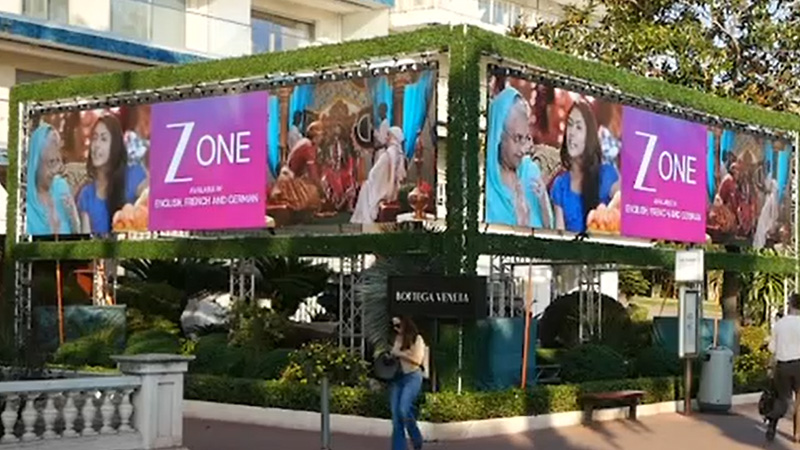
    MUMBAI: When it comes to bold ideas, Zee has always loved doing things differently. And this week in Cannes, the brand took that spirit to dazzling new heights. As the global television industry gathered for Mipcom 2025, Zee made history as the first Asian broadcaster to take over one of the largest LED screens along the legendary Croisette. From sunrise to sunset and long after the massive display of Zee One lit up the promenade, stopping people in their tracks and sparking real excitement.

    With over 15,000 visitors and delegates expected during Mipcom, it was the perfect moment to put Zee One, the company’s French-language FAST channel in the spotlight. The channel, available on Samsung TV Plus, LG Channels, and Rakuten TV, has quickly built a following in France for its vibrant mix of Bollywood films, heartfelt dramas, and colourful family entertainment.

    For many passersby, it was a surprise and a delight to see an Indian media brand taking over one of Cannes most visible spaces

    Zee has built its global presence by constantly trying what others haven’t and this Cannes moment is a reflection of that same spirit.

    Standing tall among the biggest names in international entertainment, Zee One’s luminous display on the Croisette is more than just advertising, it’s a statement of confidence, creativity, and cultural pride.

    And as the lights shimmer over the French Riviera, one thing is clear: Zee knows how to make the world stop and look up
     

  • Zee’s profit crumbles as advertisers flee the Hindi heartland

    Zee’s profit crumbles as advertisers flee the Hindi heartland

    MUMBAI:Zee Entertainment’s latest quarterly results lay bare the industrial-scale headwinds battering India’s media and entertainment industry. Profit after tax collapsed by 63 per cent year-on-year to just Rs 76.5 crore in the quarter ended September, whilst EBITDA—already anaemic—shrank by 54 per cent to Rs 146.4 crore. The numbers paint a picture of a company caught between the need to invest for tomorrow and the inability to generate returns today.

    Operating revenue edged up just eight per cent sequentially to Rs 1969.2 crore, but this masks a troubling underlying picture. Advertising revenue, the lifeblood of India’s television industry, fell 12 per cent year-on-year, ravaged by a pullback in fast-moving consumer goods spending. The company has been forced into the classic trap of fighting for market share through costly content investments and higher marketing spend, both of which hammered margins to just 7.4 per cent.

    The half-year performance is equally grim. H1 FY26 revenues fell eight per cent to Rs 3794 crore, whilst operating profit plunged 37 per cent to Rs 374.4 crore. Profit after tax declined 34 per cent to Rs 220.2 crore. Even subscription revenues—heralded as the growth engine—managed only modest growth (five per cent to Rs 1023 crore against Rs 969..9 crore a year ago)  in an increasingly crowded digital battleground, driven by OTT and domestic linear price increases.

    The company’s content strategy has become a costly bet on volume. Zee5 posted a headline-grabbing 32 per cent year-on-year revenue jump to Rs 310.8 crore, but this comes on the back of mounting losses being narrowed down from Rs 244 crore to Rs 31.2 crore. The trajectory is encouraging but the losses remain substantial. Zee Studios churned through 13 film releases during Q2 alone—a scatter-gun approach that signals desperation rather than precision.

    The domestic television network held firm on other parameters.. Zee’s market share rose 100 basis points quarter-on-quarter to 17.8 per cent, with weekly reach steady at 749 Mn viewers. Yet this stability masks stagnation. The company has been forced to launch two new general entertainment channels and ramp up non-fiction content, both expensive propositions that yield uncertain returns.

    On the cost front, operating expenditure surged nine per cent year-on-year to Rs 1822.8 crore, driven by higher programming costs and elevated marketing spend in Q2 FY26. The company’s attempts to trim fat appear half-hearted; personnel costs held steady but content acquisition and production spending ballooned.

    There are fragments of hope. Cash and equivalents stood robust at Rs 2110 crore, with the balance sheet broadly stable. Content inventory declined by Rs 60 crore  during the half-year, suggesting improved discipline in acquisition. Zee Music Co added 3.9 million YouTube subscribers during the quarter, now boasting 172 million followers—a rare bright spot in an otherwise darkening tableau.

    The company has positioned itself as an environmental and social responsibility leader, landing in the 93rd percentile for ESG scores globally. Whether this counts for much in an industry where the bottom line is bleeding red remains a moot question.

    Zee Entertainment faces a brutal choice. Content investment without advertising growth is simply loss-making at scale. The company’s hope rests on a festive-season ad bounce and the long-tail of digital revenue eventually hitting profitability. 

  • Doordarshan and Collective Media reimagine the Mahabharat with AI

    Doordarshan and Collective Media reimagine the Mahabharat with AI

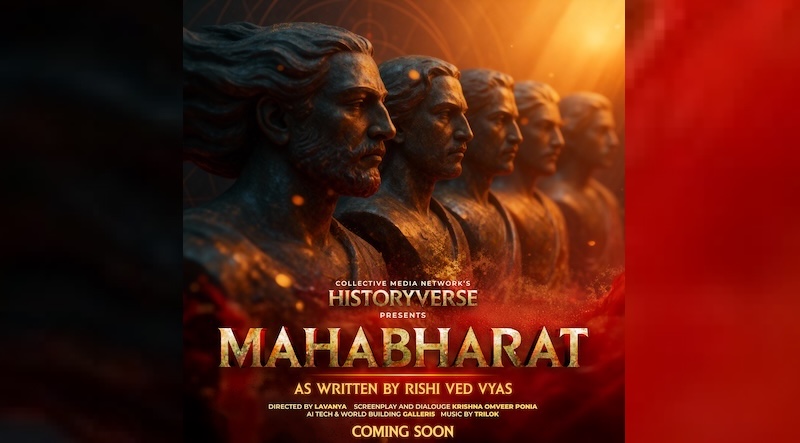
    NEW DELHI: India’s most celebrated epic is getting a technological makeover. Collective Media Network’s Historyverse has unveiled an AI-led reimagining of the Mahabharat, set to premiere on Waves OTT on 25 October 2025. Doordarshan will broadcast it every Sunday at 11:00 AM from 2 November 2025.

    The collaboration pairs Prasar Bharati’s nationwide reach with the creative firepower of a next-generation media network. Advanced AI tools have been used to reconstruct the epic’s sprawling universe—its characters, battlefields and moral quandaries—with cinematic scale and striking realism.

    “Like millions of Indians, I grew up watching the classic Mahabharata on television every Sunday. It was an experience that shaped my imagination and my connection to our culture,” said founder & group chief executive Vijay Subramaniam. “With Mahabharat, our hope is to give today’s generation a similar touchstone that feels as immersive and unifying as it did for us, but told through the possibilities of today’s technology.”

    Prasar Bharati chief executive Gaurav Dwivedi noted that the original Mahabharat‘s re-telecast during lockdown reminded viewers how deeply these narratives bind families together. “Partnering on this AI-led reimagining allows audiences to experience one of India’s greatest epics anew—honouring tradition while embracing cutting-edge technology in storytelling.”

    Waves, Prasar Bharati’s official OTT platform, has quickly amassed millions of users with its credible, family-friendly and multilingual content. The platform offers video-on-demand, live events and an extensive library of television, radio, audio and magazine programming. The Mahabharat project exemplifies how heritage and innovation can converge to create contemporary narratives that resonate across India and beyond.

  • Zee Live turns up the volume on Marathi pride

    Zee Live turns up the volume on Marathi pride

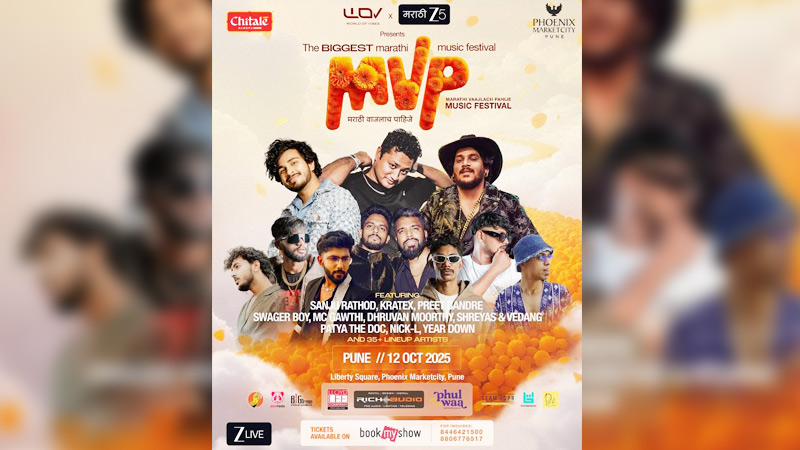
    MUMBAI: Move over quiet weekends, Pune’s about to feel the beat of Marathi pride. Zee Entertainment Enterprises has cranked up the decibels on culture with the launch of “Marathi Vajlach Pahije” (MVP), the first flagship event under its new experiential vertical, Zee Live, in partnership with World of Vibes.

    Set to take place on 12 October 2025 at Phoenix Market City, Pune, MVP is no ordinary concert, it’s a full-blown celebration of Marathi youth, rhythm, and rebellion, bringing together over 40 artists from the state’s thriving hip-hop and indie scenes. Expect names like Kratex, Sanju Rathod, Shreyas & Vedang, MC Gawthi, and Patya the Doc to turn the stage into a creative battleground where beats meet identity.

    The festival promises to be a collision of tradition and modern swagger, as today’s Marathi creators remix their heritage with street art, spoken word, and music that speaks straight from the mohalla.

    To amplify its reach beyond the mosh pit, Zee Live has teamed up with Marathi Zee5, taking the festival digital with exclusive content, artist stories, and behind-the-scenes footage, ensuring the cultural pulse of MVP reverberates far beyond Pune.

    “This is not just an event; it’s an expression of a generation,” said Zee Live business head Gareth Eswin Thomas. “Marathi Vajlach Pahije captures the rhythm of youth, energy that can’t be contained, only celebrated.”

    Marathi Zee5 and Zee Marathi business head V.R. Hema added, “By giving these young artists both a local and global stage, we’re not just showcasing music, we’re spotlighting their stories and dreams. MVP marks the next era of regional storytelling: bold, proud and rooted.”

    Presented by Zee Live, Marathi Zee5 and World of Vibes, the Festival of MVP is ready to tune Maharashtra into its most vibrant frequency yet. Tickets are live on Bookmyshow, with extra content dropping on Marathi Zee5 for fans who like their beats served with a side of pride.

  • Sony sets the Adedge to put small brands on India’s biggest TV stage

    Sony sets the Adedge to put small brands on India’s biggest TV stage

    MUMBAI: Who says prime-time dreams are only for big spenders? Sony Pictures Networks India (SPNI) is handing small and mid-sized businesses the remote control to the country’s most-watched shows. In partnership with Accenture, the network has launched Sony Adedge Centre of Excellence (CoE), a new-age advertising platform designed to lower the barriers of price and scale for growth-hungry Indian brands.

    From Kaun Banega Crorepati and Indian Idol to CID and Taarak Mehta Ka Ooltah Chashmah, Adedge lets SMBs step into TV’s most coveted slots, but with the agility, measurability, and flexibility of digital campaigns. The idea? To democratise advertising so India’s smaller players can rub shoulders with the big guns.

    AdEdge combines SPNI’s storytelling heft with Accenture’s AI-driven targeting, analytics, and media strategy expertise, helping brands design campaigns that are both mass-reaching and outcome-driven. Think of it as giving emerging advertisers the muscle of TV and the brains of data, all without breaking the bank.

    “We’re not just opening the doors of TV to SMBs, we’re reimagining how growing brands can leverage India’s most powerful media assets at the right scale, with the right tools, and at the right price,” said SPNI MD & CEO Gaurav Banerjee calling SMBs the next big frontier for Indian advertising.

    Accenture’s Berjesh Chawla echoed the sentiment: “By placing the power of data-driven advertising into the hands of SMBs, we are unlocking full-funnel, cross-platform opportunities that are accessible, flexible, and profitable for emerging businesses.”

    With a consultative model, flexible buying options, and post-campaign measurement baked in, Adedge is setting the stage for smaller advertisers to shine big. After all, in a country where cricket scores, reality show drama, and family sitcoms rule living rooms, it’s only fair that SMBs now get a piece of the spotlight.

  • Z marks 33 years since launching India’s private satellite television

    Z marks 33 years since launching India’s private satellite television

    MUMBAI: Thirty-three years ago, on  1 October 1992, Zee TV became India’s first private general entertainment satellite television channel. On its anniversary, Zee Entertainment Enterprises is reminding everyone that it got there first—and that the industry it spawned now turns over Rs 2.5 trillion annually and employs 2.8 million people – through a press release.

    The numbers tell a story of explosive growth. What began as a single channel has mushroomed into 908 private satellite channels, over 70 streaming platforms, close to 40,000 artists, music directors, lyricists and an industry producing 3,400 feature films each year. The media and entertainment sector, Zee notes, has attracted nearly Rs 1 lakh crore in foreign direct investment and is projected to grow 7 per cent to reach Rs 3.07 trillion by 2027.

    “The journey of ‘Z’ is inseparable from the story of India’s M&E industry,” says Zee Entertainment chief executive officer Punit Goenka. The company, he argues, has not merely entertained but “empowered” the nation, whilst creating an ecosystem for artists, creators and technicians across television, digital, films and live entertainment. 

    “As pioneers of this robust industry, we at ‘Z’ view this celebration as a stimulus to power ahead
    and create a robust growth path for the future. We remain committed to shaping the entertainment industry in the years to come, by nurturing an ecosystem that enhances creativity and generates opportunities for progressive growth,” emphasises Goenka.

    Zee Punit Goenka

    The self-congratulation is not entirely unwarranted. Zee pioneered culturally rooted, vernacular content at a time when India’s entertainment landscape was dominated by state broadcaster Doordarshan. Its success paved the way for competitors and transformed how Indians consumed media.

    Yet the sector Zee helped create is now fiercely competitive. Streaming platforms have upended traditional television economics, forcing legacy players to adapt or perish. Zee itself has faced turbulence—regulatory scrutiny, a collapsed merger with Sony, and leadership controversies have clouded its recent years.

    The company says  it is “staying ahead of the curve” by entering short-form content and pursuing an “omni-channel approach.” Whether that proves sufficient in an era of Netflix, Amazon Prime and JioStar remains to be seen. But on its 33rd birthday, Zee is at least entitled to remind the industry who opened the door.

  • Zee turns 33 as satellite TV pioneer keeps India’s screens buzzing

    Zee turns 33 as satellite TV pioneer keeps India’s screens buzzing

    MUMBAI: From Zee-ro to hero, India’s private satellite television industry has come a long way since Zee TV first flickered onto screens in 1992. Thirty-three years later, Zee Entertainment Enterprises Ltd. (‘Z’) is celebrating not just its own journey, but the meteoric rise of an entire industry that now fuels a ~Rs 2.5 trillion economy and supports 2.8 million livelihoods.

    Back then, the story began with a single satellite channel. Today, India boasts 908 private satellite channels, 70 plus OTT platforms, nearly 40,000 artists, lyricists and music directors, and more than 3,400 feature films churned out each year, a content explosion that has transformed living rooms and lifestyles alike.

    Zee Entertainment Enterprises Ltd. CEO Punit Goenka marked the occasion with pride, “The journey of ‘Z’ is inseparable from the story of India’s M&E industry. Collectively, we have entertained and empowered our Nation, engaging and inspiring billions of consumers on every screen. Our success over the last 33 years is not defined only by numbers but by the immense value we have generated and the moments of togetherness we’ve created. As pioneers, we view this celebration as a stimulus to power ahead and nurture an ecosystem of creativity and growth.”

    Over the decades, Zee has mirrored the M&E sector’s transformation from being a catalyst for authentic, multilingual storytelling to enabling a networked ecosystem spanning TV, film, music, digital, and live entertainment. Its latest move: venturing into short-form content to capture evolving consumer habits.

    The industry’s economic footprint is only set to expand. With nearly Rs 1 lakh crore in FDI already attracted and an expected 7 per cent growth to Rs 3.07 trillion by 2027, India’s entertainment sector is being hailed as one of the country’s strongest instruments of soft power.

    As Zee celebrates 33 years of keeping audiences glued, its story is more than a corporate milestone, it’s a chapter in how India learned to tell, stream, and scale its stories for the world.

  • Asianet rules Malayali hearts with 64 per cent prime-time viewership share

    Asianet rules Malayali hearts with 64 per cent prime-time viewership share

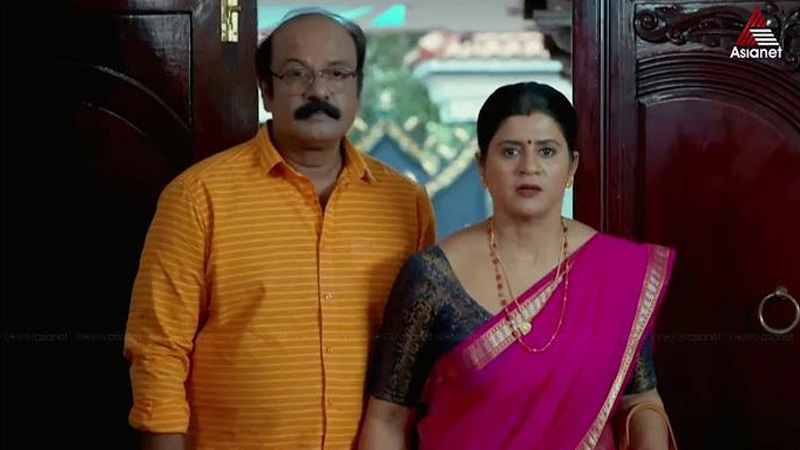
    MUMBAI: When it comes to Malayali entertainment, Asianet isn’t just leading the pack, it’s setting the rhythm of prime time itself. With a commanding 64 per cent share of urban prime-time viewership, nearly two out of every three urban Malayalis now reach for the remote only to land on Asianet. That’s not just a number, it’s a cultural footprint proof that Asianet has cracked the code of storytelling that entertains, inspires, and reflects everyday Kerala life.

    Front and centre in this success story is the juggernaut that is Bigg Boss Season 7. The show alone drives 24 per cent of Asianet’s total viewership, making it the single-largest prime-time engine across Malayalam television. Compared to last season, the current edition has levelled up dramatically weekday audiences are up 14 per cent, while weekends have surged a whopping 23 per cent.

    What explains this pull? A volatile mix of drama, emotional storytelling, and a cast that sparks conversations from dining tables to office chai breaks. Bigg Boss has transformed into more than a TV format, it’s a social ritual that spills into memes, reels, and debates in every Malayali Whatsapp group.

    Reality may be booming, but fiction is hardly lagging behind. Asianet’s weekday line-up continues to hold families glued with stories that echo Malayali life. Chempaneer Poovu, Patharamattu, Pavithram, and Teacheramma remain household favourites, weaving tales of dilemmas, resilience and small triumphs. Meanwhile, newer entrants like Mazhathorum Munpe are steadily winning loyalty, proving Asianet has mastered the delicate balance of nostalgia and novelty.

    Asianet’s power doesn’t stop at serials and reality. The channel has carved a niche with its marquee cultural specials and premieres events that feel less like programming and more like festive gatherings. The nostalgia-packed Maveli Kottaram, the adrenaline-filled star singer special event, and the much-talked-about premiere of Thudarum have created moments that transcend living rooms and bind generations together.

    Since its birth in 1993, Asianet has been more than just a channel. Over 32 years, it has mirrored Malayali aspirations, frustrations, and celebrations, standing by as a cultural companion through shifting eras of broadcast and format. Today, its reach goes beyond Kerala, stretching across the Middle East, Europe, North America, and Southeast Asia, ensuring the global Malayali diaspora feels connected to its roots.

    Even as formats change and new platforms emerge, Asianet continues to feel contemporary while staying rooted in tradition. It remains the gold standard in Malayalam entertainment. a channel that’s less of a broadcaster, more of a family member.

    Because in Kerala, prime time isn’t a slot, it’s Asianet time.

  • Goquest and Rains Pictures spark drama with new Turkish saga Arafta

    Goquest and Rains Pictures spark drama with new Turkish saga Arafta

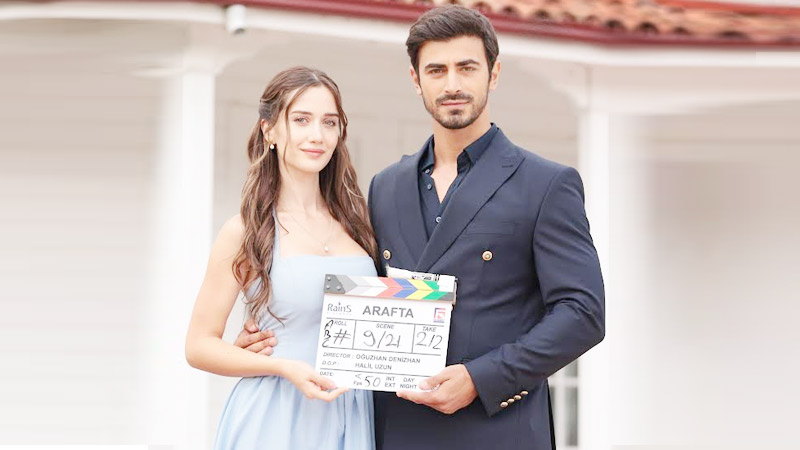
    MUMBAI: When love meets vengeance, sparks aren’t the only things that fly. Fresh off the global success of Kuma (The Other Wife), Goquest Media has greenlit its next premium Turkish drama, Arafta, teaming up with acclaimed production house Rains Pictures for what promises to be one of the most explosive sagas of the year.

    Arafta, derived from “Araf,” meaning a fateful crossroads plunges its characters into a storm of love, betrayal, revenge, and redemption. At its centre is Mercan, played by İlsu Demirci, a young woman battling fate and survival, and Ateş, portrayed by Emin Günenç, whose intensity adds a raw edge to the tale. Their turbulent relationship forms the beating heart of this sweeping generational saga.

    Goquest, already riding high on the acclaim for Kuma and its licensing success, is partnering with Rains Pictures, the studio behind Turkish hits Rüzgarlı Tepe (Winds of Love) and Kan Çiçekleri (Vendetta). Together, they aim to build on Turkey’s soaring global drama wave, where family feuds, star-crossed romances, and high-stakes storytelling have struck a chord with audiences from Latin America to South Asia.

    “After the success of Kuma, Kan Çiçekleri, and Rüzgarlı Tepe, we’re thrilled to join forces with Sevda Kaygısız and Rains Pictures,” said Goquest Media managing director Vivek Lath. “With Arafta, we’re not just telling a story, we’re creating an unforgettable experience for global audiences.”

    For Sevda Kaygısız of Rains Pictures, the collaboration is another step in cementing Turkish dramas’ dominance on the world stage. “This is a story where love, revenge, and destiny intertwine. With Goquest’s reach and our storytelling vision, Arafta will resonate far beyond Turkey,” she noted.

    With Kuma already proving the make-to-sell model works in a crowded content market, Arafta signals Goquest Media’s growing ambition to marry local depth with international scale. The show is set to premiere globally soon, promising to tug at heartstrings and ignite debates in equal measure.