Category: Factual

  • SOM Group soon to launch new “Premium Vodka”, filled with surprises in every sip

    SOM Group soon to launch new “Premium Vodka”, filled with surprises in every sip

    MUMBAI, 26th August, 2013: SOM Distilleries Private Limited (SDPL) from SOM Group, has become a favorite choice among drinkers of all age group when it comes to taste and fine quality alcohol. With the tremendous response and success to ‘Milestone 100 Whisky’, which has now become a favored choice among whisky drinkers, SOM Group is all excited and high spirited to launch their new “Premium Vodka.”

    This New Premium Vodka will soon be launched in Central India (Madhya Pradesh) and North India (Delhi), targeting at the young and young at heart people with the theme of “Stay Naughty”. This Vodka will represent the high end distilled vodka that comes with International standards, refreshing with soul satisfying taste, excellent packaging and will deliver more than its value to its people.

    Mr. Deepak Arora, CEO, SOM Group of Companies, says” With the success of Milestone 100 Whisky, we are overjoyed that people loved our product, with the gained energy and love, we are now all set to offer something more enjoyable to our drinkers, ie we will shortly launch our new “Premium Vodka”. This vodka is made for the people who love to stay young and who enjoy their life at each step. With our new Premium Vodka we wish to offer vodka made from finest ingredients which gives you a smooth and clear luxurious white spirit that will satisfy your spirit.”

    Our Premium Vodka will feature the finest ingredients as it goes through triple distillation through charcoal which enhances the vodka’s high-definition purity and clarity of taste. This Vodka delivers a drink that tastes outstanding – whether enjoyed neat, on the rocks, or in the mix with a favorite cocktail. Our Vodka will provide great taste and pleasure which will make the drinkers to fall in love with it, as it will gratify and fill all their sense with satisfaction and joy. During the consumption of our Premium Vodka, a delivery of a smooth and clear luxurious white spirit will be felt and enjoyed, which is pure and gives experience of rich and quality vodka.

    The packaging of the Vodka will showcase a semi frosted bottle with a very unique shaped glass, which will redefine the whole packing style and will stand out in the Indian market. The packaging will consist of uniqueness and creative design, which will be elegant and appealing. The packaging of the vodka will speak for it self and will attract more drinkers along with nondrinkers who will be attracted by it looks and will love to add it in their showcase collection.

    Our Premium Vodka promises everything that a complete life should have fun, enjoyment, zest and, above all, Naughtiness. It is a pure form of taste and quality, providing great value for money that will content our customer with every sip. It comes with unique positioning and advertising along with unique design promising the call for Stay Naughty, giving the brand a different attitude and a mindset every youngster can identify with.

    It is time to get ourselves ready to explore the new Surprising Premium Vodka which is a complete mixture of pure taste, quality and smoothness, along with extra attractive design which is soon to be the talk of the town.

  • Gulf Oil presents ‘LEADER TALK’ with Sir Vivian Richards and Raghav Bahl

    Gulf Oil presents ‘LEADER TALK’ with Sir Vivian Richards and Raghav Bahl

    New Delhi, 30 July 2013: At a time when India is looking for young and dynamic leadership in all spheres, CNN-IBN, in association with Gulf Oil, brings you LEADER TALK, a unique new talk show that will explore the ever-evolving aspects of leadership, be it in a corporate boardroom or in a sports arena.

    This week on the show, IBN Network Editor-in-Chief Rajdeep Sardesai talks to West Indian cricket legend Sir Vivian Richards and Raghav Bahl, Founder and Editor of Network18. On the show, Sir Richards talks about the challenge of bringing together individuals from different islands and leading them to success, while Raghav Bahl adds that trust and empowerment are the two things that people respond to. Also on the show, Sir Richards reveals that he was inspired by the likes of Nelson Mandela, Desmond Tutu and Fidel Castro, while Raghav talks about the inclusive leadership of Pandit Jawaharlal Nehru.

    The show will be aired on CNN-IBN every Saturday at 12:30 PM, followed by a repeat telecast on the same day at 10:30 PM and on Sunday at 10:00 AM and 7:30 PM.
    More details on this series can be viewed on www.ibnlive.com/leadertalk.

  • Golden era of music comes alive in all its glory on 92.7 Big FM’s new show ‘Suhaana Safar with Annu Kapoor’

    Golden era of music comes alive in all its glory on 92.7 Big FM’s new show ‘Suhaana Safar with Annu Kapoor’

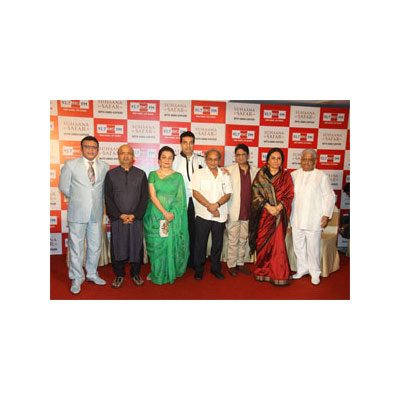
    MUMBAI, June 19, 2013: From foot tapping dance numbers and lyrical love songs to soulful melodies and the finest classical music, the Indian Film industry has given audiences a chance to enjoy some of the most beautiful and critically acclaimed music in over 100 years of existence. And, starting Monday 24th June, 2013, 92.7 BIG FM Mumbai will provide listeners with the opportunity to relive the Golden Era of Indian Cinema with its brand-new show ‘Suhaana Safar with Annu Kapoor’, every Monday to Friday between 10am and 12noon. The show was launched in style as yesteryear’s most revered personalities like actors Asha Parekh, Vidya Sinha and Dheeraj Kumar, music directors Anand-ji and Pyarelal-ji, singer Anwar and lyricist Sameer representing his legendary father Anjaan Sahab, joined actor Annu Kapoor and 92.7 BIG FM’s RJ Anirudh to relive the memories of some of their most celebrated blockbusters. 

    Covering the period between 1955 and 1985, ‘Suhaana Safar with Annu Kapoor’ is a one-of-its-kind radio show that will give 92.7 BIG FM listeners a chance to experience the joys of listening to evergreen songs that have entertained audiences in days gone by. Hosted by the affable Annu Kapoor, ‘Suhaana Safar with Annu Kapoor’ will enable listeners to relive the golden era year-by-year while taking them on an exhilarating journey where the actor will narrate behind-the-scene incidents, interesting facts and trivia about the movies and play the top 12 songs of a particular year.

    While songs from the era are etched in our minds, the stories behind these glorious melodies are relatively unknown. ‘Suhaana Safar with Annu Kapoor’ promises to make your morning drive to work an immensely pleasurable time with evergreen songs and the stories around their making. The romantic, melodious, lyrically charming, meticulously orchestrated and harmoniously sung songs of the golden-era are a treat to the senses and epitomize Hindi film music’s finest period.

    Speaking about radio debut, Annu Kapoor said, “In this new medium of radio, I would like to share my experience with my audience through the tremendous heritage of melodious music from 1955-1985 and untold stories and trivia which I have learnt while working with and interacting with great directors and producers throughout my career of 31 years in the city. This is what I offer to my audience, a pure source of entertainment; and I hope my listeners will appreciate this program, untold stories and melodious music of the Golden Era and I will try my best to entertain everyone.”

    Ashwin Padmanabhan, Business Head, 92.7 BIG FM said, “Hindi songs from the Golden Era of Indian Cinema are timeless musical pieces that hold a special place in the hearts of everyone regardless of their age. Suhaana Safar with Annu Kapoor is our endeavour to present listeners with the perfect aural entertainment experience that takes them on an incredible journey of these evergreen songs peppered with the stories that make them special. Annu Kapoor’s credibility and knowledge of the retro period makes him our most preferred host. The unique content mix provides for multiple opportunities to engage listeners and marketers alike.”

    To ensure maximized reach, the show will be promoted through a multi-media marketing campaign across radio, television, outdoor, on ground and social media.

  • Television Audience Measurement: What next?

    Television Audience Measurement: What next?

    Yesterday, BARC took a decisive step forward. Punit Goenka in his role as Chairman, BARC announced the issuance of a Request for Information or RFI from entities worldwide who might be interested in participating in the forthcoming Request for Proposal stage.

    While the television rating system in India has shown great durability and adaptiveness, the pace of growth and change in the television landscape has consistently outstripped it. BARC is premised on finding and adopting best-in-class tools, technologies and processes that will not just close the gap, but create a constantly evolving and, thus, future ready audience measurement infrastructure.

    Here are the challenges that the new system will be expected to meet and overcome.

    1. Comprehensiveness: Television reaches very nearly two-thirds of all households in India. As economic development continues apace and more people have discretionary income, entertainment and information start assuming increasing prominence in their scheme of things. A cable-connected television is, and will remain, the least expensive single-point source of meeting this need, and new consumers waste little time in acquiring it.

    The household is now exposed to content but also to advertising that becomes a potent driver of new demand for a range of previously unknown products and services. Over the last decade, almost 10 million new households have entered the television footprint every year and the number doesn’t appear to be slowing down yet. A comprehensive measurement system must be able to recognise these burgeoning television households and keep them in the sights of broadcasters, advertisers and advertising agencies.

    2. Accuracy: There has been talk over the years of making broadcasters more accountable for audience deliveries. A number of deals are done on the basis of cost-per-rating-point (CPRP) but broadcasters have, rightly, complained that fair valuation of their inventory would have to be based on cost-per-thousand (CPT) or, as the print media call it, the mille rate. The current system falls some ways short of being able to facilitate the change from CPRP to CPT. Marketeers and broadcasters are looking forward to a system where actual audience deliveries in a defined target audience can be accurately quantified so that accountability for audiences can be fixed and reciprocally paid for.

    3. Adaptiveness: We still talk of single television homes as being the dominant model in India. Apparently, we are oblivious of the emergence of second and third screens that are being used by the younger demographic for consuming what was previously available exclusively on the television in the family room. The emergence of the smartphone and more recently of new devices like tablets (or even more recently, the rather inelegantly named ‘phablets’) has placed new content consumption devices in the hands of millions of young consumers. Content is now available to be consumed not just at a location but while on the move. Just like cellular telephony transformed communication from locational to personal, these screens and a constantly improving wireless broadband infrastructure are transforming television. The imminent arrival of 4G and crashing tablet prices will place highly mobile content consumption devices in millions of hands. The audience measurement system must be able to capture such mobile content consumption and stay adaptive with every future transformation of the television environment.

    4. Auditability: Being owned and managed by BARC, a joint industry body (or JIB in the pro parlance), stakeholders will have audit rights over the system that can ask searching questions about every aspect of the process, thus ensuring its integrity and ethical standards. All the key stakeholders are represented within BARC and this will ensure that the system remains always true, fair and transparent.

    These are not challenges unique to India but are faced universally by every television audience measurement system. Responses to the RFI will unearth a great body of valuable knowledge that the BARC can use to start building a gold standard system in India.

    It is good to finally say this: BARC has BITE.

  • ‘India is among our top 10 markets’ : Discovery Networks International president, CEO Mark Hollinger

    ‘India is among our top 10 markets’ : Discovery Networks International president, CEO Mark Hollinger

    India is one of Discovery‘s key priority markets along with Latin America where there is tremendous scope for pay-TV growth.


    Bullish about digitisation in India, Discovery has plans to expand its portfolio of channels. The latest addition in the menu: Discovery Kids from the second quarter of this calendar year.


    In an interview with Indiantelevision.com‘s Ashwin Pinto, Discovery Networks International president, CEO Mark Hollinger talks about the company‘s growth markets and its expansion plans in India.


    Excerpts:

    How important is India as a growth market for Discovery?
    India is the biggest growth market for us. It is among the top 10 markets globally for us. The combination of the government being very open to international channels, the digitisation process and the great fit between the Discovery brand and the culture of India makes this country a high priority market for us.

    Discovery has launched in many genres. When are you launching the children’s channel?
    We will launch Discovery Kids in the second quarter of this calendar year. The content will be global. We are also looking at local content. As networks grow, we have tended to have locally produced content in the mix. Discovery Kids in Latin America produces some of its own content. In India too time there will be global as well as local content as we go along.

    Is the timing right given that the kids genre is struggling?
    We tend to be long term investors. When we launched a new channel in Spain, people thought that we were crazy as unemployment rate is as as 22 per cent in that country. But we saw that there was an opportunity for us and we went ahead and launched.


    So whether a market is up or down at any point of time doesn‘t matter; there is space for a more education-focussed network like ours. And India, moreover, highly values education. The digitisation process is beginning and is a good opportunity for us. We are not worried about the kids genre business at all.

    Will the education component be your differentiating element?
    Yes! The other kids channels are similar. We are not Scooby Doo. We are about how you do things, when do you do, why you do. It is inquisitive in nature. Education is an important part of society. But at the same time we are not naive to think that it is just going to be education that people will tune into; it has to be entertaining as well. This was the very genesis of Discovery when John Hendricks first started it.


    The channel will have a healthy dose of entertainment and also satisfy the curiosity of viewers in an entertaining way. The good news is that India is a young country. There are millions of kids below the age of 14 and so the market is big.

    ‘Flagship brands have a strong place in the market. We are in a better position to survive audience fragmentation than our rivals‘

    The challenge here is that niche channels have to rely excessively on ad revenue. By when do you see subscription starting to contribute in a serious manner?
    That is a big question in terms of the impact of digitisation on the affiliate revenue stream. If you look at the international portfolio, our channels are weighted towards affiliate. 70 per cent of revenue outside the US is affiliate.


    When we start in a market, there is a 100 per cent affiliate revenue and then we move towards advertising. India obviously is an ad sales market. But it is hard to sit here and say what the affiliate revenue stream is going to be. We can hope that digitisation will affect carriage fees and other things.

    For the digitisation process to succeed in terms of cut off dates being achieved, what needs to happen?
    For the cable operators, it is going to be a giant challenge. If you think just about the logistics it is going to be a huge task – acquiring enough set top boxes, distributing them, getting people to understand what is going on and creating the customer service capability.


    Forget about fancy things like DVRs. Just to get the infrastructure in place is an enormous challenge. Luckily for us, we can watch it from afar. But once it is in place, then there is an opportunity and sort of a challenge for programmers to take advantage of digitisation. We have done it successfully in other markets.

    Do you think that the 30 June deadline will be met for the metros?
    We met some MSOs recently and they are pretty much prepared for it. Moreover, a set top box is not such a novel thing now. There are 25-30 million STBs already in DTH homes. I don’t think that the deadline is a challenge. It will be managed.

    How will digitisation change OneAlliance’s relationship with MSOs?
    This relationship will become stronger. When change happens, there is bound to be some chaos. There will be disturbance and that is the time when if you are part of a strong bouquet, you can navigate through things.


    We have a great team on the ground and great brands. When The OneAlliance was started, there was no digitalisation in India, no DTH. Now that there is DTH, the OneAlliance has only become stronger.

    Will you now make a concerted effort at marketing yourself to Indian consumers so that they choose you?
    This is already happening. On DTH more and more people choose us and the digital ratings of our channels are high. We offer quality content that people globally pay for. In India there is sensational television on other channels that target eyeballs at any cost. But as we move towards a digital environment, we are better prepared with quality content.

    Discovery is in several languages in India. Could you talk about the importance of localisation?
    It is important from a content point of view, from a feed structure point of view and from a language point of view. Discovery is in five languages. We are evaluating other language launch possibilities. Some of the other players have possibly gone a little bit overboard, but we have found that local language results in higher viewership in that region.

    More players are entering the infotainment and lifestyle space in India. Will this cause fragmentation?
    There is fragmentation of viewership happening. We are, however, in a better position to survive audience fragmentation than the other companies.

    Discovery spends $1 billion towards programming. Are content investments going to be affected by the global downturn?
    No! The content that we invest in is evergreen. Moreover, we can ammortise investments across 210 markets due to the nature of our products. A show will have at least a four-year life. This allows for a longer timeline in terms of investing in shows.

    Which are the main focus areas for Discovery?
    India clearly is one focus market. Latin America is also a big priority market for us; there is pay television growth to be had from there. In Brazil pay television was hampered, but now ownership has changed and pay-TV penetration is growing substantially. Poland and Russia are also big growth markets for us.

    What is the big challenge you face this year?
    It differs from market to market. In the US pay TV has a 90 per cent penetration rate. The pay TV growth there will not happen in terms of penetration. So you will see the impact of OTT and if there is enough of an upside to counterbalance any cord cutting, that may happen. Again it is hard to know if Netflix and Amazon will continue to be successful the way they have been. This is not an issue in other markets.


    I would say that the big challenges are the impact generally of broadband or free platforms like DTT on pay television. Can pay TV penetration continue to grow? In some countries, there are regulatory issues. Some markets like Brazil have become more protectionist as of late in terms of local Brazilian content and local channels being required on packages. The availability of alternative platforms is both a big challenge and a big opportunity.

    There has been a certain amount of operational restructuring within Discovery like the removal of the COO position. Is the basic aim to be more cost effective?
    I would say that the changes were more on the US side of the business rather than on the international scene. The international business has remained largely intact in terms of its structure. The changes were made not due to cost reasons. We have an active CEO in David Zaslav. He likes to have as few layers as possible between people who run the US business and himself. The aim is to have a better handle on the business as opposed to saving money.

    Last year you split Europe into two business units. What prompted this move?
    We used to have what I think was a bit of an odd structure. The UK is an entirely separate business. Then all of Europe, Middle East and Africa are another kind of business. UK has a lot in common with the other western European markets – slow pay TV penetration and DTT kind of opportunities.


    Then you have Central, Eastern Europe and the Middle East and Africa which are much more growth markets. There is still expansion to be done. These are more entrepreneurial markets. So we split along the lines of Western Europe as one unit and then Central, Eastern Europe, Middle East and Africa as another unit. We did not add a region. The international business still has four regions. We just restructured Europe to grow Western Europe and put common markets together.

    Could you talk about Discovery‘s strategy to penetrate new markets like Colombia?
    What we tend to do with new markets is to go in first and establish distribution. So we opened new offices in Central and Eastern Europe. We opened a sizeable office in Moscow. We opened other offices in places like Kiev, Almaty and Sofia.


    There is an opportunity in Colombia and it is our fourth biggest market in Latin America. We earlier only used a local representative for ad sales. We opened an office there for the primary purpose of ad sales while offices in Europe were opened for affiliate purposes.

    In Spain you are free to air. Are you expanding your free to air portfolio?
    This expansion has been a Western European phenomenon. In Spain pay TV has been at 30 per cent penetration for the last decade. It hasn’t grown.


    So now in Germany, Spain and in the UK, we have launched free to air channels. They complement the pay business and are not intended to replace it. They have allowed us to grow at a time when the overall Western Europe pay TV business is not growing. This is harder to do in other markets as there is not a big enough digital terrestrial platform or there are ownership restrictions.

    In Korea you did a partnership with CMB. Why?
    Korea is a difficult market to get into and almost impossible without a local partner. Tom (Discovery Asia Pacific MD) did an enormous amount of legwork. He spent a lot of time in Korea. It is a strong economy and very well penetrated from a pay television point of view and from a broadband point of view. So it has always been an important market for us to get into. We had to pick the right partner and have the right kind of structure in place.

    How did the JV with Oprah Winfrey for a channel come about?
    Everybody knew that Oprah would be ending her show and moving to a new business. People in the media industry wondered what that business would be. David Zaslav sold her the idea that her brand and the Discovery brand’s missions were very well suited for each other.


    That is how it happened. We have ambitions for the channel in terms of finding markets internationally for it. Tom is a proponent for markets in the Asia Pacific where he feels that the channel will fare well. Oprah created a lot of buzz when she came down to India. This has also been the case in Australia and in other markets around the region. But we first want it to be well established in the US.

    Discovery bought Betty in the UK, its first such acquisition of a production company. Are you looking at more such acquisitions?
    It is not yet part of Discovery‘s grand strategy to get into production. But we will see whether owning production is a strong addition to our business model or not. But I will not say that we are actively looking at other companies. We will wait and see how the Betty acquisition plays out.

  • BBC Worldwide announces new factual commissions

    MUMBAI: BBC Worldwide Channels has confirmed two new factual titles set to launch internationally this year.

    Originating from Australia, ‘Free Rein‘ and ‘The Kangaroo Gang: Thieves by Appointment‘ come from the production companies Lonely Planet TV, Freehand and The Full Box Productions. They will air locally on UKTV, as well as on international feeds of BBC Knowledge, BBC HD and BBC Entertainment.

    BBC Worldwide Networks and Global iPlayer president Jana Bennett said, “It remains an important part of our strategy to increase our commitment to local commissions. These titles represent a fraction of the rich plethora of stories across our markets just waiting to be told and I‘m delighted that our international audiences will get to experience them through our channels.”

    In Free Rein, a special for BBC Knowledge, film and television actors Bryan Brown and Rachel Ward ‘The Thorn Birds‘ go in search of the spirit of Australia on the ultimate horseback adventure across The Kimberley, the Outback‘s last frontier.

    Although they come from very different backgrounds, two passions that this husband-and-wife team share are a love of horses and a fascination with the true stories of Australian history.
    These are the drivers that set them on a challenging personal journey across the remotest region of the country.

    It will launch internationally on BBC Knowledge this year and also air on BBC HD and BBC Entertainment.

    Executive producer Sue Norton of Lonely Planet TV said, “This is a fantastic project – we‘re heading to Australia‘s wild west and taking a step back in time to give audiences a true grit Lonely Planet experience.”

    The dramatised documentary, ‘The Kangaroo Gang: Thieves‘ by Appointment, will tell the story of the most spectacularly successful shoplifting gang in history. The Kangaroo Gang was a brazen band of Australian thieves who ran riot in London for more than a decade.

    Led by its charismatic ‘King‘ Arthur Delaney, the gang targeted the plush retailers of Knightsbridge and Mayfair, as well as crossing Europe to lay siege to the luxury emporia of Paris, Brussels, Rome and beyond.

    Based on the book King of Thieves by author Adam Shand, The Kangaroo Gang: Thieves by Appointment is produced by The Full Box Productions for UKTV in Australia and BBC Knowledge globally.

    BBC Worldwide Australia‘s Director of Television Deirdre Brennan said, “Free Rein and The Kangaroo Gang: Thieves by Appointment are two superb Australian programmes that will have huge appeal to our local audiences. In Free Rein, we share a remarkable experience with two fascinating Australians as they journey through the breathtaking landscapes of the Outback.

    “And ‘The Kangaroo Gang: Thieves by Appointment‘ is an innovative recreation of a famous chapter in Australian and UK crime history; it will be a world premiere highlight of our cross-channel Crime and Justice event in October.”

    ‘Free Rein‘ and ‘The Kangaroo Gang: Thieves by Appointment‘ are the latest in a slate of new commissions for BBC Worldwide Channels this year. These follow the announcement of Some Say Love, the comedy pilot currently in production by Freehand, and Andy‘s Wild Adventures, a co-commission with the BBC for the international preschool brand, CBeebies.

  • Tricon Films and Television announces multiple factual and lifestyle sales

    MUMBAI: Tricon Films and Television has announced numerous sales from its rapidly expanding factual and lifestyle catalogue including the quirky travel adventure series Life‘s A Trip to Travel Channel Europe Middle East, Africa and Asia.

    The Story of Furious Pete has been sold to VMMA Belgium. This is a documentary on a man’s turn from anorexic to food eating contest devotee Hick Town has gone to Yes DBS Israel. This is a behind the scenes documentary on one of Time Magazine’s top five majors in America.

    Rush: Beyond the Lighted Stage has gone to History Channel Spain, while pop-culture series Ad Persuasion has gone to to Studio U7 Russia.

    The food series Fresh with Anna Olson and DIY building and renovation series House of Bryan has been sold to Digiturk, Turkey.

  • ‘Japan, India & Australia are our biggest markets in the Asia Pacific region’ : Discovery Networks Asia Pacific executive VP, MD Tom Keaveny

    ‘Japan, India & Australia are our biggest markets in the Asia Pacific region’ : Discovery Networks Asia Pacific executive VP, MD Tom Keaveny

    Discovery is upping the ante in India. Leading the infotainment genre, the company has crafted three channel launches in India this year: Discovery Science, Discovery Turbo and Discovery HD. It has also introduced regional feeds for its flagship channel, Discovery.


    While media companies across the world cut down on their costs due to a global economic downturn, Discovery continued with its annual expense of $1 billion on content. The idea: Discovery drives on premium content.


    Japan, India and Australia are Discovery‘s top markets in the Asia Pacific region.


    For expanding in India, Discovery is taking the organic route. Acquisitions are not on the agenda.


    In an interview with Indiantelevision.com‘s Ashwin Pinto, Discovery Networks Asia Pacific executive VP, MD Tom Keaveny talks about the company‘s growth plans in the region.


    Excerpts:
     
     
    Could you give us an overview of the strategy that Discovery has followed to grow the business across the Asia Pacific region over the past couple of years?
    Having local people run local markets is the first thing. I know that this sounds obvious but it is important to have Indians run the business in India. They know what people want, when they watch it and why they do not watch things.


    Secondly, the local people schedule programming on channels according to viewer tastes and feedback; they also do localisation. In India, for instance, we launched feeds for Discovery in Tamil and Telugu this year.


    Then there is content creation. It started a few years ago with The Great Indian Wedding on Discovery Travel and Living (now known as TLC). We also had Shah Rukh Khan Living With A Superstar, which also was a success in Malaysia. We do local content on the basis that it can be used in other markets.


    In the US, there was a certain amount of re-organisation with a clear focus on being more cost efficient. What shape has this taken in the Asia Pacific region?
    We have always been cost efficient. In a recession, you are forced to look at costs but the areas where we carried on investing was content and branding of channels. We spend $1 billion a year on content.


    In India, the recession meant slower growth. Australia was having a mineral boom, and so there was ad sales growth. China grew. Japan has had inherent problems, but so much of our business here is based on distribution revenues that we were less affected.


    What impact did the economic downturn have on your growth trajectory?
    I won‘t say that we were not affected. However, other companies probably cut back more than us. We are seeing the benefits of continuing to invest in content.


    For the second quarter Discovery reported increased ad revenue growth of 38 per cent for its international networks. Does this mean that the difficult economic climate is behind international broadcasters like Discovery or do challenges and difficulties remain?
    Sales is a difficult job. But we have had ratings growth. Some of this ad revenue growth you mentioned has to do with the fact that last year was a lower base.


    Do I think that we have seen the end of the downturn? Well, whatever happens economically, our audiences have grown. We have had a 27 per cent audience growth in India. This has been replicated across other Asian markets.


    How much revenue comes from the Asia Pacific? Which are your top three markets?
    Japan, India, Australia are our biggest markets. Malaysia and Taiwan come next. India is growing at a good rate. However, I cannot tell you how much revenue comes from the Asia Pacific.


    ‘With new channels coming in, you would expect to see cannibalisation. But that has not happened for us. With competition, the profile of the genre has got an uplift‘


    To what extent has Discovery increased the number of feeds over the past year across Asia?
    We have launched more feeds in Australia, Malaysia, Philippines. We are going into more languages. Demand is significant. The assumption is that if you launch more networks, audiences will go down. For us it has been the reverse. The more networks there are, the higher is our viewership.


    Is fragmentation a worry for Discovery with international broadcasters launching channels in the movie, entertainment and infotainment space?
    With new channels coming in, you would expect to see cannibalisation. But that has not happened for us. When we launched Discovery Science and Turbo around the world, we did not see Discovery Channel‘s audience dip. Instead it grew. With competition, the profile of the genre gets an uplift.


    What impact do you see the three new channels having on the Indian infotainment landscape?
    I can‘t think of a market in the world where Discovery Science will be better received. India is a technology hub. It is a young nation and there is a thirst for knowledge. So having a channel dedicated to science makes sense.


    And Discovery Turbo can take encouragement from the fact that the automobile sector is seeing robust growth in India. But I also see it being important as a male lifestyle channel.


    Recent research showed that there is still a degree of uncertainty about the benefits of HD for television viewing. How do you see HD as a value add?
    Our content which includes natural history and wildlife fits into HD very well. We launched Discovery HD in Japan in 2005. It has only been in the past two to three years that other channels started investing in this technology. For us investing in technology is in our DNA. It is part of our psychological profile because it is a brand promise as well.


    We have a future proof library. For example, Shah Rukh Khan Living With A Superstar was filmed in HD. Once viewers see HD, going back is a difficult proposition. But everybody has to work towards it. It cannot be just one or two networks that are doing the heavy lifting.


    Have you done any research among the creme de la creme viewers to find out what they expect from a network like yours?
    There is congruity in terms what viewers to want to watch. Travel and cooking are key genres. Shows that combine these genres like Anthony Bourdain also work well. Grooming shows also work. Shows like Man vs Wild, Deadliest Catch, Mythbusters work globally. At the same time, you do have to take into account local tastes.


    A lot of focus has been given to Animal Planet over the past 18 months. The aim was to make the programming sharper, more edgy. Is this increased investment starting to pay dividends?
    In the digital environment, it has been one of the fastest growing channels. There is a lot of co-viewing happening. We constantly look at the schedule, find out what works and attempt to be contemporary.


    Are you satisfied with the joint venture relationship Discovery has with Multi Screen Media?
    It was the right deal to do at the right time. We have developed and grown our networks. The deal was a gamechanger and formed a template for others to follow.


    How do you get a revenue uplift from India quite in line with the success you have had with the audiences here?
    We have a two-pronged strategy in India. We launch new networks that will rate and grow audiences for us in this market. This is how ad revenue will grow. On the distribution side, there is a tipping point where analogue shuts down. Australia went quickly from analogue to digital. In India, how quick will the transition be? At what point do addressability, cable, DTH, number of channels and package costs come into play? That is something we all are trying to grapple with.

     
    Global media companies are setting up JVs with local companies in India. Is Discovery looking at something like this to grow its business in India?
    JVs are being done now by companies that were maybe 10-15 years late in getting into India. The question is whether they are doing a JV because they want to do it or because they have to. Companies that came into India early like Discovery have done it on their own terms.

    Having said that, there are times when a strategic alliance makes sense. In Japan, for instance, we have a JV with JCom. The Hub, our new channel that is set for launch, is another good fit as it brings together two strong brands in production and distribution.

  • ‘Discovery identifies India as a growth market’ : Discovery Communications India SVP Rahul Johri

    ‘Discovery identifies India as a growth market’ : Discovery Communications India SVP Rahul Johri

    Discovery Communications India is readying for a major expansion to ride on India’s rapidly growing digital pay-TV environment. The roadmap includes the launch of three channels – Discovery Science, Discovery HD and Discovery Turbo.

    The existing three channels – Discovery Channel, Animal Planet and Discovery Travel and Living – have built distinct brand propositions. And as the viewership pattern is shifting particularly in the non-fiction genre, Discovery hopes to capitalise.

    In an interview with Indiantelevision.com’s Ashwin Pinto, Discovery Communications India senior vice president Rahul Johri talks about the company’s growth plans.

    Excerpts:

    Having got the government nod, when are you planning to launch the three new channels?
    We are finalising the launch plans. Discovery Turbo will be India‘s first male lifestyle channel. Discovery Science will be dedicated to make science programming accessible, relevant and entertaining. Discovery HD, on the other hand, offers programming in 1080i with 5.1 surround sound, far superior to both NTSC and PAL. It lends itself perfectly to the type of rich and spectacular images that Discovery is renowned for.

    How are you going to tackle distribution?
    We have planned to launch Discovery Science and Discovery Turbo on both analogue and digital platforms. Discovery HD will be launched on the digital platform.

    Do you see niche channels gain as the digital environment grows?
    We currently have three distinct networks in India, each with immense brand equity. Digital platform, besides offering an enhanced viewing experience and an increased choice to viewers, demonstrates the real value of the brands and their unique propositions. Companies with strong bouquet of channels, be it mass or niche, will certainly stand to gain as the digital penetration goes up in India.

    Do you see the new channels broadening the audience base for infotainment?
    Viewers today are looking for distinct and credible content. We are witnessing a dramatic shift in the viewing patterns in India, especially in the non-fiction genre where our channels dominate.

    Considering that 60 per cent of India‘s population is under 30 years of age, this trend should only get amplified in the coming years. Each of our channels, existing and planned, has a distinct brand proposition and will resonate with viewers, advertisers and affiliates alike.

    There has been a lot of talk about how HD is changing the television viewing experience globally. But at the moment the infrastructure is not there to support this in India. How does this impact the launch plans for Discovery HD?
    India is witnessing a substantial increase in the sale of HD-technology TV sets. With the growth of digital delivery platforms, HD would emerge as a premium offering.

    Besides, we like to be ahead of the curve, be it in our programme offerings or production technologies.
    ‘Viewers today are looking for distinct and credible content. We are witnessing a dramatic shift in the viewing patterns in India, especially in the non-fiction genre where our channels dominate‘

    In terms of revenue where does India stack up vis-a-vis other Asian markets like Singapore, Hong Kong and South Korea?
    India has a considerable viewer and advertiser base and has been identified as a growth market for Discovery.

    Do you expect revenue growth this year given the economic downturn?
    It is my belief that leaders in respective categories will be least affected. Going by the current environment, we would be able to achieve our targets.

    What are the challenges that Discovery and other players in the infotainment space face this year?
    The challenge is to continuously refresh the programming to suit the viewers‘ changing demands. At the same time you have to maintain the brand‘s core propositions.

    Last year Animal Planet re-branded itself globally with a more adult-centric focus. How has this been reflected in India?
    Animal Planet revealed its fresh brand identity last year. Its new show line-up reflects intense drama, rich humour, unexpected choices and wonders of the animal kingdom.

    In order to strengthen its prime time slots, the channel introduced two new programme bands. Masters Of The Jungle at 9 pm takes viewers to meet the most celebrated wildlife experts from around the world who have dedicated their lives to animals.

    The Hunt at 8 pm presents nature‘s predators in their raw and merciless form every night. There has been a ratings increase.

    Has the look and feel been changed to reflect the channel‘s aggression?
    The new logo, communication and content allow viewers an immersive experience. Introducing new time bands, Masters of the Jungle, The Hunt and multiple new titles like Jockeys and Animal Gladiator; the channel today offers a close-up encounter with wildlife.

    What are the major programming properties coming up on the channel?
    From this month, Animal Planet‘s new series, Stranger Among Bears, will reveal the isolated life of a teacher who has received national attention for his unique but controversial relationship with the black grizzly bears for last 20 years.

    We will launch a new series in the Master of the Jungle band – Into The Pride in which the host Dave Salmoni will land himself in the middle of a ride of lions with just a walking stick. In a remarkable story of the bond between man and animal, we will present a reunion between two young men and a 500 pound pet lion in A Lion called Christian.

    Discovery Travel and Living has completed five years in India. What progress has it made in boosting lifestyle programming in the country and serving the SEC A+ demographic?
    Discovery Travel and Living has emerged as the definitive lifestyle channel in India. Surpassing all lifestyle television benchmarks, it has continuously added new genres, bringing the finest experience to its discerning audience. Even this year, it added three new genres – music, dance and relationship.

    On the Indian programming front, it explored unique Indian lifestyle themes – wedding, travel, food, fashion and hotels. It recently premiered a new series with one of India‘s leading columnists and food writer Vir Sanghvi. And in the biggest of all shows, we will present a series on India‘s biggest superstar Shah Rukh Khan, where for the first time ever viewers will be taken into his private and exclusive world.

    Has there been any change in strategy compared to previous years?
    Our focus has been to expand the existing genres like food, travel, fashion and makeover while at the same time adding new genres like music, fitness and relationship. We strengthened our prime time offerings with two strong bands – What A Life at 9 pm and Turn It On at 10 pm. Our efforts to up the weekend offerings with Brunch on Sundays and day time properties like Chew at 1 pm presented good results.

    On the advertising front, are clients more cautious in terms of committing spends?
    We value our advertisers and believe in long term associations. Just like in the past, we will continue to offer higher values to our advertisers.

     

    On the advertising front, are clients more cautious in terms of committing spends?
    We value our advertisers and believe in long term associations. Just like in the past, we will continue to offer higher values to our advertisers.


    Has there been any change in strategy compared to previous years?
    Our focus has been to expand the existing genres like food, travel, fashion and makeover while at the same time adding new genres like music, fitness and relationship. We strengthened our prime time offerings with two strong bands – What A Life at 9 pm and Turn It On at 10 pm. Our efforts to up the weekend offerings with Brunch on Sundays and day time properties like Chew at 1 pm presented good results.

    On the advertising front, are clients more cautious in terms of committing spends?
    We value our advertisers and believe in long term associations. Just like in the past, we will continue to offer higher values to our advertisers.
  • Valentine’s Day ‘Fever’

    MUMBAI: If love makes your world go around then FeVer 104 FM has the perfect gift for you this Valentines Day! Indulge in back-to-back romantic classics that would stir the love bound souls and gives those rosy glasses a view to world of splendor and beauty! As for the anti-valentine singles club, FeVer 104 FM has something in store for those as well.

    The weekend of February 10 & 11, is dedicated by FeVer 104 FM to the singles club. Tune in and vent about all that mush called love. FeVer meets your demands of playing the music that you want to listen to – a strict no entry for all the songs around life, love and the starry skies!

    For the already struck love fools, FeVer presents “Pedro – the love God” who will be your singing telegram on February 14 by coming at your doorstep to sing a dedicated love song to your sweetheart.. What better way to woo that special someone!

    As for the lost in translation or spellbound souls.. do not despair! Tune in and take notes as hot stepper Abhinav tries to woo the pretty and spunky female RJ’s at FeVer, all with a little help from “Pedro – the love God”. To find out if the Abhinav does succeed to win over any RJ, stay tuned only on FeVer 104 FM

    FeVer 104 FM launched in Mumbai in January with its vibrant, youthful, creative and interactive radio programming content believes in just letting the music play! Playing the best quality and maximum quantity music with all the listeners’ favourite contemporary hits in English and Hindi, Fever 104 FM is less talk and more music.