Category: TV Commercial

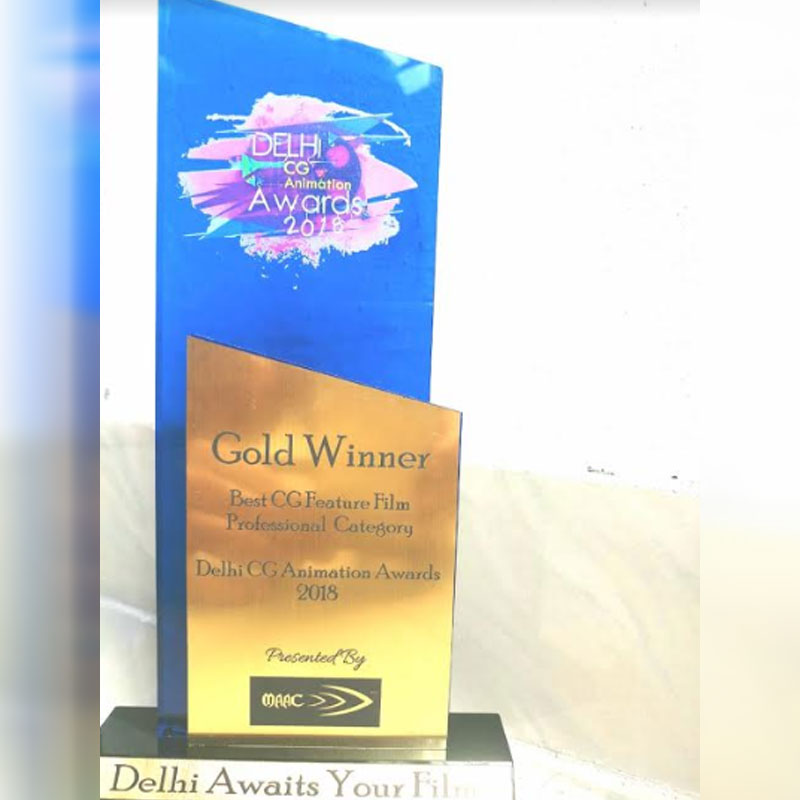
  • Contiloe Pictures adds another feather to their cap after becoming the Gold Winner of the best CG Feature Film at the Delhi CG Animation awards for Mahayoddha Rama movie

    Contiloe Pictures adds another feather to their cap after becoming the Gold Winner of the best CG Feature Film at the Delhi CG Animation awards for Mahayoddha Rama movie

    MUMBAI: Being known as a pioneer in the television industry for their shows and committing to continuously offer a distinctive mix of content and originality, Contiloe Pictures has added yet another feather to its cap after becoming the Gold  Winner of the best CG Feature Film at the Delhi Animation awards for Mahayoddha Rama movie on 22nd June 2018

    The DCG animation is a platform for industry and education in media and entertainment sector. Contiloe Pictures won an award for their Mahayoddha Rama movie, which revolves around the epic story of Mahayoddha Rama – The Great Indian Hero versus Ravana, The greatest villain of Indian mythology, portrayed like never before in an animated movie.

    The movie producer, Abhimanyu Singh’s stronghold and plethora of experience has truly pushed him to turn his passion in the mythological genre into a successful venture and film.

    Contiloe Pictures, CEO,  =Abhimanyu Singh said, “Our first 3D animated movie, magnum opus, ‘Mahayoddha Rama’ bagged Gold under CG Feature Film (Professional Category) at Delhi CG Animation Award 2018. Thank you so much to entire team and our fans. Mahayoddha Rama is unique in its storytelling style. Our humble effort to depict Shri Rama in a new light. The entire story is from Ravana’s point of view with his 10 heads talking to each other.” Our aim as a company is to constantly evolve and grow.We are always trying to diversify our content, take our technology a notch higher. Winning in the best animation category only makes us feel proud and we’d like to thank Delhi CG Animation for this recognition.”

  • TV producer Colosceum’s  new drive

    TV producer Colosceum’s new drive

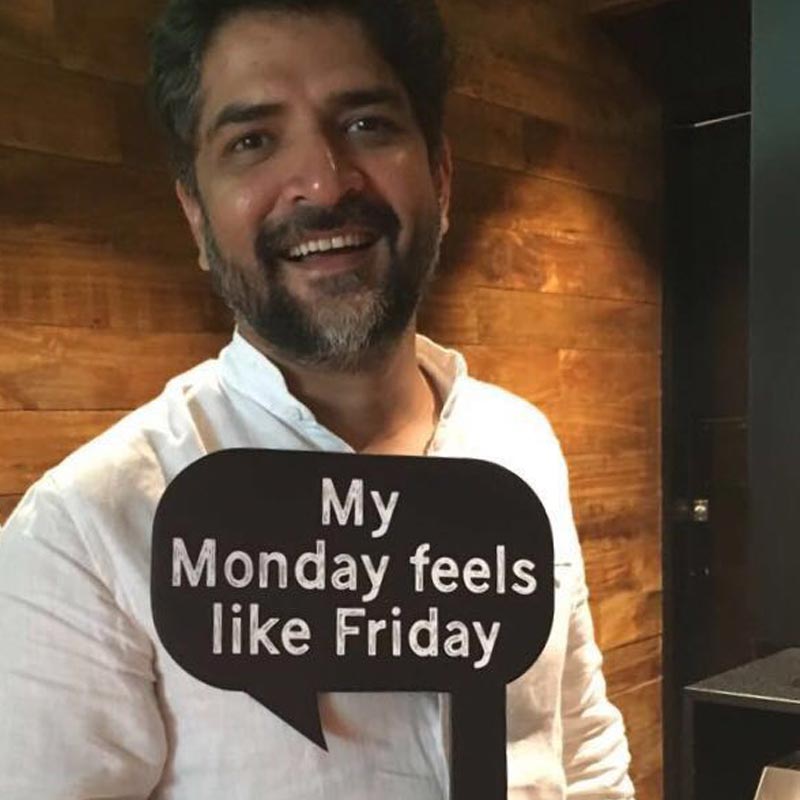
    MUMBAI: Lalit Sharma has one ambition that keeps him up all night, it’s the drive to take his production house Colosceum Media into new vistas. The smiling soft-spoken bearded CEO whose charge has built up its reputation as a top notch producer of non-fiction and reality shows would like to balance out its portfolio by diversifying increasingly into TV dramas and series for Hindi GECs, shows for international TV channels, and digital content.

    For the first, he has a challenge – albeit not un-surmountable – on his hands. For a large part programmers in Hindi GECs are a cautious bunch – they put producers in defined boxes and are loathe to give opportunities to untried and untested producers, even though they have experience in other genres. “Oh! He is into non-fiction; he does not have the requisite fiction production experience,” is oft heard in programming circles in channels.

    The production house has found a way out of this Catch22 situation. Over the years, it has partnered with fiction producers or creators by pumping in funds and looking after the production aspects of each show. For example for its latest endeavor, Dehleez, which came to a close in June 2016, Sharma found a willing listener in Star Content Studios boss Gaurav Banerji who allowed him to partner and co-produce it with Farhan Salaruddin’s Fortune Productions for Star Plus. A romantic courtroom drama it ran for 104 episodes at 10:30 pm, and pulled in consistent ratings for the channel.

    But Lalit wants more of fiction. “We were heartened by the success of Dahleez and would like to produce more shows in the fiction genre. We have a few concepts for which we are currently in conversation with a couple of Hindi GECs,” he says.

    The Rs 45.55 crore (year ended 31 March 2015) turnover TV production studio has made its reputation as the producer of flagship shows such as MTV Roadies, Splitsvilla and Masterchef which are almost iconic. But unknown to many it has almost been churning out ad films, documentaries, regional content and even mythological shows.

    Its ride into television started way back in 2007 when founder Ajit Andhare armed with little but a dream to get into production drew up a business plan and approached TV18 promoter Raghav Bahl and got him to provide him with seed capital. Ajit had little TV production experience. A 10 year veteran of marketing behemoth Hindustan Lever, he had risen up the ranks to become regional brand activation director APAC for its parent Unilever. Through the years, he had worked on brands like Sunsilk Clear, Dove, Lifebuoy, Lux, among many others.

    While at Hindustan Lever, he had creatively brainstormed and conceptualized a concept that would end up on television as a TV show Wheel Smart Srimati on Doordarshan.

    Ajit utilized the seed capital Raghav provided him for his project well. He roped in in Rajiv Lakshman (yes, he of Roadies fame and the other half of the twin brothers) as chief creative officer. He then brought in Lalit, (who had close to nine years experience and was working in Star India as AVP operations) as his COO.

    “Even though Colosceum was funded by Network 18, we were adamant on not making it a network production house, which turned out to be the biggest challenge,” shares Rajiv who has since parted ways from Colosceum, and today runs another outfit with his brother Raghu.

    Team in place, Ajit and Rajiv decided to approach Hindustan Lever with a pitch to produce Wheel Smart Srimati. The well-established Miditech and Endemol Colosceum were also in the running, but finally Levers decided to opt for Colosceum. The production house went on to make a success of it.

    But even then its big challenge was to get a show on private satellite TV. “The break came when we made Splitsvilla for MTV, the first romance reality show,” expresses Sharma.

    And then there was no looking back. Within seven months of inception, Colosceum had five shows on air Wheel Smart Srimati and Duniya on DD, Jai Sri Krishna and Bandhan Saat Janmon Ka (on Colors), and of course Splitsvilla. For its fiction, mythologicals and drama forays, Colosceum partnered with other creative boutiques such as Moti and Meenakshi Sagar, and Shakuntalam Telefilms – a tack it follows to this day.

    But the next big break at the company came when it was commissioned by Star to produce a top global format franchise – Masterchef India for Star Plus. Over the years, other shows followed on which it was a co-producer such as Jamunia and Meera on NDTV Imagine, Shakuntala on Star One, now Like Ok, and Bani Ishq Da Kalma on Colors.

    It was in 2013 when Ajit decided to head out and venture into film making under the banner of Viacom18 Motion Pictures. By then, most of the shareholding was in the hands of private equity funds.

    And the mantle to run the shop fell on Lalit. Rajiv also moved on to his joint venture with twin brother Raghu Ram. “I love experimenting with my career, Colosceum had attained stability and it was time to move on,” says Rajiv.

    Lalit brought in Jayesh Gokulgandhi as CFO, Girish Balan as VP-productions & operations and Kaveri Mehrotra as creative head. Today, a core team of 28 employees is responsible for the 200-250 hours of non-fiction content that it churns out. while the crew is hired according to the projects. The company’s rolls swell depending on the number of projects it has on the floors. For each non- fiction production, it recruits between 200-300 crew and for fiction between 60-100. For shows like Roadies which it has been producing since Season 8, it has partners and line producers nationally and internationally who are available for it on call.

    According to Lalit, the company has an appetite to produce three non-fiction, two or three regional fiction, two to three niche content and three to four fiction shows in the Hindi GEC space annually.

    “We work like a family, the entire team has dedication and passion at its core.” shares Lalit. ”Our co-productions are like collaborations where we come together to create the and produce the show. We have different revenue share models with our co-production partners,” explains Lalit.

    The Colosceum team has got plaudits from all and sundry. Its shows have won awards. But more than that is the praise that its broadcast partners shower on it. Says MTV India creative and content director Deborah Polycarp: “They produce Splitsvilla and Roadies for MTV from season 8 and have proved to be a passionate team. Colosceum puts in determined efforts behind every show that they produce. Evidence of that is the fact that Splitsvilla is amongst the top rated shows.”

    Lalit, on his part, is looking forward to the next season of Roadies which is slated to come on air in January next year.

    And taking Colosceum into the digital content space. Says Lalit: “We are pulling up our sleeves to create some path breaking content online, with the same impact as our shows on television.”

    Adds Kaveri: “We create youth content for any space, be it digital or broadcasting keeping their environment in mind. It has be out of the box and something which will have a creative hook.”

    Additionally, what’s exciting the team is a project, which is being drawn up on for an international broadcaster. “We can’t talk about it right now,” says Lalit. “But it will be a show that will take Colosceum to the next level.”
  • TV producer Colosceum’s  new drive

    TV producer Colosceum’s new drive

    MUMBAI: Lalit Sharma has one ambition that keeps him up all night, it’s the drive to take his production house Colosceum Media into new vistas. The smiling soft-spoken bearded CEO whose charge has built up its reputation as a top notch producer of non-fiction and reality shows would like to balance out its portfolio by diversifying increasingly into TV dramas and series for Hindi GECs, shows for international TV channels, and digital content.

    For the first, he has a challenge – albeit not un-surmountable – on his hands. For a large part programmers in Hindi GECs are a cautious bunch – they put producers in defined boxes and are loathe to give opportunities to untried and untested producers, even though they have experience in other genres. “Oh! He is into non-fiction; he does not have the requisite fiction production experience,” is oft heard in programming circles in channels.

    The production house has found a way out of this Catch22 situation. Over the years, it has partnered with fiction producers or creators by pumping in funds and looking after the production aspects of each show. For example for its latest endeavor, Dehleez, which came to a close in June 2016, Sharma found a willing listener in Star Content Studios boss Gaurav Banerji who allowed him to partner and co-produce it with Farhan Salaruddin’s Fortune Productions for Star Plus. A romantic courtroom drama it ran for 104 episodes at 10:30 pm, and pulled in consistent ratings for the channel.

    But Lalit wants more of fiction. “We were heartened by the success of Dahleez and would like to produce more shows in the fiction genre. We have a few concepts for which we are currently in conversation with a couple of Hindi GECs,” he says.

    The Rs 45.55 crore (year ended 31 March 2015) turnover TV production studio has made its reputation as the producer of flagship shows such as MTV Roadies, Splitsvilla and Masterchef which are almost iconic. But unknown to many it has almost been churning out ad films, documentaries, regional content and even mythological shows.

    Its ride into television started way back in 2007 when founder Ajit Andhare armed with little but a dream to get into production drew up a business plan and approached TV18 promoter Raghav Bahl and got him to provide him with seed capital. Ajit had little TV production experience. A 10 year veteran of marketing behemoth Hindustan Lever, he had risen up the ranks to become regional brand activation director APAC for its parent Unilever. Through the years, he had worked on brands like Sunsilk Clear, Dove, Lifebuoy, Lux, among many others.

    While at Hindustan Lever, he had creatively brainstormed and conceptualized a concept that would end up on television as a TV show Wheel Smart Srimati on Doordarshan.

    Ajit utilized the seed capital Raghav provided him for his project well. He roped in in Rajiv Lakshman (yes, he of Roadies fame and the other half of the twin brothers) as chief creative officer. He then brought in Lalit, (who had close to nine years experience and was working in Star India as AVP operations) as his COO.

    “Even though Colosceum was funded by Network 18, we were adamant on not making it a network production house, which turned out to be the biggest challenge,” shares Rajiv who has since parted ways from Colosceum, and today runs another outfit with his brother Raghu.

    Team in place, Ajit and Rajiv decided to approach Hindustan Lever with a pitch to produce Wheel Smart Srimati. The well-established Miditech and Endemol Colosceum were also in the running, but finally Levers decided to opt for Colosceum. The production house went on to make a success of it.

    But even then its big challenge was to get a show on private satellite TV. “The break came when we made Splitsvilla for MTV, the first romance reality show,” expresses Sharma.

    And then there was no looking back. Within seven months of inception, Colosceum had five shows on air Wheel Smart Srimati and Duniya on DD, Jai Sri Krishna and Bandhan Saat Janmon Ka (on Colors), and of course Splitsvilla. For its fiction, mythologicals and drama forays, Colosceum partnered with other creative boutiques such as Moti and Meenakshi Sagar, and Shakuntalam Telefilms – a tack it follows to this day.

    But the next big break at the company came when it was commissioned by Star to produce a top global format franchise – Masterchef India for Star Plus. Over the years, other shows followed on which it was a co-producer such as Jamunia and Meera on NDTV Imagine, Shakuntala on Star One, now Like Ok, and Bani Ishq Da Kalma on Colors.

    It was in 2013 when Ajit decided to head out and venture into film making under the banner of Viacom18 Motion Pictures. By then, most of the shareholding was in the hands of private equity funds.

    And the mantle to run the shop fell on Lalit. Rajiv also moved on to his joint venture with twin brother Raghu Ram. “I love experimenting with my career, Colosceum had attained stability and it was time to move on,” says Rajiv.

    Lalit brought in Jayesh Gokulgandhi as CFO, Girish Balan as VP-productions & operations and Kaveri Mehrotra as creative head. Today, a core team of 28 employees is responsible for the 200-250 hours of non-fiction content that it churns out. while the crew is hired according to the projects. The company’s rolls swell depending on the number of projects it has on the floors. For each non- fiction production, it recruits between 200-300 crew and for fiction between 60-100. For shows like Roadies which it has been producing since Season 8, it has partners and line producers nationally and internationally who are available for it on call.

    According to Lalit, the company has an appetite to produce three non-fiction, two or three regional fiction, two to three niche content and three to four fiction shows in the Hindi GEC space annually.

    “We work like a family, the entire team has dedication and passion at its core.” shares Lalit. ”Our co-productions are like collaborations where we come together to create the and produce the show. We have different revenue share models with our co-production partners,” explains Lalit.

    The Colosceum team has got plaudits from all and sundry. Its shows have won awards. But more than that is the praise that its broadcast partners shower on it. Says MTV India creative and content director Deborah Polycarp: “They produce Splitsvilla and Roadies for MTV from season 8 and have proved to be a passionate team. Colosceum puts in determined efforts behind every show that they produce. Evidence of that is the fact that Splitsvilla is amongst the top rated shows.”

    Lalit, on his part, is looking forward to the next season of Roadies which is slated to come on air in January next year.

    And taking Colosceum into the digital content space. Says Lalit: “We are pulling up our sleeves to create some path breaking content online, with the same impact as our shows on television.”

    Adds Kaveri: “We create youth content for any space, be it digital or broadcasting keeping their environment in mind. It has be out of the box and something which will have a creative hook.”

    Additionally, what’s exciting the team is a project, which is being drawn up on for an international broadcaster. “We can’t talk about it right now,” says Lalit. “But it will be a show that will take Colosceum to the next level.”

  • Could India be the M&E destination by 2020?

    Could India be the M&E destination by 2020?

    MUMBAI:  It’s a good time to be in India for someone in the media and entertainment industry, be it in print, digital or television, especially for the next five years. As per PwC’s Global Entertainment & Media Outlook 2016-20 report, India will be one of only seven countries to achieve double-digit growth. Could India be a major M&E destination by 2020 because of that?

    The industry is set to surpass USD 40,000 million by 2020 growing at a compounded annual growth rate of 10.3 per cent, whereas the global M and E industry will grow at 4.4 per cent in the next five years, from USD 1.7 trillion in 2015 to USD 2.1 trillion in 2020. Assuming this estimate is correct, Indian media and entertainment industry will contribute almost 2 percent to the global revenues by 2020. A number of international players already have presence in India. The PWC report statistic could entice newer players as well encourage the existing players to take India more seriously with come up with some serious expansion investments.

    “Given India’s overall growth in GDP (Gross Domestic Product) and Per Capita Income (PCI), it is not surprising that India is amongst the top 10 markets for growth in the Sector. Although, in India traditional media like newspaper publishing and cinema, has always shown strong growth, we expect that even in terms of absolute total USD spend, it should get into the top 10 in the early part of the next decade. What would be more interesting, however, is how rapidly India would catch up with global trends, where traditional media is finding it hard to remain relevant, and the digital sector is leading the growth trajectory and consequently bringing in continuous disruptions. That will all depend on how quickly the Indian digital/broadband ecosystem matures, and how the Indian players adapt and drive business models in what would be a rapidly changing environment for consumption of data/content fashioned largely by India’s under 35 population,” shared PwC India Partner & Leader – Entertainment & Media Frank D’Souza.

    With all eyes on India’s smartphone blitzkrieg and internet penetration, recently emerged digital businesses banking on the medium’s growth can expect mobile advertising to grow at a rate of 18.5 per cent CAGR as per the PwC forecast.

    “Paid search Internet advertising revenue will rise to USD 492 million by 2020. Online spend on display ads in India has witnessed strong growth in the historic period and revenue has almost tripled since 2011, reaching USD 200mn in 2015,” the report pointed out.

    Keeping in line with what several industry veterans believe, the digital explosion in the country will only augment the television sector, with digital upgrades focused on the cable and satellite industry.

    “India will be one of only seven countries to achieve double-digit growth over the forecast period at an 11.7% CAGR driven by its television advertising revenues.  This will generate revenue of USD 5.54bn in 2020, compared with USD3.19bn in 2015,” the report read.

    The report also pointed out that with no DTT (Digital Terrestrial Television) launch, TV advertising revenue is driven primarily by the subscription sector. “Multichannel TV advertising revenue reached USD 2.91bn in 2015 and will grow at a 12.1 per cent CAGR to generate revenue of USD 5.13bn in 2020,” report highlighted.

    As far as the publishing industry is concerned, global trends of advertising in the magazine, books and newspaper publishing are at near flat or negative growth trajectory. However, there is still much hope in the industry’s Indian counterpart as Indian publishing remains one of the fastest growing in the world. The growth could be credited to the increasing literacy rates, educational needs, and strong desire to consume news and content in local languages, combined with nascent digital/broadband penetration, that would further fuel the growth and keep it relevant over the 2016-20.  In 2015, the overall publishing revenues were at USD 6133 million, an increase of USD 302 million over 2014 as per the report.

    (Source: Highlights of PwC’s Global Entertainment & Media Outlook 2016-20 released on its website) 

  • Could India be the M&E destination by 2020?

    Could India be the M&E destination by 2020?

    MUMBAI:  It’s a good time to be in India for someone in the media and entertainment industry, be it in print, digital or television, especially for the next five years. As per PwC’s Global Entertainment & Media Outlook 2016-20 report, India will be one of only seven countries to achieve double-digit growth. Could India be a major M&E destination by 2020 because of that?

    The industry is set to surpass USD 40,000 million by 2020 growing at a compounded annual growth rate of 10.3 per cent, whereas the global M and E industry will grow at 4.4 per cent in the next five years, from USD 1.7 trillion in 2015 to USD 2.1 trillion in 2020. Assuming this estimate is correct, Indian media and entertainment industry will contribute almost 2 percent to the global revenues by 2020. A number of international players already have presence in India. The PWC report statistic could entice newer players as well encourage the existing players to take India more seriously with come up with some serious expansion investments.

    “Given India’s overall growth in GDP (Gross Domestic Product) and Per Capita Income (PCI), it is not surprising that India is amongst the top 10 markets for growth in the Sector. Although, in India traditional media like newspaper publishing and cinema, has always shown strong growth, we expect that even in terms of absolute total USD spend, it should get into the top 10 in the early part of the next decade. What would be more interesting, however, is how rapidly India would catch up with global trends, where traditional media is finding it hard to remain relevant, and the digital sector is leading the growth trajectory and consequently bringing in continuous disruptions. That will all depend on how quickly the Indian digital/broadband ecosystem matures, and how the Indian players adapt and drive business models in what would be a rapidly changing environment for consumption of data/content fashioned largely by India’s under 35 population,” shared PwC India Partner & Leader – Entertainment & Media Frank D’Souza.

    With all eyes on India’s smartphone blitzkrieg and internet penetration, recently emerged digital businesses banking on the medium’s growth can expect mobile advertising to grow at a rate of 18.5 per cent CAGR as per the PwC forecast.

    “Paid search Internet advertising revenue will rise to USD 492 million by 2020. Online spend on display ads in India has witnessed strong growth in the historic period and revenue has almost tripled since 2011, reaching USD 200mn in 2015,” the report pointed out.

    Keeping in line with what several industry veterans believe, the digital explosion in the country will only augment the television sector, with digital upgrades focused on the cable and satellite industry.

    “India will be one of only seven countries to achieve double-digit growth over the forecast period at an 11.7% CAGR driven by its television advertising revenues.  This will generate revenue of USD 5.54bn in 2020, compared with USD3.19bn in 2015,” the report read.

    The report also pointed out that with no DTT (Digital Terrestrial Television) launch, TV advertising revenue is driven primarily by the subscription sector. “Multichannel TV advertising revenue reached USD 2.91bn in 2015 and will grow at a 12.1 per cent CAGR to generate revenue of USD 5.13bn in 2020,” report highlighted.

    As far as the publishing industry is concerned, global trends of advertising in the magazine, books and newspaper publishing are at near flat or negative growth trajectory. However, there is still much hope in the industry’s Indian counterpart as Indian publishing remains one of the fastest growing in the world. The growth could be credited to the increasing literacy rates, educational needs, and strong desire to consume news and content in local languages, combined with nascent digital/broadband penetration, that would further fuel the growth and keep it relevant over the 2016-20.  In 2015, the overall publishing revenues were at USD 6133 million, an increase of USD 302 million over 2014 as per the report.

    (Source: Highlights of PwC’s Global Entertainment & Media Outlook 2016-20 released on its website) 

  • FY-16: Higher tax, lesser films release lowers Balaji Telefims revenue, profit

    FY-16: Higher tax, lesser films release lowers Balaji Telefims revenue, profit

    BENGALURU: Balaji Telefilms Limited (Balaji) reported 15.5 percent decline in consolidated total revenue from operations (TIO) for the year ended 31 March 2016 (FY-16, current year). The company’s consolidated profit after tax (PAT) in the current year declined to less than half as compared to the previous year. Balaji attributes the decline in consolidated TIO to release of just one film in the current fiscal as compared to five in the FY-15. Further, the company had to pay more than a five-fold (5.6 times) increase in income tax in the current year as compared to FY-15.

    Balaji’s reported consolidated TIO in FY-16 at Rs 292.76 crore as compared to Rs 342.65 crore in the previous year. PAT in FY-16 was Rs 2.74 crore (1 percent PAT margin) as compared to Rs 5.63 crore (1.6 percent PAT margin) in FY-15. 

    Note: The unit of currency in this report is the Indian rupee – Rs (also conventionally represented by INR). The Indian numbering system or the Vedic numbering system has been used to denote money values. The basic conversion to the international norm would be:
    (a) 100,00,000 = 100 lakh = 10,000,000 = 10 million = 1 crore.
    (b) 10,000 lakh = 100 crore = 1 arab = 1 billion.

    EBIDTA in the current year declined 2 percent to Rs 5.95 crore (2 percent EBIDTA margin) as compared to 6.06 crore (1.7 percent EBIDTA)

    For the quarter ended 31 March 2016 (Q4-16, current quarter), Balaji reported 6 percent year-over-year (y-o-y) growth in consolidated TIO at Rs 83.23 crore as compared to Rs 77.81 crore in Q4-15, and a 12 percent quarter-over-quarter (q-o-q) growth from Rs 73.15 crore in Q3-16.

    Revenue for the quarter from commissioned programs (including Nach Baliye) declined to Rs 55.64 crore as compared to Rs 59.51 crore in Q1-15 and Rs 71.27 crore in the immediate trailing quarter. The company says that the decline in revenues for Q4-16 was due to Meri Aashiqui Tum Se Hi, Itna Karo Na Mujhe Pyaar and Pyar Ko Ho Jane Do going off air during the quarter.

    The company created lesser hours of programming in Q4-16 as compared to during the corresponding year ago quarter and during the immediate trailing quarter. Total programming hours in Q1-16 were 247 as compared to 258 in Q1-15 and 294.5 hours in Q3-16. Net realisation per hour in Q4-16 increased to Rs 22.5 lakh as compared to Rs 22 lakh in Q1-15, but declined when compared to Rs 24.2 lakh in Q3-16.

    Balaji reported a net loss of Rs 13.28 crore in the current quarter as compared to PAT of Rs 9.61 crore in Q1-15 and  PAT of Rs 6.64 crore in Q3-16.


  • FY-16: Higher tax, lesser films release lowers Balaji Telefims revenue, profit

    FY-16: Higher tax, lesser films release lowers Balaji Telefims revenue, profit

    BENGALURU: Balaji Telefilms Limited (Balaji) reported 15.5 percent decline in consolidated total revenue from operations (TIO) for the year ended 31 March 2016 (FY-16, current year). The company’s consolidated profit after tax (PAT) in the current year declined to less than half as compared to the previous year. Balaji attributes the decline in consolidated TIO to release of just one film in the current fiscal as compared to five in the FY-15. Further, the company had to pay more than a five-fold (5.6 times) increase in income tax in the current year as compared to FY-15.

    Balaji’s reported consolidated TIO in FY-16 at Rs 292.76 crore as compared to Rs 342.65 crore in the previous year. PAT in FY-16 was Rs 2.74 crore (1 percent PAT margin) as compared to Rs 5.63 crore (1.6 percent PAT margin) in FY-15. 

    Note: The unit of currency in this report is the Indian rupee – Rs (also conventionally represented by INR). The Indian numbering system or the Vedic numbering system has been used to denote money values. The basic conversion to the international norm would be:
    (a) 100,00,000 = 100 lakh = 10,000,000 = 10 million = 1 crore.
    (b) 10,000 lakh = 100 crore = 1 arab = 1 billion.

    EBIDTA in the current year declined 2 percent to Rs 5.95 crore (2 percent EBIDTA margin) as compared to 6.06 crore (1.7 percent EBIDTA)

    For the quarter ended 31 March 2016 (Q4-16, current quarter), Balaji reported 6 percent year-over-year (y-o-y) growth in consolidated TIO at Rs 83.23 crore as compared to Rs 77.81 crore in Q4-15, and a 12 percent quarter-over-quarter (q-o-q) growth from Rs 73.15 crore in Q3-16.

    Revenue for the quarter from commissioned programs (including Nach Baliye) declined to Rs 55.64 crore as compared to Rs 59.51 crore in Q1-15 and Rs 71.27 crore in the immediate trailing quarter. The company says that the decline in revenues for Q4-16 was due to Meri Aashiqui Tum Se Hi, Itna Karo Na Mujhe Pyaar and Pyar Ko Ho Jane Do going off air during the quarter.

    The company created lesser hours of programming in Q4-16 as compared to during the corresponding year ago quarter and during the immediate trailing quarter. Total programming hours in Q1-16 were 247 as compared to 258 in Q1-15 and 294.5 hours in Q3-16. Net realisation per hour in Q4-16 increased to Rs 22.5 lakh as compared to Rs 22 lakh in Q1-15, but declined when compared to Rs 24.2 lakh in Q3-16.

    Balaji reported a net loss of Rs 13.28 crore in the current quarter as compared to PAT of Rs 9.61 crore in Q1-15 and  PAT of Rs 6.64 crore in Q3-16.


  • Center Fresh’s new ad film created by Soda Films

    Center Fresh’s new ad film created by Soda Films

    MUMBAI: Center Fresh will now be available in a different flavour. The refreshing chewing gum as an natural extension to the brand has launched the Paan flavour. The flagship brand of Perfetti Van Melle India roped in Ogilvy & Mather for the new campaign.

    The Center Fresh Paan campaign devised by Soda Films reaffirms the base brand positioning, while announcing the arrival of the new flavour. Directed by Rajesh Krishnan and produced by Ameya Dahibavkar, the TVC translates into its tagline Zubaan Pe Rakhe Lagaam (Keeps your mouth shut).

    Commenting on the launch, group product manager Chaitanya Shekar said, “Center Fresh and Paan have significant synergies, given their mouth-freshening properties and it was only a matter of time in getting this logical extension on the brand. We are extremely excited about this new launch and we believe this format will open up new avenues for consumption of Paan in a quick and fun way.”

    Giving an insight into the TVC, Ogilvy & Mather national creative director Abhijit Avasthi said, “We have all come across the not-so-pretty sight of people stuffing Paan into their mouth and talking. Half of the time it’s not even clear what they are saying. But they go on, without caring whether the spit is staining their clothes or flying off from their mouth and landing on the other person’s face. We took this insight and crafted a funny ad that showed the consequences a dhobi’s son has to face due to his talking while chewing Paan.”

  • Red Ice Films launches new TVC for Streax Hair Colour

    Red Ice Films launches new TVC for Streax Hair Colour

    MUMBAI: The ad film production house Red Ice Films has launched the latest campaign for Streax hair colour featuring actress Sonakshi Sinha for the first time.

    The campaign conceptualised by Situations Advertising. The ad highlights walnut’s essence in the brand that enhances the natural shine of the hair.

    The TV ad showcases Sinha talking about the product and emphasising how much she trusts on the natural elements for her hair and later on, the actress introduce the brand in the ad.

    Speaking on the campaign, Red Ice Productions creative producer Robby Grewal said, “Being a youth icon, Sonakshi’s presence in the campaign ensures a distinct brand identity and consumer connect to the Streax as a brand. Apart from working with Sonakshi, collaborating with Marco Pinesi an international director, on this project was the icing on the cake. He understood the local nuances well and also gave a global look and feel to the commercial. We were able to work together to give a new dimension to the brand through the TVC. Overall, the whole experience was extremely enriching and hopefully this has reflected itself in a truly memorable commercial for Streax.”

    Situations advertising creative director Samrat Dasgupta said, “With the number of hair colour products increasing with each passing day, the consumer is extremely confused. The need of the hour was a campaign that clears misconceptions and guides the audiences to choose the right hair colour. It was integral that the brand message is communicated by a trusted source, hence we chose Sonakshi Sinha as the youth trusts her.

    Red Ice Films was initiated on 15 August 1999. Red Ice has worked with several brands like Britannia, Coca Cola, Dell, Dabur, Pepsi, Saffola, Slice, Titan, Visa, and Vaseline.

  • Ad film maker Film Farm to foray into feature films post TV success

    Ad film maker Film Farm to foray into feature films post TV success

    Film Farm India, a leading ad-cum-entertainment film production house, is planning to foray into the feature film business after a successful foray into the television production. The firm is already working with top ad agencies including Lowe, JWT, O&M amongst others. The feature film will be an out and out commercial film.
     

    The Economic Times Brand Equity dated 4 June 2003 featured two of the ad film firm’s commercials in a compilation of “three best commercials of the week”. The two commercials that were featured in Brand Equity include “Rasna Juc- Up” directed by Pushpendra Mishra; and “Kissan Mr. Fruit” directed by Navdeep Singh, both a part of the Film Farm team of directors and both produced by Film Farm.
     

    In a double whammy, the company also celebrated the success of the television division’s successful foray into the TV production business at a party held in Mumbai on 6 June 2003. The serial Dil…Na Jaane Kyon on Zee TV – as part of it’s new initiative Chausat Panne – has reached the No. 2 slot in Zee’s Top 10 list just below Astitva Ek Prem Kahani.
     

    While speaking to the indiantelevision.com team, Film Farm India’s managing partner Harsh Dave says: “We are amongst two or three top companies that have adopted a different model – talent kitty within an ad film. We have a panel of young directors who have developed a core competency area of expertise and domain knowledge. The ad film industry is constantly evolving and clients/ad agencies prefer to rope in the younger generation in an attempt to get fresh ideas. The senior team within our group merely nurtures talent and guides them. Our films look much more contemporary and original.”
     

    Film Farm has a team comprising of 32 professionals. Different directors specialize in conceptualizing films related to different themes – be it fashion or food or people. “The younger lot has a lot of fire in their belly, more enthusiasm and have a broader perspective. Also, there is no one-upmanship within the team and everybody contributes in the brainstorm sessions,” Dave adds.
     

    Dave is also not in favour of creatively-oriented people running an ad production house. “We believe that production houses need managers who work out economies of scale and keep the focus on costs and schedules. There has to be a balance – since the business involves both Saraswati and Laxmi. There must be teams that focus purely on business development, others that nurture relationships and the rest who focus on creative aspects.”
     

    In less than five years since its conception Film Farm has done advertising work for companies such as Hindustan Levers, Dabur, Hero Honda, Revlon, MTV, J & J, Marico, Nerolac Paints, Jyoti Laboratories, MRF, Bombay Dyeing, Rasna, V.I.P. to name a few.
     

    “Clients and ad agencies want value and seek a comfort level while working with any ad film maker. The focus is not on cutting costs. After all, at any point of time, an ad film maker makes a Rs 3 million film that will be part of a Rs 30-million media campaign which in turn will decide the fate of a Rs 300-million brand,” adds Dave.
     

    Along with two more in-house and some more freelance directors from advertising fraternity, Film Farm has also produced TV commercials with directors of feature film background like John Mathew Mathan (Denim soap commercial), Mansoor Khan (Nerolac commercial), Pankaj Parasher (Hercules cycles with Akshay Kumar), Kundan Shah , Govind Nihalani and Rituparno Ghosh (Ponds). “We use different directors based on their styles or personality or expertise or even areas of interest,” says Dave.
     

    Besides India, Film Farm has done work for companies in Thailand, U.A.E.,Malaysia, Australia and South Africa working with directors from the same regions. Film Farm has also collaborated in production with U.K. based Academy Films for the prestigious music videos for bands like UB 40, Basement Jaxx.
     

    “We believe in two-way traffic. We have also done line productions and provided value added services to Europe/US firms that want to shoot in India. Through our international affiliations, we have also sourced good directors from a talent pool; got them down to India to shoot some of our campaigns.”
     

    Currently, the production house has an 80:20 mix as far as the ad business and television business is concerned. However, the mix will vary after we foray into the feature film production arena and increase our presence on TV channels,” adds Dave.
     

    Film Farm India is definitely planning to give it’s close competitors Big Brother and MAD a complex!