Category: Production House

  • Balaji Telefilms Q1-2015 PAT triples

    Balaji Telefilms Q1-2015 PAT triples

    MUMBAI: Balaji Telefilms Limited (Balaji) reported triple the (2.9 times) consolidated PAT at Rs 10.56 crore in the quarter ended June 2014 (Q1-2015) as compared to Rs 3.62 crore during the previous quarter ended June 2013 (Q1-2014) and versus loss of Rs 27.36 crore in the preceding quarter ending March 2014 (Q4-2014).


    Consolidated PAT expanded on the steep increase in revenue from operations which rose 61 per cent to Rs 135.34 crore against Rs 84.03 crore in Q1-2014, and was almost same as revenue from operations in the preceding quarter Q4-2014.


    Three major segments contribute to Balaji’s revenue – Commissioned Programmes, Sponsored Programmes and Films. While the revenue from films for the company stood at Rs 89.33 crore, 44 per cent more than Rs 61.65 crore in Q1-2014, the revenue from commissioned programmes was Rs 46 crore in Q1-2015 as against Rs 22.77 crore in Q1-2014 and Rs 39.86 crore in Q4-2014. The profit made by the film segment was 23 per cent down to Rs 26.06 crores y-o-y.


    Revenue from Sponsored Programs in Q1-2015 was nil.


    EBITDA for the company was in positive at Rs 14.71 crore as against negative in the preceding quarter (Q4-2014) at Rs 5.01 crore.


     Let us look at the other numbers reported by the company.


    The company’s total expenditure rose 35 per cent in Q1-2015 to Rs 123.49 crore as compared to Rs 91.33 crore in Q1-2014 and 13 per cent as against Rs 109 crore in Q4-2014.


    Cost of production/acquisition and telecast fees contribute 44 per cent to the Balaji’s total expense, while marketing and distribution expense was 14 per cent of the total expenditure. The Cost of production/acquisition and telecast fees fell 19 per cent to Rs 55.49 crore in Q1-2015 versus Rs 69.26 crore in Q1-2014 and Rs 52.73 in Q4-2014.


    Balaji’s expenditure for marketing and distribution fell 27 per cent in Q1-2015 to Rs 18.07 crore as against Rs 24.96 crore in Q1-2014 and Rs 20.30 crore in Q4-2014


    Finance costs for Q1-2015 have been drastically reduced by the company to Rs 0.02 cr as compared to Rs 1.37 crore last quarter (Q4-2014)

     
    Let us look at Balaji’s subsidiary companies.


    Balaji Motion Pictures Limited (BMPL), a subsidiary of Balaji posted a profit growth of 147 per cent at Rs 8.84 crore versus Rs 3.57 crore in Q1-2014. Revenue for BMPL stood at Rs 89.39 crore, 44 per cent more than Rs 61.66 crore


    BMPL released three movies in the current quarter, among which ‘Ek Villain’ crossed the 100 crore mark.


    Bolt Media Limited (BML), another subsidiary of Balaji, reported a loss of Rs 0.25 crore versus loss of Rs 0.22 crore in Q1-2014. Revenue of the company increased to Rs 2.5 crore from Rs 0.83 crore in Q1-2015.


    Cost of Production/Acquisition and Telecast Fees for BMPL and BML was at Rs 74.88 crore and Rs 2.45 crore respectively in Q1-2015.


    BML is commissioning serials such as “Dharma-Kshetra” (26 episodes) and “Rakht” (10 episodes) for EPIC Television Networks Private Limited (Expected launch by Q2 of FY15).


    Click for financial release

    Click for investors report

  • Software segment leads Mukta Arts to loss in Q1-2015

    Software segment leads Mukta Arts to loss in Q1-2015

    MUMBAI: Mukta Arts reported standalone net loss of Rs 24.62 crore in the quarter ended June 2014 (Q1-2015) as against net profit of Rs 0.74 crore during the previous quarter ended June 2013 (Q1-2014) and loss of Rs 3.35 crore in the quarter ended March 2014.


    Q1-2015 saw the loss in the software segment of the company of Rs 25 crore. While Q4-2014 also saw a loss of Rs 2.69 crore in the segment, the segment had shown a profit in Q1-2014 of Rs 0.69 crore.


    As net sales of the company declined 66.89 per cent to Rs 23.09 crore in Q1-2015 as compared to Rs 69.73 crore during Q1-2014 and fell 57 per cent against Rs 53.95 crore in Q4-2014, the revenue for the software division contracted 67 per cent in Q1-2015 to Rs 16.75 crore versus Rs 51 crore in Q4-2014 and was 75 per cent lower than Rs 65.92 crore in Q1-2015.


    The total income from operations (net) for Q1-2015 fell 65 per cent to Rs 24.95 crore versus Rs 71.44 crore in Q1-2014 and was 56.3per cent lower than Rs 57.1 crore in Q4-2014.


    The company reported a 29.3 per cent fall in total expenditure to Rs 49.73 crore as against the total expenditure for Q1-2014 which was Rs 70.34 crore and 17 per cent lower than the total expenditure for Q4-2014. Mukta Arts paid Rs 23.06 crore as producers and distributors cost in Q1-2015


    The company reported 49 per cent increase in finance costs in Q1-2015 versus Rs 1.32 crore in Q1-2014.


    Click here for the financial

  • Fox: Filmed Entertainment, Cable Network shine, Television segments dull Q4 results

    Fox: Filmed Entertainment, Cable Network shine, Television segments dull Q4 results

    BENGALURU: Twenty-First Century Fox, Inc. (Fox, the company) reported financial results for the three months (Q4-2014, current quarter) and full year ended 30 June 2014 (FY-2014). While the company’s Television and Direct Broadcast Satellite Television (DBST) segments reported lower y-o-y Q4-2014 operating income before depreciation and amortization (OIBDA) in Q4-2014, its Cable Networking Programming (CNP) and Filmed Entertainment (FE) segment’s OIBDA grew. For FY-2014, all the segments reported revenue and OIBDA growth.


    Fox reported 16.8 per cent growth in overall revenue in Q4-2014 at $8424 million as compared to the $7212 million in Q4-2013 (quarter ended 30 June 2013 or year ago quarter). The company’s OIBDA for Q4-2014 at $1766 million was 18.7 per cent more than the $1488 million in Q4-2013.


    For FY-2014, the company reported 15.1 per cent growth in overall revenue to $31867 million from $27675 in FY-2013 (year ended 30 June 2013). OIBDA for FY-2014 at $6715 million was 7.3 per cent more than the $6261 in FY-2013.


    Let us look at the segment results reported by the company for Q4-2014 and FY-2014


    Cable Network Programming


    Fox’s CNP segment reported 13.3 per cent higher revenue in Q4-2014 at $3347 million (39.7 per cent of all revenue) as compared to the $2953 million (40.9 per cent of all revenue) reported for the year ago quarter. Q4-2014 OIBDA at $1202 million (68.1 per cent of all OIBDA) was 11.4 per cent higher than the $1079 million (72.5 per cent of all OIBDA) reported for Q4-2013.


    For FY-2014, CNP segment reported 12.8 per cent growth in revenue to $12273 million (38.5 per cent of all revenue) from $10881 million (39.3 per cent of all revenue). OIBDA for FY-2014 at $4407 million (65.6 per cent of all OIBDA) grew 5.5 per cent from $4177 million (66.7 per cent of all OIBDA).


    Fox says that this segment’s Q4-2014 OIBDA increase was driven by a 13 per cent revenue increase led by continued affiliate revenue growth. The revenue improvement was partially offset by a 14 per cent increase in expenses, approximately a third of which reflects the planned investments related to the launches of new channels, including Fox Sports 1, Star Sports and FXX, and the consolidation of the Yes Network.


    Full year CNP annual segment OIBDA increase was driven by a 13 per cent revenue increase led by continued affiliate revenue growth. The revenue improvement was partially offset by a 17per cent increase in expenses, almost half of which reflects the planned investments related to the launches of new channels and the impact of the consolidation of recently acquired ownership stakes in the Yes Network, ESS, Eredivisie Media & Marketing CV (EMM) and Sports Time Ohio.  


    The company says that segment OIBDA growth was also adversely impacted by 3 per cent from foreign exchange rate fluctuations, primarily in Latin America and India during Q4-2014 as well as FY-2014.


    Television


    Fox’s Television segment reported lower revenue as well as OIBDA for Q4-2014 as increased retransmission consent revenues were more than offset by lower advertising revenues. Quarterly advertising  revenues declined 11 per cent from the corresponding period of the prior year driven by the impact of lower general entertainment  ratings, led by declines at American Idol says the company.


    For Q4-2014, the Television segment reported 5.9 per cent lower revenue at $1031 million (12.2 per cent of all revenue) as compared to the $1096 million (15.2 per cent of all revenue) in Q4-2013. The segment’s Q4-2014 OIBDA at $145 million (8.2 per cent of all OIBDA) was 31.9 per cent lower than the $213 million (14.3 per cent of all OIBDA).


    In FY-2014, Fox’s Television segment reported 9 per cent higher revenue at $5296 million (16.6 per cent of all revenue) as compared to the $4860 million (17.6 per cent of all revenue). The segment’s OIBDA for FY-2014 at $882 million (13.1 per cent of all OIBDA) was 3.2 per cent higher than the $855 million (13.7 per cent of all OIBDA) in FY-2013.


    Fox says that this increase was driven by continued retransmission consent revenue growth and contributions from the broadcast of Super Bowl XLVIII partially offset by the impact of lower primetime general entertainment ratings led by declines at American Idol and X-Factor and higher programming costs. Advertising revenues increased 5 per cent from the prior year driven by the broadcast of Super Bowl XLVIII and higher rates and ratings for the National Football League and Major League Baseball playoffs, substantially offset by the impact from lower general entertainment ratings.


    Filmed Entertainment


    The Filmed Entertainment (FE) segment reported 37.7 per cent growth in revenue in Q4-2014 at $2803 million (33.3 per cent of all revenue) as compared to the $2035 million (28.2 per cent of all revenue) in Q4-2013.


    FE reported Q4-2014 segment OIBDA of $339 million (19.2 per cent of all OIBDA), nearly triple (2.9 times) the $117 million (7.9 per cent of all OIBDA) reported in the same period a year-ago, driven by a $768 million or 37.7 per cent revenue increase. The company says that this growth was led by several successful worldwide theatrical releases in the quarter including X-Men: Days of Future Past, which has grossed $740 million in worldwide box office to date, Rio 2, which has grossed over $90 million in worldwide box office to date, and The Fault in Our Stars, which has grossed over $260 million in worldwide box office to date. As a result of the successful releases, the company claims that the film studio became the first to cross the $3 billion mark in worldwide box office this year. Quarterly results also reflect higher contribution from the television production businesses led by the syndication of Modern Family and the delivery of a new season of 24 adds to the company.


    For FY-2014, FE revenue at $9679 million (30.4 per cent of all revenue) increased 12 per cent from $8642 million (31.2 per cent of all revenue) in FY-2013.Full year FE segment OIBDA of $1358 billion (20.2 per cent of all OIBDA) increased $50 million or 3.8 per cent over prior year amounts. The company says that the annual results reflect higher contributions from the television production businesses led by higher SVOD revenues, including the sale of series to Amazon, and the syndication of Modern Family. This growth was partially offset by difficult comparisons to the successful worldwide theatrical performance of Ice Age: Continental Drift in the prior year.


    Direct Broadcast Satellite Television (DBST)


    Fox’s DBST segment reported 15.5 per cent growth in Q4-2014 revenue to $1593 million (18.9 per cent of all revenue) from $1379 million (19.1 per cent of all revenue).


    DBST generated quarterly segment OIBDA of $146million (8.3 per cent of all OIBDA) compared with the $156 million (10.5 per cent of all OIBDA) reported in the same period a year ago.


    The company says that the $214 million or 15.5 per cent increase in revenue underpinned by sustained Sky Deutschland subscriber growth was more than offset by higher sports programming costs including Sky Italia’s broadcast of the FIFA World Cup and Sky Deutschland’s exclusive broadcast of Bundesliga soccer. Sky Deutschland grew net direct subscribers by approximately 82,000 during the quarter, bringing total direct subscribers to 3.81 million, while Sky Italia’s subscriber base declined by 25,000 during the quarter bringing total subscribers to 4.73 million.


    For FY-2014, the DBST segment’s revenue at $6030 million (18.9 per cent of all revenue) was 35.8 per cent more than the $4439 million (16 per cent of all revenue) in FY-2013. DBST generated annual segment OIBDA of $424 million (6.3 per cent of all OIBDA), a $27 million or 6.8 per cent increase over the prior year driven by higher contributions from Sky Italia resulting from cost reduction efforts. Annual segment revenues increased principally reflecting the full year consolidation of Sky Deutschland revenues versus the consolidation of six-months of Sky Deutschland revenues in the prior year. This revenue increase was offset by the full year consolidation of Sky Deutschland costs, including costs related to its exclusive broadcast of Bundesliga soccer.


    BskyB and other affiliates


    Quarterly equity earnings from affiliates were $192 million as compared to with $223 million in Q4-2013. Annual earnings from affiliates were $622 million as compared to the $655 million in FY-2014. The decreased contributions from affiliates mainly reflect lower contributions from BskyB, says the company.


    Commenting on the results, 21st Century Fox chairman and CEO Rupert Murdoch said: “In the fiscal fourth quarter we built on our operational momentum with double-digit earnings and revenue gains. The Company’s strong financial performance was driven by sustained affiliate revenue increases at our cable networks and record fourth quarter contributions at our filmed entertainment segment on the strength of global box office successes XMen: Days of Future Past, Rio 2 and The Fault In Our Stars. As we close the fiscal year, I continue to have confidence in our ability to execute our growth plan and drive value for our shareholders. Our new $6 billion share buyback programme, to be executed over the next 12 months, further underscores our disciplined approach to increasing shareholder value.”


    Click here to read the full earnings report

  • Fremantlemedia International completes major content deal with Foxtel

    Fremantlemedia International completes major content deal with Foxtel

    MUMBAI: FremantleMedia International (FMI) today announces a colossal distribution deal with Foxtel Australia. The multi-genre package deal will see Foxtel acquire over 450 hours of FMI content for its Bio, History, CI, Lifestyle and Arena channels.

    From FMI’s world-class catalogue, Foxtel have acquired a mix of factual content, including the first two seasons of the Ovation Studios production, The Art Of (26 x 30’), which explores creative art forms that fall outside the traditional definition of “art” such as tattoos, sushi and mixology. Other FMI factual titles acquired by Foxtel include the first two seasons of Morgan Spurlock’s A Day in the Life (16 x 30’), which gives a fascinating and exclusive look into 16 very different lives including that of Sir Richard Branson and will.i.am; seasons one and two of Fatal Attraction (33 x 60’) featuring real-life stories of dangerous romances; and Moguls and Movie Stars: A History of Hollywood (7 x 60’) which offers a rare look at the American film industry. Foxtel also renewed its TV rights for Russia’s War: Blood Upon the Snow (10 x 60’), Egypt Unwrapped (8 x 60’), and Secrets of War (13 x 60’).

    The package to Foxtel also includes a variety of premium lifestyle titles such as the second season of the Fresh One produced Jamie & Jimmy’s Food Fight Club (4 x 60’). The series features the return of childhood friends Jamie Oliver and Jimmy Doherty, as they embark on another culinary adventure. Other renewals of additional Jamie Oliver programming include Jamie’s 30 Minute Meals (40 x 30’) and Jamie’s Food Escapes (6 x 60’). Foxtel will also premiere the latest season of the long-running property series Escape to the Country season 21 (72 x 60’) and the UK version of Grand Designs season 12 (11 x 60’), both produced by Boundless (part of FremantleMedia UK).

    Fashion is right on trend as Foxtel adds the new entertainment competition Project Runway: Under the Gunn (13 x 60’) to its line-up. Hosted by America’s favourite mentor, Tim Gunn, the series features Project Runway alumni Mondo Guerra, Anya Ayoung-Chee and Nick Verreos, as they try to prove that they have the vision and business intelligence to manage multiple personalities and design visionaries as they mentor 15 new up-and-coming designers. Foxtel will also take the latest season of the Emmy® nominated Project Runway (13 x 60’) as it returns with an all new group of aspiring designers. Each will have to make a lasting impression on judges Heidi Klum, Nina Garcia and Zac Posen, and mentor Tim Gunn in order to advance to the next level.

    As part of the distribution deal, Foxtel has renewed its TV rights for the New Zealand prime-time soap drama Shortland Street (260 x 30’). The serial medical drama is set in the high-pressure environment of an inner city district hospital, and follows the day to day romances and professional dilemmas of a team of caring professionals, committed to their patients, and to each other.

    Paul Ridley, SEVP Sales & Distribution, Asia Pacific, FremantleMedia International said, “We have a long-standing, established relationship with Foxtel and are beyond pleased to be continuing our partnership with this new deal. The number of hours of content taken highlights the quality of programming that sits within the FMI catalogue.”

    Foxtel General Manager of Acquisitions, Fleur Fahey said: “This diverse range of popular series and programs are a great fit for our lifestyle, factual and general entertainment channels. Our continued strong relationship with FremantleMedia International gives us access to a fantastic line-up of quality content for our subscribers.”

  • Raghu-Rajiv and Ravi Luthria team up for new venture ‘Monozygotic’

    Raghu-Rajiv and Ravi Luthria team up for new venture ‘Monozygotic’

    MUMBAI: Days after Rajiv Lakshman quit his as COO of Coloscem, he has announced a new venture with his twin brother Raghu Ram. The duo has come together with Ravi Luthra, a marketing veteran to start a new content and communications hub – Monozygotic. This new startup will mainly focus on content creation across various avenues of media from TV to digital to on-ground.


    Speaking about their new venture, Monozygotic co founder and managing zygote Rajiv said, “There has been a tectonic shift in the consumption of media in the past decade and it is critical for any brand manager to not only figure the right media mix but also the right communication for a specific media. This is where Monozygotic steps in with our cumulative experience in building enduring, genre defining brands like Roadies, Splitsvilla and Masterchef India”.


    “We have had the opportunity of multifunctional experience in content, both behind the scenes and facing the camera. The experience has helped us not only to understand the business of content but has also to develop a deep insight into audience psyche. I believe Monozygotic will be able to bridge the need gap, catering to audience and advertisers with equal ease. We have been contemplating this venture for a while now. I view Monozygotic as a natural progression in our respective careers”, added Monozygotic co founder and managing zygote Raghu.


    While majority of people know them as the face of the cult show Roadies, the dynamic duo Raghu Ram and Rajiv Lakshman, with experience of more than two decades have also been responsible for creating a number of other enduring, genre defining television shows such as Splitsvilla and instrumental in the launch and success of Masterchef India. They have also broken new ground in the digital content space with Roadies Battleground and Jack & Jones Hitched. Ravi Luthra, with 15 years experience, has also made a mark in the industry with companies like Marico Industries, Visa, Star TV, MTV and Sony Entertainment Television among others.


     “The twins are masters at content creation and community building. Monozygotic aims to create clutter-breaking content catering to a wide array of audiences and marketers. The duo has a keen understanding of the audience which we plan to leverage with a focus on new media, the future of content consumption.  Unfortunately, a huge gap exists in this space in the connect between brands and consumers. Herein lies a great opportunity to create innovative and customised market driven content that is both sharable and sustainable” said Monozygotic chief executive zygote Ravi Luthria.


    Monozygotic has already started working with some established brands on new, exciting projects.

  • We will look for international, local collaborations and diversifications: Sameer Nair

    We will look for international, local collaborations and diversifications: Sameer Nair

    I had never gone away”, says the man who is credited with bringing KBC and K shows to the Indian television screens. Sameer Nair, after a hiatus of three years, is back at doing what he does best. He has been busy exploring opportunities in online video, e-commerce, film & television production, education, hospitality and of course, helped the newest entrant, AAP, into Indian politics.


    A maverick as many call him goes by the philosophy – communicate clearly, be polite, be persuasive, sweat the detail, seize the moment and create not compete for what is already created.


    As the new group CEO at the country’s biggest production house, Balaji Telefilms, he will work closely with Shobha and Ekta Kapoor to take it to the next level.


    Indiantelevision.com’s Meghna Sharma caught up with him to know about his views on today’s audiences, their taste, Balaji’s success in gripping the viewers’ pulse and its future plans.


    Excerpts…


    You had the genius to select the content which caught the pulse of the viewers. How has that evolved? How do you keep abreast with the change in taste?


    Television is dynamic. When we did ‘KBC’ and ‘Kyunki saas bhi kabhi bahu thi’ which went on air on the same night, quickly followed by ‘Kahani ghar ghar kii’ and ‘Kasauti zindagi kay’, it used to be half an hour weekly programming on three main channels – Star Plus, Zee and Sony. This gave viewers 90 choices to pick from. At Star our big strategy was to channel this to daily and changed the whole schedule, reducing the primetime viewing choice to five. Which others followed and continues to be even done today. It was a new concept then and people liked it. With Imagine, we got mythology into primetime which can be seen today as well.


    In the last 22 years of Indian television, we have had a full generation of television – executive, creatives. When I started of in 1993, we were the pioneers then, and had only the legacy of Doordarshan (DD) to look back at whereas today’s generation has 22 years of television to study. So, in the last 20 years, there has been a lot of process especially in consumer taste because the country has progressed. Today we have 150 million television homes, 800 million mobile phones, internet, disposable income has increased and content has kept in pace with it because of the new talent entering the space. For instance, Colors has had wonderful success, Sab has created a special niche for itself and done remarkably well, production houses are doing well and coming up with shows like ‘24’ and ‘Yudh’.


    Content has evolved and so have the people.


    Channels do a lot of research, but what I feel is that research can only prevent you from doing a mistake. It can tell you what not to do and not what to do. Finally, what has to be done is done with meticulous details, creativity and the way a story is told. For instance, ‘kyunki…’ as a daily show was a good idea strategically, but people remember the story of Tulsi in the big Virani family. It is all about great stories, well told.


    What is your role as group CEO?


    Balaji is in a very good place and we have had a successful run of films as well as shows. I was doing a count and Balaji has 15 of the top 50 shows currently on the Indian television screens. There are a very few listed industries in this space and it is one of them.


    And in the past six months we have been discussing the growth plans and one of the main take outs of those meetings has been that we should scale up the company. So, now Balaji will do more movies, more television, we will look for international as well as local collaborations and look for diversifications.


    I have really come here to work with Shobha and Ekta Kapoor to do that.


    Which verticals are you looking at for collaborations?


    Could be movies, shows, formats or just partnering with an international company on specific projects. If there is a format company looking to set up a shop here in India or wants to do catalogue shows here then that could be an opportunity we would be looking at.


    Between Ekta, Shobha and you, how are the roles divided?


    Ekta is creative and she is great at that. Mrs Kapoor has been the operational backbone of the company, so I will work closely with her. And also with Ekta. The main aim here is to work together and look for growth opportunities.  


    What in your assessment are Balaji’s strengths and weaknesses? And what are its opportunities?


    Balaji has a very good team and they have produced some incredible work. So, if there has to be a weakness then it is to have craft a strategic plan and then execute it. At its current stage, the Indian television industry is at its best and has no weaknesses. But of course, one can always do better and look at different genres, show etc. But, I wouldn’t say that these are weaknesses but are opportunities.


    As for the strengths, they are very strong on creative, production and have the ability to deliver. The talent in Balaji is phenomenal and there is a lot of ambition.  


    What is Balaji’s USP- is it talent, creativity or the ability to know what viewers want?


    The USP is the storytelling. Ekta’s way of telling a story is what sets her apart from the others. The market is crowded and a lot of others are also doing a great job. It is not a monopolistic market. But Balaji is special.


    A lot of famous faces have come from Balaji’s house. How is the talent management arm, Spark, doing?


    I haven’t taken a look at it yet, but will soon do. I want to do some reorganisation with that arm. We at Balaji want to manage the talent in the country and look at growing more talent.


    Lately, we have seen channels experimenting with finite shows. According to you, what is its future in India?


    The market is already segmenting. There is a segment which will continue to watch the dailies and then there is another who will consume mythology and historical shows. But there is and will grow into a bigger section of audience which is interested in finite shows. So, there will be two distinctive audiences – you and your mother.


    Niche is always more valuable. And with digitisation it will benefit the industry and the viewer as one can choose to pay for a channel showcasing only hi-end products. As this group grows, it becomes a business model.


    The market is moving that ways and we are the market leaders.


    Globally, there are firms like Shine, BBC, Fremantle who have spread their wings internationally. Do you think Balaji can be India’s Shine?


    A lot of global companies which have come to India and come with their format catalogue which they are selling in India tend to be in reality and game show space. But we haven’t seen any international firm making any head way in the fiction space. The same thing applies on reverse basis. The west has been more advanced than India when it comes to television. The formats have done well there and since they are universal, they can travel across the globe.


    What Balaji will look to do is to partner with them. The future of this business is creative collaboration rather than destructive competition. We are looking at more people to work for.


    And we have already had a few offers to co-produce international movies into Hindi with a foreign partner. Maybe, later we could do shows as well and who knows set up a collaborated company in the future.


    Earlier there was Balaji and Balaji alone, apart from UTV. But today we have Beyond Dreams, Director’s Kut, Swastik which are producing big ticket shows. Did Balaji let go of opportunities? Or was it the content demand that helped them crop?


    It’s an expanding market and there is a limit to what a production house can do and should do. So, it’s just a dynamic market. There are too many channels and we need more shows so therefore more producers are needed to produce these shows.


    It is a nice competitive space with good creativity energy.


    Balaji did produce regional content for TV, will we see that happening again? What about venturing into regional films?


    I have heard that regional market is going through a bit of turmoil and price points have really crashed there. So, we are looking at the regional market to work with the right partners. So, again the big focus in on collaboration.


    Balaji has a lot of inherent strength and a lot of reverse so we have to see if we can collaborate with creative people there. We have an open door policy and anybody with a great idea can approach us. We are always looking for people to work with whether in television or films or new media.


    As far as films are concerned, what is the strategy?


    We have had a good run this year and the plan is to settle towards eight to 12 movie slates per year. So we will have to work really hard to achieve this because it will have to be across genre and across budgets. We have always done it that way and that’s why we have had films like ‘Ragini MMS 2’, ‘Mein Tera Hero’ and ‘Ek Villian’. So there is a lot of variety and we will be looking at scaling it up.


    What will be Tanuj Garg’s role now?


    The film arm is strong and has churned out fabulous work in the past. And will continue do so. Tanuj will be reporting to me.


    Balaji doesn’t own IP. Is that what has kept its price at the level it is?


    There is too much hype given to Intellectual Property (IP). The value of IP is when it has the ability to monetise the content. Movies have IP because after the theatrical release you can sell the broadcast rights to a channel and then re-syndicate it through DVDs.  In television, the kind of shows that are being made there is not much beyond what is in the first run. The channels are anyway syndicating it aboard.


    The US has so much of IP because of the content available there. For instance, they can have a great run of a show like ‘Big Bang theory’ and then sell it in India because we watch it too. But the reverse doesn’t work for us. For example, we can’t sell a ‘CID’ there for the Americans to watch, but we will watch ‘CSI’. So, IP makes sense when your content can cross boundaries and still be consumed.


    What is on the agenda for the next couple for years?


    We are looking a long term strategy of growing the business. In the next three to five years, we should double or triple in size. That means more shows, films and some good co-productions.


    The big agenda is that we are looking for creative people and companies to partner with and grow in inorganic manner as well.


     

  • ABC’s ‘Rising Star’ technology creator,Screenz, secures $5m investment

    ABC’s ‘Rising Star’ technology creator,Screenz, secures $5m investment

    MUMBAI: Cross-media company Screenz, announces the procurement of $5M investment from Marker LLC to expand research and development, accelerating the growth of technological advances in media entertainment.


    Screenz CEO Eli Uzan says, “The evolving media landscape provides partnership opportunities with major production companies and broadcasters, making traditional TV and second screen experiences inseparable. We are delighted that Marker LLC, a leading U.S. VC, is joining us to ensure Screenz continues to change how the world views and interacts with television.”


    Screenz and Keshet International’s Rising Star is the most social television series to date with 129,071 tweets at the series premiere and was the No. 1 downloaded iOS app. The ABC premiere outperformed NBC’s America’s Got Talent season premiere by 116% (59,734 tweets) and exceeded America’s Got Talent social media interactions by 290% (33,106 tweets).


    Rising Star scored the highest rating for an ABC summer series debut in two years. Sold into more than 25 territories, this format uses an extensive suite of products featured on Screenz’s Real-Time Platform.


    The cloud-based software solution developed by Screenz permits over 100 million interactions per minute while viewers engage with shows through second screen formats including: talent, trivia apps, real-time prediction, and social media extensions. Broadcasters and producers achieve live audience engagement while simultaneously capturing viewer data, extending their brands beyond the confines of TV, generating new advertising revenue opportunities, and taking TV into the Big Data marketplace.


    “Screenz is a leader in the emerging interactive television sector and helps navigate the future of the industry,” says Marker LLC Partner, Rick Scanlon. “The company has created and flawlessly managed real-time interactive experiences on a large scale with globally renowned entertainment companies. Marker is thrilled to partner with Screenz and support its rapid growth.”


    Screenz recently joined forces with Google extending the reach of its real-time technology. Screenz maintains a platform of innovative formats that will be revealed through leading technology and entertainment industry partnerships worldwide.

  • FremantleMedia’s master athletes powers into Sweden

    FremantleMedia’s master athletes powers into Sweden

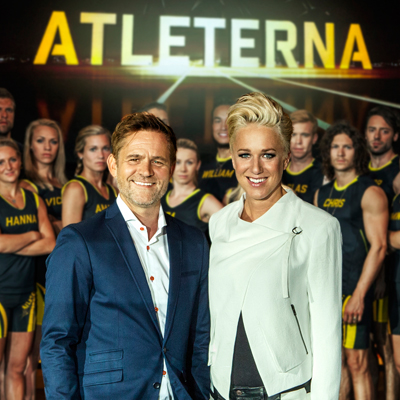
    MUMBAI: The dynamic FremantleMedia developed format, Master Athletes (Swedish title – Athlets) has sped off the starting blocks with a commission from the Swedish National broadcaster SVT. The 10 x 60’ entertainment reality shows sees competition and conflict as contestants endure intense fitness challenges, egos, injuries, tears and triumphs in their bid for glory. Devised by FremantleMedia North America’s Henrik Nielsen and produced by FremantleMedia Sweden, the Swedish version will launch on August 23. FremantleMedia will launch the format at the upcoming MIPCOM 2014.


    Filmed in a custom designed arena, 24 amateur athletes and sports fanatics are placed in a team with a member of the opposite sex and prepare themselves for a grueling ten week challenge. The athletes live, eat, sleep and train together in the luxury Master Athletes Athletic Village. Relationships develop, alliances are formed and the intense battle begins. Audiences will learn about the contestants’ sporting backgrounds and watch as the athletes try to overcome the hurdles they face throughout the competition.


    To win the show, the 12 teams must conquer ten disciplines: 60m Sprint, Hurdles, High Jump, Shot Put, Pole Vault, Archery, Free Climbing, 50m Freestyle Swim, 50m Crawl and Long Jump. Each episode sees the athletes tested to their fitness max as they take part in different events to qualify for the next episode. The top teams from the first two events leap to the next episode whilst the two lowest placed teams compete in a final head to head duel for the last remaining qualification spot. In a dramatic twist, the winners of the second event are also given the power to tactically decide which discipline is chosen for the duel. As the competition heats up, only the strongest team can survive and claim victory as the Master Athletes.


    Magnus Karlsson Lamm, Managing Director, FremantleMedia Sweden, said: “FremantleMedia Sweden has enjoyed working with SVT on this exciting and entertaining format. There is so much more to being a great athlete than physical ability and this format really explores the mental edge and tactics needed to be the best. The intense challenges, sporting brilliance and competitive clashes make great viewing. We are looking forward to the premiere on SVT.”


    Mathias Engstrand, Commissioning Editor Entertainment and Sports, SVT: “Developing this show together with FremantleMedia has been an exciting and fruitful process. The format triggers lots of emotions and the arena competitions keep the episode-tension on a high level right in the middle of the ongoing health and training trend. It’s a man depending on a woman and a woman depending on a man. They win and lose together with blood, sweat and tears. It’s sports and reality in a new and beautiful mix.”


    Master Athletes will premiere in a primetime slot on Saturdays and is hosted by Olympic High Jump Champion Kajsa Bergqvist, and Rickard Olsson.


    As an added incentive to strive for glory, the winning teams each week are rewarded with training sessions alongside former national elite athletes. The Swedish version sees Christian Olsson (High Jump), Mattias Sunneborn (Long Jump), Lars Frölander (Swimming), Erica Johansson (Track and Field), Armand Krajnc (Boxing), Thomas Fogdö (Slalom Skiing), Anja Pärsson (Alpine Skiing) and Magdalena Forsberg (Biathlon) all passing on their expertise. 

  • Cinestaan Film Company to produce three films

    Cinestaan Film Company to produce three films

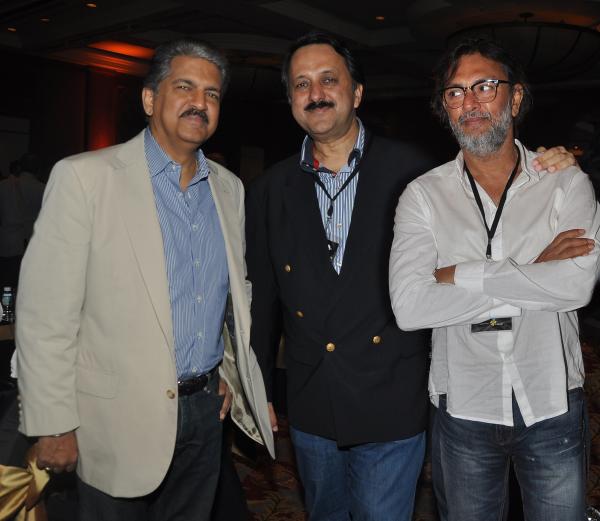
    MUMBAI: Cinestaan Entertainment has unveiled its plans to produce films and shall soon foray into television and internet services as well. Rohit Khattar is the founder and chairman of Cinestaan, while Anand Mahindra is a major investor.


    Cinestaan’s first subsidiary, the Cinestaan Film Company has announced its foray into film production with a three film agreement with Rakeysh Omprakash Mehra’s ROMP Pictures. 


    Rohit Khattar said, “I am delighted to announce the launch of Cinestaan Entertainment in partnership with Anand Mahindra. We share a common vision and similar tastes in story telling which shall, we hope, manifest in some good films. Cinestaan is committed to preserving the rich legacy of our cinema heritage for which we are working on several initiatives including an oral histories television project that shall celebrate the memories and contributions of our screen legends.” 


    He added, “To begin our film slate with a prodigal talent like Rakeysh Mehra is an incredible high and we are excited about developing these films with him.  Cinestaan shall announce some more projects soon.”


    Cinestaan Film Company’s first film as a co-production with ROMP Pictures will be the Rakeysh Mehra directed ‘Mirziya’. The second film ‘FanneyKhan’ is an official remake of an Oscar nominated film to be directed by Nitin Kakkar, the National Award Winner for Best Film “Filmistan” in 2013. The third film (yet untitled) shall again be directed by Rakeysh Mehra.

  • Sudhir Sharma’s journey: From facts to fiction

    Sudhir Sharma’s journey: From facts to fiction

    MUMBAI: A fearless producer, who has brought a change in the television industry with his out-of-the-box thinking. He is someone, who doesn’t believe in following the herd which is busy minting four-five shows at a time, but is satisfied doing one at a time. A firm believer of hard work and determination towards his art, he is one of those producers who strive to bring about a change in society through the powerful medium – television.

    We are talking about the owner of Sunshine Productions, Sudhir Sharma who has seen a meteoric rise in the television industry. The husband-wife duo of Sudhir and Seema Sharma have come a long way in providing viewers with niche shows on television like Miley Jab Hum Tum and 12/24 Karol Bagh. The two have dabbled in direction and scripting, apart from production as well.

    From news to fiction

    It was at a very young age (standard six to be precise) that Sharma became certain of making his career in either television or films. He started his career with Rajat Sharma in the news and current affairs section of Zee TV, which was the first private channel to produce news pieces, in 1992. He also directed the famous show, Janta Ki Aadalat and many other projects on Star Plus.

    After spending almost six years in directing news programmes, he then shifted to Mumbai in 1997. This was the time when he decided to work on fiction series. It was this drive which gave birth to Sunshine Productions in 1998.

    Starting a production house poses challenges, and Sharma too had his share. Surprisingly, the biggest challenge came from his news and current affairs background, as people got a little wary about his capability to handle fiction series.

    Sharma recalls the time he has spent with Ebrahim Alkazi, a famous theatre personality, in the national capital while he was working on news related projects. He believes the time he spent with him, gave him the exposure and the understanding of what is needed to create a fiction!

    Under his banner, Sunshine Productions, he began with directing ad films and music videos. From 1999 to 2005, the production house was known for creating packaging and promos.

    Initially, he focused mainly on making TV promos for all the top shows of Hindi general entertainment channels (GECs) Star Plus, Zee TV and Sony. Right from Jassi Jaisi Koi Nai to KBC, the production house was known for creating launch campaigns.

    It was in 2005, that the company finally got into producing shows. Flooded with offers to direct shows, Sharma was somewhere not comfortable in only directing a TV daily. He was confident that he could have a better hold on a project rather than just direct it. “The offers that came in, was a sign that we were doing something right. It was from 2005 that I seriously started thinking about fiction content,” says Sharma.

    The production house is always cautious of not falling into the category of someone who is rolling out shows simultaneously. “I mean this. There are no pretences and I am not being diplomatic about it. We are very sure that we want to do selective work. We do not want to do four-five shows at a time,” states Sharma.

    He is not apprehensive about the P&L of the company. “I am just conscious about the quality of work that we do because we love making and watching our each and every project. We do not do anything which is focused purely from the business perspective. I feel business will grow automatically, if I am confident and happy in what I am doing. That is the only challenge we have taken for ourselves,” explains Sharma.

    For him restraining from doing many shows is a difficult task, considering the high demand for good content, directors and producers.  Also, with the advent of new channels, the greed for doing more soaps is very tough to resist, at times.

    When he started the production house, he was never short of good resources. He had a mini creative team – right from the DOPs to assistants, writers and creative directors – that had directed projects for the company during its initial years. “Then, they used to write promos and design logos for various programmes. So in that case, the mini creative team was already in place,” informs Sharma, who considers himself lucky to have found them.

    One area, which posed challenge, was having a dedicated casting department. “Initially, I used to do the casting on my own, until three years back when Reema came on-board as casting agent and started doing a fabulous job.”

    Behind the scenes

    Sharma believes in working with the same writers again. Apart from the permanent employees, many professionals are also hired, as and when required for a project.

    The husband and wife duo have different qualities but work as a team. Seema, who is a graphic designer, is completely engrossed in content while he takes care of the strategy.

    Ideas come from either the core team or members. “Many a times, it also happens that, broadcasters give us a rough sketch. For 12/24 Karol Bagh, producer Sukesh Motwani called me and said he wanted to make a show on the Delhi middle class. Just one thought/peg is required.”

    Once a basic outline is created, a lot of writers come-in and pitch their ideas, out of which one is selected. Casting, he says, is the trickiest job and 50 per cent of a show’s success depends on it.

    He believes that ideas can float from anywhere; from a newspaper article to a poster at railway platform. He shares that at times, writers come up with their own ideas which is quite laudable. For example, the idea for Na Bole Tum Na Maine Kuch Kaha, which ran for two seasons, came from the writer, Venita Coelho, herself. Sharmas took the lead and gave it a specific direction.

    He goes on to say that the research on how to tap the viewer, (mostly) provided by broadcaster is not on his priority list. Sharma believes in doing his own research. So for Bawre, which is currently on-air on Life OK and is based in Lucknow, he went to the city and stayed there for a month to understand the culture, taste and behaviour of the people. “There I met a lot of people, did my research, shot a number of short videos and read a lot of material,” he informs. For him creative product comes from the gut and from his own conviction.

    Sunshine has clicked with the youth as well through shows like Paanch, It’s Complicated, The Buddy Project on Channel V. While every genre excites him, there are certain areas which are his strengths like youth, love etc.

    Dailies are here to stay!

    He believes that though bi-weeklies have an advantage, the importance of dailies, which cost Rs 6-8 lakh per episode, and Indian soaps will never die. “For makers, the main concern is how to attract the audience and understand what they like and don’t like. In terms of format, daily soaps will never die in India because of the different viewing pattern here. It will not turn into a UK or a US market overnight.”

    He goes on to say that earlier even mediocre shows would run for two to three years but not anymore. “This doesn’t mean that everyone will get into bi-weeklies or mini-short series. It involves a completely different science,” he opines. Finite series is a different grammar of content. “Bi-weeklies are a different type of genre which Indian audience is not exposed to so frequently. Worldwide it is a big phenomena and a big hit.”

    It was 15-16 years ago, when fiction content had just started to develop. “In these 15 years, whatever content one got was put on television and viewers watched it happily without complaining. Those days are gone now. People have become choosy and demanding. They have more channels to watch and hence better quality content is needed. They will go to anyone who offers better content.”

    The next step for Sharma is trying more bi-weeklies and mini-series. So is that the new trend the industry is moving towards? He quickly says, “It is very pre-mature to comment on this. But, from a content perspective, what a bi-weekly or a mini-series does is, it gives you better content and a tight script. Paanch was appreciated because of the kind of budget it had and the kind of quality it delivered.”

    “Feedback should not turn into a screenplay”

    Sharma has always found support from the broadcasters. For him, creative freedom is a must, and he has never faced any issues in that area.  “But at the same time, producers also have to understand that the channels are investing a lot of money and time into it. If we understand that part then things are easy,” opines Sharma.

    He further goes on to say that broadcasters have a lot of research and data which producers may not have. “Problem is when broadcasters start dictating the script and the feedback ends up turning into a screenplay. I hate that. Yes, strategy is their forte. It is always a collaborative effort between the makers and the broadcasters.”

    Sharma agrees that there is pressure always to deliver numbers, but that for him is justified. “I feel there is nothing wrong in it. This is no charity that anyone is doing. We are in a professional environment and I don’t feel anything is wrong if the channel is putting pressure,” laughs Sharma.

    But just because the efforts don’t translate into good ratings, changing the storyline doesn’t work. “One needs to be patient with the medium.” Sharma is of the view that the storyline should be changed only if the audience is unable to relate to the story.

    Surprisingly, apart from the main office, the company has a 16-20 edit set up where all the post-production and edit work happens.

    He broadly defines his three different set-ups. One is the back office where all the meetings take place between the writers and the casting happens. Second, is the post production set-up where one entire set of editors sit 24X7 in various shifts. These include editors, junior editors, post production operations team and creative team. Third, is where the shoot happens. Apart from the set, an office is located at Filmcity. On a daily or weekly basis, all of them meet to decide how to take things to the next level. At Sunshine, the core team consists of 50-60 people.

    He recalls the moment when for his first project he needed huge funding. After that, Sharma says he hasn’t faced many issues. The initial hiccup was also because he came from a different background than other existing professionals.

    By the end of this year, the company plans to delve into producing feature films.

    Sunshine won the prestigious Indian Telly Awards (2010), for being The Most Promising Producers/ Production House and in 2012 won The Best Youth Show Award for ‘The Buddy Project’.