Category: Production House

  • Kolkata TV show producers resume shooting with innovative mechanisms

    Kolkata TV show producers resume shooting with innovative mechanisms

    KOLKATA: Despite having witnessed one of the worst ever cyclones in the recent past, Kolkata resumed TV productions in early June. After months of lockdown causing a financial stress to numerous people, a part of the Tollywood returned to the sets. A number of guidelines now have to be followed while shooting but it has given hope to production house representatives as well as others related to the TV industry that they can work in safe ways.

    SVF vice president- television Arabinda Dasgupta says that there wasn’t much difficulty in resuming and even productivity had not gone down. He adds that rigorous sanitisation, regular temperature screenings, protocols of social distancing are being followed diligently. Currently, SVF‘s TV division has five dailies on different channels. 

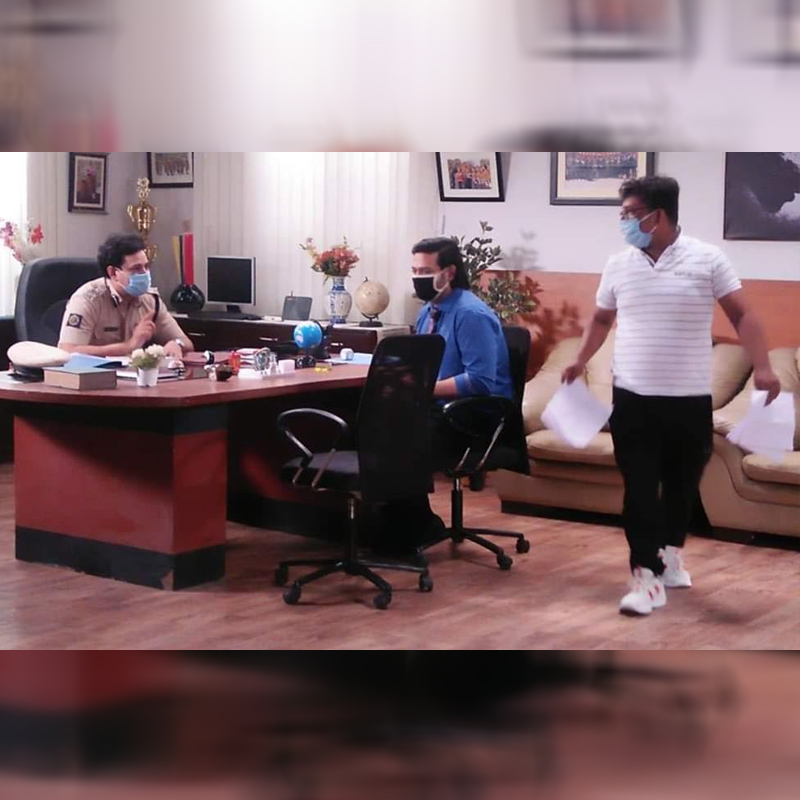
    While the mandate is 35 people inside the shooting zone as per the mandate, Dasgupta says that they are voluntarily limiting it to 25 people. Moreover, storylines are twisted to avoid physical proximity. It even carried out workshops with directors, DOPs to adhere to social distancing norms while shooting. However, in the case of unavoidable intimate scenes, the plan is to use mannequins. All shoots outside studios are deliberately being avoided to keep out crowding.

    Despite all the extra measures, Dasgupta says that churning out new episodes is not taking more time than usual as it has “a fantastic SOP.”

    Susanta Das, who owns a production house Tent Cinema and runs Boyhood Production jointly with Nispal Singh Rane, reflects the same tone. Das, who has serials on all three major broadcasters, says that the stricter norms is not delaying day-to-day affairs but rather making it easier for them to finish on time as now they have to wrap up by 8 pm. He adds that the shooting needed to resume given the large number of people associated with it. 

    Das reassures that they are using sanitisers, checking the temperature with thermal guns and not allowing anyone to go out of the floor unnecessarily and even forbidding crowding at sets to ensure safety. 

    However, he shares that the new normal is very unusual as shooting needs many people to work closely together on the floor but they are adhering to new kinds of storytelling to ensure social distancing. They, too, will use mannequins going forward if scripts demand intimacy.

    Sudeshna Roy, an actor and producer, says that as the shooting for film and digital original content is yet to resume, they are currently working on post-production. She shares that film shooting is not organised like TV serials and cannot be limited to studios. Hence, it needs robust planning which is being currently worked on. 

    The West Bengal government issued a notification on 30 May allowing shootings from 1 June with a maximum of 35 people. But due to several complexities, it took some time to finally resume the shootings. There was a stand-off between producers and artists forum regarding insurance which got solved later. 
  • TV producers on restarting offices with safety measures

    TV producers on restarting offices with safety measures

    MUMBAI: On 8 June the Maharashtra government allowed all private offices to operate with up to 10 per cent of full staff strength or ten people (whichever is higher). Production houses are still waiting for permission from Film City and district collectors to start production in Mumbai and Thane. In the meantime, certain producers have restarted their offices, while others are waiting for things to get normal.

    Famous Studio MD Anant Roongta who resumed office on 8 June thanked his team for their constant effort. The company is currently working with less than ten people. However, it has introduced a shift system to manage the workflow. There are no more than five people per floor. The studio has five facilities and across the entire facility, 35 to 40 people are working.

    Apart from that, the office space is sanitised on a regular basis. It is mandatory to wear surgical gloves while working on any equipment to stop the mitigating virus. Social distancing is followed by providing separate rooms to each employee. As far as visual reality is concerned people are working in the extreme ends of the room. Most employees are also given separate stations to maintain the social distancing norm. For travelling, employees are using private vehicles or sharing a car with no more than two people.

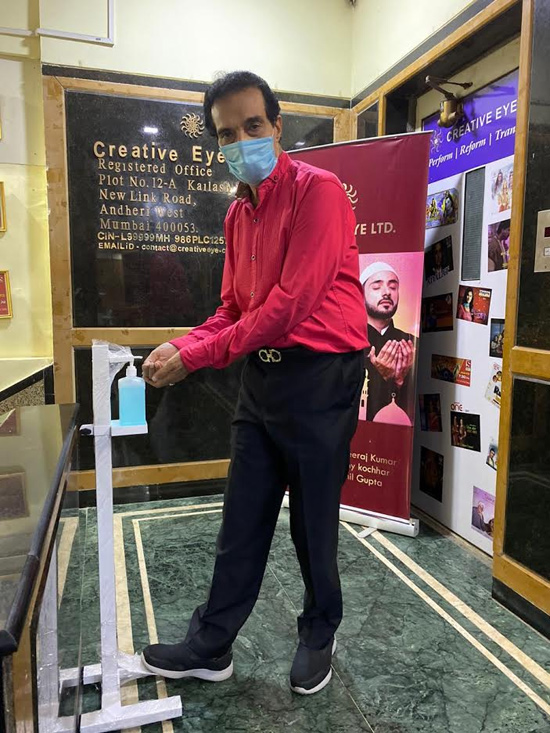
    Creative Eye has also re-started its office. Its managing director Dheeraj Kumar says, “We are functioning as per the permission granted by the government. We have already started working on a project that was supposed to happen before the lockdown. We have booked the set, paid advances and realigned 15 scripts.”

    In the last few days Kumar has shifted his focus to operational issues. As a service provider Kumar highlights that the company works on a project basis. If needed, it has close to 100 people on the set. For now, the permanent staff consists of 50 employees and only those who are close by are coming to the office in their private vehicles. People who live far off are still working from home.

    The teams required in the office are the ideation and creation teams. They include CEOs, CFOs, head of departments, general managers, operational team, studio manager, executive secretary, administrative manager, housekeeping staff and kitchen staff. Apart from that, editors are permanently also living in the office.

    Endemol Shine India CEO Abhishek Rege makes it clear that it will not be starting its office any time soon. Employees will be working from home for the next six months at least and even after that work will resume in a shift system.  

    He adds, “The key change will be the number of people coming on the set and how they behave. What can be done to maintain social distancing, and other necessary guidelines.”

    On a similar note, Hats Off Productions founder J D Majethia is also not planning to restart his office. Firstly, he wants to ensure that everything is in place in terms of SOPs and safety and then he will think of restarting. Until then all the employees will continue working from home.

    Follow Tellychakkar for the consumer facing news & entertainment

  • Shooting in Mumbai, Thane likely to start by 23 June: IFTPC’s Nitin Vaidya

    Shooting in Mumbai, Thane likely to start by 23 June: IFTPC’s Nitin Vaidya

    MUMBAI: It will soon be lights, camera, action in the television industry. With permisisons being granted slowly, filmmakers and broadcasters will have to obtain permission from the police and district authorities before they can start shooting. Maraṭhi film and TV producer Nitin Vaidya, who is also a member of Indian Film and TV Producers Council (IFTPC), told indiantelevision.com that it is trying to seek permission from Film City to begin shooting in Mumbai and Thane from 23 or 25 June.

    He adds, “We producers, among ourselves, have decided a common date to start shooting between 23 to 25 June. We must put things in place like insurance and mediclaim for all cast, crew members and people on set. We are looking at bulk insurance deals from the IFTPC. Once that is done, we can start shooting. All the decisions have been conveyed to broadcasters also. We are hoping that all the permissions will be granted for Mumbai and Thane.”

    Marathi actor, TV host and Shiv Sena leader Aadesh Bandekar highlights that producers are waiting permission from Film City to begin shooting in Mumbai.  But district collectors in Thane, Sangli and Satara have already given permission to resume shooting.

    Vaidya also mentions that in other parts of Maharashtra permission has been given. But shooting has not yet started.  In the meantime, producers are prepping up for the post-pandemic return, in terms of fumigation, sanitisation, several other SOP measures and guidelines that need to be complied with.

    According to Vaidya, the association has requested broadcasters to telecast after 13 July 2020. So, producers can go ahead with immediate bank of episodes. As this is a new normal, Vaidya finds that it will be difficult to analyse what will happen on the set after shooting resumes.

    Earlier this month Maharashtra government allowed shoots across the state to resume. A list of SOPs and other guidelines too were issued, which also includes shooting only in non-containment zones. Producers will have to apply to managing director of the Maharashtra film, theatre, cultural development corporation, the Dadasaheb Phalke Chitranagari in Goregaon, Mumbai and district collectors outside Mumbai for resuming shootings.  

  • We are a young old production house: Ram Madhvani

    We are a young old production house: Ram Madhvani

    MUMBAI: Ram Madhvani is a devoted Ad-man, but he is also known for creating fiction that gets into the nitty-gritties of a character. Ad-man turned filmmaker Madhvani is all set to make his mark as a producer and director of feature films, web series, short films with his recently launched production house, Ram Madhvani Films.

    Madhvani directed his first feature film Let’s Talk in 2002. The National Award winning movie Neerja came 14 years later. However, Madhvani didn’t lose hope, he kept trying. Sometimes projects would be announced, like fantasy Talisman with Amitabh Bachchan but did not make it to the silver screen. For the uninitiated, his web series Aarya, was initially meant to be a movie, but due to unknown reasons the movie was shelved one month before the shooting. That was seven years ago. Now, Aarya starring Sushmita Sen and Chandrachur Singh will be out on Disney+ Hotstar on 19 June. The show is based on the Dutch drama series Penoza by Pieter Bart Korthuis.

    In a special interaction with indiantelevision.com Madhvani spoke at length about his newly launched production house, setting up the entire structure, challenges faced due to Covid2019 and much more.

    Madhvani says, “It’s a natural extension of Equinox Films. Equinox will do ads in which we have six directors and four producers. Ram Madhvani Films will produce and create longer content. Both are owned by my wife Amita Madhvani and me. I will very much continue to make ads. I’m passionate about it.”

    According to Madhvani the biggest drive for becoming a producer is that it gives you control over your work.

    Speaking about how long it took to set up the entire structure he adds, “We actually already had it with Equinox. We are a production house. Producing runs in our blood. This was just a new company.”

    When the entire film and television fraternity is grappling with the current situation, Madvani mentions that he managed to finish shooting Aarya before lockdown. However editing, sound, VFX etc were added during lockdown.

    Madhvani also thanked his entire team who worked hard from home with full safety while embracing technology.

    As the Maharashtra government has given permission to resume production work with certain guidelines, Madhvani feels that safety and protocols are of utmost importance.

    Madhvani is in no hurry to release shows, erring on the side of precaution. However, he is working on a couple of scripts, but it will take time.

    “Creative people live in hope. And so my hope is that soon, this will pass and we can go back to our ‘normal’ lives,” he says.

    Equinox currently consists of Ram Madhvani, Amita Madhvani, Manoj Shroff, Rhea Prabhu and Annum Waris  as producers, Nitin Parmar, Deb Medhekar, Sandeep Modi, Priyanka Ghose, Tanvi Gandhi and Madvani as directors while Raja Ved is the CFO. The company has an in-house production designer Anna Ipe.

    Apart from this Madhvani has just started Equinox VR, a new virtual reality company where the team wants to make content for the VR world. The producer on Equinox VR is Khvafar Vakharia. These people  will also be part of the Ram Madhvani Films team when needed. He adds, “These are our in-house producers and directors that we have known and been together for years. It’s a strong dedicated hard-working team. We also work with a regular team of people who make up the rest of our extended team.”

    Madhvani highlights that the most important aspect while setting up a new production company is to continue the reputation that they have built so far.

    A pandemic is a difficult time and one must adapt fast to the post Covid2019 budgets. He said, “We are hungry for work and we partner with clients and agencies to understand everyone’s marketing and financial problems. Everyone is there to help and understand each other. We call ourselves the youngest oldest production house.”

    He concludes, “There’s only one challenge you always face when shooting and that is … time. My epitaph will read 'I wish I had more time.'”

  • Production houses plan for return after lockdown

    Production houses plan for return after lockdown

    MUMBAI: As lockdown restrictions ease across the country and state governments start handing out approvals to resume shooting, production houses are gearing up to get back on track with requisite precautions and safety measures. Tasks like an SOP plan will be on top of the priority list and this means added costs for production houses.

    IFTPC chairman TV wing and Hats Off Production founder J D Majethia is optimistic that Maharashtra will start shooting in June itself. Anticipating that the pandemic will run longer he has bought a temperature check kiosk, sanitisation stand and other necessary equipment rather than rent them. He also mentioned that insurance policies will become a necessity that will cover workers, technicians and artists for the SarsCov2 virus. 

    “On ground, our focus is crew safety and thereafter following the right protocols. We are preparing to implement SOPs on ground. We want to ensure that the number of people is less. Our focus is not just on what the government has advised but we also want to keep things under control from a safety perspective,” says Endemol Shine India CEO Abhishek Rege. However, he says that their shows will commence production only by August.

    Even though Endemol is waiting for shoots to resume here, other regional areas have commenced where permissions have been granted such as Tamil Nadu. Going forward, the company will work in a shift system, so that at any given time required crew members are present. Maintaining distance and required people on the set will be the big change. He, too, added that employee health insurance will be imperative.

    Currently, Rege is working on only new shows. “We are trying to figure out ways where we don’t compromise on our script and yet deliver good content,” he says.

    Famous Studio MD Anant Roongta, who is ecstatic about re-starting his work, thanked his team members for their constant support. Famous Studio re-started studio work from 8 June. During lockdown, his 50 employees were able to work on pending projects remotely because of its previous efforts in upgrading technology. Even artists came up with techniques to work from home.

    While mentioning hygiene and sanitisation measures Roongta says, “We have seven action areas, for all the employees and clients who are coming in our studio. We have a self-declaration form that is mandatory to fill before entering the studios. It is a list of 20 to 30 questions which includes their travel history, any possible symptoms, if they live in a containment area and much more.”

    Once people fill the form, they go to the sanitisation stand outside the office. Post that, their temperature is checked and it is mandatory to wear a mask. The studio is sanitised and disinfected every morning. Surgical gloves are provided to people who are working on equipment. As people are working on separate wings and rooms, social distancing is also taken care of. Everyone has to enter and exit from one point to avoid overlapping.

    The staff follows a dedicated SOP which included appointing housekeeping for deep cleaning before opening up the office. On the insurance front, he says “Most of the people we work with are consultants and not employees, so they are individually responsible for their own insurance policies.”

    Creative Eye Limited MD Dheeraj Kumar says that they too resumed work from 8 June. He adds, “I am waiting for broadcasters to give us the green signal to start fresh projects as well as pending ones. But even if we want to shoot, we will need a minimum of 25 days time in our hand to do all the preparation which was lost in three months.”

    Their precautionary measures include thermal infra-red guns at the entrance to check the temperature and will be written in a physical register. Whoever enters the premises will have to provide their contact details and home address. After entering the building, people must sanitise their hands with a stand that’s operated by the feet. He is also providing tailor-made in-house masks and gloves. In the past ten days, the entire Creative Eye building and office has been sanitised thrice. About 100 Creative Eye employees have also been covered under an insurance policy.

  • TISA Tech Secure’s Covid-compliant sanitisation solutions for production sets

    TISA Tech Secure’s Covid-compliant sanitisation solutions for production sets

    MUMBAI: One harsh reality that we must adjust to in the post-Covid2019 world is the constant sanitisation drives at homes, workplaces and everywhere else. Nearly three months after lockdown commenced, the Maharashtra government has given the nod to resume TV and film shootings, albeit with conditions.

    For producers, the challenge is to maintain hygiene and safety. This includes conducting regular sanitisation, thermal checking and several other measures. In an interaction with indiantelevision.com, Manish Popat, who last worked with Contiloe Pictures says that even though products are available in the market, people are clueless about their usage.

    That is when Popat, along with Fidelis Management Consultants director Harish Kale, who is responsible for audits of films, television, OTT and ad films, decided to come up with a solution to help the film and television industry. It led them to meet Tisa Tech Secure CEO Atharva Samant. Tisa Tech Secure is a security systems integration and consultancy company which has been in the business for the past 11 years. The company is currently providing services to BMC and certain Covid2019 hospitals.

    Tisa Tech Secure has now teamed up with the duo to bring together their experience in their respective fields to come up with effective Covid2019 response services and solutions. It involves recce of the shooting site, with the intention to identify areas where there are high chances of getting infected.

    Samant explains that this entire solution will be monitored by people on the ground and implemented as per government directives.

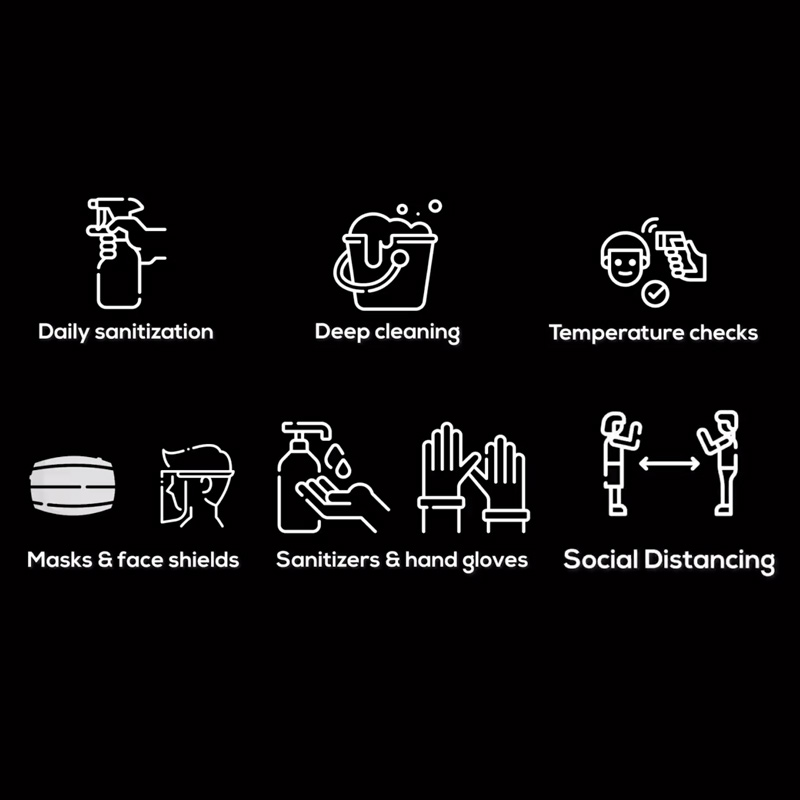
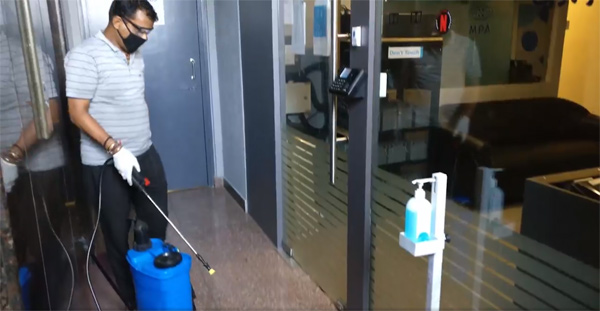
    Pre-shoot sanitisation process will involve disinfection and misting. It will cover the entire set, main floor, vanity vans, makeup rooms, PCR rooms, equipment etc. All the disinfectants are EPA approved. The entry will have a disinfecting tunnel which is loaded with thermal scanning kiosks tools. It will also keep a log of people entering. A team of two or three people will be stationed for temperature screening.

    There will be a UV disinfection chamber, which has UV-C technology which disinfects anything in 60 seconds. The chamber will be placed at various units like the makeup department and edit facilities. It will be used to disinfect phones, laptops, clothes, masks, PPE-kits, keys, tools and equipment.

    Samant said that most people are using UV tube lights and other products which are dangerous. “UV lights inherently have the tendency to do the danger if filaments are not correctly used as it leaves out carcinogenic fumes. Hence, it needs to be a closed UV chamber. So, we put a lot of thought into products which we are using,” he shares.

    The process of sanitisation is also technical. A sodium hypochlorite solution should have a ratio of 10 ml in 1 litre of water. Anything more can turn acidic.

    Samant suggests that the sanitisation process should at least happen thrice a day. Additionally, health and safety officers need to be hired now. Companies that haven’t yet positioned CCTVs at entry and exit points should do so now. Another way of ensuring minimal movement is colour-coded wristbands that provide entry in select areas. It also proposes a daily sanitisation process which will involve fogging and misting of the entire set.

    There will be an emergency action plan in case of any potential positive symptoms. The checklist includes isolating the person to the isolation chamber, coordinating with an on-site medic for checking various parameters, check oxygen level with an oximeter and log the results, immediately create a log of all the people who came into contact with the person and equipment, contact the nearest healthcare sector for an immediate Covid2019 test and much more.

    Producers can pick services that fit their needs on a daily, weekly or monthly basis. They also have the option to rent or buy equipment. A team of 55 is making the service available only in Mumbai for now. However, in the near future, it might be extended to Hyderabad and Telangana.

    What makes them stand apart is their understanding of the industry coupled with trust.

  • Telangana govt permits film, TV shootings

    Telangana govt permits film, TV shootings

    MUMBAI: After Maharashtra and Tamil Nadu, the Telangana government has given the much awaited nod to resume film and TV shooting as well as post-production work all over the state. This move comes after nearly three months of lockdown due to the pandemic.

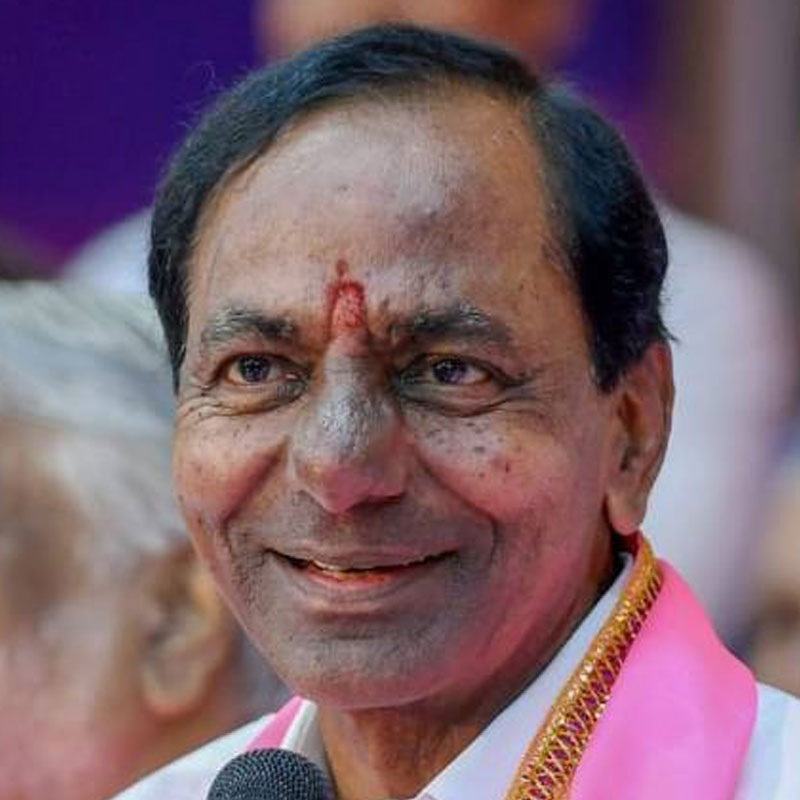
    Telangana chief minister K Chandrashekhar Rao signed the file, allowing filmmakers, producers and television programme producers to resume their work.

    The chief minister, in an official statement, said that production and shooting can be started with limited numbers of staff while strictly adhering to the guidelines issued by the government. He also allowed post-production works to resume with the same guideline.

    However, the state government has not allowed the re-opening of cinema theatres and multiplexes, as per the guidelines issued by the centre. The government has also advised filmmakers to follow all the necessary guidelines and conditions to stop the mitigation of the SARS-CoV-2 virus.

    Several prominent film personalities from the south have met the chief minister recently and requested him to allow production work in the state. Cinematography Minister Talasani Srinivas Yadav, government chief secretary Somesh Kumar, among other film personalities have prepared the draft guidelines.

  • Can’t insist producers to use only their members: Competition Commission to FWICE

    Can’t insist producers to use only their members: Competition Commission to FWICE

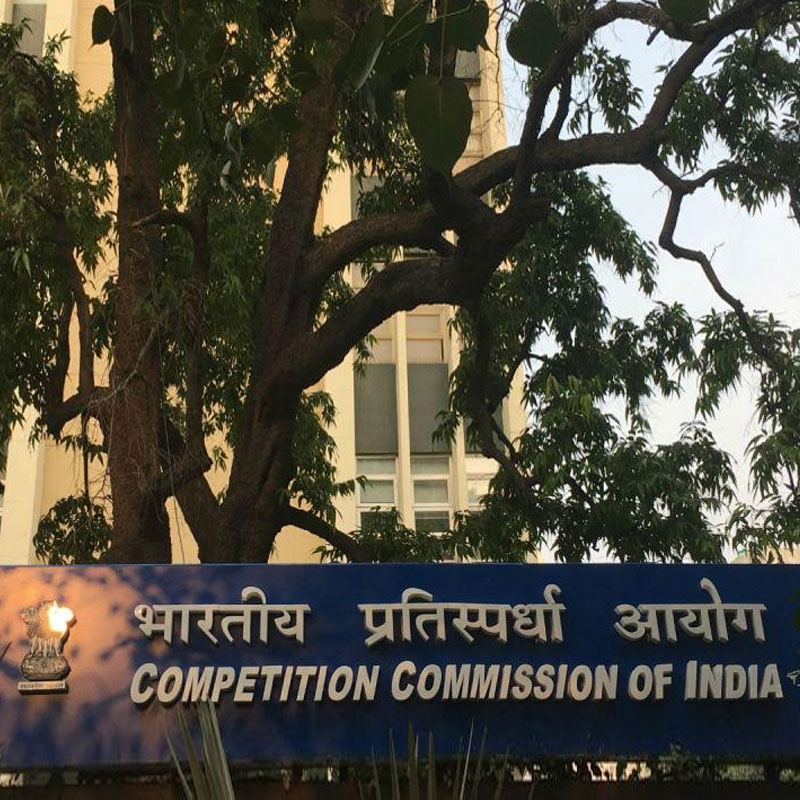
    MUMBAI: In a landmark judgement, the Competition Commission of India (CCI) has told the All India Film Employees Confederation and Federation of Western India Cine Employees (FWICE) that they cannot insist producers to take only their members to work with them.

    On 31 October 2017, the CCI passed cease and desist orders against certain national and regional trade associations of film artists and producers for engaging in practices of controlling/limiting the supply of services and market sharing. Such acts have been held to be in contravention of sections 3(3)(b) and 3(3)(c) read with Section 3(1) of the Competition Act, 2002 (Competition Act).

    The  final order by the CCI was passed on an information filed by Bollywood producer and director Vipul Shah who alleged that specific provisions of the MoU dated 1 October 2010 (MoU) signed between FWICE and producer associations i.e.  IMPPA, FTPGI, and IFTPC relating to various matters including member-to-member working, fixation of wages, etc., are anti-competitive in nature.

    Thereafter, on 8 August 2019 an application under Section 42 of the Act alleging noncompliance of the aforesaid order by other parties was received by the Commission from Contiloe Pictures Private Ltd (CPPL).

    On 12 March 2020, the matter was listed for hearing between FWICE and CPPL. Upon hearing the counsels of CPPL and FWICE, the commission observed that the contents of the directives issued by FWICE to its member affiliates/producers were in the nature of direction to its members not to engage the non-members and were in violation of the order of the Commission dated 31 October 2017.

    Later, FWICE submitted that they would withdraw their letters dated 29 March 2018 and 26 November 2018 issued to its affiliates and also the letter dated 30 November 2018 issued to CPPL, without any conditions. The association also tendered unconditional apology for disobeying the directions of the Commission.

    The Commission directed FWICE to issue communication to its affiliates," all production houses/ producers including CPPL regarding withdrawal of the said letters and file a copy thereof with the Commission within a period of 10 days. Further, FWICE was also directed to file an affidavit along with status/ compliance report within ten days to the Commission."

    However, the commission later observed that none of the parties have filed any evidence. Therefore, the commission has directed all the parties involved in the matter to file an affidavit along with status/compliance report through e-mail at secy(cci.gov.in, latest by 15 July 2020 without fail.  The secretary is directed to inform FWICE and CPPL, accordingly.

  • The spell of pandemic spills over to writing

    The spell of pandemic spills over to writing

    MUMBAI: Will the Covid2019 pandemic have a direct bearing on the way TV and film script writers churn out their scripts? Now that the Maharashtra government has allowed conditional resumption of film, television, OTT shoots, how are the writers faring? Indiantelevision.com spoke to a few scriptwriters from the film and television industry to get answers to these questions.

    Even if shooting begins, the plotline will have to go for a change; it is not going to be the same as before. Writers face the twin challenges of creating something refreshing that connects with the audiences all the while keeping in mind the numerous restrictions that have been implemented.

    While some script writers want to reflect the current pandemic situation in their writings, a tiny minority feels that it is not necessary to always showcase the reality. And one thing everyone agrees is the role technology will play in the narratives.

    According to Screenwriter Association president Robin Bhatt, many stories can be created keeping in mind the guidelines laid down by the government. With the help of technology, action scenes can also be choreographed. A lot of film scripts have already been written which don’t require any changes, but in the coming days writers will avoid writing crowd scenes or stories where SOP is compromised, he said.

    In future, he says, technology is going to play a major part in cinema. He has already finished one show which is highly technological in nature, with a lot of graphics and animation. Bhatt is currently excited to begin the shoot of Sanjay Gupta’s much-awaited movie Bombay Saga starring John Abraham. Bhatt, who is the writer of the film, says that most of the editing, background score, sound design as well as VFX had started much before the lockdown. As of now, he has not received any directions from Sanjay Gupta to make amendments in the script.

    He adds, “The current pandemic scenario will definitely reflect in my writing because the entire world has changed. The same old narratives of how couples fall in love, tragedy or drama will change. Currently, it is a wait-and-watch situation.”

    Writer-producer Zaman Habib says that until and unless the country emerges out of the risk of the pandemic, there will be changes in scriptwriting accordingly. Scenes with huge crowds or many characters will be avoided. Habib is currently a story consultant for the Star Plus’ show Yeh Rishtey Pyaar Ke.

    Habib points out that the advantage of being a writer is that it is not necessary to be present on sets. A lot of freelance writers, who have left for their hometowns, continue their work through video conferencing and similar apps. “In television, we don’t participate in day-to-day works. So it is not bad for writers but there is going to be a major change on the floor while shooting.”

    According to him, television shows are divorced from reality. But, now writers, producers and broadcasters will want to put the reality out there.

    “There are many people who want to shut off their emotions and have lighter moments. But when we write we create different characters with different emotions. So, one just cannot shy away from the reality or what is happening around us,” he added.

    Writer of Once Upon a Time in Mumbai, The Dirty Picture, Kick, Gabbar Is Back and Taxi No. 9211, Rajat Arora said that as of now he has not made any changes in his scripts.

    “As we move forward, only then we will understand what can be executed and what cannot. So, as the shooting begins, we will see if any changes in the script are required. There are certain things which cannot be done while filming as per the current guidelines. But it is just a small part. At the end, safety of our people is of utmost importance.”

    Currently, he is busy working for Ahan Shetty’s debut film. The project is backed by Sajid Nadiadwala. He is also doing the pending work of Jayalalitha biopic  starring Kangana Ranaut.

    Contrary to what other writers said, Arora feels that the current pandemic is so terrible that he doesn't want to show this situation in his writing. “I think no one wants to be reminded of a pandemic. I personally don’t want to dwell on it. Dystopian shows are now today's reality. So, we don’t want to face reality or may watch it on screen.”

  • Will TV producers look at IP ownership in the post-Covid2019 world?

    Will TV producers look at IP ownership in the post-Covid2019 world?

    MUMBAI: When a nationwide lockdown was imposed to stem the tide of Covid2019, all film and TV shoots were suspended. Finally, the Maharashtra government gave a green signal for the resumption of film and television shootings in non-containment zones.

    As things are slowly getting back to normalcy it has become important for every production house to hold its intellectual property.

    This was the unanimous view of a virtual round table conference organised by Indiantelevision.com to discuss the challenges faced by TV producers. 

    The panel, moderated by indiantelevision.com founder, CEO and editor-in-chief Anil Wanvari, had Swastik Productions & One Life Studios producer & managing director Rahul Kumar Tewary, SOL Productions founder and managing director Fazila Allana, Contiloe Pictures founder and CEO Abhimanyu Singh, Endemol Shine India CEO Abhishek Rege, Fremantle India Television Productions managing director Aradhana Bhola, Taarak Mehta Ka Ooltah Chashmah producer and Neela Films owner Asit Kumarr Modi, and ANM Global managing partner Nidhish Mehrotra.

    With the whole pandemic situation, some television producers also have the fear of being kicked out of shows. This scenario has put a big question mark on broadcasters who own the intellectual property rights for most TV shows.

    Swastik Productions & One Life Studios producer & managing director Rahul Kumar Tewary says, “Currently broadcasters have been very supportive, but mostly it is discussion rather than action that has happened from broadcasters’ end. However, I am very hopeful that they will come forward and help. Ultimately, they are the owners of the IP.”

    He adds that this lockdown will create opportunities for producers who have trust in their content and IP. This situation will give producers some time to create different business models and IPs. Apart from this, there will be huge financial calculations also.

    Adding to Tewary’s point, Contiloe Pictures founder-CEO Abhimanyu Singh said, “It has been a long discussion among all producers. This is a time where the production community can work along with broadcasters with some co-investment in place to create IPs.”

    Taarak Mehta Ka Ooltah Chashmah producer and Neela Films owner Asit Kumarr Modi thinks it is very important for all producers to own their IPs. With the help of IPs producers can also sustain their business and become a long-time player.

    He adds, “If I don’t own an intellectual property then I am merely a production coordinator and not a producer. Post Covid2019 it will be interesting to see who owns IP. Repeat telecasts are seeing a huge consumption on digital media. IP has its own value, who will own what percentage that producers and broadcasters will have to mutually decide.”

    SOL Productions founder-MD Fazila Allana said: “Despite having our own IP there are certain formats which are created indigenously for the movie market which is not owned by them.”

    She adds that it is a continued struggle. It is more than ever now that the platforms and the channels do not want to give up IPs. Because even they have realised that in this situation, they need a bank to play and they don’t want to pay for it again.

    “The struggle is going to be tougher as everybody is now realising that there is a huge financial problem, so they are alright with producers sharing the cost and therefore own half IP. So, co-investing and co-owning could be a solution for this mid path. I don’t think the broadcasters or OTT players will give 100 per cent IP,” she further explains.

    Adding to what Fazilla Allana said, Fremantle India Television Productions MD Aradhana Bhola believes that OTT players have now realised that there is no boundary to create content. They can do dubbing and subtitling; and consumers are willing to see those contents.

    As we all know that a large part of Indian television comprises reality TV shows like Indian Idol, Bigg Boss, Dance Plus, etc.   While some producers are of the opinion that owning IP will incur them huge costs and financial burden, others think that it could be the way going forward.