Category: Production House

  • Shemaroo op revenue down due to COVID2019 impact

    Shemaroo op revenue down due to COVID2019 impact

    BENGALURU: Indian content creator, aggregator distributor, specifically in the media and entertainment industry and now television broadcaster, Shemaroo  Entertainment Ltd (Shemaroo) reported 39.7 percent drop in consolidated operating revenue at Rs 86.2 crore for the quarter ended 30 June 2020 (Q1 2020, quarter or period under review) as compared to the Rs 143.03 crore  for corresponding year ago quarter Q1 2020. Consolidated operating revenue for Q4 2020 was Rs 122.74 crore. However, the company reported a lower consolidated loss of Rs 12.81 crore for the period under review as compared to the loss of Rs 14.07 crore for the immediate trailing quarter (Q4 2020). The company had reported consolidated profit after tax (PAT) of Rs 16.38 crore in Q1 2020.

    Shemaroo revenue from traditional media in Q1 2021 declined 44.5 percent to Rs 52.3 crore from Rs 94.30 crore in Q1 2020. Revenue from traditional media in Q4 2020 was Rs 76.9 crore. Shemaroo’s revenue from digital media also fell in Q1 2021 to Rs 33.9 crore from Rs 48.7 crore in Q1 2020 (y-o-y decline of 30.4 percent) and Rs 45.8 crore (q-o-q decline of 26 percent) in Q4 2020. However, contribution to revenuefrom digital media has been increasing over time says the company. In Q1 2020, digital media revenue’s contribution to overall revenue was 34.06 percent, which increased to 39.33 percent in Q1 2021. In FY 2020, the contribution of revenue from digital media to operating revenue grew to 38.55 percent from 16.94 percent in FY 2016. Please refer to the figure below:
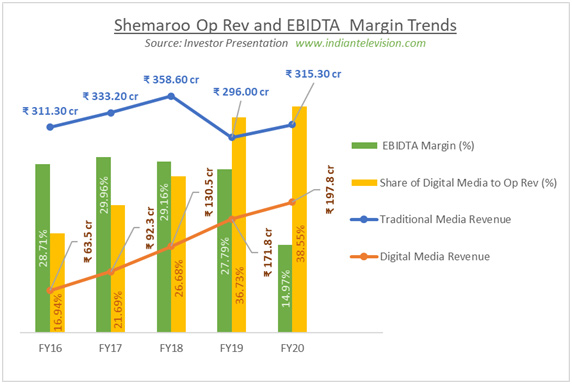
    Sheamroo says in an investor presentation for Q1 2021 that the nationwide lockdown due to COVID2019 coupled with the overall sluggishness in the Indian economy impacted consumption and hence advertisingspends by brands. It says that during the quarters, deals were either deferred or re-negotiated which had an impact on the margins and cash flows. The company says that since it had alreadyundertaken cost rationalization measures even before the lockdown, it helped the company to tide over this pandemicoperationally. However, Shemaroo says that is cognisant of the external environment and has thereby undertaken several measures to optimize the operations andrationalize thosebusinesses that have been severely impacted.

    Shemaroo’s consolidated operating EBITDA for Q1 2020 was negative Rs 4.89 crore as compared to consolidated operating profit of Rs 31.91 crore for the corresponding year ago quarter. For Q4 2020, Shemarro had negative EBITDA of Rs 3.08 crore.

    Let us look at the other numbers reported by Shemaroo

    Consolidated total income (operating revenue plus other income) for Q1 2021 declined 39.8 percent y-o-y to Rs 86.55 crore from Rs 1543.87 crore in Q1 2020. Consolidated total expenditure for Q1 2021 reduced 15.6 percent y-o-y to Rs 99.82 crore from Rs 118.32 crore in Q1 2020. 

    Consolidated operating costs for the period under review declined 19.1 percent y-o-y to Rs 71.16 crore from Rs 87.91 crore in Q1 2020. Employee benefit expense in Q1 2021 was almost flat (reduced by 0.2 percent) y-o-y at Rs 15.72 crore as compared to Rs 15.75 crore in Q1 2020, Finance costs in Q1 2021 increased 18.9 percent to Rs 6.86 crore from Rs 5.77 crore in Q1 2020. Other expenses in Q1 2021 reduced 43.6 percent y-o-y to Rs 10.22 crore from Rs 7.46 crore in the corresponding year ago quarter.
     

  • Endemol Shine India to produce first Marathi originals

    Endemol Shine India to produce first Marathi originals

    MUMBAI: Endemol Shine India today announced that it will be creating two originals in collaboration with Gulbadan Talkies, a creative video production service boutique based in Mumbai. The two series will include Thorle Vishwasrao Dhakle (TVD) is an eight episode, 45-minute Marathi series and Radical is an eight episode,45-minute, multi-lingual comedy series (primarily Hindi). Both series will showcase actors from BhaDiPa(Bhartiya Digital party) a subset of Gulbadan Talkies.

    Thorle Vishwasrao Dhakle (TVD) is an eight episode, 45-minute Marathi series for Indian fans of Detective Stories, Murder Mysteries, and Conspiracy Theories. Based in Maharashtra, the series focuses on the relationship of a Grandfather (70, retired Private Detective) and his Grandson (26, computer hacker, angsty youth) as they work together to solve a murder that happens in front of their very eyes. However, the solution is not as clear as they thought, and they find themselves wading into a dark world of conspiracy.

    Radical is an eight episode, 45-minute, multi-lingual comedy series (primarily Hindi). Abandoned in the middle of Mumbai – Ahsaan, Samar and Wajid build a life from scratch over the ten years that follow. Their unplanned immigration to Mumbai soon becomes a refuge from their past, a past that has been rightfully demonised. Mumbai’s fate is left to the Mumbaikar himself, be it the aspiring Ahsaan, the family man Samar, or the swindling conman Wajid. Through their actions, they unknowingly repay the debt they owe Mumbai for offering them a chance to carve out their own existence.

    Endemol Shine India CEO Abhishek Rege said, “We are pleased to collaborate with a creative powerhouse brand like BhaDiPa and Gulbadan Talkies for these two shows. At Endemol Shine India, we are always looking at creating content that is exciting and entertaining for our viewers and tying up with fresh talented artists and directors who are eager to showcase their ideas and enhance the creative space.”

    "As creators who carved out our space in Marathi content, we have always believed that regional-language stories should be consumed on a global scale. We’re absolutely kicked to be co-producing a Marathi series and our first Hindi series with an internationally renowned partner, Endemol Shine India," said Gulbadan Talkies & BhaDiPa CEO Paula McGlynn.

    Thorle Vishwasrao Dhakle and Radical are currently under development and will start production soon.

    Follow Tellychakkar for the consumer facing news & entertainment

  • MIPChina virtual edition starts tomorrow

    MIPChina virtual edition starts tomorrow

    MUMBAI: Everyone thought exhibitions and industry gatherings are dead, courtesy Covid2019, right? Reed Midem is just about  to prove them wrong with its fourth edition of its MIPChina endeavour, which normally takes place in the beautiful city of Hangzhou in China. It consists of face to face meetings which are preset depending on buyers and sellers' preferences when they register for the market. Additionally, conferences around the Chinese market are held and networking parties as well.

    This year, starting from tomorrow, 28 July, MIPChina has totally moved online and will be held over four days. Close to 3500 meetings have been designed for the 170 odd buyers and sellers who have signed up for it. Indian majors such as ZeeTV, Disney Star India, In10 Media, IndiaSpark and Lattu Kids are participating in MIPChina.

    “We are delighted to bring MIPChina to the world,” says Reed Midem’s Ted Baracoss. “It’s the first of the content trading markets which is kicking off. And we are hoping many deals will be struck. We are doing this for the love of TV. The meetings are going to be held across 12 different time zones.”

    CMM director Kristian Kender says that the mood is buoyant, television channels need content and hence MIPChina was rolled out. “You have to be flexible when doing deals with the Chinese,” he said. “In terms of contracts, taxation issues, it’s best to have clarity right from the get-go.”

    CMM is the representative in China for Reed Midem’s markets like MIPCOM, MipTV, MipChina, MIPCancun, among others.

    All3Media, ABC, Arte France, Beta Film , Beyond Distribution, Caracoal Television. Bilibili group, IQiyi, China Huace Film Group, Dorimedia, Entertainment One TV, Fuji TV, Global Screen, Global Agency, Kanal D, Hari International, Nippon TV, MediaCorp, Paramount, TV Tokyo, Rai, Warner Bros, ZDF, Alibaba, ANTV, Astro Malayasia, Bytedance, Fuji TV, Huanxee, Henri Advertising, Huawei, JY Animation, KBS Media, Kanal 7, Tencent, TBS, TV Tokyo, Viacom CBS Media, Youkou, are among some of the leading firms that are participating in MIPChina.

    MIPChina’s conference schedule will, however, take place in September.

  • Balaji Telefilms operating profit up; ALT Balaji subs and revenue increase in FY 2020

    Balaji Telefilms operating profit up; ALT Balaji subs and revenue increase in FY 2020

    BENGALURU: The most successful television content and film production house in India, the Shobha Kapoor and Ektaa Kapoor-led Balaji Telefilms Ltd (Balaji) reported 34.1 percent growth in consolidated operating revenue at Rs 573.55 crore for the fiscal ended 31 March 2020 (FY 2020, year under review) as compared to the Rs 427.71 crore reported for the previous year (FY 2019). Consolidated operating revenue for the quarter ended 31 March 2020 (Q4 2020, quarter under review) also increased 21.2 percent y-o-y to Rs 107.68 crore from Rs 88.86 crore in Q4 2019. Consolidated loss of FY 2020 declined to Rs 58.96 crore from Rs 97.75 crore in FY 2019. The company reported lower consolidated loss of Rs 19.84 crore in Q4 2020 as compared to 27.97 crore in Q4 2019.

    Balaji reported having completed 823 hours of commissioned programmes in FY 2020 as compared to 763 hours in FY 2019. Slightly lower programming hours were completed in Q4 2020 – 198 hours as compared to 200.5 hours in the corresponding year ago quarter. The company had halted all production on 18 March 2020 on account of the COVID2019 pandemic.  The company said that the realisation per hour was lower in FY 2020 at Rs 0.37 crore per hour as compared to Rs 0.38 crore per hour in FY 2019 because of lower number of weekend shows. Realisation per hour in Q4 2020 at Rs 0.39 crore per hour was however higher y-o-y as compared to Rs 0.36 crore per hour in Q4 2019.

    On a consolidated basis, the company reported operating profit (Simple EBITDA) of Rs 10.73 crore in FY 2020 as compared to a consolidated operating loss (negative EBITDA) of Rs 105.11 crore in FY 2019. For Q4 2020 also, Balaji reported positive consolidated EBIDTA of Rs 39.58 crore as compared to a consolidated operating loss of Rs 33.24 crore in Q4 2019.

    ALT Balaji numbers

    Though it has yet to become profitable, Balaji’s OTT platform ALT Balaji operating revenue almost doubled (increased 85.1 percent) to Rs 77.49 crore in FY 2020 as compared to Rs 41.87 crore in FY 2019. The company reported lower operating loss for ALT Balaji at Rs 92.16 crore for FY 2020 as compared to an operating loss of Rs 120.81 crore for FY 2019. Balaji says that direct subscription revenue for ALT Balaji has grown over 100 percent year on year.

    ALT Balaji operating revenue increased 61.2 percent y-o-y to Rs 22.18 crore during Q4 2020 as compared to Rs 13.76 crore in Q4 2019. The company reported lower operating loss for ALT Balaji at Rs 14.44 crore for Q4 2020 as compared to an operating loss of Rs 31.75 crore for Q4 2019.

    Commissioned programmes

    Revenue from the company’s television programming (Commissioned programmes) increased 22.5 percent y-o-y to Rs 421.25 crore in FY 2020 as compared to Rs 344.02 crore in the previous year. Commissioned programmes business operating results increased 369.2 percent during FY 2020 to Rs 83.06 crore as compared to Rs 49.09 crore in the pervious year.

    Revenue from the company’s television programming (Commissioned programmes) increased 35.6 percent y-o-y to Rs 110.89 crore in Q4 2020 as compared to Rs 81.80 crore in the corresponding year ago quarter. Commissioned programmes business operating results declined 3.5 percent during Q4 2020 to Rs 19.55 crore as compared to Rs 20.27 crore in the corresponding year ago quarter.

    Films segment

    Revenue from Balaji’s Films segment increased 69.2 percent in FY 2020 to Rs 172.40 crore from Rs 102.27 crore. Films segment operating results grew more than six-fold (grew 555.2 percent) at Rs 54.14 crore as compared to an operating profit of Rs 8.26 crore in FY 2019.

    Revenue from Balaji’s Films segment fell 43.8 percent y-o-y in Q4 2020 to Rs 5.46 crore from Rs 9.72 crore. Films segment operating results was more than three times higher (up 259.4 percent) at Rs 4.49 crore as compared to an operating profit of Rs 1.25 crore in Q4 2019.

    Some standalone numbers

    Standalone PAT for FY 2020 was 63 percent lower at Rs 21.77 crore as compared to Rs 58.87 crore in FY 2019. Balaji’s Standalone PAT for Q4 2020 and Q4 2019 was Rs 10.43 crore and Rs 2.18 crore respectively.

    Balaji’s standalone operating revenue for FY 2020 31 percent higher at Rs 567.63 crore as compared to Rs 438.67 crore in FY 2019. Standalone operating revenue for Q4 2020 and Q4 2019 was Rs 116.06 crore and Rs 82.12 crore respectively.

    Company speak

    Balaji Telefilms Limited managing director Shobha Kapoor said in the investor release, “This year has been one of the best year for Balaji Telefilms despite the partial impact of COVID-19 towards the end of March 2020. We continue to focus on creating good content and growing our digital platform. We are witnessing huge opportunity within the digital space due to COVID-19 and we are gearing ourselves to exploit this opportunity.”

    Let us look at the other numbers reported by Balaji

    Consolidated total income for FY 2020 at Rs 582.16 crore was 26.7 percent higher y-o-y as compared to Rs 459.48 crore. Consolidated total expenses for FY 2020 increased 9.7 percent to Rs 604.33 crore from Rs 1550.90 crore.

    Consolidated cost of production declined 12.6 percent FY 2020 to Rs 349.89 crore as compared to Rs 400.45 crore in FY 2019. Consolidated marketing and distribution expenses in FY 2020 increased 40.4 percent to Rs 60.56 crore from Rs 43.12 crore in the previous year. Consolidated employee benefits expense in FY 2020 declined 26.5 percent to Rs 36.45 crore from Rs 49.57 crore in FY 2019. Consolidated other expenses in FY 2020 increased 19.1 percent to Rs 76.42 crore from Rs 36.45 crore in FY 2019.

    Consolidated total income for Q4 2020 at Rs 106.09 crore was 9 percent higher y-o-y as compared to Rs 97.29 crore. Consolidated total expenses for the quarter under review reduced 5.6 percent y-o-y to Rs 118.74 crore from Rs 125.76 crore.

    Consolidated cost of production declined 16.8 percent y-o-y in Q4 2020 to Rs 75.36 crore as compared to Rs 91.83 crore. Consolidated marketing and distribution expenses in Q4 2020 declined 40 percent y-o-y to Rs 5.01 crore from Rs 8.34 crore. Consolidated employee benefits expense in Q4 2020 declined 35.2 percent y-o-y to Rs 8.57 crore from Rs 13.22 crore. Consolidated other expenses in Q4 2020 reduced 27.5 percent y-o-y to Rs 20.17 crore from Rs 27.82 crore.

  • CINTAA states no Pakistani actor its member

    CINTAA states no Pakistani actor its member

    MUMBAI: The Cine and TV Artistes’ Association (CINTAA) has released an official statement clarifying that no Pakistani actor is a member of the association and it also highlights that if the actors have applied for work permits, they will not get renewed.

    The statement was issued by CINTAA Outreach Committee senior joint secretary and chairperson Amit Behl. In the release he mentioned that  CINTAA is the oldest and the largest union of performing artistes in the country. All the actors are law-abiding citizens and the association is very nationalistic and pro-India.

    The official statement said that CINTAA being a strong scrutiny committee is very clear that the association does not give membership to anyone who has anti-nationalistic feelings or any criminal records whatsoever.

    Behl said, “Whatever has happened right now, I am sure the government, the CBI and the other investigating agencies will do the needful about it. The only thing is that in case any of our actors, technicians or anyone from the media and entertainment industry realise that they are in touch with anyone who has anti-nationalistic feelings, they should definitely dissociate themselves.”

    The association aims at supporting any directive from the ministry of home affairs and the government.

    It said, “We as a union cannot comment on the authenticity of the photographs, but we are very confident that all our members, if inadvertently, have at all been photographed with such individuals, during their visits abroad, will distance themselves from any anti-national elements or those with deep state leanings, favouring a nation that has not respected India’s courtesy and respectful overtures."

  • Nin and Aftab Shivdasani announce  production company, Mount Zen Media

    Nin and Aftab Shivdasani announce production company, Mount Zen Media

    MUMBAI: Aftab Shivdasani and wife Nin Dusanj Shivdasani have launched their production company Mount Zen Media on 20 July 2020. The husband and wife team have partnered on this together to create content ranging from films, online shows and documentaries.

    Aftab Shivdasani said, “We are very excited to announce our company today as we have been wanting to get into production for a long time. Having produced before I am familiar with the business of cinema. These are exciting times to develop content that is cutting edge, contemporary and appealing. Being in the industry for over 20 years has given me a great deal of experience in front of the camera and valuable insight in filmmaking.”

    Nin Dusanj Shivdasani shares, “Coming from a creative background from art, design, advertising and branding it’s interesting to be involved in a new medium of production, where all areas of my experience will be in use. I am excited for this new endeavour as there are so many fascinating stories to be told on this creative journey. Always intrigued by the art of storytelling, I look forward to working with a multitude of talent across various projects.”

    Mount Zen Media was formed under the ideology of Zen, which tries to free the mind from the slavery of fixed notions and ideas and instead focuses on the intuitive process of creativity. Filmmaking has always been a highly creative and imaginative process which Mount Zen Media hope to project through all their work. It aims to produce good quality content that deserves to be told and is high on entertainment.

  • TV show production efficiency impacted by Covid2019: Swastik Productions’ Rahul Kumar Tewary

    TV show production efficiency impacted by Covid2019: Swastik Productions’ Rahul Kumar Tewary

    MUMBAI: A month since TV production resumed, the ride has been bumpy. With sets rigorously sanitised, makeup and hair artists wearing PPE kits, it’s still better than no shoots at all. Swastik Productions producer Rahul Kumar Tewary says that it took a lot of planning to resume shooting.

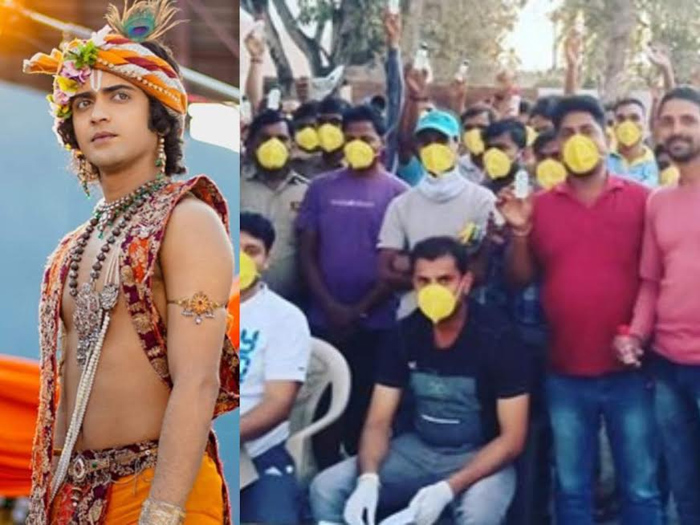
    “Before beginning the shoot, the cast and crew members of Devi Aadi Parashakti and RadhaKrishn reached Umbergaon, Gujarat, on 8 and 10 June where they were quarantined. There was regular check-up conducted within premises. The labours and crew members are living at the studio itself while artists are living at nearby apartments,” he shares.

    He highlights that the production has created a Covid2019 team that looks after sanitisation and fumigation of the entire set and the places where technicians, crew and artists are living. He clarifies that while shooting there is no contact from the outside world. There are multiple checkpoints on the set to ensure safety and security of people.

    To maintain the grandeur and bring larger-than-life feel in the episodes, Tewary is relying more on VFX than having real people on the set.

    Tewary elaborates, “It is a very difficult ride, the whole production planning, writing of episodes, consumes a lot of time. We are also focusing a lot on the VFX side to showcase more people in the story or a crowd scene. The script is written in a way that no body contact is involved. Massive sets are also avoided. So, all the departments, from the writers to creators, production, execution and technicians, are extremely careful.”

    The production house is using two camera setups and for proper lighting, the DOP is responsible for creating the entire set-up a day or a night prior to save time. Post that only actors are available for the shot sans technicians and camerapersons. This move is to ensure that at any given time there are a smaller number of people available on the set. However, this is making it difficult to get episodes out in time. The production efficiency has been compromised due to the SOP measures.

    Apart from that Tewary praises broadcasters for their constant support and encouragement. He says, “Broadcasters have been hugely impacted by this pandemic. The broadcasters worked hand in hand with producers to ensure we create a bank of episodes.”

    He adds that as the shows are on air, banks are the main thing that will drive momentum on the floor. Every show will initially have the capsule of kahani ab tak to engage audiences.

    The 12-hour shift timing remains the same as it was before the Covid2019. The studio also uses various tools to transmit data.

    Tewary notes that during the pandemic, digital mediums have gained traction. But, he says that the market audience for television and digital are completely different. Both the mediums may overlap to a certain extent, but in the end these are two different market segments. “I believe the digital is growing, but TV will also remain the same. I don’t think there will be too much of an impact on TV programming. There is a certain age group of consumers for the digital content; there is a trend that the youth of India is moving towards the digital side,” he shares.

    He is optimistic that as new content has started airing, TV audiences will be once again glued to the small screen.

  • Without grandeur, audiences will focus on the storyline: Full House Films’ Amir Jaffer

    Without grandeur, audiences will focus on the storyline: Full House Films’ Amir Jaffer

    MUMBAI: It has been close to one month since the state government allowed film and television shooting in Maharashtra. This was a sigh of relief to several new shows that were left in the lurch due to the lockdown including Zee TV’s Qurbaan Hua, which had just started on 25 February. 

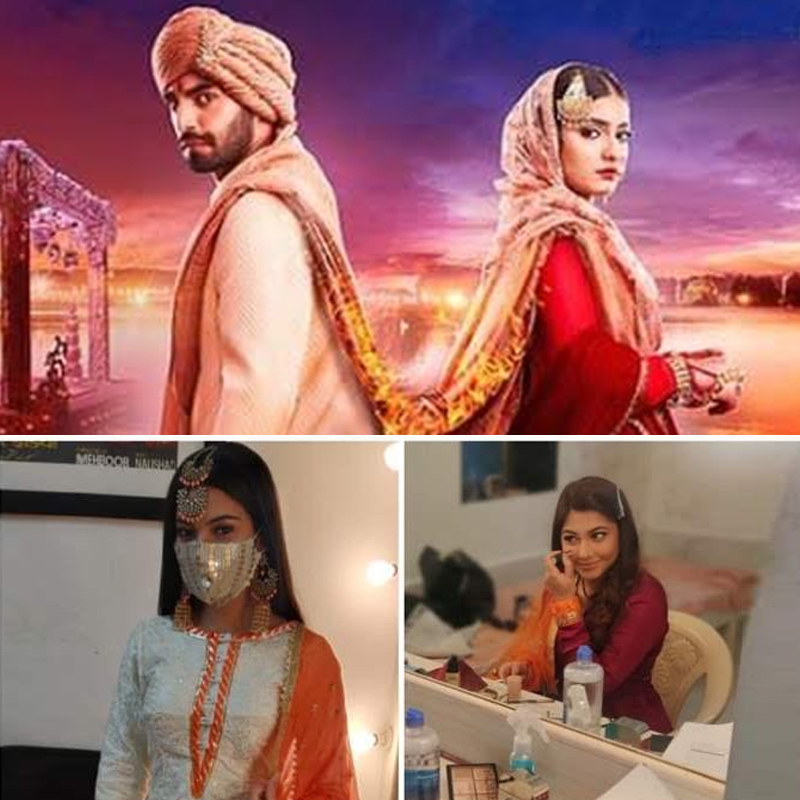
    In a special chat with indiantelevision.com, Full House Films founder and Tujhse Hai Raabta, Qurbaan Hua producer Amir Jaffer says, “We are implementing the guidelines laid by the state government and TV channels. We have insured everybody on the set against Covid2019. Everybody is working with face masks and face shields. Apart from that, make up artists and camerapersons are using PPE kits. As a smaller number of people are allowed on the set, we are planning our shooting on that basis. To showcase a greater number of people in the scene we are using separate footages and cuts of people.”

    To maintain social distancing and safety Jaffer is ensuring cast and crew members are carrying their own meal while only tea is served on the set. Food cost is being incurred by the production house itself. The studio is currently working with 60 members and no junior artists are called on the set.

    For Jaffer the biggest concern is to safeguard the health of cast and crew. As a practice, the studio is recording the temperature of cast and crew when they arrive and after the pack up.

    He also mentions that outdoor shoots are not happening currently, as it will require permission from district collectors and state authorities. The scenes are being shot with different camera angles. Family gathering, weddings and crowd scenes are not happening at all.

    Jaffer thinks that the look of the show will be compromised because there will be no grandeur. Special episodes of parties, weddings and dancing used to garner more traction which is not possible now. The stories are designed only considering the main actors. However, it will allow audiences to concentrate more on the storyline.  

    He also points out that there is no lag in the output of shows. Time-consuming scenes are avoided to meet the deadline. “We are also incorporating pandemic situations in our scripts. We also did a lockdown show with our actors. Everybody did the shooting by themselves in their own home.”

    Meanwhile, Jaffer has reopened his office with just four to five people.  Instead of calling people at the office for auditions, the casting is happening online.

    The working hour shift remains the same. Considering the curfew rule in Maharashtra, shift timings are 7 am to 7 pm so that cast and crew members can reach home before 9 pm. A 12-hour shift for the production unit and actors are called on the set only when required.

  • Balaji Telefilms takes positive steps after actor tests Covid2019 positive

    Balaji Telefilms takes positive steps after actor tests Covid2019 positive

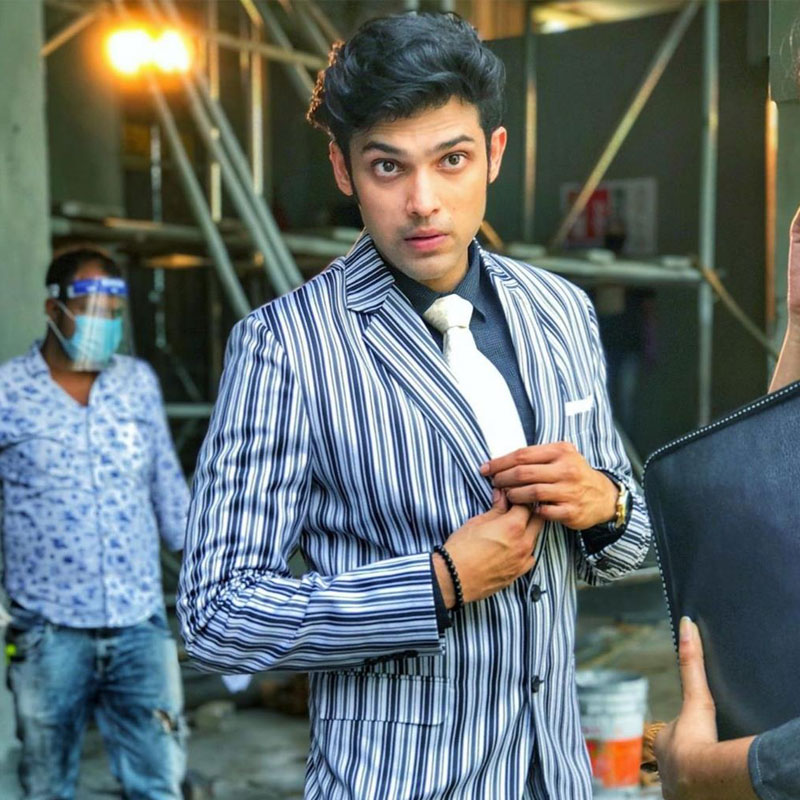
    MUMBAI: Television actor Parth Samthaan, who is best known for his role in Balaji Telefilms' Kasautii Zindagii Kay, tested positive for Covid2019 on Sunday. The actor shared the news on Instagram and revealed that he was showing mild symptoms but with doctors' guidance, he is self-quarantining at home.

    https://www.instagram.com/the_parthsamthaan/?utm_source=ig_embed

    Balaji Telefilms COO Ketan Gupta tells indiantelevision.com that the production house is strictly following all the SOP measures and guidelines laid by the government. He mentions that people’s safety and security is the most important thing for Balaji Telefilms.

    He informs that Samthaan tested positive when he was at home and not at the set. He says, “The moment we got to know that Parth Samthaan has tested positive for Covid2019, we immediately packed up the entire unit, as well as sanitised it. We called an ambulance so that everybody in the unit can have their swab tests done. Apart from the crew, we are also doing tests for actors who have recently interacted with Parth. The results are awaited. In the meantime, our production house will be closed for three days for sanitisation, cleaning, fumigation and other measures.”

    He further explains that the studio will be closely monitoring the people who were present on the set to ensure that they are safe. Gupta clarifies that even if a similar situation arises in the future, the company will not replace the main leads. “We will bring changes in the storyline until he is back. We have around eight to nine episodes in the bank,” he adds.

    Meanwhile, Ekta Kapoor and Balaji Telefilms have released an official  statement. It reads: “We would like to inform various stakeholders that one of our talent from the show ‘Kasautii Zindagii Kay’ has tested positive for Covid2019 and is now receiving medical attention. Our first priority is to help protect our talent, production crew and employees. We are taking all the precautions detailed in the guideline. We were and will continue following all medical protocols set by the authorities and have implemented guidelines concerning social interactions, hygiene, travel and visits to the sets.”

    Television actor Karan Patel who will be essaying the role of new Mr Bajaj in Kasautii Zindagii Kay reboot and his immediate family members will also get tested for Covid2019.

  • IFTPC thanks Maharashtra govt, producers in fast-racking resumption of shoots

    IFTPC thanks Maharashtra govt, producers in fast-racking resumption of shoots

    MUMBAI: In a major relief for all daily soap viewers, TV broadcasters will roll out fresh content from 13 July.

    Indian Film and Television Producers Council (IFTPC), in its press release today, thanked all the TV producers, Maharashtra chief minister Uddhav Thackeray, MLA Amit Deshmukh and government of Maharashtra for their constant effort in restarting film and television production. The association also thanked the Federation of Western India Cine Employees (FWICE), Cine and TV Artistes' Association (CINTAA), broadcasters and all the other vendors for their cooperation. It also expressed gratitude to Dr Sanjay Mukherjee, Marathi producer Aadesh Bandekar, Dr Shashank Joshi from Covid2019 task force Maharashtra and district collectors for their assistance.

    IFTPC in its release mentioned that due to the lockdown studios were shut. The release read, “Lakhs of daily wage workers and the workers from ancillary industries lost their jobs. The fear of starvation loomed large on the industry workers. Fortunately, with Unlock 1.0 shooting was allowed.”

    The Maharashtra government under its ‘mission begins’ initiative allowed shooting from 30 July 2020 with stringent SOP measures and protocols. In order to resume shooting swiftly, Hindi and Marathi producers introduced additional safeguard measures like arranging transportation, lodging and boarding facilities for their cast and crew. The production houses, in fact, bore the additional cost of maintaining safety and hygiene.

    The release said, “From today there will be more laughter and fun in every home battered by more than 100 days of lockdown. At a time when there was possibility of mental illness such as hypertension and depression was to affect many citizens, the re-entry of television is a big relief. Now the new stories full of drama, suspense fun and education will unfold and relieve the anxiety of Covid2019.”

    The television industry was forced to stop telecasting due to the countrywide lockdown from 22 March 2020. The entire shooting for films, television and advertisement was dispensed post government guidelines to ensure social distancing and to stop the mitigation of the SarsCoV2.

    In the meantime, more than 60 shows are being shot across Mumbai and Thane.