Category: Production House

  • Nikul Desai talks about his new show Taare Zameen Par

    Nikul Desai talks about his new show Taare Zameen Par

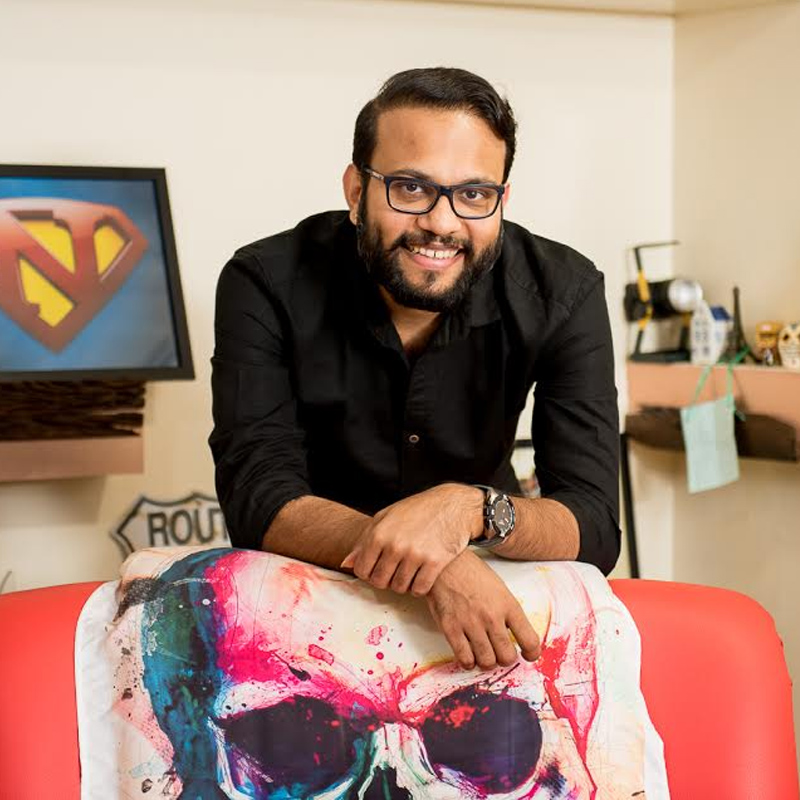
    MUMBAI: Nikul Desai is mainly known for directing non-fiction shows like Comedy Circus and Rising Star. Desai began his career under the supervision of his paternal uncle Vipul D Shah, the co-founder of Optimystix Entertainment. Starting off as an assistant director back in 2001, he has worked his way up to head of non-fiction content.

    But luck played its part too. Desai got to don the director's hat when the main director of a TV show fell ill – and that was his first break as a full-time television director. Fame quickly followed when he made a splash with the runaway success of Comedy Circus. The show aired for nine years with 18 seasons. Not only this, he brought various comedians like Kapil Sharma, Krushna Abhishek, Bharti Singh, Sudesh Lehri, and many more, into the limelight.

    Now, Desai is coming up with yet another singing reality show – Taare Zameen Par. Conceptualised as a platform for kids to showcase their signing talent, the show will be telecast on Star Plus from 2 November at 6.30 pm. The programme will not have judges, but mentors who will groom and train the kids. The makers have roped in Shankar Mahadevan, Tony Kakkar and Jonita Gandhi as mentors while popular comedian Sugandha Mishra and Aakriti Sharma (of Kullfi Kumarr Bajewala fame) will host the show.

    Desai revealed that this is the first time that any production house is attempting a non-fiction from a daily point of view. Said he: “Taare Zameen Par is a mammoth show that is keeping me and my team very busy. And then there are other projects in the pipeline, we are in conversation with Star Plus for a few other shows, which should hopefully get cleared by the end of October or November. We are also coming up with an original series, and a movie in partnership with Ashwin Varde.”

    Due to the Covid2019 pandemic, production houses have to come up with innovative ways to evolve and upgrade in the new normal. For instance, the studio has cut down on crew size – a measure that has generated its fair share of headaches.

    “A big non-fiction show has anywhere between 300 to 400 people, but now the studio is functioning with anywhere between 160 to 200 people while the work remains the same. Consequently, production has become considerably more difficult, and the team has to pre-plan a lot of stuff so there are no last minute requirements and scramble,” said Desai. This is because all the props which are coming from the market need to be sanitized and must be kept aside for 48 hours.

    In terms of the restrictions, only cameramen and technicians are allowed to go on the floor, otherwise access to the floor has been completely shut off. Further, there is zero physical contact with judges and hosts. Contact and communication has undergone a sea change.

    “Largely, the communication is completely killed from a security point of view, it's either from a pre-production point of view where we do phone calls or Zoom calls. We are shooting every day together, but we haven't really met each other. We are strictly adhering to safety and security protocols,” stated Desai.

    Child participants and their guardians, who came from all over India, went through a minimum of 14 days quarantine and it’s only recently that they have been brought out from their hotel rooms for band rehearsals, he added.

    Generally, the production control room (PCR) is a small, cluttered space. But this time to maintain social distancing. Optimystix has designed a bigger area for PCR. The studio has created a partition between technicians by putting acrylic sheets so that everybody can watch the monitors while shooting takes place. But only limited people are allowed in the room. For other crew members, the studio has made a viewing room where people who want to just watch the content can actually go to the viewing room and tune in.

    “We have given them the Zoom output off the whole master camera, so that they can watch what's happening on the floor at any point of time while sitting at their homes. And they can communicate with us over the call or Zoom chat. So, the way we function has completely changed. Earlier, a lot of people used to be there on standby to help the people present on the set but now 70 per cent of the crew is handling their own work,” Desai elaborated.

    The studio has also hired an external Covid2019 compliance company named the Covid Marshal. The set and other equipment are sanitised twice a day. No more than two episodes are shot in a day. Desai further mentioned that due to safety and security measures the productivity has comparatively been hampered.  

    Desai shared his view that audiences are now more keen than ever to watch light-hearted programmes, and in the long run non-fiction shows will fare better. 
  • Panorama Studios hires Rajat Goswami to lead new stream films & acquisitions

    Panorama Studios hires Rajat Goswami to lead new stream films & acquisitions

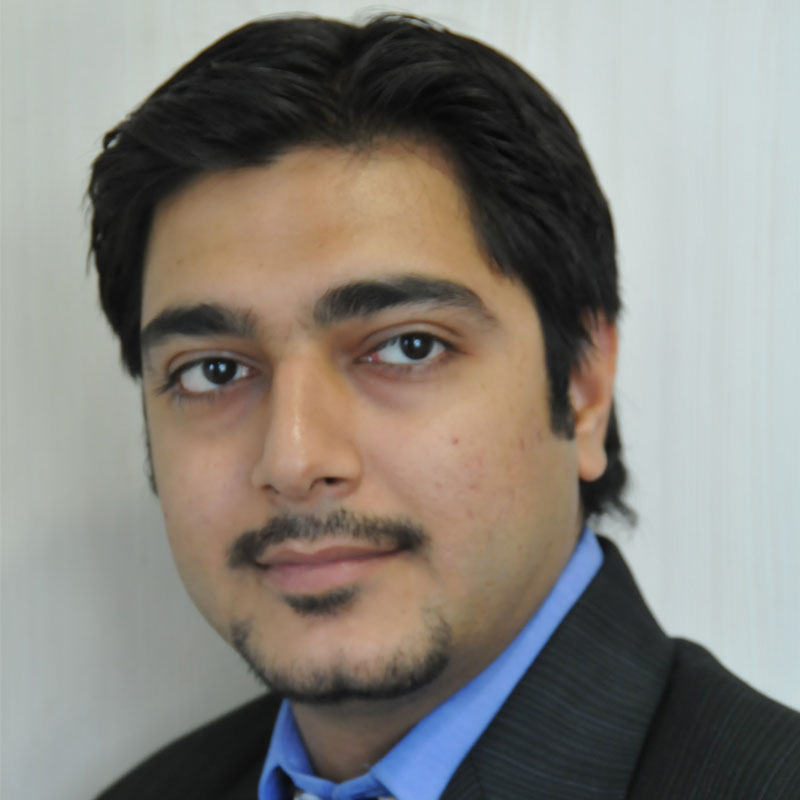
    MUMBAI: Panorama Studios has appointed Rajat Goswami as head of new stream films & acquisitions. Goswami is a renowned name in the film festival circuit and has worked in tandem with numerous reputed production houses.

    Under Rajat's leadership and the guidance of Panorama Studios Distribution managing partner Murlidhar Chhatwani, the banner will continue to back content-driven cinema and bolster independent cinema and aspiring filmmakers.

    Panorama Studios producer and director Abhishek Pathak said, “Panorama Studios has always upheld the supremacy of talent and content and so we're happy to welcome Rajat Goswami to our cinema abode. He has tremendous experience in the representing and handling of independent films and I'm positive that we can harness it so as to offer the audience exciting options for entertainment.”

    Panorama Studios Distribution managing partner Murlidhar Chhatwani added, "The undeterred consumption of content over digital platforms goes to show that even a crisis cannot diminish the need for entertainment. I am sure that Rajat's arrival into the production house at such a juncture will mark a fruitful new phase of endeavours and expansion."

    Goswami said he has received a warm welcome at Panorama and is excited to work with one of the foremost production banners in the country.

  • The Crown producer Suzanne Mackie launches own production company

    The Crown producer Suzanne Mackie launches own production company

    MUMBAI: Suzanne Mackie, one of the executive producers behind the hit Netflix show The Crown, is all set to launch her own production company. Mackie is leaving UK-based Left Bank Pictures to set up Orchid Pictures.

    Mackie, a prominent force in British drama, will continue to remain as an EP on the Left Bank-produced The Crown for the period drama’s upcoming final two seasons, shooting for which begins next year.

    Orchid Pictures will be based in London and it will work on projects across both TV and film. Sky development co-ordinator Hannah Campbell will also be joining Orchid as part of its initial team, with the company engaged by Netflix to produce a slate of projects from emerging and established talent.

    During her tenure in Left Bank Mackie developed and executive produced projects such as Sky1’s Mad Dogs and BBC1’s The Replacement. She is also attached to executive produce on the upcoming Netflix series Behind Her Eyes.

    “Having spent 12 very happy and creatively fulfilling years working with Andy Harries and the team at Left Bank Pictures, starting my own company felt like an exciting next chapter in my career. The opportunity of further deepening my collaboration with Netflix presented an immensely exciting opportunity,” said Mackie.

    Left Bank Pictures CEO Andy Harries said, “I have enjoyed an amazing journey with Suzanne, from Mad Dogs to Misbehaviour with lots of The Crown on top. She is smart, wise and has great taste. I have no doubt she will create some classy new shows for Netflix as well as riding side-saddle with us on The Crown.

  • Digital expansion is beneficial for broadcast industry: Deepak Segal

    Digital expansion is beneficial for broadcast industry: Deepak Segal

    MUMBAI: Deepak Segal has over three decades experience in the film and television industry. His repertoire of work includes key positions to drive content strategy across media giants like Fox Television Studio India, Sahara Motion Pictures, Star India and Star Plus. Now, as head of content at Applause Entertainment, Deepak Segal drives the studio’s vision of building a content hub that tells great stories across mediums, catering to millions.

    Apart from creating good content, Segal is extremely passionate about aeroplanes. In fact, he has an encyclopaedic knowledge of aircraft – be they World War II fighters or more modern airplanes. Segal was in the air force before he ventured into the broadcast industry. As the son of prolific Bollywood director Mohan Sehgal (who launched Rekha in Sawan Bhadon), he had film-making in his veins, and eventually decided to follow in his father’s footsteps.

    With Applause Entertainment riding high on the success of Scam 1992: The Harshad Mehta Story, Segal spent some time with Indiantelevision.com’s Shikha Singh, sharing his thoughts on OTT content and the broadcast industry, how it has evolved, and much more.

    Excerpts from the interview:

    On handling Covid2019:

    The Covid2019 pandemic is disrupting every industry. Due to the lockdown we stopped filming Criminal Justice. We have restarted the shoot 15 days back by strictly adhering to all the protocols laid down by the government. The pandemic has slowed down the overall process. We coordinated post production work over Zoom calls. The editing and soundtrack was completed remotely.

    For Scam 1992, we had barely finished the shooting when the virus struck; all the additional work like audio, soundtrack, visual effects and sound design happened during the lockdown. The team that was working on it stepped up during this new norm and we delivered the story in record time. The Applause Entertainment and SonyLiv teams did a brilliant job to make it happen.

    On the studio’s content strategy:

    At Applause Entertainment, we made a conscious decision to invest in creative content rather than make a pilot, develop concept around it and commission it. We have put all our creative and financial minds to make it work. Also, it is like a new way of working in the industry where you get the confidence in the platform as they are investing huge money into it. Now, we are in a position to partner with OTT platforms for scripted shows. In a way, you have proved to them that you can create a premium drama that India requires. So far we have 15 shows on air and it has worked for us in many ways. We are also in the process of developing the Indian version of the super hit British psychological drama series Luther. Currently, we are in the writing process. We are also developing The Seeker, it’s a bigger project than we’re used to and we are working with international writers for this.

    On upcoming original series Call My Agent:

    Call My Agent is the Indian adaptation of French workplace comedy Dix Pour Cent (Call My Agent), originally created by Fanny Herrero and showrunner Cedric Klapisch and represented by TF1 Studio and France TV Distribution. Narrated through the POV of four high-profile agents of celebrities, Call My Agent will tell the behind-the-scenes stories of the magic and the madness that keeps the star system running. Fragile egos, manipulation, shenanigans and insecurities come to the fore as the agents traverse the world of glitz and glamour. The series stars Rajat Kapoor, Soni Razdan, Aahana Kumra and Ayush Mehra and each episode will feature real-life celebrities who play a fun and exaggerated version of themselves. After having directed several films across genres featuring A-listers, Shaad Ali has decided to helm this project and leap into the world of premium drama storytelling. As far as the acquisition is concerned, we get formats from all sorts of markets. Acquiring an international series and adapting it to the taste of Indian audiences is also challenging. The show is set to go on the floors late October.

    On the challenges of adapting foreign IP:

    OTT has created a new set of audience that is looking for premium content. A lot of people have graduated from viewing daily soaps.

    While adapting international shows, you need to conceptualise it a little longer. The scale at which international content is filmed is very different from our scale. Every show has its own challenges. We need to adapt the characters and make it more relatable to Indian audiences. Apart from the main characters we also need to keep minute details in consideration like background, language and people. References have to be appropriate. A lot of things depend on the writing. The challenge is to make the script resonate with viewers by adding local elements. Our primary objective is to stick to the original story line. We want the story to travel across India, which is why understanding the universality of the story is crucial. 

    On the original vs adaptation conundrum:

    From the beginning we have been creating original shows. It is not like we only do adaptations, it is generally a mix of both. Undekhi, Avrodh and many other shows were original. Even when you buy the rights to a book and adapt it, you need to build the characters first and make the storyline impactful.  

    On collaborating with Banijay Asia:

    Banijay is the producer of the show Call My Agent. We are the studio and they are the producer. We have worked with them on Hostages and there are other shows in the pipeline as well. By now we have teamed up on a lot of projects, so there is a trust factor involved. For Call My Agent, Applause Entertainment holds the IP.

    On the rise in demand for OTT:

    OTT got a big boost due to the pandemic. Theatres were shut down, TV production was halted, so the only source of entertainment was OTT content. We churned out content during this period also. There are many studios who are capable of producing a huge volume of content, Applause is one such platform.
     
    On production houses shifting from linear TV to OTT:

    Yes, people are flocking to OTT content, but television shows are still immensely popular in India. Both mediums have different sets of audiences but they are not mutually exclusive. A viewer who watches linear television also watches OTT content. Various streaming platforms have become hugely popular among the Indian audience due to a number of reasons. For production houses it is always beneficial to diversify the segment and expand their footprint in the digital medium. Any expansion of the process helps to maximise the industry. Acting talent emerging on OTT content is quite phenomenal which is usually not available on film.

    On identifying stories:

    Story is one of the key factors, which is followed by the relevance and connectivity of the subject. Then we discuss with the creative team how we pan it out into 8-10 episodic series, keeping the audiences engaged and entertained with strong storytelling at its core. We observe how the characters scale and how much potential it offers us to create shades for them/build room for innovation.

    The irony is, there is nothing easy about selecting stories and how you want to tell them. While family dramedies are highly appreciated in our country, timing the witty remarks and the dynamic of character, the premise sets etc, make it imperative that they flow well. Else the simplest constructs can go unnoticed or not create an impact on the viewer.

    On picking genres:

    We are looking at all sorts of genres as we want to reach out to all buckets of audiences. Today the viewers are open in exploring different genres and as creators we want to have diverse content. With Scam 1992 – The Harshad Mehta Story we have created a financial thriller, Avrodh is a gritty and realistic account of the surgical strike, Mannphodganj Ki Binny is a dramedy set in the heartland and Hello Mini is a thriller. We are open to all sorts of genres.

    Of course, we listen to what the audience has to say. Digital has become a great way to gather insights, understand consumer psychology and their points of view on topics. It gives a leverage to mould out setup, characters and story telling.

    On competition in the content creation space:

    Competition is there in every field; you have to make sure your product stands out above all. A strong content is the deciding factor. If you are telling great stories, you will have an audience.

  • Good writing is about the soul, not success: Preeti Mamgain

    Good writing is about the soul, not success: Preeti Mamgain

    The Screenwriters Association (SWA) held its first peer-judging awards show earlier this month. The awards were given in various categories and were judged by senior writers from the industry. Indiantelevision.com – which has been a regular partner of the SWA – got into short conversations via email with some of the winners, asking them specific questions about their victory as well as what they put into the craft of writing. We are happy to present you the first of the winners: veteran actor and scripter Preeti Mamgain, who took home the best dialogue award for TV drama.

    Preeti has been behind well-known series such as Jassi Jaisi Koi Nahin, Jab Love Hua, Saara Akaash, Ek Chutki Aasmaan, and Phir Subah Hogi. Apart from this, she has appeared in front of the camera for shows such as Banegi Apni Baat, Saans, Kanyadaan, Waaris, Haadsaa, Left Right Left, Kitty Party playing character roles.

    In this conversation, however, we restricted ourselves to her penning skills. Read on to get insights from one of the better talents in TV.

    On what made her entry a winning one and what went into its writing.

    If I was to say it in two words, it was – trust and freedom. I received the award for best dialogue (TV drama), but it was also a show which I developed, so I was involved from the very inception. Writing on TV is a collaborative process, but that can also be the reason for 'bad writing'. However, when the collaboration and support is constructive, when the writer is given freedom to express and create, then he/she takes onus for their work, and that's when the best writing happens. Mere Dad ki Dulhan was a baby that I gave birth to, and I was allowed to nurture it and help it grow. 

    With the risk of sounding immodest, I would say the strength of my writing in this show was being able to truthfully capture the story world, and convey the emotions and reactions of the characters in a unique and entertaining manner. This involved immersing myself into every character's inner world, understanding how each of them feel, think and operate, and then bring out their most captivating aspects.

    On the characters in the show and the nuances she brought in.

    It is a simple story, with complex emotions, so the strength in the writing came from the authenticity of characters and emotions. I was very sure from the start that I'll stay true to the story and characters that I had set up, keep everything believable and real, and yet find fresh perspectives to the journeys the characters go on. This reflected in everything, right down to the dialogue. I treated the characters as real people, and tried to convey their real emotions and reactions through my words. The nuancing was not forced. It emerged naturally from the unique elements in the characters themselves. For instance, Amber Sharma is a man who hates the world, and loves his daughter with the same insane passion. His dialogue reflects his derision towards people, and seeing everything from the POV of his protectiveness towards his daughter. He calls her boss "Yamdoot" because the guy always comes with bad news, and takes Niya away from him. While Niya's dialogue reflects her irreverent love for her Dad.

    On her journey in the screenwriting trade.

    It's been a very, very long journey. I'm a bachelor in Fine Arts from College of Art, Delhi. I trained in commercial art, and worked as a computer graphics artist in the beginning of my career. I was also actively involved in theatre. Writing is something that came naturally because I grew up in a home where literature was held in great regard. My mother was a Hindi teacher, which is why I always had respect and fascination for the written word. When I came to Mumbai, about 20 years ago, I had no plans of becoming a professional writer. But I was surrounded by wonderful writers, directors and actors, and being a very curious person, it led to a lot of self-learning. I used to write scripts, for no one in particular, and then would pester my friends for feedback. I'm surprised they tolerate me LOL.

    My first break happened almost accidently, when two of my short stories got selected by a TV channel, for a show which aired a series of episodic stories. After that, there was no looking back. I had found my true passion – writing for the screen. It was literally love at first sight, and it has sustained over the years. Whether I fight with my writing, struggle with it, sometimes walk out on it, but I always go back to it. Because deep down I know that it's the best and the longest long-term relationship of my life! 

    On authenticity and the lengths she will go to achieve that.

    Authenticity in writing can be viewed from two aspects – authenticity of ideas, and authenticity in the writing itself. Both, according  to me, are critical. Authentic ideas are rare to come by. Most times we see a re-churning of what is already out there. As a writer, we must strive for authenticity by drawing on personal experience, knowledge and awareness of the world we live in. We are creators, so our quest should always be to put out unique and inspiring content. 

    When it comes to authenticity of writing, it's important that we stay true to our content. Screenwriting is such a powerful medium because we have direct access to people's hearts and minds. It's our responsibility to bring authentically to our writing – in terms of characters, time, thought-processes. We need to put in that hard work, otherwise we are being unjust to our own ideas.  Good writing is about the soul, it cannot be driven by success, commercial or otherwise.

    On whether industry is as invested in screenwriting and writers as it should be.

    No it's not. In our industry, currently, a writer has the status of a brick-layer. We lay the bricks, but then comes plaster, paint, lights and decor. And somewhere in that process, the brick-layer is side-lined, the house is taken over, and by the time the house gets ready, everyone has forgotten that some credit is due to the brick-layer as well. 

    Having said that, there has been a change in the last decade. It's being felt by at least a few people that writing is the foundation of any screen content. You cannot make good content with bad writing. The result is, that we're seeing some good content coming up in all mediums – TV, web and film. But is there more investment in writing – commercial, credit-wise or status-wise? Well… I feel it's still a long way to go before writers get what they really deserve.

  • Takis Candilis returns to Banijay as senior adviser

    Takis Candilis returns to Banijay as senior adviser

    MUMBAI: Banijay has welcomed former head of scripted Takis Candilis back to the business as it looks to expand its investment in the genre. Candilis has returned in the capacity of senior advisor and will drive up co-production and new IP opportunities across southern Europe.

    In recent months, Banijay, which operates 120 production entities across 22 territories, has upped its operations and talent in the scripted space. 

    During his previous stint at Banijay, Candilis was charged with expanding international activity in scripted programming. He left the global producer-distributor in 2018 to take on the role of deputy managing director of broadcast and programming at France Télévisions. There, he spent two years supervising programming and editorial strategy for the group’s national channels.

    Banijay CEO Marco Bassetti said: “While unscripted continues to be at the core of Banijay, we have undoubtedly amplified our scripted efforts through the latest acquisition. Teaming our increased ambition in the drama space with the ample opportunity in the market, we are sure, with Takis, we can further grow our international pipeline and strategically drive up southern European owned-IP for our catalogue.”

    Takis Candilis added: “What a difference two years makes… Banijay was always an inspiring, ambitious and ultimately creative business but over the past few months it has rapidly expanded and become a leading player in the scripted space. It’s a great time to be returning as the group continues to innovate and I look forward to working with the team to identify original premium IP projects and collaboration opportunities across southern Europe.”

    Having started his career as an independent producer, the entrepreneur has also held leadership roles at TF1, Lagardère Entertainment, Tara Productions and Caméras Continentales. As senior advisor, Candilis will partner closely with CEO, Marco Bassetti, and the group’s core leadership team.

  • NH Studioz appoints Ravi Malik as CEO

    NH Studioz appoints Ravi Malik as CEO

    MUMBAI: In a major shake-up in its corporate leadership, NH Studioz has brought in Ravi Malik as CEO, appointed Rohit Bohara as digital head and named Jatin Pandit as head of its business operations and productions.

    In his new role, Malik will oversee the entire running of the company. An industry veteran with over 40 years of experience, Malik was responsible for successfully establishing the DD network under the NFDC umbrella. From managing prime time slots to being an executive producer for more than 200 films in 14 languages which include classics like – Jaane Bhi Do Yaaro and Marupakkam, he has done it all. He also greenlit more than 1500 television programmes for Doordarshan 2 including Jungle Book, Rangoli, Superhit Muqabala and many others. Apart from being the CEO of Videocon Entertainment and other big companies, he served as the director of creative arts at the Fiji National University for nine years, where he headed the film and television department.

    Having such a vast and varied exposure, Malik’s vision is to create new business verticals along with movies and TV shows which suit the ever-growing demands of the audience.

    Bohara and Pandit will spearhead the digital content syndication businesses across verticals, including the setup of NH Studioz’s own OTT app as well as various digital channels. Both these names are backed with over 20+ years of hardcore experience and proficiency in the area of international and digital gevelopment.

    Rohit Bohara has single-handedly led international content markets like MIPTV, MIPCOM, ATF, CICAF, FilmMart, Cartoons of the Bay and many more. He also has over 14 years of practice in new media business development, content acquisition and syndication & distribution across mediums. During his 30-year-long career, Jatin Pandit has worked with biggies like Crest Communication Ltd, Multivision Plus, Hungama Digital, SaReGaMa, and others. He is a dab hand when it comes to content creation, programming and digital media.

    Founded in 1980, NH Studioz is a leading content house with distribution of Indian cinema around the globe. It has a vast library of 1500 films which ranges from features produced in the 1930s to 2020, across major Indian languages. Apart from producing pan-Indian movies and shows, NH Studioz also offers an extensive post-production infrastructure and services set in one of the most accessible localities of the town.

  • Strengthening their VFX vertical, Contiloe Pictures ventures into Hollywood with ‘American Pie Girls’ Rules’

    Strengthening their VFX vertical, Contiloe Pictures ventures into Hollywood with ‘American Pie Girls’ Rules’

    After creating a mark for themselves in the television industry, in Indian Cinema and the Web, Contiloe Pictures has now announced their extension into Hollywood by bagging their first ever International project – ‘American Pie Girls’ Rules’. Strengthening their VFX portfolio, the content powerhouse has worked on the visual effects for the famous franchise, along with other partners. 

    Commenting on the same, Nitin Dadoo, CFO and Head – VFX & Animation Business, Contiloe Pictures, said,“When we began building this vertical, we were mainly Mumbai based but we have now expanded our services as well as our team to Bhubaneshwar last year, and see a great potential to scale. The first large scale project we partnered for was ‘Sye Raa Narasimha Reddy’ and bagging an International film is only a positive step in our endeavour of becoming a one stop destination for all VFX and animation needs across the entertainment industry. This is our first International film, and it’s fair to say, there’s more to come”

    Commenting on the same, Abhimanyu Singh, CEO, Contiloe Pictures,said, “Today there is increasing demand for quality content strengthened by advanced visual effects, in both, domestic and international markets. Our aim has always been to create and support high quality content and this film is a positive step in that direction”

    The movie plays as a gender-flipped re-imagination of the 1999 film franchise and follows the lives of Annie, Kayla, Michelle and Stephanie coming together to harness their girl power to get what they want. The movie premiered on Netflix this month. 

  • Paramount Players hires Jeremy Kramer as president

    Paramount Players hires Jeremy Kramer as president

    MUMBAI: Paramount Pictures has hired former 20th Century Studios executive Jeremy Kramer as president of Paramount Players.

    There were reports that Kramer was up for the post at the genre label, which was tasked with creating films from "unique, contemporary" voices.

    “Jeremy has a proven track record of nurturing talent, both established and new, supporting their vision and helping them execute at the highest level – from Let’s Be Cops to Kingsman to Deadpool,” said the studio’s motion picture group president Emma Watts, who previously worked with Kramer at 20th Century Fox. “There’s isn’t a movie that he’s worked on that he hasn’t made better. The challenges of ensuring that Paramount Players grows and addresses the demands of our various audiences are formidable and we know that Jeremy is up to this task and we welcome him to our team.”

    Joining Kramer at Paramount Players as senior EVP is Ashley Brucks, who has overseen both instalments of A Quiet Place and other Paramount hits. 

    “The Players team is all the more strengthened by the addition of Ashley Brucks, whose taste, relationships and expertise have been a guiding force in many of Paramount Pictures’ recent hits. We look forward to what she will accomplish in this new opportunity,” added Watts.

    Kramer began his career as a producer for Noah Baumbach’s directorial debut Kicking and Screaming in 1995. After stints at the MPCA and Orion, he was tapped as senior vice president at Miramax Films production in 1998. In 2004, Kramer joined DreamWorks, where he worked closely with Ben Stiller and Stuart Cornfeld’s Red Hour Films.

    Brucks has overseen production of several hit films at the major studio over the past decade, including the Paranormal Activity series. Currently, she is supervising for Paramount an upcoming revival of Scream, as well as an adaptation of the Broadway musical version of Mean Girls, a show written by 30 Rock star Tina Fey, with Lorne Michaels producing.

    “My years working with Emma and Jim [Gianopulos, chairman and CEO of Paramount Pictures] at Fox were some of the most enjoyable and rewarding days I’ve had in the film business, and I am fortunate and excited to make movies with them again,” said Kramer. “We’re excited to build a slate of commercial movies that will empower new voices and experienced filmmakers to deliver the original movies that audiences crave.”

  • Getting the “big” into Reliance Big Synergy

    Getting the “big” into Reliance Big Synergy

    MUMBAI: Leading Indian production house Reliance Big Synegry CEO Rajiv Bakshi has seen a lot over the score and more years he has spent in the corporate world.  His exposure has been quite expansive with stints in  TV, internet, media, telecom and consumer durable industries, which allowed him the luxury of  witnessing India’s media and entertainment industry's evolution from close quarters. Bakshi’s mandate, when he was given charge of  the TV producer in 2018, was to enhance its multi-platform reach, drive strategic partnerships and develop its original content portfolio. He had other challenges as well: Reliance Big Synergy was known to be a non-fiction powerhouse  thanks to its founder Siddharth Basu, but it did not have much of a  track record on the fiction front and in regional language show. Bakshi's remit was to aggresively scale it in these two areas.

    And he's quite pleased with what he has achieved. Says he:  “It’s been a remarkable 12 months where we have broad-based our offerings and become a formidable powerhouse for all forms of content – from fiction, non-fiction, web series, direct to digital films, biographies, mythology and more."

    Read more about Rajiv Bakshi

    Reliance Big Synergy currently has TV series running on Star Maa, Zee Punjabi, Dangal, ZEE5 and many more.  And Bakshi is aiming even higher: he'd like his charge to have  aiming for a 4:1 (fiction to non-fiction) split , that is 80 per cent of its portfolio will be  fiction, 20 percent non-fiction. It language repertoire has also swollen to cover Bangla, Telugu, Punjabi, Bhojpuri, from just Hindi earlier.

    “Due to the pandemic the appetite for fiction shows has gone up today. Also, it has been a tough journey to transform, we worked day and night to double up our offerings. In the past, we have never done a mythological series but now we are producing them,” he reveals.

    India is a very large and diverse market, and the lockdown has demonstrated that consumers will lap up all types of content that is dished out to them – no matter which country it originates from – as long as it is produced well and tells a engaging story. Bakshi believes the media and entertainment industry – domestically and internationally –  is undergoing a dramatic transformation on all counts   – platforms, scale, talent and, above all, storytelling. Hence, the company is looking to make shows for audiences worldwide. The more varied the market, greater the opportunity, he opines with a smile. 

    “Now it’s up to us to scale up the creative teams to build both a robust portfolio of content and the production ability to produce shows of scale for the global audience, not just Indian viewers,” says Bakshi.  Chances are high that there will be more collaborations between entities – and even competitors – if the opportunity is unique and scalable, given his stated ambition.

    CEO Rajiv Bakshi unveils transformational roadmap for Big Synergy

    There has been a huge spike in OTT engagement ever since the start of the Covid2019 pandemic that is holding steady for now.  A recent survey conducted by Flyx, a social network platform for OTT content, revealed that there has been a sizeable uptick in both purchase of OTT subscriptions and viewing hours amongst Indian users. More than 50 per cent respondents shared that they have purchased new subscriptions during the pandemic. Users also revealed that there has been a 5x increase in those spending 16+ hours weekly and a 4x increase in those spending 12-16 hours weekly on OTT platforms.

    Acknowledging that watch time, particularly for streaming services, increased during lockdown, Bakshi, however, maintains that the data from the Covid2019 period cannot be the base for decision making. One will have to look at trend lines and not use it as is. He explains: “Because of the OTT platforms you cannot serve the same content to everyone, you need to divide it, whether you are a broadcaster or a digital player. As a content creator, it’s music to my ears because more the variety, more is the opportunity to create. I can say this with confidence that the OTT industry will surpass everyone’s expectations. There will be some losers, but in contrast there will be big winners. I think three key growth triggers for the OTT industry will be – affordable subscriptions, regional content and low data cost.”

    Read more news on Reliance Big Synergy

    With theatres remaining closed for months on end, moviemakers began to divert their releases onto OTT platforms instead, bypassing the idiot box. Bakshi considers this an interesting shift that’s off-shot new directions for creators to explore outside the small screen. Does that mean it is a theatre vs OTT explosion waiting to happen?

    For Bakshi, there is no competition between sectors in the media and entertainment business; everything is complimentary. He opines that no platform can match the theatre experience. So far as demand is concerned, especially when OTT platforms have subscription models, movies do help attract viewers. Therefore, streaming giants continue to invest in movies. In the current environment where moviemakers are suffering losses, the most viable solution is to release movies on OTT platforms, he states.

    When it comes to differentiating between TV and OTT content, Bakshi seeks the help of consumer insight. The studio undertakes extensive research before entering into a new market.

    Apart from this, Bakshi didn't shy away from pointing out  the challeges that he is facing due to the rampaging virus.   He notes that there are several challenges ahead in terms of creating better content – pace of production has slowed, people run a  higher risk, casualties happen, and there is added costs on top due to the SOP measures. Bakshi quips: “My biggest challenge continues to be prioritisation since so much is happening, we have to take a measured decision and exercise smart choices.”

    For the most part, the company is still in work from home mode. However, filming has begun at various locations across India. Bakshi has hired a Covid2019 compliance firm to ensure safety and security of cast and crew members on the set. He highlights that the entire process of shooting is quite intense and puts a heavy toll in terms of cost, weather, technology etc.

    But he is not letting them weigh him down. He has his own solution for these tough times. In September, Bakshi had tweeted:  "What to do when ya meet a tough cookie?" His own response was: "You dip it in milk."

    That should hold him in good stead as he goes about sculpting his big vision for Reliance Big Synergy.