Category: Production House

  • From ream to reel: The boom in book to screen adaptations in India

    From ream to reel: The boom in book to screen adaptations in India

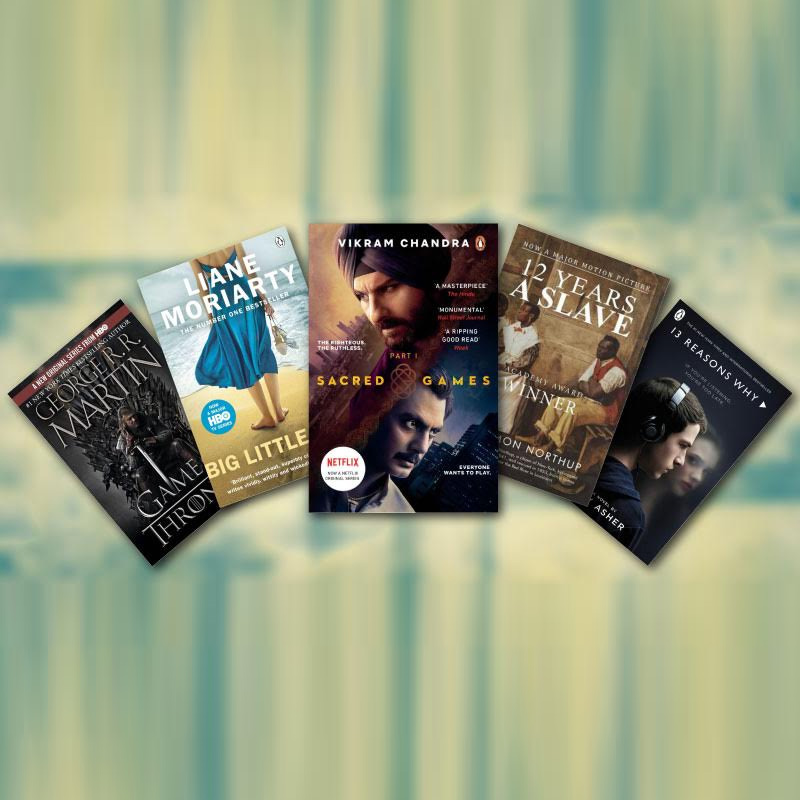
    MUMBAI: From golden age classics like Gone with the Wind and To Kill a Mockingbird, to the more recent young adult adaptations of the 2010s like The Hunger Games and The Fault in Our Stars, Hollywood has a legacy of churning out book to screen iterations. Fortunes in tinseltown have been built on entertaining the masses with 70mm productions of their favourite tomes, be it children's stories (Wizard of Oz, Harry Potter) or suspense thrillers (The Shining, Gone Girl), historical dramas (Schindler's List, Argo) and romantic fiction (Pride and Prejudice, The Notebook). While there have been constant refrains of "the book is better than the movie" by the public, Hollywood has seldom been inclined to buck the trend of motion picture or TV adaptations of mass-market publications. In fact, the massive success of Game of Thrones, whose original source material is A Song of Ice and Fire saga by George R R Martin, led to a renewed interest and spurt in adapting novels for the small screen (think The Handmaid’s Tale, American Gods, Big Little Lies et al)

    But when it comes to Bollywood, historically there has been a dearth of book to screen adaptations. While they have been around for a long time – Satyajit Ray's Pather Panchali (1955) was based on Bibhutibhushan Bandyopadhyay's novel of the same name – their frequency became too few and far in between to really count. Indian audiences were blessed with the occasional gem like Mira Nair’s The Namesake, but mostly, they're used to sub-par replications of frothy Chetan Bhagat paperbacks.

    However, book adaptations in recent years have improved, in both quantity and quality – in fact, we appear to be in the midst of a high-profile book-based production boom. Adapting a hit book isn’t a guarantee of success, but producers, more than ever, are perusing bookshelves for inspiration for the next big show or movie.

    So what has changed? When did books become a foundation for popular films and series? And what does it mean for the future of producers, authors and book publishers alike?

    If one were to pin-point the resurgence of this trend, it was Sacred Games, Vikramaditya Motwane and Anurag Kashyap’s cerebral tour de force adapted from Vikram Chandra’s massive 2006 tome of the same name, which proved to be a game-changer in the Indian OTT space. The dystopian series Leila was also based on the book by Prayaag Akbar; and the cricket drama Selection Day had its roots in the novel by Aravind Adiga. Red Chillies Entertainment’s Bard of Blood was penned by the young Indian author Bilal Siddiqi.

    Beyond OTT platforms, other content producers are also looking at books as source material. Endemol Shine India has recently acquired rights to Richa Mukherjee's Kanpur Khoofiya Pvt Ltd, Chitra Banerjee Divakaruni's unreleased book Lioness: The Last Queen, Salil Desai’s novel The Sane Psychopath along with Damyanti Biswas' crime novel You Beneath Your Skin

    Book to Screen adaptation

    HarperCollins India rights and backlist manager Arcopol Chaudhuri mentioned that in India, screen adaptations from novels have gathered pace over the past five years thanks to new and emerging broadcasting platforms, primarily driven by OTTs.

    Endemol Shine India CEO Abhishek Rege explained that adapting a book comes easy to content producers. “With adaptation, it is like a certain level of the story is already prepared and the other important aspect is popularity. If you have a certain book that is popular, you would want to use it for your story because there is a certain type of fan following which will come to watch it. I think it is something that will be continued as a book right acquisition model. Currently, OTTs need content to fill up their library, and books offer ready material, it kind of cuts short the mainline process. That is why book rights are going to be popular in the coming years.”

    Applause Entertainment content head Deepak Segal also highlighted that long-form dramas have opened many opportunities for content creators. The episodic format allows creators to deep dive into the storyline, sketch different and longer character arcs and allows them to innovate with the plot. With the digital boost, it has become one of the important mediums of storytelling as earlier the adaptations were restricted to films. This helps create more opportunities for everyone – creators, talent, platforms etc.

    Choosing Stories

    For Segal, the story is one of the key deciding factors while choosing a book. Aspects like relevance and connectivity with the audience are thoroughly examined. He said, “With India’s Most Fearless, we knew that this subject is of national importance and we wanted to highlight the storyline in four parallel tracks which the audiences have not seen.”  

    Another parameter that Applause Entertainment looks into is the shades of the character, the uniqueness to bring out a progressing reaction in the audiences. Segal further discusses the subject with the creative team, on how to pan it out into eight to ten episodic series, keeping the audiences engaged and entertained with strong storytelling at the core. Then the creative team makes an observation on how the characters will scale and how much potential it offers to build a room for innovation.

    To help writers sell their books to filmmakers and content producers, Sidharth Jain has started ‘The Story Ink’, India’s first story company. Jain said, “There are very few players in India who have been pursuing screen adaptations. But what we are doing new is to take the screen adaptation business from mere agenting to curating content strategy. I don’t think of us as an agency as it is more like a platform for writers. While we work on a fee model, we are in the business of turning books into projects.”

    Picking Genres

    Rege discovered that post Covid2019, audiences want to see happy stories. The studio is currently focusing on creating light-hearted shows. In terms of understanding viewers’ preferences, Rege uses metrics that are released by some agencies as a report for digital media consumption. Apart from this, there are different reports available that talk about genres. He also reaches out to OTT platforms to understand their research and consumer feedback.

    By contrast, Segal is looking at all sorts of genres as he wants to reach out to all buckets of audiences. “Today the viewers are open to exploring different genres and as content creators, we want to have diverse offerings. Digital has become a great way to gather insights, understand consumer psychology and their points of view on topics. It gives leverage to mould out setup, characters and storytelling,” he added.

    Jain stated that biographies and real stories have been in great demand recently. But a solid thriller, horror or mystery always makes for a good adaptation.

    Process of book adaptation

    Rege revealed that the team at Endemol Shine directly reaches out to authors and inquire if they are represented by any agents or publishers. Nowadays there are a lot of agents that work on book to series productions, and it is not the publishers who hold the rights. There is a set structure on how books are adapted to screen. Endemol Shine follows rules from global learning and then applies that to the contract. It also keeps the rights of all languages as well. When the story pans out the team decides on what could be made from it, whether it is for film, television, OTT and in what language. Packaging is another critical aspect. Post that, the director for that genre, writer, and then the cast is finalised.  

    At The Story Ink, the team has a recommendation-driven approach to pitching. They study the content strategy of the platform, map access to talent and available resources of the producer – and then recommend the right story to them for consideration. Jain added, “We don’t send out lists or catalogues. Our approach is very boutique and curated. I work with authors, publishers, and literary agents. Usually, I find a book that I feel should be adapted and then I reach out to them (the author first and then the publisher). But now, increasingly, authors are reaching out to me on their own.”

    Chaudhuri mentioned that the process involves the licensing of audio-visual rights to the producer, for a fee. The publisher or the author can reach out to the producer to pitch a book and solicit interest to license the rights. “Alternatively, producers/filmmakers themselves reach out to the publisher to acquire the rights for books they're interested in adapting for the screen.”

    According to Neelakantan, in India, the concept of IPR is still in its infancy. Usually, the writer is paid a lump sum for the book adaption rights. Theoretically, an author can put any conditions, but in practice, once the rights are sold, the author does not have any control over the product, he claimed. “Unlike books, films and television are industries and have their own constraints and demands and has scant space for writer’s ego. Once you sell the rights, it is better to forget having any creative control over it.”

    Jain disclosed that writers get somewhere around Rs 15-30 lakh and then the amount is divided between the agency and the writers, and sometimes, the publishing house.

    New Found Interest

    Is content producers newfound interest in books as source material for films and series because of the success of big-screen adaptations of Chetan Bhagat’s novels? Jain held the view that the real reason is the entry of international streaming giants like Amazon and Netflix. They are seeking better content and that’s putting pressure on the limited talent and story pool that is there in the industry.

    On the other hand, Anand Neelakantan, the bestselling author of Asura: Tale of the Vanquished and the Ajaya series, opined that not all books lend themselves for film or TV production. “The screenplay is a concise art, and many stories cannot be told in a short time of two hours. That is why there are so few screen adaptations that have lived up to the standards set by the books. Original series is a better medium to adapt novels, while the film is better served by adapting short stories or novellas. Of course, exceptions are there to this rule,” he shared. Neelakantan has written screenplays for several popular TV series, including Star TV’s Siya Ke Ram, Sony’s Mahabali Hanuman and Colors TV’s Chakravarthi Samrat Ashoka.

    According to Neelakantan, creative writing, on the whole, is moving towards the screen these days – be it movies, television or the OTT platforms. “It is the way to go. That does not mean other forms of writing would die out but would become more and more niche. Films did not finish off plays or poetry but superseded most other forms of storytelling in sheer reach and commercial power. Like any other field, those who keep pace with change in society and technology would retain leadership.”

    Impact of OTT platforms on writers 

    The question arises: are streaming giants like Netflix, Amazon, Disney+Hotstar and various other platforms changing the way books are being written, especially in India? There is a possibility that more and more writers are writing with a view of making their books accessible across audiences through these multi-media platforms.

    Jain pointed out that authors pen stories that inspire them, and OTT platforms rarely, if ever, influence how they write. Good and compelling stories will always work, in any medium. He said, “Thousands of books get published in a year, but a fraction of those will make it to screen. But yes, I believe some writers will make a lot of money because of the emergence of new platforms. Also there is no time for creators to write stories. It is at times difficult to meet the demand. In certain cases where we take on development of the scripts for books to screen adaptation, we always stay focused on what’s the best way for the audiences to enjoy the story – whether they have read the book or not. Organic and honest storytelling, keeping in mind the expectations from the format+medium will always work best.”

    Future of book adaptations

    From content creators, agencies to authors, everybody’s of the opinion that going forwards, book to screen adaptations are bound to grow by leaps and bounds. With the focus of strong storytelling at its core, this is something that will be explored more and more in the future.

    Chaudhuri contended that due to increasing demand, studios will invest more in writers' rooms. Said he: “A few years down the line, the film industry awards and the National Awards will have a category for 'best adapted screenplay', like they always do at the Academy Awards.”

    Neelkanth held the view that more books will get adapted as there is a paucity of content in the show industry. He concluded, “Book adaption does not depend on the commercial success of books. If you have a compelling story and you know how to tell it well, it does not matter how many copies the book sold. The film/ TV industry would lap up the books that would yield you a lifetime worth of royalty of a best seller in one go. So, all the writers out there, keep writing.”


  • ITV Studios names Pat Younge as non-executive director

    ITV Studios names Pat Younge as non-executive director

    MUMBAI: ITV Studios has appointed Pat Younge, as the new non-executive director. Younge is an award-winning journalist and creative leader with 30 years’ experience working at major broadcasters in the UK and abroad, he takes up the role with immediate effect.

    Younge will share his knowledge on International experience and insight to support the ITV Studios executive team. He will assist with the ongoing implementation of the Studios strategy, offer specialist advice and help develop the business. Younge replaces Denise O’Donoghue who previously held the role.

    He is currently the co-managing director of Cardiff Productions after recently leaving the Sky-backed production outfit Sugar Films.

    Pat Younge said, “It’s good to be coming back to ITV where I started my career. Julian has built a great team and ITV Studios has some fantastic labels, and I hope to help them build on their successes.”

    ITV Studios MD Julian Bellamy added, “Pat is a renowned leader in our industry with extensive experience across programme making, running Studios and TV channels.  His contribution to the ITV Studios Board will be invaluable and I’m looking forward to working with him.”

    Previously, Younge led the BBC Television Production studio, responsible for over 2500 hours of TV programming overseeing shows including Strictly Come Dancing, Doctor Who and Top Gear. Prior to that, he was a president at Travel Channel Media, during which time shows including Man v Food were launched.
     

  • Warner Media announces new UK & Ireland team

    Warner Media announces new UK & Ireland team

    MUMBAI: Polly Cochrane, Warner Media's new country manager for the UK and Ireland, has unveiled her leadership team. The company also announced that John Stanley, who helmed Warner Bros’ home entertainment operation in UK, Ireland, Spain and Nordics, has decided to exit after a tenure of 14 years.

    Stanley will step down from his responsibilities at the end of November, but stay on until the end of June on a series of transition projects.

    The new team brings together a group of seasoned executives in Alison Morris, Neil Marshall, Rachel Wakley, Alex Lewis, Allan Stenhouse and Charlie Cubbon. “I am excited to bring together such an outstanding group of executives, each of whom is testament to the great talent we have within the company,” said Cochrane. “As we integrate the commercial and group marketing activities of our Warner Bros businesses and our entertainment networks, we will benefit from their passion for our product, astute thinking, and proven desire to push new boundaries.”

    Alison Morris, who currently oversees the distribution of Warner Bros, Turner, HBO, and HBO Max content, will now lead a newly formed TV and digital distribution group which also includes home video digital distribution. She will also integrate Turner affiliate & ad sales into this combined team, working closely with respective leaders Riccardo Donato and Andrew Mallandaine.

    Meanwhile, Neil Marshall will continue to lead theatrical film distribution, and now also takes on local film production, supported by Patrick Strafford. In addition to this, he will assume oversight for all operations in Ireland.

    Rachel Wakley, who currently oversees consumer products & experiences, will expand her remit to encompass physical video and physical & digital games sales, bringing the company’s entire physical business across all retail and e-commerce channels under her purview.

    Alex Lewis will continue to lead film & games marketing. Lewis recently added digital & data strategy and media & brand partnerships as well as games to her remit and will now oversee the marketing of film catalogue in addition to her existing responsibilities for new release film.

    Allan Stenhouse will continue to lead TV Marketing, having recently taken on Turner and HBO Home Video marketing and TV distribution support in addition to the Warner Bros content he continues to manage.

    Lewis and Stenhouse will continue to jointly oversee creative services and franchise management for the UK & Ireland.

    Meanwhile, Charlie Cubbon will lead on commercial development for the UK and Ireland region, and will also oversee a newly formed central commercial planning team as well as the long-term strategy on games. He will continue to oversee supply chain.

  • Banijay retains Anne Van Sprang as HR lead

    Banijay retains Anne Van Sprang as HR lead

    MUMBAI: Banijay has confirmed that Anne Van Sprang will continue to lead its HR department as chief human resources officer. Based in Paris, she is the group’s global strategic departmental head, consulting on the company’s worldwide structure, operations and employee relations.

    Championing best practice, Van Sprang joined Banijay from Kering Group, where for two years, she was at the forefront of devising and implementing the business’ HR strategy, as well as overseeing the HR function for the technology and digital division across its 13-territory footprint. Prior to this, she was human resources director at Canal +, providing full HR support to the technical and IT division thus contributing to the digital transformation of the group. She has also held roles at TDF Group and Carrefour.

    A leading HR partner, Van Sprang has spearheaded Banijay’s integration with Endemol Shine Group, supporting chief executive officer, Marco Bassetti, and the global leadership team, in building a footprint comprising the world’s best creative entrepreneurs. Overseeing the department’s worldwide operations, she continues to collaborate with the footprint’s HR partners to combine teams and systems, and drive a joined-up, inclusive and responsible approach. 

    Marco Bassetti said, “Shortly after Anne joined us, we embarked on our acquisition of Endemol, and from the start, she has been a key player in the process. Guiding us on the integration and driving the successful merge of these two businesses, she has been an invaluable partner and voice in our biggest move yet. With her help, we are proud to be building one of the world’s most significant and innovative creative engines.”

    Anne Van Sprang said, “Talent has and will always be key to Banijay. Our creative community is at the heart of all we do and since the recent acquisition, we can categorically say we have 22 territories brimming with the most inspired minds in the business. And, with a great global HR team by my side, I am confident we can continue to attract, develop and retain the best talent in the content industry while driving new employee initiatives and best practice across our far-reaching operations.”

    Van Sprang reports to CEO Marco Bassetti in her new role.

  • Why Rana Daggubati’s South Bay is a content platform with a difference

    Why Rana Daggubati’s South Bay is a content platform with a difference

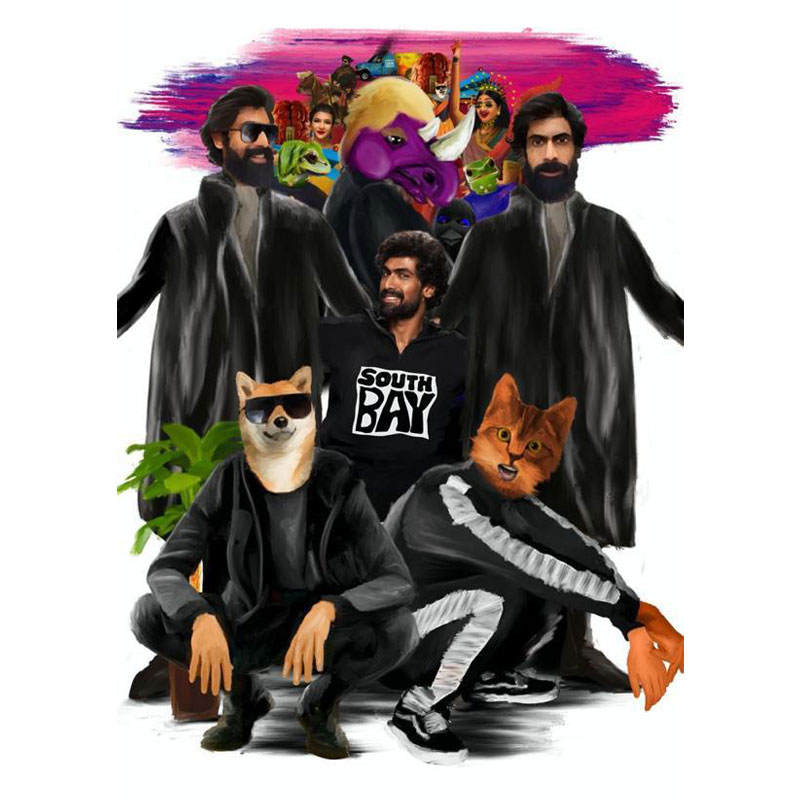
    MUMBAI: People tend to have a fixed perception when it comes to actor Rana Daggubati – that of a consummate action hero. What they don’t know is that the Baahubali star is a man who dons many hats – producer, VFX supervisor, master of the gab, entrepreneur. Recently, Daggubati launched his very own YouTube channel South Bay, marking his entry into the world of content creation.

    Rana’s South Bay will offer content from varied languages with duration ranging from ten seconds to ten hours. The actor’s intent behind this YouTube channel is to provide a platform where not only mainstream talent will be able to create cultural content but also to shine the spotlight on upcoming independent creators.

    South Bay will host programs cutting across genres and formats: from live chats, snackable short forms, news, music, animation, to fiction & non-fiction – there is enough and more for everyone. Daggubati described it as a launchpad for filmmakers who wish to go on major OTT’s.

    The driving force behind South Bay is to make it possible for those in the alternative sub-culture space to come into the mainstream, highlighted Daggubati. The idea is to start off with the YouTube channel and then take on Instagram’s IGTV. Their long-term plans involve hosting all content on their own platform – Southbay.live. On festival days, there will be two-hour-long live streaming sessions. He’s excited about his show Why Are You, which will feature Bhuvan Bam, Taapsee Pannu, Karan Johar, Ram Gopal Verma, Kangana Ranaut, Nargis Fakhri and many others. As the show progresses Daggubati wants to rope in politicians for the commentary piece.  

    “We wanted to bring a system of fair play where the large part of user base is scrolling and watching OTT content where there is so much to watch. But the idea hear is to start curating that content and then go back live system. First source of monetization is going to be through advertising and secondly through YouTube and Instagram monetization,” he said.

    For Daggubati, cultured content has always been on the cards but there was a dearth of platforms that were picking up content based out of India. Hence, he decided to launch a channel that focuses on India’s pop culture and something that address the newer generation. He added, “I have observed that in India everything is growing except cultural content. If something is sub-cultured ten years ago, it still continues to be sub-cultured and it never takes mainstream stage. We wanted to go digital because that is where the audience is. Another important aspect is the creator owns the IP as long as he lives. The problem with most content that is built, is the creator loses the value or the IP very quickly but here we are making sure we have enough creators who will stay with us for a longer period of time. We will help them with the monetization and grow further.”

    With its millennial news segment, South Bay will tap into the rising trend among young internet users to consume news on social media. For the uninitiated, 15 years ago Daggubati owned an animation company, but nothing worked out. Now, through his YouTube channel he wants to chase his passion with shows like Irreverent, promises to be a gamechanger in the Indian animation ecosystem. Unscripted content is also in the pipeline, with two shows featuring bonafide South superstars – Coming Back to Life with Lakshmi Manchu and Secret Box with Shruti Haasan – which will bring together personalities from across the globe for a conversation on life post the pandemic. For music enthusiasts, Sublime Collective will serve as a six-month-long campaign to promote handpicked independent artist across the country. Clearly, the programming line-up is packed with edgy, engaging and entertaining offerings.

    Viewers belonging to the age group of 16-45 years are South Bay’s primary target audience. For now, most shows will be in South Indian languages, while a few are going to be in Hindi. Post the first live show, Daggubati will start dropping content in independent languages. He has set his sights on bringing premium curated content in a free-play system. By generating a global awareness for Indian content, he wants to connect creators the world. Being present on the digital platform will provide them a chance to come together and build an overall ecosystem.

    South Bay has also collaborated with Triller as their exclusive and official short form video content partner. Through cross promotions South Bay and Triller will promote the respective content, programming of every single show will be packaged and uploaded specifically for the Triller format.

    Much like the characters he plays on-screen, Daggubati has undertaken a daunting endeavour in building a multi-cultural content platform that gives independent creators the chance to showcase their talent. But he’s confident and has developed a taste for success – be it on the big screen or small – and he’ll draw on his well-spring of diverse know-how and flexibility to ensure that his latest experiment pays off in a big way.

  • Balaji Telefilms sees stronger Q2 FY21

    Balaji Telefilms sees stronger Q2 FY21

    KOLKATA:  The Ekta Kapoor headed content production house Balaji Telefilms on Monday reported a consolidated revenue of Rs 78.3 crore in the second quarter, up 123 per cent from Rs 35.05 crore in the first quarter. The company has narrowed down EBIDTA to a negative Rs 12.4 crore from the negartive Rs 26.3 crore in the previous quarter. The company has posted a net loss of Rs 19.5 crore again an improvement over Rs 27.9 crore in Q1 2020.

    In a regulatory filing, Balaji Telefilms has stated that content production has resumed slowly leading to higher production cost of Rs 60.5 crore. 176.5 hours of TV content have been produced in the quarter. Six shows were on air during the quarter and the company is expected to launch two new shows in the coming quarter.

    “This quarter we took steps to restore our content production activity and have slowly returned to more normal levels of TV content production. The teams are adapting to the new processes of shooting and I am confident we will adapt quickly given our strength and successful track record. Our digital businesses had limited fresh content during the quarter but we have managed to get better engagement using our library of over 65 original shows. We will soon restart adding more shows to the platform as shows are ready for launch. Overall some of the cost optimization programs initiated should continue to allow us to see strong profitability as our operations return to pre-COVID levels,” Balaji Telefilms managing director Shobha Kapoor said.

    Total Revenue for ALTBalaji stood at Rs 14.7 for the quarter compared to Rs 14.9 in the previous quarter. The OTT platform has witnessed a marginal uptick in international subscriptions as it is gaining traction globally. While average daily subscriber addition in the quarter has stood at 9000, average revenue per user (ARPU) remains between Rs 140 to Rs 150 a year.

    The direct subscription revenue has witnessed a marginal de-growth as the country has slowly opened up and customers are returning back to work and social commitments. Moreover, revenue from its Zee5 deal has also resumed in the quarter. As there has been a huge change in content consumption trends, the recent lockdown has accelerated the shift of consumer base from tier 1 into non-metro and tier II or tier III towns and cities. 

  • Bodhi Tree Multimedia’s debut on NSE Emerge to fuel expansion & growth

    Bodhi Tree Multimedia’s debut on NSE Emerge to fuel expansion & growth

    KOLKATA: It is not a common practice for production houses in India to venture into the capital market. But in quite a unique move, content production company Bodhi Tree Multimedia Ltd recently debuted on NSE Emerge. It has already raised Rs 3.71 crore from its SME initial public offering, which will go towards expansion activities and strategic growth, said Bodhi Tree Multimedia managing director Mautik Tolia.

    Started in 2013 by Tolia and Sukesh Motwani, the production house initially focused on general entertainment on TV, and later expanded into other genres and also into digital content. Along with working for major broadcasters, it has produced content for OTT platforms like Voot, Viu.

    Tolia said that they had been considering going public since last year, and the process would have been finished in the last financial year if the Covid2019-induced lockdown had not struck suddenly. Hence, they had to push it back by a couple of months.

    “You are at a point in entertainment industry where you are at an inflection point with digital content, TV content. Moreover, new avenues of content production are emerging. If you want to take advantage of that, this is the right time to focus on accessing the capital market because it is a long-term way for a company to grow. Eventually, if you want to develop your own IP, being listed opens lots of doors for you. It’s a strategic objective, more than anything else,” Tolia explained.

    The company posted Rs 27.45 crore consolidated revenue for FY20. For the first five months of FY21, it has reported Rs 4.86 crore revenue and profit of 0.32 crore. In a filing on the stock exchange, the company has also stated that it intends to utilize the issue proceeds towards working capital requirements, general corporate purpose and meeting the issue expenses.

    Elara Capital VP – research analyst (Media) Karan Taurani also endorsed the decision of getting listed. Noting that content making has, in fact, picked up during Covid period due to increased amount of time spent on TV and digital platforms, Taurani said this has led to greater demand for good content from major broadcasters and OTT players alike. According to him, Bodhi Tree Multimedia is a solid production house which has made quality TV shows and web-series. Hence, Taurani expressed confidence that it will get a good valuation.

    Taurani went on to mention that being platform-agnostic will also work in Bodhi Tree’s favour in a market where most listed content creators churn out shows either for their own channels or OTT platforms. Hence, it will provide multiple opportunities overall, he shared.

  • Banijay retains Marie Schweitzer as chief strategy officer

    Banijay retains Marie Schweitzer as chief strategy officer

    MUMBAI: Banijay has announced that Marie Schweitzer will continue to remain as chief strategy officer. Schweitzer has been with the production house since its inception in 2008, and played a fundamental role in the merger with Endemol Shine group.

    In the newly scaled-up group, she will continue to report to CEO Marco Bassetti and oversee strategy, research and communications. In addition, she will also be responsible for Banijay’s overarching strategy and identify strategic expansion opportunities.

    Appointed to her current role in September 2016, Schweitzer joined the group during its launch as co-head of market research. Since then, she has held a number of positions across the business. Taking on strategy and business development more recently, she has been working with the executive team on M&A and growth opportunities, while leading the departmental heads within her wider remit.

    Prior to Banijay, Schweitzer was head of market research at Endemol France following several years in production.

    Banijay CEO Marco Bassetti said, “Marie has been with us since the start and is very much a key figure in the growth trajectory of the business. Aiding most recently on the complex acquisition and integration of Endemol, she has been at the forefront of our strategy and development, consistently balancing content expertise with entrepreneurial spirit. A valuable member of our exec team, she will now continue to work with us to effectively evolve and strengthen our global footprint for the future.”

    Marie Schweitzer said, “I have spent the past 12 years at the heart of a company that has gone from one territory to 22 and a few employees to thousands worldwide. It’s a proud moment to see the hard work paying off as we morph into the biggest unscripted player on the planet and with a host of super-brands to now call our own, a fantastic raft of talent and an unrivalled pipeline of premium IP, the opportunities are endless.”

  • Wiip partners with Roy Kapur Films to produce The Anarchy

    Wiip partners with Roy Kapur Films to produce The Anarchy

    MUMBAI: William Dalrymple’s best-selling historical book on colonialism The Anarchy: The Relentless Rise of the East India Company is getting an adaptation for the small screen.

    Independent production house Wiip has teamed up with India’s Roy Kapur Films to adapt the tome, which traces the rise of The East India Company and the fall of Mughal Empire. The Anarchy was recommended by former US president Barack Obama amongst his top reads in 2019. The book was recently listed as a finalist for the  Cundill History Prize 2020, one of the most prestigious awards in the world for non-fiction writing.

    Executive producers lined up for the venture are Wiip’s Paul Lee and Mark Roybal, Roy Kapur Films’ Siddharth Roy Kapur and XPat Productions’ Naz Haider and Siva Natarajan. Roy Kapur Films bought the rights to the book earlier in June this year.

    Wiip and RKF will bring onboard a diverse international team of writers to create a global series both in scale and quality.

    “Siddharth is not only India’s most formidable producer, but he is also a true gentleman. We are beyond thrilled to be partnering with him, along with our good friends at XPat, on The Anarchy. Paul, the Wiip team and I are humbled — and to be honest, slightly terrified — that Dalrymple has entrusted us with his epic masterpiece. There couldn’t be a more opportune moment for adapting The Anarchy into a television event,” said Wiip’s Mark Roybal, as quoted by Variety.

    The Walt Disney Company India former MD and current president of the Producers Guild of India Siddharth Roy Kapur produced 2016’s most successful movie Dangal. It was India’s biggest worldwide grosser of all time.

    “I believe that stories that are compelling, relevant and authentic have the potential to resonate with audiences across all nationalities and cultures, whichever part of the world those stories may come from. We are delighted to be working with Paul, Mark and their team at Wiip to bring to life this fascinating book and to create what we envision to be the definitive story of the colonization of the Indian sub-continent,” added Roy Kapur.

    Dalrymple will act as creative consultant for the show. The Historian-author has penned bestsellers like City of Djinns, White Mughals and In Xanadu.

  • Applause Entertainment releases 18 premium drama series in 19 months

    Applause Entertainment releases 18 premium drama series in 19 months

    MUMBAI: The content ecosystem has witnessed a boom with the advent of streaming services and an upsurge in non-linear content consumption. Amidst the creative revolution, Applause Entertainment has produced 18 diverse shows in multiple languages in a short span of time.

    Spearheaded by the media veteran Sameer Nair, the content creation studio has focused on a combination of smart originals of international formats, book to screen adaptations, and Applause Originals. It has created the official Indian adaptations of popular international shows including The Office, Criminal Justice, Hostages and Your Honor.

    Applause is presently developing Indian versions of the hit series Call My Agent, Fauda and Luther. The studio’s latest offering, Scam 1992 The Harshad Mehta Story, is currently the highest rated show on IMDB in India (9.6) and #21 amongst the top 50 television shows globally. Shows produced by Applause are currently streaming on leading global video streaming services including Disney+Hotstar, Amazon Prime Video, Netflix, SonyLiv and MX Player.

    Applause Entertainment CEO Sameer Nair said, “We are truly humbled by the phenomenal response from audiences for all our content. From Criminal Justice to Scam 1992, it’s been a delightful journey creating our shows, collaborating with best in class talent, creators and business partners! We are here to dazzle, delight, disturb and disrupt, and this is just the beginning.”