Category: Film Production

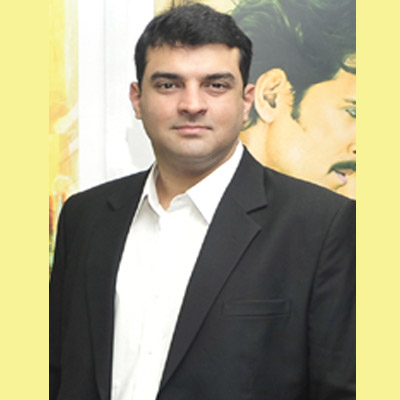
  • ‘The ability to de-risk is more now’ : UTV Motion Pictures chief executive officer Siddharth Roy Kapur

    ‘The ability to de-risk is more now’ : UTV Motion Pictures chief executive officer Siddharth Roy Kapur

    UTV has expanded its movie slate for the fiscal and is eyeing a revenue of Rs 4.5 billion from this segment, up 43 per cent from the year-ago period.

    Upping its operations over the years, UTV has a roster of 12 movies this fiscal. UTV‘s scale-up goal: to have a peak pipeline of 15 movies a year.

    Narrowing its risks, UTV has indulged in a high element of pre-sales activities. The environment has been conducive as prices for satellite TV telecast rights have ballooned with Viacom18 planning the launch of a Hindi movie channel next year. The syndication model, widely popular last year, is being thrown out of the window.

    After delisting from London‘s Alternative Investment Market (AIM), UTV Motion Pictures is not looking at raising further capital as the business has reached a self-generation mode.

    In an interview with Indiantelevision.com‘s Sibabrata Das, UTV Motion Pictures chief executive officer Siddharth Roy Kapur talks about the balance film studios need to perfect between scale and a de-risked strategy.

    Excerpts:

    Indian movie studios were talking of scale a few years back. Now de-risking seems to be the mantra. Is it because in the process of scale some of the studios burnt their fingers?
    Building scale and de-risking are not parallel processes. It is just that the ability to de-risk is more now with the overall slate of movies going up.

    But the trend is to lock in the music and satellite television telecast rights before the theatrical release of the movies. Haven‘t studios increased the pre-sales deals this fiscal?
    The opportunities have definitely increased as the market for satellite TV rights has heated up with a broadcaster planning to launch a Hindi movie channel. The syndication model, widely popular last year, is being thrown out of the window. As broadcasters are chasing exclusive rights, the rates have gone up. This is working out well for the broadcasters and the producers.

    Also, with a diversified and expanded slate, studios have been able to derive higher values. We at the early part of the fiscal, for instance, had locked in Rs 2.37 billion from pre-sales of different rights.

    Aren‘t you in the process sacrificing an upside potential?
    We are offered a premium even before the movie is out. And if we foresee a significant upside potential, we do not go for pre-sales. We decide on a film-to-film basis.

    We have also come out with new models. In case of Raajneeti, we did a satellite deal based on the theatrical performance of the film. We looked at higher slabs based on the performance index.

    But don‘t you have a de-risking approach for each movie?
    We have developed the ability to de-risk on each movie. As a strategy, we look at de-risking on the satellite and music rights front. On the theatrical distribution front, we prefer to handle it ourselves.

    With pre-sales opportunities on the rise, aren‘t you tempted to scale up further?
    We have managed to scale up to 12 movies a year and have a diversified slate in terms of genre and talent. We have a mix of movies ranging between as low as Rs 30 million and as high as a blockbuster can cost. We have the ability to release in 45 countries.

    As for the future, we are looking at a 12-15 movie slate. We feel that it is not a feasible model to scale up more if you are to maintain the same level of quality control.

    Around 50 per cent of the slate will be through co-productions. UTV will, however, handle the marketing and distribution of these movies.
    ‘We are looking at a 12-15 movie slate a year. We feel that it is not a feasible model to scale up more if you are to maintain the same level of quality control‘

    So are we going to see a slower growth in the top line?
    We are on course to achieve a turnover of Rs 4.5 billion this year (up from Rs 3.15 billion). There will be organic growth and we will also do bigger movies.

    With more multiplexes and digitisation coming up, there will be growth in theatrical revenues. We also don‘t see a softening in rates for satellite TV rights in the near future as broadcasters have planned for their growth.

    Our focus, though, will be on profitability. We are confident of posting a 20 per cent year-on-year bottom line growth for the next three years.

    UTV Motion Pictures delisted from London‘s Alternative Investment Market. Is it now looking at raising funds for its movie business?
    We are pretty much well funded and have no fund raising plan. The business has reached a self-generation mode.

    Is the slate firmed up for the next fiscal as well?
    We are sitting in a pretty position and expect to see strong growth in the next fiscal. We have only 3-4 titles to lock up. Our pre-planning is well in place. As a studio, we stand in a unique position as we are a producer and not a content aggregator.

    Is UTV looking at aggressively producing movies in regional languages, particularly Tamil and Telugu?
    We are keeping watch on how the regional play is emerging. But our focus will be totally on the Hindi slate. Strategically, Bollywood is our core business. We may do a one off movie in the regional space on a tactical basis.

    In the south, the game is riskier and the ability to de-risk lower. The theatrical dependence is huge in the south. The sensibilities are also different.

    In the revenue mix, how much does theatrical account for?
    The box office accounts for 55 per cent of the revenue mix, while 20-25 per cent comes from sale of satellite TV rights. Music accounts for 5-7 per cent, overseas for 7-10 per cent; home video for 3-5 per cent and the remaining comes from new media. Going ahead, theatrical will fall to 50 per cent while new media will increase.

    Piracy impacts our overseas home video revenues. We see that compensated over the years by the growth in the new media space. The launch of 3G in India will also augment our new media revenues.

    Has there been a correction on the cost front?
    Costs have fallen to a suitable level for the industry as a whole, but a lot more needs to be done.

    UTV has expressed concern over the rise in marketing costs. How far has the industry come together on this issue?
    There has been a 10-15 per cent increase in promotion and publicity expenses over last year. The industry spends around 50 per cent of the theatrical revenue for domestic marketing, if one calculates the net distributor share to each of the producers. Due to the competitive framework and the increase in media options, we tend to out-shout each other. We are advertising more than we need to.
    A meeting took place among some film producers and everyone seems to be committed to see that this gets corrected as it is affecting our profit margins. It is work in progress and a solution, hopefully, should be on sight soon.

    UTV has shied away from releasing films during the IPL Indian Premier League). Will you be more conscious to plan the movie releases in such a way that bumpiness does not happen from quarter to quarter?
    UTV will have some releases during the IPL this time. While we are looking at ways to ensure that bumpiness does not take place, the right release date is our top priority.

    Yash Raj Films is trying to create a segment for youth films. Do you think the industry has matured for a segmentation approach?
    The first task is to find a great story. This may or may not include some target groups. But the secret to success is working on interesting scripts. Working backwards is not always the solution.

  • ‘Fiction will help us scale up’: Endemol India managing director Deepak Dhar

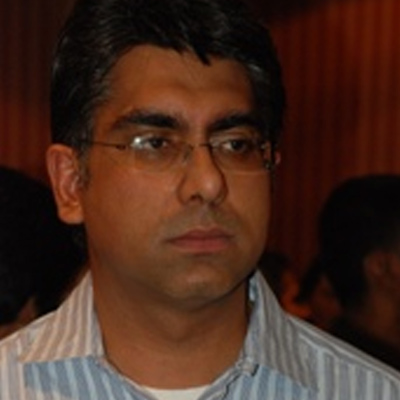
    ‘Fiction will help us scale up’: Endemol India managing director Deepak Dhar

     For Endemol India, it has been a roller coaster ride. The international content creator has established itself as a leader in the reality TV genre and has expanded into other strands of content. Now the gameplan is to speed up on the fiction front.


    Endemol, which produced 1400 hours of content in 2010, is planning to scale up in several verticals including regional language, sports and food and lifestyle programming. The company recently formed a JV with Rhiti Sports, the company which manages Indian skipper MS Dhoni, for sports formats.


    In an interview with Indiantelevision.com’s Ashwin Pinto, Endemol India managing director Deepak Dhar talks about the company’s growth plans.


    Excerpts:


    What progress did Endemol make in India last year?


    The progress has been 360 degrees. Initially, we were known for reality. Now it is not the only thing; we are known for other strands of non fiction also.


    We have an array of fiction shows. We have moved into regional as well with Bengali and Southern language content. We have also gained from being in the Hindi general entertainment channel (GEC) space.


    How does India compare to other Asian markets?

    It is growing. The entire world is looking at us. Our parent is looking at what India can do. We did over 1400 hours of production last year. We have done well if you look at the state of our productions or business development. We have had double digit growth.

    Could you shed light on how you are scaling up the fiction business?

    We are seeing ideas that can be exploited in the Hindi GEC space. They can also go into the regional space, south, Bengali, Marathi. We are looking at slots that need newer storytellung. We are meeting with our broadcast partners to see what the synergies are.


    We do a lot of non fiction and format work. In terms of scaling up, growth will come from fiction.

    We will be making two to three announcements in the next few weeks.

    What kind of shows are you looking at?


    We are not focussing only comedy or only drama or only thriller. We are known for 360 degree entertainment solutions. Anything that fits the household will be our focus.

    Are you looking at forming JVs with local production houses?


    We are constantly analysing it. Now we are largely focussing on organic growth. We will look at inorganic growth, but at this point of time there is nothing serious.

    Now we are largely focussing on organic growth. We will look at inorganic growth, but at this point of time there is nothing serious

    In terms of margins, how are you faring?


    Margins are always tough in this country, espcially in the broadcast and production sector. In our formats and even our fiction business, we have kept a healthy balance in our margins due to product efficiencies. In a year, we do around nine non fiction shows.

    But in the fiction space aren’t margins squeezed?


    They are squeezed but again for us the emphasis is great storytelling. We want to be happy with the stories being told and we will manage the margins. Comedy has its own space. In drama, emotions are integral to the Indian psyche. That will never go out of fashion.

    How do you manage costs?


    It is a challenge. Broadcasters are always looking to push costs down without the quality falling. Broadcasters, though, understand that to have a quality product the margins must be healthy. The production house must be given some breathing space.


    Non fiction shows have a larger budget. You get a bang for 13-26 weeks and that is it. With fiction it is like running a marathon. You need to have the stamina to push the idea and engage the audience.

    Balaji to some extent has lost dominance which has created a gap. How are ou tapping this?


    We have already tapped into this. We are doing three fiction shows at this point of time. We will be adding two more within a month or so. We have stepped into this opportunity. We also look at the competition and what is on the horizon.


    Fiction is where the horizon is. The margins can improve in this genre. People will look at us as an Indian producer and not just as a format producer. We will focus largely on fiction.

    Indian production houses are known for doing one kind of show. We are not like that. We do things from ‘songs and dancing’ to reality and action-based shows.

    How were you able to broadbase youreself into fiction?


    This has to do with the team. We have Gadgi and Kartik as the creative and business heads. They lend credibility and experience to Endemol’s fiction slate. We believe that if you have the right talent on board, then the right discussions start flowing out.


    Geet has worked. Mili Ye at one point really worked. But the story ran its cycle. These stories have been channel drivers for Star One and Star Plus; they will help us consolidate our next line of fiction.

    In the non fiction area, you entered the food genre with two shows. What scope do you see in the lifestyle space?


    Lifestyle is a niche space. However, we do not want to leave any space untapped. The opportunity might seem small. But an opportunity needs to be seen.


    Documentary and speciality channels are growing in popularity in the West. You will see the same trend happening here. A new spate of speciality channels from science and technology to crime and thriller to food are bound to come in. This is a new space we will be busy with this year.

    Is the approach here different from how you look at other areas like formats?


    Yes! In lifestyle you will have to create original ideas; it is not about replicating an idea from the US. We don’t want to simply pick up a format. it has to fit into an opportunity.

    The local version of Wipeout launches tomorrow. Has the format been changed in any way?


    Not really. You will see the same thing. It will be extremely engaging, funny and competitive. It is the new next breed of reality shows that we will roll out on Indian television. We want to push trends and get trends into the country.

    What trends are we seeing abroad in the format space?


    A lot of game shows are doing well at this point. 1vs 100, Million Pound drop Aare two big game shows. We are bringing them to India.


    Deal Or No Deal has done well. We produced 300 episodes of this on the Sun Network. We did five seasons back to back for them.


    You will see us pushing a lot of gameshows going forward. Howwever, reality will always be the flavour of the season. People like to watch others in pressure cooker scenarios. This is the spectrum of ideas you will see.


    We are also looking to bring in State of Panic to India. Circus Of The Celebrities is another one. It is an engaging, high end primetime experience. The common thread is people being pushed into pressure cooker situations; in others pure true human emotions are glorified on primetime television. As long as the emotions are true, it will help some of these format shows stand.


    We are also doing things in the ad funded space. Rin Mera Star Superstar, Fair And Lovely Choo Lo Aasman have done well for us. This is what I mean by having a 360 degree approach. We are pushing ideas in this space. We need top keep a balance between the needs of a broadcaster and an advertiser. You do not want an advertiser funded show to look like one. You have to do something that has been well thought through and engages.

    What is the gameplan to tackle the South market?


    We will take our big ticket gameshows there. We are also taking reality shows there.


    Currently the South is a growing part of our business. This year we will add a few more fundamental blocks to make it stand on its own.


    We are concentrating on the Tamil and Telugu markets. We producing a lot in the Malayalam space as well.

    What balance are you looking at between fiction and non fiction content?
     
     
    We want it to be 50:50. We are on track to achieve this. We have been the market leader in the non fiction space. The challenge is to see how we can fast track our business and sales. We are adding new pieces like sports into our business. This will bring in new challenges as every business has its own dynamic. We have a good tab on the competition.

    How did the tie up with Rhiti Sports come about?


    We have been exploring this in terms of doing things in the sports space. We want formats like The Match, Next Great Champ. We are looking at basketball, football, boxing, cricket. Rhiti Sports with their credibility will help us monetise the formats across sports broadcasting and GECs as well.


    The sports genre is not tapped in terms of formats. Sports formats are consumed a lot by the youth, kids and women. We have a rich library of content in the sports format space.

    You used to do a Call TV initiative with ETV. How did that fare?


    It was a good experience. In the interactive TV space, we do a lot internationally. There was a need to create a low cost game show. We produced Break The Bank. The market size, though, is small. The telecom industry versus the content industry faces its own set of challenges. So we did not push it too hard.
     
    Are you looking at new media?
     
    Yes! We do a lot of content for the mobile internationally. With 3G coming in, we are keen to tap this space. We have formats tailored for the mobile like small comedy interstitials. The youth love to sample something really fast. They are restless. They don’t only want content on the television. A lot of discussions are going on globally regarding how to cater to the mobile audience.
     
    Where do you see Endemol five years from now?
     
    When we came in four years ago, the idea was to Indianise the Endemol brand. Now we want to localise and regionalise the Endemol brand. We want to adapt our content to a lot of regional markets.
  • Hungama Mobile, GSM Association, Roamware unveil a mobile Bollywood film initiative

    Hungama Mobile, GSM Association, Roamware unveil a mobile Bollywood film initiative

    MUMBAI: Bollywood is all set to go mobile! Global roaming solutions provider Roamware, Hungama Mobile and the GSM Association have joined hands to launch a Mobile Bollywood initiative. The aim is tio create short films for the mobile. This is one way in which film lovers from across the world can sample what the Indian film industry has to offer.

    The three parties have partnered with director Sanjay Gupta to premiere Bollywood short films for the mobile. The films titled Dus Kahaniyah will premiere at GSMA’s 3GSM World Congress in Barcelona from 12-15 February 2007. Th event is expected to attract 60,000 executives from the mobile world. This initiative follows an initiative by Roamware in the US where it sponsors the Sundance Film Festival Short film Project. This is a JV between Roamware and the Sundance Institute.

    GSM Association chairman Craig Ehrlich says,”The Sundance and Bollywood communities represent some of the most creative, vibrant and diverse talent in the movie world. In showcasing the films at Barcelona we hope to create a compelling mobile experience for mobile users across the globe. The aim of the GSM Association is to make the mobile experience go beyond text and picture messaging. India is the fourth largest mobile subscriber nase. The GSM Association represents every GSM operator in the world. “

    Hungama Mobile MD and CEO Neeraj roy says, “Hungama mobile has exclusive rights to over 70 per cent of Bollywood content on the mobile and digital platforms and trhis content from India. We believe that Bollywood offers tremendous potential as a content category for carriers in over 125 countries. The revenue sharing arrangement will see around 50 per cent go to the content creator.

    At the first stage we wanted established filmmakers to come on board. Later on when the mobile becomes viral we will look at offering our platform as a springboard for emerging filmmakers. Firstly we want to test the model to see if it works and makes money for everybody in the value chain.”

    Each story in the film runs for 10 minutes and stars established stars like Madhuri Dixit, Jimmy Shergill and Dia Mirza. Mirza notes that this represents a huge opportunity for the Indian film industry to move into the international market. This she notes comes at a time when the international market is becoming more interested in what Bollywood has to offer. Gupta thanked the three parties for providing established filmmakers with the chance to make short films.

    That is something that they do not often get a chance to do. The fact that the short films have known faces will make them reach the masses that much quicker he notes. “It is exciting to be part of a move that has the potential to create a new distribution model for Bollywood. The market for short films has been given an impetus by the fact that the quality of the video experience on the mobile has improved a lot.”

  • Yash Raj Music unveils DVD-audio format of ‘Dhoom:2’

    Yash Raj Music unveils DVD-audio format of ‘Dhoom:2’

    MUMBAI: Yash Raj Music has unveiled the music of Dhoom:2 in the DVD-audio format. Surround Sound and audiophiles can choose from the audio menu the format they want to hear the songs in.

    The album makes use of the DVD-Audio format in other ways as well. The lyrics can be viewed on-screen as the music is playing, thus enabling Karaoke sing-along. The theatrical trailer of the movie is also available on the DVD, as well as a credits page that can be viewed optionally.

    Additionally, four tracks have also been include – Chand Sifarish (Fanaa), Kajra Re (Bunty aur Babli), Salaam Namaste (Salaam Namaste) and Halla Re (Neal ‘n’ Nikki), the lyrics for which are also available on screen. Rounding up the package is a gallery of pictures from the movies, as an optional feature, states an official release.

    This disc can be played on both DVD-Video and DVD-Audio Players. All tracks have been re-mastered in 5.1 Surround Sound. This DVD Audio disc features quality sound formats featured below (which can be individually selected from the audio menu options):

    – Meridian Lossless Packing (MLP) 24 bit / 48 KHz.
    – Dolby Digital 24 bit / 48 KHz.
    – DTS Digital Surround Sound 24 bit / 48 KHz.

  • Exim Bank puts Rs 2 billion behind films in FY07, mulls equity in animation companies

    Exim Bank puts Rs 2 billion behind films in FY07, mulls equity in animation companies

    MUMBAI: For the Bollywood industry which is keen to tap the overseas market, there is good news. The Export-Import Bank of India (Exim Bank) is willing to loosen its purse strings and has extended funding to the tune of Rs 2 billion for eight movies during the current fiscal.

    Exim Bank, in fact, has funded the recently released Yash Raj Films’ big ticket movie Dhoom 2. “We have lent Rs 2 billion to the film industry this fiscal,” Exim Bank chairman & managing director TC Venkat Subramaniam tells Indiantelevision.com. “Our total exposure to the sector is Rs 4 billion.”

    Of the other Yash Chopra movies funded by Exim Bank are Veer Zaara, Hum Tum, Bunty Aur Babli and Dum. The Bank has also financed Don (Rs 100 million) and Mangal Pandey – The rising (Rs 80 million). Exim Bank has been funding Hindi movie projects which have a potential to earn foreign currency revenues in the overseas market.

    Animation is another area in the entertainment sector that has drawn the attention of Exim Bank. It is eyeing the option of picking up equity in start-up animation companies. “With their outsourcing models, animation companies in India have the potential to grow. Apart from prividing debt, we may consider equity participation in the start-ups. But for the companies which are listed and are already enjoying high valuations, it doesn’t make sense for us to enter as equity partners because they are already highly valued,” says Subramaniam.

    Exim Bank is in talks with an animation company to provide finance for the expansion needs. With Crest Animation Studios Ltd, it has already agreed to lend $7 million to Crest Animation Studios Ltd.

    The Bank has extended lending to over Rs 4 billion for film projects which have potential to earn foreign exchange. “We are not only financing on production but also on the overseas distribution side.

    Noted film producer Bobby Bedi will approach Exim Bank to discuss his new project Mahabharata for which he plans to invest Rs 3-4 billion. Bedi is considering institutional financing for the epic project which will extend to a talent hunt, TV series, film trilogy, gaming, animation and a theme park. “Bedi is looking at an innovative financial structuring. He is taking the project to financial institutions. He is also going to approach Exim Bank for this,” an industry source says.

    Exim Bank will examine the cash-flow situation of the project as it spans over different formats and will take a longer period to complete.

  • SRK to be honoured at Dubai International Film Festival

    SRK to be honoured at Dubai International Film Festival

    MUMBAI: The Dubai International Film Festival (Diff) has announced this year’s festival will honour Shah Rukh Khan, Oliver Stone and Nabil El-Maleh and for their outstanding contribution to cinema, as part of the Diff Salutes programme.

    The festival will run from 10-17 December 2006 at the Madinat Jumeirah. Diff Salutes is a retrospective tribute that celebrates the work of distinguished film makers from Asia, the Arab world, and Hollywood. This follows last year’s In the Spotlight segment, which honoured Oscar-winning American actor Morgan Freeman, the Egyptian “king of comedy” Adel Imam, and Indian producer-director Yash Chopra.

    Diff chairman Abdulhamid Juma said, “Within three years, Diff has come a long way in capturing the attention, participation and awareness of the regional and international film industry. The presence of these legends will confirm the festival as a forum that celebrates milestone cinema.

    “Retrospective screenings of their acclaimed work will provide further momentum to Diff’s objective of inspiring an emerging generation of film makers, who we think will take the industry to new levels of growth.”
    Stone has won the Oscar thrice. Stone won two oscars for the Vietnam films Platoon and Born On The Fourth of July.

    At the forefront of several genre trends, his films are well crafted epics that deal with the effect of history on the individual and vice versa. A distinct feature of Oliver Stone’s movies is the unique use of cameras and film formats, as seen in JFK (1991) and Natural Born Killers (1994). Stone’s most recent film, World Trade Center, follows the thread of his earlier works in documenting events in the US that impact people’s lives.

    King Khan has appeared in over 55 films. Two of his films were India’s official entries in the Oscars: Paheli (2006) and Devdas (2002).

  • Shemaroo releases ‘RK Films-The Immortal Collection’

    Shemaroo releases ‘RK Films-The Immortal Collection’

    MUMBAI: Shemaroo has released the album RK Films – The Immortal Collection on VCD. The album, which is a six VCD pack, is a collector’s item featuring 72 songs from films produced under the RK Banner. Three VCDs of the pack comprise 36 songs from Black and White era while the other three comprise 36 songs in colour.

    The RK Banner is synonymous with melodies and good music which has entertained music lovers over several decades. Raj Kapoor always believed that good music was an essential ingredient for the success of a film. Over the years R. K Banner has delivered some of the best songs which are considered to be Gems for music lovers.

    Shemaroo says that the pack celebrates 51 years of R.K.Films, right from Aag (1948) to Aa Ab Laut Chalen (1999) as it unfolds one melody after the other from India’s most prestigious movie-making banner. The films range from the ones in which Raj Kapoor has acted/ directed to the ones which he has only directed. It also consists of films like Boot Polish, Ab Dilli Dur Nahin and Jagte Raho which were directed by rank outsiders for the R.K.Banner as well as films like Kal Aaj Aur Kal which was directed by Randhir Kapoor.

    Shemaroo adds that The Immortal collection series has been presented in the form of an album.

  • Eyeing B.A.G-ful of opportunities in media

    In the 1990s when a rookie TV producer called Anurradha Prasad started B.A.G. Films — (some old hands in the company say the strange acronym stands for Bhagwan, Allah, God) — skeptics sneered that it was another flight of fancy of a young girl from a well connected political family of Bihar, a state that can easily be dubbed the Wild East of the Indian political theatre.

    But over a decade later, critics have been more or less silenced. B.A.G. Films is today a listed company and showing decent financial results to investors, if not exactly setting the Arabian Sea on fire. It has a media training institute up and running, is doing several shows on TV channels, including Doordarshan’s terrestrial network, and has two feature films ready for release. Add to all that are its recent forays into FM radio.


    B.A.G. Films Ltd MD Anurradha Prasad

    “After the initial public offer in 2003, we were in a phase of consolidation as we realised we needed to move into a different league where more established players were operating. That’s the reason why we didn’t get into new businesses,” B.A.G. Films LTD MD Anurradha Prasad told Indiantelevision.com, sitting in her plush office in the company’s swanky corporate headquarters in Noida’s Film City on the outskirts of Delhi.


    There are also talks about B.A.G. turning into a broadcaster with the launch of at least one TV news channel (crime to be specific), if not two. But Prasad hushes away queries on this subject saying such reports are “purely speculative at the moment.” Rather, she counter-punches by asking, “Do people realize that starting a TV channel is not child’s play? And news channels are costly affairs.”


    Such assertions notwithstanding, rumours are still doing the rounds that B.A.G. is quietly preparing to launch a TV channel relating to crime news and shows as it has gained some expertise in this field by producing crime shows for Star News.


    ‘Red Alert‘ on Star News strengthened the channel‘s crime slot

    Incidentally, two such shows, Sansani and Red Alert, might not still be figuring in the Top 50 list, but do get ratings, which Prasad points out, are “heartening and encouraging.”


    After the consolidation, comes the expansion. According to B.A.G. Films vice-president (systems and planning) Amit Jain, middle of 2005 the company decided to make forays into FM radio segment, animation and creating content for mobile phones and other hand-held devises.


    Value-added services like content syndication and tailoring content for various delivery platforms for different technologies is going to become a big business, Jain explains.


    “At the moment, almost 90 per cent of the revenue is coming from TV programmes. But over the medium to long term, we expect each of the new segments to contribute significantly to the overall kitty,” Jain avers, pinning his hopes on the business activities taken up by B.A.G. in recent months.


    However, equity fund managers are still skeptical of the media company, promoted by Prasad and her Member of Parliament husband Rajiv Shukla.


    Said an equity analyst who tracks several media company stocks, “In terms of business, B.A.G. is doing well, but the programming strategy is flawed, which leaves the company with little scope to scale up operations. In media, the whole game hinges on the scalability factor.”


    ‘Siddhanth‘ on Star One gave Indiantelevision a star in Pavan Malhotra

    Another capital market analyst adds that B.A.G. Films might be doing almost 20 hours of programming per week for various TV channels, but it needs shows to break into the Top 20 and Top 50 list of programmes.


    “As a fund manager, I’d say B.A.G. needs to build up a sizeable market capitalization and show better earnings per share, which would come only when the company’s growth is good,” the analyst adds.


    For the year ending 31 March 2006, B.A.G.’s net income from sales / operations were up 16.4 per cent to Rs 423.7 million from Rs 364.1 million the previous year. Net profit after tax stood at Rs 30.5 million compared to Rs 33.8 million in the year ago period. The company said that lower net profit after tax was mainly due to significantly higher depreciation charge due to capitalization of new building at Noida. The earnings per share (EPS) was Rs 0.51 for FY’06.


    Woh Hue Na Hamare on DD

    Apart from launching two movies, the company’s average programming hours per month during the quarter ended 31 March 2006 were 46 for Q4 as compared to 73 in the corresponding quarter last year. Over 95 per cent of the company’s programmes continue to be commissioned. A new launch during Q4 ended March 2006 was Woh Hue Na Hamare, a half hour twice-a-week soap on DD1.


    Though B.A.G.’s Jain might not entirely concur with market and equity analysts, he does admit that the company is looking for both top line and bottomline growth. “Our balance sheet is very important and more important is the fact that it should reflect growth as we have to live up to our investors’ expectations.”


    B.A.G. Films Ltd was incorporated in 1993. The company has six separate business units (SBUs) which are TV software, ISOMES- International School of Media and Entertainment Studies, film production, animation, FM Radio and new media & convergence


    Here is a brief lowdown on each of the segments that B.A.G. operates in.


    TV PROGRAMMING


    The biggest revenue earner for the company presently, content generation naturally gets prime attention from the B.A.G management.


    ‘Poll Koll‘ strengthened the political satire genre on TV

    Out of the 90 per cent revenue being raked in by B.A.G.-produced shows, a bulk of it comes from the Star Group, followed by Doordarshan (DD) and regional language channel Tara, which is promoted by former director-general of DD and ex-CEO of Star India, Rathikant Basu.


    On Star News alone, B.A.G. has a number of shows like Sansani, Red Alert, Poll Khol and a programme on super-natural elements, Kaun Hai. On top of this, the company also does part news gathering for Star News as part of business process outsourcing (BPO).


    “Between 10-20 per cent of the revenue coming from Star News is through the news gathering BPO,” Prasad admits. Work from Star News contributed Rs 136 million or 32 per cent of the company’s overall revenue in FY06.


    The company has already produced more than 5,000 hours of on-air software and has a rich footage library of more than 50,000 hours. Star Group (Star News, Star Plus, Star One), Sony Entertainment Television, Sahara Network, DD News are some of the channels that B.A.G. is associated with.


    The darker side of life: Haqeeqat on Sahara One

    B.A.G. has been associated with popular programmes like Poll Khol, a political satire on Star News, Kumkum- Ek Pyara Sa Bandhan soap on Star Plus, news magazines Rozana and Khabrein Bollywood Ki on DD News and multi-award winning Haqeekat on Sahara One.


    “We are presently in talks with Sony Entertainment TV India for some shows, “Prasad said, adding that the company is also looking at exploiting other Indian language channels by producing or dubbing programmes in Tamil, Telugu and Bengali.


    According to her, the revenues are not high in regional language television, but they are avenues of expansion and future growth.


    MEDIA TRAINING


    After settling down in the media education space, ISOMES now targets an expansion


    ISOMES or the International School of Media and Entertainment Studies has collaborated with the Missouri School of Journalism, USA, the oldest journalism school of the world.


    ISOMES offers post-graduate diploma in broadcast journalism, TV production and direction and media management. The school also has six months diploma courses in acting and television direction & production, besides short-term courses like radio jockey, air time sales and TV editing.


    According to Prasad, the media training institute is now ready for expansion.


    FILM PRODUCTION

    B.A.G. is producing two films in 2006. One of the films Zindaggi Rocks stars Sushmita Sen and Shiney Ahuja. The film is scripted and directed by Tanuja Chandra and Anu Malik has composed the music.


    Sushmita Sen rocks in ‘Zindaggi Rocks‘

    The second film in Punjabi language called Mannat starring youngsters like Jimmy Sheirgill and TV star-turned –film actress Kulraj Randhawa. The film is directed by Gurbir S Grewal.


    Made on modest budgets, the B.A.G.-produced films can be called small budget films if compared to the latest box-office hit Krrish (Rs 600 million) or some earlier films in recent times in Bollywood.


    “We need to be watchful on the financial side as we are a stand alone company making forays into film making unlike established players who have corporatised a lot in recent times,” Jain says.


    While Zindaggi Rocks cost Rs 60 million, Mannat’s budget was Rs. 17.5 million. But an aggressive marketing strategy like selling various rights judiciously makes B.A.G. hopeful that part of the cost involved in film making could be recovered before the release of the movies.


    According to Prasad, “Almost 90 per cent of investment is recovered through selling rights and small budgets films can do this successfully.”


    The company has plans to release five films by 2007.


    ANIMATION


    B.A.G. Films has entered into a joint venture with Sieundesign Co Ltd, a leading Korean firm that has presence in production, distribution and licensing of animation films and TV series.


    This initiative of B.A.G. is to tap the growing animation segment and also strengthen presence in the mobile telephony content business. The JV is proposed to be named Sieun & B.A.G. Animation Pvt. Ltd.


    At present, talks are on with some American companies for creating content.


    FM RADIO


    Entering the FM Radio business for B.A.G. Films was a natural stride towards forward integration, Prasad says.


    With the government proposing to limit such cross holdings in different segments of broadcasting business via a legislation that is being hotly debated these days, such integration process may have to be reviewed by the company at a later stage.


    The company has bagged the FM Radio licences for Haryana, Himachal Pradesh, and certain parts of Punjab, Bihar, Jharkhand, Maharashtra and Madhya Pradesh. For this purpose B.A.G. Infotainment Pvt. Ltd has been formed.


    While the top management at B.A.G. is very bullish on the radio FM business, market analysts say as radio is a long gestation business activity, a lot of this enthusiasm might evaporate once operations start and a clearer picture emerges on revenues.


    “The company has a long way to go in radio business, though an announced move to form a consortium with other smaller radio operators for airtime sales is a good move,” a fund manager with a Mumbai-based company says.


    NEW MEDIA

    The world of media, entertainment, telecom, infotech and broadcasting is undergoing a change towards convergence. The benefits of technological advancement, convergence, digital broadcasting, high definition programming, streaming and compression and the challenges of an increasingly competitive market place, demand synergy and optimum utilization of resources to develop multi-purpose software for all media windows, B.A.G claims.


    With an eye on tomorrow, new media initiative includes video streaming, animation and gaming, interactive content for broadband and mobi-sodes specially developed for mobile phones and handheld devices.


    The company already provides voice content including news, cricket and sports, jokes, astro forecasts, celebrity interviews, Bollywood reviews and music album reviews in four languages, Hindi, English, Tamil and Malayalam.


    “Value added services are becoming popular in India and content would be the greatest pusher for such initiatives,” explains Prasad on why the company is flirting with activities for which there are specialized outfits already operating.


    “Presently, the revenue is not big as telecom companies take away the maximum share (80 pr cent), but over a period of time we see the content provider’s share too increasing significantly,” Jain adds.


    CONVERGENCE


    A group of professionals are working closely to explore opportunities, which are coming through 3G.


    (Rs 47 = 1US$)

  • Prasad EFX delivers VFX for Rakesh Roshan’s ‘Krrish’

    Prasad EFX delivers VFX for Rakesh Roshan’s ‘Krrish’

    MUMBAI: Prasad EFX, one of the largest Digital Post Production Studios in India, has executed more than 1200 VFX shots for the upcoming Hrithik Roshan starrer Krrish.

    The movie, produced and directed by Rakesh Roshan, is loaded with spectacular VFX and is all set to catapult Indian VFX to Hollywood standards, says the company in an official release.

    VFX Supervisors from Hollywood Craig Mumma and Marc Kolbe, worked with a team of more than 100 VFX specialists in Prasad EFX to come out with the VFX sequences.

    Prasad EFX senior team leader Himakumar says, “We have done very high end 3D modeling and animation including whole body scans. A lot of 3D models of cars, bikes, helicopter, birds and animals were created and animated to match live action footage. Fire sequences are always a challenge and we have used it to great effect in Krrish. Very complicated wire removals and compositing work were minutely executed, so were critical special effects that add intensity to images and action shots. A whole futuristic set was designed and implemented by the team at Prasad EFX in 3D.”

    Rakesh Roshan says, “Prasad EFX has exceeded my expectations because they’ve done a fantastic job – unbelievable! I was a bit tense as to whether it will be to the standard of Hollywood but I think they have lifted the status of the film to a very high level. It is not like Hollywood. It is Hollywood. I salute the entire EFX team.”

    Craig Mumma, who has to his credit films including Independence Day and Godzilla, says, “One of the reasons I was approached by Rakesh Roshan to work on Krrish was because we wanted to do some mind blowing, world standard VFX. We had to keep various things in mind, budgets, capability, infrastructure and so on. We looked at many studios and all our efforts pointed to Prasad EFX. I wanted to work with a company that will get involved with the project to a very deep level. EFX in my past couple of years of experience with other projects has delivered the goods well above my expectations.”

    Adds Craig, “Working with the people at Prasad EFX has been a great experience. They understand films, they understand VFX and that way I was able to get the most out of them. The VFX will be a trendsetter. We will see more of this happening in the future.”

    Prasad EFX also provided the Digital Intermediate service for Krrish. Senior line producer, DI, Rajiv Raghunathan says, “DI is catching on fast. Right now it is the big budget and special effects intensive movies that use this service. Once filmmakers understand the advantages of having a Digital Master at 2K/4K resolution, then only the full potential of DI will be realized. Digital Cinema, DVD masters, HD/Sd outputs, Mobile/PDA delivery, web and other future media can be served content from a single digital master resulting in consistency, cost & time savings and flexibility. Very soon DI will be part of the planning for all movies. One obvious change noticed in the past one year is that DI is being used more towards enhancing the look and feel of the film as opposed to correcting shooting flaws.”

    Prasad Film Labs made over 700 prints for Krrish for national and global distribution form the DI negatives, according to the official release.

  • Media education space in focus as industry biggies take aim

    The Indian media and entertainment industry is expected to grow at 19 per cent compound annual growth rate to reach Rs 837.4 billion by 2010 from Rs 353 billion at present, says a study by FICCI and PricewaterhouseCoopers. As market analysts point out, one area, which is going to capitalise immensely on this expansion will be the media education sector.

    So, that explains the kind of boom that this particular stream of education has been witnessing since the last two years. Some of the listed media firms in the country such as Zee and B.A.G. have also chosen the occasion to explore the media education space while more players are gearing up to make their entries.

    B.A.G. invested to the tune of Rs 120 million to launch its International School of Media and Entertainment Studies (iSOMES), Noida, in collaboration with Missouri School of Journalism, USA in August 2004. Zee Interactive Learning Systems Ltd (ZILS), the education arm of the Subhash Chandra-promoted Essel Group, launched its own media institute, the Zee Institute of Media Arts (ZIMA), in the same year in November on an initial investment of Rs 30 million.

    The latest to join the bandwagon is the Subhash Ghai promoted Mukta Arts Ltd which will unveil its Whistling Woods International Ltd (WWIL) in July this year. Mukta Arts has invested Rs 500 million to set up what it claims is Asia‘s biggest film, television, animation and media arts institute in Mumbai.

    Balaji Telefilms is another player, which is seriously looking at the media education sector. According to market sources, the production house will be launching its institute in Pune within another year or two.

    B.A.G Film‘s iSOMES at Noida

    Looking at the kind of investments made by these media firms on media education, the thought would occur that if they are considering the space as a natural extension of their main area of business. Does a firm hold on the media space and the right understanding of the industry enable them to give a better performance in this area? Are they able to translate the kind of talent accessible to improved business performance in the areas of production and broadcasting? How much does it help them to forget the worries of head-hunting for their own organisations? Are their final products competitive enough to survive in the uncertain industry (here films)?

    “The media industry is now driven by the techniques of convergence and I would say a well-trained talent pool is the key for survival,” says B.A.G. Films promoter Anurradha Prasad. “Earlier, we used to hire fresh trainees and spend a lot of time and effort to get them equipped. Now, we are able to source well-rounded professionals from our institute and that helps our cause to an extent. It saves a lot of trouble because they are already trained. That way, the whole industry is also benefited.”

    ZILS CEO Arun Khetan says his institute follows a standalone business model irrespective of Zee‘s interest in the broadcast business. “Irrespective of our parent company‘s interest in the broadcast business, we have access to all the major players in the industry,” he says.

    Speaking on the advantages, Khetan adds it brings a certain kind of synergy into the business. “You can get the right kind of feedback on the programming and other areas from your student community. They can be very good critics. You can use this talent pool for your research as well.”

    Subhash Ghai‘s Mukta Arts has followed the theory that, expert knowledge should be passed on to the right hands. Explains Chaitanya Chinchlikar, who heads the marketing division of WWIL, on the rational behind Mukta extending to film education: “If one knows how to make a qualitatively good film and turn a profit while doing so, it would make sense to teach others how to do so.”

    When queried on the kind of revenues that these initiatives chip into the kitty of their parent companies, the general feedback is that there is not much dependence as such for the initial years. “We are not looking at WWIL as a revenue resource at this point of time. The idea is to invest in quality education, which keeps up to the international standards, and boosts the whole industry by offering well-trained talents,” says Ghai.

    Khetan reveals that, Zima was launched as a high level pilot project and major expansion plans are on the anvil. “We made an initial investment of about Rs 30 million to launch this project. Now the plan is to convert it as a complete academy through a gradual process of expansion. We are planning to pump in at least Rs 350 million more over a peiod of three years,” he says.

    WWIL dean Kurt Inderbitzinn

    While Zima is mainly targeting Indian students, WWIL and iSOMES (remember the Missouri connection) keep an eye on the international aspirants as well. That fact is reflected in the fees structure that these institutes follow. Zima charges about Rs 150,000 for its one-year Diploma course in Television Direction, according to Khetan.

    “While offering a competitive curriculum, we have also made it a point to attract the right Indian talent through an affordable fees structure. Presently we are not targeting international students,” says Khetan.

    On the other hand, the two-year film direction course in WWIL costs about Rs 1 million. On an aggressive note — in order to attract global attention — WWIL has gone ahead and associated with most of the leading entertainment technology providers on the infrastructure front. The institute also has its dean in the internationally renowned film-television professional Kurt Inderbitzin.

    “There is a clear lack of International level of technical expertise. Hence India falls behind in a truly global economy,” reasons Chinchlikar.

    At a time when media institutes mushroom as each and everyone – be it media firms, media personalities or independent aspirants – try a hand in the seemingly lucrative space, what should be the criterion for choosing an effective educational platform?

    “I agree that lots of shops are being opened these days and they are charging some unbelievable amounts as fees. It is up to the aspirants to decide between boys and men. The criteria one should look at to choose an institute would be, exposure, experience and quality of curriculum. Work experience in a live environment is very important,” says Prasad.

    So much said and done, there remains the most important element in any education – placements. Khetan feels that the television industry‘s growth in the recent past and the eagerness to rope in the right talent has boosted the placement side really well. “The concept of campus interviews is now gradually coming into this space. Well trained students will really benefit from this trend,” he says.

    Visualisation of the reception area at WWIL

    “An Indian Film, TV, Animation & Media Arts institute having campus placements akin to MBA schools and Engineering colleges will be commonplace. The industry is hungry for professionally trained talent,” confirms Chinchlikar.

    Prasad feels that this has become true to an extent for television, while it is not the same for film aspirants. “People who are trained in television-related streams are able to fetch jobs very easily and the payment is also decent. An assistant director earns in the range of Rs 12,000 to Rs 16,000 and that is not very bad if that person is a new entrant. However, it is still difficult in films,” says Prasad.

    Film industry aspirants indiantelevision.com spoke to call for an organised professional set up to drive recruitments and a competitive payment structure. They feel that firms such as Zee, Mukta and B.A.G. should take an initiative in this regard. “If the industry is coming up with so many courses, the main question is – are they prepared to offer job and pay on merit? Or do they expect their students to work free-of-cost for them? Industry contacts should not be the criteria, but the right talent. Opportunities should be given on merit,” says a qualified film aspirant in condition of anonymity.

    “It matters what training has been imparted to the student – students who are taught expired knowledge, will not be valued heavily in the industry, and hence will be paid less. Time will tell that well-trained, technically brilliant freshers will be able to command a much higher price in the market than their current peers,” Chinchlikar responds.

    That seems a valid question and a valid explanation at a time the industry is witnessing an explosion of growth. However, lot would depend on how these companies plan their growth in this space.