Category: Film Production

  • Panorama reels in big sales but profits take a box-office hit

    Panorama reels in big sales but profits take a box-office hit

    MUMBAI: It was a quarter of high-grossing sales but low-margin drama for Panorama Studios International Limited, as its Q1 FY26 results revealed a tale of two halves blockbuster revenue gains paired with fading profit lines. Net sales for the June quarter hit Rs 136.35 crore, soaring 49.8 per cent above the average of the past four quarters, signalling a strong near-term script for revenue generation. The box-office-style growth points to robust demand and successful monetisation across projects.

    But the profit subplot wasn’t as cheery. Profit Before Tax (PBT) slumped to Rs 3.24 crore, a steep 73.7 per cent fall from recent averages, while Profit After Tax (PAT) slipped to Rs 5.11 crore, marking a 51.2 per cent drop. Rising borrowing costs also made a cameo, with the company logging its highest interest expense in five quarters.

    Off-screen, the Debtors Turnover Ratio hit its lowest point in recent periods, hinting at a slower pace in receivables collection, an area that could affect cash flow if the credits keep rolling in late.

    The board meeting on 7 August 2025 didn’t just sign off on numbers, it added a governance twist. M/s Nitesh Chaudhary & Associates were appointed as Secretarial Auditor for FY26–FY30 (subject to AGM approval), and the studio unveiled a refreshed contact identity with a new email (info@panoramastudios.in) and website (www.panorama studios.in).

    With sales running hot but profits cooling, Panorama’s next act may hinge on whether it can keep the audience in their seats while tightening the back-office plot.
     

  • Applause gives Archer novels the reel deal with big screen plans

    Applause gives Archer novels the reel deal with big screen plans

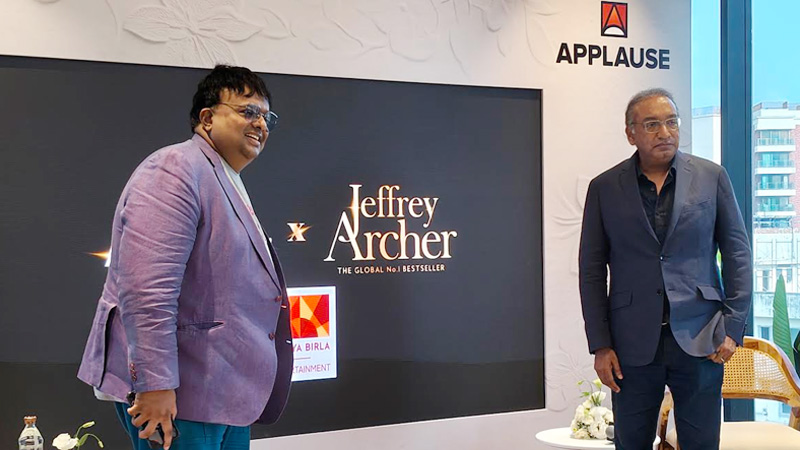
    MUMBAI: India is flipping the page on adaptation history Jeffrey Archer’s bestsellers are finally getting their official real life adaptation close-up. Move over pirated plots and ‘inspired’ scripts Jeffrey Archer is getting a legitimate Indian makeover. In a landmark announcement, Applause Entertainment has acquired exclusive screen rights to six of the legendary author’s most iconic novels. And unlike decades of uncredited rip-offs, this one’s all above board legal, global, and ready to stream in style.

    The acquisition includes The Clifton Chronicles, First Among Equals, Fourth Estate, Sons of Fortune, Heads You Win, and The Eleventh Commandment. Applause, known for high-impact Indian originals like Scam 1992 and Criminal Justice, is making its first foray into international fiction adaptations and they’re going big. Expect a slate of premium drama series and feature films spanning languages, formats, and platforms.

    At a live conversation in Mumbai, author Jeffrey Archer and Applause MD Sameer Nair shared their vision and plenty of mutual admiration. “There isn’t a Cain, but there’s certainly an Abel in every Indian,” joked Archer, reflecting on how his stories of ambition, love, betrayal and revenge have found deep resonance here. The 85-year-old best-selling author, whose books have sold over 300 million copies across 115 countries and 49 languages, called the collaboration “a privilege,” but added with trademark candour, “I shall be watching and waiting for results!”

    Sameer Nair was clear that this partnership signals a bold new direction. “This isn’t just a rights deal, it’s a creative call-out to India’s best storytellers,” he said. “We’re inviting screenwriters, directors, and regional creators to reimagine Archer’s worlds in contemporary Indian settings while staying true to the original narrative arc.” Nair cited First Among Equals as an example, saying its political premise translates beautifully into India’s high-stakes electoral landscape. “Just replace Westminster with the Vidhan Sabha, and you’ve got a blockbuster.”

    Applause plans to adapt some novels as long-form series and others as films, possibly in multiple Indian languages. The idea, said Nair, is to retell global IP through a local lens and take it back to the world via global streaming platforms. “These are timeless stories, and the new generation deserves to hear them in a voice and context they understand.”

    For Archer, the faith in adaptation lies in one word: screenwriting. “If the screenplay’s right, the show works. If it isn’t, nothing can save it,” he quipped, citing The West Wing as an example of sublime screenwriting. And he’s no stranger to the perils of poor adaptation either. “The BBC did Cain and Abel brilliantly. But Not a Penny More, Not a Penny Less? Terrible. It’s not easy but when it works, it’s magic.”

    In an industry where copyright infringement once passed for creativity, this deal is also a statement. “Indians are done with jugaad. We want to do it the right way,” said Nair. “It’s time Indian content gets a global reputation for originality and excellence.”

    So what’s next? The creative process has begun, with teams now deciding which titles will go where, in what language, and on which platform. Archer’s only golden rule to filmmakers? “Stick to the story. Don’t think you can write your own half of Kane and Abel. Just don’t.”

    From the pirated paperbacks sold at Indian traffic signals to a sprawling screen universe led by some of the country’s sharpest creators Archer’s tales are finally getting the adaptation they deserve. With Applause calling the shots, this is one literary remix that promises to be worth the wait.

  • Jeffrey Archer tips his hat to India’s enduring love for great stories

    Jeffrey Archer tips his hat to India’s enduring love for great stories

    MUMBAI: When an Archer hits the screen, it’s bound to be cinematic. In a landmark move that marries British literary mastery with Indian storytelling flair, Applause Entertainment has acquired exclusive screen rights to six of Jeffrey Archer’s most popular novels, The Clifton Chronicles, Fourth Estate, First Among Equals, The Eleventh Commandment, Sons of Fortune, and Heads You Win. This marks Applause’s first foray into global fiction adaptations and sets the stage for a string of prestige projects that promise political intrigue, media dynasties, and multi-generational drama with an unmistakably Indian flavour.

    In a candid and entertaining conversation, author Jeffrey Archer and Applause Entertainment’s managing director Sameer Nair gave a glimpse into the creative chemistry behind this literary-meets-OTT deal. “I’m sentimental about my Everest story,” Archer said, musing about Prisoner of Birth, a title he still hopes will see a screen adaptation someday. Reflecting on timeless narratives, he added, “Jane Austen, Higgins, Agatha Christie they go on. A good story lasts and lasts.”

    This acquisition isn’t just about borrowing bestsellers. “We’re looking to take these stories to a much wider audience,” Nair said. “The adaptations will be reimagined in Hindi, possibly Tamil or Bengali, and crafted for young adult sensibilities without compromising on Archer’s signature pace and drama.” The projects will be helmed by a wide pool of Indian creators Applause has previously collaborated with. “We’re already in discussions, and within the next 3–6 months, you’ll hear announcements,” Nair assured.

    The creative challenges, however, aren’t just about casting or rewriting. “Jeffrey and I see eye-to-eye more easily than our lawyers do,” Nair quipped. “But that’s true for everything in showbiz. The lawyers will hold us up more than anyone else.” Archer added, tongue firmly in cheek, “I’ll wait to see the results before I comment again!”

    The plan isn’t to play only to Archer’s existing readership either. As Nair explained, “Reading requires literacy. Consuming audiovisual content doesn’t. The idea is to make these adaptations contemporary, bold, and cinematic to reach beyond readers, to those who haven’t read the books, and make them fall in love with the story all over again.”

    Asked about the marketing vision, Nair kept it grounded: “We’ve got to make the shows first. Once we do that, we’ll see where they go.” The team hinted at partnerships with global streaming platforms and a high-quality visual treatment, given Archer’s dense plotting and character arcs.

    The move also fits squarely within Applause’s content philosophy of adapting compelling, well-known IPs with local creative sensibilities. The studio has previously reimagined formats like Scam 1992 and Criminal Justice for Indian audiences.

    For Archer, whose books have sold over 275 million copies globally, this collaboration marks another chapter in his screen journey. His previous titles like Kane and Abel have made it to TV but often, without his permission. “I hate it when people say, ‘I loved Kane and Abel on television,’” Archer lamented. “They just stole the story!”

    As for storytelling itself? Both Archer and Nair agree, it’s universal. “There’s no such thing as Indian or foreign storytelling. A local story is only good if it’s universal,” Nair summed up. Archer added, “I read an Italian novel recently The Leopard. Didn’t care that it was Sicilian. It was a damn good story.”

    And now, six damn good stories are headed to Indian screens with a fresh voice, but Archer’s trademark twists intact. Let the adaptations begin.
     

  • UFO Moviez posts Rs 6.52 crore Q1 profit as box office bounces back

    UFO Moviez posts Rs 6.52 crore Q1 profit as box office bounces back

    MUMBAI: Lights, camera, profit UFO Moviez has kicked off the fiscal year on a blockbuster note, posting a consolidated net profit of Rs 652 lakh for Q1FY26, marking a sharp turnaround from a loss of Rs 414 lakh in the same quarter last year. The homegrown digital cinema distribution major reported a 16 per cent rise in consolidated revenue at Rs 10,903 lakh, up from Rs 9,451 lakh in Q1FY25. EBITDA also saw a healthy jump to Rs 1,929 lakh from Rs 658 lakh a year ago.

    Standalone profit came in at Rs 365 lakh versus a loss of Rs 267 lakh in the previous year’s comparable quarter. Notably, this improvement comes despite a 7 per cent drop in standalone net sales compared to the same quarter last year.

    The boost in profitability was helped by a sharp reduction in impairment provisions down to zero from Rs 365 lakh last year as well as higher other income and steady cost control across verticals.

    Employee costs for the quarter stood at Rs 2,111 lakh (up from Rs 2,191 lakh last year), while ad revenue share expenses held steady at Rs 1,848 lakh. Equipment and lamp purchases jumped significantly to Rs 2,252 lakh, signalling investment in expanding or upgrading the network.

    UFO’s Q1 earnings per share stood at Rs 1.68, compared to a loss per share of Rs 1.07 last year.

    The company had earlier received NCLT approval for the amalgamation of its two wholly owned subsidiaries Scrabble Digital Limited and UFO Software Technologies Pvt Ltd effective April 1, 2024. As a result, the Q1FY25 numbers have been restated to reflect this merger.

    The board meeting to approve the results concluded at 3:50 p.m. on July 31, 2025.

    With the film exhibition and cinema tech segments bouncing back post-pandemic, UFO Moviez appears set for a sequel of steady growth.


  • Banijay Asia and Collective Artists Network collaborate to script India’s biggest creator-led universe

    Banijay Asia and Collective Artists Network collaborate to script India’s biggest creator-led universe

    MUMBAI: In a major move to redefine the creator economy in India, Banijay Asia, one of India’s leading content powerhouses, has joined hands with Collective Artists Network, the country’s premier talent and creator company, to launch a first-of-its-kind creator-led content and IP engine.

    This landmark collaboration will conceptualize, develop, and produce creator-first and creator-controlled properties across scripted, unscripted, branded, and digital-first formats — spanning long-form shows, short-form skits, micro-dramas, and vertical social content.

    At the heart of this alliance lies the powerful convergence of creators, content, and commerce — leveraging Collective Artists Network’s expansive creator and brand network, and Banijay Asia’s expertise in content creation and production at scale.

    The collaboration has already onboarded leading creators like Aisha Ahmed, Dolly Singh, and Kashish to develop brand-friendly content. Collective is also in active conversations with large FMCG and E-commerce advertisers to co-create high-impact, culturally resonant content that merges entertainment with brand purpose.

    Deepak Dhar, Founder & Group CEO, Banijay Asia &EndemolShine India said: “This partnership marks a bold new chapter in content creation — where creators are no longer just participants but become the driving force behind the narrative. By joining forces with Collective Artists Network, we’re building a powerful ecosystem at the intersection of content, creators, and brands. Together, we’re setting the blueprint for the future of entertainment.”

    Mrinalini Jain, Group Chief Development Officer, Banijay Asia &EndemolShine India added: “We see this as a creator-powered revolution. The future lies in content that’s authentic, scalable, and culture-shaping — and creators are at the center of it. With Collective Artists Network’s unmatched access to talent and brands, and Banijay Asia’s storytelling DNA, we’re launching a next-gen engine that’s built for today’s platforms and tomorrow’s audiences.”

    DhruvChigopekar, Co-Founder, Collective Artists Network, said: “This partnership marks a meaningful step forward for both traditional and new-age content. Banijay has built some of India’s most iconic shows, and to see that scale and storytelling depth now extend to the creator space is exciting. What’s changing is how stories are being told, creators are becoming part of the process instead of just the output. This collaboration allows us to explore that shift thoughtfully, combining structure with spontaneity, and legacy with a fresh lens. We believe it’s a strong foundation for what the next decade of entertainment could look like.”

    What this collaboration unlocks:

    –  Launching a new destination for Collective Artists Network’s creators to tell their stories spanning scripted, unscripted, and branded formats, which are genre and platform-agnostic.

    – Talent integration into Banijay Asia’s existing IPs, opening new doors for creators to host, act, write, or contribute creatively to Banijay Asia’s broad content slate.

    –  Co-creating digital-first, short-format content, micro-dramas, skits, sketches, vertical stories, and social-first formats specifically with Collective Artists Network creators.

    –  Leveraging Collective Artist Network’s expertise to lead brand integration and sponsorship across all joint content initiatives.

    –  Developing a creator-driven content universe across Instagram, YouTube and Facebook, which then potentially expands into other platforms.

    The partnership reflects Banijay Entertainment’s global vision of aligning with creators to modernise brands, bridge the gap between creators and creatives,  and reach new audiences through culturally-resonant formats. 
  • Shemaroo posts Rs 45.8 crore Q1 loss as revenue and margins dip sharply

    Shemaroo posts Rs 45.8 crore Q1 loss as revenue and margins dip sharply

    MUMBAI: Drama, but no dividends Shemaroo’s first quarter script writes itself into the red. The veteran media and entertainment company reported a consolidated net loss of Rs 45.8 crore for Q1 FY25, ballooning from Rs 17.2 crore in the same quarter last year. Even standalone losses were sharper, at Rs 46.9 crore versus Rs 17.5 crore year-on-year. Despite total income standing at Rs 143.2 crore, a steep rise in expenses especially operational and employee-related pushed the firm into deeper losses.

    Revenue from operations dropped 9.6 per cent year-on-year to Rs 139.5 crore (from Rs 154.4 crore), and sank over 31.7 per cent from Rs 204.3 crore in the previous quarter (Q4 FY24). Employee costs rose marginally to Rs 31.2 crore, while operational costs climbed significantly to Rs 152.3 crore, overtaking revenue altogether.

    Shemaroo’s loss before tax stood at Rs 60.9 crore for the quarter, compared to Rs 22.8 crore in Q1 FY24. The company’s total comprehensive loss now stands at Rs 45.8 crore for Q1 FY25, compared to Rs 17.2 crore a year earlier and Rs 5.1 crore last quarter.

    The board, however, remained busy beyond the balance sheet. It approved the reappointment of three top Shemaroo executives Raman Maroo as managing director, Atul Maroo as Joint MD, and Hiren Gada as CEO for another three-year term beginning January 2026. Additionally, Namrata Shinde was appointed compliance officer, effective immediately.

    But the real plot twist comes from the GST front. The company is entangled in a legal showdown after the GST department demanded recovery of inadmissible input tax credit (ITC) of Rs 70.3 crore, interest, and penalties totalling a staggering Rs 133.6 crore each on the Joint MD, CEO, and CFO. Shemaroo has challenged the order in the Bombay High Court and secured an interim stay on proceedings.

    In another strategic move, the company plans to transfer the broadcasting license of Mango TV to Mango Mass Media Pvt Ltd for at least Rs 25 lakh, subject to MIB approval.

    From VHS tapes to digital platforms, Shemaroo has seen the industry’s highs and lows. But if Q1 FY25 is any indicator, the road ahead might call for some tight editing and serious plot development both financial and regulatory.

  • Regional stories steal the show as audiences tune out the usual

    Regional stories steal the show as audiences tune out the usual

    MUMBAI: Lights, camera, localisation! At the 9th edition of The Content Hub Summit 2025, the session on “The Rise and Rise of Regional Content” didn’t just capture attention, it underscored a seismic shift in what India watches and why. Gone are the days when Hindi content ruled unchallenged. From Marathi to Malayalam, Punjabi to Gujarati, regional languages are not only speaking up, they’re roaring loud across platforms and pushing boundaries with content that’s local in soul, but universal in appeal.

    Karan Taurani of Elara Capital, moderating the star-studded panel, noted that the 20th-ranked Hindi film today earns just ₹20 crore, a steep fall from pre-pandemic numbers where the 20th film could clock in Rs 70–Rs 80 crore. Rabindra Narayan, MD of PTC, echoed this, citing how Punjabi film Sehra raked in Rs 100 crore just from Maharashtra, denting a mainstream release like Bhabhi by an estimated Rs 20–Rs 30 crore.

    Rishi Negi of Banijay Asia pointed out that while Hindi struggles with resonance, regional films like Pushpa and KGF succeed because they tell stories rooted in emotion whether it’s a son seeking acceptance or avenging his mother. These narratives, Negi argued, transcend language and connect with audiences across demographics.

    The session also touched on the economics of production. Making content in regional languages isn’t just creatively liberating, it’s cost-effective too. With South Indian films now commanding higher acquisition budgets than Hindi titles on platforms like Netflix, the tide has clearly turned.

    Mamta Kamtikar from Junglee Pictures highlighted how Malayalam film Lones, produced on a modest budget, became a critical and cultural success due to strong storytelling and a buzz-worthy release strategy. “It’s not just about making a film,” she stressed, “it’s about making it travel emotionally and linguistically.”

    This brings us to another hot-button topic: localisation. Avinash Mudaliar of OTTplay noted that dubbing and subtitling in India have undergone a transformation. “Earlier, South Indian action films just needed punchy dialogues. Now, dubbing is almost script-rewriting. It’s no longer a mechanical job, it’s cultural translation.”

    But the challenge isn’t just about turning Tamil into Hindi. As Arpit Mankar of Shemaroo explained, a joke that lands in Delhi might bomb in Bengal. Comedy, drama, even character arcs need regional nuance something only local creators truly understand. That’s why Shemaroo has gone deep into Gujarati OTT, helping three films cross ₹10 crore in the first half of 2025 alone triple the usual annual average.

    ETV Win’s Saikrishna Koinni and others agreed: regional makers have the home-field advantage. They live the language, breathe the culture, and write stories with lived authenticity that no algorithm or distant studio exec can replicate.

    And there’s money on the table too. With over 33 OTTs now bundled into super-subscription packs and growing willingness to pay, regional content is not just filling the gap, it’s the main event.

    In short, India’s entertainment engine is no longer fuelled solely by Bollywood dreams. It’s powered by local love, dubbed brilliance, and subtitles that speak volumes. And if this panel is anything to go by, the future of Indian content is decidedly regional and refreshingly relatable.

  • Balaji Telefilms posts Rs 90 crore profit after last year’s Rs 22 crore loss

    Balaji Telefilms posts Rs 90 crore profit after last year’s Rs 22 crore loss

    MUMBAI: It’s not just the daily soaps serving plot twists Balaji Telefilms just delivered one of its own, posting a dramatic turnaround from loss to profit in its latest annual results. Balaji Telefilms Ltd., one of India’s most iconic television and content production houses, has posted a stunning financial comeback, reporting a standalone net profit of Rs 90.59 crore for the financial year ending March 31, 2025. This is a significant leap from a net loss of Rs 22.52 crore the previous year, a turnaround worthy of prime-time applause.

    According to the audited results filed with stock exchanges and published in leading dailies on 5 July, the company’s total standalone income from operations stood at Rs 45,306.92 crore for FY25. On a consolidated basis, it reported a net profit of Rs 84.57 crore, recovering sharply from a loss of Rs 26.08 crore in FY24.

    This reversal comes despite a notable dip in revenue for the final quarter ending March 2025, where standalone income dropped to Rs 8.63 crore, down from Rs 13.46 crore in the same quarter last year. Still, profits surged in the final stretch, with the company posting Rs 99.31 crore in Q4 profit, a complete U-turn from the Rs 22.52 crore loss in the comparable quarter.

    The earnings per share (EPS) rose to Rs 6.68 basic for the year, up from negative territory last year signalling restored investor confidence.

    The company, led by Chairman Jeetendra Kapoor, published the results in Financial Express and Mumbai Lakshadeep and noted that detailed financials are available on its website as well as on BSE and NSE portals.

    With flagship shows still ruling the ratings and digital spin-off ventures gaining traction, Balaji seems to have re-scripted its business drama into a tale of fiscal finesse. Whether this rebound is a one-season wonder or the start of a long-running hit remains to be seen but for now, the curtains have risen on a new chapter of profitability.

    (If you are an Anime fan and love Anime like Demon Slayer, Spy X Family, Hunter X Hunter, Tokyo Revengers, Dan Da Dan and Slime, Buy your favourite Anime merchandise on AnimeOriginals.com.)

  • Warner Bros. signs five-film desi deal to remake its classics for Indian cinema screens

    Warner Bros. signs five-film desi deal to remake its classics for Indian cinema screens

    MUMBAI: Hollywood’s muscle just got a Mumbai makeover. In a landmark alliance that promises paisa vasool and popcorn, Warner Bros. Pictures has joined hands with Bhanushali Studios Limited (BSL) and Joat Films to remake five of its legendary films for the Indian market. This isn’t just a Hindi-meets-Hollywood tale—it’s a calculated move to blend global blockbusters with India’s narrative spice and masala magic.

    The deal will see the studios collaborate to develop Indian adaptations of iconic Warner Bros. Pictures titles. The reimagined films will retain their emotional heart but undergo a full Indian cultural reset. Warner Bros. Pictures will handle global distribution, indicating a wide international rollout.

    “India represents one of the world’s most vibrant and sophisticated film markets, with audiences who deeply appreciate authentic, locally rooted narratives. This partnership allows us to combine our storytelling heritage with exceptional local talent to create films that will resonate profoundly with Indian audiences while maintaining the universal appeal that defines great cinema”, said Warner Bros. Pictures VP & MD India Denzil Dias.

    BSL founder Vinod Bhanushali echoed the excitement, stating, “We’re incredibly excited to partner with Warner Bros. Pictures, a studio that has shaped cinematic history across generations. This collaboration represents a unique opportunity to reimagine the stories by Warner Bros. Pictures through an Indian creative lens, blending emotion, scale, and culture for audiences both at home and internationally”.

    Jack Nguyen of Joat Films will co-produce the films under his first-look deal with Warner Bros. Pictures. Nguyen, a seasoned industry executive with over 30 years of experience in Asian productions, set up Joat to independently back cinematic projects with regional depth.

    “I’m excited to partner with BSL to adapt Warner Bros. Pictures on titles that will resonate with Indian audiences”, Nguyen said. “Warner Bros. Pictures has an unparalleled library from which we will carefully curate select titles for the vibrant Indian market”.

    BSL’s recent critical success Sirf Ek Bandaa Kaafi Hai bagged five Filmfare OTT Awards in 2023, including Best Web Original Film—cementing the studio’s rising stock in India’s storytelling ecosystem.

    Development for the first project under the alliance is currently underway, with casting calls and crew reveals expected in the coming months.

    The strategic move underscores Warner Bros. Pictures’ intent to deepen its global roots by embracing local storytelling formats in high-potential markets. As international studios increasingly eye India for both eyeballs and box office returns, this five-film pact could signal a new genre of big-budget ‘Indiwood’ collaborations.

  • Balaji Telefilms merger proposal for  ALT Digital and Marinating Films with itself gets NCLT sanction

    Balaji Telefilms merger proposal for ALT Digital and Marinating Films with itself gets NCLT sanction

    MUMBAI:  Balaji Telefilms has received the green light from the National Company Law Tribunal (NCLT), Mumbai, for its Composite Scheme of Arrangement that merges its wholly owned subsidiaries — Alt Digital Media Entertainment and Marinating Films — into the parent company. The appointed date for the merger has been set as 1 April 2024.

    The scheme, sanctioned under sections 230–232 of the Companies Act, aims to simplify the group structure, slash redundancies, and boost operating efficiency across its content empire — from streaming platform ALTT to reality show production and IP development.

    According to the tribunal’s order, the merged entity will benefit from economies of scale, unified cash flow management, and enhanced resource optimisation — all under the Balaji banner, which is already listed on NSE and BSE. No shares will be issued, given the transferor companies are fully owned by the transferee.
    The consolidation brings together:

    * Alt Digital, home to subscription-based OTT content under the ALTT brand;
    * Marinating Films, known for unscripted and event IP;
    * and Balaji Telefilms, India’s leading producer of Hindi and regional TV content.

    The merger was approved by shareholders at an April 2025 meeting and has cleared all statutory hurdles, including SEBI, BSE, NSE and tax authorities. The company has also settled creditor objections and responded to pending GST disputes, with all liabilities transferring to Balaji Telefilms post-merger.

    In short, Balaji is scripting a cleaner, leaner, and meaner future — bringing its IP under one tent to better play the platform and profit game. The final step? Filing the certified order with the Registrar of Companies, which will trigger the scheme’s effective date.

    More drama, less duplication — just the way Ekta Kapoor likes it.