Category: Film Production

  • Green Gold’s golden Mumbai launch

    Green Gold’s golden Mumbai launch

    MUMBAI: Green Gold Animation is all set to hit the green running with its new offshoot Golden Robot. The Rajiv Chilaka-run animation outfit has been wowing everyone with its deals for animation series with both Netflix and Amazon Prime. 

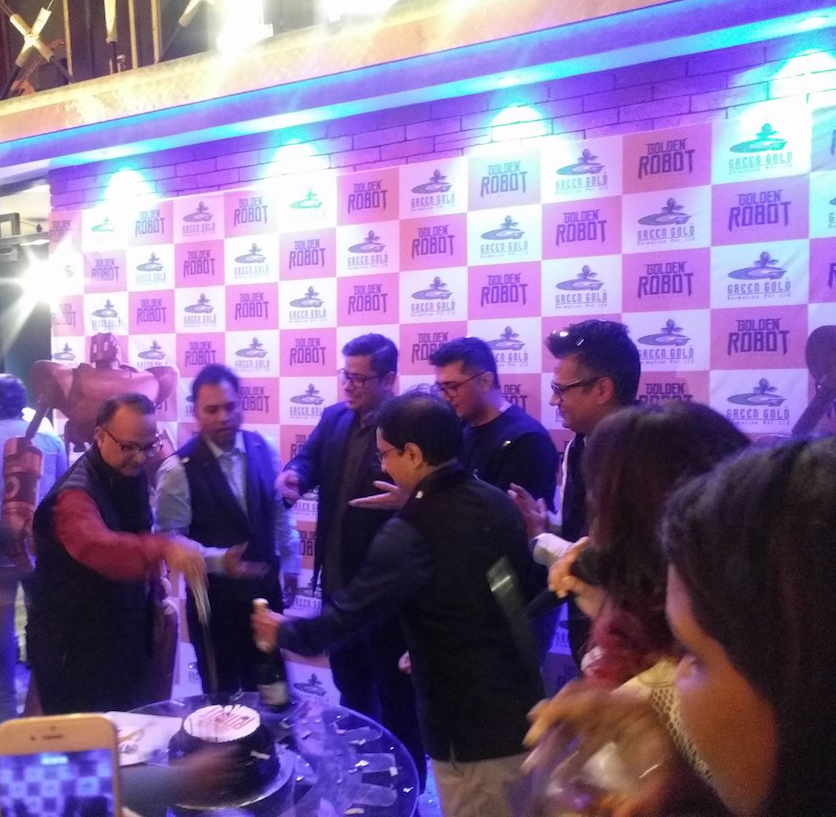
    But the occasion this time was the celebration of the launch of Golden Robot’s new Mumbai studio in Mumbai’s Goregaon West area’s DLH Park (which also has the presence of Red Chillies’ VFX facilities) earlier this week.

    Spread over some 10,000 sq feet, Golden Robot is Chilaka’s third animation initiative. Its purpose: to capture more outsourced work from international studios. While Green Gold will house the original IP creating arm – churning out episodes of Chhota Bheem, Mighty Raju, and many others, Golden Robot will be producing episodes for large American and European studios.

     The whos who of the animation industry made it a point to attend the launch party which was cheered on by Golden Robot’s 250 or more employees. Among those who came to congratulate Rajiv, Srinivas, and Samir Jain included Nick boss Anu Sikka, Sony Pictures Networks India vice-president programming Ronojoy Chakraborty, Amazon Prime’s Manish Menghani and Abhishek Goradia, Bioscopewalla Pictures’ Nishit Takia and AnimationXpress.com’s Anil Wanvari.

    They all came in to wish the team luck, and of course a golden pot for Golden Robot.

    Also Read:

    Green Gold, Amazon Prime put Kerala martial art on the map

    Chhota Bheem-makers launch Golden Robot Animation

    Chhota Bheem becomes Mighty with Netflix

  • Increased revenue from traditional media boosts Shemaroo numbers

    Increased revenue from traditional media boosts Shemaroo numbers

    BENGALURU: Integrated media content house Shemaroo Entertainment Limited (Shemaroo) reported 18.3 percent higher year-on-year (y-o-y) consolidated total revenue for the quarter ended 30 September 2017 (Q2 FY 2017-18, the quarter under review) stood at Rs 1,345.7 million as compared with Rs 1,138.6 million in Q2 FY 2016-17. The company’s consolidated profit after tax for the quarter under review improved to 29.9 percent y-o-y to Rs 188.2 million (14 percent margin) as against Rs 144.90 million (12.8 percent margin) in the corresponding quarter a year ago.

    Revenue from operations increased by 18.3 percent y-o-y to Rs 1,343.7 from Rs 1135.5 million. In its earnings release, revenue from traditional media rose by 11.8 percent y-o-y during the quarter under review to Rs 1002 million as compared with Rs 896 million in the corresponding year ago quarter. Revenue from new media increased by 42.5 percent y-o-y in Q2 FY 2017-18 to Rs 342 million from Rs 240 million.

    Shemaroo’s EBIDTA, including other income, during the quarter was Rs 363.2 million (27 percent margin on total income of operating revenue) increased by 13.7 percent y-o-y from Rs 319.4 million (28.1 percent margin on total income of operating revenue).

    A look at the other numbers

    Total expenditure (TE) in Q2 FY 2017-18 at Rs 1,079.6 million (80 percent of operating revenue) grew by 19.5 percent y-o-y from Rs 903.5 million (79.6 percent of operating revenue). The company’s cost of raw materials consumed declined by 19.9 percent y-o-y to Rs 692.5 million (51.5 percent of operating revenue) as compared with Rs 864.3 million (76.1 percent of operating revenue).

    Employee benefits expense during the quarter under review grew by 35.7 percent y-o-y to Rs 98.5 million (7.3 percent of operating revenue) from Rs 72.6 million (6.4 percent of operating revenue). Other expenses declined by 7.7 percent y-o-y in Q2 FY 2017-18 to Rs 50 million (3.7 percent of operating revenue) from Rs 54.2 million (4.8 percent of operating revenue).

    Also read:

    Shemaroo makes key hires to boost business

    Backed by new media, Shemaroo reports improved numbers for first quarter

    Rahul Mishra Shemaroo’s new general manager marketing

  • India-UK co-produce ‘The Far Pavillions’ for $150 mn

    India-UK co-produce ‘The Far Pavillions’ for $150 mn

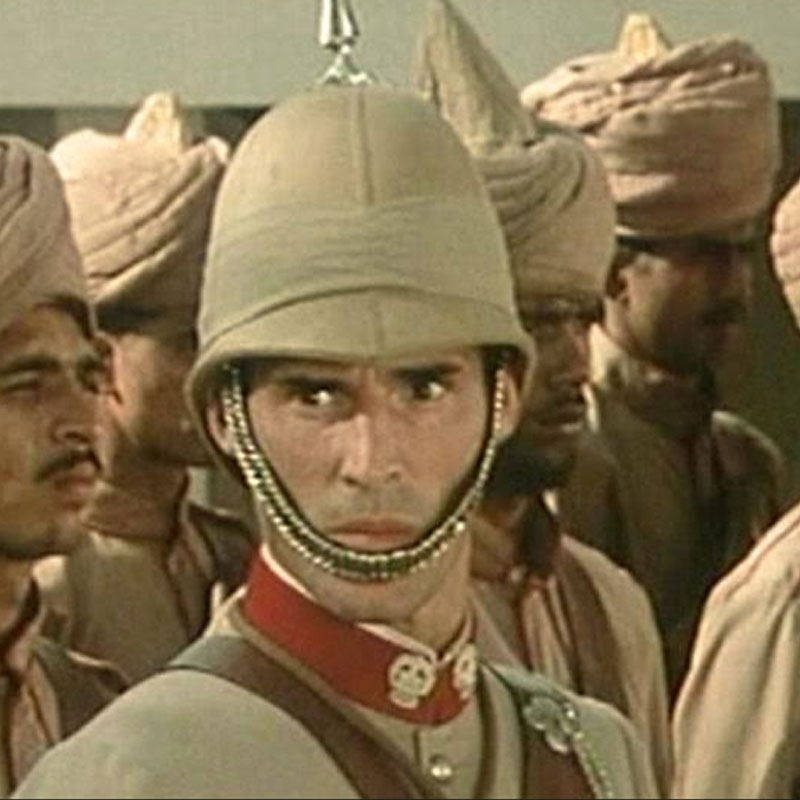
    MUMBAI: MM Kaye’s novel The Far Pavillions, which speaks of an Englishman being raised as a Hindu during the British Raj and falls in love with an Indian princess, is being remade for TV by a UK-India duo at a budget of $150 million.

    Beautiful Bay Productions, run by India-based Michael Ward and Britain’s Collin Burrows, is targetting 30 episodes of one hour each. The cast and crew will prominently be from the two countries while post-production will take place in London and the shooting will be in India.

    Thirty years ago, the novel was made into a three-episode mini TV series by HBO starring Ben Cross, Amy Irving, Omar Sharif, and Christopher Lee. Ward has condensed the novel into a play. He said, “It’s the perfect time to take my stage adaptation of Mollie Kaye’s masterpiece much further and deeper into its Indian cultural landscape, and to invite the best of Indian and British talent to contribute towards turning it into a high-end television series authentically written and cast for a global audience,” he said.

    London mayor Sadiq Khan is touring Mumbai as part of the UK-India Year of Culture. “It represents the best of British and Indian talent and sends a clear message to the rest of the world that London is open to partnerships, to collaboration, to creativity and for business,” said Khan.

    British Film Commission Film London chair Adrian Wootton added,“This adaptation promises to be a sumptuous spectacle in its own right but it’s also indicative of how our above- and below-the-line talent can come together to create a production that harnesses everything from Indian locations to London’s world-famous post-production expertise.”

  • FremantleMedia enters into creative partnership with 87 Films

    FremantleMedia enters into creative partnership with 87 Films

    Mumbai: FremantleMedia continues to build its roster of creative scripted partnerships with a new development deal with 87 Films. 87 Films was formed by Dudi Appleton and Jim Keeble, one of the leading writing teams in the UK drama industry, with executive producer Patrick Irwin joining the company. 

    Under the new agreement, the companies will collaborate on ambitious scripted projects for the international market alongside FremantleMedia’s global in-house producers. 87 Films is currently developing dramas with the FremantleMedia’s Wildside in Italy, Kwai in France, Miso across Scandinavia, and FremantleMedia North America in the US.

    FremantleMedia director of global drama Sarah Doole said, “Jim and Dudi are a creative force that will be a tremendous addition to FremantleMedia. They have an exceptional vision for stories that tie perfectly into our ambitions for our drama business. This key relationship will bring their talents to our global network of producers.”

    Appleton added, “Christian Vesper and Sarah Doole are hugely inspiring collaborators for us. We speak the same language. In an international television business that can seem increasingly corporate, they are passionate about great dramatic stories wherever they come from, wherever they lead. And telling those stories is what we do. Collaborating with FremantleMedia’s global producers, we are creating authentic new drama that breaks through traditional borders of culture, language, and place.”

    The agreement with 87 Films is the latest in FremantleMedia’s creative partnerships. Over the past few years, the company has invested in talented scripted creators, including Miso Film, Abot Hameiri, Dancing Ledge, Fontaram, Kwai, Wildside, Bend It TV and Easy Tiger, and has completed development deals with SLAM Films and Neil Gaiman.

  • Steps to encourage ease of doing film business under way

    NEW DELHI: Information and broadcasting secretary Ajay Mittal has said the Ministry has initiated a series of measures to promote ease of doing business and reiterated government’s commitment to work closely with the film industry.

    Mittal was speaking at a function where megastar Amitabh Bachchan inaugurated the new office premise of the Central Board of Film Certification (CBFC) in Mumbai yesterday.

    A number for film personalities including former CBFC Chairman Anupam Kher, Ramesh Sippy, Raveena Tandon, Sonu Sood, Pritish Nandy, Manmohan Shetty, Gajendra Chauhan, Kiran Shantaram, Mukesh Sharma were among those present.

    CBFC, which had been functioning from the Bharat Bhavan in the White House Complex on Walkeshwar Road since 1950s, was facing severe space constraint against drastic increase in work load.

    Mumbai, being the centre of the Hindi, Marathi, Bhojpuri and Punjabi film industry, accounts for nearly 60% of all certification work of CBFC. During 2015-16, it certified over 11,000 films of various duration including 787 Indian feature films and 690 foreign films for theatrical release in India.

    Faced with an acute space constraint, lack of parking facility for visitors, CBFC moved a proposal for allocation of space in the Films Division Complex for a modern, digitally enabled office. It may be recalled that the online film certification system of CBFC was launched by Information & Broadcasting Minister M Venkaiah Naidu in New Delhi last week.

    Ramesh Sippy welcomed the online film certification system saying it would facilitate quicker certification of films.

    The Civil Construction Wing of Prasar Bharati has refurbished the new office, which houses the chambers of the Chairman, CEO as well as the Mumbai Regional Office. CBFC, besides its own preview facilities, can now utilize additional preview theatres of Films Division as well to quicken the process of film certification.

    The Films Division Complex now houses the offices of Films Division, Children’s Film Society of India, CBFC and also the upcoming National Museum of Indian Cinema, which is expected to promote synergy among different institutions of the I &B Ministry.

  • Ekta ties up with Lemon Advisors for Alt Balaji global launch

    Ekta ties up with Lemon Advisors for Alt Balaji global launch

    MUMBAI: Ekta Kapoor’s Alt Balaji, which is gearing up for launch in early 2017, has announced a strategic partnership with Lemon Advisors, a Singapore based technology consulting firm. With this tie-up, the tech company will assist and strengthen business development activities in key global markets with significant Indian diaspora and demand for Indian content.

    “We are delighted to have Lemon Advisors on board. Their impressive network spanning across 30 countries worldwide will certainly help us in reaching out to the global audience. Technology will play a huge role in shaping the growth trajectory of digital entertainment industry in India and globally, and as we make our foray into the domain with disruptive content, we are proud to have an established technology and business development partner,” said Balaji Telefilms group CEO Sameer Nair.

    Lemon Advisors will help Alt Balaji forge alliances with distribution partners like telecom operators, internet service providers and OEMs. They will also assist in exploring brand alliance opportunities with major international brands along with planning& executing marketing and on ground activities. In addition to this, they will also be a representative entity for Alt Balaji at various trade shows & exhibitions.

    “Balaji is a name that every Indian content consumer worldwide is extremely familiar with. It’s a privilege for us to partner with Balaji as they embark on their digital journey in the form of Alt Balaji. We are happy that we will have a chance to contribute to the overall success of their endeavour”, added Lemon Advisors founder and chairman SubhashR. Ghosh.

  • Ekta ties up with Lemon Advisors for Alt Balaji global launch

    Ekta ties up with Lemon Advisors for Alt Balaji global launch

    MUMBAI: Ekta Kapoor’s Alt Balaji, which is gearing up for launch in early 2017, has announced a strategic partnership with Lemon Advisors, a Singapore based technology consulting firm. With this tie-up, the tech company will assist and strengthen business development activities in key global markets with significant Indian diaspora and demand for Indian content.

    “We are delighted to have Lemon Advisors on board. Their impressive network spanning across 30 countries worldwide will certainly help us in reaching out to the global audience. Technology will play a huge role in shaping the growth trajectory of digital entertainment industry in India and globally, and as we make our foray into the domain with disruptive content, we are proud to have an established technology and business development partner,” said Balaji Telefilms group CEO Sameer Nair.

    Lemon Advisors will help Alt Balaji forge alliances with distribution partners like telecom operators, internet service providers and OEMs. They will also assist in exploring brand alliance opportunities with major international brands along with planning& executing marketing and on ground activities. In addition to this, they will also be a representative entity for Alt Balaji at various trade shows & exhibitions.

    “Balaji is a name that every Indian content consumer worldwide is extremely familiar with. It’s a privilege for us to partner with Balaji as they embark on their digital journey in the form of Alt Balaji. We are happy that we will have a chance to contribute to the overall success of their endeavour”, added Lemon Advisors founder and chairman SubhashR. Ghosh.

  • TV production temporarily impacted by cursed Rs 500-1000 notes

    TV production temporarily impacted by cursed Rs 500-1000 notes

    MUMBAI: In what may be called a Herculean step, PM Narendra Modi banned Rs. 500 and Rs. 1000 notes as of midnight intervening 8 and 9 November. His live television broadcast came as a surprise to millions of unassuming Indians and the world at large, to say the least.

    Once understanding of the gravity of his announcement hit, throngs rushed to the ATMs, super markets, and chemist shops in a bid to rid themselves of the cursed notes which were to transform into waste paper overnight. In fact, retail shopping giant Big Bazaar, luxe watch chain Ethos, among many others seized this opportunity and allowed shoppers in till midnight, rightly expecting a rush. Petrol stations saw long queues even as late as the night of 9 November as desperate Indians tried to shed their 500 and 1000 notes. Foreign tourists despaired about the dud notes they had in their possession, as they neither hold bank account or post office accounts; the only currency they had was useless to them.

    By demonetizing Rs 500 and Rs 1000 notes, Modi has taken a bold stance to curb the raging black money menace and counterfeit currency that has been gnawing at the country’s economy for decades. The speed at which everything had transpired was astonishing, and many netizens lauded the move on social media.

    While this historic move is expected to contribute greatly towards nation-building, the transition phase will not be smooth. With banks shut for another day, ATMs dysfunctional temporarily until new legit denominations are restored in the banking system, life is proving tough for the public, to put it mildly. Different sectors have braced up for the varied impact this decision will bring, including the Indian television production industry.

    “For production houses like us, there are certain requirements for action props — flowers, food items, etc, which we usually buy in cash. Moreover, everyone’s travel and other conveyance compensation are also paid in cash. Not to mention the daily labour and daily-wage workers that a shoot employs… so yes, this ban has definitely created an a problem, especially with the banks shut,” explains Sol Production’s Fazila Allana.

    “Our ongoing shooting in Delhi for the show ‘Small Money Big Makeover’ which airs on FYI is currently stuck. It requires us to go out and buy stuff from the local market, and with today’s cash crunch situation, that is difficult,” she adds.

    Allana isn’t hindered by that, however, as she strongly believes that it is only temporary. “In the long term, I believe it is good for the industry. “A lot of these union workers often used to insist on cash payments, but now this sector can be regulated more effectively.”

    Asked if any of the long-running daily shows would be affected by this temporary turmoil, Allana reassured that it was highly unlikely. “Mega serials, as they are often called, will be the least affected as their shoots and contracts with artistes etc mostly operate on a monthly basis. They might be slightly inconvenienced by the sudden prop requirements, but that is all.”

    Allana, however, expressed concern over the lack of clarity on the upper limits of withdrawal for companies and the corporate, as it will be next to impossible to function if the cap for company usage is also Rs 2000 per day.

    BBC Worldwide India SVP & GM Myleeta Aga has welcomed the Prime Minister’s bold move calling it ” good to happen” to our industry.

    “There will be inconvenience, but we should all manage the inconvenience. It won’t stop our work. We mostly function with partners with whom we have long-term associations. They too understand the current situation, and are cooperating accordingly. We can use credit notes and the right available denominations for the next few days. As long as they are providing a legit service and are being paid in a legit way, there is nothing to worry about,” she adds.

    “The industry simply needs to be mindful while making cash payments in these two to three days,” says the optimistic CEO of The Contiloe Entertainment, Abhimanyu Singh.

    Asked if the TV industry will be majorly affected by this crackdown on black money hoarders, Singh says, “I don’t think the TV industry has something to worry about, most of our accounts are clean and every transaction is accounted for.”

    “In the short run, businesses will have to compromise with the change but I have faith the government has thought this out, and will effectively take action to normalise the situation. I don’t believe the prime minister would want businesses to shut down,” Singh added.
  • TV production temporarily impacted by cursed Rs 500-1000 notes

    TV production temporarily impacted by cursed Rs 500-1000 notes

    MUMBAI: In what may be called a Herculean step, PM Narendra Modi banned Rs. 500 and Rs. 1000 notes as of midnight intervening 8 and 9 November. His live television broadcast came as a surprise to millions of unassuming Indians and the world at large, to say the least.

    Once understanding of the gravity of his announcement hit, throngs rushed to the ATMs, super markets, and chemist shops in a bid to rid themselves of the cursed notes which were to transform into waste paper overnight. In fact, retail shopping giant Big Bazaar, luxe watch chain Ethos, among many others seized this opportunity and allowed shoppers in till midnight, rightly expecting a rush. Petrol stations saw long queues even as late as the night of 9 November as desperate Indians tried to shed their 500 and 1000 notes. Foreign tourists despaired about the dud notes they had in their possession, as they neither hold bank account or post office accounts; the only currency they had was useless to them.

    By demonetizing Rs 500 and Rs 1000 notes, Modi has taken a bold stance to curb the raging black money menace and counterfeit currency that has been gnawing at the country’s economy for decades. The speed at which everything had transpired was astonishing, and many netizens lauded the move on social media.

    While this historic move is expected to contribute greatly towards nation-building, the transition phase will not be smooth. With banks shut for another day, ATMs dysfunctional temporarily until new legit denominations are restored in the banking system, life is proving tough for the public, to put it mildly. Different sectors have braced up for the varied impact this decision will bring, including the Indian television production industry.

    “For production houses like us, there are certain requirements for action props — flowers, food items, etc, which we usually buy in cash. Moreover, everyone’s travel and other conveyance compensation are also paid in cash. Not to mention the daily labour and daily-wage workers that a shoot employs… so yes, this ban has definitely created an a problem, especially with the banks shut,” explains Sol Production’s Fazila Allana.

    “Our ongoing shooting in Delhi for the show ‘Small Money Big Makeover’ which airs on FYI is currently stuck. It requires us to go out and buy stuff from the local market, and with today’s cash crunch situation, that is difficult,” she adds.

    Allana isn’t hindered by that, however, as she strongly believes that it is only temporary. “In the long term, I believe it is good for the industry. “A lot of these union workers often used to insist on cash payments, but now this sector can be regulated more effectively.”

    Asked if any of the long-running daily shows would be affected by this temporary turmoil, Allana reassured that it was highly unlikely. “Mega serials, as they are often called, will be the least affected as their shoots and contracts with artistes etc mostly operate on a monthly basis. They might be slightly inconvenienced by the sudden prop requirements, but that is all.”

    Allana, however, expressed concern over the lack of clarity on the upper limits of withdrawal for companies and the corporate, as it will be next to impossible to function if the cap for company usage is also Rs 2000 per day.

    BBC Worldwide India SVP & GM Myleeta Aga has welcomed the Prime Minister’s bold move calling it ” good to happen” to our industry.

    “There will be inconvenience, but we should all manage the inconvenience. It won’t stop our work. We mostly function with partners with whom we have long-term associations. They too understand the current situation, and are cooperating accordingly. We can use credit notes and the right available denominations for the next few days. As long as they are providing a legit service and are being paid in a legit way, there is nothing to worry about,” she adds.

    “The industry simply needs to be mindful while making cash payments in these two to three days,” says the optimistic CEO of The Contiloe Entertainment, Abhimanyu Singh.

    Asked if the TV industry will be majorly affected by this crackdown on black money hoarders, Singh says, “I don’t think the TV industry has something to worry about, most of our accounts are clean and every transaction is accounted for.”

    “In the short run, businesses will have to compromise with the change but I have faith the government has thought this out, and will effectively take action to normalise the situation. I don’t believe the prime minister would want businesses to shut down,” Singh added.
  • Q1-17: Diversified mix boosts Eros revenue

    Q1-17: Diversified mix boosts Eros revenue

    BENGALURU: The Sunil Lulla-led Eros International Media Limited (Eros) reported 22.2 percent increase in total revenue including other income (TR) for the quarter ended 30 June 2016 (Q1-17, current quarter) as compared to the corresponding quarter of the previous year (Q1-16).

    Eros reported lower revenue of Rs 411.08 crore in the current quarter as compared to total revenue of Rs 480.59 crore in Q1-16, but considering the one-time sale of digital rights of Rs. 1,44.20 crore, its revenue for Q1-16 works out to Rs 336.39 crore. The company says that a diversified movie mix that included worldwide releases of
    Housefull 3, Ki and Ka, Nil Battey Sannata, Sardaar Gabbar Singh (Telugu), 24 (Tamil), amongst other releases helped in the double-digit increase in revenue.

    Total comprehensive income including other income after taxes in Q1-17 increased 42.9 percent year-over-year (y-o-y) to Rs 73.87 crore (18percent margin) from Rs 51.70 crore (15.4 percent margin on Rs 336.39 crore, 10.9 percent margin on TR).

    Finance cost in the current quarter increased 9.7 percent y-o-y to Rs 9.40 crore from Rs 8.57 crore. Total Expenditure in Q1-17 declined 14.4 percent to Rs 329.37 crore from Rs 384.94 crore in Q1-16. Employee Benefit Expense in the current quarter increased 52.6 percent to Rs 17.50 crore from Rs 11.54 crore in Q1-16.

    The company also had a diversified revenue mix comprising Theatrical Revenues – 52.1%, Overseas Revenues – 17.2% and Television & Others – 30.7% as a percentage of Income from Operations.

    Company speak

    Commenting on the performance of Q1-17, Eros, executive vice chairman & MD Sunil Lulla said, “Fiscal 2017 has begun on an excellent note for Eros International with notable progress on operational and strategic parameters. Our approach towards investing in high quality portfolio of film content, which is greenlit at appropriate budgets and is monetized across various revenue streams, continues to yield positive results.”.

    “This year is also marked by strong pre-sales of majority of our film slate including, Dishoom, Baar Baar Dekho, Rock On 2, Banjo as well as regional films to leading satellite channels, as a part of our de-risking strategy and ensuring revenue and cash flow visibility,” Lulla said.

    “Q2-17 has also begun well with the power packed performance of Dishoom and Happy Bhaag Jayegi and our Telugu release Janatha Garage is heading to be the biggest Telugu grosser of this year,” Lulla added.