Category: Fiction

  • Sky Studios CEO Gary Davey to step down by next summer

    Sky Studios CEO Gary Davey to step down by next summer

    MUMBAI: Sky Studios, the production arm of Comcast-owned European pay TV giant Sky, has confirmed that its chief executive officer Gary Davey would step down next year.

    In the meantime, he will continue to lead the team until a new CEO is appointed and leave the company next summer.

    "I wanted to let you know that I have decided to step down as CEO of Sky Studios in 2021. When we launched Sky Studios last June, I could not have dreamed where we would be right now. And I don’t just mean Covid2019. In 18 short months, we have created a strong, creative organisation that has broken the mould of how studio businesses work in Europe,” said Gary Davey.

    He added: "We have produced ambitious, original series that are loved by our customers and viewers around the world. The fact that nine of the top 10 shows viewed on Sky in the UK this year are Sky Originals, speaks for itself. At the same time, this year we have delivered 29 series to 15 US networks and platforms."

    Davey further mentioned, "not every show has been a ratings hit, but looking back, I have no regrets for any of our green-lights."

    In his note, he also revealed that "next year Sky Studios will become profitable," noting that "the year after we will open the doors to Sky Studios Elstree, a huge, long-term investment in Sky’s original content ambition, enabling us to truly fulfil our potential as we look to more than double our investment by 2024."

    Sky group CEO Jeremy Darroch in an internal note praised Davey for his distinguished career. Said he: "He has uniquely worked across all of our markets, having led the successful launch of Sky Italia’s terrestrial TV network, cielo, in 2009 before joining Sky Deutschland as executive VP, programming in 2011. Gary returned to Sky UK in 2015 as managing director of content, transforming our push into bold, original programming, and in 2019 took on a new challenge as CEO of Sky Studios."

  • Banijay France taps Jean-Louis Blot as EndemolShine Production CEO

    Banijay France taps Jean-Louis Blot as EndemolShine Production CEO

    MUMBAI: Banijay France has appointed Jean-Louis Blot as CEO of EndemolShine Production (excluding scripted).

    In his new role, Blot will be responsible for spearheading EndemolShine Production’s unscripted operations and is charged with driving creativity and a healthy pipeline of IP for the business’ local and global clients, as well as the wider group’s extensive cross-territory catalogue. An entrepreneur, producer and tastemaker, he brings a range of experience to the role and will be at the forefront of growing the organisation’s offering and bolstering its reputation in the market.

    Having graduated from Sciences Po, Jean-Louis is one of the most respected names in the industry. In 2008, he created BBC Worldwide Productions France, the first French subsidiary of the BBC, which he led with success and since 2016, has been behind the equally triumphant creation of Warner Bros International Television Production France.

    Banijay France CEO François de Brugada said, “We are very happy to have Jean-Louis joining the Banijay adventure. For the past ten years, he has demonstrated a strong ability in anticipating trends in the French market and strategically capitalising on growth and success opportunities. With the know-how and creativity of EndemolShine Production, the amazing tank of ideas that is the Banijay catalogue, and Jean-Louis leading, I am confident in our company’s future.”

  • Raffaele Annecchino is new ViacomCBS president & CEO

    Raffaele Annecchino is new ViacomCBS president & CEO

    MUMBAI: ViacomCBS has appointed Raffaele Annecchino as ViacomCBS Networks International (VCNI) president and CEO, with immediate effect. He succeeds David Lynn, who is stepping down and will depart the company following a transition period.

    In his new position, Annecchino will handle all of ViacomCBS’s media networks and related businesses outside the US. He will also be responsible for a portfolio of pay-TV entertainment brands and broadcast networks across six continents – including Channel 5 in the UK, Telefe in Argentina, Network 10 in Australia and Colors in India through a joint venture with Viacom18 – and work closely with ViacomCBS’s global streaming organisation to manage the rollout of Pluto TV and the launch of Paramount+ in 2021. Annecchino will report to ViacomCBS president & CEO Bob Bakish.

     “Annecchino is an entrepreneurial, results-oriented leader with a proven ability to transform businesses and drive growth across diverse markets,” said Bakish. “In recent years, Annecchino has taken on increased responsibility, demonstrating strategic and operational expertise that extends across a wide variety of geographies and platforms. His experience in expanding ViacomCBS’s international footprint, forging key partnerships and accelerating our push into mobile and digital platforms will be critical to building on our leadership positions across Europe, Latin America and Asia and realising our global ambitions.”

    On Lynn’s departure, Bakish added, “I want to extend my deepest thanks to David for his many contributions over the past two decades, from integrating the international portfolios of CBS and Viacom to overseeing the launch of Viacom International Studios, including the acquisition of Ananey and repositioning the division to enable the continued expansion of our global streaming offerings. I’m grateful for his dedication and leadership and wish him the best as he starts this next chapter.”

    “It’s an honour to step into this role and help continue ViacomCBS’s strong momentum around the world,” said Annecchino. “We have an exciting opportunity to broaden the company’s reach through new, innovative distribution channels and partnerships, and I look forward to working with Bob and the rest of the team to execute against our growth initiatives.”

    During his 23-year tenure, Annecchino has held a number of positions across VCNI. Until now, he served as president of ViacomCBS Networks Europe, Middle East, Africa and Asia (EMEAA), during which time he oversaw operations across a range of markets and led and coordinated VCNI’s mobile strategy globally.

    Prior to joining MTV Networks International in 1997, Annecchino worked at Turner International, Cartoon Network and CNN. 

  • Global Bulletin: WarnerMedia restructures EMEA leadership teams

    Global Bulletin: WarnerMedia restructures EMEA leadership teams

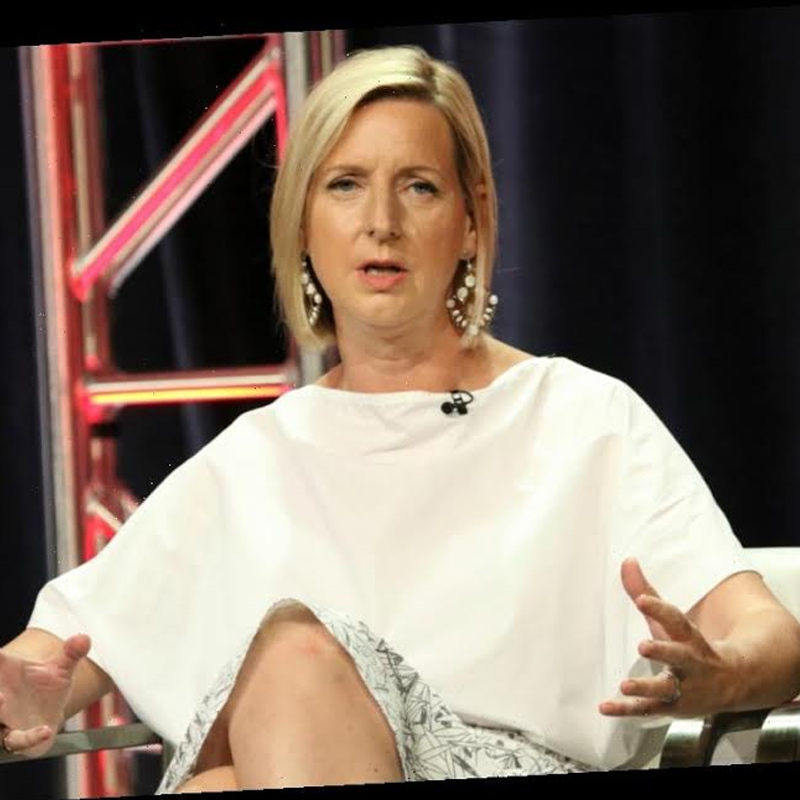
    MUMBAI: New WarnerMedia France and Benelux, Germany-Austria-Switzerland country manager Iris Knobloch has restructured her leadership teams across EMEA.

    Olivier Snanoudj, Eric Broet, Caroline Lang, Guillaume Coffin and Gregory Schuber will resume leadership positions for France and Benelux, with Willi Geike, Steffen Schier, Peter Schauerte, Sylvia Rothblum, Matthias Heinze and Tim van Dyk assuming leadership responsibilities for GAS.

    Snanoudj and Schier will overlook theatrical distribution for the France and Benelux and GAS markets, respectively, while Lang will head TV distribution for France and French-speaking territories with Rothblum seeing the same responsibilities for GAS and Israel.

    Home entertainment and consumer products in each region will consolidate under one leadership, handled by Broet along with the support of Yves Elalouf and Jérôme Ollagnier. Schauerte will oversee home entertainment and consumer products for GAS, supported by Veronika Tiedemann and Stefan Hausberg.

    Schuber and van Dyk will look after the marketing teams in the two territories including publicity, franchise management and data. Geike, who last worked on the position of country manager, will now head the company’s local theatrical production for GAS. Broet will supervise local theatrical production for France and Benelux.

    Meanwhile, Warner Bros TV Production UK Group company Twenty Twenty has appointed James O’Reilly as its new creative director. He will report to managing director Leanne Klein and work out of the company’s newly established Bristol offices which will serve as the company’s headquarters starting in 2021.

    O’Reilly will be responsible for overseeing the creation and production of new original content for the company’s slate, and to manage the company’s existing catalogue of ongoing series. He joins the company after more than a decade at Blast! Films, serving as creative director for the last four years.

  • 20th TV & Touchstone merged under Disney TV restructure

    20th TV & Touchstone merged under Disney TV restructure

    MUMBAI: The shake-up in Walt Disney’s upper echelons continues, after the company announced large-scale streamlining of its content creation and distribution into separate and distinct global units earlier this year. Falling in line with CEO Bob Chapek’s vision of ‘strategic reorganisation’ in the wake of the tumult caused by Covid2019, other heads of businesses – namely general entertainment content chairman Peter Rice, and media and entertainment distribution overseen by Kareem Daniels – divvied up responsibilities, shuffled top-rung personnel, consolidated assets, and generally spruced up operations to make the multi-billion dollar enterprise more profitable in these troubled times.

    Last month, Disney-owned ESPN unveiled its own reshuffle of senior leaders, with content executive vice president Connor Schell leaving the company. Reports stated that the sports outlet is expected to reduce its workforce by 500 staffers.

    Now, ahead of Investor Day (scheduled for 10 December), Disney has undertaken another big round of restructuring to further consolidate its content creation across streaming and linear. Walt Disney Television chairman of entertainment Dana Walden has initiated a major reorganisation of the television production and original content businesses under her leadership. This includes Hulu’s longtime SVP content Craig Erwich adding oversight of ABC original content to his purview. He has been named president of Hulu Originals and ABC Entertainment.

    He will take over responsibilities held by ABC Entertainment president Karey Burke who, after a successful stint at the network, is taking on a role as president of 20th Television, the combined operation of 20th Television and Touchstone Television. As the cable/streaming-focused studio is being folded into 20th TV, Disney TV Studios has now gone down to two divisions with ABC Studios and ABC Signature merger earlier this year. 20th TV will be run by Burke, and ABC Signature will be headed by president Jonnie Davis. Both Davis and Burke will report to Walden.

    Craig Hunegs will move from his role as president of Disney Television Studios to become Walt Disney Television entertainment president, working alongside Walden across all business units. He will oversee centralised business affairs, production, casting and creative talent development & inclusion teams.

    Touchstone TV (formerly Fox 21) president Bert Salke will bring transition to a multi-year overall producing deal with Disney Television Studios. During his time at the company, Salke looked after development and production at the studio, which included such shows as Homeland, Genius, Queen of the South and The Hot Zone. Together with FX Prods, the studio produced The Americans, Sons of Anarchy, Mayans M.C and more.

    Former 20th TV president Carolyn Cassidy will stay back at the studio as EVP, development. Touchstone TV’s Jane Francis will also stay put and become EVP – series for 20th TV. Both Francis and Cassidy will report to Burke.

    As part of the restructuring, 20th Animation, currently a division of 20th TV, will have its own unit, run by Marci Proietto. Additionally, Disney TV will launch a production unit for unscripted programming. Both divisions will be overseen by Hunegs.

    Tara Duncan will continue to oversee original programming for Freeform. She and Erwich will continue to report to Walden.

    “This has been an incredibly challenging but successful year. Our television studios produce many of the top-rated shows in the industry. ABC is now the number one entertainment network and the Hulu Originals team launched their most successful slate yet of critically acclaimed, award-winning, high-performing shows. I am proud of our exceptional leadership team and all we have accomplished, but the media landscape is changing and this reorganisation better positions us for the future,” said Walden. “The changes we are announcing today are in service of three goals: rightsizing our organization, streamlining functions across our studios and original content teams, and strengthening our partnerships with the extraordinary creators who call Disney Television Studios their home.”

  • From ream to reel: The boom in book to screen adaptations in India

    From ream to reel: The boom in book to screen adaptations in India

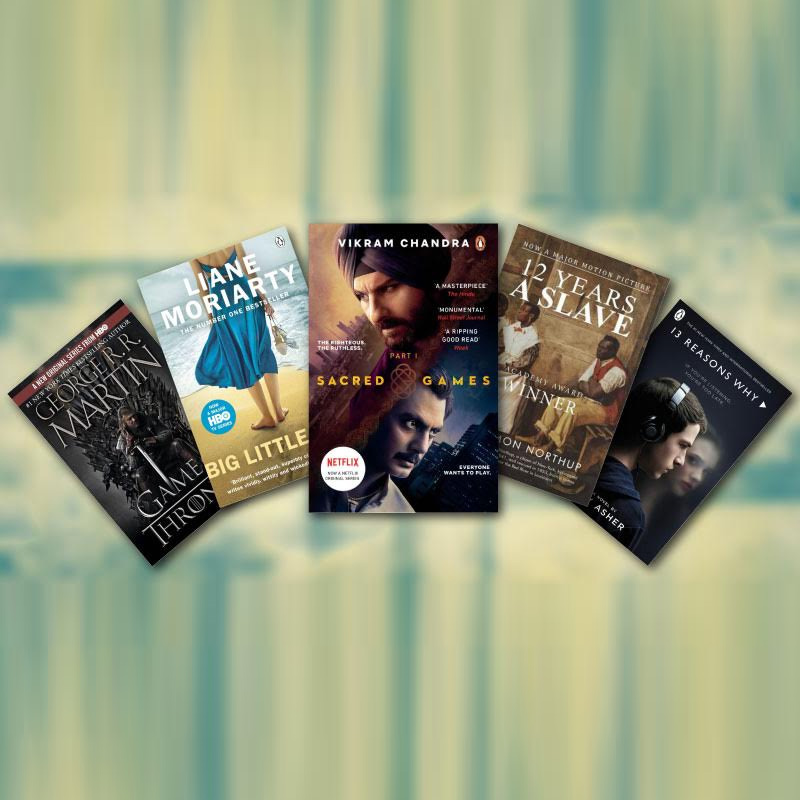
    MUMBAI: From golden age classics like Gone with the Wind and To Kill a Mockingbird, to the more recent young adult adaptations of the 2010s like The Hunger Games and The Fault in Our Stars, Hollywood has a legacy of churning out book to screen iterations. Fortunes in tinseltown have been built on entertaining the masses with 70mm productions of their favourite tomes, be it children's stories (Wizard of Oz, Harry Potter) or suspense thrillers (The Shining, Gone Girl), historical dramas (Schindler's List, Argo) and romantic fiction (Pride and Prejudice, The Notebook). While there have been constant refrains of "the book is better than the movie" by the public, Hollywood has seldom been inclined to buck the trend of motion picture or TV adaptations of mass-market publications. In fact, the massive success of Game of Thrones, whose original source material is A Song of Ice and Fire saga by George R R Martin, led to a renewed interest and spurt in adapting novels for the small screen (think The Handmaid’s Tale, American Gods, Big Little Lies et al)

    But when it comes to Bollywood, historically there has been a dearth of book to screen adaptations. While they have been around for a long time – Satyajit Ray's Pather Panchali (1955) was based on Bibhutibhushan Bandyopadhyay's novel of the same name – their frequency became too few and far in between to really count. Indian audiences were blessed with the occasional gem like Mira Nair’s The Namesake, but mostly, they're used to sub-par replications of frothy Chetan Bhagat paperbacks.

    However, book adaptations in recent years have improved, in both quantity and quality – in fact, we appear to be in the midst of a high-profile book-based production boom. Adapting a hit book isn’t a guarantee of success, but producers, more than ever, are perusing bookshelves for inspiration for the next big show or movie.

    So what has changed? When did books become a foundation for popular films and series? And what does it mean for the future of producers, authors and book publishers alike?

    If one were to pin-point the resurgence of this trend, it was Sacred Games, Vikramaditya Motwane and Anurag Kashyap’s cerebral tour de force adapted from Vikram Chandra’s massive 2006 tome of the same name, which proved to be a game-changer in the Indian OTT space. The dystopian series Leila was also based on the book by Prayaag Akbar; and the cricket drama Selection Day had its roots in the novel by Aravind Adiga. Red Chillies Entertainment’s Bard of Blood was penned by the young Indian author Bilal Siddiqi.

    Beyond OTT platforms, other content producers are also looking at books as source material. Endemol Shine India has recently acquired rights to Richa Mukherjee's Kanpur Khoofiya Pvt Ltd, Chitra Banerjee Divakaruni's unreleased book Lioness: The Last Queen, Salil Desai’s novel The Sane Psychopath along with Damyanti Biswas' crime novel You Beneath Your Skin

    Book to Screen adaptation

    HarperCollins India rights and backlist manager Arcopol Chaudhuri mentioned that in India, screen adaptations from novels have gathered pace over the past five years thanks to new and emerging broadcasting platforms, primarily driven by OTTs.

    Endemol Shine India CEO Abhishek Rege explained that adapting a book comes easy to content producers. “With adaptation, it is like a certain level of the story is already prepared and the other important aspect is popularity. If you have a certain book that is popular, you would want to use it for your story because there is a certain type of fan following which will come to watch it. I think it is something that will be continued as a book right acquisition model. Currently, OTTs need content to fill up their library, and books offer ready material, it kind of cuts short the mainline process. That is why book rights are going to be popular in the coming years.”

    Applause Entertainment content head Deepak Segal also highlighted that long-form dramas have opened many opportunities for content creators. The episodic format allows creators to deep dive into the storyline, sketch different and longer character arcs and allows them to innovate with the plot. With the digital boost, it has become one of the important mediums of storytelling as earlier the adaptations were restricted to films. This helps create more opportunities for everyone – creators, talent, platforms etc.

    Choosing Stories

    For Segal, the story is one of the key deciding factors while choosing a book. Aspects like relevance and connectivity with the audience are thoroughly examined. He said, “With India’s Most Fearless, we knew that this subject is of national importance and we wanted to highlight the storyline in four parallel tracks which the audiences have not seen.”  

    Another parameter that Applause Entertainment looks into is the shades of the character, the uniqueness to bring out a progressing reaction in the audiences. Segal further discusses the subject with the creative team, on how to pan it out into eight to ten episodic series, keeping the audiences engaged and entertained with strong storytelling at the core. Then the creative team makes an observation on how the characters will scale and how much potential it offers to build a room for innovation.

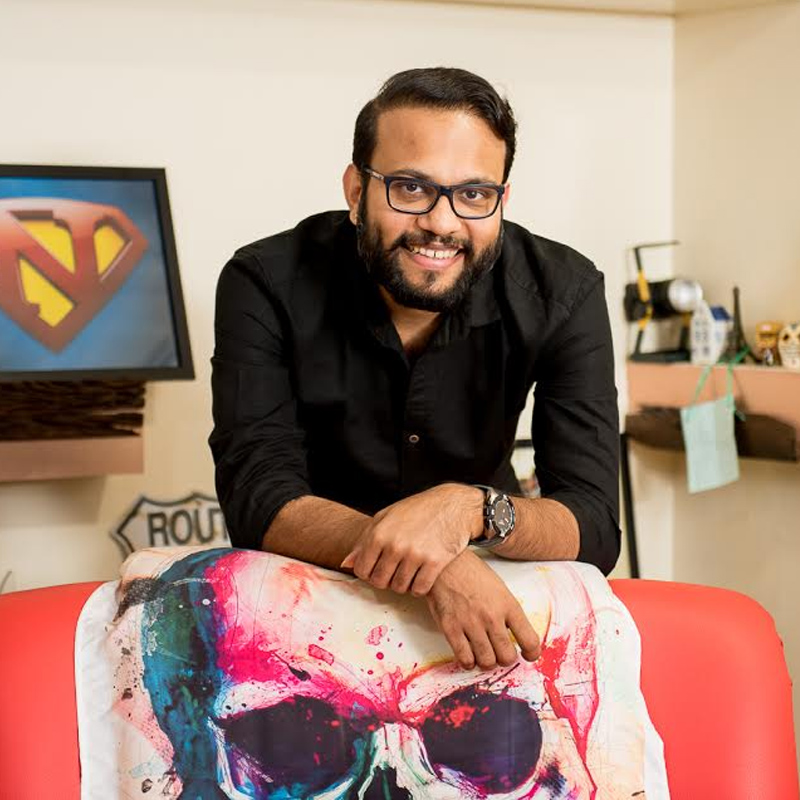
    To help writers sell their books to filmmakers and content producers, Sidharth Jain has started ‘The Story Ink’, India’s first story company. Jain said, “There are very few players in India who have been pursuing screen adaptations. But what we are doing new is to take the screen adaptation business from mere agenting to curating content strategy. I don’t think of us as an agency as it is more like a platform for writers. While we work on a fee model, we are in the business of turning books into projects.”

    Picking Genres

    Rege discovered that post Covid2019, audiences want to see happy stories. The studio is currently focusing on creating light-hearted shows. In terms of understanding viewers’ preferences, Rege uses metrics that are released by some agencies as a report for digital media consumption. Apart from this, there are different reports available that talk about genres. He also reaches out to OTT platforms to understand their research and consumer feedback.

    By contrast, Segal is looking at all sorts of genres as he wants to reach out to all buckets of audiences. “Today the viewers are open to exploring different genres and as content creators, we want to have diverse offerings. Digital has become a great way to gather insights, understand consumer psychology and their points of view on topics. It gives leverage to mould out setup, characters and storytelling,” he added.

    Jain stated that biographies and real stories have been in great demand recently. But a solid thriller, horror or mystery always makes for a good adaptation.

    Process of book adaptation

    Rege revealed that the team at Endemol Shine directly reaches out to authors and inquire if they are represented by any agents or publishers. Nowadays there are a lot of agents that work on book to series productions, and it is not the publishers who hold the rights. There is a set structure on how books are adapted to screen. Endemol Shine follows rules from global learning and then applies that to the contract. It also keeps the rights of all languages as well. When the story pans out the team decides on what could be made from it, whether it is for film, television, OTT and in what language. Packaging is another critical aspect. Post that, the director for that genre, writer, and then the cast is finalised.  

    At The Story Ink, the team has a recommendation-driven approach to pitching. They study the content strategy of the platform, map access to talent and available resources of the producer – and then recommend the right story to them for consideration. Jain added, “We don’t send out lists or catalogues. Our approach is very boutique and curated. I work with authors, publishers, and literary agents. Usually, I find a book that I feel should be adapted and then I reach out to them (the author first and then the publisher). But now, increasingly, authors are reaching out to me on their own.”

    Chaudhuri mentioned that the process involves the licensing of audio-visual rights to the producer, for a fee. The publisher or the author can reach out to the producer to pitch a book and solicit interest to license the rights. “Alternatively, producers/filmmakers themselves reach out to the publisher to acquire the rights for books they're interested in adapting for the screen.”

    According to Neelakantan, in India, the concept of IPR is still in its infancy. Usually, the writer is paid a lump sum for the book adaption rights. Theoretically, an author can put any conditions, but in practice, once the rights are sold, the author does not have any control over the product, he claimed. “Unlike books, films and television are industries and have their own constraints and demands and has scant space for writer’s ego. Once you sell the rights, it is better to forget having any creative control over it.”

    Jain disclosed that writers get somewhere around Rs 15-30 lakh and then the amount is divided between the agency and the writers, and sometimes, the publishing house.

    New Found Interest

    Is content producers newfound interest in books as source material for films and series because of the success of big-screen adaptations of Chetan Bhagat’s novels? Jain held the view that the real reason is the entry of international streaming giants like Amazon and Netflix. They are seeking better content and that’s putting pressure on the limited talent and story pool that is there in the industry.

    On the other hand, Anand Neelakantan, the bestselling author of Asura: Tale of the Vanquished and the Ajaya series, opined that not all books lend themselves for film or TV production. “The screenplay is a concise art, and many stories cannot be told in a short time of two hours. That is why there are so few screen adaptations that have lived up to the standards set by the books. Original series is a better medium to adapt novels, while the film is better served by adapting short stories or novellas. Of course, exceptions are there to this rule,” he shared. Neelakantan has written screenplays for several popular TV series, including Star TV’s Siya Ke Ram, Sony’s Mahabali Hanuman and Colors TV’s Chakravarthi Samrat Ashoka.

    According to Neelakantan, creative writing, on the whole, is moving towards the screen these days – be it movies, television or the OTT platforms. “It is the way to go. That does not mean other forms of writing would die out but would become more and more niche. Films did not finish off plays or poetry but superseded most other forms of storytelling in sheer reach and commercial power. Like any other field, those who keep pace with change in society and technology would retain leadership.”

    Impact of OTT platforms on writers 

    The question arises: are streaming giants like Netflix, Amazon, Disney+Hotstar and various other platforms changing the way books are being written, especially in India? There is a possibility that more and more writers are writing with a view of making their books accessible across audiences through these multi-media platforms.

    Jain pointed out that authors pen stories that inspire them, and OTT platforms rarely, if ever, influence how they write. Good and compelling stories will always work, in any medium. He said, “Thousands of books get published in a year, but a fraction of those will make it to screen. But yes, I believe some writers will make a lot of money because of the emergence of new platforms. Also there is no time for creators to write stories. It is at times difficult to meet the demand. In certain cases where we take on development of the scripts for books to screen adaptation, we always stay focused on what’s the best way for the audiences to enjoy the story – whether they have read the book or not. Organic and honest storytelling, keeping in mind the expectations from the format+medium will always work best.”

    Future of book adaptations

    From content creators, agencies to authors, everybody’s of the opinion that going forwards, book to screen adaptations are bound to grow by leaps and bounds. With the focus of strong storytelling at its core, this is something that will be explored more and more in the future.

    Chaudhuri contended that due to increasing demand, studios will invest more in writers' rooms. Said he: “A few years down the line, the film industry awards and the National Awards will have a category for 'best adapted screenplay', like they always do at the Academy Awards.”

    Neelkanth held the view that more books will get adapted as there is a paucity of content in the show industry. He concluded, “Book adaption does not depend on the commercial success of books. If you have a compelling story and you know how to tell it well, it does not matter how many copies the book sold. The film/ TV industry would lap up the books that would yield you a lifetime worth of royalty of a best seller in one go. So, all the writers out there, keep writing.”


  • Balaji Telefilms sees stronger Q2 FY21

    Balaji Telefilms sees stronger Q2 FY21

    KOLKATA:  The Ekta Kapoor headed content production house Balaji Telefilms on Monday reported a consolidated revenue of Rs 78.3 crore in the second quarter, up 123 per cent from Rs 35.05 crore in the first quarter. The company has narrowed down EBIDTA to a negative Rs 12.4 crore from the negartive Rs 26.3 crore in the previous quarter. The company has posted a net loss of Rs 19.5 crore again an improvement over Rs 27.9 crore in Q1 2020.

    In a regulatory filing, Balaji Telefilms has stated that content production has resumed slowly leading to higher production cost of Rs 60.5 crore. 176.5 hours of TV content have been produced in the quarter. Six shows were on air during the quarter and the company is expected to launch two new shows in the coming quarter.

    “This quarter we took steps to restore our content production activity and have slowly returned to more normal levels of TV content production. The teams are adapting to the new processes of shooting and I am confident we will adapt quickly given our strength and successful track record. Our digital businesses had limited fresh content during the quarter but we have managed to get better engagement using our library of over 65 original shows. We will soon restart adding more shows to the platform as shows are ready for launch. Overall some of the cost optimization programs initiated should continue to allow us to see strong profitability as our operations return to pre-COVID levels,” Balaji Telefilms managing director Shobha Kapoor said.

    Total Revenue for ALTBalaji stood at Rs 14.7 for the quarter compared to Rs 14.9 in the previous quarter. The OTT platform has witnessed a marginal uptick in international subscriptions as it is gaining traction globally. While average daily subscriber addition in the quarter has stood at 9000, average revenue per user (ARPU) remains between Rs 140 to Rs 150 a year.

    The direct subscription revenue has witnessed a marginal de-growth as the country has slowly opened up and customers are returning back to work and social commitments. Moreover, revenue from its Zee5 deal has also resumed in the quarter. As there has been a huge change in content consumption trends, the recent lockdown has accelerated the shift of consumer base from tier 1 into non-metro and tier II or tier III towns and cities. 

  • Wiip partners with Roy Kapur Films to produce The Anarchy

    Wiip partners with Roy Kapur Films to produce The Anarchy

    MUMBAI: William Dalrymple’s best-selling historical book on colonialism The Anarchy: The Relentless Rise of the East India Company is getting an adaptation for the small screen.

    Independent production house Wiip has teamed up with India’s Roy Kapur Films to adapt the tome, which traces the rise of The East India Company and the fall of Mughal Empire. The Anarchy was recommended by former US president Barack Obama amongst his top reads in 2019. The book was recently listed as a finalist for the  Cundill History Prize 2020, one of the most prestigious awards in the world for non-fiction writing.

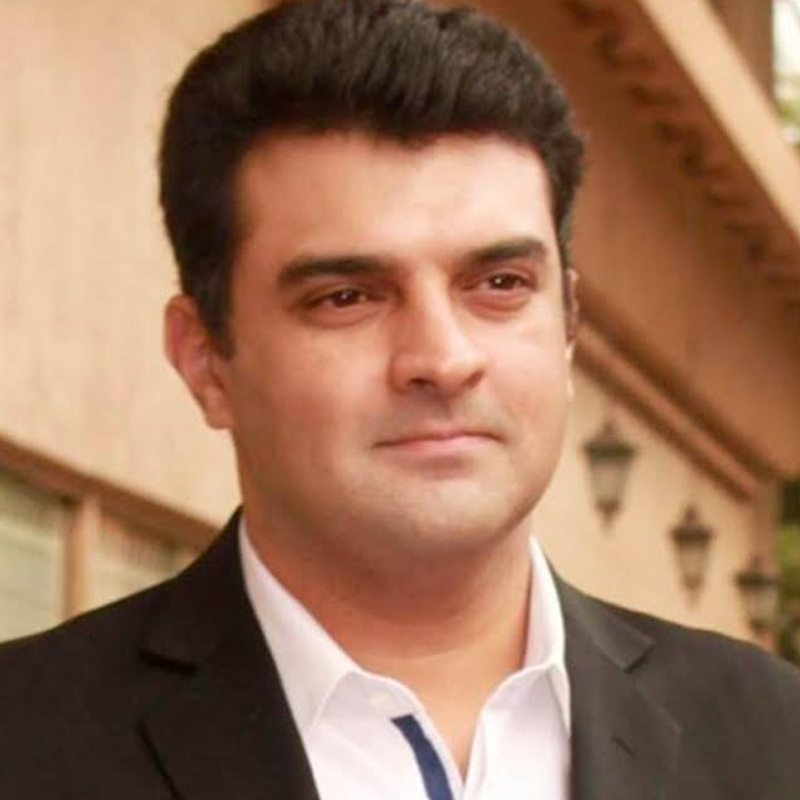
    Executive producers lined up for the venture are Wiip’s Paul Lee and Mark Roybal, Roy Kapur Films’ Siddharth Roy Kapur and XPat Productions’ Naz Haider and Siva Natarajan. Roy Kapur Films bought the rights to the book earlier in June this year.

    Wiip and RKF will bring onboard a diverse international team of writers to create a global series both in scale and quality.

    “Siddharth is not only India’s most formidable producer, but he is also a true gentleman. We are beyond thrilled to be partnering with him, along with our good friends at XPat, on The Anarchy. Paul, the Wiip team and I are humbled — and to be honest, slightly terrified — that Dalrymple has entrusted us with his epic masterpiece. There couldn’t be a more opportune moment for adapting The Anarchy into a television event,” said Wiip’s Mark Roybal, as quoted by Variety.

    The Walt Disney Company India former MD and current president of the Producers Guild of India Siddharth Roy Kapur produced 2016’s most successful movie Dangal. It was India’s biggest worldwide grosser of all time.

    “I believe that stories that are compelling, relevant and authentic have the potential to resonate with audiences across all nationalities and cultures, whichever part of the world those stories may come from. We are delighted to be working with Paul, Mark and their team at Wiip to bring to life this fascinating book and to create what we envision to be the definitive story of the colonization of the Indian sub-continent,” added Roy Kapur.

    Dalrymple will act as creative consultant for the show. The Historian-author has penned bestsellers like City of Djinns, White Mughals and In Xanadu.

  • Nikul Desai talks about his new show Taare Zameen Par

    Nikul Desai talks about his new show Taare Zameen Par

    MUMBAI: Nikul Desai is mainly known for directing non-fiction shows like Comedy Circus and Rising Star. Desai began his career under the supervision of his paternal uncle Vipul D Shah, the co-founder of Optimystix Entertainment. Starting off as an assistant director back in 2001, he has worked his way up to head of non-fiction content.

    But luck played its part too. Desai got to don the director's hat when the main director of a TV show fell ill – and that was his first break as a full-time television director. Fame quickly followed when he made a splash with the runaway success of Comedy Circus. The show aired for nine years with 18 seasons. Not only this, he brought various comedians like Kapil Sharma, Krushna Abhishek, Bharti Singh, Sudesh Lehri, and many more, into the limelight.

    Now, Desai is coming up with yet another singing reality show – Taare Zameen Par. Conceptualised as a platform for kids to showcase their signing talent, the show will be telecast on Star Plus from 2 November at 6.30 pm. The programme will not have judges, but mentors who will groom and train the kids. The makers have roped in Shankar Mahadevan, Tony Kakkar and Jonita Gandhi as mentors while popular comedian Sugandha Mishra and Aakriti Sharma (of Kullfi Kumarr Bajewala fame) will host the show.

    Desai revealed that this is the first time that any production house is attempting a non-fiction from a daily point of view. Said he: “Taare Zameen Par is a mammoth show that is keeping me and my team very busy. And then there are other projects in the pipeline, we are in conversation with Star Plus for a few other shows, which should hopefully get cleared by the end of October or November. We are also coming up with an original series, and a movie in partnership with Ashwin Varde.”

    Due to the Covid2019 pandemic, production houses have to come up with innovative ways to evolve and upgrade in the new normal. For instance, the studio has cut down on crew size – a measure that has generated its fair share of headaches.

    “A big non-fiction show has anywhere between 300 to 400 people, but now the studio is functioning with anywhere between 160 to 200 people while the work remains the same. Consequently, production has become considerably more difficult, and the team has to pre-plan a lot of stuff so there are no last minute requirements and scramble,” said Desai. This is because all the props which are coming from the market need to be sanitized and must be kept aside for 48 hours.

    In terms of the restrictions, only cameramen and technicians are allowed to go on the floor, otherwise access to the floor has been completely shut off. Further, there is zero physical contact with judges and hosts. Contact and communication has undergone a sea change.

    “Largely, the communication is completely killed from a security point of view, it's either from a pre-production point of view where we do phone calls or Zoom calls. We are shooting every day together, but we haven't really met each other. We are strictly adhering to safety and security protocols,” stated Desai.

    Child participants and their guardians, who came from all over India, went through a minimum of 14 days quarantine and it’s only recently that they have been brought out from their hotel rooms for band rehearsals, he added.

    Generally, the production control room (PCR) is a small, cluttered space. But this time to maintain social distancing. Optimystix has designed a bigger area for PCR. The studio has created a partition between technicians by putting acrylic sheets so that everybody can watch the monitors while shooting takes place. But only limited people are allowed in the room. For other crew members, the studio has made a viewing room where people who want to just watch the content can actually go to the viewing room and tune in.

    “We have given them the Zoom output off the whole master camera, so that they can watch what's happening on the floor at any point of time while sitting at their homes. And they can communicate with us over the call or Zoom chat. So, the way we function has completely changed. Earlier, a lot of people used to be there on standby to help the people present on the set but now 70 per cent of the crew is handling their own work,” Desai elaborated.

    The studio has also hired an external Covid2019 compliance company named the Covid Marshal. The set and other equipment are sanitised twice a day. No more than two episodes are shot in a day. Desai further mentioned that due to safety and security measures the productivity has comparatively been hampered.  

    Desai shared his view that audiences are now more keen than ever to watch light-hearted programmes, and in the long run non-fiction shows will fare better. 

  • The Crown producer Suzanne Mackie launches own production company

    The Crown producer Suzanne Mackie launches own production company

    MUMBAI: Suzanne Mackie, one of the executive producers behind the hit Netflix show The Crown, is all set to launch her own production company. Mackie is leaving UK-based Left Bank Pictures to set up Orchid Pictures.

    Mackie, a prominent force in British drama, will continue to remain as an EP on the Left Bank-produced The Crown for the period drama’s upcoming final two seasons, shooting for which begins next year.

    Orchid Pictures will be based in London and it will work on projects across both TV and film. Sky development co-ordinator Hannah Campbell will also be joining Orchid as part of its initial team, with the company engaged by Netflix to produce a slate of projects from emerging and established talent.

    During her tenure in Left Bank Mackie developed and executive produced projects such as Sky1’s Mad Dogs and BBC1’s The Replacement. She is also attached to executive produce on the upcoming Netflix series Behind Her Eyes.

    “Having spent 12 very happy and creatively fulfilling years working with Andy Harries and the team at Left Bank Pictures, starting my own company felt like an exciting next chapter in my career. The opportunity of further deepening my collaboration with Netflix presented an immensely exciting opportunity,” said Mackie.

    Left Bank Pictures CEO Andy Harries said, “I have enjoyed an amazing journey with Suzanne, from Mad Dogs to Misbehaviour with lots of The Crown on top. She is smart, wise and has great taste. I have no doubt she will create some classy new shows for Netflix as well as riding side-saddle with us on The Crown.