Category: Fiction

  • No more TV & film shoots in Goa, govt enforces 15-day lockdown

    No more TV & film shoots in Goa, govt enforces 15-day lockdown

    New Delhi: With one of the highest rate of Covid2019 infections in the country, Goa chief minister Pramod Sawant on Friday announced a state-wide curfew in the state from 9 May to 23 May.

    According to government data, Goa has recorded a positivity rate of 41 per cent, which has surpassed the infection rates in Delhi as well as Mumbai. “The positivity rate and death rate are increasing in the state. There is no shortage of oxygen and medicines in the state. A detailed order regarding the state-level curfew will be released by 4 pm on Saturday,” said Sawant.

    The announcement comes hours after the Entertainment Society of Goa (ESG) cancelled all permissions granted for film and television serial shootings in the state in the wake of the raging pandemic. The ESG is Goa government’s nodal agency empowered to give permission for commercial shootings in the state.

    Several film and TV serial makers from Mumbai and Chennai had recently shifted their sets to Goa after strict restrictions were imposed in Maharashtra and other states.

    “We will not allow any shooting of films or television serials in public or private properties till the Covid2019 situation in the state comes under control,” ESG vice president Subhash Faldesai told PTI.

    All those currently shooting films and serials in Goa have also been asked to wind up their schedules. The ESG said it will review its decision only after the situation is under control.

    On Thursday, Goa reported its highest daily tally so far with 3,869 Covid2019 cases that took the count of infections to 1,08,267.

  • Maharashtra shuts all TV, film shoots till 1 May

    Maharashtra shuts all TV, film shoots till 1 May

    New Delhi: With no slowdown in sight in the surge of Covid2019 cases, the Maharashtra government has decided to shut down all ongoing television and film shooting from 8 pm on Wednesday. The restrictions will remain in effect till 7 am on 1 May.

    The state is grappling with an alarming rise in the number of Covid2019 infections and has the maximum caseloads, more than any other state, amidst the second wave tearing through the country. Chief minister Udhav Thackeray said the current situation was “scary”, with hospitals across the state battling with acute shortage of beds, oxygen cylinders and lifesaving drugs.

    Thackeray stopped short of using the term ‘lockdown’, but said only essential activities and services will be permitted to operate for the next two weeks. The government has announced closure of all schools, colleges, restaurants, hotels, cinema halls, theatres, multiplexes, gyms, sports complex, amusement parks and all religious places. E-commerce will be allowed for the delivery of goods. Section 144 will be imposed across the state from 8 pm Wednesday till 7 am on 1 May.

    Television producers and broadcasters who were already reeling under the economic fallout of the pandemic will now have to face the challenge of running daily shows amid these strict restrictions. Several TV and film shoots have already been bearing the brunt of the pandemic during the last two weeks, with an increasing number of artists and staff members testing positive for Covid2019.

    Shooting of TV shows like Wagle Ki Duniya, Anupamaa and films like Gangubai Kathiawadi, Mr Lele, Ram Setu were halted after several Covid-positive cases were reported on the sets. The Indian Film and Television Producers Council (IFTPC) had also been urging the producers to ensure their staff is being regularly tested for Covid2019. The government had already announced the closure of cinema halls and multiplexes last week.

    The cases and fatalities have peaked sharply in Maharashtra over the last few weeks with as many as 60,000 cases being reported daily. The state has already lost as many as 58,000 lives to the pandemic. The capital city of Mumbai has reported as many as 7,898 new positive cases on Tuesday and reported 26 deaths, taking the total number of positive cases to 5,35,017.

  • Zee TV’s Aparna Bhosle on changing the content game in television

    Zee TV’s Aparna Bhosle on changing the content game in television

    MUMBAI: Traditional television broadcast has long been a staple of entertainment. But as the fast-growing internet and over-the-top (OTT) video platforms make inroads into the consumer market, more and more people are beginning to cut the cord and move to a digital viewing experience. The rules of the content game have changed. Digitisation has lifted barriers and offered a multitude of opportunities to tell stories that were once impossible to tell and it has become more important than ever for broadcasters to up their game in terms of content quality.

    Indiantelevision.com’s Shikha Singh spoke to Zee TV business head Aparna Bhosle on how this transformation has impacted the audiences’ demands, the use of newer technologies, shooting techniques to meet the ever-growing need of viewers for quality entertainment and more.

    Edited Excerpts:

    On what has led to the growth of TV shows.

    Technology has evolved over the years and has certainly contributed significantly to our shows looking much better visually. We have more sophisticated cameras and lenses today, much better visual effects, and cutting-edge post-production software. But, at the end of the day, it is more about a maker's intent. Our audiences are far more exposed to global content than they ever were. Hence we, as makers, have started putting in a lot more effort into every small detail which makes the content look more aesthetic and visually appealing. It is not only about monetary investment but also investment in terms of time and thought. A lot more thought goes into production design which overall results in shows looking much better.

    On changes they have introduced to improve the look and feel of the shows.

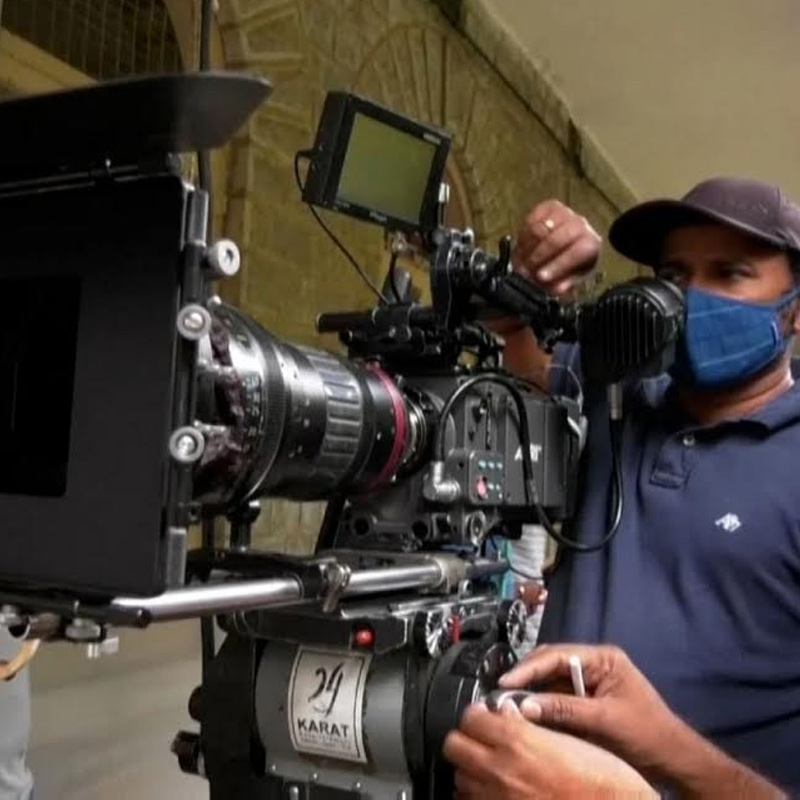
    Shooting on Sony F5 is a standard in today's time. We even shoot on more sophisticated cameras such as Arri Alexa, Sony FX9. These are some cameras that have given great results even in low lighting conditions and the picture quality is top-notch. And with the advent of specialty equipment such as drones, Go-Pros, one can bring alive the scale of production values.

    Apart from that, more and more technicians are now experimenting not only with cameras but also lighting techniques. The days of flat lighting are long gone. Today's storytelling requires different shows to have different lighting. It is not just about having the latest technology at your disposal, it is more about how one leverages it to narrate a story more effectively. Technicians today love to experiment and create new looks for the show. They play with camera angles, lighting techniques which overall helps in achieving a new contemporary look. Sound, too, plays a very important role in storytelling. Today, our shows come with a Dolby digital 5.1 output which gives our viewers a high-quality sound experience while watching TV.

    On advantages of shooting in 4K.

    Shooting in 4K means more resolution, deeper colours, more creative options to work with during post-production. But the 4K files are heavy, which means more time to grab, hence for daily shows, it becomes time-consuming and not viable as a process. Shooting in 4K is possible in the case of certain events or promos that provide sufficient timelines between the dates of the shoot and on-air telecast.  

    On what kind of discussion goes on with production houses before creating any property.

    Detailed discussions between the channel and the production house right from the concept of a show, the narrative and the pace at which the storytelling should unfold, the key drama spikes, the characterisation, casting, core communication pitch, the production design, and the overall look and feel of the show are an integral part of the show’s making. As one moves closer to the show going on the floor, aspects such as set design, art direction, costume styling, camera treatment, and edit patterns get discussed.  

    Today, with the audience being far more exposed and discerning,  it is imperative for every broadcaster to display their A-game to hold and sustain audience interest.

    On how shows are made and changes introduced in the script.

    Just a few years ago, a tape used to be delivered from the editing studio to a channel’s office for transmission. Today, the same is achieved by a simple file transferring process. Content production is a dynamic process, and we are always eager to introduce new technology into our ecosystem. The journey from envisioning to execution is always a challenging one. As far as scripting is concerned, technology has given far more creative freedom to content creators as a lot of sequences that were earlier unthinkable in terms of execution have now become possible and even cost-effective.

    On how digitalisation has changed content production on TV.

    It has certainly lifted a lot of barriers. The camera quality is far better. Cameras can now shoot much better in low light conditions; they are lighter in weight, there is sophisticated equipment to shoot underwater, action sequences, etc. Our requirement for lights has considerably reduced. Shooting in uncontrolled environments, outdoors has become far easier. Footage transfer has become faster. The advancement in visual effects has empowered us to bring our viewers stories that were once impossible to tell.

    The post-production process has gone through a mammoth leap. The process of DI (digital intermediate, or digitising filmed content and manipulating the colour and other image characteristics), colour grading, sound effects, and background music were all very time-consuming and today can be achieved in a decent timeline. From a viewer's point of view, they are experiencing content with never-seen-before visual and audio quality and further advances in digitisation will only help us to up our ante.

  • Appetite for quality content pushing the need for technological advancement

    Appetite for quality content pushing the need for technological advancement

    KOLKATA: With the appetite for quality content growing exponentially among consumers, the need for upgradation of technology has also risen simultaneously. Content studios and production houses have started looking at high quality hardware as well as cloud computing to keep up with the demand for better viewing experience. Moreover, the organisations are also looking at tools for easier remote work as the pandemic has changed the way the industry works. As part of the overall transformation, mobile workstations are gaining more prominence of late, panelists agreed during Indiantelevision.com's webinar themed ‘Accelerating the new age of content with technology’. 

    Moderated by founder, CEO and editor-in-chief Anil Wanvari, the engaging session included Excel Entertainment CG supervisor Apul Mehta, Endemol Shine India chief operating officer Gaurav Gokhale, Hats Off Productions chairman and managing director JD Majethia, Contiloe Pictures CFO & Illusion Reality Studioz business head – animation & VFX Nitin Dadoo, Redchillies VFX technology head Rajiv Sharma, Epic On chief operating officer Sourjya Mohanty, and Dell Technologies Dell Precision Workstations marketing consultant & product evangelist Suhas Pingat.

    While India is witnessing the heyday of content consumption, accelerated by OTT platforms, certain challenges have emerged as well. Sharma said the size of content has actually become bigger now with the demand for better quality content. Hence, hardware supporting better graphic cards, faster NVMe (non-volatile memory express) storage, better display for viewing content is a must. If the hardware is not updated, it is tough to produce content which is up to the mark, he added. 

    On the other hand, Mehta mentioned that delivering content on time still remains a challenge due to the exploding uptake and quality requirement. And with the spread of the cheap and fast 4G data, the industry is competing with mobile phones as viewers are consuming more content on phones, observed Majethia. The industry has to go beyond – focus on a good story supported by greater technology. According to him, the storytelling team and executing team need to be in sync with the upgradation of technology.

    Gokhale shared that the one important aspect which the industry needs to address is how it can adjust to the remote working style. In his view, even production can be executed with a smaller crew supplemented with more technology. From a post production perspective, the work has to move from a wired system to cloud based operating, he added.

    “We have solutions which are one to one remote which means you dedicate one complete workstation to one single user. Remoting does not mean virtualisation. It can be one to one connectivity. Remoting can also be mobile workstations but stage four is definitely going to be virtualisation, because there you need to have practically low levels of latency,” Pingat explained.

    As part of a production house, Dadoo has seen on set post-production work evolve in real time – this includes Unreal Engine and rear projection (cinematic technique in film production that combines foreground performances with pre-filmed backgrounds) for an upcoming feature series. The studio works closely with DOP and production designers from the beginning itself where they work live on set to complete the composition and final VFX on the camera itself. That’s where our system is heading, he added.

    “We have a set where we have LED walls and a virtual cam. With that, we are shooting the data that technically comes in a hard drive. We want to visualise that onset whether the shot is properly done or not,” Sharma commented. He added that further mobile workstation is always needed for them, along with RTX cards, fastest NVMe RAM to allow them on set for visualising content. Epic On’s Mohanty also deliberated upon the need for mobile workstations for real-time computing.

    Pingat explained further why mobile workstations are becoming more popular. Most importantly, the flexibility of the platform for a user to use on-site or anywhere makes it stand out. Mobile workstations do not require main power as well. Technology has enabled mobile workstations to be more powerful, he added.

    “From a technology standpoint, as far as mobile precision is concerned, it (Dell’s mobile workstation) is very fast. Its entire ecosystem supports 4K as of now. It’s a mobile workstation, its processing capability from a graphics perspective is very fast,” he said.

    In order to adapt to new technologies, content studios and production houses are investing increasingly in technology. Epic On’s Mohanty said it hovers around five to eight per cent because the platform usually keeps upgrading its technology on a six-month basis.

    Echoing the sentiment, Dadoo said that Contiloe’s investment also stands at around five per cent as it deals with a lot of animation and VFX, which need constant upgradation. Redchillies and Excel Entertainment, too, are investing in the five-ten per cent range. Gokhale did not reveal an exact figure but stated the input differs from project to project.

    Clearly, technological advancements have transformed the process of content production and it has become apparent that the filmmaker with the most cutting-edge tools has the edge over others in terms of qualitative aspects that make the consumer's viewing experience better. No wonder then, that the industry is upping the stakes in the technological race.

  • Today, audiences are slot loyal and not TV loyal: JD Majethia

    Today, audiences are slot loyal and not TV loyal: JD Majethia

    MUMBAI: Jamnadas Majethia, better known as JD, started his career as a theatre artist and has been active in the Gujarati theatre scene for over two decades. The actor/producer teamed up with his close friend Aatish Kapadia and launched the joint venture Hats Off Productions in year 2001-2002. Their first co-production Khichdi was followed by Sarabhai vs. Sarabhai and a host of hit comedy shows on television. Now, the studio is back with a new avatar of the beloved legacy show Wagle Ki Duniya – Nayi Peedhi, Naye Kissey, which is airing on Sony Sab.

    Comedy and family values have always been at the core of the works they’ve created, shared Majethia. Feel good shows are the strength of Hats Off Productions, as he believes this kind of content can be watched together as a family.

    Said he: “We have always received a great amount of respect, adulation and love from audiences. Hats Off Productions is a team of passionate people who believe in giving progressive content to their audiences. Relationships, warmth, creating memories and emotions are the elements that work well in India and so we always try to work around these factors. Our shows Sarabhai vs Sarabhai and Khichdi are two decades old but they still resonate today and are loved by audiences. Audiences have kept this show alive that is what we strive for.”

    Apart from the iconic and memorable Khichdi and Sarabhai vs Sarabhai, he has experimented with formats outside his forte of comedy, such as family dramas (Baa Bahu Aur Baby, Jasuben Jayantilaal Joshi Ki Joint Family, Sukh By Chance, Behenein), romance (Chintu Chinki Aur Ek Badi Si Love Story, Ek Doosre Se Karte Hain Pyaar Hum) and supernatural/fantasy (Bakula Bua Ka Bhoot, Badi Dooooor Se Aaye Hai).  

    Explaining how majority of his shows based on family values have worked well among the different genres that he has produced to date, Majethia said, “Viewers only have half an hour to enjoy our show, in that specific time period we need to catch their attention and  provide them wholesome entertainment. In today’s time content is the king, it is important to come up with fresh ideas which are also engaging.”

    Majethia believes that today audiences have a myriad of options, from TV loyalty the focus has been shifted to slot loyalty. He opined that earlier one channel used to dominate all the slots. But now things are changing, audiences are programme loyal. More than the brand, the content is working, which works in the favour of production houses. Be it comedy, horror, crime, thriller, daily soaps, historical or mythology, each of these genres works well among viewers, he explained.

    On Wagle Ki Duniya reboot

    The opportunity to bring back popular sitcom Wagle Ki Duniya, which aired on DD National from 1988 to 1990, landed before him almost like an act of providence, quipped Majethia.

    “We were working on a show with middle class and higher middle class backdrop. It was almost finalised when Sony Sab business head Neeraj Vyas called Majethia to re-adapt Wagle Ki Duniya. Interestingly, on the same night he received a call from RK Lakshman’s daughter in law Usha Lakshman. Considering this as the universe’s calling, I went ahead with the story. Earlier the show had only 19 episodes and Usha Lakshman wanted to utilise those episodes. But it has very little scope when it came to creation. That is when the makers decided to create a programme all together with a new format,” he detailed.

    Along with his co-partner Kapadia, he created a bank of pilot episodes which got an instant thumbs-up from the Sony Sab team. However, the biggest challenge is to create fresh episodes every single day. Unlike other daily soaps, there is no scope for stretching the content or utilising previous shots and the existing library.

    Explaining on how this version is going to be different, Majethia remarked, “In those days what RK Lakshman created was the story of a common man, we have taken that same story a notch higher. The issues are more pertinent to today’s time. He is addressing the real challenge of feeding his family, raising kids, taking care of parents in the pandemic. He wants his family to have a happy lifestyle, but his income is not sufficient and he is also not a risk taker. So, the story is about how he manages everything simultaneously. Our motto is to make people understand that ultimately life is all about being happy and creating new memories.”

    With a change in generation, the protagonist in the new series will face a newer set of dilemmas and challenges. The show will also showcase the progression in the lives of the middle-class in the country. While Aanjjan Srivastav and Bharti Achrekar will reprise their roles of Srinivas and Radhika Wagle, Sumeet Raghvan and Pariva Pranati will play the new lead couple along with child artist Sheehan Kapahi and Chinmayi Salvi.

    Earlier, Wagle Ki Duniya was filmed in a small house but now, in step with contemporary norms, the team has shot the show in a two-bedroom flat. The entire set is in Mumbai’s Mira Road where they have created a house, society garden and an office. They have also created multi-utility rooms with all the technical assistance to make the work much more efficient. Behind Wagle Ki Duniya – Nayi Peedhi, Naye Kissey there is a strong team of ten writers including Majethia and Kapadia and headed by Jayesh Patil. The show is directed by Sameer Kulkarni.

    Hats Off Production is also working on its latest drama Janani for In10 Media’s new Hindi GEC Ishara. Supriya Pilgaonkar is essaying the lead role. In the near future, Majethia said he wishes to work on non-fiction shows.

  • Balaji Telefilms approves stock options for employees

    Balaji Telefilms approves stock options for employees

    NEW DELHI: Balaji Telefilms has granted 14 lakh stock options under ESOP to its eligible employees. Each stock option is convertible into an equivalent number of shares of face value of Rs 2 each with an exercise price of Rs 52.01 per option per share.

    Employees will be able to exercise this option within three years from the vesting date.

    Amid such uncertain times, Balaji Telefilms has taken a step forward to reward its employees.

    Ekta Kapoor-led Balaji Telefilms is one of the largest content production houses across India, South Asia, southeast Asia and the Middle East, delivering Hindi and regional content. It has created several iconic serials such as Mano Ya Na Mano, Hum Paanch, Itihaas, Koshish… Ek Aasha, Koi AaneKoHai , Kkusum … EkAamLadki Ki Kahani, Kyunkii… SaasBhiKabhiBahuThi, KahaaniGharGharKii and KasautiiZindagii Kay, to name a few.

    It has produced over 17,000 hours of television content and has state of the art infrastructure including production sets, resources, manpower and editing machines, allowing it to continuously produce high quality shows.

    Promoted by Jeetendra Kapoor, Shobha Kapoor, Ekta Kapoor and Tusshar Kapoor, the company has further diversified into Balaji Motion Pictures, Alt Entertainment, Alt Digital Media, Chhayabani Balaji Entertainment, Marinating Films, Brand Ek.

  • Balaji Telefilms to acquire Ding Infinity

    Balaji Telefilms to acquire Ding Infinity

    MUMBAI: Balalji Telefilms is all set to take over content studio Ding Infinity. Over the weekend, the company informed the Bombay stock exchange of its intentions. Ding is a production house promoted by long time Balali Telelfilms creative professional Tanveer Bookwala, who was once CCO at Balaji Motion Pictures.

    The Ekta Kapoor spearheaded firm will be picking up a minimum of 55 per cent equity in Ding, which was promoted in November 2020, at a price less than Rs 5 crore. The deal is planned to be a cash for shares deal, with Balaji acquiring a controlling majority stake.

    The purpose of the acquisition:   to produce 100 per cent premium original cut through the clutter content. Ding was set up by Tanveer to produce premium shows and films at competitive budgets giving directors and creators a free hand to produce a variety of genres keeping its founder’s vision for the company in mind.

    The twitterverse was buzzing when Ekta Kapoor announced she would reveal all very soon, posing with Tanveer for a selfie. Twitterati presumed the duo was getting married; when it actually related to her  acquiring Tanveer’s firm.

    Said Kapoor: “Tanveer is a true storyteller at heart and has for a decade worked tirelessly and passionately at Balaji Telefilms for multiple projects to deliver for his audiences.”

    Said Tanveer: Balaji Telefilms and Ekta’s faith in my abilities, allows me the opportunity to enable my creativity backed with logistical and strategic support.”

  • BBC Studios looks to partner with local platforms to bolster India presence

    BBC Studios looks to partner with local platforms to bolster India presence

    MUMBAI: India has become a fiercely contested territory for major streaming players as they look to drive sub-growth outside the maturing North American and western European markets.  

    BBC Studios, from the stable of the British public service broadcaster, recently unveiled a new content catalogue deal with new kid on the OTT block, Lionsgate Play. Under the agreement, five of BBC Studios' scripted dramas have been selected for the streaming service, with the shows subtitled into multiple regional Indian languages. The new deal, while bolstering the premium Lionsgate Play content portfolio, is tweaked to suit the tastes of the vastly diverse Indian audiences.

    BBC Studios South Asia distribution VP Stanley Fernandes revealed that the partnership with Lionsgate Play was nurtured when the pandemic was at its peak.

    “This augurs well for the state of the OTT industry. It’s good to see that there is demand and a growing audience for quality English-language entertainment. BBC Studios as a brand attracts its own set of audiences and we are happy to see that our programmes will now settle into Lionsgate Play amongst a rostrum of popular US shows,” said Fernandes.

    At the heart of good content is storytelling, for which the BBC is well-known. The series covered under the deal are an eclectic mix of contemporary genres, including Brexit: The Uncivil War, starring Benedict Cumberbatch, which dives into the activities and strategies behind the 2016 "Vote Leave" campaign in the U.K. Also included is the eight-episode series Class, set in the universe of Doctor Who; Les Misérables, starring Dominic West and Oscar winner Olivia Colman; Pure, about a 24-year-old woman coping with obsessive-compulsive disorder; and the epic period drama SS-GB, which tells an alternative history set in 1941, where the Germans have won the Battle of Britain.

    Fernandes is confident that the line-up will attract, engage and be appreciated by the discerning Indian viewer on Lionsgate Play. Said he: “We cater to a global audience and our aim is to bring world-class entertainment, with British sensibilities, to audiences locally. Thus far we have been successful with our content partnerships, branded blocks, and with our own branded channels which are appealing to Indian audiences. Our content is particularly viewed and enjoyed by audiences who invest time and money into their interest in content. This is a segment of the audience that Lionsgate is reaching out to, and we are confident that our content profile proposition will make for a successful partnership.”

    Asked how he plans to distribute the content, he quipped that it’s not about mass appeal, rather it’s about targeted appeal. “It is a partnership – it’s a two-way process. As owners of our intellectual property, we know our content best and our partners understand their audiences. Finding that right mix of shows to not only attract audiences but sustain them is what makes a deal successful.”

    Fernandes pointed out that BBC Studios’ content spans the bandwidth of, without being limited to, drama, comedy, natural history, science, children, lifestyle, documentaries, among others. This range of genres assists the content studio in supporting its partners to curate the right mix of shows that will garner audiences to their platforms by meeting targeted viewing requirements.

    “In India, for now, our business plans are to align with local platforms and it’s in these platforms that we see our best partnerships. Having said that, this is an ever-evolving space and we are always on the lookout for opportunities to increase our brand outreach and audience share,” he explained.

    But is the studio planning to target other Asian countries like Bangladesh, which is another big market in terms of content consumption? Fernandes shared that the aim is to reach out to as many audiences as it can, across platforms and territories. He further revealed that local partnerships in other South Asian markets are in sight.

    “However, currently there is so much to focus on in India; our key business agenda is to grow existing partnerships and create new relationships across both linear and digital services with India as our priority market. Having said that, most of our licensing deals with key partners extend to territories within South Asia, covering territories such as Bangladesh, reaching out to our audiences within these bases,” he detailed.

    BBC Studios is vaunted for its premium shows; it has a huge content library and due to the pandemic, there has been a surge in content consumption. Thus, investing in the streaming platforms is an obvious step, reasoned Fernandes. He pointed to BBC iPlayer in the UK, launched in 2007, and which can be accessed by all license fee payers in the UK. Subscribers of BBC Channels in Singapore and Malaysia have been given access to BBC Player. More recently, it launched BritBox in the US and Canada, followed by Australia in the last couple of months. BritBox is its JV partnership with ITV, bringing the best of British content to one dedicated service. 

    Additionally, BBC Studios all is set to launch a new, ad-free subscription streaming channel, BBC Select, in early 2021 on Amazon Prime video channels and the Apple TV app. BBC Select will offer a rich range of programs from the UK covering three main topics – culture, politics, and ideas. 

    Apart from Lionsgate Play, the studio is in talks with content players in both the digital as well as the linear space with new and innovative deals and business models. These deals are under contractual discussions and will be unveiled when formalised. For now, Fernandes mentioned the studio’s content is well received across both of its operated channels –CBeebies, which provides fun learning through play for pre-school kids, and on its JV partnership channel Sony BBC Earth, showcasing the best of factual entertainment. BBC Studios’ content is also seen across various digital platforms such as Netflix, Amazon, Discovery Plus, Disney+HotStar, Hungama, Tata Sky, Voot, and Voot Kids.

    Shedding light on licensing and merchandising, Fernandes highlighted that content sales over the years have changed from pure fixed-fee license deals. Audiences know and understand content and brands, a key factor for BBC Studios’ businesses. For him, it’s all about adding value. In India, BBC brands and branded content are important to its audiences. The studio’s branded blocks such as BBC First on Zee Café, the cult following for shows such as Top Gear on Discovery Plus, Doctor Who on Amazon Prime Video attract core fan audiences. BBC Studio will also adapt BAFTA-nominated series One of Us in Telugu for Disney+ Hotstar.

    He concluded, “Branded partnerships have been key in shaping our businesses, bringing our audiences closer to the best of world-class, bold, British entertainment in India.”
  • Guest column: Pause, Reset, Play – The M&E sector’s mantra during pandemic

    Guest column: Pause, Reset, Play – The M&E sector’s mantra during pandemic

    MUMBAI: This Covid2019 pandemic has forever transformed the way content is consumed across the world. With people confined at home and all outdoor public entertainment shut, and with easy access to 24×7 TV and high-speed internet, viewers consumed content across screens like never before. This paradigm shift prompted the M&E industry to pause, re-assess strategies and finally, scramble back on its feet with a refreshed plan of attack.

    Like most of our contemporaries, we, at Endemol Shine India, were taken by complete surprise when India went into its first lockdown in March. Some of our ongoing shows had to be halted mid-way. Instead of throwing our hands up in despair, we utilised the forced break to go back to the drawing board to reset and put in place extremely detailed blueprints, SOPs and protocols, ready to be deployed for all production units when the lockdown opened.

    When Unlock 1.0 was announced, we were well prepared to hit the ground running. We immediately deployed our well-laid plans, and over the next couple of weeks, started productions across the country. A lot of precious prep-time was saved through meticulous pre-planning that was done between our operating teams and medical experts over numerous Zoom calls.

    Over the next couple of months, we successfully launched three Bigg Boss productions – in Telugu, Tamil and Hindi – all being some of the most complex on-ground productions in India that involve complex workflows and employ significant manpower throughout the day and night, across multiple months. It’s no less than war, but each day brings new learnings, and we are constantly on high vigil – the slightest error can be irreversibly catastrophic.

    Despite inevitable financial setbacks due to a few show cancellations and postponements, we have been able to deliver to our customers what Endemol Shine India has always stood for — top-drawer high quality content. The biggest lesson learnt from this crisis is to always stay prepared for the next one. A great Plan A is now hygiene; the ability to pre-emptively keep Plan B ready is now the true differentiator.

    The other side of the coin

    While the lockdown period stalled productions and original content on TV went off air, repeats of successful older shows saw substantial viewership.

    Ramayan returned to the small screen after 25 years, making DD the #1 channel in the country. Our very own Bigg Boss reruns contributed significant GRPs to our broadcaster partners. With original content back from July and with Bigg Boss and IPL driving viewership in Hindi and regional markets, broadcasters are also looking at a healthy turnaround in the advertising market. With the Covid numbers across India seeming in control and experts staying cautiously optimistic, the M&E industry is slowly but surely raising its head once again.

    These steady progressions have not only fuelled optimism but also investments into the sector. As global brands like Apple, HBO and NBC as well as a few of our domestic giants wait in the wings to test the waters, the timing couldn’t be better for content creators and producers.

    To make the best use of new and emerging opportunities in the post Covid era, it is imperative for organisations to reflect on long-term strategies, consolidate the green shoots and double-down on operating plans for 2021 and beyond. At Endemol Shine India, over the last couple of years, we have been actively pursuing a two-pronged strategy – preserve and grow our non-scripted portfolio, with newer formats and newer platforms; and significantly scale up our scripted portfolio.

    We believe that upstream participation in Intellectual Property (IP) creation is critical and have been investing a lot in creative development – through book rights, original stories, and talent tie-ups. While we are the producer of choice for non-scripted shows, our next frontier is to become the producer of choice in the scripted space. We have set ourselves an ambitious target of delivering 50 per cent of our business from scripted productions over the next three years. As the industry is pivoting around content across devices and as consumption habits change, we realise that we too need to adapt and diversify. To deliver our plans, we are organising ourselves around content. To service the platform demand across the variety of shows we produce, we have created dedicated teams of creative, commercial and production personnel across scripted, non-scripted and factual content.

    As we step on to this ambitious journey, we have identified three critical levers in our production playbook:

    1.    Modularity in execution

    Decentralised, empowered teams for each show, to deliver volumes without sacrificing quality. In 2021, quality supply at scale will be the single biggest USP of production houses.

    2.    Customer-centric approach

    Platform is king and feedback deserves utmost respect. As platforms re-orient their business models and discover newer consumption patterns in 2021, a strategic approach will differentiate production houses and decide who gets repeat volume business.

    3.    Eye on ROI

    The gains of diligent book-keeping cannot be under-stated. Also, we have realised that commercial efficiency and creative excellence are not always a zero-sum game. With granular planning, robust scheduling and tight execution, the interests of the platform and the production P&L can be aligned.

    Looking ahead

    In hindsight, the pandemic has been a steep learning experience, and luckily has not been the unmitigable hopeless disaster it threatened to be. On the contrary, it has made us deliberate and question the fundamentals of our operating models and come up with smarter ways of creating content for our diverse customer base.

    The industry as a whole, has become more resilient and adaptive to new realities – of consumption shifts, lower margins and cost efficiencies. The government can support by easing taxation across the value chain and offering meaningful incentives for productions showcasing our beautiful country, a move that can indirectly help spur domestic tourism. After all, an industry that positively engages 750+ million consumers daily for hours at end, can only boost the revival sentiment in the near and long run as we head into an interesting 2021.

    (The author is COO, Endemol Shine India. Indiantelevision.com may not subscribe to his views.)

  • Films, TV & OTT should actively further the LGBTQ+ cause

    Films, TV & OTT should actively further the LGBTQ+ cause

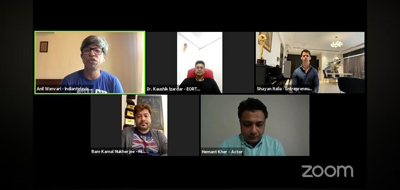
    NEW DELHI: How many of you know about the LGBTQ community? This was the first and the basic question put  Indiantelevision.com founder and editor-in-chief Anil Wanvari during the session titled ‘Finding the Rainbow in the Indian Creative Industry.’ Panellists included filmmaker Ram Kamal Mukherjee, EORTV media executive director Kaushik Izardar, actor Hemant Kher, and renowned entrepreneur, pianist, songwriter and musician Shayan Italia.

    Mukherjee opened the session by stating that they stand for free and equal rights for everybody. “They are not they and us, and it’s the beginning of the conversation. We should stop discriminating,” he said.

    Echoing the sentiment, Italia compared the situation in India and the USA. “In the USA, the LGBTQ community contributes massively to the economy. In India, it is not much. The government cannot allow this community to be segregated community. It has a monetary value in it. We are a little behind and are coming up.”

    Kher shared that there are a lot of members of this community working in the film industry, especially make up people and actors, and he has never had cause to feel awkward and uncomfortable – because irrespective of sexuality or the gender they identify with, they feel the same emotions equally and every day. “People need to understand it from a spiritual perspective,” he remarked.

    Wanvari then delved deeper into the subject of inclusivity and enquired how people from different walks of life were accepting people who identified themselves as LGBTQ+.

    Izardar started off with a quote – ‘First they will hate you and then they will start speaking about you and then follow you.’ He further believes that LGBTQ is a misnomer and the word should not exist. Since there’s no word like MPMHF, putting a label like that automatically creates a sense of ‘otherness’.

    “When these words are not levelled at us then why them? The vision and mission of my platform is to not show a struggle or depressing life of LGBTQ, but a plain story where if someone is showing their sexual preference it is not to be taken as a surprise or in another light,” he declared.

    Three years ago, the Supreme Court struck down section 377, giving the country's LGBTQ+ community the freedom to safely express their sexual orientation. But it’s a fact that they encounter harassment and social stigma even today. Is a truly inclusive society a distant dream?

    Mukherjee, who recently created an original on the subject, said that when the government legalised same-sex relationships, he could see how happy LGBTQ people were, that they could live, breathe and talk freely. It is important for them to have an official stamp for them to live freely in the country.

    Kher shared that in metros, people have started accepting them and the wall is broken. “When you go to small towns, people have stopped talking about this issue anymore as they know they have to accept it because it’s a law. There can be a transformation where people accept them.”

    However, change doesn’t happen overnight – it does take time to understand and make notions long considered taboo a part of peoples’ daily lives and it needs a lot of education, stressed Mukherjee. “I remember the rigidities that we used to witness 15-20 years ago, those things have almost gone. People understand that its legal.”

    He further added that today if a guy gets up and tells his parents that he has a boyfriend and wants to marry him, the parents won’t be as shocked as they would have been 15 years ago.

    Things like coming out also depend on the mindsets and outlook that parents have and the same reflects in the society at large, observed Izardar. If parents find out that their child is inclined towards the same sex, it could result in hostility and alienation. “It happens in rural more and people abandon their child. A lot of cases are there in Mumbai also. It happens at different ages. Most gay men are identified after their marriages and it leads to exclusion from the village. I have seen this kind of prejudice in many educated families as well,” he elaborated.

    The panellists then lowered the lens on how Indian mainstream cinema has portrayed the LGBTQ community on the big screen.

    Mukherjee noted that things are changing – actors like Ayushmann Khurrana, Rajkummar Rao, Sonam Kapoor are not playing a caricature when they take on such projects.

    It was agreed that if big Bollywood actors come forward and play solid roles that are not stereotypical, then the message would percolate to the remotest corners of the country.

    Taking the discussion a notch forward, Italia mentioned that LGBTQ community is accepted in outside countries because its heroes are true contributors to mankind. The minute India would have such heroes and you cannot deny their contribution to the country, I think that would be able to change the mindset more than any Bollywood actor or movie. 

    Kher strongly vouched for teaching the values of acceptance and inclusivity at the grassroots. “In schools we are taught what is religion, we need to teach them about LGBTQ, sexual preferences of the people, and how they live,” he asserted.

    Wanvari added that one of the good ways to educate is via cinema, television and OTT. In India, there are not many OTT shows focusing on or even featuring LGBTQ characters available, and he was not sure that the industry has tackled it well.

    Mukherjee towards the end mentioned that the moment you are not doing something that is not a routine in the world it becomes difficult to raise money for that. “The moment you say that the platform is about LGBTQ community, then the investors will say that it will be niche, no family audience. But it should not deter you from what you want to do in life,” added Mukherjee.

    Kher concluded that the film fraternity is more aware about this subject and is more open than others. “People are not coming out because of this social burden. It stops us from saying and doing what we want to do. The social fabric needs to understand the sensitivity of the subject and that they are human beings.”