Category: Fiction

  • Q2-2016: Balaji Telefilms’ QoQ PAT more than triples despite lower revenue

    Q2-2016: Balaji Telefilms’ QoQ PAT more than triples despite lower revenue

    BENGALURU: Balaji Telefilms Limited (Balaji Telefilms) reported 3.5 times consolidated profit after tax (PAT) in the quarter ended 30 September, 2015 (Q2-2016, current quarter) at Rs 7.29 crore (13.2 per cent margin) as compared to the Rs 2.09 crore (2.8 per cent of TIO) in the immediate trailing quarter. The company had reported a loss of Rs 75.80 crore in Q2-2015.


    Note:  (1)100,00,000 = 100 lakh = 10 million = 1 crore

    (2) All numbers are consolidated unless stated otherwise.


    The company reported eight per cent YoY drop in consolidated total income from operations (TIO) current quarter to Rs 55.08 crore from Rs 59.86 crore and 27.3 per cent drop from Rs 74.64 crore in Q1-2016. 


    The company’s revenue from commissioned programs segment in Q2-2016 increased YoY to Rs 51.18 crore from Rs 49.33 crore but declined 30.4 per cent from Rs 73.58 crore in the immediate trailing quarter. The segment’s operating profit in the current quarter increased by 2.2 times YoY to Rs 13 crore from Rs 5.85 crore and increased 11.4 per cent QoQ from Rs 11.67 crore.

    Total programming hours (excluding Nach Baliye) in the current quarter at 199 were lower than 219 hours in Q2-2015 and 209 hours in Q1-2016. Revenue per hour in Q2-2016 was Rs 24.3 lakh, higher than the Rs 20.50 lakh in the year ago quarter. For the immediate trailing quarter, revenue per hour was also Rs 24.3 lakh. The company says that drop in number of hours in the current quarter is mainly on account of Jodha Akbar going off-air in August 2015.


    Balaji’s other segment – Films, reported revenue of just Rs 1.64 crore in the current quarter as compared to Rs 9.43 crore in Q2-2015. The segment reported revenue of Rs 1.04 crore in Q1-2016.


    Film’s segment reported operating profit of Rs 0.06 crore in Q2-2016 as compared to an operating loss of Rs 7.46 crore in Q2-2015 and an operating loss of Rs 0.45 crore in the immediate trailing quarter.


    Total Expenditure in the current quarter declined 10.2 per cent to Rs 45.85 crore as compared to Rs 51.07 crore in the corresponding year ago quarter and declined 28.5 per cent from Rs 64.16 crore in the immediate trailing quarter.


    The company’s cost of production in the current quarter declined 33 per cent YoY to Rs 36.7 crore from Rs 54.6 crore and declined 39 per cent QoQ from Rs 60.2 crore.


    Staff cost increased 19 per cent YoY and QoQ to Rs 50 crore from Rs 42 crore.

  • Viacom to open production studio in Miami

    Viacom to open production studio in Miami

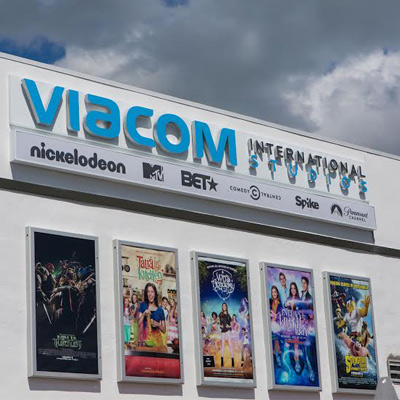
    MUMBAI: Viacom Inc will open a two-stage, 88,000 square foot, state-of-the-art production facility in Miami, Florida. 


    The new studio, which was built by the Miami Omni Community Redevelopment Agency (CRA) as a public-private partnership with EUE/Screen Gems Studios, will serve as a production hub for Viacom’s global entertainment brands including Nickelodeon, MTV and Comedy Central.


    “We are creating more content than ever before across all of our brands at Viacom. The Viacom International Studio in Miami will offer a turnkey facility where we can create even more original, high quality content to meet the increasing demand for long-and-short-form content on all of our global platforms,” said Viacom International Media Networks (VIMN) president and CEO Robert Bakish. 


    “We have had terrific success with the recent live action productions we have coming from Miami, and we are very excited to be committed to doing more. We are constantly looking for new creative ideas and content formats that allow us to tell stories in a completely different way, and this facility will certainly forward that effort,” added Viacom Kids and Family Group president Cyma Zarghami.


    “Viacom has demonstrated again and again that hits come from all over the world. With an established track record of multi-lingual hits including Every Witch Way and Talia in the Kitchen being produced in Miami for multiple audiences simultaneously, in global collaboration with the US and local Latin American teams, we’re excited to have the opportunity to further expand our production capabilities in the market,” said VIMN Americas president and Nickelodeon International EVP Pierluigi Gazzolo.


    Located in central Miami, the studio location offers access to a highly skilled, multi-lingual talent pool essential to creating global productions in multiple languages. The facilities will include two modern sound stages equipped to create a variety of content simultaneously, from daily scripted series, music specials and game shows to short form content for mobile, digital and on-air.


    “We welcome Viacom as a long-term partner at our new Miami studios. Our company has worked closely with Viacom to develop a facility worthy of a dynamic content producer. Today, we celebrate our relationship with Viacom, and we applaud our partners at the Omni CRA, whose vision and efforts have made this building possible,” said EUE/Screen Gems Studios COO Chris Cooney.


    EUE/Screen Gems has entered into a long-term lease with Miami’s Omni CRA to operate the new facility.

  • Balaji Telefilms targets OTT as core business in 5 years’ time

    Balaji Telefilms targets OTT as core business in 5 years’ time

    BENGALURU: Just a couple of days back at the Indian Digital Operators Summit (IDOS) 2015 organised by Indiantelevision.com and Media Partners Asia, Telecom Regulatory Authority of India (TRAI) principal advisor SK Gupta said that ‘the customer was king’ and suggested that players in the broadcast industry ecosystem look at over-the-top (OTT) platforms to cater to the consumers need.


    Taking a cue from the current ‘over the top’ mood in the Indian broadcast industry, Balaji Telefilms Ltd is planning to make digital B2C (business to consumer) as its core business in five years’ time. This strategy will be driven via its own content as well as curated content.


    As was reported earlier by Indiantelevision.com, this business will be housed under Balaji’s subsidiary company ALT Digital, which was re-launched in Q2-2016 with renewed vigour.


    With a three-pronged growth strategy covering television, films and digital B2C, Balaji Telefilms is looking at becoming a diversified media company. The most important component of the company’s growth strategy is to diversify into new opportunities via digital B2C. Balaji’s plans are built around the emerging changes in the consumers’ viewing habits.


    Through ALT Digital, Balaji plans to offer original and curated premium content on its own Subscription Video on Demand (SVOD) and advertising -Video on Demand (AVOD) platform across multiple genres and languages to garner a share of the online mobile and video market. The subscription driven platforms on ALT mobile app and other connected devices as well as the ALT website are slated for a Beta launch in Q3-2016 (quarter ending 31 December, 2016). Additionally, technical development, content production, promo launch and pre-launch marketing is also being targeted in the same quarter. The formal launch is being targeted for Q4-2016 (quarter ending 31 March, 2016).


    While Balaji has been a content company, it seldom has had the chance to interact directly with the consumers. Now with the digital foray, not only will it have an opportunity to connect with consumers but will also be the owner of the digital IP unlike in television content where the IP of the show belongs to the broadcaster.


    According to the company, a majority of content available online are either re-runs or DIY, which in turn leaves a big opportunity to offer original web-series for internet audience.


    The business model that Balaji has chalked out for digital is subscription based ‘freemium’ approach as the primary source of revenue. Revenue from advertising, licensing and sponsorship will be the secondary source of revenue.


    Targeting an urban and semi-urban audience group that comprises smartphone internet users active on YouTube and social media in the 19-34 age group, Balaji plans to use global ‘best of breed’ technology to ride on the imminent explosion of internet bandwidth in the country. Viewers will have streaming and offline viewing options, delivered over multiple screens. 


    The company’s strategy is to churn out original, edgy, never-seen-before content in India created especially for the OTT platform.


    Balaji Telefilms is in the process of putting together a skilled team. Additionally, a robust implementation plan is being executed to help realise the opportunity and meet its goals.


    Apart from its digital focus, Balaji Telefilms’ other two areas of focus are its existing businesses of television content and film production. On the television front, the company, which has had Hindi fiction as its mainstay until now, is planning to foray into regional and non-fiction content by making selective risk-reward plays. On the other hand, for films Balaji’s strategy is to scale moderately and become profitable.

  • “It took five years to put ‘Mahabharat’ on air:” Siddharth Kumar Tewary

    “It took five years to put ‘Mahabharat’ on air:” Siddharth Kumar Tewary

    MUMBAI: Known for shows on Hindi general entertainment channels (GECs) like MahabharatRazia Sultan, Yam Hai Hum andManmarziya amongst others, Swastik Productions has completed eight years in the television industry and in its journey so far, the company has managed to create differentiated content as well as maintained its position as one of the top show churners.


    Since the launch of its first show – Amber Dhara in 2007, Swastik Productions founder and creative director Siddharth Kumar Tewary has left no stone unturned in making it a successful journey.


    Launched with the vision to create and tell stories in a way that no one had done before, Swastik Productions’ journey has been sprinkled with huge amount of learning. 


    In an exclusive chat with Indiantelevision.com, Tewary said, “I realized a month back that we are completing eight years. It’s been a very exciting journey. I always wanted to tell stories to the world and the only way I could do that was by opening my own production house. That’s how Swastik came into existence.”


    The production house took up the challenge to deliver unique content from day one in the form of Amber Dhara, which was a story about conjoined twins. 


    While coming up with a subject like Amber Dhara eight years back was progressive in thought, it was difficult to portray on screen. “The outcome is not in our hands but as long as you try, you will be rewarded sooner or later,” Tewary said.


    It was while he was working with Sony that Multi Screen Media CEO NP Singh advised Tewary to open his own production house if he wanted to do something on his own. “Singh has been a very important person in my life. He assured me that I would get an opportunity if I did well. At the time of Amber Dhara, we were very raw and didn’t have any experience. We used to shoot without a set and it was tough to shoot at different locations on a daily basis. Sleeping on the road or in a car was normal for me at that time. I was moving like a zombie but it was an amazing experience,” Tewary recalled.


    A major breakthrough for the production house came in the form of Mahabharat, which did really well on the small screen. Star Plus approached Swastik Productions to give the epic a different identity without changing its history. And Tewary was quick to rise up to the challenge. Talking about the show, he said, “When Star Plus asked me to make the show, I had no clue whether I would be able to do it or not. Uday Shankar (CEO Star India) is the most visionary person I have ever met. He asked me to make Mahabharat in a way that nobody else could make it in the country. He was instrumental in upping the scale of the show and that in itself was a big challenge for us. The idea was to put the show on air in eight or nine months but when we actually started working on it, we realised that it was not something that could happen overnight. We needed to go deeper into the subject in order to interpret it and give the show a new take.”


    Making the show from a different perspective was no cakewalk. “It wasn’t a remake, rather it was a reinterpretation of the epic. It took us five years to put the series on air. In hindsight, it was much more difficult and than even starting Swastik Productions. Doing a show on a large scale isn’t an easy task. It took us five years to complete the show. We wanted our work to be remembered and Mahabharat was an effort in that direction,” Tewary asserted.


    Mahabharat became the talking point because of the story, cast as well as costumes and was much appreciated by the audience. Tewary’s research and studying of every character closely worked. From costume to casting, everything was done under his observation. After trying out numerable people from the industry to give a different look to each character, he zeroed in on Oscar winning costume designer Bhanu Athaiya to design costume for the cast of Mahabharat.


    While Mahabharat rakes in the praises, the production house’s other show Manmarziyaan failed to generate sustainable ratings despite being appreciated for its content and production quality. “We made an experimental show and an effort in telling a story in a different style, which connected with the younger audiences but not with the older ones. While we didn’t get the desired number, we are happy and proud that we made an attempt to do something new.” 


    After the success of Mahabharat, Tewary was keen to come up with a comedy and it came in the form of Swastik Production’s next show – Yam Hai Hum, which airs on Sab. “We were keen to explore other genres and I really wanted to produce a comedy show. I met Anooj Kapoor (Sab business head) and discussed the concept with him. He loved the idea and that’s how Yum Hai Hum happened,” he informed.


    While television remains the mainstay of entertainment, its digital counterparts like OTT and VOD platforms are fast catching up. More and more entertainment content is consumed on the go today. Tewary is of the opinion that in the coming years, digital will be the way to go and there will be no other option left. “Indeed the market is growing and digital will appeal more to metro centric audiences, whereas television will cater to the masses. There is huge market out there for digital, which is needs to be explored,” he said.


    Swastik Productions currently has three shows on air namely Yam Hai Hum on Sab TV, Razia Sultan on &TV and Suryaputra Karn on Sony. “Primarily at the core, we are a content company and that is core purpose of Swastik Productions. We are happy with our work. There are some projects in the pipeline and we will make the announcement when the time is right,” he concluded.
  • Bomanbridge Media to bring Korean dramas to Mongolia

    Bomanbridge Media to bring Korean dramas to Mongolia

    MUMBAI:Singapore-based production/distribution agency, Bomanbridge Media has acquired  several popular Korean dramas to bring into Mongolia. The production house has closed deals with major Korean broadcasters like KBS and SBS to get broadcast rights of dramas like The Producers, Unkind Ladies, The Mask and The Gang Doctor, among others.

    “Bomanbridge is strategically moving into developing Asian countries and we strongly believe in the growth of the Mongolian television landscape.  Korean broadcasters such as KBS and SBS are well recognized brands, and increasingly around the globe, as top Korean producers of drama. As Mongolians have an increasing appetite for well-produced content, we are happy to deliver the best,” said Bomanbridge Media CEO Sonia Fleck.

    KBS sold the Mongolian rights to dramas The Producers starring Soo Hyun Kim, IU and Gong Yo Jin, Unkind Ladies: a drama series about four women of three generations trying to live their lives together, The Man in the Mask : a Korean version of The Legend of Zorro; and Who Are You – School 2015: A realistic teen drama.

    SBS sold rights for four of its popular shows including Heard It Through the Grapevine, A Girl Who Can See Smell, The Mask, and The Gang Doctor.

  • Balaji Telefilms readies two shows for Colors Bengali & Star Jalsa

    Balaji Telefilms readies two shows for Colors Bengali & Star Jalsa

    MUMBAI: Balaji Telefilms, which is eyeing expansion in the regional programming space, is all set to launch two new Bengali shows soon.


    While the first one will be a Bengali fiction daily for Colors Bengali, the second will be a non-fiction show for Star Jalsa.


    The Colors Bengali show will go on air from the first week of October this year, whereas the non-fiction show for Star Jalsa is slated to go on air in the first week of February 2016.


    It may be recalled that in 2014, Balaji Telefilms had entered into a partnership with the Kolkata based production house Chhayabani to form Chhayabani Balaji Entertainment in a move to strengthen its regional offering.


    Balaji Telefilms has also licensed the Box Cricket League (BCL) format for regional broadcasting to Zam Media from Punjab.


    Under the aegis of Ekta Kapoor, Balaji Telefilms has executed over 15,000 hours of television content in Hindi, Tamil, Telugu, Kannada, Malayalam and Bengali entertainment across genres. What’s more, keeping abreast with technological advancements, the company has now moved towards HD programming to enhance viewing experience. It has also produced a fitness DVD with Sunny Leone for Times Wellness.


  • Q1-2016: Balaji Telefilms’ net down 80% at Rs 2.08 crore; revenue down 45%

    Q1-2016: Balaji Telefilms’ net down 80% at Rs 2.08 crore; revenue down 45%

    MUMBAI: Balaji Telefilms Limited (BTL) reported lower consolidated profit after tax (PAT) (less than one-fifth) in the quarter ended 30 June, 2015 (Q1-2016) at Rs 2.09 crore (2.8 per cent margin), which was down 80 per cent as compared to the Rs 10.56 crore (7.8 per cent margin) in Q1-2015 and less than one-fourth the PAT of Rs 9.54 crore (12.3 per cent margin) in the immediate trailing quarter.


    BTL reported 44.8 per cent drop in consolidated total income from operations (TIO) in Q1-2016 to Rs 74.64 crore as compared to the Rs 135.34 crore in Q1-2015. The company’s Q1-2016 TIO dropped 2.6 per cent as compared to the Rs 76.94 crore in the immediate trailing quarter.


    Note:  (1)100,00,000 = 100 lakh = 10 million = 1 crore

    (2) All numbers are consolidated unless stated otherwise.


    Television segment


    BTL’s television segment reported 57 per cent growth in revenue from operations at Rs 68.46 crore in the current quarter as compared to the Rs 43.50 crore in Q1-2015 and 15 per cent more than the Rs 59.51 crore in Q4-2015.


    The segment reported a 62 per cent growth in PAT to Rs 4.51 crore as compared to the Rs 1.96 crore in the corresponding year ago quarter. PAT in Q4-2015 was however more than double at Rs 9.61 crore. Consolidated EBIDTA in the current quarter was Rs 4.97 crore as compared to the Rs 14.71 crore in Q1-2015.


    The segment’s cost of production shot up by 54 per cent in the current quarter to Rs 55.21 crore as compared to the Rs 35.77 crore in Q1-2015 and was 23 per cent more than the Rs 44.91 crore in Q4-2015, though the company had shot more commissioned programming hours in Q4-2015 than in the current quarter.


    The company’s television segment reported revenue of Rs 52.76 crores from 240.5 hours of commissioned programs as compared to the Rs 42.57 crore for 208 commissioned hours in Q1-2015 and revenue of Rs 59.51 crore for 258 commissioned hours in Q4-2015. The number of commissioned hours does not include Nach Baliye. Revenue per hour for commissioned programs in Q1-2016 increased 7.4 per cent to Rs 21.94 lakh as compared to the Rs 20.42 lakh in Q1-2015, but was 4.9 per cent lower than the Rs 23.06 lakh in the immediate trailing quarter.


    UPCOMING TELEVISION SHOWS


    BTL is gearing up to launch four new shows across four general entertainment channels (GECs) in 2015. The first show is a finite series of 130 episodes, which will be aired from Monday to Friday on Sony beginning second week of September. The second show is a daily fiction serial to be aired on Star Plus from Monday to Saturday from the second week of September. The newest GEC &TV from the Zee Entertainment Enterprises stable will air a new Balaji fiction daily from Monday to Friday by end September. On the other hand, Colors will air a finite show called Nagin comprising 26 episodes of one hour programming, which will be aired on Saturday and Sunday by end October this year.


    Additionally, the company is also in talks with GECs for various non-fiction ideas.


    UPCOMING MOVIES


    BTL has multiple films namely Grand Masti, XXX, Kya Kool Hai Hum 3 and Udta Punjab on the floor. These are either in the post production stage or are nearing completion. The company is looking at releasing these in Q3 or Q4 of the current financial year if schedules stand. Another biopic Azhar is expected to be released in Q1-2017, while shooting is also in progress for a superhero film Flying Jat.

  • Balaji Telefilms eyes regional expansion; seeks local partners

    Balaji Telefilms eyes regional expansion; seeks local partners

    MUMBAI: Even as the promoters have upped their stake in the company in the light of Star selling its 26 per cent stake, Balaji Telefilms Limited (BTL) has set sight on the regional television programming space for expansion.


    The production house, which recently wrapped up the seventh season of Nach Baliye on Star Plus, plans to launch as many as 10 shows in Bengali and southern languages. Moreover, in order to break into the regional space, BTL is also eying tie-ups with local partners.


    “Our plan is to have three – five shows each in Bengali and Southern languages by the end of FY2016,” the company said in its annual report.


    This apart, BTL is also mulling launching a few of its Hindi shows in regional languages. The first of these would be the telecast of the Zee TV show Kumkum Bhagya, on Zee Bangla. At the same time, the production powerhouse is also eyeing tie-ups in the south, which will yield three to four shows.


    It may be recalled that in December 2014, BTL had entered into an alliance with the Kolkata-based Chhayabani to form Chhayabani Balaji Entertainment and create distinctive, contemporary and clutter breaking television content for Zee Bangla.


    Also under consideration is the plan to launch its celebrity sports reality show Box Cricket League in the regional space. At the same time, BTL has set a target to launch six new shows in the Hindi general entertainment channels (GEC) space this fiscal. While plans are underway to launch a comedy show on the lines of the Great Indian Laughter Challenge, BTL is also readying a high concept fiction show for Star Plus.


    With audiences patronizing the Balaji brand, the company’s key focus is to improve its bottom line during FY2016.


    “We aim to be more process-driven, rather than personality-driven. With changing dynamics of the industry, we are aiming to capitalise our capabilities in making high-concept fiction and non-fiction shows. To begin with, we are coming up with a high concept, high fiction show for Star TV. We are confident of the ratings of our new shows, especially reality based shows,” the company said.


    On the movies front, BTL has a strong pipeline of movies lined up for FY16 and FY17.  With aspirations to become the number two entertainment studio going forward, the production house has in its kitty 8 – 10 films like Azhar, A Flying Jatt, Suspect X, Naatak, and Bhool Se Naam Na Lo Pyaar Ka, among others.


    Not ignoring the fast-developing digital space, BTL is also in the process of creating its own IP and genuine B2C content to tap the burgeoning platform.


    That said, BTL seems poised to spread its wings and fly even more so now with BTL group CEO Sameer Nair, armed with his business acumen, adding extra stars to the creative prowess of Ekta Kapoor.

  • Balaji Telefilms’ promoters up stake to 47.29% post Star India’s exit

    Balaji Telefilms’ promoters up stake to 47.29% post Star India’s exit

    MUMBAI: After Star’s stake sale of 25.99 per cent in Balaji Telefilms Limited (BTL), the company’s promoters Shobha and Ekta Kapoor have acquired 28,43,000 equity shares at Rs 63.60 per equity share. With this, the promoters have upped their stake in BTL from 42.93 per cent to 47.29 per cent.


    Prior to the acquisition, Shobha Kapoor held 14 per cent stake in BTL, which has now been upped to 15.31 per cent (99,82,462 equity shares) post the acquisition of shares from Star Middle East FZ-LLC.


    On the other hand, Ekta Kapoor’s shareholding in the company has increased to 23.87 per cent (1,55,62,704 equity shares) from the previous 20.81 per cent post the share acquisition.


    Balaji Telefilms group CEO Sameer Nair also acquired 416,000 equity shares, which takes his current holding in the company to 1.06 per cent (692,729 equity shares).


    Balaji Telefilms Limited managing director Shobha Kapoor said, “Balaji Telefilms has in place a very strong growth platform in both the television and motion pictures segments. We are very optimistic about our growth outlook that is being driven by a highly capable leadership team. This transaction is reflective of our confidence in the company and its growth story.”


    Nair added, “We have already embarked upon several exciting strategic initiatives, which we believe will translate into improved operating and financial performance. We are also very well poised to capitalise on the several opportunities opening up in the media industry.”

  • Star offloads 26% stake in Balaji Telefilms for Rs 108 crore; shares up 20%

    Star offloads 26% stake in Balaji Telefilms for Rs 108 crore; shares up 20%

    MUMBAI: The “Star” has finally moved out of the Balaji Telefilms household. Rupert Murdoch owned Star Group has offloaded its entire stake of 25.99 per cent in Balaji Telefilms through a block deal on the Metropolitan Stock Exchange of India (MSEI).


    As of 30 June, 2015, Murdoch’s company Star Middle East FZ-LLC held 1,69,48,194 shares in the television and film production powerhouse helmed by Ekta Kapoor, which was equivalent to a 25.99 per cent stake. The deal was done at an average price Rs 63.60 per share, which values the transaction at approximately Rs 107.80 crore. The buyer of the shares remains hitherto unknown.


    Ekta Kapoor and her family comprising Shobha, Jeetendra and Tusshar Kapoor jointly hold 42.93 per cent stake in the company with a total of 2,79,92,938 shares to their name.


    Riding on the back of this news, Balaji Telefilms’ shares rallied on the Bombay Stock Exchange (BSE) on Wednesday 5 August, 2015. The company’s shares were quoting at Rs 95.25, up by Rs 15.85, or 19.96 per cent on the BSE. The stock also hit its 52-week high and there were only buyers and no sellers after the Star Group’s exit block sale.


    Star India’s Hong Kong-based parent company Star Group Ltd, had bought a 21 per cent stake in Balaji in 2004 for Rs 123 crore through its Dubai-based affiliate Asian Broadcasting FZ-LLC (now known as Star Middle East FZ-LLC). The stake acquisition was then followed by an open offer, after which Star’s shareholding increased to 25.99 per cent.


    Pertinent to note here is that Star has been keen on divesting its stake in Balaji Telefilms since 2008 when relations between the once thick friends went sour over low ratings of Balaji’s shows on Star Plus in the wake of intense competition. Rumors were rife in 2008 and then subsequently every other year that Star was planning to sell its entire stake in Balaji.


    Throughout 2004, Balaji Telefilms’ shares were trading in the price range of Rs 92 – Rs 105 on the BSE. While the shares touched a high of approximately Rs 188 in early 2006, it was in late 2007 when the company was at its peak with share price of Rs 350+ per piece. In December 2007, Star’s 25.99 per cent stake was worth a whopping Rs 597 crore based on Balaji’s stock price of Rs 352.40 on the BSE.


    While Star has finally made the much-vied exit in 2015, it seems as if this deal brought about a negative return for the company as far as valuation is concerned in the face of the investment that was pumped into Balaji Telefilms by the media behemoth more than a decade ago. However, it must be kept in mind, that over the years Star also earned sizeable amount of dividends from the company. Additionally, Star also enjoyed the fruits of intangible benefits such as the exclusive content agreement with the production house for its TRP-raking soaps. That said, it’s simple math that the price tag of Rs 108 crore for 25.99 per cent stake in 2015, is less than Star’s buying price of Rs 123 crore for 21 per cent stake way back in 2004.