Category: Fiction

  • Disney enters 5-year production, post-production deal with Microsoft

    Disney enters 5-year production, post-production deal with Microsoft

    MUMBAI: The Walt Disney Studios (Disney) has entered a five-year deal with Microsoft to move key parts of its movie-making and distribution processes to the cloud. Under the new partnership, the initial focus will be on moving some of the studio’s editing to the cloud.

    According to a report from Variety, Disney’s StudioLab, an internal innovation incubation lab, will lead the deal. The ultimate goal is to use Microsoft’s Azure cloud platform all the way “from scene to screen”.

    “There are tons of benefits of being in the cloud,”  Walt Disney Studios chief technology officer Jamie Voris said as quoted by Variety. He also added that cloud-based editing will allow Walt Disney Studios to more easily collaborate across multiple locations. He explained that working collaboratively on the same project in the cloud will also cut down the need to store and administer many different copies of a file.

    “It really feels like we are at the tipping point for cloud in media and entertainment,” said Microsoft US president Kate Johnson. "We like to think of us as the platform cloud for media and entertainment,” she added further. Disney opted for Microsoft because other cloud competitors weren't as focused on the media space. 

  • The expanding Cosmos of Indian animation

    The expanding Cosmos of Indian animation

    “Animation can explain whatever the mind of man can conceive” – Walt Disney

    India is at the cusp of a creative revolution. There has been a sudden proliferation of media platforms. Content consumers are spoilt for choice. This increase in supply has peculiarly resulted in increased demand and consumption, thereby giving rise to more such platforms and more opportunities. This has been a boon for storytellers and IP creators like Cosmos-Maya. Cosmos-Maya’s growth is a microcosm of that of the Indian animation sunrise industry. A recent report by KPMG pegs that the Indian Animation and VFX industry, which now stands at $1.23 billion, will more than double in size to $2.6 billion in the next 5 years.

    With a market share of 65 per cent in the burgeoning kids’ animation space, Cosmos-Maya is a shining success story like no other. From producing four half-hour episodes a month to producing 50, from having one show to having 15 on-air and from being a onetime service provider, backend studio to a leading IP creator, Cosmos-Maya today is the largest kids’ animation company in India with a 360-degree expansion focus.

    Since KKR backed Emerald Media acquired a controlling stake in the company, the last few years have seen Cosmos-Maya attain a consistent annual growth of more than 50 per cent. Its success can be attributed to its evolution from a premium animation outsource destination to IP creator. The report states that the Indian animation IP production business grew by about 20per cent in the last year and currently stands at Rs 860 crore. It is slated to double in size to Rs 1750 cr in the next 5 years.        

    Digital platforms are seeing a boom in the country. Close to 650 million Indians have access to internet services today. Smartphone penetration has reached the 500 million mark. When we look at the breakup of India’s animation production pie, 53.5per cent is digital’s share. This is driven by content viewing on mobile phones in a country which has mostly single TV households. WowKidz, Cosmos-Maya’s YouTube network, has been a big benefactor of this digital growth.

    WowKidz today has more than 26 million subscribers and 13 billion views. An average of 60,000 new subscribers are added daily to the mix. WowKidz had humble beginnings and Cosmos-Maya saw it as a source of additional revenue. It was given a push when Cosmos-Maya envisaged a brand which viewers could bank upon for 24X7 quality entertainment. In just 18 months, it is now a full-fledged business entity raking in a substantial share of the company’s revenue pie. The platform now has 10,000 odd videos of quality entertainment for the 3-14 year demographic. WowKidz has the world’s largest Hindi language animation content catalogue today. The company has also acquired blockbuster shows like Smurfs, Boonie Bears, Omnom, Hotwheels and Simba from American, Chinese and European countries and these are giving back rich dividends on WowKidz. WowKidz has become a window to bring the best global content to India and to showcase quality Indian kids’ content to the world.

    Interestingly for India, the classic Television is also still growing. There are currently 24 kids’ channels in India. Another report by Boston Consultancy Group says that traditional media continues to be the media of choice for consumers with an overall share of 84 per cent, the biggest chunk of which is with television. More than 200 million households in India today have a television, up from 180 million in s 2016. This ensures a consistent, pan-India reach of the content aired on TV. What makes these statistics even more interesting for a market like India are its absolute numbers. There are more than 300 million households in the country today, growing ever so quickly. TV has 30 per cent share in India’s animation production pie, but still has the maximum reach. Today TV and digital are both growing in the country. With animation transcending boundaries between the two, we live in a beautiful era of plurality. For a content creator like Cosmos-Maya, both platforms are equally lucrative.

    This lucrative scenario has been an enabler of cross-continental partnerships to develop high-quality co-productions with top studios in the world. Cosmos-Maya currently has 5 European co-productions, namely ‘Leo Da Vinci’ (with Gruppo Alcuni and All Rights Entertainment), ‘Berry Bees’, an Italian-Australian-Irish co-production), ‘OPS’ (with Studio Campedelli and Movimenti) and ‘Atchoo!’ (with Studio Campedelli and Cartobaleno). ‘Galactic Agency’, is the latest co-production with Studio 100 France. Cosmos-Maya is aggressively expanding into China with co-productions and licensing deals with the top Chinese entertainment players.

    Cosmos-Maya has organically moved into the international content distribution space with WowKidz Distribution. The onus will be on acquiring best in class American, European and Chinese content, the seeds of which have already been sown. We are following a three-pronged approach of marketing, creative localization (which includes voice casting in local language and music) and syndication of the content. Our knowledge and distribution experience of local Asian markets coupled with our creative prowess enables us to add that extra zing to the content and making it ready for consumption. To quote an example, ‘Berry Bees’, one of our biggest co-productions with Atlantyca, SRL and Telegael will be ‘The Dabangg Girls’ in India, thereby giving it an Indian soul and yet retaining its original charm. Glocalization is the future.

    Licensing and merchandising (L&M) segment accounted for a share of 17 per cent in the Indian animation production pie. Needless to say, with home-grown IPs growing in number, this is a category waiting to explode. Cosmos-Maya’s IPs like Selfie With Bajrangi and Guddu are very conducive to L&M given their reach and relatability and a full-fledged L&M department has been created to exploit this space.

    A $2 billion giant in the form of the Indian ed-tech industry has been given a push by animation. A major need gap exists between the education and entertainment industries. Cosmos-Maya is creating the WowKidz Edutainment App to bridge this gap and bring fun ways of learning to kids of all ages. The same is slated to launch in the next financial quarter. Cosmos-Maya is working with the largest ed-tech company in the country. Ed-Tech assumes a major chunk of the company’s revenues and the scope of business is planned to grow exponentially in the next couple of years.

    To sum up, Disney established itself as a leader in the animation industry before diversifying. The Indian animation industry is alive and kicking. Cosmos-Maya will continue to drive growth of this sunrise sector.

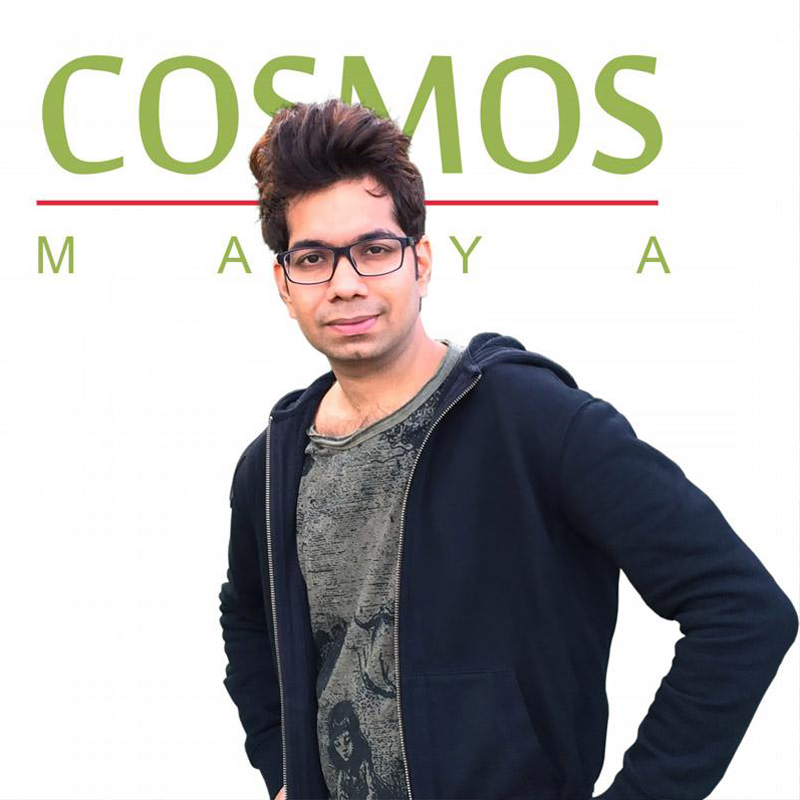
    (The author is CEO Cosmos-Maya. The views expressed are his own and Indiantelevision.com may not subscribe to them)

  • Hasbro to acquire Entertainment One for approx $4 bn

    Hasbro to acquire Entertainment One for approx $4 bn

    MUMBAI: Hasbro is set to acquire Entertainment One (eOne) in an all-cash transaction valued at approximately $4 billion. The deal enhances Hasbro’s brand portfolio, which includes My Little Pony, with the global preschool brands Peppa Pig and PJ Masks, as well as a slate of additional brands under development, including Ricky Zoom.

    eOne brings profitable, growing capabilities in scripted and unscripted TV development and production. eOne’s Canadian TV and film operations will continue as a distinct Canadian-controlled business within the combined business.

    “The acquisition of eOne adds beloved story-led global family brands that deliver strong operating returns to Hasbro’s portfolio and provides a pipeline of new brand creation driven by family-oriented storytelling, which will now include Hasbro’s IP,” said Hasbro chairman and CEO Brian Goldner. “In addition, Hasbro will leverage eOne’s immersive entertainment capabilities to bring our portfolio of brands that have appeal to gamers, fans and families to all screens globally and realise full franchise economics across our blueprint strategy for shareholders. We are excited to welcome eOne’s talented employees from around the world into the Hasbro family.”

    eOne chairman of the board Allan Leighton said, “On behalf of the board of eOne, I am very pleased by this exciting development, which is a testament to eOne management’s vision, leadership and solid execution. This transaction creates significant, immediate value for our shareholders as it recognizes the strength of our future-facing business model.”

    “Hasbro’s portfolio of integrated toy, game and consumer products, will further fuel the tremendous success we’ve achieved at eOne,” said eOne CEO Darren Throop. “There’s a strong cultural fit between our two companies; eOne’s stated mission is to unlock the power and value of creativity which aligns with Hasbro’s corporate objectives. eOne teams will continue to do what they do best, bolstered by the access to Hasbro’s extensive portfolio of richly creative IP and merchandising strength. In addition, the resulting expanded Hasbro presence in Canada through eOne’s deep roots will bring world-class talent and production capabilities to Hasbro. Along with our leadership team, I look forward to working with Hasbro on our joint growth and success for many years to come.”

    “By combining two profitable and financially disciplined companies we expect to unlock value in the short- and long-term for our stakeholders,” said Hasbro chief financial officer Deborah Thomas. “eOne’s brands and TV and film expertise, together with Hasbro’s brands, toy and game innovation and licensing capabilities, positions us to more quickly drive revenue and profit over the medium-term. We remain committed to maintaining an investment-grade rating and returning to our gross Debt to EBITDA target of 2.00 to 2.50X.”

  • Balaji Telefilms aims to break even consolidated business by end of FY20

    Balaji Telefilms aims to break even consolidated business by end of FY20

    MUMBAI: Balaji Telefilms Ltd (Balaji Telefilms) is hoping to break even its consolidated business by the end of the ongoing financial year. While the recent partnership of its digital arm ALTBalaji with ZEE5 will work as a key contributing factor, good movies and better cost control environment for television segment will also help the content powerhouse to achieve its aim by 31 March 2020. Moreover, the company expects significantly higher revenue from ALTBalaji at the end of this financial year compared to FY 2019.

    “Our aim is to break even on both the cash as well as on a P&L level, the consolidated business by March 31 2020 given that at this scale of operations we will be cash sufficient for a long time,” the management said in an earnings call with analysts after publishing its Q1 results.

    “The cash receipts from the sale of rights for the movies has to yet come in, it has come in Q2, so Q2, Q3 we will see that, that is the portion. H2 is when the cash situation on ALT we will see a significant increase. So the movies cash inflow starts from this quarter because the Zee deal kicks in. You will see a significant improvement in cash flow on ALT also. A combination of this will mean that we will be in a much better position breaking even like I said at the end of the year,” the management added further.

    Like the financial year 2019, ALTBalaji will be investing around  Rs150 crore this year out of which Rs 75 crore has already been invested in the first quarter itself. So, while the proposed investment in ALTBalaji will be around Rs 75 crore. the company will contemplate later if there is a need to increase funds. While Rs 100 crore is allocated for investment in content, rest of the Rs 50 crore will be used for other segments like technology, people.

    Moreover, there will be no ALTBalaji content available on big telecom platforms from 1 October 2019 due to the new ZEE5 deal. “It is a co-sharing model, share the content on ALT as well as on ZEE. Before the ZEE deal we used to share the content on about 6 to 7 partners. Now all that will be taken away and everything will be behind the paywall for all production that will go in H2,” the management commented on the newly announced deal.

    The company is also confident about a certain amount of revenue for ALTBalaji from the ZEE5 deal. It also hopes to continue on the growth trajectory of its revenue which was at Rs 7 crore in the first year and Rs 42 crore in the second year. Moreover, it also expects 1.5 to 2X growth compared to last year.

    For now, the deal has been struck for two years where the IP will be co-shared by both the platforms, unlike a TV production deal. Moreover, the library of 38-40 shows that have been produced will continue to be exclusively with the OTT platform.

    “What the Zee deal does is that there will be no telcos now where freely content will be available, so there is no free-pricing model, everything goes behind the pay and therefore we are more confident that we will be able to get direct subscriptions. Our library of 38 shows will be exclusive to us. Only the fresh shows in H2 will go to ZEE5. So these factors lead us to believe that we will have direct subscription growth year-on-year,” the management commented.

  • Insight TV Announces Co-Production with VICE Studios for Streetkings in Jail

    Insight TV Announces Co-Production with VICE Studios for Streetkings in Jail

    Amsterdam: Insight TV, the world’s leading 4K UHD HDR broadcaster and producer of native UHD content, is announcing details of its gritty new series Streetkings in Jail, a co-production with VICE Studios, the production company from VICE. Featuring 4 x 44 minute episodes, Streetkings in Jail will launch on Insight TV on September 10th.

    Football stars from all over the world hone their skills in playgrounds, parks and on the streets from an early age. As well as building world-class players, these environments are a backdrop for those whose lives travel in a very different direction. In Streetkings in Jail, Insight TV puts the spotlight on those that ended up in prison, spending the majority of their life in a concrete cell.

    In each episode Edward Van Gils, the Godfather of street football, will join forces with a football legend and visit a jail in the country they’re from, looking for talented players who took a wrong turn and ended up in the very worst position. Featuring Ruud Gullit (Netherlands), Gilberto Silva (Brazil), Juan Pablo Angel (Colombia) and Kevin Kuranyi (Germany), van Gils explores what puts some street kings on the world stage and others behind bars They will show the benefits street football can bring to the lives of inmates and how they can draw on the positive experiences that sport delivers to stay out of trouble in the future. As well as training them for a match, Edward and the legends will find out about the inmates backgrounds, what led to the moment that changed their lives forever and what they will do if and when they are released from prison.

    Frank le Mair, Executive Producer, Insight TV, says, “What triggered me to commission this series is the micro cosmos a little square around the corner of your house can be. You might find kids playing football that end up making it on a national team and you might find kids that will make bad choices in life, sometimes even more talented, but still end up making mistake after mistake and never get the life they could have had. This new series not only shows how difficult life can become by making one wrong choice, but how football can create positivity and unite people no matter what their background or circumstance. It’s the perfect fit for Insight TV; combining strong personal stories with powerful visuals in high quality.”

    Stefan Tieleman, General Manager, VICE Studios Benelux, adds, “Streetkings in Jail isn’t just a series about sports – it shows the impact sports can make on someone’s life at whatever stage that might be. Leveraging on the insights, talent and deep connection  with culture coming from VICE, we’re thrilled to bring a fresh, new take on football to the Insight TV viewers across the globe.”

  • Balaji Telefilms commissioned programs, ALT Balaji numbers up in Q1 2019

    Balaji Telefilms commissioned programs, ALT Balaji numbers up in Q1 2019

    BENGALURU: The Jitendra Kapoor-Shobha Kapoor-Ektaa Kapoor-led Balaji Telefilms Ltd reported 33.1 percent y-o-y growth in revenue from its Commissioned Programmes (CP) segment for the quarter ended 30 June 2019 (Q1 2020, quarter or period under review) as compared to the corresponding year ago quarter. The company also reported more than doubling (up 113.1 percent) of revenue from its Digital segment (ALT Balaji) in the quarter under review as compared to Q1 2019. Revenue for Balaji Telefilms CP segment for Q1 2020 and Q1 2019 was Rs 93.17 crore and Rs 70.01 crore respectively. Revenue from ALT Balaji was Rs 12.33 crore and Rs 5.78 crore for Q1 2020 and Q2 2019 respectively. The company reported less than one-fortieth operating revenue (down 97.5 percent) for Q1 2020 at Rs 1.67 crore as compared to Rs 68.04 crore from its films segment

    Overall, on a consolidated basis, Balaji Telefilms reported 26.7 percent y-o-y decline in operating revenue for Q1 2020 at Rs 90.52 crore from Rs 123.44 crore. The company explained that there were no film releases during Q1 2020, as compared to 1 film that was released in the corresponding quarter of the previous year. Consolidated EBITDA for Q1 2020 was an operating loss of Rs 33.24 crore as compared to an operating loss of 27.98 crore in Q1 2019. The company reported a consolidated loss of Rs 41.54 crore for the quarter under review as compared to a consolidated loss of Rs 27.03 crore in Q1 2019.

    The company reported an operating profit (result) of Rs 9.67 crore for Q1 2020 as compared to a loss of Rs 2.12 crore in Q1 2019 from its CP segment. Commissioned programming hours in Q1 2020 increased 15 percent y-o-y to 195.5 from 170.5 in Q1 2019. Revenue from commission programmes increased 21 percent y-o-y to Rs 69.6 crore in Q1 2020 from Rs 57.3 crore in Q1 2019. Net realisation per hour increased 5 percent in Q1 2020 to Rs 0.36 crore from Rs 0.35 crore in Q1 2019.  

    For ALT Balaji, the company reported a higher operating loss (result) of Rs 36.83 crore for Q1 2020 as compared to a loss of Rs 28.76 crore for Q1 2019.  The company reported 25.3 million subscribers at the end of Q1 2020 as compared to 3.4 million subscribers at the end of Q1 2019. As on 8 August 2020, Balaji Telefilms claims that it had 27.3 million subscribers. (100 lakhs = 10 million = 1 crore)

    For its Films segment, Balaji Telefilms reported an operating loss (result) of Rs 0.10 crore for the quarter under review as compared to an operating profit of Rs 8.91 crore in Q1 2019.

    On a standalone basis, Balaji Telefilms operating revenue in Q1 2020 declined 38 percent to Rs 82.85 crore from Rs 133.65 crore in Q1 2019. EBITDA for Q1 2010 was Rs 10.56 crore as compared to an operating loss of Rs 0.88 crore for Q1 2019. The company reported standalone profit after tax of Rs 2.53 crore as compared to a loss of Rs 1.20 crore for Q1 2019.

    Balaji Telefilms managing director Shobha Kapoor said, “Operationally this was a good quarter with strong performance across all business and the two deals in our movie and digital business dramatically improves our financial profile going forward and will allow us to pursue our growth ambitions. I also take this opportunity to thank Sunil Lulla our Group CEO who has decided to pursue other opportunities after a brief period with us. Sunil leaves Balaji Telefilms in a very strong position for future growth and the rest of the leadership team will continue to drive the business forward.”

  • Shemaroo revenue up in first quarter

    Shemaroo revenue up in first quarter

    BENGALURU: Indian content creator, aggregator and distributor, specifically in the media and entertainment industry, Shemaroo  Entertainment Ltd (Shemaroo) reported 15.9 percent year-on-year (y-o-y) growth in revenue from operations at Rs 143.03 crore for the quarter ended 30 June 2019 (Q1 2010, quarter or period under review) from Rs 123.36 crore for the corresponding year ago quarter. Total revenue for Q1 2020 increased 16.4 percent y-o-y to Rs 143.87 crore from Rs 123.58 crore.

    Profit after tax or PAT for the period under review declined 16.2 percent y-o-y to Rs 16.38 crore from Rs 19.55 crore in Q1 2019. Total comprehensive income for Q1 2020 reduced 15 percent y-o-y to Rs 16.15 crore from Rs 19.01 crore in Q1 2029. Operating EBITDA for Q1 2020 declined 17.9 percent y-o-y to Rs 31.92 crore (22.3 percent of operating revenue) from Rs 38.90 crore (31.5 percent of operating revenue) in the corresponding year ago quarter.

    Total expenditure for Q1 2020 increased 28.6 percent y-o-y to Rs 118.32 crore from Rs 91.99 crore. Cost of materials consumed during the quarter under review increased 28.4 percent y-o-y to Rs 87.91 crore from Rs 68.45 crore. Employee benefits expense in Q1 2020 increased 41.9 percent y-o-y to Rs 15.75 crore from Rs 11.10 crore. Finance costs in Q1 2020 declined 5.9 percent y-o-y to Rs 5.77 crore from Rs 6.13 crore. Other expenses in Q1 2020 increased 51.6 percent y-o-y to Rs 7.46 crore from Rs 4.92 crore.

  • Tusshar Kapoor steps down from Balaji Telefilms board

    Tusshar Kapoor steps down from Balaji Telefilms board

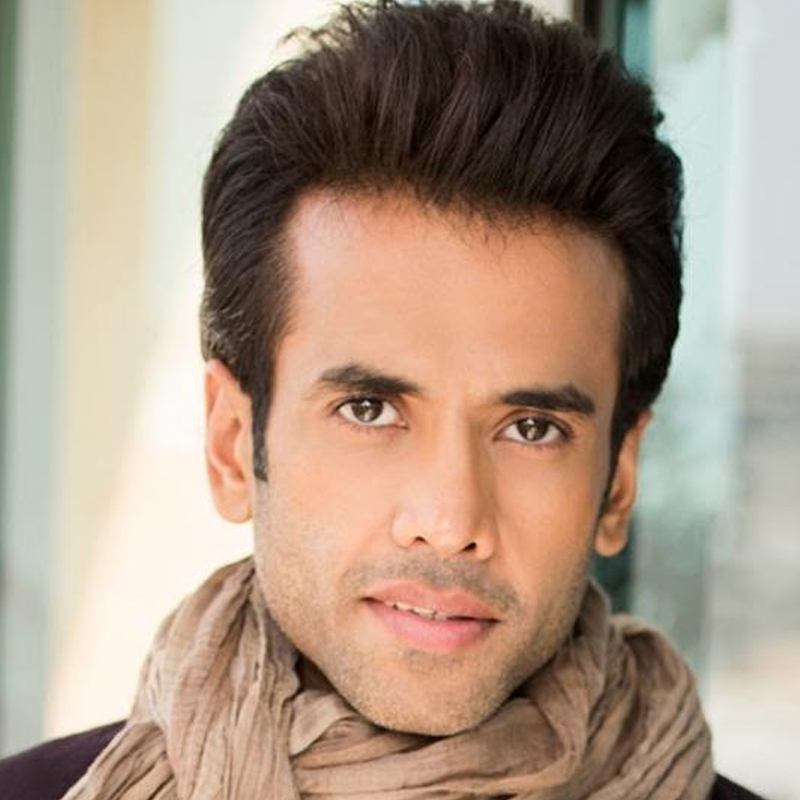
    MUMBAI: Tusshar Kapoor, the famous actor in the Bollywood fraternity, stepped down from his post of non-executive non-independent director of Balaji Telefilms. The resignation is effective from 27 March. The actor holds an MBA degree from Michigan University.

    “Pursuant to Regulation 30 read with Para A of Schedule III of the Securities and Exchange Board of India (Listing Obligations and Disclosure Requirements) Regulations, 2015, we wish to inform you that Mr. Tusshar Kapoor, Non-Executive Non-Independent Director of the Company has tendered his resignation from the office of the Director of the Company with effect from March 27,2019, due to personal reason and pre occupation,” the company said in a BSE filing.

    Balaji Telefilms started its journey as a private limited company back in 1994 which went public in 2000. After producing renowned TV shows such as Kyu Ki Saas Bhi Kabhi Bhau Thi, Bade Achhe Lagte Hai, Pavitra Rishta, Naagin for years, the company also ventured into online video streaming space with ALTBalaji.

  • Disney formally closes deal with Fox, massive layoffs expected

    Disney formally closes deal with Fox, massive layoffs expected

    MUMBAI: Walt Disney Co (Disney) has finally closed the deal with on its $71 billion acquisition of 21st Century Fox (Fox). In recent months, the acquisition received final approval from antitrust regulators across the globe. This merger will lead to thousands being fired, industry experts as well as several media reports speculate.

    With the deal, Disney is taking over majority of Fox’s assets including 20th Century Fox studio, the FX and National Geographic cable networks, and an additional 30 percent of Hulu. The giant media conglomerate thinks the deal will help it increase its international footprint along with expanding its direct-to-consumer offerings.

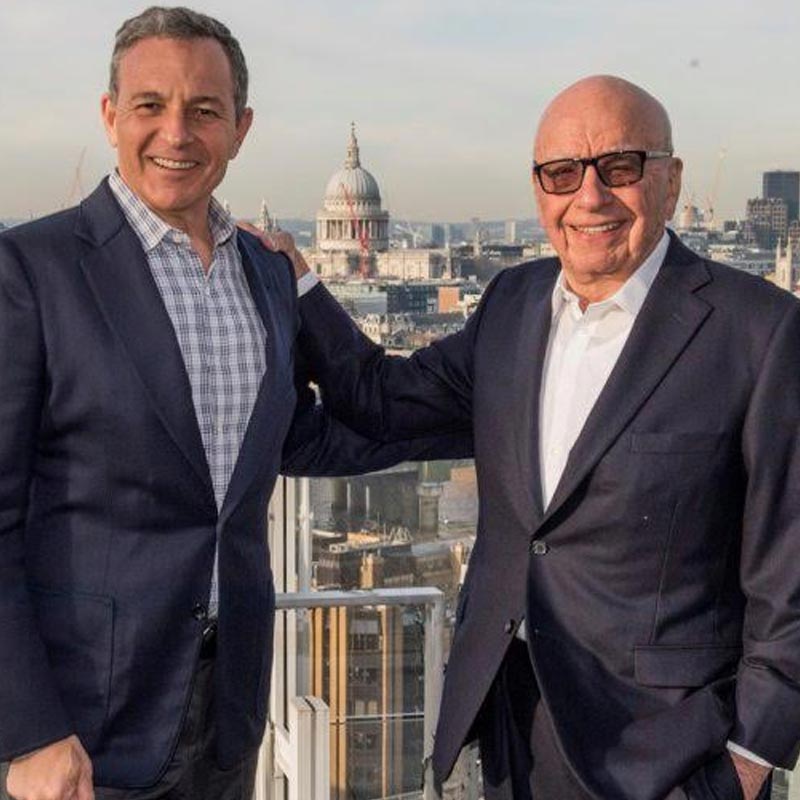
    “This is an extraordinary and historic moment for us — one that will create significant long-term value for our company and our shareholders,” Disney CEO Bob Iger said in a press release. “Combining Disney’s and 21st Century Fox’s wealth of creative content and proven talent creates the preeminent global entertainment company, well positioned to lead in an incredibly dynamic and transformative era,” he added.

    Bob Iger promised $2 billion in cost savings which clearly indicates to epic job cuts. While Disney is taking on 15,400 Fox employees, the smaller new Fox Corp will keep about 7,000. The layoffs are expected to come down heavily on domestic market first. “You can anticipate more domestic at the front end, just because of regulatory issues outside of the US,” Disney chief financial officer Christine McCarthy said earlier as quoted by Bloomberg.  The number of cuts could reach up to 4000, maybe even higher than that. Most of the jobs that are expected to be hit by the acquisition are duplicate ones.

    To take on this bet, Disney has to sell 22 regional sports networks in the US and its sports networks in Brazil and Mexico as part of regulatory approvals. The company also agreed to sell its stakes in such networks as Lifetime and History in Europe.

    Although the Fox deal will help Disney in its direct to consumer business, the cost of launching Disney+ is expected to impact the company’s financials next year.  A study from the research firm Ampere Analysis suggested that Comcast, after the acquisition of European pay TV giant Sky, and Walt Disney, after its Fox deal, will dominate global content spending.

  • Goquest Media Ventures picks up drama content from China, Thailand, Taiwan

    Goquest Media Ventures picks up drama content from China, Thailand, Taiwan

    MUMBAI:  Independent content distributor GoQuest Media Ventures announced a raft of new acquisitions from China, Thailand and Taiwan. 

    Collaborating with leading Chinese streaming platform iQiyi, GoQuest Media has secured the rights for Vietnam to the epic drama series Tang Dynasty Tour (36 x 45’).  The costume drama, an iQiyi Original directed by Zhu Dong-Ning and produced by Gordon Chan revolves around Yun Ye, who one night falls asleep and wakes amid the opulent brickwork of an ancient Tang Dynasty palace.  Yun soon meets the troubled Li Anlan, a Tang princess disowned for being born out of wedlock.  Spurred to life by survival and his desire to stay at Li’s side, he embarks on a series of adventures ranging from hysterical to heart-wrenching.

    Entering the Asian drama space, GoQuest Media is also pleased to announce the acquisition of content through its Vietnam office, headed by Harshad Wadadekar, general manager – distribution business.  These include the rights for Vietnam to series such as Blind Date which is the Chinese remake of Dori Media’s hit romantic scripted comedy Ciega A Citas, An Oriental Odyssey, The Lost Swordship, Mr Swimmer, Legend of S. Fire Walker from Media Culture Ltd, Hongkong, The Masked Lover, Behind Your Smile, Swimming Battle, Home Sweet Home, Between from nationwide cable TV network Sanlih E-Television, Taiwan and A Billion Love Game, and Chaoweha from Thailand’s True4U.  

    Commenting on the acquisitions, GoQuest Media MD Vivek Lath said, “It is a privilege to be offering viewers in Vietnam great content homegrown in Asia and providing the ever-challenging TV market with good quality programming.  There is huge potential for Asian content and we strongly believe that shows such as these will be well received.'