Category: Fiction

  • Applause Entertainment appoints Yogesh Manwani as head of marketing & revenue

    Applause Entertainment appoints Yogesh Manwani as head of marketing & revenue

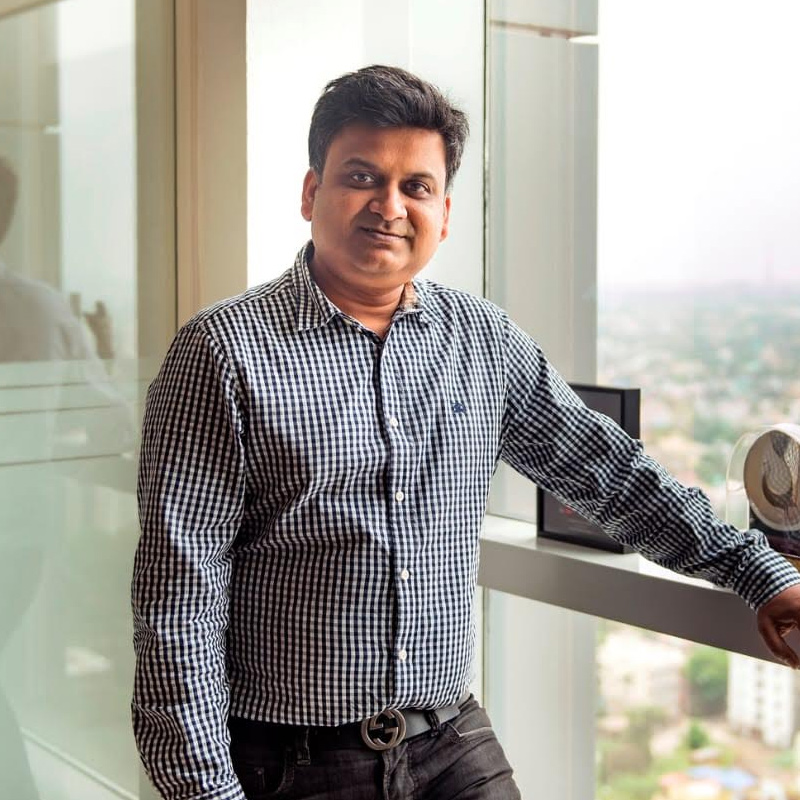
    MUMBAI: Applause Entertainment today announced the appointment of Yogesh Manwani as head–marketing and revenue. Taking over the reins from Ashok A Cherian, Manwani will be driving the integrated brand and revenue mandate.

    Manwani comes with over two decades of expansive experience in content marketing, brand strategy and business management and has held leadership positions at reputed media organisations like Star India, ZEE5 and others. A UCLA Anderson Alumnus, Manwani shouldered responsibilities entailed devising and executing multiple aspects of the Go-to-Market strategy – to grow market share for new and challenger brands.

    “Applause Entertainment is definitely the most uniquely positioned content studio in the country today, one that is blazing a new trail in the premium content space. Under the able leadership of Sameer Nair, Applause has created path breaking premium content across genres & languages. I am looking forward to contribute towards the growth and success of Applause Entertainment,” said Manwani.

    Promoted by Aditya Birla Group chairman, Kumar Mangalam Birla and headed by Sameer Nair, Applause Entertainment is the leading content studio in the country committed to investing and co-investing in the creation of content across shows, movies, unscripted and short-form. Since its inception in 2017, Applause has created 19 marquee shows that include the likes of Hasmukh, Criminal Justice, Hostages, Bhaukaal, Mind the Malhotras, The Office and many more.

    “These are difficult times, but we are confident that innovation in content creation and distribution will be a key outcome of this crisis. At a crucial juncture like this, I am delighted to have Yogesh come onboard to lead the marketing and revenue mantle. His repertoire of work is exemplary and exhaustive, and I am confident that he will add immense value to Applause’s journey ahead. I would also like to take this opportunity to thank Ashok for his invaluable contribution to brand Applause; he has been a very critical part of our success so far and I wish him all the best for his future endeavours,” signed off Nair.

  • Dubbing comes to a standstill; subtitling goes on

    Dubbing comes to a standstill; subtitling goes on

    MUMBAI: The outbreak of Covid2019 has not only brought the film and TV production industry to a halt, but even the associated sectors. The dubbing industry is one.

    However, the pandemic hasn't stopped people from consuming content. In fact, people are consuming content more than ever. According to a recent study conducted by KPMG, there has been a perceptible increase in media consumption during the last few weeks as people have remained homebound.

    With no new content in the making, most dubbing and subtitling companies are suffering huge losses.

    Business Of Languages (BOL) founder and CEO Rahul Bhatia says, “Currently, the dubbing industry has completely shut down. In this case, working from home is also not possible. We, in fact, tried doing it with artists with setups available at home but the outcome was not that great. So, technically everything is shut down as far as dubbing is concerned.”Prime Focus Technologies AVP Dubbing Bipin Doshi said, "Creating fresh viewing content requires lot of personal interaction which in the current scenario is neither permitted nor advisable. This means localizing existing or older content is the only option to ensure that audience currently ensconced at home gets entertained. Traditional method of dubbing currently is on a halt due to the restrictions in place but PFT is working on couple of approaches to start the dubbing process without endangering health of team or talent."

    Bhatia says that though dubbing is not happening,  other kinds of works like e-learning content where video reference is not required are going on. It can be recorded on the phone and shared with the client. Apart from that, IVR and audiobox projects are also being conducted from the confines of people's homes.

    Even for dubbing content in the regional language, Bhatia says it is not possible without studios and proper artists.

    Mega Media Studio MD John Joseph says that nobody is approaching for dubbing work right now. Most of the films are halfway through and those which are lined up do not have a release date.

    "Covid2019 has immensely affected our studio. Nothing is happening right now on the production side but post-production work is slowly happening. We are just continuing with films which were happening in the studio before lockdown."

    According to Joseph, unless films are completed, they cannot go ahead with the dubbing work.

    Doshi begun taking tentative steps for remote dubbing last year and managed to do a couple of tests just before the lockdown came into place. According to him voice quality is something that will take a while in addressing. The output will get homogenised to a certain extent and better quality can be achieved if talent can acoustically treat their rooms, mics are used etc so that voice quality can be monitored. It is important to solve for change in room tonality which is inherently found when audio is recorded in different setups.

    He adds, "Although we have begun using remote dubbing solutions it has lot of technical and user end challenges as this industry has never tried it before."

    Fakt Marathi Enterr10 MD Shirish Pattanshetty, however, says that the dubbing industry is making use of some other sectors to survive.

    "As far as industry norm goes people have been deferred from operating dubbing studios but some large corporates are using dubbing to their benefit to tap various content for different languages to ensure there is freshness in the content to cater to the audiences so that the retention level is high," he says.

    As the lockdown continues, no new episodes are being made. So, Pattanshetty thinks that the second-best option would be to dub the existing projects into native languages that are demanded by the audiences. He also believes that dubbing content is a beter option that showing OTT shows on TV.

    On the contrary, subtitling is happening with the help of cloud-based platforms where artists are translating the content and sharing on the platform. The cloud-based solutions enable them to download and transfer easily and quality issues do not come into play like they do for audio in dubbing.

    Cloud-based solutions enable editors also to work from home as long as they have stable broadband connectivity. Prime Focus Technologies has a cloud-based solution on its flagship product called CLEAR for content sharing, viewing and reviewing of the same at the other end. For localization, the options of reviewing multi-language audio tracks without creation of additional video screeners is a lifesaving facility. "Ability to give access through independent user IDs with watermarking of the content ensures online viewing of the files without having to send them to any one separately," Doshi adds.

    While different states are mulling over various lockdown-lifting strategies, Bhatia says, “We have to wait till the government grants permission to resume work. We work with a lot of professional dubbing artists but due to the lockdown most of them are in their hometown. So, we are waiting for permission so that people could travel. As of now we are completely clueless what is going to happen next.”

    Pattanshetty thinks that even if Mumbai  remains shut there would be dubbing studios based out of Pune, Kolhapur or Sangli who could ensure work is delivered to other connecting places. If Delhi becomes fully functional, Hindi content can take help from Delhi studios.

    Bhatia also points out that even after the lockdown is lifted clients will cut down the numbers of hours of dubbing. As cost-cutting measures, they might want to have only 20 hours of dubbed content rather than 50 hours.

    Joseph says, "We are currently suffering as there is no payment coming in. Initially, we would be finishing three to four movies a month and now we are restricted to just one."

    In a recent announcement, Kerala cultural affairs minister AK Balan  said that the Malayalam film industry will soon resume the post-production work of pending films. Meanwhile, FEFSI association president RK Selvamani has requested the Tamil Nadu government to grant them the permission to resume post-production works such as dubbing, re-recording and editing for films and TV soaps. Additionally, the Karnataka government has also granted indoor shoot permission with minimal 18 to 20 people. While there were rumours that the Maharashtra government was likely to give some leeway, the sudden spurt in the number of cases has closed that door.

    ZEEL executive vice president and cluster head South business Siju Prabhakaran says, “We are waiting for the Maharashtra government to grant permission to resume post-production work. In the meantime it is a good opportunity for people to use footages of short-form content which is pending for a long time.”

    Although new shows are not in production, ZEEL says it has certain shows as backup which will be used in the content pipeline for future. Prabhakaran adds that audiences know short-form content are sometimes shot on the phone and there is a possibility that it will have a technical snag. As far as a proper TV serial or a film is concerned, it requires a dubbing studio.

    For now, the dubbing industry doesn't have a way out and industry players are waiting for a revival strategy.
  • Producers Guild of India issues clarification on shooting resumption guidelines

    Producers Guild of India issues clarification on shooting resumption guidelines

    MUMBAI: The Film & TV Producers Guild of India (the guild) today issued a clarification relating to shooting guidelines that would be put in place once the lockdown courtesy the Covid2019 pandemic is lifted and filming is permitted by the various governments.  Certain media outlets have carried reports detailing the list of protocols that would need to be followed while filming, sourcing it to the guild. 

    A release issued by the guild today had the following to state: 

    “A work-in-progress document prepared by the guild of draft guidelines for resumption of shooting activities has recently been circulating widely in the media and industry.

    This is to clarify that this document is only an early internal draft prepared by the guild in preparedness for the future resumption of shooting activities. Any final safety protocols and guidelines will be formalised only after comprehensive consultations with government officials, medical professionals and relevant industry bodies.”

    As readers may recollect, film and TV productions have been stalled for more than a month and a half and broadcasters have been airing reruns of old shows on their channels. The cost of constructed sets and rentals of different shooting floors and studios have been accumulating in certain cases. And both producers and broadcasters have been working on finding a solution around this along with studio and shooting floor owners.

    It may also be recalled, a publication carried a story quoting minister of information and broadcasting Prakash Javadekar saying that film and TV shoots could start in response to a plea by the Indian Broadcasting Foundation, if the Maharashtra government gives the production sector the go ahead.

    But since then, the Maharashtra government lead by Uddhav Thackeray took a decision to move into Lockdown 3.0 in order to get a handle on the spread of the Sars Cov2 virus. 

    Meanwhile, reports have appeared about TV productions commencing in Australia and a local publication carried a news report that Karnataka is likely to green signal film and TV shoots from next week. 

  • This is not the time to think of loss or profit: SVF’s Mahendra Soni

    This is not the time to think of loss or profit: SVF’s Mahendra Soni

    MUMBAI: The unprecedented COVID-19 crisis has thrown a spanner in the works of both large companies as well as small and medium enterprises. SVF, one of the biggest production houses in East India, is also not an exception. Although its over-the-top platform Hoichoi has fared well, its massive film and TV production business, which had seven daily soaps going on, has come to a halt. SVF co-founder and director Mahendra Soni acknowledges the crisis but he thinks it is a time to support the fraternity, rather than overdoing the loss count.

    In an interaction with Indiantelevision.com, Soni spoke on wide-ranging topics including the impact of the crisis in the Bengali market, on SVF and the way forward.

    Edited excerpts:

    What will be the overall impact of the crisis on the Bengali industry?

    If we take the financial year 2020-2021, I think there will be at least 30-40 per cent drop than the last year for sure, if it opens before May end or around that period. So, I think August will be a very important time period in the Bengali market because by that time people should start coming back to theatres and we can have a few footfalls by Durga Puja. But if we continue beyond that (May end), then it becomes difficult because the whole cycle is stuck. At this moment all I can say is that it’s not about loss or profit, it is about at least looking after the people that work there, daily wage workers, etc. Honestly, we are not also thinking beyond that.

    How does this crisis impact SVF's overall finances as well?

    No one was prepared for it. It’s not the time to be thinking about balance sheets. I am not listed on the share market so I am not worried about that. We know that we have a pool of great creative talent and whenever it opens, we will bounce back stronger. At this moment our priority is to be safe and make sure that everybody stays in their home and also reach out to everyone who can help in any way. In fact, I would like to appeal to others in the industry to be strong, support your people, stand by them and not think of losses.

    How many projects of yours are stuck and how many were in the initial stage?

    We were working on almost seven new films. Six were already shot or in the production/post-production stage. Apart from that, there are six-seven films that we were planning from April to December, all those films got stuck.

    How much impact are you seeing on TV production?

    To be honest, TV is a daily loss. As it has stopped, we are not making any money or any content. So that’s revenue-wise more impactful and the team size is also bigger there.

    Since you have a robust movie library and you have worked along with Bengali Star Jalsha, Zee Bangla, are you planning to offer some of your movies to the channels?

    So we spoke about that but almost 80 per cent of my library is already with Jalsha.  I also feel that TV broadcasters are a little reluctant to invest in new content. At least, I can say from the regional perspective because the advertising revenue has definitely gone down. I had some discussions about monetising that content with a couple of channels but I feel that also has been stuck because of their budget issues and cash flow issues because they also have to look after so many people they have already employed.

    How are you focusing on the development part of the projects currently?

    We have divided the teams into two-three groups. Everybody is working from home and we use Microsoft Teams to connect. One team speaks to directors. A lot of creative things are happening because the scenario would change a lot after this even when we come back; how people feel, how people see things, how we're going to change ourselves so that’s also going to create a lot of content that we create every day. So those discussions are happening. We are going back to also thinking what all we have done and what has gone wrong so we should not be doing those mistakes again.

    So, we do one meeting every week to figure out what they have watched and from there we would pick up at least seven-eight ideas that can be developed or looked into.

    Once things resume, how much time will it take for you to go back to normalcy for your production?

    I don’t think we will take even half a minute to go back to normalcy. We are paying our dues, we are supporting our people, we don’t see any reason for a delay of anything.

    Are you expecting any support from the government?

    Again it's not the time to ask that. It is the time to get past through it. I am sure the government also would be supportive but at this moment we should support our government to just make sure that the poor people, the homeless people, the medical fraternity should be looked after well and whatever we can do for them is more important than doing for our business.

  • Industry must scale down together to ensure one party does not cannibalise another: Bodhi Tree CEO Mautik Tolia

    Industry must scale down together to ensure one party does not cannibalise another: Bodhi Tree CEO Mautik Tolia

    MUMBAI: The TV production industry had to hurriedly drop everything and wrap up shoots in order to comply with government directives to stop shooting and avoid large gatherings. With shoots re-opening in the near future, production houses will have to implement several changes in the way they function.

    Bodhi Tree Multimedia CEO Mautik Tolia says that production processes will see drastic changes. “Crews will have to be made smaller. Sanitization stations will need to be put up on sets. The temperature of the crew will need to be monitored. Set areas will have to be kept under very strict controls to make sure all areas from the food getting served, props, equipment used are disinfected on a recurring basis.”

    He feels that the decision to halt production to curb the spread of the COVID-19 had to be taken immediately, but it has left almost everyone grappling for solutions as the media and entertainment fraternity has never witnessed a standstill like this. A strong ecosystem consisting of clients, vendors, technicians and talent relationships will help them get through this testing phase.

    “This lockdown is bound to have a ripple effect across the entire chain from broadcasters to the very last worker on sets. We are anticipating the industry to lose close to a few thousand crores in the wake of this lockdown because of the COVID-19 outbreak,” he says.

    This pandemic has also robbed the daily wage workers of their livelihood. Unfortunately, layoffs and pay cuts will be the grim reality that cannot be denied. Tolia says: “We have 40-50 daily wage workers. Some of them have returned to their hometown and are waiting for the lockdown to end. Some of them are in Mumbai. We are in touch with them and make sure of their well-being, ensuring that relief reaches them. We will not lay off people. Instead, we are finding ways for everyone to come together collectively as a company and finding a balance to ensure that everyone is taken care of in the interim with feasible measures.”

    Even though budget cuts are on the anvil, it will be mindful about not compromising on the quality of the content.

    Tolia suggests that the entire ecosystem will have to find a way to scale down together in terms of current market rates.  He says that it is not a matter of an individual company but the entire industry which will have to make corrections across the system from actors, technicians, vendors, set rentals, etc. to come out of the crisis.

    “It will have to be done in a manner where all stakeholders have to come together in the spirit of co-cooperation and solidarity keeping in view the long term and making sure that one party does not cannibalise the other. That is the only way the industry will be able to tide this over,” he adds.

    Due to the lockdown, the company had to halt the shoot of two projects which are on the floor. But the teams are utilising this time to focus on pre-production, research and development.

    The creative team at the production house is keeping busy with ideating, developing new content, continuing with the scripting of existing shows so script banks can be put in place. Casting is also going on with actors sending self-tests from home.

    “We are constantly ideating and brainstorming to understand the changes occurring, both at a practical and philosophical level. While nothing has changed for us with these processes, we will continue to create storylines for our future shows with an understanding of the fact that content value can never go down. In addition, we are also building our bank in terms of scripts for our current on-air shows,” says Bodhi Tree Multimedia founder-director and CCO Sukesh.  

    As creative professionals and writers, Tolia and Motwani feel it is a good time to create a development slate of content that can be pitched to platforms over the next year. It is a time to think and reflect on what kind of content will work in the coming years.

    According to Motwani, COVID-19 is a part of reality and the organisation will have to embrace the new normal. The idea is not to exploit the pain of this time but rather get inspired and inspire and create hope for society with the kind of stories that are created. 

    Tolia adds, “The entire media and broadcast fraternity will be compelled to integrate this reality in some way and it will definitely reflect in our ideas and in our current stories. While some shows may use the impact more subtly in the background, some shows could entirely be centred on the new reality of our pursuits to counter COVID-19. Constant brainstorming sessions on how we as storytellers can capture these times are being implemented.”

    Elaborating more on their OTT venture with Voot’s Marzi and The Raikar Case, Tolia and Motwani say it has helped them immensely with the learning curve on original shows. While Marzi is an adaptation of an international format, The Raikar Case is an original creation that took 1.5 years to write.

    Motwani adds, “It is one of those shows which has a combination of interesting characters, dialogues and twists in each episode. It is probably one of the first ‘whodunit’ in the Indian digital space.”        

    Marzi revolves around the importance of consent with a psychological touch to the storyline. While it has been adapted from a British show called The Liar, Motwani says that it has helped them find the art of science in adapting an international format.

  • Production houses keep their faith as they weigh impact of COVID-19

    Production houses keep their faith as they weigh impact of COVID-19

    MUMBAI: The iconic ‘Lights, camera, action’ has temporarily been silenced across the country. The COVID-19 pandemic is wreaking havoc on the once-thriving media and entertainment industry, stymieing its smooth functioning, at least for the time being. The silver lining, however, is that despite the global impact of the pandemic, production houses are hopeful of a brighter future. Industry experts are hoping that the short-term pain will be a long-term gain. While some feel that the nation will soon be back on its feet, others are thankful for the much-needed break for creative people. 

    Indiantelevision.com reached out to a cross section of players in the industry for reaction.

    The Film and Television Producers Guild of India CEO Kulmeet Makkar believes it is too early to predict the overall impact. It completely depends on how long this lockdown continues. “Everything is shut. How soon will theatres open is a huge question mark. Even if the essential commodities are made available, will cinema halls open for the public, considering the social distancing norm? Given all this, everyone except news channels is facing a huge setback,” he says.

    Production houses that had rented sets for their upcoming shoots had to hurriedly halt things. Indian Film and TV Producers Council director Shyamashis Bhattacharya says, “We are talking to all the studio owners both at an individual level as well from IFTPC that the rent of such studios should be waived off for the period where there has been no work. Film City, where the industry has the maximum number of sets, is controlled by the Maharashtra government; we are trying to reach out to them as well on this matter. I am sure they will take an empathetic view of our concern. For sets where the producer may not get any waiver on the rent, I am sure the broadcaster of that show will pitch in and help the producer.”

    Hats Off Productions co-founder Aatish Kapadia says that it is more important to look after the lives of daily wage earners and people who are in trouble because of work shortage than to worry about the rent.

    Unemployment and job cuts will be a grim reality that will hit the industry soon. Bhattacharya says: “Sacking of people would be an individual choice of every producer and that will depend on how long the lockdown continues. I don’t think anyone will like to sack people if they are able to manage financially.”

    Even though no jobs have been taken away yet, Makkar questions whether production houses can sustain those losses for long if the lockdown continues. For now, the focus is on the daily wage earners, the most hard-hit by the COVID-19.

    Playing their part to help fellow humans, industry biggies have come forward with a heart of gold.

    Red Chillies’ Shah Rukh Khan is making available his office for quarantine facilities. Balaji Telefilms’ Ekta Kapoor will donate her annual salary of Rs 2.5 crore towards helping daily wage earners and freelancers. The Yash Chopra Foundation will look after 3000 daily wage earners from the industry. The foundation will also transfer Rs 5000 to their individual bank accounts. 

    Meanwhile, streaming giant Netflix has contributed $1 million to the relief fund set up by Producers Guild of India. Sony Pictures Networks India will donate Rs 100 million. Zee Entertainment has also committed to help 5000+ daily wage earners who are working directly or indirectly in its overall production ecosystem.

    However, the question looming large is the sustainability for producers and broadcasters when revenue doesn’t kick in for a few months. Experts suggest that if the crisis continues, every stakeholder will see more than 15 per cent of the total yearly revenue being wiped out.  Although the initial support has been phenomenal, the government needs to step in soon. Even if the lockdown is lifted on 14 April, it will take time for things to get back to normal.  Every single month of inactivity would mean losing 10 per cent of the business.

    In the meanwhile, some parts of the production chain are still being oiled. A few production houses are doing background work to promote their shows on digital platforms. “We are doing a lot of collaborative work on Zoom calls and other Microsoft applications. The work is in progress with several channels. I am writing scripts for a web series and a film. Khichdi and Sarabhai Vs Sarabhai are back on television and to promote the shows every team is resorting to video conferencing. We are doing a lot of shoots on social distancing through our individual social media handles,” says Kapadia.

    Bhattacharya says that the scripting for some shows is being conducted via email exchanges. These are shows that were commissioned before the lockdown but couldn’t get started with the shoots. “As far as absolutely new ideas are concerned, I think the broadcasters will listen to them only when the situation normalises to some extent,” he says.

    Nonetheless, heads from the entertainment and media industry are hopeful that things would be better once the lockdown is lifted and the government plays its part in helping the stakeholders in the industry. But the industry will feel the pinch for the months to come.

    Let’s earnestly hope that the industry will emerge unscathed from this unprecedented and hard situation. 

  • CINTAA seeks donations to help film, TV artists amid COVID-19 crisis

    CINTAA seeks donations to help film, TV artists amid COVID-19 crisis

    MUMBAI: The cine and TV artistes' association (CINTAA) has appealed to the masses and its A-lister members to donate rations and funds for the benefit of film and TV artists who have lost their livelihood amid the ongoing 21-day lockdown.

    “Since CINTAA has a very limited corpus, we are not a cash-rich association. Our charitable sister trust, the cine artist welfare trust (CAWT), is also running out of funds,” said actor and CINTAA senior joint secretary and chairperson outreach committee Amit Behl. “We have appealed to all our members and A-listers to start helping us by donating ration and some funds. We have also circulated the account number and IFSC of cine artist welfare trust giving them the benefit of 80G certificate.” 

    “The responses have already started pouring in. We have learnt that many of CINTAA's senior and well-established actors are also sending their appeal videos. Apart from members, A-listers and the masses, CINTAA has also approached the I&B ministry and Maharashtra government, urging them to request the broadcasters to release payments during this crisis. Generally, there is a 90-120 day cycle for clearing payments,” said Behl. 

    From CINTAA’s own corpus, the association has pledged to help their members in need. They have been making and distributing ration packets. “Also, Rs 2000 per member based on the actual needs is also being compensated. The start has happened. We are also trying our best to help our members,” affirmed Behl.

  • Cine employees federation urges using masks, sanitizers at work

    Cine employees federation urges using masks, sanitizers at work

    MUMBAI:  The federation of western India cine employees (FWICE) has issued a notice asking companies to provide employees with face masks while at work in order to reduce direct exposure to the coronavirus.

    It also urges them to provide hand sanitizers to disinfect themselves.

    The letter goes on to state: “We have also requested the producers' association to make the masks and sanitizers available to the workers on the sets/shootings/studios. In the case of non-compliance by the production houses or producers, you are requested to inform FWICE and it shall take up the matter with the respective production house or producer."

    In case an emergency, FWICE states that the shooting/setting work will have to be stopped till the emergency is lifted and things get back to normal. “We shall ensure complete safety of our workers and technicians,” it said.

    With more confirmed cases, India has also upped its safety measures by restricting travel, urging people to adopt work-from-home policies and using proper hygiene. The spread of COVID-19 has also led to the postponement of the Indian Premier League to 15 April as well as the suspension of the India-South Africa series. 

  • Vijay Singh quits Fox Star Studios India

    Vijay Singh quits Fox Star Studios India

    MUMBAI: Fox Star Studios chief executive officer Vijay Singh has resigned after his decade-long stint at the studio, which is going through the final phases of completing its acquisition by The Walt Disney Co.

    Though he has stepped down, he will be continuing at Fox Star Studios India for the next two or three months, helping Bikram Duggal, executive director and head – studio entertainment at The Walt Disney Company, take charge.

    Joining Fox Star Studios India in 2007, Singh went on to set up the Indian market, including the foray into Hindi films. Prior to Fox Star, he worked with The Tetley Group – Tata Global Beverages and Sony Music Entertainment India.

    According to media reports, Singh will join a foreign media technology brand which is eager to enter the Indian market.

  • All segments rake in numbers for Balaji Telefilms, Alt Balaji numbers up

    All segments rake in numbers for Balaji Telefilms, Alt Balaji numbers up

    BENGALURU: One of the most successful television content production houses in India, the Shobha Kapoor and Ektaa Kapoor-led Balaji Telefilms Ltd (Balaji) reported growth in revenue from all its three segments for the quarter ended 31 December 2019 (Q3 2019, quarter or period under review) as compared to the corresponding year ago quarter Q3 2019.  The company’s board of directors has declared an interim dividend of 20 percent or Rs 0.40 per share for the financial year 2019-20.

    In its investor presentation, the Balaji says that its TV Business contributes to 15 percent of prime-time ratings and that it is the number one production house by a wide margin. It had nine shows running through the quarter with two new launches, while two shows came to an end. The Indian drama series Yeh Hai Chahatein, a spin-off show based on Yeh Hai Mohabbatein was launched on Star Plus. The fourth season of the very popular supernatural series Naagin was launched on Viacom18’s flagship Hindi GEC Colors, replacing Kaavach 2. Also Balaji Telefilms released one new film – Dream Girl in Q3 2019.

    Balaji’s posted more than double (up 144.5 percent) y-o-y growth in standalone profit after tax or PAT for Q3 2019. Standalone revenue from operations increased 77.9 percent y-o-y in Q3 2020.

    Though it has yet to become profitable, Balaji’s OTT platform ALT Balaji operating revenue almost tripled (increased 187.5 percent y-o-y to Rs 23.14 crore during the period under review as compared to Rs 8.05 crore in Q3 2019. The company reported lower operating loss for ALT Balaji at Rs 12.27 crore for Q3 2020 as compared to an operating loss of Rs 32.95 crore for Q3 2019.

    Revenue from the company’s television programming increased 3.4 percent y-o-y to Rs 81.96 crore in Q3 2020 as compared to Rs 79.3 crore in the corresponding year ago quarter. Revenue from Commissioned programmes segment increased 28.2 percent y-o-y in Q3 2020 to Rs 133.10 crore from Rs 103.79 crore in Q3 2019. Commissioned programmes business operating results increased by 56.2 percent during the period to Rs 27.94 crore as compared to Rs 17.89 crore in the corresponding year ago quarter. Balaji produced 10.1 percent more programming hours during the quarter under review at 219 hours as compared to 199 hours in Q3 2019, but realisation per hour in Q3 2020 at Rs 0.37 crore was lower y-o-y as compared to Rs 0.40 crore in Q3 2019 according to the company’s investor presentation.

    Revenue from Balaji’s Films segment increased nine-fold (increased 800.4 percent) y-o-y in Q3 2020 to Rs 93.89 crore from Rs 25.33 crore. Films segment operating results was more than 70 times higher (up 6,978.9 percent) at Rs 33.50 crore as compared to an operating profit of Rs 0.43 crore in Q3 2019.

    Balaji’s standalone PAT for Q3 2020 and Q3 2019 was Rs 29.41 crore and Rs 12.02 crore respectively.  On a consolidated basis, the company reported PAT in Q3 2020 at Rs 13.83 crore as compared to a consolidated loss of Rs 27.31 crore in Q3 2019. Standalone EBITDA increased by 77.9 percent y-o-y in Q3 2020 to Rs 198.36 crore from Rs 111.50 crore.

    Standalone operating revenue for Q3 2020 and Q3 2019 was Rs 198.36 crore and Rs 111.50 crore respectively. Consolidated operating revenue in Q3 2020 increased 95 percent y-o-y to Rs 187.89 crore from Rs 96.33 crore.

    Company Speak

    Balaji Telefilms managing director Shobha Kapoor said in the investor release, ”This quarter we created good, compelling and entertaining content across all our business verticals and this has resulted in a very strong financial performance. Apart from driving the top line, we remain focused on cost-saving measures that allow us to leverage economies of scale in content production, yielding an improved bottom line. We will continue to focus on growing the business profitably and utilising our existing cash reserves prudently, as we have been doing.”

    Let us look at the other numbers reported by Balaji

    Consolidated total income for Q3 2020 at Rs 190.68 crore was 81.1 percent higher y-o-y as compared to Rs 105.30 crore. Consolidated total expenses for the period under review increased 25 percent y-o-y to Rs 192.58 crore from Rs 140.22 crore.

    Consolidated cost of production was almost flat (declined 0.9 percent) y-o-y in Q3 2020 to Rs 95.07 crore as compared to Rs 95.95 crore. Consolidated marketing and distribution expenses in Q3 2020 declined 37.1 percent y-o-y to Rs 6.76 crore from Rs 10.74 crore. Consolidated employee benefits expense in Q3 2020 declined 34.2 percent y-o-y to Rs 9.37 crore from Rs 14.25 crore. Consolidated other expenses in Q2 2020 increased 63 percent y-o-y to Rs 16.02 crore from Rs 9.83 crore.