Category: Television

  • Globecast unveils content-sharing platform for sports rights holders

    Globecast unveils content-sharing platform for sports rights holders

    MONACO: Sports broadcasters are getting a new weapon in the battle for eyeballs. Globecast will showcase Content Exchange, its latest media platform solution, at Sportel 2025 in Monaco from 20 to 22 October.

    The platform, designed for rights holders and sports federations, offers a unified, all-IP infrastructure combining satellite, fibre and hybrid cloud technologies. It enables seamless acquisition, processing and delivery of both live and on-demand content, creating a secure hub that connects content owners with broadcasters and unlocks new monetisation opportunities.

    “With the launch of Globecast Content Exchange, we’re transforming the way sports content is delivered and shared,” said Globecast head of digital media development Steve MacMurray. “It gives rights holders unmatched flexibility and control to distribute highlights, live feeds and on-demand content to partners and fans worldwide, all through a simplified, scalable and secure platform.”

    Visitors to stand G.05 can experience the technology first-hand. The solution promises scalable transmission and processing for demanding media applications, offering rightsholders greater control over distribution in today’s hybrid media landscape.

    Globecast will also spotlight its recent sports collaborations. Racer  Network, which will broadcast over 300 live motorsport events in 2025, has partnered with the company to enhance quality and streamline delivery using advanced graphics and cloud playout. Meanwhile, Globecast’s extended partnership with Premier Padel as global delivery partner for the 2025 and 2026 seasons supports the sport’s international expansion through a fully IP- and cloud-based distribution model.

  • Doordarshan and Collective Media reimagine the Mahabharat with AI

    Doordarshan and Collective Media reimagine the Mahabharat with AI

    NEW DELHI: India’s most celebrated epic is getting a technological makeover. Collective Media Network’s Historyverse has unveiled an AI-led reimagining of the Mahabharat, set to premiere on Waves OTT on 25 October 2025. Doordarshan will broadcast it every Sunday at 11:00 AM from 2 November 2025.

    The collaboration pairs Prasar Bharati’s nationwide reach with the creative firepower of a next-generation media network. Advanced AI tools have been used to reconstruct the epic’s sprawling universe—its characters, battlefields and moral quandaries—with cinematic scale and striking realism.

    “Like millions of Indians, I grew up watching the classic Mahabharata on television every Sunday. It was an experience that shaped my imagination and my connection to our culture,” said founder & group chief executive Vijay Subramaniam. “With Mahabharat, our hope is to give today’s generation a similar touchstone that feels as immersive and unifying as it did for us, but told through the possibilities of today’s technology.”

    Prasar Bharati chief executive Gaurav Dwivedi noted that the original Mahabharat‘s re-telecast during lockdown reminded viewers how deeply these narratives bind families together. “Partnering on this AI-led reimagining allows audiences to experience one of India’s greatest epics anew—honouring tradition while embracing cutting-edge technology in storytelling.”

    Waves, Prasar Bharati’s official OTT platform, has quickly amassed millions of users with its credible, family-friendly and multilingual content. The platform offers video-on-demand, live events and an extensive library of television, radio, audio and magazine programming. The Mahabharat project exemplifies how heritage and innovation can converge to create contemporary narratives that resonate across India and beyond.

  • Runs Reels and Revenue Knight Riders Boss Mysore Hits a Six at FICCI Frames

    Runs Reels and Revenue Knight Riders Boss Mysore Hits a Six at FICCI Frames

    MUMBAI: If cricket and cinema are the twin gods of India, then Venky Mysore is their high priest. At the FICCI FRAMES 2025, the CEO of Knight Riders Group and Red Chillies Entertainment took the stage to lay out the playbook for India’s sports-entertainment juggernaut, mixing statistics, storytelling, and a dash of showbiz flair.

    Mysore, reflecting on his journey across two industries, described himself as straddling India’s “two religions,” cricket and movies. “Live sports is unscripted spectacle,” he said, contrasting it with scripted films where even action scenes follow a pre-determined cut. That unpredictability, Mysore explained, is what keeps audiences riveted, game after game.

    The numbers speak volumes. Celebrating 15 years with the Kolkata Knight Riders, Mysore revealed he has witnessed 228 matches with the franchise. The IPL alone commands an astonishing 165-169 million viewers on television, surpassing even the Super Bowl’s 155 million. “The real-time tension, the tribalism, the emotional stakes, it’s a thrill that no scripted entertainment can replicate,” he emphasised.

    The magic of live sports extends beyond the pitch. From merchandising and ticket sales to broadcasting and sponsorship, Mysore highlighted the massive economic engine behind cricket. “We do economic impact studies for every city we play in from Kolkata to Trinbago to Abu Dhabi and now Los Angeles,” he said, pointing out the ripple effect on tourism, hospitality, and local businesses.

    Mysore also gave a glimpse into the global ambitions of Knight Riders, noting the establishment of the L.A. Knight Riders and their stadium plans ahead of the 2028 Olympic Games. “Stadium naming rights discussions are already underway, which shows the value that live sports can create economically,” he added.

    Entertainment, of course, is never far from cricket. Mysore explained how live events are being personalised for different audiences, citing innovations like multi-cam viewing, vertical video feeds, social gaming integrations, and interactive features mirroring the kind of bespoke content that digital platforms thrive on. “Every live moment can be a story, a connection, and a commercial opportunity,” he said, highlighting how AI, gaming, and the creator economy are poised to transform live sports in the next three to five years.

    While cricket remains the anchor, Mysore is betting on expansion. “Other sports like kabaddi, tennis, golf, and football can adopt our model,” he said, citing Pro Kabaddi as a successful adaptation. Women’s cricket, too, is high on the agenda. “It’s about making the sport representative and inclusive. Young girls are now aspiring to play because of the WPL, and that’s a flywheel that will keep spinning,” Mysore noted, emphasising the cultural and social impact of sports beyond the commercial.

    Mysore’s keynote also shed light on the convergence of sports, entertainment, and commerce. He noted how live spectacles like the IPL, Super Bowl, and Olympics attract diverse audiences through music, fashion, and celebrity appearances, creating a hybrid ecosystem where culture meets business. “Entertainment today isn’t just consumed, it’s experienced, shared, and lived,” he said, neatly summarising his vision for the future.

    On valuations, Mysore remained measured yet optimistic. Comparing cricket franchises to US sports teams, he suggested India has only scratched the surface in terms of economic potential. “In LA, the lowest valuation for a sports team is over a billion dollars. Cricket has similar global appeal, and there’s huge investment yet to come,” he said.

    From his high-octane reflections to the meticulous statistics, Mysore’s address offered a masterclass in the business and cultural power of sports. The underlying message was clear: cricket and entertainment are no longer just games or films, they are engines of connection, commerce, and culture, shaping the future of live experiences in India and beyond.

  • Studio 100 Film brings The Last Dodo to life at AFM 2025 premiere

    Studio 100 Film brings The Last Dodo to life at AFM 2025 premiere

    MUMBAI: It’s extinction no more, the dodo’s back and ready to soar. The Studio 100 Film is giving the world’s most famous flightless bird a new pair of wings with The Last Dodo, which makes its grand debut at the American Film Market (AFM) 2025 in Santa Monica.

    The vibrant CGI-animated family feature follows Dave the last surviving dodo,  who finds himself navigating the perilous streets of 17th-century London. With help from his street-smart sidekick, Eggy the rat, Dave must overcome his fear of flying, proving that courage sometimes comes with feathers.

    Produced by Australia’s Cheeky Little Media (Kangaroo Beach, Vegesaurs) and the UK’s Cantilever Media (The Amazing Maurice), the film is co-directed by Jun Falkenstein (The Tigger Movie) and written by Simon and Tristan Dodd. The international collaboration brings together creative forces from Australia, the UK, and India, a global flock united by humour and heart.

    “This film reimagines the dodo not as a relic, but as the beating heart of a hilarious buddy story,” said Studio 100 Film senior manager sales and acquisition Lorena Booth. “It’s full of laughs, surprises and a message that really takes off.”

    Cheeky Little Media chief content officer Patrick Egerton added, “The dodo has always captured our imagination: tragic, funny, or both. Dave is all that and more, a character you’ll root for in a wildly funny and heartfelt adventure.”

    Currently in development and slated for release in 2027, The Last Dodo promises a feather-ruffling mix of comedy, courage, and charm, a film that proves even the extinct can make a spectacular comeback.


  • Wickets Widgets and Wow Moments Make India’s Sports Playbook a Big Hit

    Wickets Widgets and Wow Moments Make India’s Sports Playbook a Big Hit

    MUMBAI: It’s no longer just about cricket bats, it’s about data stats, fandom maps, and digital laps. At FICCI Frames 2025, Ishan Chatterjee, CEO for Sports, JioStar, set the ball rolling on how India’s sports and media ecosystem is stepping into its biggest growth spurt yet fuelled by inclusivity, innovation, and a nation hooked on both wickets and Wi-Fi.

    Chatterjee painted a picture of an industry at “an inflection point”, quoting a Deloitte study that pegs India’s sports economy to leap from 30 billion dollars in 2023 to 70 billion dollars by 2030. “To put that in perspective, Brazil stands at 6–8 billion dollars, and the UK, one of the most advanced markets, is at about 40 billion dollars,” he said, underscoring India’s ascent as a sporting superpower in the making.

    But even as men’s cricket continues to mint viewership gold, Chatterjee said the real growth story lies beyond the boundary. “The big trend we’re betting on is the rise of other sports in India whether established ones like tennis, football and kabaddi, or newer ones like e-sports. As soon as Indian athletes start delivering world-class results, fandom accelerates. Just look at what Neeraj Chopra did for the javelin,” he said, drawing cheers from the audience.

    If cricket remains the heartbeat, the pulse is diversifying fast. Chatterjee believes the next decade belongs to multi-sport India, where technology and storytelling will be as crucial as talent. “India’s young audience is discovering, following, and even betting emotionally on new sports. What used to be once-a-year cricket fever has become a 12-month sports calendar,” he noted.

    At the heart of this transition, he said, lies fandom, a force as unpredictable as it is powerful. “We’ve moved from viewership to ownership. Fans no longer just watch; they participate, react, and create. That’s why sports is no longer just an event, it’s an experience.”

    Chatterjee also touched upon what he called one of JioStar’s biggest responsibilities, inclusivity especially in women’s cricket. “Our role as broadcasters is to give women’s cricket visibility, prime-time slots, and the right storytelling so it inspires the next generation. The WPL is one of our biggest priorities,” he said.

    He emphasised that women’s cricket is not just a symbolic cause but a commercial and cultural imperative. “From a consumption standpoint, there’s a lot of headroom. From a business perspective, it makes sense to invest in it. But more importantly, for our sporting culture to become truly representative, women’s cricket has to grow,” he added.

    Naturally, the talk couldn’t skip India’s favourite sporting spectacle the IPL. “The great thing about the IPL is the scale it operates on. During the last season, we lit up over 1.1 billion screens across TV and digital,” Chatterjee said.

    But the magic, he added, lies in customising the experience. “To grow consumption whether it’s more viewers, more matches, or longer watch time, we have to appeal to different interests. For the core fan, it’s about depth and stats. For the casual viewer, it could be entertainment, creators, or even Motu Patlu engaging kids. That mix keeps the IPL ecosystem buzzing.”

    If fandom is the fuel, technology is the engine driving this new sports era. “India has always been at the cutting edge of tech adoption,” Chatterjee said. “At JioStar, we are led by consumer behaviour, and our vision for sports viewing is a completely personalised one-to-one feed. Two people can watch the same match, but the experience camera angles, commentary, interactive features will be entirely different for each.”

    From AI-driven smart highlights to multi-cam viewing and vertical formats, Chatterjee said technology is already reshaping how fans engage with sport. “This is just the beginning,” he smiled. “Imagine a future where your favourite player’s perspective, the commentator you like, or even the memes you enjoy all are woven into your viewing experience.”

    Chatterjee pointed out that India’s unique combination of youth demographics, mobile-first audiences, and insatiable appetite for entertainment positions it perfectly for sports innovation. “Our sports consumption is growing not because we’re copying Western models, but because we’re creating an Indian one built around community, interactivity, and scale,” he said.

    From e-sports tournaments drawing millions online to local leagues popping up in tier-two cities, the momentum is unmistakable. “The beauty of India’s sports journey,” he said, “is that every new fan adds to the market, not just shifts within it. Every new sport that takes off expands the universe.”

    As the fireside chat wrapped up, one thing was clear, India isn’t just playing more sports; it’s reimagining how sports are played, viewed, and loved.

    Chatterjee’s closing line summed up the sentiment perfectly: “For us, sports is not just entertainment, it’s identity. As long as our athletes keep pushing boundaries and our fans keep breaking the internet, India’s sporting story will only get bigger.”

    And with a wink to the future, he added, “We’re just in the warm-up. The real game begins now.”

  • Sport and showbiz join forces to power India’s live entertainment boom

    Sport and showbiz join forces to power India’s live entertainment boom

    MUMBAI: There was once a time when cricket was just a sport, concerts were a luxury, and event organisers were the unsung heroes behind the scenes. Fast-forward to 2025 and the boundary lines between sports, entertainment and live events have blurred into one big, buzzing spectacle.

    At a recent industry discussion that brought together some of the biggest names in sports, media and live entertainment, the conversation spanned everything from job creation and infrastructure to AI, accessibility, and the rise of the “fake wedding” phenomenon. If there was ever a moment that captured how deeply India now lives, breathes and monetises experience, this was it.

    “Cricket is a great vehicle,” said one of the panellists, noting how the sport in India transcends language, geography and generations. “It’s not just entertainment, it’s an ecosystem.”

    And it truly is. From regional commentary to AI-assisted streaming and immersive experiences, cricket has evolved into a multimedia juggernaut. Broadcasters no longer deliver just a match, they curate a universe of emotions, languages, and second-screen stats. “We’ve gone from peering through neighbours’ windows in 1983 to watching replays from six angles in six languages,” quipped one speaker. “Each fan now has their own version of the match.”

    But the conversation wasn’t just about cricket’s cultural dominance, it was about its economic ripple effect. As panellist Sabas Joseph pointed out, the government has finally recognised the events and entertainment sector as a vital part of India’s economic engine.

    “The government of India has created a joint working group with ten ministries to develop greenfield venues and reform licensing norms,” he revealed. “Event management is now part of state policy and economic policy.”

    The statistics speak for themselves. The events industry now supports over 10 million jobs, with more than 150,000 companies across India 30 per cent of them women-owned. “We’ve gone from pleading for recognition to being written into policy,” Joseph said, to applause.

    And the vision ahead? Transforming India’s cricket stadiums into multi-purpose venues for concerts, festivals and even international shows. “Stadiums already have the best infrastructure, why not use them for entertainment too?”

    Kunal, another panellist from the ticketing side of the business, spoke of India’s “culture of going out” something unthinkable two decades ago. “People are attending midnight runs, 5 a.m. DJ parties, even fake weddings complete with baraat, food and music, but no bride or groom,” he laughed.

    What’s powering this shift is trust and tech. “Our job now is to make live experiences predictable from clean bathrooms to clear directions,” Kunal said. Platforms like his are introducing digital-only, QR-based tickets that can’t be duplicated or resold, curbing black marketing and ensuring safety.

    He also highlighted growing accessibility efforts, including partnerships with disability rights advocates to make events more inclusive from wheelchair access to seat mapping. “We want every person to experience live entertainment comfortably and safely,” he added.

    If cricket built the blueprint, kabaddi proved the model works. “We Indians were sceptical at first,” said one broadcaster. “Could kabaddi, a sport we remembered from schoolyards, really become primetime entertainment?”

    The answer was a resounding yes. Smart packaging, slick graphics, and a 30-second raid format turned kabaddi into India’s second most-watched sport. “We created heroes, we gave it drama, and we respected its roots,” he said. “Now it airs on global networks like ESPN, Sky and Fox.”

    The takeaway: India’s homegrown sports can be global hits if nurtured right.

    As another panellist pointed out, India’s live entertainment story isn’t just about star power, it’s about audience power. “In 2008, we had barely 2,500 sports clubs. Today we have over 16,500,” he said. “And ticket sales, once a myth, now drive the bulk of the business. Indians pay premium prices for premium experiences.”

    From Coldplay to Lollapalooza, international acts are selling hundreds of thousands of tickets in India at global rates. “The audience is ready to spend,” said Kunal. “We just have to deliver the experience they expect.”

    Technology remains the ultimate gamechanger. AI, VR and personalised feeds are transforming how people watch and attend events. Fans can switch between camera angles, get player stats on their phone, or even experience concerts in virtual reality.

    And yet, the heart of it all remains human. “No government policy, no brand campaign, no festival happens without event managers,” Joseph reminded the audience. “Ours is an industry built by people from those who’ve never been to school to MBAs from the best universities.”

    From the sound of it, India’s entertainment future will be part stadium, part screen, and all heart.

    As one panellist summed up: “Events have become part of India’s economic and cultural DNA. We’re no longer just watching, we’re participating.”

  • NDTV World Summit 2025 to host four PMs together

    NDTV World Summit 2025 to host four PMs together

    MUMBAI: Four prime ministers, one stage, endless possibilities. The NDTV World Summit 2025, set for 17–18 October in New Delhi, will see an unprecedented convergence of global leadership: India’s PM Narendra Modi, Sri Lankan PM Harini Amarasuriya, former UK PM Rishi Sunak, and former Australian PM Tony Abbott. Two serving and two former heads of government sharing the stage underscores the Summit’s stature as a premier forum for ideas shaping the world.

    Under the theme ‘Edge of the unknown: Risk. Resolve. Renewal.’, the Summit aims to tackle uncertainty with imagination, view resolve as deliberate action, and embrace renewal as the creation of uncharted futures. Topics will range from geopolitics and technology to ecology, culture, and economic innovation, offering a rare space where inherited realities meet unwritten possibilities.

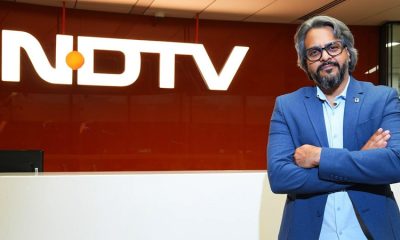
    NDTV CEO & editor-in-chief Rahul Kanwal said, “This is a crucible of influence where ideas, imagination, and intention converge. The participation of four prime ministers alongside innovators, business leaders, and cultural icons reflects India’s central role in global dialogue and its growing impact on shaping a collective future.”

    The Summit promises to be more than discussion, it will be a stage for vision, creativity, and global collaboration, positioning India at the heart of the world’s conversation and highlighting NDTV’s renewed commitment to curating conversations that matter.

  • India’s news industry is eating itself, warns veteran publisher

    India’s news industry is eating itself, warns veteran publisher

    MUMBAI: Fifty years in the media business buys you the right to speak bluntly. Aroon Purie exercised that right at Ficci Frames 2025 in Mumbai, delivering a blistering critique of India’s news industry—an ecosystem he says is simultaneously massive, unprofitable and increasingly compromised.

    The numbers are staggering. India has over 140,000 registered publications, 375 twenty-four-hour news channels (with more in the pipeline), and a broadcasting industry employing 1.7 million people. Delhi alone wakes up to dozens of English and regional newspapers daily. No other country comes close to this scale. Yet 99 per cent of news channels lose money.

    The problem, Purie argues, is structural. India’s news industry runs on what he calls “raddi economics”—newspapers priced so low that readers profit from selling them as scrap. Broadcasters pay cable operators carriage fees just to reach viewers, a practice that persisted even after digitisation. The Telecom Regulatory Authority of India’s price controls strangle market forces, treating cable television like wheat or rice. “The government has made a mess of the broadcasting industry due to lack of foresight and regressive policies,” Purie said.

    Worse still is the funding model. With consumers paying next to nothing, advertisers bankroll nearly the entire industry. “When journalism’s survival depends almost entirely on advertising from corporations and governments, its independence is under a constant threat of compromise,” Purie warned. The hand that gives can also take away.

    Enter what Purie calls “billionaire news channels”—industrial houses launching news operations not as businesses but as tools for influence and access. They have deep pockets and no profit motive, destroying economic models for legitimate players. “Their entrance makes the public believe that every channel is a mouthpiece for a vested interest,” he said. It’s the only business, Purie noted drily, where the industry loses money yet people queue to enter it.

    Digital promised salvation but delivered more of the same. Publishers chased scale and eyeballs, giving content away for free. Google, Facebook, YouTube and Twitter became the world’s “new editors-in-chief”, controlling distribution and monetisation whilst producing no journalism. They hoover up over 70 per cent of total media revenue—digital advertising now claims 55 per cent of all ad spending—leaving crumbs for actual newsrooms. The algorithm rewards outrage and virality, not depth or accuracy. “Newsrooms that once invested in reporters now have to invest in SEO specialists,” Purie said.

    Artificial intelligence poses the next existential threat. AI can scrape, synthesise and regurgitate news without credit or revenue, summarising five articles into one paragraph. “What happens to the original news organisations—the ones who pay reporters and fight court cases—when our content is scraped?” Purie asked. It’s a question the industry is only beginning to grapple with.

    Purie, whose India Today Group reaches 750 million viewers, readers and subscribers, doesn’t claim to have all the answers. But he’s clear about the solution’s shape: stop apologising for journalism’s value, innovate business models, and persuade audiences that credible news is a public good with a price. “A subscription is not just a transaction; it’s a vote for the kind of media you want to exist,” he said.

    After five decades navigating disruption—from print to television to digital to AI—Purie’s diagnosis is stark. The old models are broken, the new gatekeepers ruthless, and professionally generated content under siege. Yet he remains defiant. “Disruption is not the enemy, it’s the new normal,” he said. “The real question is, do we have the courage, imagination, innovation, resilience and integrity to seize it?”

    Whether India’s news industry can answer that question may determine the health of its democracy. No pressure, then.

  • AI meets news: India Today leads the way

    AI meets news: India Today leads the way

    MUMBAI: When it comes to news, India Today is taking a deeper dive. The media giant has become the first in the APAC region to launch Taboola’s Deeperdive, a Gen AI answer engine designed to bring instant, trustworthy answers straight to readers on its own sites.

    Deeperdive taps into decades of India Today’s rich editorial content, allowing readers to ask questions on anything from election analysis to trending stories, and get AI-powered answers sourced from trusted journalists. The engine even suggests related queries, keeping users engaged longer and exploring more of the site.

    “Pioneering journalism means being future-ready,” said India Today Group vice chairperson and executive editor-in-chief Kalli Purie. “With Deeperdive, we’re offering richer experiences, staying connected to our readers, and unlocking new AI-powered frontiers of engagement and monetisation.”

    Taboola CEO and founder Adam Singolda added, “India Today is a must-visit destination for news and analysis. Deeperdive lets them join the Gen AI revolution on their own terms, delivering trusted answers while opening search-like advertising opportunities.”

    Built to understand the “pulse of the internet,” Deeperdive analyses trends from over 600 million daily users across 9,000 publishers. Unlike traditional AI engines, it uses real-time data to deliver timely, contextual insights, ensuring readers get answers that matter, right when they need them.

    For publishers, this means longer reader engagement, more site exploration, and high-intent ad revenue within their own environments, all while maintaining a seamless, intuitive experience.

    With 50 years of journalistic excellence and a digital presence spanning Aaj Tak, Business Today, and The Lallantop, India Today is leveraging AI not just to keep pace with change, but to lead it, showing that when it comes to content, the future is very much now.

  • Polls apart: NDA leads as Bihar warms up to vote

    Polls apart: NDA leads as Bihar warms up to vote

    MUMBAI: It’s polling season in Bihar, and the numbers are already making noise. As the state gears up for its high-stakes election, India News and Newsx have joined hands to take the electorate’s temperature, and the results are sparking plenty of chatter.

    Their two-phase Bihar opinion poll, conducted in partnership with Ians–Matriz, offers an early snapshot of the political battlefield. The survey gives the NDA a clear lead with 49 per cent of the vote share, while the Mahagathbandhan trails at 36 per cent, and others stand at 15 per cent. Development has emerged as the top voter priority, leaving caste and religion in the rear-view mirror.

    The poll dug deep across Bihar’s heartland, from Patna and Muzaffarpur to Gaya, Purnia, and Bhagalpur, capturing both urban buzz and rural voices. Beyond numbers, it decoded what’s driving Bihar’s electorate: leadership credibility, alliance chemistry, and Narendra Modi’s continuing influence.

    “The Bihar Opinion Poll reflects the authentic voice of the people,” said India News managing editor Rakesh Singh, adding that the channel aimed to deliver an unbiased, data-backed pulse of the state. Newsx & Newsx World editor-in-chief Rishabh Gulati, noted that the project went “beyond speculation” to analyse why voters are thinking the way they are.

    Aired on 6 October at 7 pm, the broadcast generated strong engagement and debate across social media, as analysts and party watchers dissected what the trends could mean for the final verdict.

    Meticulously researched and sharply presented, the India News–Newsx Bihar opinion poll has set a new benchmark for pre-election coverage, turning raw sentiment into smart insight, and giving voters a mirror to their own political mood.