Category: Television

  • NDTV Profit IGNITE Debuts with a Defining Dialogue for Samvat 2082

    NDTV Profit IGNITE Debuts with a Defining Dialogue for Samvat 2082

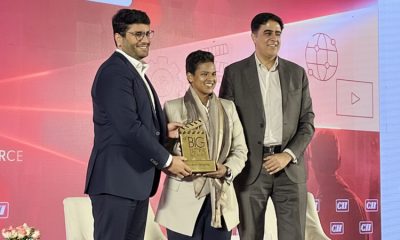
    MUMBAI: In a grand launch befitting the festive spirit of Diwali, NDTV Profit hosted the first edition of IGNITE in Mumbai, convening India’s top market strategists, corporate leaders, fintech founders, and investors. The event underscored the urgency and optimism with which market participants are looking ahead to the new Samvat, seeking both direction and conviction in the wake of global economic turbulence.

    As the forum opened, veteran investor Ramesh Damani set the tone with a candid assessment: ‘The world today is vastly different from when I began in 1989,’ he remarked, calling for a recalibration of expectations and strategy. While globalization once dominated frameworks, he noted, nations now increasingly must fend for themselves. Yet, he asserted, India remains comparatively well-placed to navigate these headwinds.

    Damani also steered the attention toward sunrise sectors — rare earth minerals, shipbuilding, and infrastructure development — while voicing caution on gold’s long-term track record.

    Manish Chokhani of Enam offered a counter-view on gold’s resurgence as a hedge against inflation and Western monetary excess, though he too reinforced the importance of discipline and patience.

    From the exchange’s vantage, Ashishkumar Chauhan, CEO of NSE, issued a firm caution on leverage and derivatives, warning individual investors that unlike companies, they lack bankruptcy protections. ‘Leverage is the ultimate risk,’ he said, urging restraint.

    Nilesh Shah of Kotak Mahindra AMC underlined how India’s startups are absorbing technology at unprecedented speed and called for reforms to further unlock potential.

    Sundeep Sikka of Nippon Life AMC emphasized the resilience of SIP flows as a safeguard against emotional investing. Harshvardhan Roongta highlighted that no portfolio is complete without insurance, while Ayush Mittal urged investors to use AI as a research ally, not a substitute for judgement.

    The conversation also touched on consumption revival post-GST cuts, with Mayank Shah of Parle Products explaining how pricing benefits would filter down to smaller packs in the months ahead. Market voice Vijay Kedia called the IPO market ‘frothy,’ reiterating his now-signature lines urging discipline, patience, and conviction. Actor-entrepreneur Vivek Oberoi brought a refreshing entrepreneurial lens, sharing how his educational venture Swarnim University is blending degrees with start-up culture to build India’s next generation of founders.

    Rahul Kanwal, CEO & Editor-in-Chief of NDTV, said: ‘IGNITE is about bringing the market’s most trusted voices together. At a time when investors are flooded with noise, we want to create a space that offers clarity and reason. Our goal is to help people understand where real opportunities lie, and to make those conversations accessible to everyone who looks to NDTV Profit for guidance.

    The launch of IGNITE marks a new chapter for NDTV Profit — a conversation designed to explore the choices investors must make in an uncertain world. With its first edition setting the bar high, IGNITE will return through the year as a space where clarity, wisdom, and foresight come together to shape the conversation on India’s financial future.
     

  • Boom and Belonging, News18 Bangla’s Puja Tale Rings Twice on Global Stage

    Boom and Belonging, News18 Bangla’s Puja Tale Rings Twice on Global Stage

    MUMBAI: If storytelling were an art form, this one’s painted in vermillion and gold. News18 Bangla’s Durga Puja brand campaign, crafted in collaboration with Daaker Shaaj, has struck global gold again earning a coveted spot on Ads of the World for the second consecutive year. The campaign celebrates Bengal’s biggest festival through a cinematic blend of emotion, artistry, and community spirit that feels as timeless as the beats of the dhaak itself.

    Durga Puja isn’t just a festival, it’s five days of goosebumps, glitter, and grace that transform Kolkata into a living, breathing artwork. It’s where neighbourhoods turn into museums, and the faithful become storytellers. Channeling that magic, the campaign uses the ubiquitous boom, crafted with Daaker Shaaj’s signature detailing, as its visual thread connecting everyday Puja moments in a shared celebration of togetherness.

    The film’s Bengali copywriting hums with poetry and pride, weaving diversity, devotion, and the festival’s chaotic beauty into one seamless story. It captures the pulse of the city the late-night pandal-hopping, the sparkle of new clothes, and the laughter echoing over bhog and beats. Every frame feels soaked in nostalgia yet freshly relevant, offering viewers an emotional walk through Bengal’s cultural soul.

    Created by Inner Circle, this is not just a campaign but a cultural postcard, one that continues News18 Bangla tradition of elevating festive storytelling. Its repeat recognition on Ads of the World cements the brand’s reputation for innovative, inclusive, and locally rooted creativity that resonates globally.

    “Durga Puja is not only a religious festival but an emotive experience for people of Bengal. This campaign brilliantly captures that spirit, blending its rich culture with compelling storytelling,” said Xiaomi India RMM East Gourav Sinha.

    Echoing that sentiment Wow! Momo, CMO and co-founder L. Muralikrishnan added, “Durga Puja is not just a festival, it’s a celebration of myriad hues of what Bengal stands for; which is ‘For All. By All.’ This campaign beautifully captures that spirit, blending cultural authenticity with inclusive storytelling.”

    By celebrating the vibrancy and inclusivity of Durga Puja, News18 Bangla’s campaign doesn’t just showcase Bengal’s creative might, it reminds us why great ideas, like great festivals, are “for all, by all”. As the dhaak beats rise once again, this campaign proves that when culture meets creativity, the world can’t help but dance along.

  • Damini strikes again with a sequel after 30 Years

    Damini strikes again with a sequel after 30 Years

    MUMBAI: Lightning strikes twice, and this time, it’s Damini 2.0. The cult Marathi television classic that pioneered daily soaps in the 90s is set to make a grand comeback after three decades.

    Originally produced by the late Gautam Adhikari and Markand Adhikari under the Sri Adhikari Brothers banner, Damini ran for over nine years, clocking more than 1,500 episodes and earning legendary status in Marathi households.

    Now, Damini 2.0 is ready to carry forward that legacy. The sequel is being produced by Doordarshan Sahyadri Vahini and will once again be written and directed by Kaanchan Adhikkari, who helmed the original series.

    On the revival, media baron Markand Adhikari expressed his joy, “I am very happy that Doordarshan Kendra, Mumbai has decided to take forward the legacy of Damini by producing Damini 2.0, with Kaanchan writing and directing it. Adhikari Brothers has always strived to create content that resonates with Indian audiences, and our next generation, Ravi and Kailash, will continue this legacy.”

    A show that once changed the face of Marathi television is ready to do it again. With Damini 2.0, nostalgia meets new-age storytelling, and the storm is set to return to the small screen.

  • Bihar on the move as Times Now’s Election Yatra hits the road

    Bihar on the move as Times Now’s Election Yatra hits the road

    MUMBAI: Forget bulletins from air-conditioned studios this election season, the news is on the move. As Bihar braces for a high-octane poll battle, Times Now and Times Now Navbharat is hitting the dusty roads and crowded gullies of the state with Election Yatra, a roving newsroom covering 4500 km across 28 districts to capture democracy in its rawest, most unfiltered form.

    Beyond the familiar rhythm of Litti Chokha and Madhubani art, Bihar is a land forever rewriting its story restless, young, and hungry for change. With nearly 58 per cent of its people under 25 and a burgeoning MSME sector generating over 6 lakh jobs across 15 plus industries, the state is quietly shaking off stereotypes, one enterprise at a time. And now, as it heads into one of the most closely watched elections in the post-Operation Sindoor and new GST era, the spotlight burns brighter than ever.

    From Patna’s bustling lanes to Begusarai’s fiery campaign grounds, Times Now and Times Now Navbharat Election Yatra promises a front-row view of Bihar’s shifting political landscape. The mobile newsroom doubles as a studio, broadcasting straight from where conversations spark the chai stalls, the chowks, and the campaign caravans.

    This isn’t just another election coverage; it’s a 4500 km odyssey to decode the state’s complex identity, where nostalgia meets new narratives. Will Prashant Kishor’s experiment rewrite Bihar’s political math? Or will the familiar power blocs, the NDA and the Maha Gathbandhan hold fort once again?

    Under Mandate 2025, Times Now rolls out a power-packed programming slate that goes beyond headline politics.

    ● National Debate, airing from 11 October every Saturday at 8 pm and Sunday at 3 pm, brings sharp minds together to dissect Bihar’s biggest issues.

    ● Inside, a documentary-style weekend special also launching 11 October at 11:30 am, delves deep into the forces shaping the polls.

    ●  Access, another new format, shadows key candidates through the campaign trail, offering an unfiltered, insider’s view of life behind the loudspeakers.

    Times Now Navbharat’s mobile hydraulic canter transforms into a full-fledged studio on-ground. The channel also has come up with a strategically designed lineup captures the pulse of Bihar as it heads into a historic Assembly election. Babua E Bihar Ba presently airing at 11:30 am & 7:30 pm every day, brings a travelogue-style journey across the state, interacting with locals keeping authentic linguistic charm. Further on Reporter Vs Reporter Season 2, returns to present both sides of every story: balanced, accurate, and fair, directly from Bihar’s heartland.

    “Bihar has always been the hotbed of political movements, a laboratory for national experiments,” said Times Now and Times Now Navbharat group editor-in-chief Navika Kumar. “This will be the first big test for voter sentiment post Operation Sindoor and the Opposition’s vote chori campaign. With new entrants like Prashant Kishor shaking up old equations, our teams will be on the ground to track every tremor of change.”

    She added that Times Now’s election coverage stands apart for its “depth, reach, and credibility”, ensuring that viewers don’t just watch the election, they understand it.

    As November 13 brings the Poll of Polls and Exit Poll, Times Now’s analytical engine will decode voter moods and seat projections with surgical precision. The Counting Day special on November 14 promises minute-by-minute updates as results unfold across the state, each number a reflection of not just votes, but voices.

    From Hajipur’s bylanes to Patna’s university corridors, Bihar’s democracy is as earthy as its soil and as unpredictable as its politics. Through Election Yatra, Times Now doesn’t just report the story, it travels with it, kilometre by kilometre, capturing the sounds, the sights, and the soul of India’s most fascinating electoral theatre.

  • Breaking the news and the charts CNN-News18 tops the ratings race

    Breaking the news and the charts CNN-News18 tops the ratings race

    MUMBAI: Newsrooms thrive on breaking stories but this time, CNN-News18 is the story. The network has stormed ahead of rivals to claim its place as India’s undisputed English news leader, clocking numbers that speak louder than any debate panel ever could.

    According to the latest BARC India data, CNN-News18 has pulled off a 64.4 per cent market share in the primetime slot (7–11 pm), leaving competitors trailing far behind NDTV at 15.4 per cent and Times Now at 12.2 per cent. (Source: BARC India | Market: 10L plus | TG: 22–40 Male | Period: Weeks 36–39’25 | Market Share per cent | 5 channels considered.)

    For a genre known for high decibels and fierce rivalries, CNN-News18’s dominance is striking, the channel holds more than four times the share of its nearest competitor. The network’s grip on viewers during India’s most-watched hours has placed it firmly in a league of its own, with “No. 1” becoming more of a habit than a headline.

    Zooming out beyond primetime, CNN-News18 continues to reign overall with a 36.5 per cent market share, followed by NDTV 24×7 at 25.2 per cent and Times Now at 21.4 per cent. (Source: BARC India | Market: India | TG: 15+AB | Period: Weeks 36–39’25 | Market Share per cent basis AMA’000 | 8 channels considered.)

    The victory isn’t a flash in the pan either. CNN-News18 has maintained the top spot since the return of BARC ratings in March 2022, consistently holding its ground across cycles, a feat few news brands can boast in such a volatile space.

    What’s fuelling this sustained supremacy? A mix of credibility, sharp reportage, and familiar faces that have become synonymous with trustworthy journalism.

    The channel’s roster of seasoned anchors Zakka Jacob, Anand Narasimhan, Rahul Shivshankar, and Shivani Gupta has helped define its editorial rhythm. Their prime-time shows are known for being fast-paced yet focused, where arguments may heat up but facts still win the floor.

    Behind the desk, CNN-News18’s network of correspondents across India keeps the channel ahead on breaking stories, from Delhi’s political corridors to distant district headquarters. It’s this combination of speed, scale, and storytelling that keeps viewers coming back when the clock strikes seven.

    In an era where English news is often accused of shouting louder than it reports, CNN-News18 seems to have struck the balance pairing the energy of TV debates with the discipline of data. The result is clear in the numbers: nearly two-thirds of English news viewers are tuning into CNN-News18 during primetime, a lead that transforms competition into footnotes.

    What makes this rise even more striking is the shrinking gap between viewership and trust, a rare commodity in news. The channel’s ability to hold attention without sensationalism, and to mix credibility with conversation, appears to be its secret sauce.

    It’s not just about being the loudest voice in the room anymore, it’s about being the one audiences actually listen to.

    With its 64.4 per cent primetime share, 36.5 per cent overall market lead, and an editorial style that’s both assertive and authentic, CNN-News18 isn’t just leading the English news genre, it’s redefining what leadership looks like in it.

    In the ratings war, it seems, the network has done what it does best break the news, then break the mould.

  • Travelxp expands Baltic footprint with Cgates launch in Lithuania

    Travelxp expands Baltic footprint with Cgates launch in Lithuania

    MUMBAI: Travelxp, the Mumbai-headquartered travel content powerhouse, has made its Lithuanian debut through a launch on Cgates, one of the country’s leading TV platforms—marking another milestone in its aggressive Baltic expansion.

    From 1 September, Cgates subscribers have been tuning into Travelxp HD via the “Laisvalaikio” (Leisure) thematic package, unlocking a world of adventure, culture, cuisine, and discovery in high definition. The channel promises more than just travelogues—viewers can expect adrenaline-packed explorations, wildlife documentaries, and local lifestyle stories that transport them across continents.

    Travelxp now beams into over 119 countries in 25-plus languages, reaffirming its position as a global leader in 4K HDR storytelling. “This launch deepens our footprint in Lithuania and the Baltics,” said Travelxp  managing director, Europe & Africa Sumant Bahl. “Together with Cgates, we’re igniting curiosity and connecting Lithuanian audiences to the world.”

    Cgates’ director of legal and TV content Dina Adomavičiūtė-Matulė called the tie-up a natural fit. “Travelxp’s blend of inspiration, education and entertainment perfectly complements our offering,” she said.

    With this move, Travelxp continues to chart new frontiers—turning television screens into global passports and reminding viewers everywhere that the journey never ends, it only widens.

  • From print to AI how news keeps up with times

    From print to AI how news keeps up with times

    MUMBAI: Wake up, check your phone, catch a podcast, scroll a story, news never sleeps. At a lively session on “Credibility in the Age of Chaos & Media’s Role in Shaping India’s Identity,” India Today Group vice chairperson and editor-in-chief Kalli Purie joined Business Standard columnist and author Vanita Kohli-Khandekar, to explore how a 50-year-old brand stays relevant in a 24 by 7 media whirlwind.

    Purie reflected on longevity and adaptation. “Fifty is the new 25. Men age, magazines don’t,” she said, highlighting how India Today has evolved from a fortnightly publication to producing over 120,000 content pieces every month across print, video, podcasts, social media, and live events.

    Kohli-Khandekar added a sharp perspective on the challenge of capturing audience attention in a saturated media environment. “Where does news lie in this era of short stories, micro dramas, and podcasts? How does it stay relevant and profitable?” she asked, emphasising the need for integration across platforms to maintain trust and impact.

    The discussion turned to technology and AI, where Purie revealed some pioneering initiatives. From AI anchors covering Bihar elections to AI-assisted translations and folk music storytelling, India Today has been embracing innovation to increase efficiency, reduce monotony, and explore new revenue streams. “AI is like a sandwich,” she quipped. “Human bread with AI in between. The human touch has to remain.”

    Purie stressed that technology alone cannot replace credibility. “You are a primary source. People want news from a human perspective, on the ground. AI cannot tell that story… yet,” she said, hinting at a future where robots might cover hazardous assignments while humans oversee the narrative.

    The session also highlighted India’s media identity in a global context. Purie noted, “People want sources from their own country. Digital imperialism is real, but Indian media has to assert its relevance.” Kohli-Khandekar added that 24 by 7 connectivity requires news organisations to adapt fast, integrate teams across platforms, and keep audiences engaged with stories that matter locally and globally.

    The conversation showcased how a legacy brand like India Today balances tradition and innovation, human insight and artificial intelligence, local identity and global perspective. Purie’s parting thought summed it up perfectly: staying credible, creative, and connected is the ultimate headline.

  • Streaming Dreams and Story Schemes Mark Netflix’s Decade in India

    Streaming Dreams and Story Schemes Mark Netflix’s Decade in India

    MUMBAI: When Netflix arrived in India ten years ago, the streaming giant wasn’t just entering a new market, it was stepping into a nation obsessed with stories. From cricket to cinema, India has always lived in 16:9 emotion. A decade later, as Netflix celebrates its 10th anniversary here, it has become more than just a platform, it’s a pop-culture mood board, a social mirror, and occasionally, the nation’s favourite debate topic over dinner.

    At FICCI Frames 2025, Netflix India, vice president of content Monika Shergill revisited the platform’s decade-long journey not as a corporate milestone, but as a cultural chronicle. “It’s been ten years of discovering stories that surprise even us,” she said with a smile. “India has taught us that there’s no such thing as one audience.”

    Shergill’s words carried weight. In 2016, when Netflix launched in India, data plans were expensive, the idea of binge-watching was alien, and cable television ruled the roost. Yet, as she pointed out, “audiences were already hungry for something different, they just didn’t know where to find it.” That ‘something different’ soon arrived in the form of gritty, genre-bending originals like Sacred Games and Delhi Crime, titles that not only redefined Indian streaming but also caught the attention of global viewers.

    “Shows like Delhi Crime proved that our stories don’t have to be diluted for global audiences,” Shergill noted. “They resonate precisely because they are authentic, rooted, and unapologetically Indian.”

    Over the years, Netflix’s slate has stretched from the heartlands to the Himalayas, serving up thrillers, romcoms, docuseries, and biopics that mirror the country’s diversity. From Kota Factory’s monochrome melancholy to Khufiya’s cloak-and-dagger intrigue, every title seems to tap into a different emotion, language, and landscape proof that India doesn’t just contain multitudes, it streams them too.

    But as Shergill highlighted, the real game-changer has been regional storytelling. “Tamil, Telugu, Malayalam, and Bengali stories are not just finding local audiences, they’re travelling globally,” she said. “When you keep the essence local, you end up going global.” Indeed, viewership of Indian regional content on Netflix has shot up by more than 60 per cent in the past three years, while global viewing of Indian titles has doubled.

    Beyond the data, there’s a shift in creative dynamics. Netflix’s approach to nurturing over 200 Indian writers, directors, and creators has created what Shergill calls “a sandbox for fearless storytelling.” Unlike theatrical cinema, where success is often measured by box-office numbers, the streaming space has allowed creators to focus on experimentation, representation, and emotional truth.

    “Streaming has democratised creativity,” she said. “You could be a first-time director from Shillong or a veteran from Mumbai, your story gets the same chance to be discovered.”

    That discovery is also increasingly shaped by technology. Shergill spoke of how algorithms, AI tools, and personalisation engines have made every viewer’s journey unique. “We often joke that no two people have the same Netflix,” she said. “But the magic lies in how tech quietly helps stories find the right audience, not the other way around.”

    Of course, Netflix’s decade in India hasn’t been without its plot twists from the rise of fierce competition (DisneyPlus Hotstar, Prime Video, JioCinema, Zee5, SonyLiv, and more) to debates on pricing, censorship, and content localisation. Yet, as Shergill pointed out, these challenges have only sharpened the industry’s creative instincts. “Healthy competition means better stories,” she said. “It’s proof that the audience is winning.”

    As India becomes one of Netflix’s fastest-growing markets, the company is doubling down on localisation not just through language, but through themes that reflect real India. Small-town aspirations, gender fluidity, generational conflict, and cultural nostalgia are no longer niche; they’re mainstream. “The stories that come from the heartland are the ones making it to hearts worldwide,” Shergill quipped.

    The conversation also drifted to how streaming has blurred the lines between entertainment and experience. “Today, entertainment is no longer consumed,” she observed. “It’s lived, shared, and replayed. When people cry over a character or cheer for a show, they’re not just viewers, they’re participants.”

    As FICCI Frames explored the theme of India’s creative economy, Shergill’s reflections summed up a decade where the screen became both a stage and a storyteller. “Streaming is not just about algorithms and recommendations,” she said. “It’s about emotion, connection, and the thrill of seeing your story on a global map.”

    For Netflix, that map is only expanding. With new content partnerships, investments in regional studios, and a growing slate of originals, the next chapter seems poised for even more ambitious storytelling.

    Ten years on, the red N has gone from being an app icon to an emotional bookmark in India’s entertainment story. And as Shergill reminded the audience, “Our best stories are still buffering and that’s the most exciting part.”

  • Yash Raj Films to shoot three major films in UK from 2026, Starmer confirms

    Yash Raj Films to shoot three major films in UK from 2026, Starmer confirms

    MUMBAI: Bollywood is heading back to Britain. Yash Raj Films, India’s leading production and distribution house, has announced plans to shoot three major films across the UK from early 2026, creating over 3,000 jobs and injecting millions of pounds into the local economy, UK prime minister Keir Starmer revealed in Mumbai today.

    The announcement was made at Yash Raj Studios, which marks 20 years of operations in India on 12 October, where Starmer was joined by top UK film representatives, including the British Film Institute, British Film Commission, Pinewood Studios, Elstree Studios, and Civic Studios. The visit forms part of a two-day trade mission aimed at strengthening UK-India ties and boosting creative industry collaborations.

    The UK film sector contributes 12 billion pounds annually and supports 90,000 jobs, attracting international productions with its state-of-the-art studios and iconic landscapes. After an eight-year hiatus, Yash Raj’s return highlights the growing impact of the UK-India trade deal on cultural and creative partnerships.

    “Bollywood is back in Britain, and it’s bringing jobs, investment and opportunity, while showcasing the UK as a world-class filmmaking destination,” Starmer said. “This is exactly the kind of partnership our trade deal with India is designed to unlock.”

    Yash Raj Films CEO Akshaye Widhani added, “The UK has always held a special place in our hearts. Iconic films like Dilwale Dulhania Le Jayenge were shot here, and we are thrilled to reignite our ties with the country that has always supported our creative vision. With the 30th anniversary of ddlj and the stage adaptation Come Fall in Love underway in the UK, this partnership couldn’t be more timely.”

    UK culture secretary Lisa Nandy said, “Given the strength of our film industries and the deep cultural links between our nations, collaborations like this make perfect sense. Bollywood blockbusters filmed in Britain will drive growth, investment and creative exchange.”

    A supporting MoU between the British Film Institute and India’s National Film Development Corporation will further strengthen co-productions, enabling filmmakers from both countries to share resources, talent, and expertise. Past collaborations, such as Slumdog Millionaire, generated around 300 million pounds for the UK from a modest 12 million pounds budget, proving the immense potential of UK-India film ventures.

  • TV9 Network hosts News9 Global Summit 2025 Germany edition in Stuttgart

    TV9 Network hosts News9 Global Summit 2025 Germany edition in Stuttgart

    MUMBAI: TV9 Network is set to host the second News9 Global Summit – Germany Edition in Stuttgart on 9–10 October 2025, celebrating 25 years of India-Germany strategic partnership.

    The Summit, themed “Democracy | Demography | Development: The India-Germany Connect,” brings together policymakers, corporate leaders, and thought innovators from both nations to explore trade, technology, and collaborative opportunities.

    Presented by the Government of Maharashtra and MIDC, co-hosted by Vfb Stuttgart and supported by the State of Baden-Württemberg, the event promises high-level dialogue and actionable insights. Gold partners Fintiba and Barmer, Silver partners MHP – A Porsche Company and Tata Ace Pro, alongside other institutional and strategic partners, anchor the discussions.

    The Germany edition began in Berlin on 6 October at the Axica Convention Centre, adjacent to the Brandenburg Gate. Over 200 innovators, startups, and investors attended, with keynotes from India’s Ambassador to Germany HE Ajit Gupte, and spotlight sessions featuring Vijay Chauthaiwale, Anandi Iyer, Stefan Halusa, and Jörg Müller. The journey continues through Munich and Karlsruhe, culminating in Stuttgart for the main Summit dialogue.

    TV9 Network, MD & CEO Barun Das said, “The Summit is about more than dialogue; it’s about building trust in a multipolar world. Stuttgart, a hub of engineering, innovation, and diplomacy, is the perfect stage for India’s narrative as the world’s fastest-growing major economy.”

    Vfb Stuttgart chief marketing & sales officer Rouven Kasper added, “Sport and dialogue share a common language, teamwork, resilience, and innovation. Co-hosting the Summit reflects these shared values and celebrates the India-Germany connect beyond trade and technology.”

    The Summit’s lineup is a blend of policy, industry, and culture: From Germany and Europe Johann David Wadephul, Nina Warken, Maroš Šefčovič, and state leaders including Winfried Kretschmann and Frank Nopper; Industry voices Andreas Lapp, Joachim Erdle, Bernd-Otto Hörmann, alongside innovators like Honza Ngo and Jan-Frederik Dammenhain; Strategic experts Karl-Heinz Grossmann (Airbus Defence & Space), captain Michael Giss (Bundeswehr), cultural innovators Alexander Heinrich and Thomas Diehl.

    From India, the Summit includes Piyush Goyal and Devendra Fadnavis (virtual), with in-person participation from Anurag Singh Thakur, Uday Samant, and HE Ajit Gupte, supported by policy and economic thought leaders like Arvind Virmani and Sachin Kumar Sharma, as well as industry leaders including Vivek Lall, Pankaj Vyas, Anandi Iyer, and Ujjwal Jyoti.

    Cultural and creative perspectives feature chef Kunal Kapur, captain Zoya Agarwal, and new-generation innovators Siddharth Bhasin and Markus Besch.

    The News9 Global Summit 2025 – Germany Edition continues TV9 Network’s mission of placing India at the heart of global dialogue while redefining bilateral cooperation, innovation, and strategic partnerships for the next 25 years.