Category: Television

  • Sun Bangla celebrates Mother’s Day with a storm of emotion and storytelling

    Sun Bangla celebrates Mother’s Day with a storm of emotion and storytelling

    MUMBAI: Rain fell, stories flowed, and hearts swelled as Sun Bangla rolled out its latest campaign, ‘Ma—The Eternal Shelter’, in the run-up to Mother’s Day. Set against a typical summer downpour, the channel’s new campaign takes a rousing dive into the primal force that is motherhood—present in goddesses, guardians, and even little girls.

    The campaign centres around a seven-year-old girl, Avery, who visits her ancestral home and befriends Chhutki, the daughter of a staff member. Their bond deepens over shared stories and playful mischief until a sudden rainstorm sweeps through. What follows is a visual essay on instinctive care—from a child shielding her goat to another protecting her dolls, culminating in a symbolic goddess who melts in the rain but never lets her children come to harm.

    “Motherhood isn’t just a role—it’s an instinct. A shelter. A sacrifice”, states the campaign film, which debuts on social media on 9 May. Already gaining traction online, the campaign has sparked emotional engagement with story-led visuals reflecting everyday acts of maternal care.

    Sun Bangla, known for its rooted Bengali storytelling, aims to culminate the campaign with a television rollout on 11 May. The on-air phase will extend the emotion beyond screens, anchoring its message in the homes of millions.

    Adding another layer of depth, the campaign also features leading protagonists from the channel’s top-rated serials. These actors will share their personal reflections through exclusive bytes and specially designed on-screen Astons. Each message underscores the theme that mothers—biological or otherwise—are life’s first and most enduring safety net.

    From digital buzz to primetime screen time, Sun Bangla’s tribute to mothers is both personal and universal. As the channel puts it, “This Mother’s Day, Sun Bangla stands with every Ma—because her love is the story that shapes us all”.

  • Zee J&K Ladakh: Zee Media’s northern frontier reboot with a mission for truth and unity

    Zee J&K Ladakh: Zee Media’s northern frontier reboot with a mission for truth and unity

    MUMBAI: In a strategic pivot steeped in regional pride, Kesar TV has been rebranded to Zee J&K Ladakh— a new avatar designed to capture the pulse of India’s northern frontier. Zee Media’s fresh orange and red brand identity goes beyond mere optics, standing as a beacon for integrity, resilience, and the region’s indomitable spirit, according to a press release issued by it.

    The rebranding is not just cosmetic, adds the release. It’s a statement. Zee J&K Ladakh is here to amplify the voices of Jammu, Kashmir, and Ladakh—showcasing local stories, bridging communication gaps, and serving as a platform for hyper-local journalism. In a region where history, culture, and geopolitics collide, the channel aims to provide a steady, truthful narrative.

    Zee Media CEO Karan Abhishek Singh highlighted in the release: “With the strategic rebranding, Zee J&K Ladakh, the channel/ platform aims to be the voice of a region that has long been at the crossroads of history, culture, and geopolitics.  In fact, it is a bold step towards redefining how regional stories are told, heard, and understood. We look forward to bringing the stories of Jammu, Kashmir, and Ladakh to the forefront, with integrity, empathy, and a relentless focus on truth.”

    Salaam TV and  Zee J&K Ladakh editor Tarique Faridy added: “Zee J& K Ladakh is committed to shedding light on the issues that matter most to the people of Jammu, Kashmir, and Ladakh. We are focused on providing the region with a platform for authentic storytelling, tackling everything from local politics to the aspirations of its youth. Through this, we aim to foster understanding, cultivate hope, and inspire change within and beyond the region.”

    The press release further highlighted that Zee J&K Ladakh’s digital-first strategy would enhance its reach with a revamped website and YouTube platform, offering trusted news and insightful public interest content to audiences across borders and generations. From the snow-clad peaks of Ladakh to the bustling streets of Srinagar and Jammu, the channel pledges to be a trusted source of news, covering politics, technology, sustainability, and more.

  • Siddharth Zarabi and Alok Nair take charge of Business Today in sweeping leadership shuffle

    Siddharth Zarabi and Alok Nair take charge of Business Today in sweeping leadership shuffle

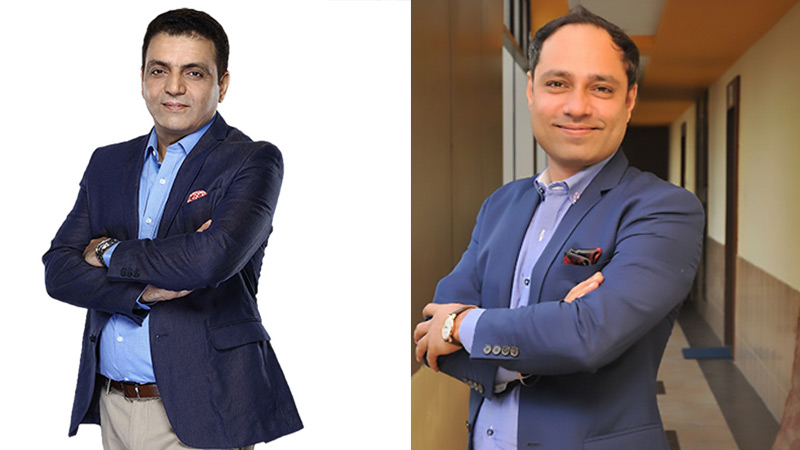
    MUMBAI: At Business Today, the winds of change are charging at bull-run speed. In a significant leadership shake-up announced by the India Today Group, Siddharth Zarabi has been elevated to the role of group editor, while Alok Nair has taken independent charge of the overall Strategic Business Unit (SBU). Both executives now steer one of India’s most influential business media outfits into its next ambitious chapter.

    Zarabi, who has been with Business Today for just four years, will now helm the brand’s digital mandate in addition to his leadership across print and TV. With this expanded portfolio, Zarabi completes the vision of a unified, synergistic business vertical across platforms—a strategy laid out by Aroon Purie and the Group’s top brass. In his new role, he reports to Purie for print and to the author of the announcement for digital and TV operations.

    Congratulating Zarabi, the note hailed his growth as a homegrown ITG talent and recognised his leadership in shaping Business Today’s editorial voice. His promotion positions him at the forefront of an integrated content strategy amid growing media convergence.

    On the business side, Business Today COO Nair has taken independent charge of the entire SBU. Having spent four years scaling up the business, Nair has seamlessly integrated into the company’s high-performance culture. The announcement lauded his blend of energy, vision, and what were cheekily referred to as “magic beans”.

    Nair will now report directly to India Today Group, group CEO Dinesh Bhatia. His elevation is seen as a bold move to energise Business Today’s business trajectory and deepen its market impact.

    In a separate but equally enthusiastic email, Kamlesh Kishore Singh, host of the podcast Teen Taal was welcomed back into the newsroom after a brief sabbatical. Singh, known for his 16-year stint at the group and his mentorship at Lallantop, resumes a full-time role from 1 May, adding further heft to the Group’s editorial firepower.

    With Singh’s ‘unretirement’, the reunion with longtime collaborator Venkat promises what leadership calls a “lethal combo” for doubling down on AI and digital transformation. In lighter moments, the note teases an “Unfarewell party” to celebrate his return.

    Both announcements underline India Today Group’s renewed faith in internal leadership and long-standing editorial talent. “Get ready for a real bull run”, the memo concludes—a statement that may apply as much to markets as it does to this spirited newsroom.
     

  • Disney’s magic numbers: Q2 2025 earnings cast a spell

    Disney’s magic numbers: Q2 2025 earnings cast a spell

    MUMBAI: The Walt Disney Company’s Q2 2025 earnings have delivered a star-studded performance, with revenues climbing seven per cent to $23.6 billion, driven by robust gains in entertainment and experiences. But it wasn’t all smooth sailing — sports struggled with soaring production costs, keeping the magic somewhat grounded.

    In the spotlight, Disney’s entertainment segment sparkled with a 61 per cent surge in operating income, hitting $1.3 billion. Direct-to-consumer revenues also soared, thanks to a 2.5 million bump in Disney+ and Hulu subscriptions, pushing the combined total to 180.7 million. The much-talked-about Disney+ subscriber base alone rose to 126 million, an addition of 1.4 million from the previous quarter.

    However, the sports division played a tougher game. Operating income tumbled by $91 million to $687 million, primarily due to bloated programming costs, which included airing three extra college football playoff games and an additional NFL clash. ESPN’s domestic advertising revenue shot up by 29 per cent, but it wasn’t enough to offset the spending blitz.

    Disney’s crown jewel — its experiences division — continued to enchant. Segment operating income hit $2.5 billion, a nine per cent rise, as domestic parks saw a 13 per cent boost in income, driven by higher spending and increased attendance.

    Net income soared to $3.4 billion from just $216 million a year ago, with adjusted earnings per share (EPS) hitting $1.45, a 20 per cent year-on-year jump. Free cash flow surged over 100 per cent to $4.9 billion, thanks to lower tax payments and tighter cost control.

    But not everything was a fairy tale. Disney’s Star India JV posted a $103 million loss, reflecting ongoing challenges in the competitive Indian market. There was also a equity loss from India JV of ~$300 million driven by purchase accounting amortisation. Amounts for the current period include impairment charges related to the Star India transaction ($143 million) and content ($109 million). Tax expense in the current period includes the estimated tax impact of these charges and a non-cash tax charge of $244 million related to the Star India transaction. Amounts for the prior-year period include impairments of goodwill ($2,038 million).

    Looking ahead, Disney is waving its wand at a 16 per cent rise in adjusted EPS for the full year, expecting $5.75 per share, as it bets on double-digit growth in entertainment and a fresh direct-to-consumer push with ESPN’s new offering.

    Disney’s CEO Bob Iger summed it up: “Our outstanding performance this quarter underscores our continued success building for growth and executing across our strategic priorities. Overall, we remain optimistic about the direction of the company and our outlook for the remainder of the fiscal year.” 

  • Sanjog Gupta pitches JioStar’s mega play: one fan, one individual feed, infinite screens

    Sanjog Gupta pitches JioStar’s mega play: one fan, one individual feed, infinite screens

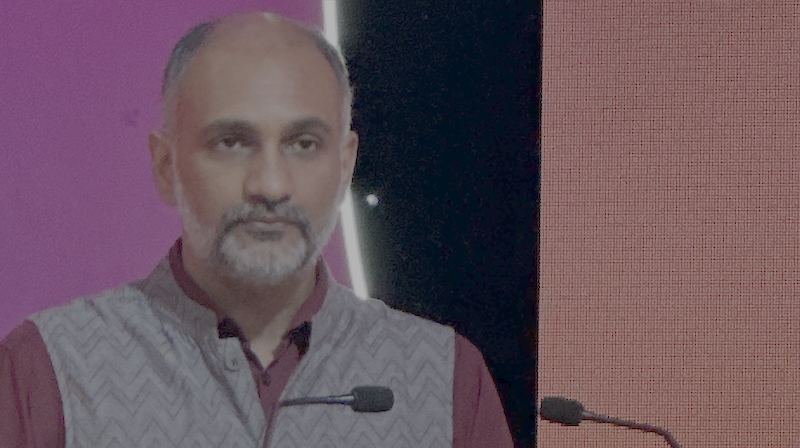
    MUMBAI: JioStar chief executive of sports and live experiences Sanjog Gupta knows how to play it well. He took the SVG India Summit stage on 5 May and delivered a fiery address that was part state-of-play, part future manifesto, and full of pride. This was despite him recovering from a bout of flu. 

    From JioStar’s record-breaking cricket broadcasts to the turbocharged rise of JioHotstar, Gupta dropped numbers and punchlines in equal measure.

    “Since the IPL began, we’ve added three  million pay TV homes and scaled to 280 million digital subscribers,” he said. “That’s not a curve; that’s a rocket.”

    A year ago, Disney Star and Viacom18 were at each other’s throats. Today, they’re joined at the hip in JioStar—a media juggernaut Gupta calls the marriage of “Star’s creativity and Jio’s connectivity.”

    In under 90 days, JioHotstar was born, merging two massive platforms with 250 million monthly users each. Since then, it’s broken just about every sports viewership record across both TV and OTT, from Test series highs to the biggest-ever WPL and IPL starts.

    But this isn’t just about cricket. Gupta unveiled JioStar’s new vertical—live experiences—which aims to blend collective fan energy with next-gen storytelling and interactivity. “We don’t want to just serve today—we want to shape tomorrow,” he declared.

    He outlined JioStar’s four commandments for partners:

    1. Think consumer, night and day
    2. Be bold, nimble, and humble
    3. Chase creativity, not just ideas
    4. Execute relentlessly

    But the mic-drop moment came when Gupta demoed MaxView 2.0—a souped-up, AI-powered vertical viewing experience designed for mobile fans. Swipe up for bite-sized moments. Swipe left for alternate angles and HeroCam views. Tap once and you’re back in the live game.

    “Screens are getting smaller, but the experience is getting bigger,” he quipped. “One taxi driver watches it at red lights. One guy told me he watches in the office without anyone noticing. That’s what we call stealth sports.”

    Since MaxView’s rollout, JioHotstar has clocked 25 per cent higher engagement from users on mobile. The mission now?

    One fan, many feeds—a world where each viewer gets a bespoke experience tailored to their individual moods, moments and devices.

    As Gupta put it: “Not many fans as one, but one fan as many.”

    Clearly, that should sweep fans all the way to the boundary – with lots of glee.

  • Slam dunks and music beats: NBA and Budweiser launch India’s first BUDX NBA House

    Slam dunks and music beats: NBA and Budweiser launch India’s first BUDX NBA House

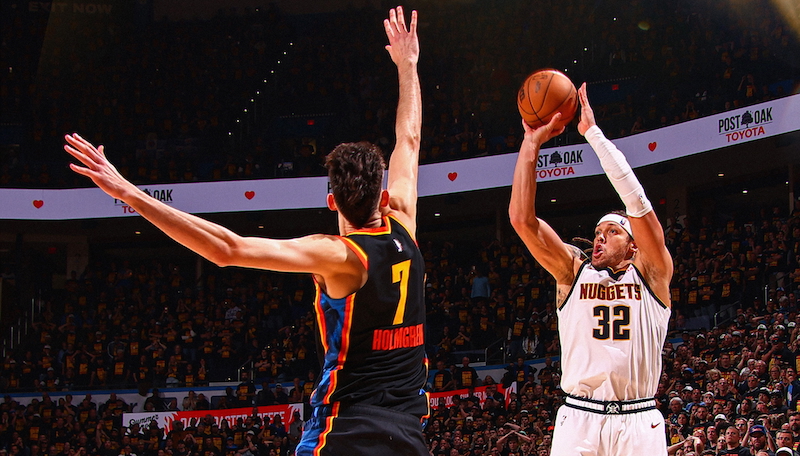
    MUMBAI: The NBA is bringing its A-game to India with a full-court press of culture, music and sport. Teaming up with Budweiser, the league is set to debut the country’s first-ever BUDX NBA House on 7 and 8  June at the Dome, SVP Stadium in Mumbai.

    Timed to coincide with the 2025 NBA Finals, the two-day carnival promises more than just hoops. Think meet-and-greets with five-time NBA champion Derek Fisher and Hall of Famer Gary Payton, high-flying stunts by the Sacramento Kings dunk team, and DJ-fuelled chaos courtesy of Slamson the mascot and the Kings Dancers.

    “The first BUDX NBA House will be a must-visit destination for the passionate NBA fans in India to come together and celebrate their love of the game amid the excitement of the NBA Finals,” said NBA Asia head of strategy and NBA India country head Rajah Chaudhry.  “We look forward to bringing this signature showcase of the NBA, music and culture to India at a time when there is incredible momentum around basketball in the country.” 

    BudweiserVP  of marketing and trade marketing in India Vineet Sharma, called the event a “trendsetting experience” designed to blend hoops with high-octane youth culture. “We’ve long championed music and immersive fan moments. Now we’re turning up the volume with basketball.”

    Produced and ticketed by Zomato, the event has also roped in Brand USA, Emirates and Visit California as partners. More sponsor activations and programming are expected to drop soon.

    The NBA has previously taken its signature ‘House’ format to Brazil, France, Canada, Mexico, the US and the UK. Now it’s India’s turn to feel the bounce.

  • Shemaroo strikes gold with a GEMA-packed show of creative power

    Shemaroo strikes gold with a GEMA-packed show of creative power

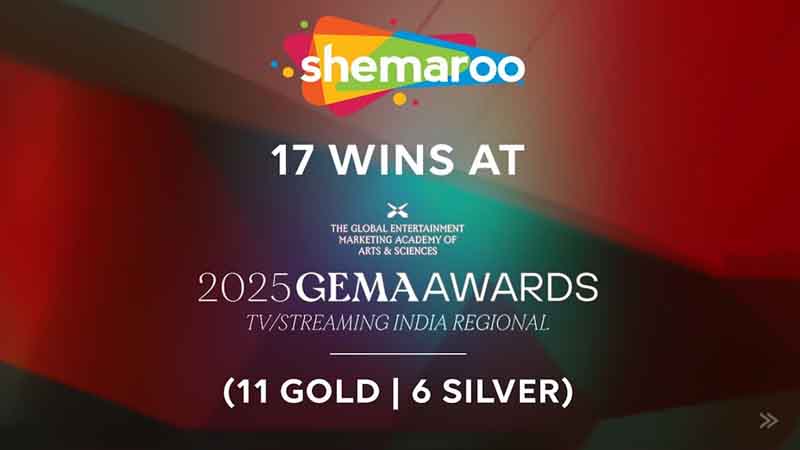
    MUMBAI: From devotional beats to thriller treats, Shemaroo has truly GEMA-fied its game. At the 2025 GEMA Awards – TV/Streaming India Regional, Shemaroo Entertainment walked away with a glittering haul of 17 trophies 11 Gold and 6 Silver proving that when it comes to regional and digital entertainment marketing, it’s anything but playing it safe.

    The wins weren’t just plenty, they were poetic. The Gujarati thriller Vash thrilled its way to double Gold for promos, plus a Silver encore for poster and visual art. Meanwhile, Live Bhakti Vibes turned divine inspiration into design domination, with multiple Golds for its Lalbaugcha Raja and Rath Yatra campaigns, covering everything from animation to festive promos.

    Even the in-house team got their moment in the spotlight, with their Congratulations campaign snagging Gold and Silver nods. Elsewhere, Hellaro, Baahubali (Marathi dubbed), and Super 13 showcased Shemaroo’s genre-spanning mastery from music and mythology to high-stakes drama.

    With a clean sweep in four key categories, Shemaroo isn’t just making content, it’s scripting success across formats, languages and fandoms.

    So while some chase virality, Shemaroo playing the long game: crafting campaigns with cultural weight, emotional charge, and visuals that pop harder than a Diwali firecracker. At this point, calling them ‘award-winning’ feels like an understatement, it’s more like award-collecting.

  • Network18 logs out the competition with digital dominance drive

    Network18 logs out the competition with digital dominance drive

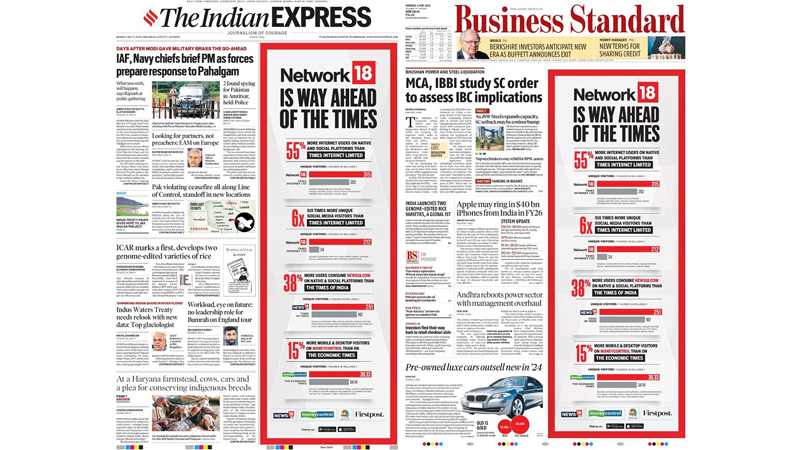
    MUMBAI: Clicks, clout, and Comscore cred Network18 is spelling it all out in black and white. The media group has taken its digital victory lap to print with a bold ad campaign in The Indian Express and Business Standard, calling time on Times Internet’s top spot.

    Armed with March 2025 data from Comscore, the ads proclaim a sweeping lead: Network18 clocked 315 million unique digital visitors 55 per cent more than Times Internet’s 202 million. And on social media, the gap turns into a chasm, with 212 million unique users tuning in to Network18 content nearly six times more than Times Internet’s 34 million.

    The bragfest doesn’t stop there. News18.com, the group’s flagship news platform, also takes centre stage, claiming 251 million unique visitors 38 per cent more than The Times of India, which drew 182 million. That’s a lot of extra eyeballs for what’s often seen as the underdog in the English news race.

    Meanwhile, in the world of bulls, bears, and breaking business scoops, Moneycontrol has emerged as the Street’s top tip. With 39.33 million unique visitors across desktop and mobile, it’s outpacing The Economic Times (34.14 million) by 15 per cent. The message? If you’re looking for your next market move, Moneycontrol might already be a few steps ahead.

    With the campaign splashed across major dailies, Network18 seems to be saying: the scoreboard’s up, and the numbers don’t lie.

  • India’s M&E story set to double: Uday Shankar urges industry to back storytellers, not just screens

    India’s M&E story set to double: Uday Shankar urges industry to back storytellers, not just screens

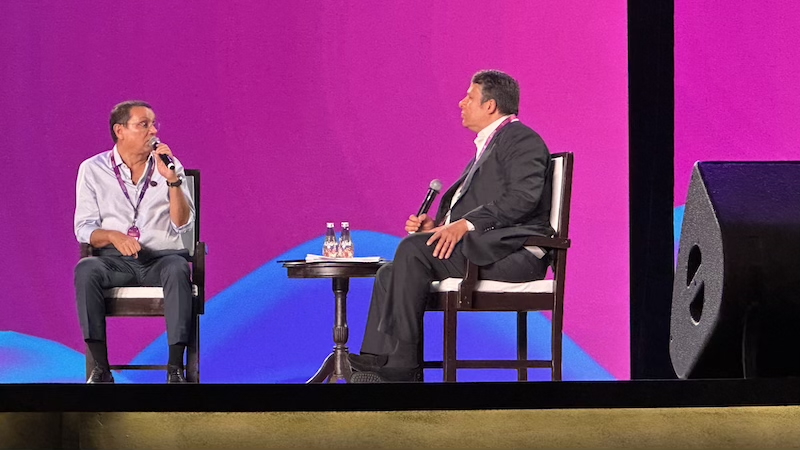
    MUMBAI:  India’s media and entertainment industry is sitting on the edge of a blockbuster sequel—if it can get the script right. That was the central message from Uday Shankar, vice chairman of JioStar and co-founder of Bodhi Tree Systems, at the Waves 2025 Summit. His session—“Media in India: Past 25 Years & Journey Ahead – to 2047”—with Media Partners Asia’s Vivek Couto was a masterclass in both history and prophecy.

    “From a country with barely a few state-run channels, we’ve become one of the world’s most voracious consumers of video,” Shankar said. “But what got us here won’t get us there.”

    Shankar began with a rewind to the early 1990s when, as he put it, “Satellite TV sneaked into India while the regulators were looking the other way.” This accidental revolution unleashed a tidal wave of demand, innovation, and ultimately, ubiquity. By the 2000s, television had wormed its way into the remotest villages.

    “India’s success wasn’t scripted by policymakers or global giants,” he pointed out. “It was local grit, local creativity, and Indian capital.”

    Today, he said, the transformation is even more dramatic. With over 700 million video consumers and platforms like JioStar commanding 500 million users—many of them paid subscribers—India has gone from media laggard to streaming juggernaut.

    While western media circles love predicting the death of linear TV, Shankar shut down that eulogy. “TV is not dying in India. In fact, we’ve added pay-TV subscribers,” he noted. “The reason? We backed the medium with the right kind of content. Content that understands India.”

    Streaming, too, is thriving—especially when priced with precision. “People said Indians wouldn’t pay for content. Wrong. They will, if it’s priced right and respects their time.”

    But not all is well on the content front. Despite world-class distribution, India’s storytelling muscle, Shankar warned, is underdeveloped. “We’re importing formats that worked elsewhere and force-fitting them into our own culture,” he said. “We need more content—and more local content.”

    He championed a full-fledged push into Tier II and III markets, and beyond the usual suspects of Hindi, Tamil and Telugu. “Bhojpuri, Haryanvi, Kumaoni—these audiences are starved for stories in their own language,” he said. “Let’s not give them leftovers.”

    While billions flow into content investment, Shankar identified a severe talent bottleneck. “You can’t serve 750 million viewers with 6,000 content creators. It’s absurd,” he said. “We need an army of new-age writers, directors, showrunners—young blood with their ears to the ground.”

    He pulled no punches on Hindi cinema saying it had “fallen out of touch” and was “creatively stuck in a loop.” The south Indian industries, by contrast, were lionised for their energy, risk-taking, and affordability. “Look at Tamil Nadu or Telangana or Karnataka —affordable tickets, packed theatres, and movies that connect. That’s the model,” he said.

    If there was any doubt about the depth of domestic commitment, Shankar squashed it with numbers. The merged JioStar entity, he revealed, spent Rs 25,000 crore on content in 2024, expected to rise to Rs 30,000 crore this year, Rs 32,000 -Rs 33,000 crore in 2026—roughly $10 billion over three years.

    “This isn’t speculative cash chasing vanity metrics,” he said. “It’s focused investment meant for Indian consumers, with returns from Indian markets.”

    Despite all the growth, Shankar acknowledged a glaring weakness: outdated monetisation models. “The industry is still stuck between advertising and subscriptions—meanwhile, new players are eating into revenues with creator content, commerce, and gamification.”

    His prescription? Rethink what it means to monetise a viewer. “Should a subscription just be access? Or can it be bundled with loyalty programmes, micropayments, creator communities? There’s a whole universe we haven’t touched.”

    Shankar also fired a warning shot at policymakers. “India’s regulatory framework still treats TV and digital like twins,” he said. “They’re not. They’re cousins at best—raised differently, with different needs.”

    He urged the creation of a sandbox-like regulatory structure—one that encourages innovation and gives breathing space for Indian platforms to grow, rather than mimicking Western regimes.

    In conclusion, Shankar set his sights high. “We’re at $30 billion today. The US is at $200 billion. China is pushing $75 billion. Why should we settle for less?”

    With 65 per cent of Indians under the age of 35, he argued, India has the youngest, hungriest audience on the planet. “If we invest in our people, our platforms, and—most importantly—our stories, we won’t just match the world. We’ll lead it.”

    From satellite smuggling to streaming scale, the Indian M&E journey has been wild. Now, says Shankar, it’s time to script Act II—with more voices, sharper ideas, and fewer borrowed templates.

  • Myprotein flexes its muscle as nutrition partner for India’s first Hyrox race in Mumbai

    Myprotein flexes its muscle as nutrition partner for India’s first Hyrox race in Mumbai

    MUMBAI: In a move that blends protein with performance, Myprotein has been named the official nutrition partner for India’s first-ever Hyrox race, set to take place in Mumbai on 3 May 2025. The global indoor fitness competition, famed for its brutal mix of one kilometre runs and functional exercises, has finally touched down on Indian soil—and Myprotein is fuelling the action.

    The high-intensity race will unfold at Nesco Grounds in Goregaon, with athletes pushing through a battery of challenges including the SkiErg, Sled Push and Pull, Burpee Broad Jumps, RowErg, Sandbag Lunges, Farmers Carry, and the fan-favourite Wall Balls.

    Myprotein will keep participants primed and replenished with its event-specific hydration product, The Electro, and muscle-building formula, The Whey. The Watermelon-flavoured Electro blend packs 1000mg of electrolytes—650mg sodium, 300mg potassium, and 60mg magnesium—to replace minerals lost through sweat. Meanwhile, The Whey’s Pista Ice Cream edition offers 25g of protein, 5.9g of BCAAs (2.8g leucine), just 3.6g of carbs, and 1.2g sugar—making it as lean as it is tasty.

    “We are excited to be the official nutrition partner for the debut of the globally renowned Hyrox in India. This thrilling competition perfectly aligns with Myprotein’s commitment to supporting fitness enthusiasts in achieving their goals. We are focused on providing the knowledge and nutritional tools necessary for individuals to train effectively for the unique challenges of Hyrox while fostering a strong sense of community and overall wellness. Our Hyrox-focused products, The Electro and The Whey are specifically designed to meet the hydration and recovery needs of these incredible athletes,” said Myprotein regional manager – India Sudeshna Saha.

    To build up to race day, Myprotein will also host its Move Club at Veronica’s, Bandra on 2 May at 7.00 am. The shakeout run will offer a sneak peek of Hyrox’s run component and connect the brand with Mumbai’s fitness community.

    Social media influencers and fitness icons such as Ria Kataria, Lakhvinder Singh, Piyu Sharma, Prashanth Sharma, Daman Singh, Pooja, and Abhishek Parhiar will also be seen at the event.

    Hyrox Mumbai 2025 Details:

    . Date: 3 May 2025 (Saturday)

    . Time: 9.00 am onwards

    .  Venue: Nesco Pvt Ltd, Goregaon, Mumbai

    Move Club Mumbai Details:

    .  Date: 2 May 2025 (Friday)

    .  Time: 7.00 am onwards

    .  Venue: Veronica’s, Bandra West, Mumbai