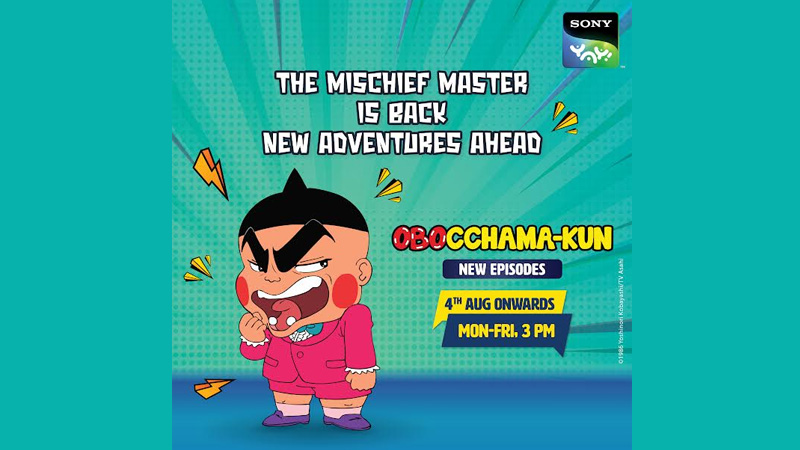
MUMBAI: Sony YAY!, the leading kids’ entertainment brand in India, has partnered with Japan’s iconic broadcaster TV Asahi to produce brand – new episodes of the fan-favourite anime Obocchama-kun. The first-of-its-kind collaboration has the stories and character design created in Japan and the animation produced in India, bringing together the creative strengths of both countries to revive a classic series for a new generation.
Since its debut on Sony YAY!, Obocchama-kun has emerged as a breakout hit, resonating strongly with kids across India through its eccentric humour, relatable characters, and unique storytelling style. The series has quickly built a loyal fanbase and proved its potential to grow into a long-term franchise.
Ambesh Tiwari, Business Head, Sony Kids said, “Obocchama-kun has created a special place in the hearts of kids across India. At Sony YAY!, our mission has always been to give our audience more of what they love. This collaboration is a step forward in that journey—bringing new stories, deeper humour, and the same Obocchama magic that has connected so strongly with fans.”
Maiko Sumida, Head of Animation Sales & Development, Interntational Business Department, TV Asahi said, “Obocchama-kun is back again! What’s more, all the stories are brand new, fully supervised by the original creator, Mr. Yoshinori Kobayashi, making this return more fun and exciting than ever before. This series holds special significance for TV Asahi, as it is a co-production with Sony Pictures Networks India. We are looking forward to the Obocchama-kun’s unpredictable adventures on Sony Yay!”
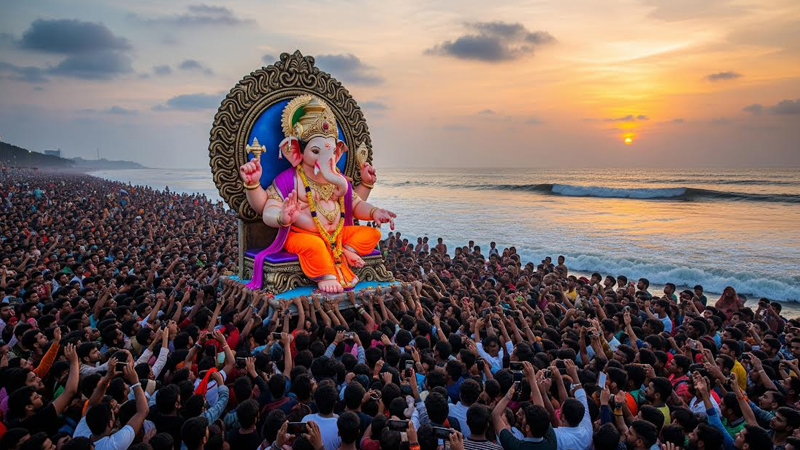
MUMBAI: Ganpati Goes Global, and Zee 24 Taas Is Right at the Heart of It. From Glasgow to Girgaon, Ganpati is no longer just a local celebration, it’s a global phenomenon. And Zee 24 Taas isn’t just covering the news, it’s shaping the narrative. In an engaging conversation with Indian Television Dot Com Zee 24 Taas editor Kamlesh Sutar shared how the channel is reimagining festive programming to reflect both tradition and tech, rural reverence and social media sparkle.
“It starts with Shravan,” Sutar explains, “Dahi Handi and Gokulashtami kick off the season, followed by Ganesh Utsav, Navratri, and Diwali. Our audience spans the globe now diaspora in the US, UK, UAE, even Pakistan tunes in.” Last year, the channel’s Desho Deshi Se Bappa special featured live coverage from Glasgow, where the Grand Maharashtra Mandal’s celebrations lit up screens back home.
Zee 24 Taas plans to go bigger this year, capturing Ganesh festivities in cities with strong Maharashtrian communities Dubai, New York, Spain, and beyond showing how faith travels and festivals follow.
Back home, the strategy is rooted in hyper-local storytelling. “Mumbai isn’t just Mumbai,” Sutar says. “We go down to the mohalla Dadar, Parel, Girgaon. And the same for other cities Ashur in Pune, Hatkanangle in Kolhapur. Hyper-local gives us deeper engagement and a stronger emotional connect.”
The channel’s on-ground teams no longer report from the field they are the field. Anchors now go live from pandals and mandals, turning static coverage into immersive storytelling.
Zee 24 Taas is also speaking the language of Gen Z. “Young people don’t tune into conventional news, they scroll it,” Sutar says. So the team infuses digital-first formats like Instagram Lives, trending reels, and celeb-driven content. A Celebrity Ganpati segment is in the works, roping in well-known faces to boost youth engagement across platforms. “We’re not just live on TV, we’re live on YouTube, Instagram, everywhere.”
To keep audiences plugged into the pulse of the festival, Zee 24 Taas has lined up a comprehensive slate of special programming that blends devotion with entertainment. For television viewers, the schedule includes Shree Ganesh Aarti, a daily broadcast of the morning aarti from 27 August to 6 September at 6:45am, and Zee 24 Taas Sukhkarta, airing twice first as a build-up from 21 to 26 August at 10:30am, and later as a daily festival bulletin from 27 August to 6 September at 7:30am.
Global Bappa, telecast at 12:30pm, brings a glimpse of Ganeshotsav celebrations from across the world, while Bappa Aaj Kai Khanar spices things up with festive recipes during the same afternoon slot. Gharguti Ganesh Spardha, airing from 1:30pm to 2pm, invites viewers to showcase their home celebrations, while Celebrity Ganpati brings star-studded darshans to the screen from 5:30pm. Gavakadcha Bappa, scheduled at 7:30pm, offers local flavours through festival walk-throughs from across Maharashtra. Special aarti broadcasts like Shree Ganeshachi Pran Prathishtha will mark the festival’s start on 26 and 27 August. The finale, Pudhchya Varshi Lavkar Ya, on Anant Chaturdashi (6 September), will run from 7am to 11pm, capturing the immersion-day fervour.
Beyond the box, Zee 24 Taas is equally charged up on digital. Their festival content package includes a mix of festival news, informative stories on Ganesh Chaturthi’s significance and rituals, vibrant photo galleries featuring eco-friendly idols and pandals, and specially curated recipes. The channel’s social feeds will also be abuzz with original and syndicated videos, plus crowd-sourced web stories featuring images sent by enthusiastic devotees. This integrated multi-platform strategy ensures Zee 24 Taas celebrates Ganeshotsav not just as a regional affair, but as a global experience echoing across living rooms in India and beyond.
Sustainability, too, has made its way into editorial choices. The channel spotlights eco-friendly idols, online pujas, and even the rise of online Ganesh shopping. “Modern-day concerns like the environment and accessibility are integrated seamlessly,” Sutar notes.
Zee 24 Taas is mindful of maintaining editorial sanctity while embracing advertiser partnerships. “Brand integration works when it’s organic,” says Sutar. “For instance, a mithai brand during Ganpati feels natural. We steer clear of irrelevant sponsorships. It has to be a win-win for the brand and for our audience.”
The channel’s approach ensures advertisers find a contextual home during peak seasons, and viewers get content that’s immersive, not intrusive. With tailored brand stories, past campaigns have seen solid ROI and lasting recall.
At its heart, Zee 24 Taas’ festive coverage is driven by a simple belief: India’s festivals aren’t bound by state lines or even national ones. They resonate worldwide, evolve with technology, and unite communities through shared celebration.
And as Kamlesh Sutar puts it best, “I may not celebrate Ganpati at home anymore, but with Zee 24 Taas, I get to celebrate it with a million households across the world.”
MUMBAI: Lights, camera, profit UFO Moviez has kicked off the fiscal year on a blockbuster note, posting a consolidated net profit of Rs 652 lakh for Q1FY26, marking a sharp turnaround from a loss of Rs 414 lakh in the same quarter last year. The homegrown digital cinema distribution major reported a 16 per cent rise in consolidated revenue at Rs 10,903 lakh, up from Rs 9,451 lakh in Q1FY25. EBITDA also saw a healthy jump to Rs 1,929 lakh from Rs 658 lakh a year ago.
Standalone profit came in at Rs 365 lakh versus a loss of Rs 267 lakh in the previous year’s comparable quarter. Notably, this improvement comes despite a 7 per cent drop in standalone net sales compared to the same quarter last year.
The boost in profitability was helped by a sharp reduction in impairment provisions down to zero from Rs 365 lakh last year as well as higher other income and steady cost control across verticals.
Employee costs for the quarter stood at Rs 2,111 lakh (up from Rs 2,191 lakh last year), while ad revenue share expenses held steady at Rs 1,848 lakh. Equipment and lamp purchases jumped significantly to Rs 2,252 lakh, signalling investment in expanding or upgrading the network.
UFO’s Q1 earnings per share stood at Rs 1.68, compared to a loss per share of Rs 1.07 last year.
The company had earlier received NCLT approval for the amalgamation of its two wholly owned subsidiaries Scrabble Digital Limited and UFO Software Technologies Pvt Ltd effective April 1, 2024. As a result, the Q1FY25 numbers have been restated to reflect this merger.
The board meeting to approve the results concluded at 3:50 p.m. on July 31, 2025.
With the film exhibition and cinema tech segments bouncing back post-pandemic, UFO Moviez appears set for a sequel of steady growth.
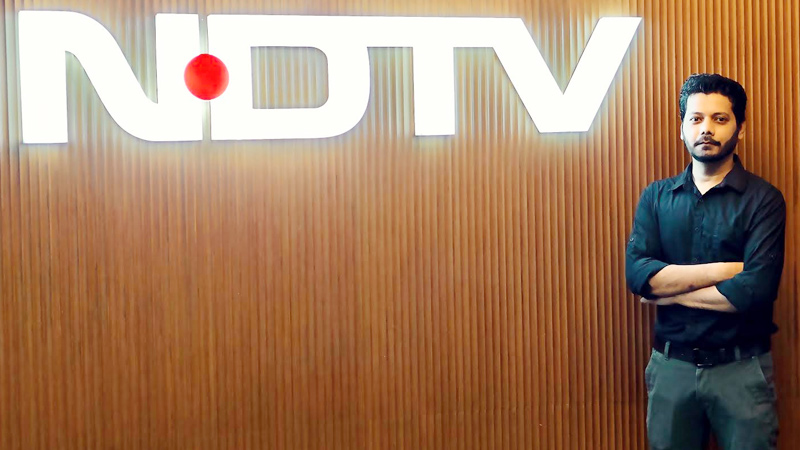
MUMBAI: NDTV has appointed Nazim Khan as Editor, NDTV Profit Digital, as the platform enters a new phase of editorial and digital growth. The appointment underscores NDTV’s commitment to building a sharper, more agile business news offering – rooted in clarity, credibility, and journalistic depth.
Nazim brings over 15 years of experience across India’s most respected financial news platforms, including Moneycontrol, CNBCTV18.com, and Morningstar. His work spans newsroom leadership, content innovation, and digital strategy – shaping coverage that blends market insight with audience intelligence.
In his previous role as Vice President – Business and Content at Quantent, Nazim led digital initiatives for leading financial institutions and fintechs. From investor education platforms to high-performance content formats, he has consistently delivered strategies that are both editorially sound and digitally effective.
‘NDTV Profit Digital is evolving to meet a new kind of business audience – one that is faster and more discerning. Nazim understands the intersection of editorial purpose and execution for a digital platform. He brings both newsroom instinct and strategic clarity’, said Rahul Kanwal, CEO and Editor-in-Chief of NDTV.
At NDTV Profit Digital, Nazim will oversee editorial direction and content strategy, with a focus on deepening market coverage, launching original IPs, and broadening investor engagement across platforms and formats.
‘NDTV has always stood for thoughtful, trustworthy journalism. I am excited to build on that legacy and help shape a platform that is intelligent, accessible, and aligned with the way modern India consumes business news’, said Nazim Khan on his appointment. Nazim’s appointment signals a renewed editorial vision for NDTV Profit Digital – one that meets the demands of today’s audience while anticipating the shifts of the future.
MUMBAI: Loss to gloss? Eros Media scrapes into the black, thanks to a property sale. From a cinematic cliffhanger to a financial plot twist, Eros International Media has posted a modest standalone profit of Rs 13 lakh for the half year ended 30 September 2024 thanks almost entirely to a Rs 2,303 lakh gain from selling office premises. But behind the positive headline figure lies a tangled script of unpaid dues, regulatory heat, and an eroded net worth.
As per the company’s unaudited results approved on 31 July 2025, total income stood at Rs 5,390 lakh for the April–September period, of which only Rs 3,079 lakh came from actual operations. The remaining Rs 2,311 lakh largely stemmed from the one-time property deal, bumping up the bottom line just enough to dodge a red mark. For context, Eros had reported a loss of Rs 9,970 lakh in the same period last year and a full-year loss of Rs 47,973 lakh in FY24.
Despite this slim profit, Eros continues to operate under significant financial strain. Its net worth remains negative at Rs (48,572) lakh, and liabilities exceed assets. The company is staring at long-overdue receivables of Rs 14,893 lakh from Eros Worldwide FZE, its former parent, apart from another Rs 7,303 lakh from Eros UK and Rs 3,183 lakh from Eros USA. A provision of Rs 25,150 lakh has been made towards these in FY24.
Moreover, the company is entangled in a regulatory saga. The Securities and Exchange Board of India (SEBI) issued an ex-parte order in June 2023 and later a confirmatory order in October 2023, citing irregularities including suspect content advances. These advances Rs 5,253 lakh (net of impairment) out of a whopping Rs 1,07,201 lakh remain under SEBI scrutiny. The watchdog has since issued a show-cause notice, and the next Securities Appellate Tribunal (SAT) hearing is slated for 22 September 2025.
Adding to the drama, the Enforcement Directorate conducted a search at Eros’ Mumbai office earlier this year under the Foreign Exchange Management Act, with proceedings still pending.
Eros’ auditors, Haribhakti & Co LLP, have flagged a “material uncertainty” over its ability to continue as a going concern. While the company says it’s pursuing overdue collections, restructuring loans, and exploring long-term monetisation of its film and music library, the road ahead is anything but smooth.
Despite the small profit reprieve, this may not be the interval, let alone the climax. Eros still needs a major plot twist to turn the tide. For now, it’s banking more on nostalgia and asset sales than a strong box office-style comeback.
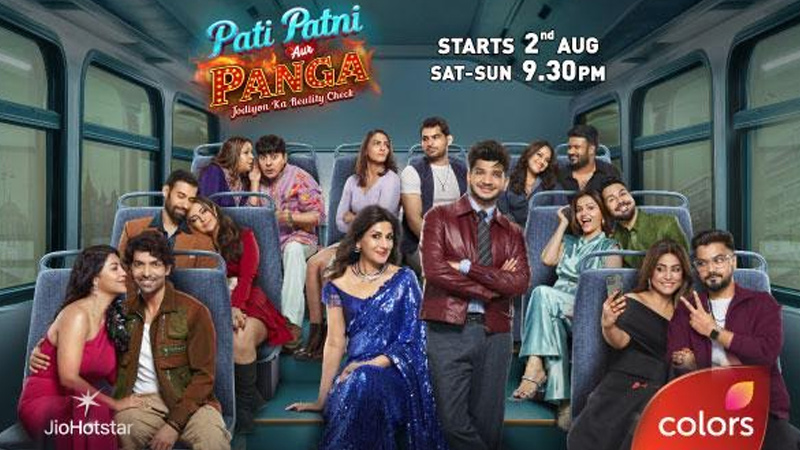
MUMBAI: For over a decade, Colors has stood as a pioneer in homegrown non-fiction entertainment, consistently creating original formats that redefine family viewing in India. Building on this legacy of relatable, impactful storytelling, the channel is set to premiere its new weekend primetime reality format, Pati Patni Aur Panga, on Saturday, 2 August 2025. The excitement is already translating into strong advertiser confidence. With 11 sponsors across television and digital platforms, the show is one of the most commercially promising non-fiction launches of the year.
Leading the sponsor lineup is Nivea Body Milk as the Presenting Sponsor, with Sugar Free Green, Rajdhani Besan, Cadbury Dairy Milk, Pour Homme and ENVY joining as Co-Powered Sponsors. Vikram Tea, Colgate, Catch, and Giva have come on board as Special Partners, while Zouk adds to the strong roster as the Associate Partner. This impressive sponsor response underscores the strong market momentum and brand confidence surrounding the show.
“Colors is a non-fiction powerhouse, consistently delivering engaging home-grown non-fiction formats that strike a chord with viewers across the country.Our focus has always been on creating formats that bring families together and keep audiences engaged weekend after weekend. Pati Patni Aur Panga builds on this tradition with a unique blend of authenticity and entertainment. For brands, it offers family-inclusive weekend viewing, prime-time stickiness, and high-impact integrations across TV and digital.The perfect festive-season alignment, ensuring maximum recall and engagement with viewers across demographics,” said Mahesh Shetty, Head of Revenue, Entertainment, JioStar.
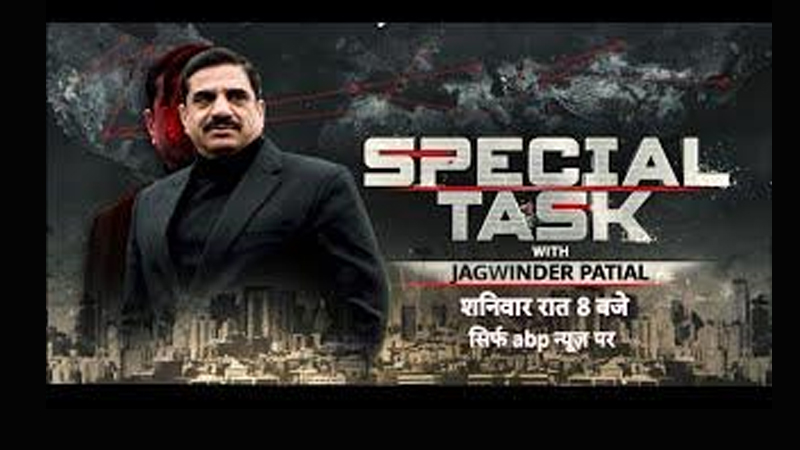
MUMBAI: Truth takes the witness stand every Saturday night, starting 2 August. ABP News is turning up the heat on investigative journalism with the launch of Special Task, a hard-hitting weekly show that promises to shine an unflinching spotlight on India’s hidden truths. Airing every Saturday at 8 PM, the show is hosted by veteran journalist Jagwinder Patial and kicks off its debut with a compelling three-part series titled Operation Beta.
Special Task takes viewers deep into the country’s underbelly exposing systemic cracks, unheard citizen struggles, and overlooked tragedies. With each one-hour episode, the series will serve raw, on-the-ground narratives that challenge comfort zones and demand accountability.
Jagwinder Patial, a name synonymous with fearless reporting, brings over 27 years of field experience to the show. From conflict zones to calamity-hit areas, his work has consistently championed public interest. Patial has been recognised with the Ram Nath Goenka Award for Excellence in Journalism and the Balraj Sahni National Award, both testaments to his credibility and impact.
The debut series, Operation Beta, promises to be no less than a journalistic raid delving into neglected communities and revealing institutional blind spots. True to its name, Special Task sets out not just to report, but to hold up a mirror to those in power and ask the questions no one else will.
The show is positioned as more than just a programme, it’s a public mission. ABP News has built its editorial reputation on challenging the status quo, and Special Task reinforces that stance by marrying rigorous fieldwork with purpose-driven storytelling.
Whether you’re a news junkie or a casual viewer, this is one assignment you won’t want to skip.
Catch the first episode of Special Task on ABP News at 8 PM on August 2, 2025.
MUMBAI: Ekta Lakhi, a seasoned pro in the cut-throat world of advertisement sales, has bagged a plum new gig: general manager at TV Today. With a CV that reads like a who’s who of the entertainment industry, Lakhi is clearly no stranger to the small screen, having demonstrated a rather impressive knack for getting brands to cough up the dosh.
Armed with a Bachelor of Management Studies, with a keen focus on marketing, Ms. Lakhi isn’t just about the chat; she’s got the academic chops to back it up.
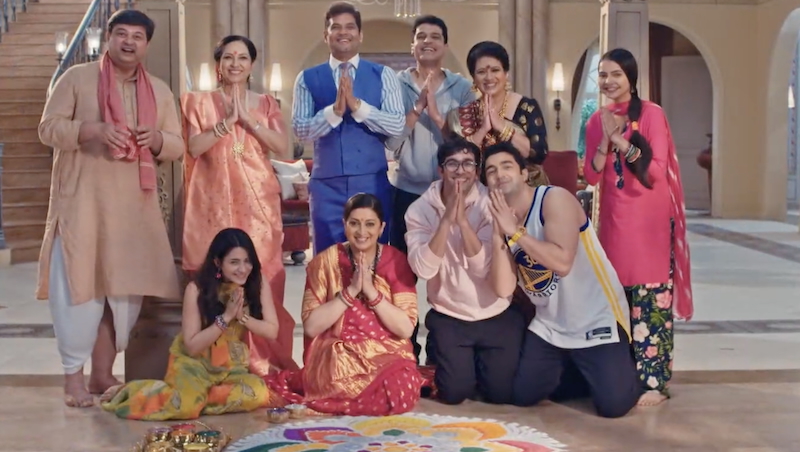
MUMBAI: It’s been 25 years since Tulsi Virani first walked into our living rooms, but the magic of Kyunki Saas Bhi Kabhi Bahu Thi hasn’t dimmed a bit. Ekta Kapoor and Balaji Telefilms’ magnum opus remains as endearing today as it was when it first aired — a reminder of the power of family ties in an increasingly fragmented modern India.
A Family Portrait in an Age of Isolation
For those of us who grew up in bustling joint families, watching the Viranis feels like coming home. Their laughter, their rituals, even their quarrels — all echo a world that’s slowly slipping away. Today, nuclear households dominate India’s urban landscape. Parents are often left in old-age homes, siblings are scattered across cities and time zones, and “quality time” has been replaced with curated Instagram reels. Yet, as the Viranis gather under the palatial roof of Shantiniketan, the series offers a bittersweet reminder of what we’ve lost — and why we still yearn for it.
Old Tropes, New Resonance
Yes, the show is steeped in traditional tropes: Mihir as the patriarch, Tulsi shouldering the emotional and domestic burdens. But there’s nuance beneath the surface. Mihir is not a dictator but a partner — one who values Tulsi’s opinions, especially on their daughter Pari’s life choices. Their partnership reflects a subtle but important evolution in how couple dynamics are portrayed: mutual respect in a traditional framework. A Gripping Opening
The revival wastes no time. From the very first episode, where preparations are underway for the Virani elders’ 38th wedding anniversary, viewers are swept back into the grand world of Shantiniketan. The writing is crisp, the camerawork fluid, the lighting lush, and the casting absolutely on point. Balaji’s signature flair for scale and detail is intact.
The Sacrifices of Tulsi
In the first two episodes, Tulsi remains the selfless heart of the household. She attends her anniversary party without a care for glamour, even giving away her saree to a relative. Midway through the celebration, she dashes to rescue her son Angad after a car accident, promising him she won’t tell Mihir. She returns to the festivities as though nothing happened, her own emotional turmoil buried under duty. These sacrifices define Tulsi — the glue of the Virani family.
Cracks Beneath the Perfect Surface
Of course, no Virani gathering is without its shadows. A jealous sister-in-law simmers in resentment, praying for Tulsi’s downfall. And in the third episode, a sensitive issue surfaces: Tulsi, older and heavier, worries about her fading youth next to Mihir’s enduring vitality. His tender reassurance — that she is the pillar on which Shantiniketan stands — transforms the moment into one of the show’s most moving exchanges.
A Timeless Winner
With just three episodes, it’s clear that Star Plus, Ekta Kapoor, and Balaji Telefilms have another winner on their hands. More than a television drama, Kyunki Saas Bhi Kabhi Bahu Thi is a cultural touchstone — a reminder that while lifestyles may change, our hunger for love, loyalty, and family never will.
As the Viranis sit down together under the glowing chandeliers of Shantiniketan, one thing is certain: some sagas don’t just entertain us — they become part of who we are.
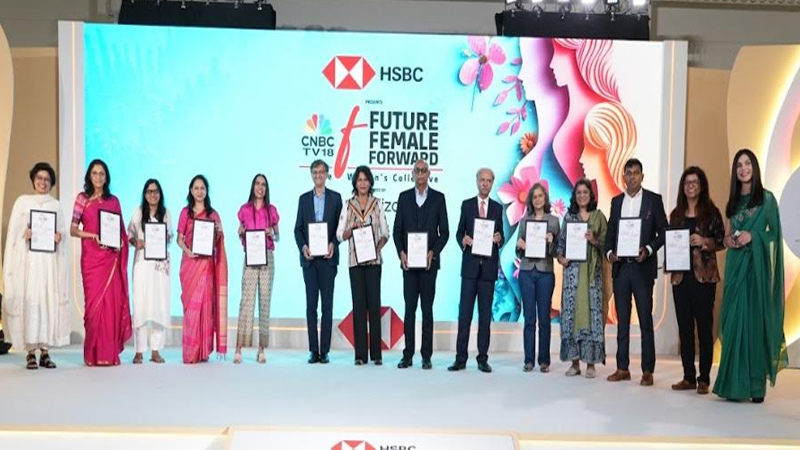
MUMBAI: CNBC-TV18 successfully hosted the Bengaluru edition of HSBC presents Future. Female. Forward. Season 3, co-presented by Cognizant India, to a packed house of policymakers, industry leaders, and DEI advocates. Following its impactful national launch in Mumbai, the Bengaluru chapter zeroed in on a critical, and often under discussed barrier to achieving gender parity: the ‘broken rung’ that can hold women back from progressing into leadership roles.
Opening the evening, CNBC-TV18 managing editor Shereen Bhan, delivered a compelling call to action that set the tone for the discussions ahead. “We created CNBC-TV18 Future. Female. Forward. —to build a space where women in full flow could speak, challenge, and lead. Today, women founders still receive only 2.3 per cent of total capital, globally under three per cent, and in India, just six per cent in H1 2025. That’s not a pipeline problem; that’s a design flaw. From AI to public infrastructure, this city sits at the edge of innovation, yet the blueprint remains exclusionary. Equity must be the earliest principle, not a late-stage correction. And that’s the conversation we’re committed to pushing forward—with facts, with courage, and with community.”
The evening began with HSBC India CEO Hitendra Dave reflecting on Embedding Equity: The HSBC India Inclusion Playbook. He emphasized the need for strong institutional frameworks and measurable outcomes to build truly inclusive cultures.
He said, “Over the last three years, we’ve started a conversation—one that challenges us to rethink how we approach inclusion, not as a multi-decadal aspiration, but as a series of deliberate, incremental actions. Each season, each dialogue, and each story reminds us that looking away is not an option and while the journey is complex and nuanced, what matters is that we are moving in the right direction. At HSBC, we take pride in playing a small but meaningful role in fostering these conversations that bring us closer to a future where equity is not just an ideal, but a reality.”
Taking the stage next, Shobana Kamineni, executive chairperson of Apollo HealthCo, delivered a compelling fireside chat titled Prescription for Disruption: The Kamineni Code.
She shared: “Women aren’t short on ideas, intelligence, or ambition, but they’re funded like they are. Globally, women-led businesses raised just $108 billion last year, and India accounted for a mere ₹25 crore. You can’t talk about scale without real capital. If we want more women in leadership, we need to back them not just with applause, but with board seats, and belief in their ability to lead mainstream, high-impact ventures, not just niche ones.”
The evening also featured a case‑led session by Pooja Sharma Goyal, founding CEO of The Udaiti Foundation, titled Leading with Purpose, Building with Equity. Drawing on lived experience, she outlined practical frameworks that turn inclusive‑growth theory into action.
A high-impact panel discussion titled Purpose, Parity & Performance brought together an esteemed lineup of leaders, including Bhawna Agarwal (SVP & MD, HPE India), Rajesh Varrier (President – global operations and chairman & managing director, Cognizant India), Jaya Jagadish (country head & SVP, AMD India), Meena Ganesh (co-founder & chairperson, Portea; Trustee, Bahaar Foundation), and Sunita Naik (SVP & country lead – India, State Street Investment Management).
During the panel discussion, Rajesh Varrier, president – global operations and chairman & managing director, Cognizant India, offered a large-enterprise perspective on building inclusive workforce strategies.“Inclusion isn’t just about hiring; it’s about building systems and structural interventions that support a woman’s entire career journey. That’s why we created Shakti —a unified framework of programs and policies designed to empower women from college to corporate leadership, enabling them to realise their full potential. Also, we know that progress is most powerful when supported by allies—those who advocate, amplify, and help open doors,” he noted.
From a global capital lens, Sunita Naik, senior managing director & India lead of State Street Investment Management, illustrated how inclusion is being hardwired into investment decisions and organizational culture, moving beyond token gestures to measurable accountability. Sunita said, “At State Street Investment Management, we didn’t just advocate for inclusion; we built it into our leadership. Our CEO is an Asian-American woman, our operating group is majority women, and our board is 50 per cent women. This isn’t about eliminating men; it’s about proving that diverse teams outperform. Real change happens when women lead at every level, not just entry level. From the iconic Fearless Girl to our own boardroom, we’re showing that inclusion drives performance, not just perception.”
The evening saw the signature “FFF ICONS” segment where a remarkable group of individuals whose contributions span sport, science, social change, and national service were honoured. Among the honorees were Shreyasi Joshi and Swarali Joshi – Skater Sisters; Alina Alam – Founder & CEO, Mitti Café; Sonal Holland – Founder & Director, SoHo Wines; Savithri H. S – Former Professor, Department of Biochemistry, Indian Institute of Science, Bengaluru; Lt Commander Roopa Alagirisamy and Lt Commander Dilna K – Indian Navy; India’s first all-women mine rescue unit, SMART-191, Singareni Mahila Active Rescue Team; Sandhya Puchalapalli – Founder & President, Aarti for Girls; Roshni Devi – National-Level Weightlifter; and Meena Ganesh – Co-founder & Chairperson, Portea, and Trustee, Bahaar Foundation.
Lt commander Dilna K, a commissioned officer in the Indian Navy, spoke about her life journey navigating a male-dominated force with resilience and clarity. Reflecting on her partnership with fellow officer Lt Commander Roopa Alagirisamy, she shared: “Roopa and I trained together, went through life and death situations, and spent more time at sea than on land. You get to know everything about the other person; there’s no space to be enemies. When I wasn’t okay, she was there to take over, and when she wasn’t, I stepped in. That teamwork was the real success of this journey.”
The evening closed with a clear message: fixing the broken rung isn’t a side issue, it’s central to building stronger institutions. From rethinking how promotions work to ensuring fairness in performance evaluations, the conversations throughout this pivotal event called on organizations to act with intent, not just awareness. Parity, the room agreed, must be designed into the system, not added as an afterthought.