Category: Television

  • Viacom to launch Comedy Central in Germany next year

    Viacom to launch Comedy Central in Germany next year

    MUMBAI: MTV Germany will launch the first dedicated comedy channel on free-to-view German television. Comedy Central launches next year.

    To this end, the channel will broadcast not only shows from its American namesake, but also home-grown German productions. In addition, it will provide a platform for local comedy talent.

    MTV Germany vice president Markus Andorfer will oversee Comedy Central in addition to Nickelodeon. He says, “In the US, we have made a name for ourselves with programmes such as South Park, Chappelle’s Show and the Emmy Award-winning Daily Show with Jon Stewart. The schedule will be tailored to German tastes, to help us reach the 14-49 year olds audience in Germany.”

    Andorfer oversaw the launch of Nickelodeon, successfully establishing it in the marketplace since it began broadcasting in September 2005.

    Comedy Central’s channel manager in Germany Thorsten Sievert says, “This new position is particularly challenging, because there has never been a 24-hour comedy channel on German television.”

  • Music industry loses 50% share due to piracy: Dasmunsi

    Music industry loses 50% share due to piracy: Dasmunsi

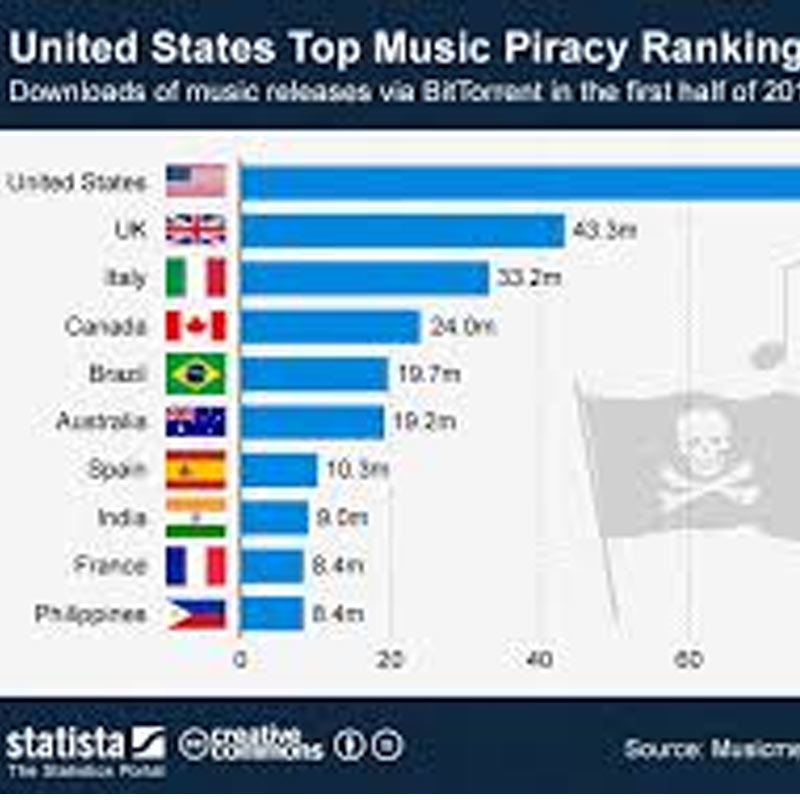
    MUMBAI: The vicious wave of piracy continues to eat into the revenues of the Indian music industry. According to information and broadcasting minister P R Dasmunsi, the Indian music industry has lost 50 per cent of its share between 1999-2004 primarily due to piracy.

    However, Dasmunsi assured that several steps have been taken and will be taken in the future by the government to curb piracy.

    According to a report by PTI, the Indian Music Industry (IMI) pegs the size of the industry at Rs 5 billion in 2004 as compared to Rs 10 billion in 1999.

    Dwelling also on the much talked about issue of CAS (conditional access system) in the Lok Sabha today, Dasmunsi further said that the government has held meetings with broadcasters, cable operators, consumer organisations and other stake holders with regard to the implementation of the CAS.

    “There was a broad consensus that nine-month time is required to take preparatory steps and to implement CAS smoothly and as such no exact time-frame can be indicated,” he was reported as saying.

  • Vh1 brings music festival ‘Vh1 Rock Rules’ from 18 May

    Vh1 brings music festival ‘Vh1 Rock Rules’ from 18 May

    MUMBAI: MTV Networks’ international music and lifestyle channel – Vh1, will be rolling out an international music fiesta with Vh1 Rock Rules, featuring three international bands and 12 local bands.

    The music fiesta will begin 18 May and culminate on 3 June in Mumbai, Delhi and Bangalore.
    Apart from the who’s who of Indian rock, the 15-band line-up stars three international bands – Haven (UK), Empire Dogs (Sweden) and a finale from the Aussie band Taxiride.

    While, on the national front, the rock acts includes – Pentagram, Parikrama, Helga’s Fun Castle, Them Clones, Oritus, Nakshatra, Synaps, Parousia, Lounge Piranha, Vayu, Level 9 and Messiah.

    On 18 May, Haven and Helga’s Fun Castle will perform, followed by Empire Dogs and Vayu on 25 May and finally Taxiride and Pentagram will perform on 1 June in Mumbai at Velocity.
    In Delhi, Haven, Nakshatra and Them Clones will perform on 20 May, followed by Empire Dogs, Parikrama and Oritus on 27 May and finally on 3 June Taxiride, Level 9 and Messiah will perform at Elevate.

    On 2 June, Taxiride, Synaps, Parousia and Lounge Piranha will perform in Bangalore at Palace Grounds.

    Last year, Vh1 held Vh1 Hip Hop Hustle, wherein the channel brought in hip hop band Flipsyde as well as two international DJs Noname and Mentat. While the event was restricted to Delhi and Mumbai, Vh1 has now added Bangalore to the tour rock map.

    Vh1 India VP and general manager Keertan Adyanthaya said, “Vh1 Rock Rules is slated to delight rock fanatics in India. We are not only bringing fresh new international talent to India but also providing a platform for Indian rock bands to reach their fans. It’s a clear indication that India is now on the world tour map and Vh1 is playing a major role in fostering this phenomenon.”

  • Miditech wins two Rapa awards for ‘Deal…’ and ‘M.A.D’

    Miditech wins two Rapa awards for ‘Deal…’ and ‘M.A.D’

    MUMBAI: Miditech has won two awards in the 31st All India Radio & TV Advertising practitioners’ Association (Rapa) Awards 2005. The first one is for Sony’s Deal Ya No Deal, which won in the game show category in Hindi and the second for Pogo’s Music Art Dance (M.A.D) in the children’s serial category.

    Deal Ya No Deal, which is in its third season is a show that tests a contestant’s ability to make the right choices and survive in a game of luck, risk and tension, given a choice of 22 cash boxes, which might have anything up to Rs 10 million. Rajeev Khandelwal now hosts the show, which was earlier being hosted by R Madhavan and then Mandira Bedi.

    International versions of Deal Ya No Deal have enjoyed high viewership worldwide including Argentina, Australia, Austria, Belgium, Chile, Croatia, France, Germany, Hungary, Italy, Israel, Mexico, the Middle East, the Netherlands, Russia, Turkey and Thailand.

    M.A.D. is a unique, refreshingly original and exciting series for pre-adolescent children. Each week, with the help of a couple of mini M.A.D. kids, our hosts, explore a theme through music, art and dance. Whether it be using familiar items to create innovative and engaging things, trying stunts like using their whole bodies as paintbrushes, creating musical acrobatics and rhythmic dancing or looking through the viewers gallery, we always take our audience with us, encouraging kids to re-evaluate the things they see and hear every day.

    The Rapa is one of India’s oldest associations of media professionals. It came into existence over 31 years ago and has contributed significantly towards promoting audio visual works of excellence. Every year the awards function recognises and honours outstanding radio and television productions and the people who create them.

  • Prasar Bharati financial rejig near completion

    Prasar Bharati financial rejig near completion

    NEW DELHI: The Indian government is close to taking a final decision on the financial restructuring of pubcaster Prasar Bharati, which manages Doordarshan and All India Radio.

    A group of ministers (GoM) set up to look into the issue has finalised its report, which now will be vetted by the information and broadcast ministry before being put up at a cabinet meeting.

    A government official, while confirming that the restructuring report is complete, said, “The GoM and I&B ministry will have to finalise the format in which it will be put up before the Cabinet as the broad contours have been thrashed out.”

    Though the matter is likely to go to the Cabinet after the present session of Parliament gets over in a couple of weeks’ time, the official refrained from giving a time frame for a formal announcement in this regard.

    One of the options mentioned in the report, according to sources, is the government holding an equity stake in Prasar Bharati Corporation in lieu of the assets (including real estate and infrastructure), which would be transferred from government books to the Corporation.

    However, the GoM has attempted to tread carefully on the issue of the sensitive status of employees of Prasar Bharati.

    Almost 99 per cent of the over 45,000 employee base of Prasar Bharati is treated as part of the government and enjoy various perks as government servants.

    Transferring the employees to Prasar Bharati, an autonomous body created under an Act of Parliament, will make them lose some of the privileges like low-cost housing facility.

    The government official said the cabinet will have to take a final view on such matters.

    Employee status has been a ticklish issue within and outside Prasar Bharati with various employees’ unions of the Corporation opposing any change in their status, least of all being categorized as private sector employees.

    The workers’ unions had even petitioned Prime Minister Manmohan Singh last year to scrap the Prasar Bharati Act and revert DD and AIR to full government control.

    A committee, headed by I&B secretary SK Arora, was appointed by the government on 30 March, 2005 with the mandate to suggest a viable capital and financial structure for the cash-strapped Prasar Bharati to facilitate the strengthening of its functioning.

    The terms of reference of the panel was to propose a viable capital and financial structure for Prasar Bharati, while taking into account the broadcaster’s role as a pubcaster and the need to maximise revenue-earning potential through commercial operations.

    This panel was to submit its report to a GoM that was to add its own perspective.

    Though Prasar Bharati closed the last financial year ended 31 March 2006 with a record revenue mop up of Rs 12.47 billion, the gap between expenditure and income is still huge.

    For FY07, Prasar Bharati has set itself a revenue target of Rs 15 billion.

  • ‘If pay model comes into place, I wouldn’t even think twice before launching four more kids’ channels’ : Zarina Mehta – Hungama TV chief operating officer

    ‘If pay model comes into place, I wouldn’t even think twice before launching four more kids’ channels’ : Zarina Mehta – Hungama TV chief operating officer

    Hungama TV has recently touched the number two position in the kids' channels space and the channel's chief operating officer Zarina Mehta is in an ecstatic mood. What's more, she is also upbeat about the new talent hunt for kids on the only Indian kids channel beaming in the country.

    The channel has roped in John Abraham for the same and the two kids who win the hunt will get a chance to star opposite the youth icon in a UTV produced movie. This can be termed as a perfect example of synergy between the two brands – UTV and Hungama TV.

    Her enthusiasm and zest for her baby (that's best how Hungama TV can be described) is infectious. In a free wheeling interview with Indiantelevision.com's Hetal Adesara, Mehta talks about the channel's future plans, the kids' space in India and the problems broadcasters are facing due to non implementation of conditional access system (CAS), which will help bring in pay TV revenues.

    Excerpts:

    Hungama TV recently achieved the number two position in the kids' channels space. What has contributed to the growth?
    Overall I think the growth has basically come from excellent distribution for which I have Star TV to thank and my own distribution team headed by Kevin Pereira.

    Secondly, localisation on the marketing and programming front, that has worked on the channel. Whether it is the Hungama Captains' Hunt, which is such a local area that reaches out to the kids directly and pulls them into the channel. They can actually see who is running the channel. Then a show like Hero, which is right now one of our massive driver shows has done really well on the channel so much so that the repeats of the show has got higher ratings that the first time airings.

    The third thing is excellent acquisitions. Doremon is the top rated kids show for the last four – six weeks. This week we got 36 GRPs just from Doremon.

    We did a brand study last year in May because we had a very critical brand problem, which we have now solved. The problem was the logo of the channel with the 'h,' which was perceived as too young. The responses we got from kids about the channel were 'not cool,' 'not for me' or 'my kid sister may watch.'

    The study was done among 2,000 kids and this is when we realised that we had a serious brand problem. So in October 2005, we re-launched with the new logo and in March this year, we changed the entire look and feel of the channel.

    We commissioned the BBC to do design our new on air look but I was very disappointed with what they did. Apart from the new logo with the swirl that they made for us, we re-did the entire on-air look of the channel in-house. This has also helped the channel. Hungama has now become a cool, friendly, fun and Indian channel for kids. The brand perception is shifting now and kids are spending more time on the channel.

    The interesting story about the 141 GRPs that we got a couple of weeks back is that our time spent went up. Hence loyalty and stickiness on the channel are going up, which is very comforting to know.

    How has your role been redefined after becoming COO of Hungama TV? What are the additional responsibilities apart from programming that you are now looking after?
    There are massive additional responsibilities now. Instead of just looking after programming and OAP, I have to look after everything. I am still learning the ropes but so far it has been a good experience.

    I have a great team at Hungama and the people are really passionate about their work. There's Kevin Periera, who is the head of distribution and operations; Siddhartha Roy Kapoor is our group head of marketing who looks after UTV and Hungama TV. Then there is Aparna Bhosle who is vice president programming for the channel, Nilofer Dhund who is vice president sales, Venkatesh G is our head of OAP and Shilpa is the head of research.

    My task is to make sure that the different elements of the channel work powerfully together so that one plus one is eleven, not even four. And that's what I think we are slowly achieving. Marketing, sales, distribution and programming have to work together. We had passionate people before but they were not working together as a team. Now that has changed.

    What are the new shows that you have acquired recently?
    There are three new shows that we have acquired and each one of them is really big. But at this point in time, I cannot talk about it because we haven't yet signed on the dotted line.

    This year, we will be going to Cannes for Mip Junior in October. Last year, we screened each and every show that was there on the market, so now we know the kids' market place.

    What about new local content?
    We have a reality talent hunt show called John Aur Kaun?, which is a magnificent idea. We'll be going across five major cities in search for two kids who will get an opportunity to star in a UTV produced movie starring John Abraham. UTV has signed a two movie deal with John and more than anything else, it is a perfect example of fabulous synergy between UTV and Hungama TV.

    We were thinking of a big idea for Hungama TV and then Siddhartha came up with this one and I immediately lapped it up. My skill is to manage people and recognise a good idea (not necessarily come up with it) and make it happen.

    John has also been roped in as the brand ambassador for the channel. What role is he going to play in this respect?
    John is willing to do the movie with two kids because he recognises how popular he is with the 4 – 14 TG. Then we thought that if we are doing a movie with him; then let's take him on as the channel's brand ambassador. He agreed to that too.

    We are going to figure out ways to synergise the relationship between John and Hungama TV. We are just working all that out and we have at least three innovative ideas but it will take another month or so to finalize the same. When John comes back from his world tour, we will be ready to announce the specifics of what we are doing with him besides John Aur Kaun?

    'I will never ask John to act in 'Hero' or 'Sanya' as it will be a detriment to his brand and also mine'

    Speaking about John, how important do you think is it for a kids channel to have a brand ambassador? If we look at the other channels, Nick had Saif Ali Khan and Animax had Irfan Pathan as brand ambassadors… but nothing much came out of it so to speak…
    Honestly, if I may say, I don't think they used them correctly. I am never going to use John to say – "Watch Hungama TV." I am going to innovate, which is why it has taken me more than seven – eight months to think how exactly to use him in an innovative long term manner, wherein he can bring a long term brand equity to the channel. It is absolutely a no – no that I will ask him to ever act in Hero orSanya. I will never ever do that as I think it is a detriment to his brand and mine because if Hero can't stand on his own two feet then he is not a hero.

    A brand ambassador has to go deeper into the brand and build a meaningful relationship with the kids and I am figuring that out. I will make it work. It cannot be done the way the others did it. Even Sab TV had done it with Karisma Kapoor… it didn't work.

    For my brand it is going to be a deeper connection with the kids. How? I can't answer that right now. The channel will be a medium for kids to connect with John. In no way should either of the brands be diluted by this association… especially his brand.

    Are there any other new local shows apart from this talent hunt that in the pipeline?
    We are doing a whole new series of Hero, which will be launched in June. We have a fantastic new story written by Aarif Ali and I'm sure kids will love it.

    I am also planning a new series of Sanya. Moreover, I think it has a good merchandising and licensing opportunities. All the merchandising and licensing that is happening currently is all international stuff. I want to break to that and I also want Hero and Sanya to become licensing and merchandising powerhouses.

    It's going to take the earth and the moon to do it because somehow Indians tend to buy foreign things, which is sad but true. So we need to break that but I'm going to try.

    So will we be seeing a separate division for licensing and merchandising?
    I must admit that this is one thing where we are nowhere near our competition. However, having said that, we have licensed Yu Gi Oh!with the Pepsi taazzos and it is doing quite well.

    Funnily enough, the very first merchandising property in the kids' space was the Shakalaka Boom Boom pencil and they were a runaway success (except that they got pirated since they were cheap and easy to copy).

    We are lacking there but we are looking at it seriously now. It is going to be quite some time before we actually start making money there or even giving Cartoon Network and Disney any competition there but it will be a beginning.

    There are seven kids channel in the country at present. Together, how much have they managed to grow the market?
    From January 2005 to mid April 2005, there were a total of seven kids' channels, which together contributed 300 GRPs. Compare that to the same time period this year (2006) and the number of channels are the same but the GRPs have climbed up to 500. It's a fantastic, unbelievable and sensational growth.

    I have to compliment my competition as well as us, because together we are driving value to the kids' space. There are a lot of things that we are competing for but there are certain things that we need to do together. We need to change the perception of advertisers towards the kids' space. We have to make them understand that the current big thing that is growing today is the kids' space and everything else is declining. I really believe that 2006 – 2007 is the year of the kids' channels. For me, I value my competition because if they weren't there I would be lazy and bored. I actually want my competition to work because then the space works and it is important for the space to work.

    Overall, the key is to drive our effective rates (ER) up from the current abysmal rates that we have. We should stop selling at low rates because we are worth much more. Even with the cable operators, we should use our clout together. These are the things we should do together. At the same time there is no denying that there is a huge sense of competitiveness amongst Cartoon Network, Disney and Hungama TV. This hots up the space and makes it that much more exciting. No media planner or buyer can ignore us… they may not give us the ERs that we deserve but it is moving in the right direction.

    Programming-wise, what do you think is the way forward for kids' channels – live action or animation?
    It has to be a mix of the two. Originally produced live action is great but we have to admit that it is very expensive. I cannot afford to have more than two or three originally produced live action shows on my channel. I think the rest of the channel has to be filled with acquisition – whether it is live action or animation.

    That is the best way to go. I am very happy with the balance we have currently on Hungama TV.

    Are there any new distribution platforms that you are looking at for your content?
    We were the first to go on the mobile with our Hungaming channel. We launched it in October. Sadly we didn't make a noise about it.

    Kids can download and play the Gol Gol Ghulam and Full Toss games. Also in the pipeline is the Hero game, which is currently being developed. This has been done in association with Indiagames.

    What is the latest on the deal with Sun TV for the two regional kids' channels?
    No comments.

    A couple of years back; at the Ficci Frames seminar you had mentioned that by 2010, we will have 20 kids' channels in India. How realistic does that figure look to you today?
    I still think so. As far as I am concerned, we already have plans to launch two more channels and we definitely need to grow the pie.

    The only thing that is stopping us is the state of cable in the country. Pay TV revenues have to kick in and viewers have to pay for what they get. They cannot keep expecting free stuff as it is not fair to the broadcasters, cable operators or anybody who is running a business. Why should a consumer get it free? It doesn't make sense to me.

    In the market the prices of everything keeps going up but our prices keep going down. Why should it be like that? The government also has to take a hard stand on this. Basically what they are doing is that they are not allowing the market to open. When pay TV kicks in the market will boom again. By not implementing CAS they are actually depressing the growth of the market.

    But do you think CAS will be implemented considering its history in the country?
    I don't know. It is so sad that it is not happening because it is the only way to implement a pay model. And then the other thing is DTH and we are all hoping that DTH will work.

    We have 65 million cable and satellite (C&S) homes and the reporting is a meager five million homes. This is utter nonsense and this is only because viewers are not paying. Cable operators may be underreporting but viewers are actually not paying.

    Let DTH come in and reach that five million homes; I will switch off cable and go to DTH because I need to earn. The fact is that we are spending a lot of money. I don't think any of the broadcasters are profitable as yet. There are a lot of issues that need to be sorted out. But India is the best place to be in and it is the best kids' market in the world. Only if the pay model comes into place, I wouldn't even think twice about launching two or even four more channels.

  • Broadband applications in the US put networked homes on a strong growth trajectory

    Broadband applications in the US put networked homes on a strong growth trajectory

    MUMBAI: As the networked home market in the US reaches the mass-market adoption stage, multimedia and entertainment-centric networking solutions are likely to drive the demand for home networking and become strong revenue generators.

    Moreover, increasing broadband penetration and expanding range of applications and services are ushering in new growth opportunities for all stakeholders in this nascent market.

    Research firm Frost and Sullivan finds that spurred by the increase in multiple PC households, falling hardware prices, increasing number of IP applications and rise in broadband adoption; the number of networked homes in North America is likely to increase from 22.5 million in 2005 to 63.8 million in 2012.

    Frost & Sullivan industry analyst Piyush Arora notes, “Entertainment-based home networks and emerging broadband services and applications such as IPTV and personal video recording are likely to be key contributors to future growth of home networking. The growth in network-enabled consumer electronic devices and the burgeoning online and offline digital content, will also fuel this trend.”

    Last year only five per cent of total networked homes had a multimedia network with at least one non-PC networked device such as a television, DVD player or set-top box. However, by 2012, multimedia networks are likely to post a stronger growth and increase their share to 25 per cent of total networked homes.

    The increasing penetration of broadband is also expanding the range of potential applications of home networks — from sharing broadband access between computers to streaming multimedia content between networked consumer electronic devices. Networked storage, home automation and home security are also likely to become strong contributors to home networking growth.

    Furthermore, networked homes will be ideal for service providers to deliver triple-play services and other service bundles to attract new customers. In fact, service providers are becoming an important component of the distribution channel for networking products and solutions.

    Last year, around 15 per cent of total home networking equipment revenues in North America came from the service provider channel. This share is likely to increase to 37 per cent by 2012 as service providers — including cable companies, telcos, and other broadband ISPs — increase their service bundling initiatives and start playing a more active role in offering home networking solutions.

    In the long term, it is essential for service providers, networking equipment vendors, and other stakeholders to forge more effective partnerships and develop networking solutions that provide a simpler set-up experience for consumers and reduce ongoing maintenance issues.

    “Given the complexity of setup, installation, and troubleshooting, developing a more lucid support management framework and new customer support tools are crucial for the widespread adoption of home networks,” concludes Arora.

  • Cartoon Network’s Beyblade Championship in Mumbai sees more than 1500 kids participate

    Cartoon Network’s Beyblade Championship in Mumbai sees more than 1500 kids participate

    MUMBAI: Cartoon Network’s Hojaye Shuru Beyblade Championship that was held in Mumbai on 14 May saw a participation from more than 1500 kids.

    Tarun Shenoy from Podar International School, Santacruz won the title of the Mumbai champion, while Prathamesh Mistry of St. Thomas School, Goregaon was the runner up of the championship.

    Tarun took home a Beybalde medal along with a digital camera and Prathamesh received a BMX cycle. Besides Tarun and Prathamesh, Kartikeya Upasane and Manas Pawar were the lucky ones to reach the final four to win Magnadomes.

    The final four were judged on their ability to spin the Beyblade and assemble the same. Beyblade goodies were distributed amongst all those who participated.

    Tarun will be flown to New Delhi on 21 May to compete with the Delhi champion for the title of National Beyblade Champion. The final winner will receive a Beyblade trophy and a personal computer, while the runner up will take home a Sony Play Station2.

  • US IPTV company Kasenna appoints Kumar Shah as CEO

    US IPTV company Kasenna appoints Kumar Shah as CEO

    MUMBAI: The California-based IPTV firm Kasenna has appointed Kumar Shah as CEO. Shah succeeds Mark Gray, who will continue to serve on the Kasenna Board as its Chairman and also continue to drive strategic partnerships across the globe.

    Kasenna provides video-on-demand (VOD) content and MPEG-4 ready IPTV applications for Triple Play services over broadband networks.

    “With our rock-solid and battle-tested VOD Server, innovative LivingRoom Middleware Platform, and industry leading ViewNow Content Aggregation and Management business, Kasenna has clearly established a demonstrable technology and product leadership in the IPTV market,” said Kumar. “I am excited about joining Kasenna at this crucial inflection point for Kasenna and for the IPTV market. I am looking forward to leveraging our product and technology leadership into a global leadership position in the IPTV market.”

    An industry veteran with more than 20 years of business, marketing, and sales management experience, Shah was recruited by the Kasenna board members from US Venture Partners, where he was an Entrepreneur-In-Residence (EIR).

    Prior to that, Shah was involved with a number of venture capital funded start-up companies, most recently as President & CEO of Occam Networks (OTC: OCNW) and prior to that as Chief Marketing Officer of AccessLan Communications, which was acquired by Advanced Fibre Communications, which in turn was acquired recently by Tellabs.

  • Chandra to pump in Rs 7.5 billion into WWIL, Dish

    Chandra to pump in Rs 7.5 billion into WWIL, Dish

    MUMBAI: Subhash Chandra has big investment plans for the two de-merged entities of Zee Telefilms Ltd (ZTL). Wire and Wireless (India) Ltd. and Dish TV, engaged in the cable TV and direct-to-home (DTH) businesses respectively, will together be pumping in Rs 7.5 billion to fund their expansion plans.

    WWIL will have an investment requirement of Rs 5 billion over the next three years to give a big push to digitisation of cable TV, broadband and voice services. The cable company also expects to rope in an investor. “WWIL has a business plan which would take in an investment of Rs 5 billion over three years. The strategic thrust will be on rollout of digital cable. We are also looking at triple play offerings. We have a network which can be made available to telecom operators for voice,” Essel Group chief executive officer of corporate strategy and finance Rajiv Garg tells indiantelevision.com.

    WWIL is looking at a debt-equity ratio of 1:1. “The net worth of the company currently is not that strong to support that sort of debt. We would like a 1:1 debt-equity ratio,” Garg says.

    Operating revenues from ZTL’s cable line of business stood at Rs 1.5 billion for the fiscal ended 31 March 2006 while net profit was at Rs 7 million.

    For Dish TV, the DTH outfit, there is a Rs 2.5 billion investmen plan over the next two years. The net expenses for DTH operations thus far is Rs 3.8 billion, says Garg. “We project a gross revenue of Rs 3.2 billion from our DTH business in FY07. We aim to have 2.4 million DTH subscribers in the fiscal while the average revenue per user (ARPU) should go up from Rs 190 to Rs 250 a month because of the launch of value-added services,” he adds.

    The operating revenues for the DTH business stood at Rs 818 million in FY06. On the back of subsidies and marketing expenses, the DTH operations incurred a loss of Rs 790 million during this period.

    The de-merged DTH and cable companies are likely to opt for an initial dilution of up to 26 per cent to investors. They are open to both private equity and strategic investors.