Category: Television

  • Internet access at work & home increases: study

    Internet access at work & home increases: study

    MUMBAI: The number of adults who are online at home, in the office, at school, library or other locations continues to grow at a steady rate.

    In the past year, the number of online users has reached an estimated 172 million, a five per cent increase, according to the latest Harris Poll.

    In research among 2,032 US adults surveyed by telephone in February and April 2006, Harris Interactive found that 77 per cent of adults are now online, up from 74 per cent in February/April 2005, 66 per cent in the spring of 2002, 64 per cent in 2001 and 57 per cent in spring of 2000.

    When Harris Interactive first began to track Internet use in 1995, only nine per cent of adults reported they went online.

    Internet access increases at home and at work

    The proportion of adults who are now online at home has risen to 70 per cent, up from 66 per cent in 2005 and 55 per cent in the spring of 2002

    The percentage of those online at work has not really changed (35 per cent now, 36 per cent in 2005) yet is still up from 30 per cent in the spring of 2002. Adults who are online at a location other than their home or work also remains steady at 22 per cent (21 per cent in 2005, 19 per cent in the spring of 2002)
    The demographic profile of Internet users in the United States looks like the country as a whole

    As Internet penetration rises, the demographic profile of Internet users continues to look more like that of the nation as a whole. The study indicates that that more young than older people, and more affluent than low-income people, are online.

    However, eight percent of those online are now age 65 or over (compared to 16 per cent of all adults who are 65 or over), 39 per cent of those online (compared to 47 per cent of all adults) did not go to college and 14 per cent have incomes of less than $25,000 (compared to 19 per cent of all adults).

  • Zee News weaves programming around Fifa World Cup

    Zee News weaves programming around Fifa World Cup

    MUMBAI: As the football World Cup draws nearer, the Fifa fever is spreading to the news channels as well. Zee News will be telecasting special programmes on the coverage of the 2006 Fifa World Cup, titled Duniya Hai Goal.

    Preceding the start of the World Cup on 9 June, Duniya Hai Goal will commence as a half an hour special programme from 30 May at 7:30 pm until the finale on 9 July. In keeping with the channels focus to extensively cover the event, two teams of correspondents from Zee News will cover the event in Germany.

    A segment on the day’s play will be broadcast during the 6 – 7 am, 11 – 12 noon, 12 noon – 1 pm, 5 – 6 pm and 10 – 11 pm bulletins.

    Besides coverage of the tournament, the bulletin also seeks to incorporate viewer interactivity. As part of this special, score bugs will run and trivia will cover the main information around Fifa this year. Zee News has also made way for debates, discussions and expert comments from big names in the game.

    Programs like Zee Team Player will select the best player of the day on the basis of performance, which will be announced at 7:30 pm during the bulletin. In addition, a Zee World Cup Team consisting of the Top 15 players across the contesting teams will be selected and rated as per their performance during the matches.

    Other programs such as Which Team Would Win, will choose a favourite team through the interactive involvement of viewers on the basis of the SMSs received. The channel will include a profile of top teams and players on the Countdown and will also telecast features on the stadium, encompassing every aspect of the World Cup.

  • America crowns Taylor Hicks its 5th ‘Idol’; viewership hits 35.4 million

    America crowns Taylor Hicks its 5th ‘Idol’; viewership hits 35.4 million

    MUMBAI: Twenty-nine-year old Taylor Hicks from Alabama beat LA gal Katharine McPhee to be crowned the American Idol in the finale of the fifth season. A whopping 63.4 million votes were cast and America made its choice. According to host Ryan Seacrest, Hicks took the majority of the fan votes, though he did not reveal how close McPhee came.

    Taylor Hicks — The winner takes it all!

    Hicks now joins the likes of Carrie Underwood, Kelly Clarkson, Ruben Studdard and Fantasia Barrino, who have been previous season winners. However, the result of fifth season of American Idol doesn’t come as a surprise as Hicks had wooed TV audiences with his raw singing style and boisterous personality.

    Hicks foisted the ubiquitous catchphrase “Soul Patrol!” on an unsuspecting audience and turned it into a national movement. What Hicks has won is an RCA recording contract and his first single will be Do I Make You Proud.

    Katharine McPhee and Taylor Hicks on judgement day
    As for the network that airs the show in the US – Fox, the two weekly Idol episodes remain the top-rated shows in the US, raking in tens of millions of dollars for the network.

    The American Idol seasons have been a ratings goldmine for Fox. The show has continued to rate high even in its fifth season and has given the network the biggest hit in prime time, propelling the broadcaster to first place this season in the ratings race for viewers aged 18 to 49.

    ‘AMERICAN IDOL’ FINALE DRAWS 35.4 MN VIEWERS

    It was not only Taylor Hicks that emerged winner on American Idol’s fifth season finale. Fox, too emerged as a major winner in terms of the ratings it clocked. According to Nielsen Media Research, the finale of Fox’s two-hour American Idol special was a big hit among viewers, drawing an audience of 35.4 million people.

    Idol opened at 8 pm with 27.4 million viewers, climbing steadily to a peak of 42.9 million in its final half-hour as Hicks edged past Katharine McPhee to take the crown.

    This makes it the second most-watched Idol finale ever behind 2003’s competition, which was watched by 38.1 million viewers. Last year’s contest won by Carrie Underwood was seen by 30.3 million.

    In Canada, CTV said the American Idol season finale peaked at 5.2 million viewers when Hicks was announced as winner.

    The American Idol TV audience was only about two million viewers shy of the Oscars for being the most-watched television event of the year after the Super Bowl.

    What has also added to the popularity and interest levels in American Idol through the seasons is the incessant coverage by the print, internet and television media.

    Shows like Entertainment Tonight and Saturday Night Live give constant updates on every twist and turn on Idol. Dedicated websites and blogs have also kept the interest levels high. On the other hand, producers of the show claim that the success of season five came from the fact that they had a particularly good batch of talent.

    The finale of the fifth season had plenty of star power with the likes of Ben Stiller, Heather Locklear, Mary J. Blige and David Hasselhoff. What’s more, the Baywatch star got all teary eyed when Hicks was announced the winner. Prince too made a surprise appearance on the show and performed.

    After the winner was announced, runner-up McPhee was reportedly quoted as saying that she hadn’t expected to win and didn’t have any regrets.

    McPhee said she planned to take a week’s break before heading for the American Idol tour with Hicks and the other finalists.

  • Yahoo!, eBay form strategic partnership

    Yahoo!, eBay form strategic partnership

    MUMBAI: Internet powerhouses Yahoo! and eBay today announced a multi-year strategic partnership aimed at taking on the likes of search engine leader Google and Bill Gates’ software giant Microsoft.

    A joint statement issued by the two companies says the partnership is “designed to mutually benefit both companies by better serving their user, merchant, and advertising communities in the US. The agreement consists of four major components in the areas of search and graphical advertising, online payments, a co-branded toolbar, and the opportunity to explore ‘click-to-call’ functionality.”

    Yahoo! and eBay will begin to roll out the initiatives outlined in the agreement this year. This will include a testing phase that will take place over the next several months, with a plan to achieve full implementation in 2007.

    According to the deal, Yahoo will be the exclusive third-party provider of all graphic ads throughout eBay’s auction site. Yahoo! and eBay have also agreed to collaborate on ways to increase the quality and comprehensiveness of Yahoo! Web search results for eBay.com.

    Yahoo has also chosen eBay’s online payment system PayPal to allow its own customers to pay for Yahoo Web services. PayPal will be integrated and promoted as Yahoo!’s payment solution to Yahoo!’s merchants and publishers, which includes the Yahoo! Publisher Network, Yahoo! Search Marketing, Yahoo! Merchant Solutions and other small business services.

    “Our consumers will benefit from the combination of Yahoo! and eBay’s leading technology and services, providing them with one of the best online experiences,” said Yahoo! chairman and CEO Terry Semel. According to Semel, the partnership offers an opportunity to extend the two companies’ sponsored search and graphical advertising reach on the Web,” he added.

    Said Meg Whitman, eBay president and CEO, “Working together, we can create more exposure for our properties, which in turn makes them more valuable to our users.”
    access.”

  • Cinema India Expo 2006 kicks off in Mumbai

    Cinema India Expo 2006 kicks off in Mumbai

    MUMBAI: The sixth successive International Exhibition and India’s only established tradeshow and convention Cinema India 2006 began in Mumbai today. The three-day conference will take a look at Digital Cinema Technology, Film Production, Cinema Theatre Equipment and Multiplex Design and Solutions.

    Global players in the film technology industry including Kodak, Real Image, Sim2, Projection Design, Panasonic and Kinoton will be present on the Cinema India exhibit floors. Valuable Media, E-City Digital and Real Image has set up digital cinema demos in their auditoriums o the floor of the expo.

    The highlight of the opening day has been a panel discussion on FM Radio industry. The panel featuring India Today Group GM Commercial Uday Chawla, Radio Masti CEO Rajiv Mishra and BMG Deep Emotions Music Publisher Achille Forler discussed the opportunities and challenges of FM Radio. The session was moderated by Pro Sound Magazine editor Anil Chopra.

    Explaining the challenges FM radio industry faces, Mishra highlighted the lack of effective government policies on the satellite radio sector. “FM radio is targeted at people on the move, while satellite radio is understood as a stationary medium. The repeater technology can change this scenario for satellite radio operators. So we need solid government policies on satellite radio,” opined Mishra.

    On Internet Radio, Chopra said the technology was not feasible in India at the moment. “But the cost will surely come down in the near future once the technology gets cheaper.”

    Speaking on the niche spaces for FM radio, Chawla said it depended on the intensity of competition. “If we have three or four players in a market, everybody would be targeting the same general audience segment. But once you have about ten players fighting out in a market, some of them would obviously go for niche segments such as western music and classic music,” he said.

  • Premiere selects NDS MediaHighway middleware solutions

    Premiere selects NDS MediaHighway middleware solutions

    MUMBAI: Pay TV operator in Germany and Austria – Premiere – has chosen the NDS MediaHighway middleware solution to set-up an interactive platform paving the way into advanced digital TV services.

    The middleware-based TV platform will enable customers to interactively use innovative add-on-services – all with the ease of using their remote control via a return channel over the internet. Based on the NDS MediaHighway middleware, Premiere will launch this innovative platform that will offer a range of TV services to Premiere subscribers from August 2006.

    NDS MediaHighway, running an open middleware language, will play a key role in operating the interactive TV architecture, that combines broadcast and IPTV technologies into a single service on a hybrid STB. The cornerstone of the new platform will be a middleware enabled easy-to-use STB user-interface, that ensures the same look and feel over a variety of STBs and provides convenient and instant access to the services. The new infrastructure will enable Premiere to further extend its exclusive content offering combined with maximum usability for the viewer.

    The technological architecture of the platform unites the advantages of classic broadcasting with the individual and on-demand features of the internet. While the viewer will enjoy a premium quality TV experience, customers will be able to use interactive applications such as making pay-per-view orders at the touch of the remote control on their STB. Premiere will build up its range of interactive applications and add-on-services progressively based on open application standards.

    NDS is working closely with Premiere to launch this platform that will mark the start of middleware-supported and advanced interactive TV services in Germany and Austria. The agreement is a major reference for the NDS MediaHighway middleware solution and the first large scale customer win for NDS in Germany.

    Premiere CEO Dr. Georg Kofler said, “NDS is the ideal partner for us for establishing our interactive platform. NDS MediaHighway middleware has proved itself around the world, and is already running on more than 38 million set-top-boxes. It is extremely powerful and flexible and covers all the functions that we need, from interactive and add-on services to advanced PVR technology. We are thus gaining a fast and efficient entry into modern, interactive television.”

    “We could not think of a better reference than Premiere for our NDS MediaHighway middleware and hybrid TV solutions. We are delighted to be working with Premiere as our first large scale customer win in Germany. NDS will be supporting the company now to unlock the opportunities of advanced, interactive television,” said NDS France vice president and general manager Caroline Le Bigot.

  • TV now switches in as baby-sitter: Kaiser study


    MUMBAI: The electronic media is a central focus of many young children‘s lives, used by parents to help manage busy schedules, keep the peace and facilitate family routines such as eating, relaxing, and falling asleep.


    In short, television has now stepped in as a baby-sitter according to the findings of a new study by the Kaiser Family Foundation.


    Many parents also express satisfaction with the educational benefits of TV and how it can teach positive behaviours.


    According to the study, in a typical day more than eight in 10 (83 per cent) children under the age of six use screen media, with those children averaging about two hours a day. Media use increases with age, from 61 per cent of babies one year or younger who watch screen media in a typical day (for an average of 1:20) to 90 per cent of four to six year-olds (for an average of 2:03).


    The report, “The Media Family: Electronic Media in the Lives of Infants, Toddlers, Preschoolers, and Their Parents,” is based on a survey of 1,051 parents with children age six months to six years old and a series of focus groups across the country.


    In many homes, parents have created an environment where the TV is a nearly constant presence, from the living room to the dining room and the bedroom. One in three (33 per cent) children this age has a TV in their bedroom (19 per cent of children ages one year or younger, 29 per cent of children ages two-three years, and 43 per cent of those ages four-six years).


    The most common reasons parents give for putting a TV in their child‘s bedroom is to free up other TVs in the house so the parent or other family members can watch their own shows (55 per cent), to keep the child occupied so the parent can do things around the house (39 per cent), to help the child fall asleep (30 per cent), and as a reward for good behaviour (26 per cent).


    As one mother who participated in a focus group in Irvine, CA said, “Media makes life easier. We‘re all happier. He isn‘t throwing tantrums. I can get some work done.”


    A third (32 per cent) of children this age live in homes where the television is on all (13 per cent) or most (19 per cent) of the time and a similar proportion (30 per cent) live in homes where the TV is on during meals all (16 per cent) or most (14 per cent) of the time.


    As a focus group mother from Columbus, OH explained, “The TV is on all the time. We have five TVs. At least three of those are usually on — her bedroom, the living room and my bedroom.”


    Children whose parents have established these heavy TV environments spend more time watching than other children: for example, those who live in households where the TV is on all or most of the time spend an average of 25 minutes more per day watching TV (1:16 vs. 0:51), and those with a TV in their bedroom spend an average of 30 minutes more per day watching (1:19 vs. 0:49).


    “Parents have a tough job, and they rely on TV in particular to help make their lives more manageable. Parents use media to help them keep their kids occupied, calm them down, avoid family squabbles and teach their kids the things parents are afraid they don‘t have time to teach themselves,” said Kaiser vice president and director program for the study of entertainment media and health Vicky Rideout.


    At a time when there is great debate on the merits of educational media for children, many parents are enthusiastic about its use. For example, two-thirds of parents (66 per cent) say their child imitates positive behavior from TV, such as sharing or helping. A large majority of parents (69 per cent) say computers mostly help children‘s learning and a plurality (38 per cent) say the same about watching TV (vs. 31 per cent who say TV “mostly hurts” and 22 per cent who say it doesn‘t have much affect either way).


    The study found that how parents feel about TV‘s benefits is related to how much time children spend watching. Children whose parents say TV mostly helps learning spend an average of 27 minutes more per day watching than children whose parents think TV mostly hurts.


    In focus groups, parents noted many specific benefits of TV viewing for their children, such as spurring imaginative play, teaching letters and words and learning a foreign language. One mother noted, “Out of the blue one day my son counted to five in Spanish. I knew immediately that he got that from Dora.”


    Another mom said, “My daughter knows her letters from Sesame Street. I haven‘t had to work with her on them at all.”


    Since a similar survey in 2003, there have been increases in the share of children in households with at least one computer (from 73 per cent to 78 per cent), with internet access (from 63 per cent to 69 per cent), and with high-speed internet access (from 20 per cent to 42 per cent).


    There was a small but statistically significant decrease in the per cent of children living in households where the television is kept on always or most of the time, from 37 per cent in 2003 to 32 per cent in 2005, and of children living in households where the television is on during meals always or most of the time, from 35 per cent in 2003 to 30 per cent in 2005.


    The study also found that among children who do each activity in a typical day, children are spending an average of 17 minutes less per day listening to music and 10 minutes less per day watching TV.

  • Katzenberg announces India animation intent

    Katzenberg announces India animation intent

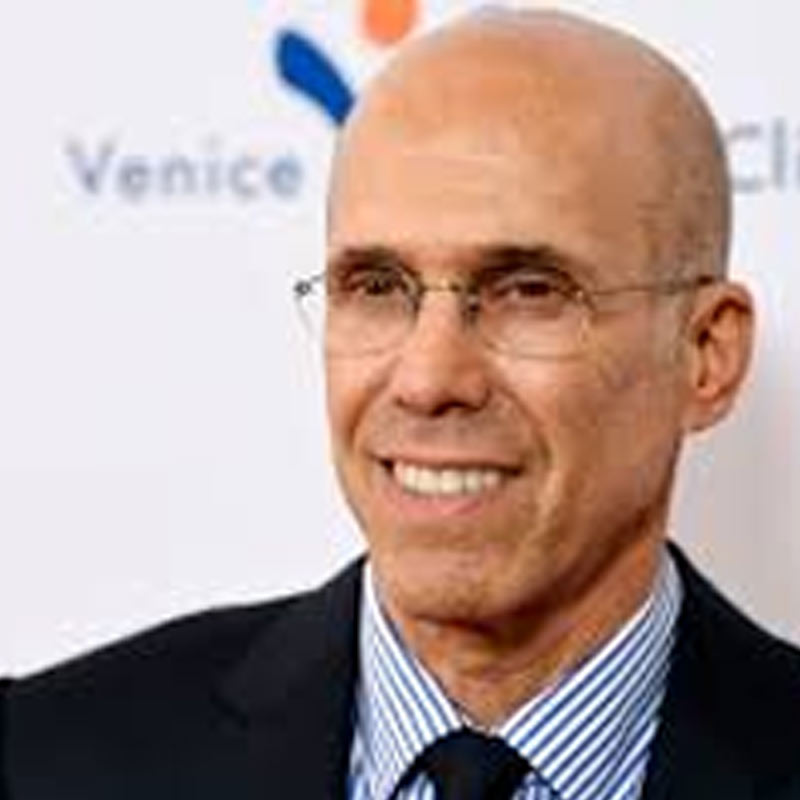
    CANNES: It’s official and its coming from DreamWorks SKG cofounder Jeffrey Katzenberg’s mouth. “We are coming to India in a big way,” he told indiantelevision.com at the Cannes Film Festival where he was promoing Over the Hedge. “In what shape or form we don’t know as yet, but we will.”

    Katzeberg said he had been to India three times in the past nine months. “India is a very exciting place and has potential for great animation…no other place has greater potential than India for great creative work,” he explained. “You have an excellent pool of creative talent. ”

    He however added that Dreanworks foray into India would not be in the form of outsourcing. “:It will be definitely more than that.”

    Katzenberg pointed out that what animation is witnessing is its second renaissance. “The first wave was in the eighties and was more handdrawn,” he pointed out. “Today, animation s driven by digital, by computers. It is a great time for animation. Some of the finest movie producers are taking it up. We at Dreamworks Animation are committed to producing at least two animation movies a year.”

  • Uefa wins case against streaming sites

    Uefa wins case against streaming sites

    MUMBAI: Football association Uefa has announced a victory in the High Court in the UK over the illegal streaming of Uefa Champions League matches via the internet.

    Uefa had issued proceedings in March this year in the High Court in England against the owners and operators of a series of websites unlawfully streaming and making available to subscribers television coverage of Uefa Champions League matches.

    The claim alleged infringement of copyright in the broadcasts and all the separate ancillary copyright works included in those broadcasts, namely the UCL music, the UCL on-screen graphics, the sponsored video sequences and the UCL Starball.

    The judge granted summary judgment, issued a permanent injunction restraining the broadcasting of UCL matches over the Internet, ordered the confiscation of all equipment used in the pirating process as well as ordering that the defendants pay the substantial costs of the claim with the precise level of damages to be assessed.

    Uefa CEO Lars-Christer Olsson said, “This is a landmark decision in favour of Uefa and of rights holders everywhere. We see this as a major victory against the unauthourised and illegal streaming of UEFA Champions League matches over the Internet, and therefore a full endorsement for the protection of the rights of the official broadcasters who have purchased the right to show these matches.”

  • Cell users worldwide prefer GSM: study

    Cell users worldwide prefer GSM: study

    MUMBAI: The subscriber results from Informa Telecoms and Media’s World Cellular Information Service for 1Q 2006, 3G Americas reports that cell phone users across the globe choose GSM 10 to one over any other wireless mobile technology.

    According to the study, the customer base for the GSM family of technologies which include, GSM, GPRS, EDGE and UMTS/HSDPA — grew by nearly 120 million additional subscribers in 1Q 2006 alone, compared to the total net growth of CDMA of about 12 million customers.

    Today, the 1.85 billion users of the GSM family of technologies make up more than 81 per cent of the wireless mobile market worldwide, with total subscribers of CDMA at less than 300 million and a 13 per cent market share. There were 57 million customers using UMTS services at the close of 1Q 2006.

    The results also indicate that from Q1 ’05 to Q1 ’06, the GSM family of technologies showed continued growth throughout the Western Hemisphere, adding nearly 95 million new customers — 3.5 times as many as CDMA – and approaching a quarter of a billion customers in this region alone.

    CDMA’s customer base in the region grew to a total of 169 million in the same time period with 27 million new customers and market share declining to 34.6 per cent, along with CDMA to 11.6 per cent. By contrast, the growing market share for GSM reached 47.8 per cent. Latin America and the Caribbean once again nearly doubled their GSM customer base in these 12 months, growing from 77 million customers in March 2005 to 150 million by March 2006.

    In this region, more than 19 million GSM users were added, versus 2 million for CDMA. GSM now has nearly 150 million customers in Latin America and the Caribbean and over a 58 per cent share of market, indicating that it is the no.1 technology for wireless mobile services.

    In the US and Canada, GSM operators reported exceptional growth, with 4.8 million new customers added in the 1Q 2006 for a customer base of 84 million.

    3G Americas president Chris Pearson said, “The majority of wireless customers are selecting GSM service for the value and variety of products and services that are supported by a global eco-system of manufacturers, encouraged by open technology standards versus proprietary standards.”

    “In addition, carriers throughout the Americas and worldwide continue to choose EDGE and UMTS/HSDPA as leading next generation technologies for wireless data services for many compelling reasons, such as spectral efficiency, global roaming, economies of scale, handset availability, as well as the potential for increased revenues from 3G services,” he added.

    According to a release, the growth of GSM is evident in the number of carriers upgrading or changing their technology platforms in the industry for a variety of strategic business reasons. These include veteran CDMA operators such as Telstra in Australia, and KT Freetel and SK Telecom in Korea who are deploying UMTS/HSPDA. Chinook Wireless (Montana) made a similar announcement to deploy GSM/EDGE to ‘enable their subscribers to benefit from higher performing network service with increased coverage, higher voice quality and advanced digital data services like multimedia messaging and Internet browsing.’ To date, at least 11 operators have announced CDMA to GSM migrations or dual technology deployments.

    Globally, the GSM family of technologies continues its rapid evolution to 3G high-speed wireless data. EDGE is commercially offered by 133 operators across 80 countries, including 31 countries in Latin America and the Caribbean. There are 81 additional EDGE networks planned or in deployment. Currently, there are 105 UMTS networks in service across 50 countries, with 59 more planned or in deployment. HSDPA, which is an enhanced version of UMTS for high speed mobile broadband, was launched first in the world by Cingular Wireless in 16 markets in December 2005.

    Now, five months later, HSDPA is commercial on 22 networks and 73 additional operators have networks planned, in deployment, or in trial. Rogers Wireless of Canada will deploy HSDPA before year end 2006; T-Mobile USA has announced plans to do the same when spectrum resources are acquired. It is expected that nearly all UMTS operators will deploy HSDPA, essentially a software upgrade to UMTS, resulting in a significant increase in data capacity and offering operators a much-reduced network cost for data services.

    Additionally, through its level of scale, GSM serves emerging markets, providing a sub $30 GSM cost handset to the market and reducing typical capital expenditure for deploying a GSM network to a quarter of that required for CDMA, according to the GSM Association.

    This data is based on figures from Informa Telecoms & Media, which provides business intelligence and strategic services to the global telecoms and media markets.