Category: Television

  • Disney Asia Pacific holds its first new media showcase

    Disney Asia Pacific holds its first new media showcase

    MUMBAI: Disney’s distribution arm Buena Vista International Television (BVITV) along with Walt Disney Internet Group, Disney Channel, ESPN, ESPN Star Sports, and its US television network ABC hosted its first New Media Showcase in the Asia Pacific region in Singapore.

    Broadcasters, mobile operators, content aggregators, ISPs, and triple-play providers from around the region attended the event at which executives from across the Company showcased how Disney is combining cutting-edge technology with great content to create unique entertainment experiences for audiences allowing them to enjoy content whenever and wherever they want it. 

    Buena Vista International Television (Asia Pacific) senior VP and MD Steve Macallister said, “This is an extremely exciting time to be in the media industry and it’s a particularly exciting time for The Walt Disney Company. We’re buoyed by the rapid developments and change facing the industry and are pleased to be the first US studio to undertake an event of this scale in the region.

    “Disney’s ‘road map to the future’ lay in combining the riches of our entertainment properties with new forms of distribution. Asian consumers have a voracious appetite for both technology and content, and across our businesses we are embracing this sea of change. There really is no other entertainment company better equipped to navigate the changes in our industry than The Walt Disney Company.

    “The New Media Showcase has been a marvellous opportunity for our current and potential clients to view for the first time in one place, the new media content offerings from our many businesses.”
     
    BVITV-AP showcased Desperate Housewives and Lost available for new media platforms such as for mobile, internet and video-on-demand. BVITV-AP says that it was the first studio to launch wireless content in South Korea in October 2005. In this mobile content deal with TU Media, the first-ever with a US studio, over 250 hours of programming including Desperate Housewives and Alias went to air via its linear channel “Blue”.

    In the US Disney-ABC signed a deal with Apple to offer Disney and ABC content on iTunes and ad-supported, full-length episodes of four ABC primetime series on abc.com. Disney is looking after sports fans too. The World Cup soccer tournament currently gripping sports fans everywhere has underscored the international opportunity available in the wireless space.

    ESPN Star Sports’ latest mobile service offering in Asia, includes video, data and WAP services in addition to java games, wallpapers and ringtones. Keeping fans up to date with the action on the pitch is ESPN Here We Go.

    This has the latest match insights, previews, predictions and analysis from the World Cup, and SportsCenter Mobile News, providing the latest in coverage of the top sports stories. Using SMS and Wap services, ESPN Football Live is keeping audiences abreast of the latest breaking news, injury reports, fixtures listings, and half-time and full-time scores.

    ESPN Insider sends fans first hand match development and predictions with expert commentary. ESS recently launched Mobile ESPN. This mobile service brings the best of video, SMS, WAP, games and downloads for sports fans. 

    Younger audiences also have new platforms on which to enjoy and interact with content. Disney Channel’s programming, digital media and marketing teams are working seamlessly to create an engaging experience empowering viewers to connect with the brand across multiple platforms, ultimately reinforcing and supporting the linear Disney Channel.

    Disney Channel’s strategy for creating compelling content for new media channels focuses on providing constant and personalised entertainment at the viewers’ convenience. In June, Disney’s shows That’s So Raven and The Suite Life of Zack & Cody will be available in six different languages, on the re-launched broadband site, DisneyChannel.com. The local language tracks include English, Mandarin Chinese and Hindi. 

    The musical movie High School Musical is doing well among kids, tweens and families in the US. It recently premiered on Disney Channel Australia and New Zealand, followed by international roll-out across over 100 countries this year, and had 1.2 million unique visitors to DisneyChannel.com – the most ever for the site. Distributed by Walt Disney Records, the music album was number one on iTunes Music Store for three weeks and 1.3 million single tracks have been purchased digitally.

  • BBC Arabic launches an online marketing campaign

    MUMBAI: BBC World Service has announced that following the success of BBC Arabic’s interactive road show Your future… who decides it? in North Africa and the Middle East earlier this year, it has launched an online marketing campaign promoting its latest way of connecting with audiences – a BBC Arabic e-newsletter.

    Entitled Be the first to know, the ad campaign aims to reach 19 million online users with advertisements appearing on a number of key pan-Arab websites including MSN Arabia – Hotmail and Messenger, Yahoo, and Ebay.

    Be the first to know promotes the new monthly, free BBC Arabic language e- newsletter. Subscribers get an insider’s view of the most popular and trusted non-Arab news broadcaster in the Middle East and North Africa.

    They receive a monthly update on the programmes and special features coming up, have an opportunity to share their views and opinions with online debates and polls and get behind-the-scenes insights of BBC Arabic with profiles on their favourite presenters and backgrounds on the top stories.

    There are also opportunities to link with debates on bbcarabic.com and to enter a variety of competitions with a range of exciting prizes.

    BBC World Service marketing, communications and audiences Controller Alan Booth says that the BBC Arabic e-newsletter is a way of connecting with young people in the Middle East. “We met over quarter of a million people through Your future… who decides it? Over 33,000 gave us their names for further contacts,” he says.

    “They are passionate about the news and events that affect their lives – and the lives of friends and family at home and around the world. The BBC Arabic e-newsletter ensures they can follow news events through BBC Arabic coverage on radio and online and prompts opportunities to express their views.

    “We also know young people are already using the Internet, which is why we are using online advertising for Be the first to know.”

    BBC World Service used Amman-based design agency Mint to produce creative work for the campaign. The London-based specialist online agency Agency Republic planned and bought the advertising space. Database management and email marketing services will be managed by Broadsystem based in London. Subscriptions will be driven via a dedicated page on bbcarabic.com.

  • DAB Radio: A toy for the iPod GenX

    DAB Radio: A toy for the iPod GenX

    SINGAPORE: Radio as we know it, is soon going to be a thing of the past. With new and emerging technologies, radio is all set to get a face lift.

    Radio in Asia, is the most accessible of the media and what’s more… it’s free. There are a few key factors behind the success of analogue radio. It’s simple and user friendly, has a wide variety of content, it’s portable and mobile and has a broad audience appeal. But the big question is – Will analogue radio survive in a digital world? 

    The answer to that is anyone’s guess. The next generation of radio – Digital Audio Broadcasting (DAB) – is now vying for consumer attention.

    While DAB radio defines the next generation of radio receivers, it must cross the cultural divide first and gain consumer acceptance. The hurdle it faces are that users don’t want to move into new and unfamiliar technology and hence DAB Radio must offer much more than FM / AM. Also, incremental cost must be justified by content and new features and it has to change the way traditional radio is consumed. Perhaps, the most crucial thing is that DAB radio must offer more than just radio.

    Highlighting the key strengths of DAB, Frontier Silicon UK VP sales and marketing Steve Evans said, “DAB has better quality audio, is easy to tune in, has more channels, provides data services, has future proof technology and value added features. However, it is not just about high quality radio. Compared to conventional analogue radios, DAB has to be much more. Moreover, broadcasters can capitalise on the potential of DAB technology to transmit more attractive data services.” 

    “On the other hand,” Evans said, “Receiver manufacturers can develop receivers that enable the consumption of the services. However, there has to be cooperation between broadcasters and receiver manufacturers.”

    What’s more, DAB also enables EPG (Electronic Programme Guide) and allows the iPod generation to get their music, where they want it and when they want it. “EPG allows listeners to see what’s on now and for the next seven days, search programmes by genre, by time, and allows them to set advanced timer recordings. It also enables recording of programmes in real time or at a later date in the same way as a personal video recorder (PVR) apart from enhancing the user’s radio listening experience,” Evans said. 

    Another important feature of DAB is that it gives the consumer the ability to pause, rewind, fast-forward, and record live radio to variety of storage mediums. “This is a growing feature that is becoming synonymous with DAB digital radios. It works both on audio data and DLS text messages, however, small incremental price due to additional RAM memory required for rewind buffers,” said Evans. 

    DAB’s Dynamic Label Segment also allows broadcasters to send text information and control characters along with the audio service. The text can be used to provide more information about the station and also to increase advertising revenue for the broadcasters. Apart from this, a Slide Show feature in DAB allows broadcasters to send a sequence of images (JPG/BMP) associated with tracks being played. “Visual along with audio would greatly help radio advertisers to increase advertising revenue and is already being trialled by numerous broadcasters,” Evans said. 

    Additionally, content can also be repurposed for different delivery platforms. Evans said, “DAB is an ideal transport channel for web site content to be delivered to users using the DAB BWS user application. Broadcast Website (BWS) allows DAB multiplex operators to use the internet as source content and deliver an entire web site to a DAB receiver using only the broadcast channel of DAB. Content on the web site can be used to promote the broadcaster and provide interactivity to the consumer.” 

    Another aspects of DAB is that it enables mobile digital TV by using T-DMB (Digital Multimedia Broadcast). “DAB can act as a transport mechanism to deliver video to receivers and has the capability to deliver video up to 1.5Mbps. It also enables the long awaited mobile TV deployment using broadcast technology, rather than cellular based point-to-point service, which has traffic handling limitations,” Evans said.

    T-DMB services have already commercially launched in Korea, China and very recently in Germany.

    However, these data services are useless unless suitable receivers are introduced into the market. DAB receivers should:

    • Present the data in a ‘usable’ and ‘attractive’ manner
    • Low power consumption to ensure long battery life
    • Low cost to promote mass market uptake
    • Easy integration to enable more manufacturers
    • Sufficient processing power to cope of datacast decoding 
    • Programmable to cope with changing standards

    The key features of Next Generation radios include:

    • Large display to show more contents
    • Built-in memory for data caching applications (pause/rewind)
    • Support for external memory plugin to read audio files (USB host/slave)
    • Support for Firmware Upgrade (USB) to cope with changing standards 
    • Applications including DAB, FM, Audio decoders, Picture/Video decoders, PVR like capability

  • ‘Inside the Actor’s Studio’ will complete 200 episodes in the US

    ‘Inside the Actor’s Studio’ will complete 200 episodes in the US

    MUMBAI: US broadcaster Bravo has announced that its show Inside the Actors Studio completes 200 episodes on 25 June. The guest is Oscar winner Dustin Hoffman

    James Lipton sits down for a candid tell-all of Hoffman’s life and career as one of the most prominent actors of his time. In India, the show airs on Pix.

    For the uninitiated, the interview based show is hosted by James Lipton. He has interviewed some of the world’s most accomplished actors and directors for interviews. What is unqiue about the show is that it is taped in front of students at The Actors Studio Drama School. In addition to his duties as host, Lipton is also the dean of the school.

    Dwelling on his bad audition for his breakthrough role in The Graduate Hoffmann recalls, “I went to shake the prop guy’s hand, and all my subway tokens fell out of my pocket. And he picked them up and handed them back to me, saying, ‘Here kid, you’re gonna need these.”

    As far as what motivates him to act, Hopffmann says, “A friend told me to take acting, and I asked him ‘Why? I don’t want to act.’ And he said ‘Because no one failed acting.’”

  • US President Bush laments broadcasters pushing decency bounds

    US President Bush laments broadcasters pushing decency bounds

    MUMBAI: US President Bush has signed the Broadcast Decency Enforcement Act of 2005. The bill that has become a law will raise the fines for indecency against American TV stations. The fine is raised ten times from $32,500 to $325,000.

    Bush noted that unfortunately, in recent years, broadcast programming has too often pushed the bounds of decency.

    Said Bush, “One study found that during the hours between 8 pm and 9 pm, that’s the time when most families are watching television, the use of profanity on television shows increased vulgar language by 95 per cent, from 1988 to 2002.

    “In other words, the language is becoming coarser during the times when it’s more likely children will be watching television. It’s a bad trend. Since 2000, the number of indecency complaints received by the FCC (America’s media regulatory body) has increased from just hundreds per year to hundreds of thousands. In other words, people are saying, we are tired of it, and we expect the government to do something about it.”And so we believe we have a vital role to play. We must ensure that decency standards for broadcasters are effectively enforced. That’s the duty of the FCC.”

    Bush stressed that it is the duty of the FCC to impose penalties on broadcasters and stations that air obscene or indecent programming. “It’s one of their responsibilities. People expect us to adhere to our responsibilities. And since I’m the head of the executive branch, I take responsibility, as well, forputting people in place at the FCC who understand one of their jobs, and an important job, is to protect American families.

    “The problem we have is that the maximum penalty that the FCC can impose under current law is just $32,500 per violation. And for some broadcasters, this amount is meaningless. It’s relatively painless for them when they violate decency standards. And so the Congress decided to join the administration and do something about it. The bill I’m about to sign, the Broadcast Decency Enforcement Act, increases tenfold the penalty that the FCC can impose, to $325,000.

    “The legislation does not change the broadcast decency standards that are already on the books. What the legislation does is it gives the FCC the means to enforce them more effectively. By allowing the FCC to levy stiffer and more meaningful fines on broadcasters who violate decency standards, this law will ensure that broadcasters take seriously their duty to keep the public airwaves free of obscene, profane and indecent material.”American families expect and deserve nothing less.And so I’m going to ask the members of Congress who have worked hard on this piece of legislation to join me.”

    Bush noted that every day, American parents strive to raise their children in a culture that too often produces coarse, vulgar and obscene entertainment. “In our free society, parents have the final responsibility over the television shows that their children watch, or the websites they visit, or the music they listen to. That’s a responsibility of moms and dads all across the country, to make sure their children are listening to or watching the right kind of programming.

    “The best way to do that is for parents to be vigilant, pay attention to what their children are doing. One thing they can do if they’re worried about people watching a bad program is turn off the TV.

    “Parents are the first line of defense, but broadcasters and the electronics industry must play a valuable role in protecting our children from obscene and indecent programming. They provide the tools that empower parents to make good decisions,which is voluntary rating systems and the V-chip.

    “And we applaud those. Broadcasters also have a duty to respect common decency, to take into account the public interest and to keep the public airwaves free of indecent material, especially during the hours when children are most likely to be watching and listening,” said Bush.

  • Mauj Telecom is the mobile partner for Wimbledon in India

    Mauj Telecom is the mobile partner for Wimbledon in India

    MUMBAI: Indian mobile value added services provider Mauj Telecom has just served an ace. In partnership with the All England Lawn Tennis and Croquet Club, Mauj Telecom has launched an exclusive Wimbledon Mobile portal. This partnership has been facilitated by IMG Media. The multi-modal portal is available on sms, voice and WAP/GPRS.

    Tennis buffs can catch match schedules, score updates and Wimbledon news by sending ‘Wimbledon’ as a sms to 7007. The Mauj Talk Voice portal can be accessed by calling 5057007 on the mobile phone. Radio Wimbledon is another innovation that will be available live on this. Wallpapers, videos, video ringtones, themes, colour logos and other mobile content will be available on www.mauj.com on the net and on wap.mauj.com on GPRS / edge phones.

    The content also includes 2005 Championship Round-Up and 2006 Championship Preview. Throughout the Wimbledon fortnight, wallpapers and videos of daily preview, individual match highlights, player interviews and daily round-up will be updated approximately within two hours of the matches.

    A separate zone is being built featuring 101 Golden Moments of Wimbledon History. This features videos and images of some of the most memorable moments at Wimbledon, including the historic tennis battles between Martina Navratilova and Steffi Graf, John McEnroe and Bjorn Borg, Andre Agassi and Goran Ivanisevic, Pete Sampras and Goran Ivanisevic.

    Sampras’ epic seven victories and the fierce battles of the Williams sisters will also be there.

    IMG Media sdenior intl VP Andrew Wildblood said, “IMG Media is excited to partner with Mauj to bring Wimbledon mobile content to India. IMG is always trying to extend the reach of its premier sports properties like Wimbledon beyond the traditional broadcast viewing. Mauj is the best of class mobile partner and distributor in India and will help us extend the reach of Wimbledon among the fastest growing mobile markets in the world”

    Mauj Telecom CEO Arun Gupta said, “Mobile phones are becoming the centre of the entertainment universe. In the past, too, we have been bringing quality mobile content to cell phone customers, be it entertainment, sports or Bollywood. Mauj Telecom is extremely glad to partner with Wimbledon and IMG Media to launch the content exclusively in India on 7007, 5057007 Mauj Talk and wap.mauj.com portals. With this, we bring the best tennis action to the 90 million mobile consumers in India.”

    Mauj Telecom is part of the People Group, which also owns internet brands such as Shaadi.com, Astrolife.com and Fropper.com. Mauj’s wap portal wap.mauj.com offers mobile gaming, mobile music, mobile video and GPRS/EDGE/WAP space facilities. Its shortcode is 7007.
          

  • MSN ties up with LivePlanet for next gen online content

    MSN ties up with LivePlanet for next gen online content

    MUMBAI: Online content service provider MSN has announced an alliance with LivePlanet, a Los Angeles-based production company with the aim to bring a new generation of storytelling online.

    The first show that will be launched under this recently announced MSN Originals initiative is LivePlanet’s production Fan Club: Reality Baseball..

    The upcoming show aims to move unscripted programming into the big leagues of new media with always-accessible content and interactivity that puts the MSN audience at the center of a unique entertainment experience.Fan Club MSN says gives fans control of the Schaumburg Flyers, a real professional minor league baseball team based in a suburb of Chicago. Each day, new online content will tell the stories of the Flyers’ players, giving the fans intimate knowledge of “their” ballclub, as well as the team’s coaches, wives, girlfriends and personalities, revealing their dreams, demons, triumphs and difficulties, on and off the playing field.

    MSN users will manage the team on a daily basis, voting to determine such key decisions as the batting lineup, fielding positions and pitching roster. Fantasy baseball meets reality TV in “Fan Club: Reality Baseball,” where the fans run the team and control the action.

    MSN director of business development Joe Michaels says, “We are going to hit one out of the park with Fan Club: Reality Baseball. We were a bit stunned at first that a professional baseball team would allow our audience to manage it, but we quickly realized that ‘Fan Club’ is a fabulous programming concept which is perfect for the Web.

    “We are thrilled to be working with LivePlanet because they are great storytellers who can deliver the drama and excitement behind the scenes of this professional sports team. Fan Club is a great example of what we’re doing with MSN Originals: providing our audience with new and engaging entertainment experiences and opening up significant opportunities for advertisers.”

    LivePlanet CEO Larry Tanz says, “This is Bull Durham meets fantasy sports, and it’s all real. We expect ‘Fan Club’ to appeal to anyone who has ever yelled at their TV because they thought they could do a better job running the team — now the fans will have their chance.

    “Fan Club will appeal to sports fans and non-sports fans alike with the type of behind-the-scenes, unscripted drama seen in shows like Project Greenlight. Because MSN reaches hundreds of millions of users, the show will have access to a vastly larger audience than television. And the interactive features of MSN are the key to allowing fans to control their ballclub, something television can’t currently accomplish.”

    The Northern League in which the Schaumburg Flyers play divides its season in half, with the winners of each half meeting in the playoffs.

    Fan Club: Reality Baseball is slated to go live in mid-July in time for MSN users to manage the team day to day for the full second half of the 2006 season, determining whether or not the Flyers will make the playoffs.

  • ESS derives distribution benefits from World Cup

    ESS derives distribution benefits from World Cup

    MUMBAI: The ongoing FIFA soccer World Cup in Germany has helped ESPN Star Sports (ESS) get back on board over 600 cable operators who had severed ties with the sports channels even as football viewership increased.

    Confirming the development, ESPN Software India distribution head Sricharan Iyengar told Indiantelevision.com, “The World Cup has done wonders for network development (read getting ESPN and Star Sports on cable networks and on prime band).”

    Many cable networks, which had de-activated ESS signals owing to varying reasons, replacing the sports channels with other in-demand ones, decided to again do a samba with ESS as the football magic unfolds in Germany and public pressure built up for football.

    “I would say, between 600-700 networks across India have either re-activated ESS signals or have signed up with us afresh,” Iyengar said, adding the response has been more than enthusiastic and anticipated.

    For example, ICC cable network in Pune, which had been involved in a running battle with ESS over non-payments of dues, kissed and made up soon after the World Cup got underway.

    Industry observers also felt that the patch-up happened as ICC feared in the absence of ESPN and football, there could be subscriber desertion to Dish TV’s DTH service, which had stepped up its sales pitch in places like Pune, Chennai and Hyderabad.


  • Mobile Televison: The next big thing

    Mobile Televison: The next big thing

    SINGAPORE: While the rain Gods are showering upon the city of Singapore, there is an onslaught of discussions on the new technologies for broadcasting at the Broadcast Asia Summit 2006 being held in Expo City.

    With a full house on a Monday morning, professionals from various media companies from Asia and elsewhere are lapping up all that there is to.

    What with the revenue expectations for mobile TV globally pegged at $ 682 million within the next five years, broadcasters in the space are raring to go! Its popularity in the markets where it has been rolled out, will definitely help broadcasters meet that mark if not more.

    The two morning sessions saw discussions and presentations on Asian digital cinema and also an update on delivering mobile television to handheld devices. The latter provided an international review and update on mobile television and an overview of the technology and services being offered across various countries like Italy, Japan, Korea, the UK and the US.

    Consumers have reacted favourably to mobile television in the markets where the services have been launched. Close to 76 per cent consumers in the UK are willing to pay for mobile TV. On the other hand, consumers in Finland and France are willing to shell out € 10 and € 7 respectively per month for mobile TV. 

    In turn, what consumers want is good picture and sound quality, value for money, right selection of channels, service availability, simplicity of use and a multimedia device. 

    The speakers for the session comprised Broadcast Australia broadcast services director Clive Morton, Kobeta Korea manager of planning team Hyun Ho, Qualcomm MediaFLO director of international business development Jeffrey Brown, TBS Japan development manager Hidefumi Yasuda, Nokia director of strategy Juha Lipiainen, TeamCast France executive director Gerard Faria and Enenys France president and CEO Regis Le Roux. 

    While the service is gaining popularity, there seems to be ambiguity in terms of the regulations required for the same. Should the broadcaster be the ultimate content regulator for mobile TV or should it be the telecommunications company? That is one area where not much progress has been made. Brown said, “The spectrum regulation for mobile television services is fragmented per country per industry. It isn’t clear still whether the broadcasting authority or the telecommunications authority is responsible for regulating content. But the transition is slowly happening as the industry is understanding the value of mobile television.” 

    Interestingly, while the number one telecommunications company in Korea S K Telecom accepted and adopted this new technology easily, there was resistance from KTF and LG Telecom, who were reluctant to offer mobile television technology – T-DMB – on their mobile devices.

    The reason behind this was that since mobile television was being offered free, consumers would watch more television on their handhelds and in turn use less of SMS and internet services, which in turn would mean a significant revenue loss for them. However, these two companies had to eventually succumb to the popularity of mobile television and started offering the technology on their devices late last year. 

    The requirements for a mobile TV device are:

    *Watch up to four hours TV 
    *Large anti glare screen 
    *Simple to operate TV 
    *Recording capability 
    *Always up to date Electronic Service Guide 
    *Camera and camcorder to record own content
    *Consumers use mobile television mostly to pass time, for example, while waiting for something. They also use it to stay updated with news, to relax or entertain oneself, as a background entertainment while doing other things, to create their own space ( e.g. in public transportation) or as a second TV while the household’s TV is used by others.

    The top three usage situations among active users of mobile TV are:

    *When traveling using transportation 
    *When at home 
    *When at work 

    According to Brown, the potential mobile TV users globally in 2008 – 2010 will be in the range of 100 – 200 million. As per a research done by Nokia in major cities in 32 countries, it was found that by end 2005, there were two billion mobile phone subscribers globally and is expected to reach three billion by end 2009. While there were 735 million mobile phones sold in 2005, the projections for 2009 are 944 million. 

    So does mobile TV have future potential? Yes, but assuming that the pricing and content are in line with consumers’ expectations and needs.

  • ‘Key to successful radio programming is to know what territory you can own & defend against predators’ : Steve Martin – BBC World Service on-air editor

    ‘Key to successful radio programming is to know what territory you can own & defend against predators’ : Steve Martin – BBC World Service on-air editor

    BBC World Service on-air editor Steve Martin has been responsible for the present on-air image that BBC’s English Radio Network holds, be it the sound identity of the network or its on-air promotions. Radio, to Martin, is something that establishes a certain personal connection through what it offers.

    According to Martin, content should be strong enough to trigger emotional reactions among consumers. He emphasizes that the players should better know their audience, the better knowledge they have, more acceptable forms of presentation will be created.

    Martin has his own theory on the sales & promotion aspect, which goes beyond the commercial break. He says the content should be creating and raising awareness of the product or the service.

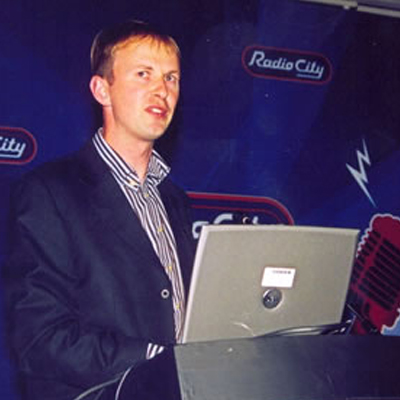
    On his way to London, BBC World Service on-air editor Martin spent two days in Mumbai, attending a seminar organized by FM channel Radio City.

    Indiantelevision.com’s Manisha Bhattacharjee caught up with Martin during his brief stay in the city, to get a perspective on the evolving business.

    Excerpts:

    Could you provide a brief of overview of the current radio status in UK?
    Today, it is an extremely mature and diverse radio market. BBC now operates 10 national networks some of which are only available on the digital platform, the rest of them on FM and AM in the traditional way. And we also operate a network of 38 local radio stations which is centered in all different cities and towns in England. We run two radio stations in Wales, two in Scotland, and two in Northern Ireland. So in any one place in Great Britain you are guaranteed to get at least five to six BBC radio stations. Plus you will get a similar number of commercial services in some places and in some places there are more. It’s a very developed market now.

    Now that is really diverse. Was there any kind of regulatory push, which also enhanced the market?
    In Britain, it is permissible for a radio group to own several radio stations in one market. This isn’t the case in India.

    When this happens you don’t find much similarities between two radio stations, because if you are going to own two radio stations in the same market, the last thing you want to be doing is exactly the same thing and cannibalizing the same audience. So you ensure that the two radio stations are broadly complementary. That makes good business sense and you ensure that on each radio station in a particular territory, which is not only hugely successful but it is also defensible against any other outside broadcaster. The key to successful radio programming is to know what territory you can own and defend against predators.

    That works for the public service as well. In BBC we are publicly funded and do not have a commercial imperative. We are all there to maximize revenues. However, because we are publicly funded, we have a duty to serve absolutely everybody of the UK population. So we have an obligation to ensure that our services are broadly complementary.

    For example: We run a national new music service, which specializes in breaking new music. It is a patronage in the arts in terms of supporting new talents in new music and it plays hits also of the popular culture.

    Please comment on BBC service radio networks’ programming strategy. How different is it from that of commercial radio stations?
    BBC service radio networks are distinctive from the commercial radio stations. It would be wrong to say that we solely do things that the market can’t support. Because we have an obligation to provide something to everybody, the services have to be popular. But these are absolutely distinctive.

    We would take creative risks with our programming such as of BBC Radio 2 – we will do a speech based consumer phone-in and discussion stations are doing that. On Radio 1 we will break great new music and we will take risks with that. We invest in social action programming, investigating issues that young people are facing in Britain today. And on BBC Radio 3 we support orchestras. So our patronage of the hour is not just something having on the plaque on the wall, it is actually real money going into supporting musicians creating music and support the cultural life of Britain today. So that some of the stuff that we do in music, commercial service radio stations don’t indulge in.

    In speech radio, we are the single biggest broadcast news gathering operation anywhere in the world. And in UK specifically, we run an intelligent speech radio station which is not just news and current affairs but includes drama, documentary and cultural programmes.

    Please comment on the competition between BBC and the commercial radio stations. How does it affect the market?
    Commercial radio is first and foremost a business and these radio stations will try to know the most profitable territories in programming terms. I think it is fair to say that because of the pressure of BBC, which is innovating in programming, the commercial radio stations have raised their game and are not going in for cutting the investment in programming and creating the cheapest programming possible.

    Because of the competition from BBC, we have got a healthy creative section within the commercial radio stations in the UK. Commercial radio stations invest heavily in research and keep us on our toes.

    Also, the regulatory framework ensures through the system of licensing that the stations are held to a particular format and have to comply with the terms of format licensing issues by the regulator. This ensures that there is a spread of different formats in any one market. But the commercial stations would want that in any case because they wouldn’t want two stations duplicating the same output.

    In the present scenario, how different is the US radio market from that of the UK radio market?
    They have a public radio network but that is quite different from what BBC is doing and it appeals to a particular niche audience. In recent years, the arrival of satellite radio through XM Satellite and Sirius Satellite Radio, which has made a huge number of formats available from coast to coast, which is great if you are driving. It allows one to listen to the same station through the journey.

    Last year, 25 % of UK radio revenues came from S&P activity

    The evolution of the radio industry, in particular it’s rapidly growing digital uptake, does that signify a threat posed by digital radio to terrestrial radio?
    More radio is good for the industry; it is good for the consumers, because, it gives more choice. You are more likely to hear what you want when you want it. That’s a positive force. BBC has been a pioneer in digital radio in UK, we have strongly welcomed it. It has enabled us to provide new services and are able to reach sections of the community which were otherwise being undeserved.

    It does mean that more communication radio stations will compete against us but that said that adds to the totality of choice available to UK radio listeners and that’s got to be healthy.

    I think where the challenge comes for the commercial stations is to manage the investment. You’ve got to invest in the new technology of rolling out the transmitter networks providing new radio services before getting enough listeners to turn a profit from those. So there is the issue of funding. That’s where the challenges lie from the business point of view.

    BBC has been leading the roll-out of digital radio infrastructure. So we have been an enabler for the commercial. Because every time you buy a digital radio set, not only do you have new BBC radio station but you have access to the new commercial stations as well.

    Radio is probably looking at greater fragmentation of its audience (like any other media). Is this an encouraging sign for the marketers or advertisers?
    If I was an advertiser and I knew there was a radio stations that supports on a functional and emotional level, with a clear voice to my target listeners. I know I will be able to buy just that station and eliminate waste on my ad spend. It is going to be good for advertisers as there is more choice on where to put spends.

    It may mean that in order to reach the audience you need more than one radio station but you can be selective in the stations you buy and eliminate waste.

    If you have only one station in the market, or all the stations sound the same, then you are guaranteeing to be wasting some of your advertisers’ spend. Because you will be talking to people who are not within your target audience or your advertising campaign. So, the more the fragmentation the easier it is to target the specific audience segment you are interested in.

    More relevant, from an advertisers’ point of view, is maximizing reach – the number of different people who listen in a week. But consumers generally hate advertisements as it is an interruption?
    Well, listeners don’t hate radio advertising. They primarily hate bad radio advertising. Secondly, the scene is changing, first there were advertising spots, and then came sponsorship. But now there’s S&P (sales and promotion) and its growing fast. Last year, 25 per cent of UK radio revenues came from S&P activity. It takes the client beyond the commercial break by creating and raising awareness of the product or the service.

    It can exploit the closeness and personal nature of radio for brands. It can also give brand endorsement from popular and trusted RJs and can create great radio entertainment for listeners. It can bring in new listeners for the radio station.

    Today, the Indian radio market is perceived as an industry which is booming. What’s your perception?
    At the moment of course, we have a situation where a lot of radio stations are broadcasting music, of course with a very similar play list. It is yet to be seen, if anybody has the guts or intelligent research in order to tone down or target their music specifically. That’s an inevitability. Whoever does that will be hugely successful in the market.

    Knowing that the radio FM market is at its nascent stage; doesn’t that give even more opportunities for the players to take risks as they are still craving a place for themselves?
    You have to be extremely brave indeed to say good-bye to a certain section of one audience. The industry is booming at the moment people are running successful businesses with this model. I believe the only question is as the radio market matures, how long the situation can continue before the audience will expect a degree of choice? But I think at the same time it would be wrong to suggest that there isn’t some choice there already.

    Though music is largely played, the individual stations have invested in individual personalities who will become listeners’ friends over time and they will be characterizing differently, between station A and station B. So it just doesn’t have to be just about music. It could be emotional qualities, personalities, attitude of the presenters or RJ’s on the air. There are a number of ways you can introduce to a radio station format something that is particular to your radio stations that is owned by you and over time you become famous for and that is about segmentation and building brands.

    Are players reluctant to experiment primarily due to lack of news and current affairs?
    In any market you have to accept the regulatory framework which is in place. And in India, that’s the regulation.

    In markets where it is allowed to broadcast different types of news on radio channels, it is a popular form of radio programming. And you will also find the people will have different news needs as the day continues.

    At breakfast time for example, people tend to want information, the kind of information they need to get into the day and through the day. Then, later in the day, people may want to think a little more about the issues and not just get information but come to their own conclusion about what it means for them. So, we talk about this journey through the day from information in the morning to an understanding in the evening and people have a need for or devote a lot of time to knowing in the morning and thinking in the evening.

    In the markets where we are producing speech programming through the day we produce a range of news programmes. We run a programme called World Today which is a fast moving double headed presentation programme by two presenters. Very high story counts and have live reports from correspondents from across the globe. It is fairly light in tone. Later in the day, News Hour is a longer broadcast with one or two big stories from the day so far with a range of perspectives from the other BBC correspondents and other figures who are involved in the news story.

    We produce news programmes in such a way that they are available to listeners at a time when they better satisfy their news needs.

    What is the strategy to have a successful station format and positioning of the radio channel?
    A key thing about radio is that it is an emotional medium. Radio is company, a complement for life, and so the key thing to be successful in radio, firstly you research in an audience. Know exactly whom you are talking too. What makes them tick. What their interests are. What kind of tone of voice you need to adapt and from there devising a radio format and delivering consistently. So that your audience knows exactly where to find the things that you are offering and you are rendering the whole thing up in a consistent tone of voice which becomes part of your brand identity.

    People around the world say what they love most about their favourite radio stations are personalities, the music, and the local information that helps get them through the day.