Category: Television

  • Disney to broaden mobile distribution channel in Southern Europe via Buongiorno

    MUMBAI: The Walt Disney Internet Group (WDIG) has inked a mobile content agreement with Buongiorno, a company in the field of multimedia content for telephony and digital channels. This move supports Disney‘s strategy to make its highly creative and engaging content available to consumers in a wide variety of ways.


    Under the terms of the deal, Buongiorno will make Disney mobile content such as screensavers, wallpapers, ringtones and games available to consumers across Greece, Italy, Portugal, Spain and Turkey. Content includes Mickey Mouse and Friends (e.g. Goofy, Minnie Mouse, Daisy Duck), Disney Classics (e.g. Cinderella, Peter Pan, Snow White and the Seven Dwarfs), Finding Nemo and The Lion King.


    “This agreement with Buongiorno gives consumers another means to access Disney‘s popular mobile content in southern Europe. Buongiorno‘s expertise and local market reach will help consumers find Disney mobile content anytime and anywhere, and we are pleased to add them to our network of distributors,” said WDIG Europe vice president of mobile Sunil Gunderia.


    “We are delighted to be associated with a leading entertainment company like Disney to help bring their properties to market. Disney content will allow Buongiorno to offer several million customers in southern Europe a unique experience of entertainment on the move. We are looking forward to widening our collaboration to new markets, exploiting Buongiorno and its consumer brand Blinko‘s global network,” said Buongiorno Group head of global products Matteo Montan.


    According to Informa, an international provider of specialist information and services, the fast-growing mobile entertainment market will be worth $42.8 billion by 2010, of which $11.2 billion will be generated from mobile games.


    Disney content will become part of Buongiorno‘s portfolio of over 300,000 services and licensed contents, marketed to a potential target of more than one billion wired and wireless telephone users globally, through a multi-channel strategy that includes direct distribution through the brand Blinko as well as through partnerships with telecom companies and the most important media groups.


    All of Disney‘s mobile content will be managed by Buongiorno through B!3A, its proprietary technology platform conceived to design, build, manage and provide high quality services to leading businesses and to mobile consumers globally. B!3A provides a full-blown set of components that allow performing all the main tasks to create a complete digital content marketplace embracing content acquisition, presentation, delivery, reporting, billing and CRM.

  • Disney to broaden mobile distribution channel in Southern Europe via Buongiorno

    Disney to broaden mobile distribution channel in Southern Europe via Buongiorno

    MUMBAI: The Walt Disney Internet Group (WDIG) has inked a mobile content agreement with Buongiorno, a company in the field of multimedia content for telephony and digital channels. This move supports Disney’s strategy to make its highly creative and engaging content available to consumers in a wide variety of ways.

    Under the terms of the deal, Buongiorno will make Disney mobile content such as screensavers, wallpapers, ringtones and games available to consumers across Greece, Italy, Portugal, Spain and Turkey. Content includes Mickey Mouse and Friends (e.g. Goofy, Minnie Mouse, Daisy Duck), Disney Classics (e.g. Cinderella, Peter Pan, Snow White and the Seven Dwarfs), Finding Nemo and The Lion King.

    “This agreement with Buongiorno gives consumers another means to access Disney’s popular mobile content in southern Europe. Buongiorno’s expertise and local market reach will help consumers find Disney mobile content anytime and anywhere, and we are pleased to add them to our network of distributors,” said WDIG Europe vice president of mobile Sunil Gunderia.

    “We are delighted to be associated with a leading entertainment company like Disney to help bring their properties to market. Disney content will allow Buongiorno to offer several million customers in southern Europe a unique experience of entertainment on the move. We are looking forward to widening our collaboration to new markets, exploiting Buongiorno and its consumer brand Blinko’s global network,” said Buongiorno Group head of global products Matteo Montan.

    According to Informa, an international provider of specialist information and services, the fast-growing mobile entertainment market will be worth $42.8 billion by 2010, of which $11.2 billion will be generated from mobile games.

    Disney content will become part of Buongiorno’s portfolio of over 300,000 services and licensed contents, marketed to a potential target of more than one billion wired and wireless telephone users globally, through a multi-channel strategy that includes direct distribution through the brand Blinko as well as through partnerships with telecom companies and the most important media groups.

    All of Disney’s mobile content will be managed by Buongiorno through B!3A, its proprietary technology platform conceived to design, build, manage and provide high quality services to leading businesses and to mobile consumers globally. B!3A provides a full-blown set of components that allow performing all the main tasks to create a complete digital content marketplace embracing content acquisition, presentation, delivery, reporting, billing and CRM.

  • Disney’s ‘Pirates’ creates new box office records

    Disney’s ‘Pirates’ creates new box office records

    MUMBAI: Walt Disney’s Pirates of the Caribbean: Dead Man’s Chest opened on 7 July to a record $132 million in its first three days at the North American box-office, shattering the record previously held by Sony’s Spider-Man, which opened to $114.8 million.

    The movie has set new benchmarks as it is the biggest opening weekend in Hollywood history and also the biggest opening day on Friday with collections of $55.5 million.

    In India, the film will hit the big screens on 21 July.

    It is also bigger than the four day opening weekend record holders – X-Men: The Last Stand, (grossed $122.9 million) and Spider-Man 2, (grossed $115.8 million in four days last summer).

    Pirates of the Caribbean: Dead Man’s Chest is also the first film in history to cross the $100 million mark in just two days and is Disney’s biggest opening, surpassing The Incredibles, which had garnered $70.5 million in three days.

    The movie also led the way in the UK with a $25 million debut and grossed $9 million from South Korea and $8.2 million from Australia.

    Buena Vista (the theatrical distribution arm of Walt Disney) attributes the success of Dead Man’s Chest to the mass appeal it had with male and female audiences of all ages.

    Dead Man’s Chest reunites the cast and crew of the Curse of the Black Pearl including Johnny Depp, Orlando Bloom, Keira Knightley, director Gore Verbinski, and producer Jerry Bruckheimer.

    Pirates of the Caribbean: Curse of the Black Pearl opened in 2003 to $46.6 million over the weekend and $70.6 million over five days, leading to a huge $305.4 million mark domestically (US and Canada) and $654 million worldwide.

  • Film & Television Producers Guild opposes proposed Broadcast Bill

    Film & Television Producers Guild opposes proposed Broadcast Bill

    MUMBAI: Media bodies are now waking up to condem on the draft of Broadcast Bill prepared by the information and broadcasting (I&B). After the Indian Broadcast Federation (IBF) has opposed the cross-media holding restrictions and the so-called Draconian clauses in the bill.

    The Film & Television Producers Guild of India Ltd has expressed its concerns about recent reports in the media that the government of India is planning to present a Broadcast Bill in the monsoon session of parliament.

    In an according to an official release issued, the Guild feels that the proposals are retrograde in nature, restrictive and definitely regressive.

    The Guild fears that if this bill is passed, anybody will have the right to complain to competent authorities and they will have the right to intervene. This will hamper the smooth functioning of media components and can lead to unnecessary government control of media. 

    The Bill also talks of imposing restriction on cross-media holding which is against the spirit of free enterprise. Also, extremely important problems of Copyright Theft and Piracy which together threaten to cripple the industry have not been addressed at all in the bill.

    The Guild which represents all major stakeholders in the Filmed Content space would like to play a more active role in this and should definitely be consulted before any such Bill is finalized/passed, informs the release.

  • Distraction promotes Richardson to acquisition manager

    Distraction promotes Richardson to acquisition manager

    MUMBAI: Distraction Formats acquisitions and sales coordinator Nina Richardson has been promoted to acquisitions manager. This was announced by Distraction CEO and president Michel Rodrigue.

    Richardson joined the Distraction team in 2004 from the VTR Group, a Soho based post production house.

    In addition to continued work with Distraction’s sales team to source and sign new properties, Richardson will now be spearheading the growth of the format broker’s acquisitions department and developing structures in line with its expanding sales department.

    She will also be in charge of sourcing new formats to complement Distraction’s current catalogue, which includes scripted comedies, prime-time entertainment formats and ready-to-air footage.

    Rodrigue said, “Over the past two years, Nina has been implicated in all aspects of Distraction’s business and has acquired a thorough knowledge of the industry. Her skills and flair will definitely contribute to the continued growth and development of the company.”

  • Sahara One to launch new weekend chat show on 15 July

    Sahara One to launch new weekend chat show on 15 July

    MUMBAI: Sahara One Television will be launching a new chat show – Mrs Punjabi – on 15 July. The half hour show will be aired on Saturdays and Sundays at 7.30 pm, just before the 8 pm movie on the channel.

    In the first episode, the show, whose anchor’s name is being kept under wraps by the channel will have Shahrukh Khan, Mallika Sherawat and Mahesh Bhatt together on Indian television for the first time.

    The show feasts on hot gossips as Mrs Punjabi unveils the secrets and buried facts about her special guests, behind the scenes of latest Bollywood blockbusters, star party circuits and much more. Touted as a light hearted show that promises to unburden your woes, the show seems more on the likes of Kandy Floss on Sony, which is being hosted by Archana Pooran Singh.

    “Humor makes friends, wins enemies and this show will make viewers unwind and laugh at issues that would otherwise end up as stressful experiences,” said Sahara One Television COO Purnendu Bose.

    Mrs. Punjabi is a typical Page 3 wannabe aunty with huge assets and flashy make up and low-necklines and an even lower IQ.

  • Zee unveils state-of-the-art digital studio in UAE

    Zee unveils state-of-the-art digital studio in UAE

    MUMBAI: Zee Telefilms International has opened a state-of-the-art digital studio in Sharjah, UAE. The studio been launched with the purpose of telecasting locally-produced programmes in the region.

    UNI has quoted Zee Telefilms International regional MD Yogesh Radhakrishnan as saying that, the system would complement the network’s increasing emphasis on Arab viewership and indigenous content as exemplified by its Arab-oriented channel Zee Arabiya.

    The six million dollar high-end studio and post-production facilities located at the ISO certified Airport Free Zone will serve several purposes, including support to the new, Arabic based and youth-focused channel Zee Arabiya, as per the report.

  • Ram Jethmalani talk on ‘Spirituaity and management’ on Sanskar TV

    Ram Jethmalani talk on ‘Spirituaity and management’ on Sanskar TV

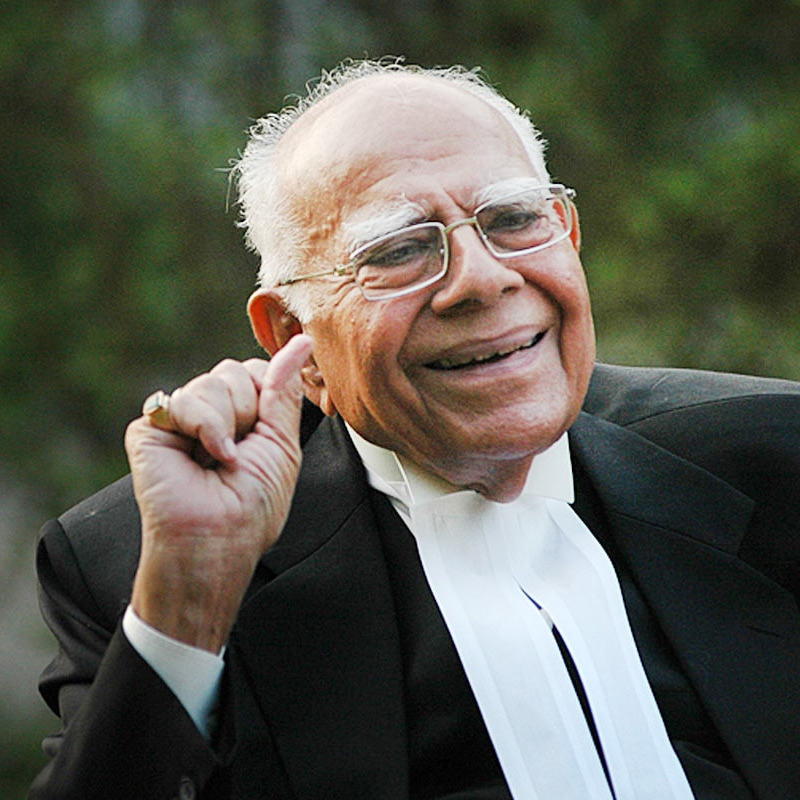
    Mumbai July 11, 2006: This Sunday watch Mr. Ram Jethmalani, former Law Minister- Union of India speaking on “Spirituality and Management” at 01:40 pm on Sanskar TV. A versatile Lawyer still full of enthusiasm shares with the youth of India experiences of his life and what he thinks should be the purpose of life for the youth.
    He shares his life in India beginning at Ulhasnagar, after partition ,with only Rs. 10 in his pocket. He interprets the Bhagavad Gita as only how Ram Jethmalani could do it. He has his opinions on leadership, not sparing even Mahatma Gandhi and Pt. Nehru. He advises the youth on Management and that creation of wealth is no crime. The youth should learn that there are no failures and every adversity is an opportunity to move up in life. In the end he advises the youth that to rise in life you have to earn the trust of the people and that can be earned only by honesty and integrity.
    Watch all this and more on Sanskar TV on Sunday July 16 at 1.40 PM.

    Some of the administrative heads to appear and educate the populace about the relationship and dependency between spiritualism and administration are Vithal Kamat – CMD The orchid and Deena Mehta, a Chartered Accountant and MBA.

    Sanskar TV is a spirituality channel that imparts insight into humanity and goodwill. It is a free to air channel on Thaicom – 3.

    Media Contact
    Neelam Gupta – 98200 70564
    Vedika Tripathi – 98703 32920
    nr2image@gmail.com

  • Indian television advertising is very much underpriced’ : Joy Chakraborthy – Zee Network executive VP Network Sales

    Indian television advertising is very much underpriced’ : Joy Chakraborthy – Zee Network executive VP Network Sales

    Joy Chakraborthy took charge of Zee Network as ad sales head in early 2005, at a time when Zee TV was going through a crucial phase. Chairman Subhash Chandra was strategising a turnaround for the flagship channel and a number of big ticket shows were being readied, with the expectations of re-writing Zee TV's fortunes in the Hindi GEC arena.

    As Network sales head, Chakraborthy's first challenge was to project Zee in a new light. "Zee had a perception problem in the market and a section of the trade had written it off. We wanted to create a new impression and build on that," Chakraborthy says."There couldn't have been a better time for me to head the network's sales team," he gushes.

    Speaking to indiantelevision.com's Bijoy A K, Chakraborthy elaborates on the strategies that worked for Zee, future plans and on the industry scenario.
    Excerpts:

    You have completed a year as the sales head of Zee network. Please elaborate on the key industry learnings you could gather during this period?
    A crucial lesson we have learnt is on the significance of soaps in the GEC prime time game. We have learnt that GEC is all about soaps, but different from Saas-Bahu sagas. People buy a channel for consistency and not for spikes only. In the industry, on an average, 70 per cent revenue is tied up on a long-term basis and only soaps can fulfill that promise. Innovative programming is fine, but they should be scheduled and timed very effectively. When you innovate, it should not be just a programming decision but a collective decision including sales, marketing and programming.

    Everybody had written Zee off. But we could pull off a turnaround — what seemed impossible until some time back – through team work, discipline, passion, accurate timing and by keeping the faith intact. As expected, the trade has responded to this change very positively, and now we enjoy the backing of the entire market. This is because of the strong relationships we had built during this period. What I am driving at is the fact that, relationships play a key role in this industry. This period also showed us who are our real friends and who are opportunists. Also, it has been a learning for me that both, people and organizations are important, and one cannot exist without the other.

    How is the industry evolving? Give us a low down in the recent developments and the trends?
    Indian television advertising is very much underpriced and we have decided to bring this issue into focus, under the banner of the Indian Broadcast Foundation (IBF). In a couple of months, we are planning to come out with certain guidelines on pricing, which would hold a lot of significance for the industry. Our main concern is the underpricing of television. It is a powerful medium and it should get its due, especially at a time when the costs of programming and marketing have skyrocketed. All network sales heads are now represented in IBF and we are united on this cause.

    The present scenario is very confusing. Television is booming, but clients are very tentative to take a call on TV as compared to the print as television research is more confusing and dynamic and changes everyday. I think an increase of 15 per cent to 20 per cent in rate is due immediately. It should also be noted that cricket of late has not affected GEC/Hindi movies viewership, which are the primary revenue drivers in C&S. The Hindi movie genre is still very much underpriced and same is the case with regional channels.

    I keep hearing that the English entertainment space is shrinking, but I don't agree with this as this is the genre with least wastage and where even an advertiser is a viewer.

    Does GEC still hold an edge over other genres when it comes to delivery and demand? Or has there been a change in the pattern?
    GEC will always hold the edge as maximum revenue comes to this genre. For any client, the reach build up and in some cases, frequency by smart scheduling comes from GEC. According to me, the genre pecking order would remain as: GEC, Hindi Movies, Regional, News, Sports – in that order.

    In the last two years, unique content channels have seen so much of a price cut that the FCT has increased drastically and revenue in the genre has hardly moved. I sometimes wonder how they are still surviving in business.

    Regional television space holds a lot of potential though it faces tough competition from print. The key segments driving growth in regional are: Retail, education and real estate, in addition to general categories like FMCG, telecom services, consumer durables etc.

    Zee has already started working on all these segments. We have started roping in retail clients and our next focus is on the real estate and education. Though there is a slow transition of main print category advertisers to television, the good news is that these clients have realised the power of television.

    Did the recent stock exchange fluctuations impact sales?
    The fluctuations haven't affected us at all. Actually, Zee recorded better sales during this period of May-June. June-July usually has a lean period tag attached to it, but this year, it was different. This is one change in the normal pattern. These days, there is nothing called lean or peak period. This is due to the boom in categories such as telecom, services, finance and the perennial FMCG.

    Today, advertisers are not limiting themselves to a particular genre due to media fragmentation. Most clients are there in almost all the channels/genres. Earlier, there used to be a particular set of advertisers for particular genres, such as premium products for English entertainment channels. These days, even FMCG brands are keen on English channels. It is a trend of aspirational marketing.

    'With the good performance, our viewer base has also expanded and this, in turn, helps us to better our performance on a consistent basis'

    The last one year saw Zee TV pulling off a turnaround in Hindi GEC, by reaching the second position. Could you briefly outline what happened during this eventful phase?
    During this period, the sales team was able to initiate a lot of changes successfully. To start with, we decided to remove the paid bonus system and agreed to reduction of ad sales inventory. This helped to change the general perception that, Zee has unlimited inventory. Then, we made it a point to keep away from attempting any innovation in terms of sales. This is because, the delivery of innovations take too much of time for the value we generate. Also, I have observed that in spite of doing innovations, the clients/agencies are always unhappy with the implementations, however good you might do. So why do innovations?

    We also focused on doing more client/agency meetings and met people at all levels. The Zee Network had a perception problem in the market, and the sales team has positively addressed this. I felt a lot of our positives were not known to the market. We had been very firm in our decisions and we always made it a point to abide by our well-defined sales policy. I have ensured all commitments/deliverables are in writing and not verbal, as this avoids conflict when people change at channel/agency side. When it comes to deals, the attempt has been to create win-win situations. We reduced our FCT to an effective level to create demand and initiated a very transparent sales policy.

    We also introduced the Matrix system, which played a key role in bettering the network performance. We appointed individual sales heads, responsible for strategy, revenues and targets of their channels. We have senior people as branch heads in the business deployed in key markets such as Delhi, Kolkata and the South whose roles are more tactical and they ensure revenue spread across all channels and have their branch targets. Both sales heads and branch heads work very closely with themselves and with me.

    For me, Zee has turned out to be a great place to work. It is a place with total freedom and great empowerment. I would say internal stability in Zee is very high. All decisions are discussed and not pushed down your throat. We have the best bunch of professionals, both at senior and junior level.

    Please comment on your face-off with Star. Star recently initiated its counter strategy to block your surge in the 9-10 pm time band. What impact has it made on your game plan?
    You feel happy when the leader reacts. Zee has pioneered the strategy of launching soaps with innovative media breaks. Seeing Star also doing the same for their show has been an ego booster for us. Coming to the second part of your question, it felt even better when the leader's tactics didn't affect our numbers and the market demand.

    With the good performance, our viewer base has also expanded and this, in turn, now helps us to better our performance on a consistent basis. Earlier, when we launched a show, rating in the range of 1 TVR to 2 TVR was considered as satisfactory or good. Now, our new launches pick up very fast and the shows even record an opening rating of 2+ TVR on an average basis. This has inspired us to fight Star in its own bastion – the 10 – 11 pm band – with non-soaps such as Johny Aala Re and Sabash India.

    So what is the next big idea? What will be Zee's next focus?
    We have now settled ourself comfortably in the 6 pm – 8 pm and the 9 – 10 time bands. You will be seeing some more launches in the months to come which will strengthen our FPC even further. The programming, marketing and sales wings are now working on the strategies to strengthen the 8-9 pm band.

    What is the strategy you follow to sell Day Parts?
    We have made lot of efforts to increase the demand for the Non Prime Time (NPT) band. Each sales package has got a mix of PT and NPT. We ideally would love to sell at 30:70 for PT/NPT. We have also been selling early NPT and late night slots for religious/tele shopping properties. As a result of focusing on NPT, our inventory FCT consumption has doubled in NPT.

    Which are the client segments that top your delivery list these days?
    Still FMCG is number one, though there has been a major upswing in Telecom/Services/Auto/ to name a few. The concern has been the consumer durable category with a few big players not clear about their plans. Additionally, SMS has emerged as a key revenue driver for us for our interactive shows.

    Speaking about the network performance, what is the scorecard?
    Zee TV is on top followed by Zee Cinema. Zee TV was underpriced when I took over, and now we are steadily moving in the right direction of rate. We activated rate corrections twice for the network during the six months and now, as the festival season is coming, you can expect another correction soon. For some channels, it will be across all day parts and for some it will be programme based.

    Revenue wise, maximum share comes from Zee TV followed by Zee Cinema, Zee Marathi, Zee Bangla, Zee English cluster, Zee Music and Zee Smile. The beginning of the year has been very good and I am sure we will touch a new high this fiscal.

    Now let us take it one at a time. To start with, please comment on the performance of Zee Cinema. What is the plan for this year?
    As a sales person, I can't ask for a better channel than Zee cinema which has been consistently delivering for years in the face of stiff competition. My colleagues in programming and marketing have given us a product which is a must have in all media plans, specially if it is targeting the "cow" belt (Hindi heartland). Since the last two years, the Amitabh movie band Shaniwaar ki Raat Amitabh Ke Saath has been our key driver. This year, we have introduced a youth block – Klub. We have our own share of blockbusters for the year also.

    Zee Smile has been keeping a low profile these days. Is the channel in an orphaned state, or is there a plan on the anvil?
    You will soon know our plan for Smile. But for sales, Smile has been a great help to get incremental revenues. The channel is very well distributed in non traditional markets and hence, you will find lots of brands advertising on Smile.

    Speaking about regional channels, you are in charge of sales of two key players Zee Bangla and Zee Marathi. How did these two channels fare in the last one year period?
    This year, we have practically re-launched Zee Bangla with a slew of new programmes and this will boost its sales potential. We are again going to do sales initiated programmes like Durga Pooja and Jatra.

    Zee Marathi has now become the clear number one. We are there in almost all plans. We have also set up a separate sales team to develop retail and non traditional advertisers like educational institutes, real estate, local jewelers, classified etc and the results are showing.

    Comment on the delivery of your event properties.
    During the last one year, there has been an extra thrust on good events, and the efforts have paid off very well, I would say. We have converted the Saregama finals as an on-ground event and the attempt has met with great success. This had inspired us to take the Saregama Ek Mein Aur Ek Tum finals to Dubai. Apart from winning a global appeal, going to international venues helps sales also. Zee Cine Awards, Mauritius and even the Zee F- Awards, have done very well for us.

    We have Zee Astitva Award, Zee Marathi Awards, Zee Gaurav Puraskaar, Zee Amader Gaurav, Zee Songeet Puroshkaar to name a few, lined up in the next few months across various channels.

    Have you retained Amap's service as an alternative rating agency to Tam?
    Yes. We need to have two meters because the industry needs competition in this realm also. It is always good for the trade. It brings out the best of everyone. According to me, each of them can coexist, triggering healthy competition. I am not making a judgment here, but for the betterment of industry, we need two parallel rating systems. The earlier we acknowledge this, the better it would be for all of us.
  • CNN scores with air travelers

    CNN scores with air travelers

    CNN International has another set of numbers to thump its chest about. The International Air Travelers survey (IATS Asia 7) – conducted by the European Data & Research Ltd (EDR) between March and April 2000 in the international departure/gate areas of ten major airports in Sydney, Melbourne, Manila, Bangkok, Hong Kong, Jakarta, Kuala Lumpur, Seoul, Singapore and Taipei – has revealed that CNN reaches more than twice the number of international air travelers than its nearest rival the Beeb.

    The survey shows that CNNI reaches 37 per cent of international air travelers on a weekly basis as against BBC World’s 19 per cent and CNBC Asia’s 15.4 per cent. IATS Asia 7 also confirmed that CNN International reaches 50 per cent of all senior business executives surveyed, the CNN press release states.

    “This is a very positive result for CNN International. (It) endorse(s) our investment in regionalisation, which has meant a significant amount of extra spending to increase the localized content available to our viewers, ” says CNN International managing editor, Asia Pacific Bill Baggitt.