Category: Television

  • Walt Disney to buy out Hungama TV, take 15% stake in UTV

    Walt Disney to buy out Hungama TV, take 15% stake in UTV

    MUMBAI: The Walt Disney Company today announced that it has entered into an agreement to wholly acquire Hungama TV and take a 14.9 per cent equity interest in media company UTV Software Communications Ltd, in each case subject to regulatory approval.

    Disney has entered into an agreement to acquire 100 per cent of United Home Entertainment LTD (Hungama TV) at an enterprise valuation of $30.5 million and purchase equity stake of 14.9 per cent of expanded capital in UTV Software Communications LTD, at a consideration of $ 14 million. So, the total combined investment is $ 44.5 million.

    The announcement confirms the news first put out by Indiantelevision.com that Disney would be buying into Hungama TV and picking up a small stake in UTV.

    Hungama TV COO Zarina Mehta will be working closely with the Disney team for the next three months to ensure a smooth organisational and operational integration of Hungama TV into Disney’s portfolio of kids channels. Post that Mehta will be working with Disney as a consultant for a period of six months to a year.

    Once final, the acquisition will firmly establish Disney’s ties in a rapidly growing media market where local content product is key. The combination of the three kids’ channels — Disney Channel, Toon Disney and Hungama TV — will establish Disney as a strong contender against the market leader Turner India (Cartoon Network and Pogo).

    “India is a long term strategic priority for the Walt Disney company. The acquisition of Hungama TV and the investments in UTV will significantly advance our presence in India and allow us to develop a strategic relationship with one of the countries leading integrated media companies,” said Walt Disney International president Andy Bird.

    “Not only will we be acquiring a great channel asset, we will also be able to participate in UTV’s diversified businesses and bring to UTV our global media and synergy expertise, including developing and distributing high quality family friendly content in nearly 200 countries worldwide and expanding related franchises across film, TV, music, merchandise, new media and live entertainment,” said Bird.

    When queried on Disney’s plans to launch a theme park in India, Bird answered in the negative. “We are not looking at a theme park in India,” he said.

    “TV is and will continue to be the major growth engine in building franchise affinity in India. Integrating Hungama TV in the Walt Disney Company’s existing India channel portfolio of Disney Channel and Toon Disney will allow Disney to fortify its already strong presence in India’s kids TV market,” said Disney Channel Worldwide president Rich Ross.

    When queried about the integration process of Hungama TV into Disney, Walt Disney Television International (Asia Pacific) senior vice president and managing director Nicky Parkinson said, “At present we are not sure how the integration will take place. We are in the process of finding out a way to best talk to kids. We are not here to cannabalise the market place. India is a relatively nascent market but one which has phenomenal potential.”

    “Hungama TV has proven its appeal to Indian children and families with compelling entertainment choices and has in a brief period built a strong management team and sucked out a leadership position in the competitive children’s TV environment. We are also delighted that Disney has chosen to make a strategic investment in UTV, which will augment our business in India and around the world,” said UTV group CEO Ronnie Screwvala.

    Launched in September 2004, Hungama is a 24-hour Hindi-language entertainment cable channel for children and is currently in a close fight with Turner’s Pogo channel for the the number two position in the Indian kids space behind leader Cartoon Network. Hungama TV has a staff strength of 71.

    Disney currently reaches over 107 million television homes in India through a programme block on Doordarshan and Disney Channel and Toon Disney/Jetix reached approximately 30 million homes on cable and satellite in India.

    UTV has a diversified set of businesses, which includes television and film production and distribution, animation production, and other services.

  • Ajay Vidyasagar to head Star’s internet, merchandising thrust

    Ajay Vidyasagar to head Star’s internet, merchandising thrust

    NEW DELHI: Star India, the revenue-generating arm of News Corp in Asia, is picking up the global threads being woven by its parent in the Internet and merchandising space and reorganizing its workforce accordingly.

    An indication to this effect is the new responsibilities given to Star India executive vice-president Ajay Vidyasagar who had thus far been looking after the network’s marketing and communication.

    As part of the changes being effected at Star India with an eye to tap new revenue generation sources, Vidyasagar will now be also responsible for the company’s soon-to-be-unveiled new thrusts in the internet and merchandising space.

    In his new role, Vidyasagar will be spearheading Star’s initiatives on the Net, part of which will entail “giving an Indian skin” to global activities being undertaken by News Corp.

    Meanwhile, Satya Ragahvan has moved in as head of marketing of Star India. Vidyasagar, will however continue holding the portfolios of marketing and communication.

    Star sources said that activities on the Net and merchandising fronts will hot up in India in fiscal 2007 when some other major initiatives on the programming, marketing and ad sales side too will be rolled out.

    Globally, Star’s parent News Corp has been prowling the Net space aggressively, prompting the likes of advertising wiz Martin Sorrell to question this haste.

    News Corp’s biggest buy in the space was of course last year’s $580 million acquisition of youth networking website MySpace.com.

  • ABU Digital Radio Convention to focus on complete digital transition

    ABU Digital Radio Convention to focus on complete digital transition

    MUMBAI: The second edition of the Asia-Pacific Broadcasting Union (ABU) Digital Radio Convention will be held in Kuala Lumpur from 14 to 17 August.

    The speakers at the convention will speak to radio broadcasters in the Asia-Pacific region on when to make the complete digital transition.

    The speakers lined-up for the convention include: KBS-BTRT director Shinil Chung, Factum Electronics / WorldDAB Forum MD Kenneth Lundgren, Broadcast Systems, STRL, NHK principal research engineer Koichiro Imamura, International Broadcast Business Development Ibiquity Digital Corp director Perry Priestley, Broadcast Electronics Chuck Kelly, AMP Radio GM Michael Blackburn, Dalet director of marketing Nicolas Hans and NPR Labs VP CTO and executive director Mike Starling.

    The four day convention and workshops not only provide updates on digital radio developments, but concentrates on the implementation and application issues – the myriad of decisions on business factors, content production facilities, transmission standards/systems, receiver developments, consumer take-up and switch-over issues.

    According to an official release, around 40 experts from Asia and around the world will contribute to the event by way of presentations, panel discussions and facilitating the in-depth, interactive workshops.

    Sponsors and exhibitors of the ABU Digital Radio Convention brings in big names, which include: principal sponsor Harris; AMP, Broadcast Electronics, Broadcast Australia, iBiquity Digital Corporation, Thomson Broadcast & Multimedia AG, Digital Radio Mondiale (DRM), Commercial Radio Australia, THL Australia Pty Limited, Go-Mobile Pte Ltd, WorldSpace, VT Communications, Klotz Digital, Digital Integrated System Sdn Bhd (DIS), on and DMB.

    “We are delighted to be supporting this major convention which keeps broadcasters in tune with the developments in digital radio,” says Harris Broadcast Communications director, Radio Products & Strategy Rich Redmond.

    “The ABU Digital Radio Convention is the key venue for broadcasters, manufacturers and others who want the full picture of the region’s burgeoning digital future. DRM is excited to play an active role in this year’s convention, and we look forward to meeting the participants in Kuala Lumpur. The ABU is a long-time member of the DRM consortium, and we are proud of its leadership in promoting digital solutions to its own members,” Deutsche Welle director and DRM chairman Peter Senger adds.

    “An increasing number of radio broadcasters in the region are embracing the transition to digital transmission. This convention will provide an excellent platform for broadcasters and industry players to network and understand the business issues as well as new technical developments. We would particularly like to address those issues that seem to be holding up the wide scale adoption of digital radio technologies in the Asia-Pacific,” points out ABU secretary general David Astley.

  • “Though I love acting, I want to take the spiritual road to where there is lasting happiness.”

    “Though I love acting, I want to take the spiritual road to where there is lasting happiness.”

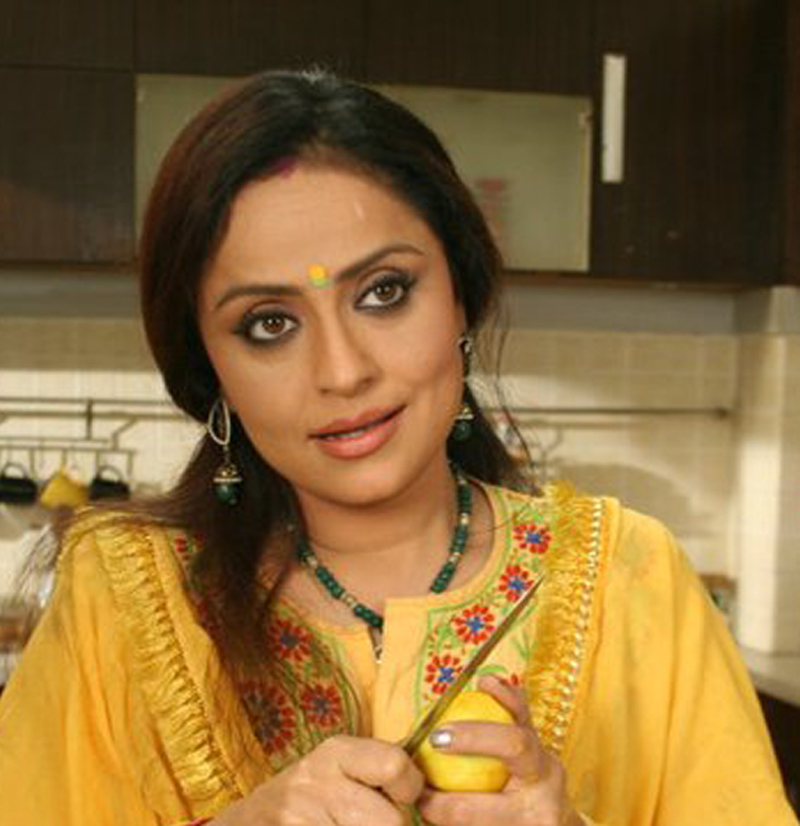
    Playing the lead in Choti Maa.. Ek Anokha Bandhan, Vaishnavi Mahant or Macdonald finds herself on totally new ground. The big budget and strong team aside, it is the challenging title role that is giving this young actress her much needed toehold in the fickle television industry.

    This Madhya Pradesh-born, Hyderabad-bred 25-year-old is deeply spiritual. The turning point in her life, she says, came ten years ago when she had a unique spiritual experience, which changed her from being a ritualistic Hindu to a devout Christian. This strong believer in God goes to church regularly, contributes half her successes and failures to destiny, although she is a disciplined worker herself.

    We meet her on the sets of Suraag-The Clue, the Adhikari Brothers’ hit thriller, being shot at Andheri, suburban Mumbai.

    It has been hectic for Vaishnavi the last few days. She has been shooting continuously and the previous day’s dubbing had stretched till two in the morning. Still, she was on the sets at eight in the morning. Excerpts from an interview held recently with indiantelevision.com’s Harish Patil:

    You look quite refreshed inspite of a hectic schedule ?
    My priorities are quite clear. I don’t mull over unnecessary things, and I don’t lose sleep over trivial matters. I also practise meditation, whenever I can. Of course, if such schedules continue for a while, it reflects on my face. Sleep is the only solution then.

    How did your acting career take off?
    I started my acting career at the age of eight, as a child artiste in Ramsay Brothers’ thriller Veerana and a couple of other films. Veerana was a medium success and my work was appreciated. It was like a picnic for me as everything was new and interesting, and there was hardly any pressure. Then I went back to Hyderabad to pursue my studies. I was set on studying to become a scientist. The desire to do films surfaced in my mind again when I visited Mumbai during a long vacation. With the support of near ones, I prepared a portfolio, which was shown to producers.
    Around that time, Bharat Kapoor was looking for fresh talent for a big budget film Barsaat Ki Raat. I was selected for the role. Inspite of having the best of talent availabale, like choreographer Chinni Prakash, Saroj Khan, cinematographer W B Rao, music composers Laxmikant Pyarelal, it did not work. For some reasons, the schedule stretched on for four years taking the film’s budget to nearly Rs 4 crore (Rs 40 million), and the film turned into a flop.Personally, it was like a school. I made mistakes but also learned a lot. This was the first time that I really looked and tried to understand the art of filmmaking. I started looking at it seriously and enjoyed every moment of it.
    During the same period, I received offers for a few other films. Bambaika Ka Babu, Ladlaa and Danvir … But nothing worked, except that they added to my confidence and maturity.

    My role in Chingari is that of a very strong woman who
    believes in herself. She knows she is right and so stands for what she does. I like to play such roles, which convey some
    message to viewers.
     

    What happened next? How did you turn to television? Was it with a kind of negative mindset?
    No, not at all. True, there was pressure from people around that I should continue only in films and that I would get the right role sometime. This was over four years ago, when moving from films to television was definitely taboo. But I am not the kind of person who will just wait and watch. More importantly, I could not adjust to the kind of atmosphere and “demands” of some of the players in the film industry.
    Luckily or otherwise, I was not branded in films, which would have otherwise been a problem for me while doing television. So I was as good as new for TV audiences. That was the time I got an offer to work in Shaktimaan (Vaishnavi replaced Kitu Gidwani in the fantasy serial).

    It must have been a novel experience to work in a tele-serial after doing four films. What difference do you observe in the two media ?
    The scale is totally different. The budget, time, resources don’t have any constraints in a film. There can be any number of retakes if the director feels that the shot is not ok. Television is very different in that sense.
    But as far as creativity or characterisation goes, I feel television is no lesser than films. It also gives you much needed space and time to settle in the character. On television, you have to be more like what you are unlike in films, where you are larger than life. Even the environment here is much better than in films.

    How was your experience working in Shaktimaan (on national broadcaster Doordarshan’s DD1 channel) as firebrand journalist Geeta Biswas? Does technology overshadow acting prowess in a fantasy serial?
    True, special effects do rule in a fantasy serial. But viewers’ attachment with Shaktimaan and Geeta is intense because the human angle has been developed well. The director keeps hammering into us the fact that we have to be careful with our portrayals since a majority of the audience is children.
    Even in the interior parts of the country, I am known as Geeta Biswas. A few months ago, when my character was put off air due to a change in the storyline, there were thousands of calls and letters to the producers demanding my return. After eight months, they had to call back my character. These are definite receipts of your efforts.
    Vaishnavi has appeared in a couple of episodes of Saturday Suspense on Zee TV, and has co-anchored the show Awaz Ki Duniya (DD1) with Rohan Kapoor, as well as acted in a couple of other serials like Chingari, Gharana and Dushman, which are now either off the air or no longer feature her. In Chingari, she etched a crucial role of a woman of substance.

    What about serials like Dinesh Bansal’s Chingari where you played a strong woman?

    My role in Chingari is that of a very strong woman who believes in herself. She knows she is right and so stands for what she does. I like to play such roles, which convey some message to viewers. The serial did well on Zee TV and my role was appreciated.

    But sometimes, it so happens that you just can’t understand the character. You don’t get the soul, in which case it is very difficult to do justice to that characte

    And how you did you get Choti Maa?
    There were nearly 100 aspirants trying for the role (well known actress Tabu too had been considered at one point). The director, Mohena Singh, had seen the pilot of Naqab made for Ashok Shekhar, in which I am playing a strong character.
    I think my Indian looks and eyes helped me getting the role. I was initially confident of clearing the audition, but got the jitters when I realised that even the channel and the producers would have to approve of me.
    Eventually, I got a call from Mohena asking me to find time for the serial’s shoot, which was already on in Pandharpur (where the early episodes are shot). At that time I was doing Gharana and Shaktimaan. I had a tough time convincing the producers of Gharana. Eventually the character in Gharana was replaced. And I landed in Pandharpur for the shoot ofChoti Maa.

    What was your initial reaction when you got the role?
    Frankly, I was not even aware of Chithi, the original Tamil mega hit serial on Sun TV. So it was like getting just any other role. But eventually when I read about Chithi and heard about it from people, I could understand the magnitude and importance of the project.

    Did you prepare specially for the role?
    I was like a clean slate. I had decided to be as spontaneous as possible. Sharda (i.e Choti Maa) is a unique character. She does not believe in God, but in human power. She believes in the strength and purity in human beings that makes it divine. She is against rituals.
    I had to take much care while portraying her character. My voice is very high and thin, which sounds like a young girl. Sharda is a mature woman with a lot of authority in her voice though she is young, so I have to deliberately keep my voice low, firm and with a strong base. At the same time, it has to be clear and should not sound fussy. For this, I literally take my pitch/voice to the ground, and physically take my hand towards the ground and take it up to the level I want from there. It was a bit difficult initially. I try to feel the character while dubbing too.I have no ego problems. I am always ready to change. My director and others give me a lot of tips, which help me understand the character better.

    There was a courtroom scene in Chingari that was 14 minutes long with three changeovers, totally focused on me. I had the dialogues by heart and I needed only one retake.

    Do you look to Radhika (who played the title role in Chithi) for inspiration or do you have other role models?
    I had not seen the original Chithi even once before I started shooting. The reason was we wanted to do it our way, taking our target audience into consideration. Radhika once came to the Choti Maa sets in Bangalore. She congratulated me on my performance, which I think was very valuable to me. She also gave me some crucial tips on posture and carriage. Such tips are very important for perfect characterisation.
    And I have kept Jesus Christ as my ideal person, because the way he carried himself is quite amazing. So I can identify Sharda’s character with him.

    Who are your favourite directors?
    I like Mani Rathnam and Sanjay Leela Bhansali for their sensitivity in handling the subject. On television, among my favourites is Ravi Rai for the way he handles emotional scenes. Anurag Bose is another of my favourites. I like the way he handles drama and perfect characterisation.

    Do you follow any particular acting pattern?
    I don’t follow any particular school of acting. I have not taken any formal lessons in acting. If the character is close to my nature, it is easy for me to play that. But sometimes, it so happens that you just can’t understand the character. You don’t get the soul, in which case it is very difficult to do justice to that character. And whenever it happens, it puts me off. I compare acting with singing. Each Avatar (character) is like a raga, there are different sur (tune) to play different characters. If you can’t find that sur, the singing is useless.

    Do you believe in living the role?
    Not to a great extent. Whenever I am on the set, I feel like I am playing that character. It is the case with strong characters like Sharda, especially when I shoot continuously. I feel that impact even when I leave the set. Normally I don’t read the script before going to the set. But in the case of Choti Maa, I read the whole story beforehand, which helped me understand the character.


    Shaktimaan Vaishnavi

    I have no ego problems. I am always ready to change. My director and others give me a lot of tips, which help me understand the character better.

    Do you take special efforts to remember dialogue?
    My memory is quite good. Most often, I easily remember dialogues. There was a courtroom scene in Chingari that was 14 minutes long with three changeovers, totally focused on me. I had the dialogues by heart and I needed only one retake. Everybody on the set applauded.

    Who are your favourite actors?
    Renuka Shahane, Sachin Khedekar and Pallavi Joshi are my favourites because of their natural and intense performances. I also liked Shefali Chhaya in Hasratein.

    Which channels do you usually watch?
    I watch Zee and Sony. I particularly watch Hum Pardesi Ho Gaye on Sony and Sarhadein on Zee.

    How do you spend your leisure time?
    Reading is my passion. I read anything that gives knowledge. There is no specific genre that I go for but I am interested in philosophy and spiritualism. I like religious books that deal with spiritual experiences

    Acting, I feel, is making me a self centred person. Everything is me, my, mine. I think we should also look at the people outside our periphery. There are so many people whom you can help to improve life.
     

    So what is Vaishnavi all about?
    I don’t know. I am very difficult to understand. At times, I behave like a kid. I like to laugh a lot. I don’t have ego problems. I am a down to earth person and vibe well with similar people. If I don’t like somebody, I just withdraw from the conversation.

    I am very close to my mother (who handles her career) and my younger sister is my greatest pal. And of course my fiancé (who is in the navy). Whenever I get time I like to spend time with my sister.I believe in God and destiny. I feel every success is 50 per cent hard work and 50 per cent destiny.

    What are your plans for the future?
    I will be pursuing acting as a full-time career for the next two years at least. I am simultaneously working on another project, which might make me give up acting after two years.
    I may take up some acting assignments in between. Acting, I feel, is making me a self centred person. Everything is me, my, mine. I think we should also look at the people outside our periphery. There are so many people whom you can help to improve life. If you can do it, I feel one can really live his life.

    So what is this plan of yours?
    All I will say is that it will not be related to media. (In an interview three years ago, she had spoken of her involvement in church activities, related to slum development and literacy).

  • Walt Disney to buy out Hungama TV, take 15% stake in UTV

    MUMBAI: The Walt Disney Company today announced that it has entered into an agreement to wholly acquire Hungama TV and take a 14.9 per cent equity interest in media company UTV Software Communications Ltd, in each case subject to regulatory approval.


    Disney has entered into an agreement to acquire 100 per cent of United Home Entertainment LTD (Hungama TV) at an enterprise valuation of $30.5 million and purchase equity stake of 14.9 per cent of expanded capital in UTV Software Communications LTD, at a consideration of $ 14 million. So, the total combined investment is $ 44.5 million.


    The announcement confirms the news first put out by Indiantelevision.com that Disney would be buying into Hungama TV and picking up a small stake in UTV.


    Hungama TV COO Zarina Mehta will be working closely with the Disney team for the next three months to ensure a smooth organisational and operational integration of Hungama TV into Disney‘s portfolio of kids channels. Post that Mehta will be working with Disney as a consultant for a period of six months to a year.


    Once final, the acquisition will firmly establish Disney‘s ties in a rapidly growing media market where local content product is key. The combination of the three kids‘ channels — Disney Channel, Toon Disney and Hungama TV — will establish Disney as a strong contender against the market leader Turner India (Cartoon Network and Pogo).


    “India is a long term strategic priority for the Walt Disney company. The acquisition of Hungama TV and the investments in UTV will significantly advance our presence in India and allow us to develop a strategic relationship with one of the countries leading integrated media companies,” said Walt Disney International president Andy Bird.


    “Not only will we be acquiring a great channel asset, we will also be able to participate in UTV‘s diversified businesses and bring to UTV our global media and synergy expertise, including developing and distributing high quality family friendly content in nearly 200 countries worldwide and expanding related franchises across film, TV, music, merchandise, new media and live entertainment,” said Bird.


    When queried on Disney‘s plans to launch a theme park in India, Bird answered in the negative. “We are not looking at a theme park in India,” he said.


    “TV is and will continue to be the major growth engine in building franchise affinity in India. Integrating Hungama TV in the Walt Disney Company‘s existing India channel portfolio of Disney Channel and Toon Disney will allow Disney to fortify its already strong presence in India‘s kids TV market,” said Disney Channel Worldwide president Rich Ross.


    When queried about the integration process of Hungama TV into Disney, Walt Disney Television International (Asia Pacific) senior vice president and managing director Nicky Parkinson said, “At present we are not sure how the integration will take place. We are in the process of finding out a way to best talk to kids. We are not here to cannabalise the market place. India is a relatively nascent market but one which has phenomenal potential.”


    “Hungama TV has proven its appeal to Indian children and families with compelling entertainment choices and has in a brief period built a strong management team and sucked out a leadership position in the competitive children‘s TV environment. We are also delighted that Disney has chosen to make a strategic investment in UTV, which will augment our business in India and around the world,” said UTV group CEO Ronnie Screwvala.


    Launched in September 2004, Hungama is a 24-hour Hindi-language entertainment cable channel for children and is currently in a close fight with Turner‘s Pogo channel for the the number two position in the Indian kids space behind leader Cartoon Network. Hungama TV has a staff strength of 71.


    Disney currently reaches over 107 million television homes in India through a programme block on Doordarshan and Disney Channel and Toon Disney/Jetix reached approximately 30 million homes on cable and satellite in India.


    UTV has a diversified set of businesses, which includes television and film production and distribution, animation production, and other services.


    Also Read:
    UTV scrip up on Disney deal buzz

  • UTV scrip up on Disney deal buzz

    MUMBAI: UTV Software Communications’ share price has gone up by 18 per cent in the last three trading days on the talk that the Walt Disney Company is buying into Hungama TV. The market is also abuzz with rumours that Disney is picking up a small stake in UTV.

    The scrip opened today at Rs 162, touched a high of Rs 182, and closed at Rs 175. On Thursday, it had gained Rs 14.50 to end at Rs 165.65.

    UTV is making a preferential allotment to Disney, a dealer in a broking firm said. The integrated media company holds 49 per cent in United Home Entertainment (UHE) which runs Hindi kids channel Hungama TV.

    Meanwhile, an earlier deal that was to go through with Malaysia’s Astro All Asia Entertainment Networks has not yet closed, another dealer said. Astro was to take 26.01 per cent in UHE for a consideration of $7 million (Rs 310 million), putting the enterprise valuation at a little under $28 million (Rs 1.24 billion). While UTV was to hold 49 per cent, the balance was to be with UTV founder-promoter Ronnie Screwvala.

    The market buzz is that Disney would hold at least a controlling stake in Hungama TV, a dealer said. UTV had earlier in its FY06 results announced that the capital employed in UHE was Rs 840 million. This was used to fund Hungama TV’s operations. UTV has made investments of Rs 680 million into the channel till then.

    Neither UTV nor Walt Disney Company (India) Ltd were available for comment. UTV had earlier denied a report in a leading financial daily, stating in a notice to the stock exchange that it was not in talks with Walt Disney to sell 30 per cent stake in UHE.

    MTV Networks India had also been in talks with UTV but the two parties could reach no common grounds on valuation. The plan was to have a second channel along with Nick, which was struggling to get audiences. MTV, sources say, was interested in buying out Hungama TV.

    UTV, meanwhile, is planning to merge United Entertainment Solutions Ltd, a post production subsidiary company, with itself. In a move to consolidate the post production business, the company had acquired Western Outdoor in 2002. UTV also has a strong presence in movie production and is into animation business.

  • Sun TV in for a consortium with Red FM

    Sun TV in for a consortium with Red FM

    MUMBAI: Kalanithi Maran’s Sun TV Ltd. is expected to enter into a consortium with Red FM, the operators in Delhi, Mumbai and Kolkata, for its radio business.

    The alliance will offer a joint platform to advertisers, making it a formidable bouquet against the biggies like Radio Mirchi and Radio City. Brand promotions will also be a part of this exercise, market sources say. Both Red FM and Sun TV Ltd were not available for comment till the time of filing this report.

    Malaysia’s Astro All Asia Networks plc, which is one of the three stakeholders in Red FM, recently said that it was in advanced discussions with strategic partners on various initiatives in India, including participation in a nationwide consortium of FM radio networks. “We expect to finalise partnership arrangements in the coming months. Appropriate announcements will be made in due course,” Astro Group CEO Ralph Marshall told reporters after the company’s AGM in Kuala Lumpur.

    Maran, who made an aggressive nationwide bid in the second phase of FM radio expansion, had excluded Delhi, Mumbai and Kolkata, the cities where Red FM operates. While Kal Radio (where Sun TV owns 89 per cent) would confine its operations to the southern language states, South Asia FM (Sun has 94.91 per cent equity) would carve out stations in the other regions.

    Joining hands with NDTV and Hyderabad-based Value Labs to acquire Red FM from Radio Today for around Rs 1.3 billion, Astro is eyeing a major presence in the FM sector in India. “We expect that we would have a 20 per cent interest in a nationwide radio licence as soon as we receive the approvals,” Marshall had told reporters in Kuala Lumpur.

    Apart from Red FM, Astro is already managing two FM radio stations in Kolkata through AMSI (Airtime Marketing & Sales India). The company, working with its local Indian partners Power107.8 FM and Aamar 106.2 FM, provides studio facilities and airtime sales and marketing services to the two FM radio stations in Kolkata.

    Sun TV Ltd, which raised Rs 6.03 billion through an initial public offering (IPO), has bet big on radio to scale up revenues. A consortium with Red FM would particularly help Sun in the newer markets, analysts say. In the southern language markets, Sun has the advantage of dominating ownership of movie rights which it can leverage for its radio business.

    Before the IPO, Sun had taken clearance from the Foreign Investment Promotion Board (FIPB) for issuing equity shares to foreign investors. The company, in its application, had said that it was intending to issue this either by “way of a preferential allotment prior to the IPO” and/or by “way of an initial public offering of its equity shares of the face value of Rs 10 each of 10 per cent of its post IPO paid up equity capital, subject to the maximum foreign investment limit as prescribed.”

  • Asianet looking to launch educational channel

    Asianet looking to launch educational channel

    MUMBAI: The Thiruvananthapuram-headquartered media house Asianet Communications Ltd is planning to launch two more channels in the Malayalam television space. One of these two projects will deal with a television channel covering the education genre.

    Speaking on the occasion of the second anniversary celebrations of the media firm’s youth-oriented entertainment channel Asianet Plus, Asianet chairman Reji Menon revealed the company’s long term plans. “Asianet targets to have a total of five television channels and one of these will be an educational channel,” he said, without offering any time frame on the plans.

    “Asianet will be launching India’s first ever educational channel. We are still working out the plan and the project is presently in its preliminary stage,” Asianet managing director K Madhavan told indiantelevision.com.

    According to market sources, Asianet is seriously looking at expanding its presence in the Southern television space by entering the non-Malayalam (Kannada, Telugu and Tamil) market. “The fifth channel might possibly target one of these three languages,” says a source.

    Flagship entertainment channel Asianet, the youth channel Asianet Plus and the news channel Asianet News constitute Asianet’s television force at present.

  • Television sports agency Sportfive put up for sale

    Television sports agency Sportfive put up for sale

    MUMBAI: European sports television agency Sportfive will be sold.

    Media reports indicate that Sportfive’s owners – US private equity firm Advent International, media firm RTL, and investment bank Goldman Sachs – are hoping to take advantage of the interest in sports rights businesses in the wake of the Fifa World Cup. Goldman and Morgan Stanley are looking for a price in the reange of €800 million and €1bn.

    Private equity firms like Equity Partners, Apax Partners and Blackstone are said to be eying Sportfive.

    Advent and Goldman them own 65 per cent of the company. RTL has a 25 per cent stake and management has the remaining 10 per cent.

  • Zee Telefilms’ Q1 consolidated net slips 28% at Rs 562 million

    Zee Telefilms’ Q1 consolidated net slips 28% at Rs 562 million

    MUMBAI: Zee Telefilms has posted a 27.8 per cent fall in consolidated net profit at Rs 562 million for the first quarter ended 30 June, 2006, as against Rs 779 million in the corresponding period last fiscal

    Total income, however, rose 24 per cent to Rs 3.884 billion, up from Rs 3.131 billion.

    The consolidated operating profit stood at Rs 726 million, after factoring in initial investments in new activities viz. Zee Telugu, Zee Smile, Zee Sports and others, amounting to Rs 571 million (14.7 per cent of consolidated revenues). As a result, consolidated operating profits of continuing businesses were Rs 1.297 billion. These are higher by 8.4 per cent as compared to the corresponding quarter last year.

    “The growth rate is subdued mainly due to investments in programming and marketing focused on long-term buildup of mainline channels. Profit before tax for the first quarter of the fiscal 2007 was Rs 672 million while net profit was Rs 562 million,” Zee said in an official release.

    On a standalone basis, Zee Telefilms has posted a 50.8 per cent fall in net profit to Rs 156 million for the quarter ended 30 June, 2006, as compared to Rs 306.80 million for the corresponding period last year. Total income has increased to Rs 2.440 billion for the quarter ended 30 Jun, 2006, up from Rs 1.777 billion for the corresponding period last year.

    Commenting on the results, ZTL chairman Subhash Chandra said, “We are pleased to report the strong recovery in our market position and continuing uptrend in ratings on the flagship channel. The performance reflects our success in delivering superior content to viewers and stronger relationship with our consumers.” “We are also happy about some recent developments relating to our business. The Delhi High Court has ordered the Union Government to issue a revised notification for implementation of CAS in the notified areas of Mumbai, Delhi and Kolkata by 31 December, 2006. This will additionally help in bringing about addressability on cable. On DTH, DishTV enhanced its offering from June when The OneAlliance bouquet was also made available to subscribers. Also, the TDSAT order has directed Star to provide their content to DishTV within 15 days. All these have extremely positive and long term impact on our business,” Chandra added.

    Commenting on the restructuring exercise, Chandra continued, “The restructuring exercise is expected to be completed by September/ October 2006, subject to necessary approvals. This shall create four focused, pure play, listed companies ready to exploit the vast emerging opportunities in each line of business. It would result in streamlined operations in each area and would also clear the ground for acquisitions and strategic or financial partners in the demerged businesses, apart from unlocking shareholder value. The next several years would provide tremendous growth opportunities for all these four businesses.”

    Punit Goenka, Zee Telefilms whole time director and responsible for content creation, said, “Zee TV continued to increase its viewership share from 21 per cent in 4Q FY2006 to 25 per cent during 1QFY2007, along with a significant growth in time spent. During the quarter, average gross ratings points (GRPs) of Zee TV have crossed 200 and for the last week it was at 240 GRPs, giving Zee a channel share of 29 per cent. The growth momentum has been led by widespread success of Saat Phere and Kasamh Se, which rank 5th and 6th among the top programmes on television, across genres. Zee TV now has leadership in the 9 pm to 10 pm time band, for the last six weeks.”

    “Zee Cinema continues to be the number one movie channel, and increasingly is becoming a reach channel for advertisers. Zee Marathi has also considerably narrowed the gap with its competitor (ETV Marathi). Zee Sports continues to build on the back of Football and ODI Cricket matches. We will continue to reinforce our competitive advantage and deliver more value to viewers and shareholders,” Goenka added.

    Elaborating on the performance, Zee Telefilms CEO Pradeep Guha said, “During FY2006, the yield per spot of ten seconds was the lowest in the history of Zee TV. Zee TV has introduced many initiatives, which focus on improving inventory utilization, attracting higher yielding categories of business and increasing effective rates across time bands. These efforts have resulted in a revenue growth faster than that of industry. Also, we have been able to establish Zee Cinema as a reach channel instead of a frequency channel, which will help us garner more advertising revenues.”

    The Board of Directors in its meeting held today, has taken on record the unaudited consolidated financial results of Zee Telefilms Limited and its subsidiaries for the quarter ended 30 June, 2006.

    REVENUE STREAMS:
    Zee’s advertising revenues increased to Rs 1.729 billion, a 31.5 per cent growth as compared to the corresponding quarter last fiscal. “This growth in advertising revenues was a result of higher average rates on most of the network channels. During this quarter, Zee Sports telecast the two One Day (ODI) Cricket matches played between Indian and Pakistan, which has
    contributed to the growth in advertising revenues,” the company said.

    Overall, subscription revenues stood at Rs 1.798 billion, registered an increase of 2.8 per cent over the corresponding quarter last fiscal. Domestic pay revenues, including Siticable, stood at Rs1.039 billion. Other sales and services grew to Rs 357 million.

    EXPENDITURE:
    Overall, the cost of goods and operations went up 60.6 per cent compared to a year-ago period, mainly due to investments made in new channels like Zee Sports, Zee Smile, Zee Telugu and Zee Jagran. A large part of the incremental cost was on account of programming cost of Cricket rights on Zee Sports, states the company release.

    Personnel cost were also up, 26 per cent higher than the corresponding period last year. Other costs, particularly marketing costs have increased by 23.2 per cent. As a result, total expenses were higher by 47.6 per cent.

    From FY2006, the Company has accelerated its investments in the development and expansion of its network. There have been substantial marketing and content improvement initiatives on one hand, and on the other, number of new channels have been launched.

    “As a result, Zee is in a phase in which the initial investments have been made and expensed fully, while the corresponding revenue build-up is to be realized in the next several quarters. The immediate impact is on operating profits, which we hope to recover in successive quarters through increasing revenues and progressive reduction in costs, the release adds.

    Zee’s Q1 segment-wise revenues are indicated in the table below:

    *Content Business includes all Broadcasting and content production companies in India and abroad of Zee Telefilms
    Limited, ETC Networks Limited.
    # Access Business includes Siticable, Zee Turner and distribution segment of ZTL.

    OTHER HIGHLIGHTS

    Sports
    During the first quarter, Zee Sports telecast two ODIs between India and Pakistan played at Abu Dhabi. These were the first two matches in the contract with BCCI for overseas Cricket. In football, National Football League matches were telecast during the quarter. Building on the Football World Cup fever, Zee Sports commissioned ‘Goal 2010’, an initiative to see India in the World Cup of 2010.

    Cable Network
    The cable business is poised to pursue new technology opportunities with renewed focus including digitization of cable, broadband and ‘triple play’ offerings. As per the Zee release, Siticable is the only MSO that would be deploying state-of-the-art Headend In The Sky technology, which would allow it to cover the entire country, not just the CAS notified areas. The recent regulatory and legal developments look set to lead to a roadmap for digitisation initially in the metros. The Delhi High Court has ordered Union Government to issue a revised notification to implement conditional access system (CAS) by 31 December 2006 in the notified areas of three metros i.e. Delhi, Mumbai and Kolkata. There is more visibility now on the path of transition in the cable business towards digitisation, which would result in greater transparency and accountability, the release further adds.

    Direct Consumer Services business
    DTH services continue to make inroads into Indian homes. The service offerings have been expanded by adding SET Discovery’s The OneAlliance bouquet from June 2006. The service revenues from DishTV continue to generate good response.

    The subscriber numbers have crossed 1,200,000 and are growing at the rate of about 3,500 per day. We are poised to execute market expansion strategies which would lead to a ramp up of subscription from the urban markets, based on value added services not presently available on cable.

    Recently the Telecom Disputes Settlement and Appellate Tribunal (TDSAT) came out with an order, instructing Star to provide its channels to DishTV within 15 days. This would further enhance the present content offering of DishTV, Zee said in the release.

    Restructuring in Zee Telefilms
    Application for the restructuring has been made to the High Courts. The scheme of arrangement would require approval of shareholders of Zee and of Bombay High Court. The whole process is expected to be completed by September / October 2006. Zee News Limited, ASCEL and WWIL would be listed on all stock exchanges where ZTL is listed.Based on the unaudited results of ZTL (consolidated), Zee News Ltd. and ASCEL, the following table sets forth the proforma financials of each line of business for 1Q FY2007, as they would appear in a demerged scenario.

    The company’s investment in 25 FPS Media Pvt Ltd, a subsidiary engaged in production of television programming for the Zee Telefilms, is intended to be disposed off. Accordingly, its financials are not consolidated in these results. Previous year’s figures are also not comparable to that extent, the company said in a posting on Bombay Stock Exchange (BSE).

    At the Bombay Stock Exchange today, the Zee scrip opened at Rs 251.70 and closed at Rs 249.75, down Rs 1.95 from the previous day’s close.