Category: Television

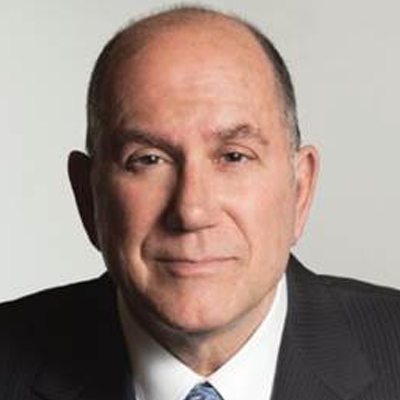
  • ‘The only thing that supercedes creativity is accountability’ : Laurence Boschetto – DraftFCB president & COO

    ‘The only thing that supercedes creativity is accountability’ : Laurence Boschetto – DraftFCB president & COO

    It was in June that media conglomerate Interpublic combined its Draft and Foote Cone & Belding (FCB) units around the world to create a channel-neutral agency model DraftFCB. Heading DraftFCB as its president-COO is Laurence Boschetto, previously president-COO of Draft.


    Hardly has Boschetto had time to gather his breath on the ramifications of the new entity has come an even more radical announcement. Which is that Interpublic is reorganizing its media operations with Initiative becoming aligned within DraftFCB and Universal McCann coming under McCann Worldgroup.


    The reorganisation came just ahead of news that the newly integrated DraftFCB has been awarded the account of retail behemoth Walmart worth an estimated $570 million. That the monster win came on top of new business that DraftFCB had won from Citigroup, Merrill Lynch and Atari has been more than a validation for Boschetto and the team at DraftFCB.


    In conversation with Indiantelevision.com, Boschetto, who over the last three weeks “has been on the road to every single region introducing them to the new model”, throws some light on just what’s happening at DraftFCB, as too the vision thing with IPG.


    Excerpts:

    Is it fair to say that IPG’s reorganization of its media operations represents the most significant example of support for those against the unbundling of media that we have witnessed over the last 20 years or so? And extending that posit, can we then argue that making media and creative interdependent is the best way forward?

    Over the last decade we stripped everything out of an agency, we have taken strategic planning, we stripped away media and now they have basically become interchangeable parts, the ‘value has been devalued.’ So what we are doing right now is we look at the client, we look at the demands and pressures that they have, we look at the environment that their end user works in and we say ‘how do we change the game.’


    This might look like the old model but it’s packaged in the new model formulation, an offering of complete integration of products and services but not doing it syllogistically under the model.


    What we are saying is that there is one management team, there’s one P&L and the palette consists of all the different skill sets, so the clients don’t have to manage all those relationships and the agency can come back with a business solution orientation based on the real business issues rather than the disciplines that they are confident in.


    Today we often hear clients say, ‘I want channel agnosticism and discipline neutrality.’ Yet there isn’t really any channel agnosticism. We didn’t build organizations in the industry that way, we have people that are proficient in strategic planning, in branding, in advertising, in PR and in retail. Now they are asking for renaissance marketing communications people, that’s what this whole model is about, it’s about building another class of business builders in the marketing communication field.

    The new media strategy represents the third major organizational change Interpublic has instituted this year. What is the broad direction that IPG is taking with all this?

    When you take a look at the advertising industry, you cannot ignore client structuring and their constituent parts because this tends to have a ‘domino effect’. The environment that the customer lives in has radically changed, technology has changed they way that they live and breathe, how they interact and connect with each other, this has created one basic phenomena ‘immediacy’.


    Technology has changed the way we work and engage. This has put tremendous pressure on the CMOs, as they also live in an environment and at a time when their CEOs are demanding performance in their books. It is estimated that every CMO has a life expectancy of roughly 24 months. However, if they have to produce they will have to figure out how to navigate through a company, what the alliances are, who their end user is and quarter after quarter their performance based on real business metrics will determine what their life expectancy will be.

    Over the last decade we stripped everything out of an agency, we have taken strategic planning, we stripped away media and now they have basically become interchangeable parts, the ‘value has been devalued’

    If you say that a CMO has an average 24 month life cycle, what happens if he continues to deliver what the client demands?

    As defined, stage I is to develop a way of operating to deliver that media and channel neutrality and agnosticism and that’s by bringing together not just one person to lead the business but all the discipline leaders at a round table, to form a team for the client.

    Now, if one client is more strategic in nature then they may have a strategic person in the key position, while someone else who is more data driven might have the data person heading it, but the way we think through the issues are holistic. The goal is that over time we are not expecting that someone who is highly proficient in strategic planning and database modeling to be interchangeable. But the person who heads up strategy must be able to think more holistically, so that when they come to a business situation they determine what’s right for the client.

    But will these individuals continue to function within their respective units?

    The goal is to make sure that the purity and the authority of every discipline still resides in an agency so that we never lose that foothold. In the process of giving clients that ‘channel agnosticism’, the days of only the account person holding that relationship, we are saying that before we get there we need to have a team consisting of media, strategic planning, account services and a creative database all sitting at the table and having an equal voice in determining how to solve a business issue.

  • Cartoon Network & Pogo toons shake a leg with kids

    Cartoon Network & Pogo toons shake a leg with kids

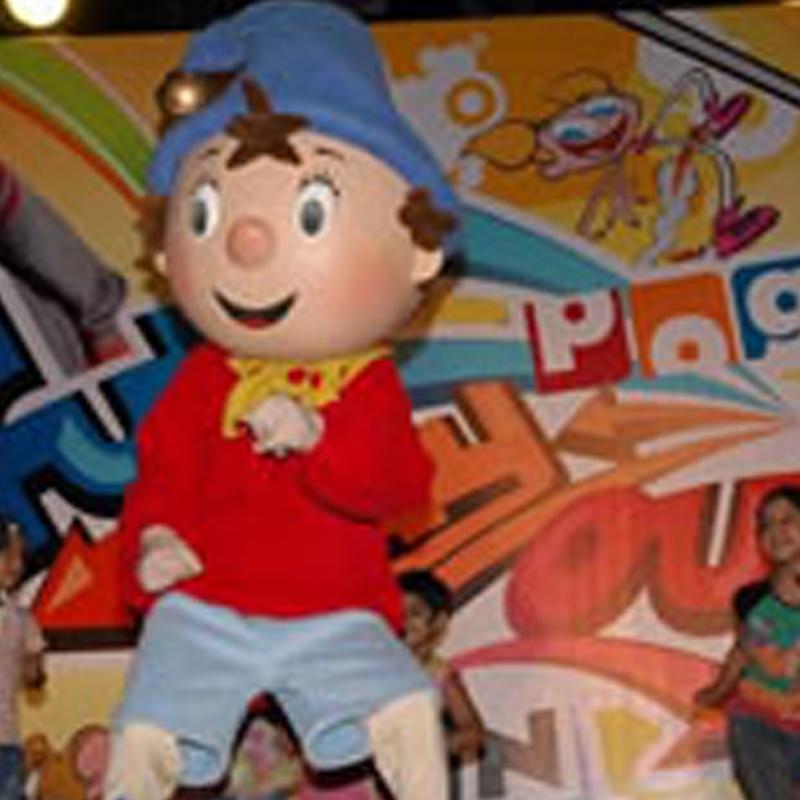
    MUMBAI: Cartoon Network and Pogo hosted a ‘Fun Day Out’ for Mumbai kids giving them an opportunity to meet their favourite toon stars including Johnny Bravo, Noddy, Dexter, Dee Dee, Popeye and Scooby Doo on 29 October 2006.

    Aimed at engaging viewers in activities beyond the scope of television the ‘Cartoon Network and Pogo Fun Day Out’ had the adorable cartoon characters render a local flavour to the event as they danced to popular chartbusters, urging the kids to also join in with them.

    In addition to catering to the kids, games were also organised for the entire family. On-stage games such as ‘Dance Like Noddy’ and ‘Pogo Trivia’, tested the skills and knowledge of not only the children, but also the elders. Special Cartoon Network and Pogo games were also organised beyond the stage including puzzles like ‘Back Where They Belong’, ‘Knock Down The Villian’, ‘Play Smarter’ and ‘Tiny TV Play Area,’ informs an official release.

    Kids also got a chance to show off their beyblading skills with ‘Beyblade’ games. While other games like the ‘M.A.D (Music, Art and Dance) Fan Club’ allowed kids to scribble and draw their messages on a large canvas.

    The gala day came to an end with 20 lucky kids hogging the opportunity to shake hands with Bob the Builder, Scooby and Noddy while the winners of the various games pocketed Cartoon Network and Pogo goodies as prizes.

  • India-OZ likely to play 3-match ODI series in America in ’07

    India-OZ likely to play 3-match ODI series in America in ’07

    MUMBAI: After Abu Dhabi (DLF Cup) and Malaysia (tri-series), the next offshore cricket venue for the Indian cricket team will likely be in North America.

    Indian cricket board vice-president Lalit Modi told Indiantelevision.com that an in-principle agreement had been reached for a three-match series between India and Australia to be held in North America in June 2007, just ahead of India’s tour of England in July.

    Modi offered no other details except to say that he would be flying out to the US next week to finalise things.

    If a report filed by Cricket World proves correct, the three matches will be held in Brooklyn, New York.

    The report cites the Floyd Bennett Field in Brooklyn, the first municipal airport in the US, as the venue for the three New York games, which has recently undergone a $38 million renovation to house a new sports and entertainment complex.

    Zee Sports acquired the global media rights for all matches that India will play in non-ICC member countries with a huge $ 219.15 million bid. As part of the deal 25 matches will be played over a period of 5 years with an average of 5 matches per year. The global media rights comprise television, radio and Internet rights. The rights are for a period of five years from 1 April 2006 to 31 March 2011.

    The way the deal breaks up is that for the second year, Zee’s payout commitment to the BCCI is $ 6.03 million per match, which means that Zee Sports would have to generate a little over $ 18 million from the event all told, just to break even on it.

    From the North American market at least, Zee would be expecting to extract a significant proportion of its investment from pay-per-view.

  • Disney’s ‘My School Rocks’ gears up for National roll out in November

    Disney’s ‘My School Rocks’ gears up for National roll out in November

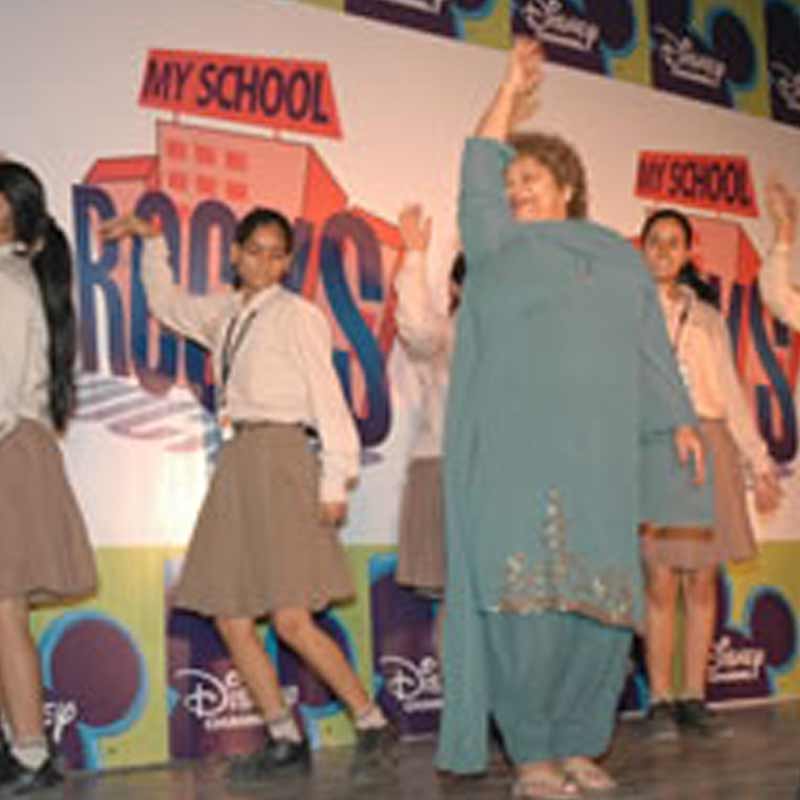
    MUMBAI: Following the global success and drawing inspiration from Disney Channel’s original movie High School Musical, Disney in India is set to introduce a country wide interschool group-dance competition ‘My School Rocks.’

    Walt Disney Television International (India) executive director – programming and production Nachiket Pantvaidya said, “Disney Channel programming reflects real kids’ lives, their aspirations and dreams. ‘My School Rocks’ is all about encouraging kids to express themselves while learning the value of teamwork. As in the movie High School Musical, this contest is about believing in yourself and following your dreams.”

    The last date for schools to register with the Disney Channel is 10 November. Participating schools will choreograph a dance sequence on the High School Musical hit song ‘Ho ek hi aim’ and appear for auditions at select locations in cities across India. Bollywood choreographer Saroj Khan would then shortlist five finalists from the entries received. Disney Channel will air vignettes of these five performances in December and the final winner will be decided based on audience polls by Disney Channel viewers and Saroj Khan’s evaluation of the teams, informs an official release.

    The winning group will star in a special music video, which will be choreographed by the Khan that will premiere on Disney Channel on 25 December 2006. 

    Nachiket added, “High School Musical has created rating highs across the globe. Its popularity among Indian audiences symbolizes the popularity of Disney Channel’s contemporary and universally relevant content. ‘My School Rocks’ contest is an effort, in the context of the movie, to provide Disney Channel viewers delightful moments to be enjoyed with the peer group and the entire family.”

    Audition dates across select cities in India include: 
    – Amritsar: 9 November 
    – Kolkata and Delhi: 15 and 16 November 
    – Mumbai: 16 and 17 November 
    – Ahmedabad: 17 November 

    Khan and Nachiket today visited the Father Agnel School, Gautam Nagar, New Delhi to congratulate the school on being the first to register in this all-India event.

    Saroj Khan said, “Being associated with kids through a Disney Channel event is definitely a very different experience. I am extremely excited about this dance contest and am looking forward to meeting and dancing with a lot of kids! The uniqueness of the event is in its philosophy of self-expression and that’s a beautiful thing to teach our kids today.” 

    The foot tapping music of High School Musical was rendered in Hindi by industry stalwarts Sunidhi Chauhan, Naresh Kamath, Shweta Pandit, Neuman Pinto, and directed by John Stewart, programmed by DJ G and John Stewart. The on-ground events include the ‘My School Rocks’ school contact program across 650 schools in Delhi, Mumbai, Kolkata, Ahmedabad and Amritsar where principals and art teachers are being briefed about the contest. They are being presented with the ‘My School Rocks’ kit complete with the VCD, lyric sheets, dance moves etc. 

    My School Rocks is being presented by Cadbury Bournvita in association with Reynolds Pens, Nippo Batteries, Candyman Cofitino, Peppy and Pizza Corner.


  • Regional television struggles to find its voice

    Regional television struggles to find its voice

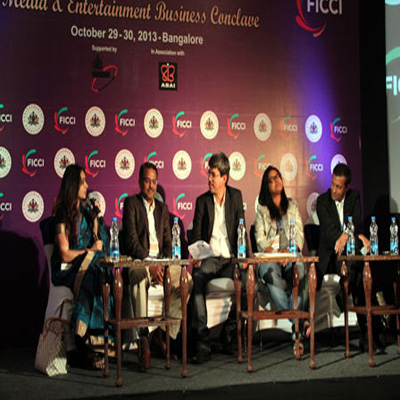
    BENGALURU: What good would a FICCI MEBC event be in Bengaluru without a discussion on the current status of regional TV, ratings, content and formats? The session moderated by indiantelevision.com CEO and editor in chief Anil Wanvari saw four personalities – TAM CEO L V Krishnan, Asianet and Star Suvarna Business Head Anup Chandrashekaran, TV serials director Shruthi Naidu and actress Malavika Avinash – talk about the evolving genres in the south TV market and the tussle that that the industry has with the TAM ratings.


    According to the FICCI Deloitte report, the south Indian TV industry was valued at Rs 13, 470 crore in FY 2013 and is set to grow at an estimated CAGR of 20 per cent over the next four years. TAMs Krishnan added that it also accounts for 20 per cent of national viewership. To top it all, south Indian viewers are glued to their TV sets almost 30 per cent more than their northern cousins. The former spend 150-200 minutes a day watching soaps, series, movies, drama and non-fiction as compared to HSM viewers who spend 100-110 minutes disclosed Krishnan.


    Kannada TV is in a strange predicament and its viewership is eroded because of the fact that the state shares its borders with others such as Tamil Nadu, Andhra Pradesh, Kerala and Maharashtra which means viewers in these regions watch TV shows in the languages prevalent in those states. To make matters worse, only 35-40 per cent of Bengalurus populace speaks Kannada. This despite, Krishnan is optimistic that Kannada TV will do well. It has grown by 25 to 30 per cent in the last five years in terms of engagement and the next four years will see the viewership increase by 20 to 25 per cent, he says.


    Chandrashekaran said that the south TV industry is experiencing changing consumption patterns. Fiction consumption is growing here as compared to HSM where non-fiction is taking over, he said. There has been de-growth of film consumption in the states of Karnataka, Andhra Pradesh and Kerala. Movies are unviable on TV today everywhere else except in Tamil Nadu, he said. We pay Rs 2.5 crore to acquire a title; but we spend around Rs 70,000 to Rs 80,000 an episode for fiction and we get the same or better viewership. Then, big ticket formats are also slowly spreading such as the Kannada and Tamil versions of KBC, he added. Then ETV produced Bigg Boss in Telugu and Kannada.


    Both Avinash and Naidu bemoaned the fact that budget restrictions in Kannada have led to creativity and innovation being stifled in the region. The protagonists in most shows are becoming younger – in their late teens or early twenties, which leaves limited scope for actors like us who have been around for 15 years, wailed Avinash. She, however, added that her Oprah Winfrey-like conflict resolution show has given her a good platform for her to exploit her creativity.


    Chandrashekaran said that the younger protagonist strategy is being resorted to because broadcasters are trying to draw in younger audiences – apart from the plus 45 year olds – to watch television. Krishnan pointed out that the broadcasters strategy is on the button as TAM Media research has shown that boys 14 and above tend to follow what their fathers are watching, mainly sports while girls follow their mothers and watch serials.


    Chandrashekaran said the economics of programming dictate that higher budgets for shows will work in a broadcast network scheme. If we can produce and amortise our costs over various languages like Tamil, Telugu, Malayalam and Kannada it will make our shows viable, he explained.


    Naidu agonised over the fact that Kannada broadcasters are increasingly resorting to making adaptations of successful Hindi shows rather than encouraging and experimenting with original stories from Karnataka. Chandrashekaran said that this was happening because there is a paucity of scriptwriters in the region and the novelists and literature writers from the state tend to look down on TV as below their creative dignity. We do a lot of interactions with our viewers and we only focus on filling whatever our focus group studies throw up as viewing need-gap. Avinash pointed out that emotion and drama work very well with TV audiences which is why adaptations of Hindi shows in the form of soap, drama and series are working on regional television.


    The topic also shifted to the credibility of TAM with her asking whether TAM data is rigged due to inconsistent ratings as compared to the popularity and visibility of shows. To this, Krishnan said that they have checks and balances in place to prevent any penetration or doctoring of the data. Yes, I am honest enough to say, one can reach out to our people meter sample, but we have policing mechanisms in place which will immediately penalise anyone who is trying to do that, he emphasised.


    Niche genres are missing in the south with most of the channels being GECs or film channels. But Chandrashekharan says that the potential to harvest niche genres is there.


    With the 10+2 ad cap coming in, we will see a lot of advertiser funded programs (AFPs) specially in Tamil Nadu because its base is huge, he said. I am very optimistic about our future and I can only see rosy pickings for everyone.

  • Star World unveils programme line up for the Diwali month

    Star World unveils programme line up for the Diwali month

    MUMBAI: From a special Halloween horror fest to all-new seasons of popular shows, Star World is leaving no stones unturned to get its share of the viewership this Diwali.

    The channel presents Robbie Williams- A Close Encounter on 7 October, the show that broke the Guinness Book Of World Records for the fastest and largest number of concert tickets ever sold in one day – 1.6 million in 24 hours, states an official release.

    Simi Garewal will profile choreographer Farah Khan with her husband Shirish Kunder on 22 October and Aishwarya Rai on 29 October on Rendezvous with Simi Garewal.

    Star World then has the comedy programme Must Sceam TV on 29 October. On 8 October, series 4 of Parkinson kicks off with a look back at some of Series 3’s highlights whose guests include James Blunt, Antonio Banderas, Ricky Gervais, Susan Sarandon, Robbie Williams and Stevie Wonder.

  • Zee Cinema remains top of the heap; Filmy up

    Indian television‘s Hindi movie channels (HMCs) are no more playing second fiddle to the big brother general entertainment channels (GECs).Since 2005, the space has been witnessing a lot of interesting trends – be it innovations, strategy changes or experiments.

    The introduction of Sahara One Media and Entertainment‘s Filmy in the space has given a new dimension to the goings on as the channel‘s unconventional approach to movie programming won it good returns. In this context, Indiantelevision.com thought it would be worth analysing how the channels fared during the third quarter of the 2006 calendar year (based on Tam CS4+ HSM ratings).

    We have two sets of market share data in front of us. One is the average channel share data spread over the period of 12 February to 29 July and this almost covers the first and second quarters of the 2006 calendar year. As per the data, Zee Cinema is leading the line up with a channel share of 35 per cent, closely followed by Max at 32 per cent. Star Gold come in third with 25 per cent, followed by newcomer Filmy with 7 per cent. The B4U Movies‘ picture is a dismal one with just 1 per cent of viewing audiences.

    Moving in to the Q3 period of July to September, Zee Cinema has further increased its average market share – from 35 per cent to 36.7 per cent. Max, however, shows a slip, shedding about 2 per cent to stand at 30.2 per cent during this period. Star Gold also tells a similar story with the channel‘s average share down to 22.4 per cent. Filmy, on the other hand, has improved its position from 7 per cent to an impressive 9.5 per cent, while B4U Movies has also shown some positive traction to reach 1.3 per cent share.

    According to Zee Cinema programming head Mohan Gopinath, Zee Cinema could maintain its growth momentum by concentrating on three factors: movies that work, strategic scheduling and the brand power that Zee Cinema enjoys. Except for Garam Masala, the channel didn‘t have any big ticket premiere for the period and still there hadn‘t been a drag.

    Explains Gopinath, “The movies which have done the trick for us during this period are mainly Garam Masala, Waah Life Ho To Aisi and then a Rajnikant movie premiere. So the plan has always been to schedule effective movies on a strategic basis and then push the properties with the kind of brand power the channel enjoys. The innovation of break content has also helped the channel to deliver. The Amitabh movie band Shaniwar ki Raat Amitabh Ke Saath has played a key role in sustaining the good performance. We are now celebrating the completion of 100 weeks of Shaniwaar Ki Raat.”

    For Filmy, meanwhile, the period has been hectic with experiments, attempted innovations and trial and error runs. The channel, which created a buzz in the market during its initial phase with big movies, wrap-around programming and heavy marketing, spent the July to September period by unveiling some innovative property launches and attempting a re-look at certain programming aspects. The period saw the channel unveiling the concept of a stock exchange based interactive TV game Filmy Stock Exchange.

    Filmy marketing and content head Shailesh Kapoor feels Filmy‘s unconventional approach to movie programming proved successful in the market.

    “We could get a good opening and as more and more people started sampling the channel, it reflected in numbers as well. We made our best efforts to bring more variety, be it in our promotional campaigns or movie properties. Our attempt has been to give a complete Indian twist to television‘s movie-viewing habit. Our refreshing image makes the viewer come back and this has been the key to our success,” says Kapoor.

    Though Star Gold and Max had lined up some impressive movies during this period, the impact of Filmy and the superiority of Zee Cinema as a brand resisted their surge in the rating charts. As the data reveals, the market hasn‘t got an expansion during this period as such, but Zee Cinema and Filmy have actually eaten into the shares of Max and Gold.

    Cricket is expected to drive the fourth quarter for Max and rival channels are strategising their moves to counter Max on this front. Star Gold has lined up the big premiere of Rang De Basanti for the Diwali phase. Filmy is unveiling its Hollywood dubbed movie segment Firangi Filmy in the same period. The channel has also announced plans to conduct a contest based on the stock exchange game to promote the premiere of Malamaal Weekly on the channel.

    Zee Cinema introduced its youth block Klub, well ahead of Diwali and one of the movies it has lined up for Diwali premiere is the Salman-starrer Kyunki..

    When queried on the chances of Max stealing the show in the fourth quarter with a heavy doze of cricket content, Gopinath says cricket can never substitute movies as a mode of entertainment. “Movies and cricket are different in terms of TV programming. Both have their own USP. For a pure movie lover, cricket is completely another genre. We are confident that, this particular segment will witness our Q4 growth.”

    “Our target is to achieve about 14 per cent channel share by the end of 2006. We have taken into account cricket as a challenge and will be dealing with this issue by resorting to some smart scheduling of movies,” says Kapoor.
     

  • MGM adds three more shows to iTunes store

    MGM adds three more shows to iTunes store

    MUMBAI: Metro-Goldwyn-Mayer Studios Inc. (MGM) has added more programming from MGM’s television library to iTunes Store. 

    The 22 half-hour episodes from the first season of the television classic The Addams Family are available on iTunes.

    Other popular MGM classics, including 32 one-hour episodes from the first season of the original science fiction series The Outer Limits and 32 half-hour episodes of the animated Pink Panther television series will also be available from the iTunes Store later this week.

    “We are excited to launch more of MGM’s premium and classic television programming through the iTunes Store,” said Doug Lee, MGM new media division executive vice president. “We have over 10,000 hours of television programming so making MGM hit series available to the iTunes community is a great way for us to continue our expansion in the new media world.”

    Earlier this year MGM made episodes of the hit science fiction/adventure series Stargate SG-1 and Stargate Atlantis available for purchase and download through the iTunes Store. 

    Since forming its new media division in April of this year and recruiting Lee to supervise the unit, MGM continues to expand in the new media world, exercising the upside potential of the company’s massive programming library. Additional new media announcements are expected in the future.

  • Zee Sports to telecast AFC U-20 championship live

    Zee Sports to telecast AFC U-20 championship live

    MUMBAI: Zee Sports, the television partner to the All India Football Federation (AIFF), will produce and telecast the AFC Youth Championship from Kolkata and Bangalore starting 29 October to 12 November 2006.

    In Kolkatta the matches will played at the Salt Lake Stadium and in Bangalore the matches will be held at the Sree Kanteerava Stadium.

    Zee Sports is also the host broadcaster for the entire Asian region for the event and the feed will be going out to 25 Asian countries.

    The AFC U-20 Championship is held every two years and is open to players under the age of 19. According to an official statement, the future stars of Asian football will be playing in this tournament and most of them will in all likelihood represent their countries in the 2010 Fifa World Cup. This tournament also acts as a qualifying tournament for the Fifa U-20 World Cup.

    The top four sides in the AFC Youth Championship will advance to the Fifa U-20 World Cup to be played in Canada from 30 June 2007 to 22 July 2007.

    The Korea Republic claimed the AFC Youth Championship crown in 2004 with a 2-0 win over China in Kuala Lumpur.

    Countries competing in this edition of championship are Kyrgyzstan, Jordan, China, UAE, Thailand, Australia, Japan, North Korea, Iran, Tajikistan, Iraq, Saudi Arabia, Malaysia, Vietnam and hosts India.

    Telecast Schedule of the AFC Youth Championship

    Match
    Date
    Time
    Korea Republic vs. Jordan 29 Oct 15:30 onwards
    India vs. Kyrgyzthan 29 Oct 18:30 onwards
    China PR vs. Australia 30 Oct 15:30 onwards
    Thailand vs. UAE 30 Oct 18:30 onwards
    Jordan vs. India 31 Oct 15:30 onwards
    Kyrgyzthan vs. Korea Rep 31 Oct 18:30 onwards
    Saudi Arabia vs Malaysia 1 Nov 15:30 onwards
    UAE vs China PR 1 Nov 18:30 onwards
    Korea Republic vs India 2 Nov 14:30 onwards
    China PR vs Thailand 3 Nov 14:30 onwards
    Quarter Finals 6 Nov 15:30 onwards
    Quarter Finals 6 Nov 18:30 onwards
    Semi Finals 9 Nov 15:30 onwards
    Semi Finals 9 Nov 17:00 onwards
    Third Place Play Off 12 Nov 15:30 onwards
    Finals 12 Nov 17:00 onwards

  • Entertainment, software are the most heavily counterfeited sectors

    Entertainment, software are the most heavily counterfeited sectors

    MUMBAI: Gieschen Consultancy has released the 2006 Mid-Year Counterfeit and Piracy Intelligence Report derived from Bascap’s Daily Counterfeit and Piracy Intelligence Report statistics compiled over the first half of 2006.

    This focusses on intellectual property theft, citing major links to illegal activity, the Internet, and brands.

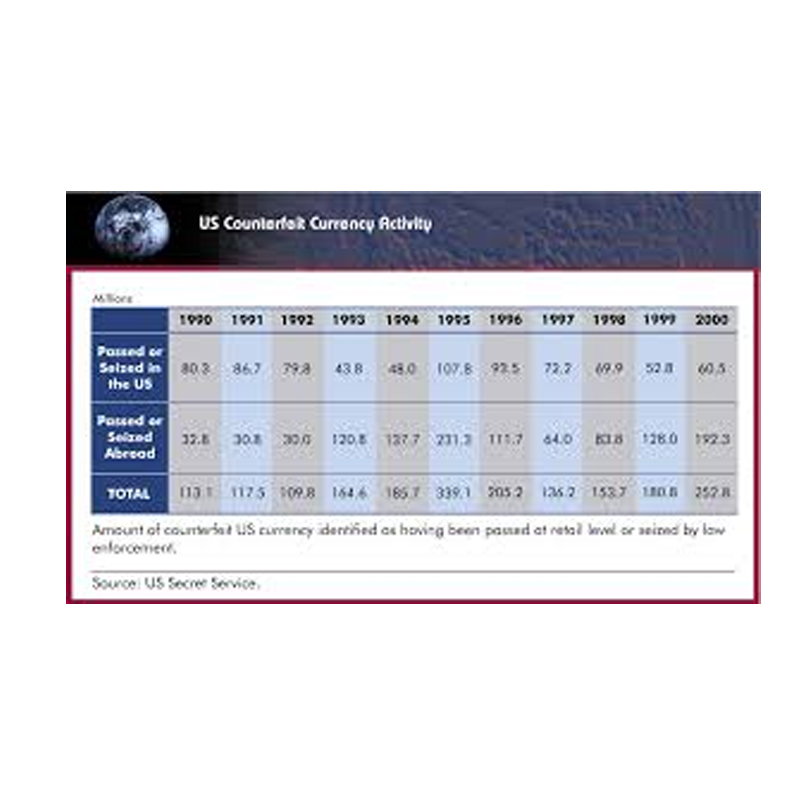
    Entertainment, software are the most heavily counterfeited sectors. The US, UK, India, Malaysia and China top the list of countries that have the most intellectual property violations. Over the first six months of 2006 a total value of $699.3 million of counterfeit and pirated goods, specifically intellectual property theft, was discovered from 760 incidents in 69 countries. Louis Vuitton, Nike, Microsoft, Gucci and Prada are the brands that are counterfeited the most. Pepsi is the most counterfeited brand in the food category.

    Glen Gieschen says, “This activity has major implications upon job creation and sustainability, consumer health, safety and security, and is driving serious criminal activity into this seemingly innocent crime. The greatest misconception about counterfeiting is that the impact is negligible, however the truth is far different.

    “Consumers who are unaware they are purchasing fake products and those who are actively seeking them have consumed adulterated drugs and died, installed fake products in their vehicles which reduce its life or cause bodily injury when they malfunction. We have documented an endless number of instances where these bogus items result in serious problems, large and small for consumers.

    “Recently, counterfeit airline parts were discovered in Russia which, as a passenger, is a concern. When seizures are made of bootleg music, software, and films, it is becoming a frequent occurrence to discover illegal drugs and weapons. In some cases, phony items are sold by illegal immigrants to support their families and fund causes in their homelands. When you purchase these items, you have no idea of the type of people you are supporting, where these funds are going and for what purpose.”

    The top 5 (of 69) countries enforcing intellectual property violations:

    1. USA, 205 incidents, $51.7 Million seizures & losses

    2 UK, 116 incidents, $31.1 Million

    3. India, 87 incidents, $2.5 Million

    4. Malaysia, 52 incidents, $5.9 Million

    5. China, 43 incidents, $5.3 Million

    The report also analyses the use of the Internet in networking and organising the activity of counterfeiters in addition to providing unregulated and competitive advantages which legitimate businesses are unable to use through trade boards, spam, auctions and cyber outlets.

    The most heavily counterfeited sectors:

    1. Entertainment and Software, 383 incidents, valued at $256 Million

    2. Clothing and Accessories, 149 incidents, $69 Million

    3. Drugs and Medical, 44 incidents. $15.8 Million

    4. Food and Alcohol, 40 incidents, $1.7 Million

    5. Cigarettes and Tobacco Products, 37 incidents, $276 Million
    The reports conclusions are based on data obtained from actual counterfeit and piracy activity.

    – Countries, such as China and Russia, export more counterfeit goods than they seize domestically.
    – The US and UK are more effective at enforcing intellectual property rights than other countries.
    – Five per cent of all intellectual property theft is linked to other serious criminal activity such as drugs, thefts, and weapons offences.
    – Counterfeiters are now cross selling different brands with different types of fake goods and in some cases are dealing illicit items with the counterfeits.
    – 14 per cent of counterfeit investigations now involve the use of the Internet.
    – The Internet is being used by all types of counterfeiters to network and organise their activity.
    – Trademark and copyright goods are counterfeited in nearly equal proportions.

    The Bascap Intelligence Reports show that the Internet has been used as marketing tool in one of every seven reported investigations. A significant percentage of spam and junk email is attributable to internet vendors peddling everything from counterfeit drugs and watches to clothing, jewelry, software and pens. Manufacturers of fakes are using the Internet to market directly to consumers, retailers, and distributors through trade boards, auction sites, spam, and cyber outlets.

    The shift from physical marketing to cyber marketing of fake products is due to a number of factors. The Internet is a vast and growing consumer and business market in all economies. Websites can be set up in minutes, at a minimal cost, with the use of a credit card and require only basic computer skills to design and publish. Moreover, tracing the physical location of a counterfeiter through a website can be extremely difficult.

    Some counterfeiters are able to gain a competitive advantage over legitimate businesspeople by using Internet marketing methods that may be illegal or that most manufacturers or retailers would not wish to use. For example, the use of spam, online auctions, or trade boards may dilute a brand’s value and pose legal, technical, and ethical challenges for many legitimate brand owners.

    The top 5 (of 357) items counterfeited:

    1. Films, 13.3 per cent of items counterfeited
    2. Music, 7.5 per cent
    3. Software (Business and Games), 6.1 per cent
    4. Medicine, 4.3 per cent
    5. Handbags, 2.1 per cent

    In reviewing the top counterfeited items reported in the Bascap Intelligence Reports, it becomes evident that copyrighted (51.3 per cent) and trademarked (48.7 per cent) products are being infringed in nearly equal numbers. The variety of reported items suggests that counterfeiters are diversifying into a larger range of goods and industries, which phenomenon is regularly demonstrated when a wide mix of products is seized in raids on a single site.

    Cross selling of different items and brands is also becoming a standard practice as fake Viagra is sold with cigarettes, CDs with handbags, and perfume with watches. In a small, but growing, trend, knockoffs are being sold with other illegal goods such as illicit drugs, fake identification and counterfeit currency.

    The growth of the popularity as a distribution channel for counterfeit and pirated goods notwithstanding, reports indicate that traditional channels and mobile operations are still a significant problem for brands. A large percentage of retail operations are now set up in homes to minimise detection of mail order, product assembly, copying, warehousing and distribution operations. Mobile operations such as street vendors, flea markets, bazaars, auctions, and boot sales remain strong due to the large numbers of consumers attracted to discounted items and bootleg goods.

    Intelligence also suggests that counterfeiters are experts at building upon existing brand marketing, thus saving themselves the cost of creating and testing consumer segments, setting up distribution channels, and advertising. For these reasons, it is not surprising that the leading brands counterfeited in each classification are well-known global brands. A notable case study is the Fifa World Cup 2006 which serves as an example of how counterfeiters implement this strategy.

    Unlike brands whose images have been developed over dozens of years, the World Cup was promoted by organisers and sponsors in a relatively short period of time. Counterfeiters anticipated key markets, manufactured and warehoused knockoffs well in advance of the consumer demand, and then began attempting to distribute them as soon as the brand image was created by the World Cup organisers.

    The top 5 (of 392) brands counterfeited:

    1. Louis Vuitton, 5.2 per cent of incidents.
    2. Nike, 4.9 per cent
    3. Microsoft, 4.7 per cent
    4 Gucci, 3.8 per cent
    5. Prada, 2.5 per cent

    During this reporting period, 392 brands were imitated. The majority of the 760 investigations focused on a number of brands, of which the top five were compiled in Table 4. Noticeably, Louis Vuitton, Gucci and Prada represent luxury products where supplies are limited and prices reflect the exclusivity of the brand. Counterfeiters are successfully moving large quantities of these products for a number of reasons. This exclusivity includes substantial marketing and retail costs, which translate into high prices that are easily avoided by counterfeiters.

    The counterfeiters are able also to manipulate product quality and thus lower the cost of copying the products. The result is a substantial undercut in price of between 50 – 75 per cent from the suggested retail price. Regardless of these deeply discounted prices, it is common to find hundreds of percentage points in profit margins on these knockoffs, thus making it an attractive market to enter.

    The top brands counterfeited in each category:

    Cigarette and Tobacco Products – Marlboro
    Clothing and Accessories – Louis Vuitton
    Computer Equipment and Supplies – Canon
    Drugs and Medical – Viagra
    Electronic Equipment and Supplies – Underwriters Laboratories
    Entertainment and Software – Microsoft
    Food and Alcohol – Pepsi
    Industrial Goods and Supplies – Toyota
    Jewelry and Watches – Rolex
    Perfume and Cosmetics – Giorgio Armani
    Toys and Sports Equipment – Fifa World Cup 2006
    Non-luxury goods, such as those produced by Nike, fight the challenge of popularity as opposed to exclusivity. Due to the high consumer demand for some brands, counterfeiters are able to sell large quantities at the full retail or modestly discounted prices. Again, quality is controlled by the counterfeiter to reduce costs and increase profit margins. Perhaps the highest-margin knockoff product is software. While hundreds of percentage points in profit appears adequate to counterfeiters and pirates for many phony products, margins in pirated software are in the thousands of percentage points.

    The 392 brands analysed for this report represent a significant portion of the portfolio of consumer products available worldwide and a significant percentage of international trade. Moreover, the production and distribution of these brands provide millions of jobs – many of which are at risk to growing competition from illegal markets distributing fake versions of the original products. In controlling the cost of production and thus the quality of fake products, counterfeiters may put consumer health and safety at risk and undermine the confidence placed in these brands.

    A number of factors affect sectors differently. Sales of fake Clothing and Accessories are influenced by a large variety of selling schemes, such as street peddlers, flea market vendors, bazaars, purse parties, internet auctions and discount outlets. The Entertainment and Software industries are vulnerable to Internet file-sharing technology and simple computer manufacturing techniques available to most consumers.

    The Drugs and Medical, Food and Alcohol, and Cigarettes and Tobacco sectors are subject to regulatory and health restrictions such as mandatory age limits, verification of prescriptions, and expiry of goods. In addition, added taxes levied on these products provide incentives for counterfeiters to enter these markets and infiltrate supply chains.