Category: Television

  • Shemaroo rolls out first hindi movie channel ‘Shemaroo Josh’

    Shemaroo rolls out first hindi movie channel ‘Shemaroo Josh’

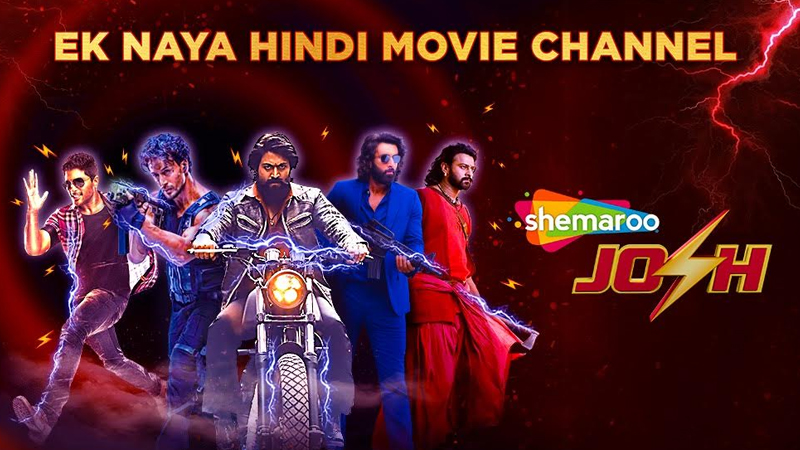
    MUMBAI: Lights, camera, Josh! Bollywood buffs, get ready for a full-throttle film fest on your TV. Shemaroo Entertainment, the six-decade-old powerhouse of Indian entertainment, has launched Shemaroo Josh: its first dedicated Hindi movie channel.

    Formerly known as Chumbak TV, the channel has now morphed into a high-energy movie destination, promising back-to-back blockbusters across action, drama, romance, comedy and everything in between. Available on DD free dish, all major DTH platforms, and cable networks, Shemaroo Josh is set to beam the big screen straight into living rooms across India.

    The line-up is a cinephile’s dream: PK, Animal, Kantara, KGF, Bahubali, Waltair Veerayya, 12th Fail, Bade Miyan Chote Miyan, Bhool Bhulaiyaa 2 and many more, ensuring that every evening can feel like a Friday release.

    “Shemaroo has been an integral part of India’s cinematic journey,” said Shemaroo Entertainment, CEO, Hiren Gada. “With Shemaroo Josh, we bring renewed energy and a sharper focus on what excites the masses, strengthening our commitment to keep India entertained every single day.”

    Echoing this, Shemaroo entertainment, COO – broadcasting business, Sandeep Gupta added, “In a world of endless choices, the joy of watching a blockbuster with family on TV remains unmatched. Shemaroo Josh is our tribute to that timeless habit, turning every film into an event.”

    With a splashy line-up, massy storytelling, and a name that screams energy, Shemaroo Josh looks set to add serious power to India’s most loved TV genre. After all, in a nation where cinema is a religion, there’s always room for one more screen idol. This time, in the form of a channel.

  • TPL serves up Season 7 in Ahmedabad with global stars and local passion

    TPL serves up Season 7 in Ahmedabad with global stars and local passion

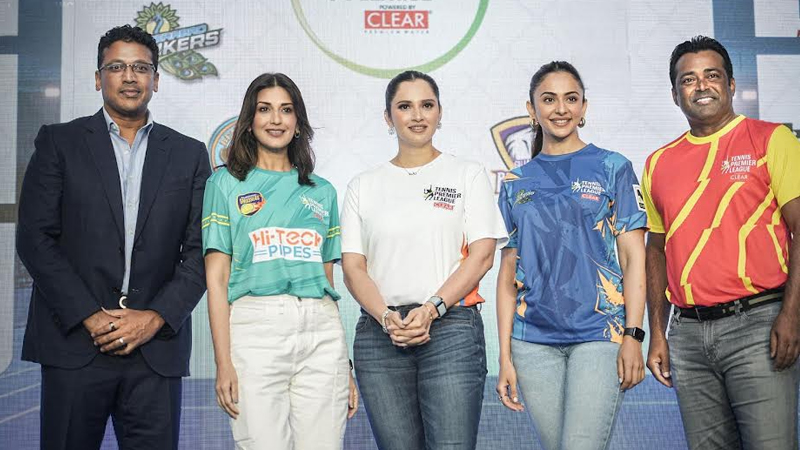
    MUMBAI: Game, set, Ahmedabad, India’s only professional tennis league is ready to smash new ground. The Tennis Premier League (TPL), under the aegis of the All India Tennis Association (AITA), will stage its 7th season from 9–14 December at the Gujarat University Tennis Stadium, marking its first-ever move outside Maharashtra.

    In hitting this milestone, TPL becomes only the fourth Indian sporting league to enter a 7th season, joining the ranks of IPL, Pro Kabaddi, and ISL. The eight-franchise tournament has heavyweight backers, from Leander Paes, Sania Mirza, and Mahesh Bhupathi to Rakul Preet Singh and Sonali Bendre. On court, fans can expect fireworks as international players ranked between 30 and 50 in the ATP rub shoulders with India’s finest, including two-time Grand Slam champion Rohan Bopanna.

    What sets TPL apart is its trademark 25-point format quick, high-octane matches designed to keep crowds hooked. Over 400 tournaments across 20 plus cities in a single year and its Race to Gold Scholarships have made TPL a genuine grassroots-to-glory pipeline. Gujarat has already felt its impact, with age-group tournaments and scholarships energising the local tennis scene.

    “This will be a real shot in the arm for tennis in Gujarat,” said Gujarat state Tennis Association secretary Shrimal Bhatt highlighting the historic arrival of top-ranked ATP stars. For co-founders Kunal Thakkur and Mrunal Jain, the shift to Ahmedabad is about scale and spirit bringing world-class tennis to a city fast emerging as a sporting capital.

    With 250 plus matches played across seasons, international stars, and the promise of electrifying rallies, Season 7 is primed to be TPL’s most exciting chapter yet. Ahmedabad, brace yourself, tennis fever is about to hit full throttle.

  • Revolving doors keep spinning in television as executives flee for calmer pastures

    Revolving doors keep spinning in television as executives flee for calmer pastures

    MUMBAI: The Indian media and entertainment business is experiencing something of a convulsion. At the heart of the storm sits television, a medium once considered impregnable, now rattled by both economic pressures and shifting consumption patterns. Senior and mid-level executives are walking out of plush offices at an unprecedented rate, turning resignation letters into the industry’s hottest commodity. The revolving doors at general entertainment channels, factual broadcasters and news networks have scarcely stopped spinning.

    Take the case of Rahul Kanwal, who after more than 16 years of high-profile editorial leadership quit India Today TV to join NDTV, in a move that shocked newsroom insiders. Or Ajit Varghese, the revenue chief at JioStar, who traded the corporate heft of a giant for partnership status at Madison, Sam Balsara’s three-and-a-half-decade-old agency. Meanwhile, Ashish Sehgal, a towering presence at Zee Entertainment for two decades and long seen as a confidant of Subhash Chandra and Punit Goenka bowed out just last week, a departure many in the industry still consider unimaginable.

    The Indian entertainment industry has been undergoing a leadership shake-up, particularly at Sony Pictures Networks India (SPNI). Veteran executive Neeraj Vyas exited after decades with the broadcaster to pursue entrepreneurial ambitions, signalling a personal pivot. Leena Lele Dutta, who oversaw the Kids and Animation business, is also stepping down, with Ambesh Tiwari set to replace her—a move that reflects SPNI’s portfolio restructuring. At the same time, the network bolstered its programming muscle by onboarding Nimisha Pandey as Programming Head at Sony SAB, underlining a renewed focus on fresh content creation.

    At Zee Media, a similar churn has unfolded. Manish Kalra and Archana Anand departed from Zee5 amid the platform’s ongoing strategy reset, while Mona Jain, Chief Revenue Officer, stepped down in August, citing industry-wide advertising pressures. Leadership realignment continued with Karan Abhishek Singh taking over as CEO, succeeding Abhay Ojha. These shifts highlight both the turbulence caused by stalled merger talks and the urgent need for sharper digital and ad revenue strategies.

    The news broadcasting sector has also witnessed high-profile exits. Avinash Pandey, CEO of ABP Network, resigned after more than two decades, stating personal reasons and the desire for a new professional chapter, with Sumanta Datta stepping in as his successor. MK Anand, CEO of Times Network, retired after leading the group through market headwinds, paving the way for Varun Kohli, who joined as COO to drive growth. Meanwhile, industry veteran Bobby Pawar shifted gears by joining News18 Studio as a creative consultant, reflecting the increasing importance of branded storytelling and creative content partnerships in newsrooms.

    The exits stretch beyond individual cases. Varun Kohli, who lasted barely a year as chief executive of Times Now, is gone. Aditya Raj Kaul, a stalwart of TV9, has crossed over to NDTV. At Warner Bros Discovery, Uttam Pal Singh, who spearheaded kids’ programming, resigned suddenly earlier this year, followed by Azmat Jagmat, another senior name. And in a particularly symbolic shift, Sanjog Gupta, head of sports at JioStar, has left to take up what one insider calls “a less bruising role” at the International Cricket Conference.

    What explains this exodus? A cocktail of pressures, say industry watchers. “Some of the folks are being let go on account of job redundancies,” observes one long-time media consultant. The wave of mergers and acquisitions JioStar’s consolidation, Zee’s attempted tie-ups, and the global reorganisations at Warner Bros Discovery has created overlapping functions. Where there are two people for one chair, one has to go.

    But redundancies only partly explain the malaise. The sharper truth, argue observers, lies in economics. Television revenues are under siege. Ad growth has slowed dramatically, with TAM Media data showing a 10 per cent decline in the first half of the year. Broadcasters, desperate to offset the slide, are demanding steeper targets from revenue heads and programming chiefs. “The expectations are unreasonable,” says another insider. “Advertisers are spoiled for choice, streaming platforms are eating into budgets, and yet top managements are chasing revenue hikes that are simply not possible. The stress is unbearable.”

    Increments, too, have dried up. Senior executives accustomed to annual rises and bonuses now find themselves fighting merely to hold ground. Worse still, broadcasters have been launching streaming services of their own almost all advertising-driven which has only spread resources thinner and pushed teams into even more brutal competition for a shrinking pool of ad dollars.

    Not all departures are sackings; some are voluntary retreats. As one industry observer puts it: “Executives are not just quitting jobs, they’re choosing health over hypertension. The rat race is too costly.” Indeed, several departures from Sanjog Gupta’s exit to ICC, to executives slipping into agencies or advisory roles bear the hallmark of a search for relative calm.

    Macro forces are compounding the gloom. With Russia’s war in Ukraine dragging on, Israel and Palestine locked in fresh conflict, and US president Donald Trump slapping stiff tariffs on Indian goods, global instability is feeding into local advertising budgets. Brands, particularly multinationals, are cautious, trimming campaigns and deferring big spends. “Belt-tightening will only intensify in the second half of the year,” warns a veteran media planner. “Blood baths are going to continue. Expect more resignations, more forced exits. The churn is far from over.”

    For now, television in India is still a business of scale: hundreds of millions watch every day, advertising still contributes the lion’s share of broadcaster revenues, and regional channels continue to proliferate. But for the men and women running the show, the glamour has dimmed. The executive suite, once the ultimate perch, has become a revolving door. And the more it spins, the less likely it seems to stop anytime soon.
     

  • NFDC signs landmark film tie-ups with Australia for global collaborations

    NFDC signs landmark film tie-ups with Australia for global collaborations

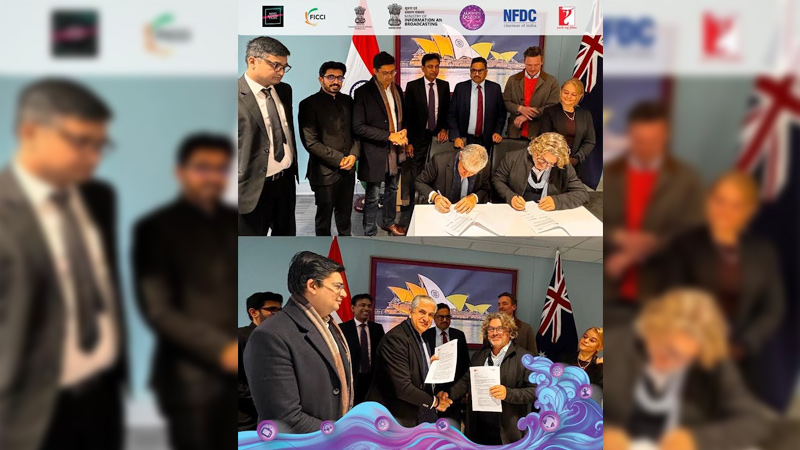
    MUMBAI: Lights, camera, collaboration! India and Australia are ready for a cinematic crossover as the National Film Development Corporation of India (NFDC) has inked two landmark Letters of Intent (LOIs) with Screen Producers Australia (SPA) and the National Film and Sound Archive of Australia (NFSA). Together, they’re rolling out a red carpet for co-productions, preservation and partnerships.

    With Screen Producers Australia, the spotlight is on India Connect, a marquee initiative that will see a delegation of Indian producers fly to the Gold Coast in 2026 for Screen Forever, the country’s biggest screen conference. Think project-matching forums, structured networking, and fresh avenues for cultural exchange, a power-packed script designed to spark creative and commercial collaborations across borders.

    The second LOI with NFSA is all about safeguarding cinema’s soul. The partnership will focus on film restoration, digitisation, and archival expertise, ensuring that the legacies of both nations remain intact for future generations of cinephiles. Knowledge-sharing and joint preservation practices will form the spine of this alliance, giving old reels a new lease of life.

    The curtain rises on these collaborations in late 2025, with timelines rolling into Screen Forever 2026 and beyond. The partnerships will also extend to Waves Bazaar, NFDC’s flagship content and co-production market, hosted alongside IFFI in November. With Australian participation bolstering the line-up, Waves Bazaar promises to be a buzzing hub where stories, ideas and partnerships take centre stage.

    As I&B Secretary Sanjay Jaju put it, the moves “reaffirm NFDC’s commitment to building global bridges for Indian cinema.” From the Gold Coast to Goa, the script is set for a blockbuster partnership that brings filmmakers, audiences, and archives together in one global reel.
     

  • Bengaluru gets a smashing serve with Pickleball Now Grand Prix debut

    Bengaluru gets a smashing serve with Pickleball Now Grand Prix debut

    MUMBAI: Game, set… and smash! Bengaluru is all set to witness a sporting spectacle with a twist as Times Network serves up the Pickleball Now Grand Prix on 30 August 2025 at Gorally, Whitefield. Billed as India’s first premium lifestyle pickleball showcase, the daylong event promises a fiery mix of sport, community, and high-energy fun. Over 250 registered players will battle it out across 7 dedicated courts, cheered on by more than 500 attendees. With a Rs 2 lakh prize pool, 14 winners and 14 runners-up will take home medals, trophies, and bragging rights, all backed by official Pickleball World Rankings (PWR) points to up their global standing.

    The format caters to both seasoned pros and rising enthusiasts, with Men’s, Women’s, and Mixed Doubles in Intermediate and Open categories, plus a cheeky Mystery Partner draw where teammates are paired at random ensuring unpredictable rallies and plenty of laughs.

    Backing the Grand Prix is a power-packed sponsor roster, led by Hell Energy Drink (presenting partner) and MG Motors (driving partner), with big names like Skechers, Just In Time, Aris Perfumes, River Bikes, Amity University, Coindcx, Radico, Zoho, Acerpure, Assetz Builders, Airavat, and Stayvista all jumping on board.

    With booming brand power, rising player numbers, and a sport that’s fast becoming India’s newest obsession, the Pickleball Now Grand Prix looks set to ace its debut not just as a tournament, but as a lifestyle statement that Bengaluru won’t stop talking about.

  • ICC teams up with Google to turbocharge women’s cricket

    ICC teams up with Google to turbocharge women’s cricket

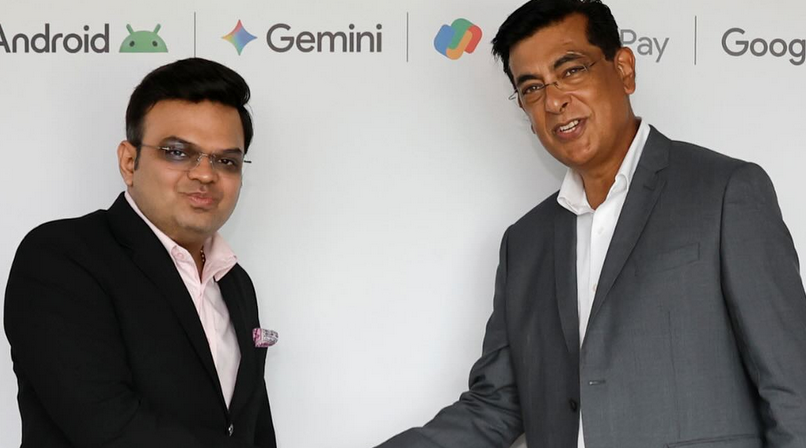
    LONDON: The International Cricket Council (ICC) has inked a landmark global partnership with Google to accelerate the growth of women’s cricket, betting that technology can turbocharge fan engagement at a moment when the sport is reaching critical mass.

    The tie-up, unveiled on Friday, comes just as the women’s game prepares for its two biggest stages: the ICC Women’s Cricket World Cup 2025, to be split between India and Sri Lanka, and the ICC Women’s T20 World Cup 2026 in England and Wales.

    For the ICC, the partnership signals a decisive push to make women’s cricket more visible, accessible and lucrative. Earlier this year, Unilever became the ICC’s first global partner for the women’s game. Now, Google’s entry adds the sheen of Silicon Valley to cricket’s most ambitious attempt yet at elevating women’s sport to parity with the men’s version.

    ICC chairman Jay Shah called the deal “a landmark moment” that would help take women’s cricket “to even greater heights” by inspiring new generations and strengthening the sport’s global reach. “Together with Google, we aim to make women’s cricket a truly global force, resonating with fans in both established and emerging markets,” he said.

    Google’s arsenal of consumer products—Android, Google Pay, Gemini AI, and Pixel smartphones—will form the backbone of this strategy. The idea is to create an integrated ecosystem that enhances every stage of the fan journey: discovering match schedules, watching highlights, engaging with players’ stories, making seamless payments for tickets or merchandise, and celebrating wins online.

    “This alliance is not just about a single tournament; it’s about building deeper engagement,” said Google India vice-president of marketing Shekar Khosla. “We want to make the sport more accessible and enable fans to feel a stronger connection with what they care about.”

    The ICC hopes this “always-on” digital presence will not only expand the fan base but also attract new advertisers eager to reach younger, more digital-native audiences.

    Women’s cricket has been growing rapidly, buoyed by marquee tournaments like the Women’s Premier League (WPL) in India, the Big Bash in Australia, and increasing broadcast commitments. Audience numbers are rising, sponsorship is flowing in, and players such as Smriti Mandhana, Alyssa Healy, and Nat Sciver-Brunt are becoming household names.

    But the economics still lag far behind the men’s game. Rights packages, sponsorship valuations and player salaries remain a fraction of men’s cricket. By hitching the sport to Google’s technology stack, the ICC is signalling it wants to fast-track the commercialisation curve, making women’s cricket a product that broadcasters, advertisers and fans cannot ignore.

    The deal also reflects the growing entanglement of global tech platforms with sport. From Amazon streaming tennis to Apple bankrolling Major League Soccer, Silicon Valley is embedding itself in the sporting ecosystem. For Google, cricket is a natural fit: it is India’s most-followed sport and one of the most powerful cultural exports across the commonwealth. By associating with women’s cricket, Google also gets to position itself as a champion of inclusion and representation—values that resonate with global consumers.

    For the ICC, this is as much about geopolitics as sport. The women’s World Cup in 2025 will be staged in India and Sri Lanka, markets where Google dominates digital infrastructure but where competition from local players like Paytm, PhonePe and Jio is fierce. Embedding its brand through cricket is a way to reinforce dominance at a cultural level.

    For women’s cricket, the timing could not be better. With two World Cups in less than a year, unprecedented visibility is guaranteed. The challenge will be to convert eyeballs into habit, passion into loyalty, and novelty into permanence.

    Cricket’s men’s World Cups have long been billion-dollar properties. The women’s version has so far lived in their shadow, but that is changing. The 2022 Women’s World Cup drew record viewership globally, and the inaugural WPL auction stunned observers with player valuations that rivalled established men’s leagues. The ICC now wants to seize this momentum and institutionalise women’s cricket as a commercially viable product on its own terms.

    The Google alliance, then, is more than a sponsorship. It is an attempt to rewire how women’s cricket is consumed, blending sport with technology to create experiences that transcend stadiums and television screens. If successful, it could turn the women’s game into a global sporting phenomenon, not just a promising sideshow.

    If it fails, critics will dismiss it as another flashy announcement without structural change. But for now, women’s cricket has the wind at its back, the ICC has its boldest partner yet, and Google has found a new pitch to play on.

  • Formula 1 races into record books with blockbuster first half of 2025

    Formula 1 races into record books with blockbuster first half of 2025

    MUMBAI: Full throttle, no pit stops! Formula 1’s 2025 season hasn’t just been about roaring engines and tight overtakes, it’s been a spectacle both on and off the track. From Brad Pitt’s F1: The Movie smashing box office records to sold-out Grands Prix pulling in millions of fans, the sport has hit top gear in its 75th anniversary year.

    The season opened with F1 75 Live at London’s O2, where 16,000 fans watched all ten teams unveil their new cars alongside live music from global stars like MGK, Tems and Take That. The livestream drew 7.5 million viewers worldwide, setting Youtube records and proving that F1 knows how to put on a show as much as a race.

    Hollywood soon joined the grid. Pitt’s racing blockbuster has already grossed more than 600 million dollars, making it the highest-earning sports film ever and his biggest box-office hit. Premieres in New York and London drew A-listers from Tom Cruise and Naomi Campbell to Lewis Hamilton and Charles Leclerc, not to mention Formula 1’s biggest names behind the wheel.

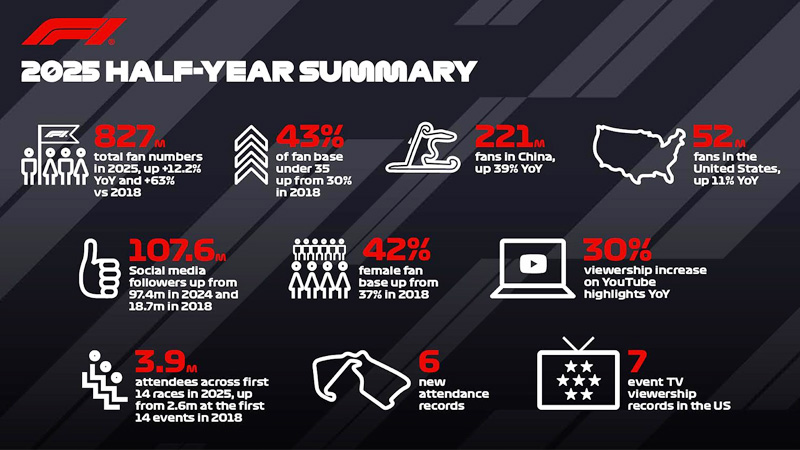
    On track, the numbers are just as electrifying. More than 3.9 million fans attended the first 14 races, which is the highest ever mid-season tally, with Australia and Britain each topping 400,000. 11 of the 14 events sold out, while record-breaking crowds turned up in Spain, Canada and Belgium.

    Digital reach is also flying. Formula 1’s social media following has surged past 107 million, up 21 percent year-on-year, with Tiktok and YouTube highlights pulling in record views. Younger fans are driving the growth too: 43 percent of F1’s global fanbase is now under 35, and nearly half are women.

    Commercially, the grid is just as busy as the paddock. Partnerships with Disney, Pepsico, LEGO, Barilla and luxury powerhouse LVMH have broadened F1’s global appeal, while quirky activations such as LEGO driver parades and gourmet pasta pop-ups, have kept fans talking.

    And the best part? There’s still half a season left. With Zandvoort kicking things off this weekend, F1’s second act promises more drama, more speed and, if the first half is anything to go by, more records smashed.
     

  • News18 reigns supreme as rivals trail in English and Hindi news battle

    News18 reigns supreme as rivals trail in English and Hindi news battle

    MUMBAI: When it comes to the news game, the 18s are playing in a league of their own. CNN-News18 and News18 India have once again flexed their dominance, leaving competitors scrambling to catch up in both English and Hindi news television.

    According to the latest BARC data, CNN-News18 continues to tower over the English news space with a hefty 38.8 per cent market share, while NDTV 24×7 trails at 23.8 per cent and Times Now at a modest 17.0 per cent. (BARC India | Mkt: India | TG: 15 plus | Wk30’25 – 33’25 | 8 Channels considered | Market Share  per cent Basis AMA’000). Ever since BARC ratings resumed in March 2022, CNN-News18 has kept its crown, week after week, making its supremacy look almost effortless.

    The Hindi turf tells a similar story. News18 India clocked 77,918 AMA’000, comfortably ahead of Aaj Tak at 74,546 AMA’000 (BARC | Metric: Avg. Weekly AMA’s | TG: NCCS All 15 plus | Period: Wk 30’25-Wk 33’25, 24 Hrs, All Days | Market: HSM). With anchors like Kishore Ajwani, Amish Devgan, Rubika Liyaquat, Prateek Trivedi, and Aman Chopra fronting its power-packed programming, News18 India continues to be the nation’s preferred pitstop for Hindi news.

    Part of the larger News18 Network, which boasts the country’s biggest omni-channel news presence, both CNN-News18 and News18 India have invested heavily in editorial firepower and technology. The strategy is paying off handsomely, with the network cementing its place as India’s most-watched and trusted news giant proving that in the battle for eyeballs, the house of 18 is still the boss.

  • Zee Telugu hits the high notes with Sa Re Ga Ma Pa Li’l Champs launch

    Zee Telugu hits the high notes with Sa Re Ga Ma Pa Li’l Champs launch

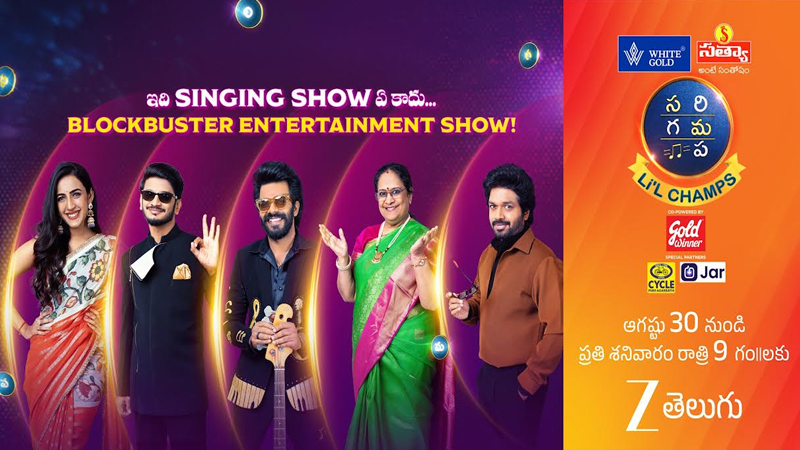
    MUMBAI: Zee Telugu is tuning up for a melodious ride as it launches the 17th season of its iconic singing reality show, Sa Re Ga Ma Pa, this time in the Li’l Champs avatar. The musical journey begins on 30 August at 9 pm, with fresh young talent ready to steal hearts every Saturday night.

    Fronting the show is the ever-charismatic Sudheer, whose quick wit and charm promise to keep the energy buzzing. Guiding the contestants is a star-studded panel: singer SP Shailaja, director Anil Ravipudi, lyricist Ananth Sriram, and actor Niharika Konidela each bringing their own flair for music, cinema and storytelling. Together, they’ll mentor the budding singers while keeping audiences hooked with insights and banter.

    The line-up of contestants is as vibrant as the stage itself. Advith turned heads with a spirited take on Chaaruseela, complete with a comical American accent, while Kruthi charmed with a soothing rendition of Kokilamma. Nithyasree electrified the crowd with Magallu Vatti Maayagalle, and Aliya Fathima from Kerala proved that music knows no language barrier with her soulful Sirimalle Poova. Meanwhile, Adharv amped up the festive vibe with Dhandalayya, and Lakshmi Chowdary wowed with her jaw-dropping dual voice modulation. A surprise highlight came when singer Sameera Bharadwaj and her daughter took the stage for a playful mom-daughter duet of Kathalenno Chepparu, blending melody with comedy.

    With a mix of powerhouse voices, pint-sized confidence, and a panel that knows how to strike the right chord, Sa Re Ga Ma Pa Li’l Champs promises to be less of a contest and more of a celebration of music, childhood and pure joy.

  • KBC’s season 17 draws in marquee sponsors, Sony LIV ramps up play-along push

    KBC’s season 17 draws in marquee sponsors, Sony LIV ramps up play-along push

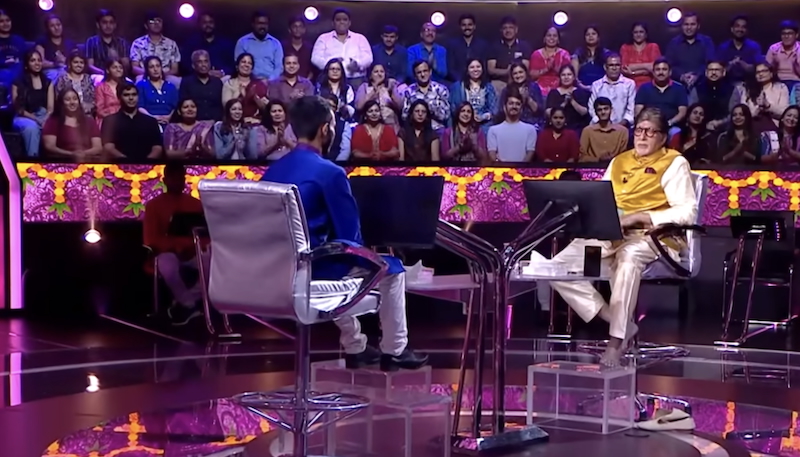
    MUMBAI: Kaun Banega Crorepati (KBC) is back for its 17th season, and the big brands are queueing up once again. Sony Entertainment Television and Sony LIV have rolled out the latest edition of India’s most iconic quiz show, hosted as ever by Amitabh Bachchan, with a line-up of sponsors as weighty as the prize money.

    Maruti has signed on as lead automobile partner, sweetening the stakes by giving away new cars to every Crorepati on the hot seat and to the overall Play Along winner. Hindustan Petroleum Corp Ltd (HPCL) has returned to underline its mass-market connect, while UltraTech Cement and Pidilite’s Dr Fixit have doubled down on their aspirational pitches to smaller cities and family households.

    All told, 15 brands from categories spanning automobiles, cement, home-building products, condiments, clothing, payment gateways and mouth fresheners have joined forces with the show this season. Their faith underscores KBC’s ability to deliver reach, recall and resonance across India.

    Sony LIV is once again pushing its “second-screen” play, with the return of KBC Play Along and the hugely popular Har Din Lakhpati feature. The format, which lets viewers answer questions live via the app, has turned KBC from a television property into a nationwide interactive event since debuting in 2018.

    Sony LIV, head of ad sales revenue Ranjana Mangla said KBC “has stood as a bedrock of consistency for advertisers—delivering unmatched reach, deep engagement, and a cultural resonance that few formats can claim.”

    HPCL’s CH srinivas hailed the programme’s “spirit of knowledge and the power of questions,” while UltraTech’s Ajay Dang called the Sony Liv tie-up “a once-in-a-lifetime opportunity” to cement aspirational journeys in tier 2 and 3 towns. Swati Jha of Pidilite added that both KBC and Dr Fixit “have been trusted companions in people’s lives” for more than two decades.

    With Sony LIV reporting over 100m app downloads and pushing an expanding roster of sports rights, films and originals, KBC remains its most bankable franchise—blending nostalgia, mass appeal and advertiser trust in equal measure.