Category: Television

  • Heineken 0.0 fuels India’s Formula 1 fan rush

    Heineken 0.0 fuels India’s Formula 1 fan rush

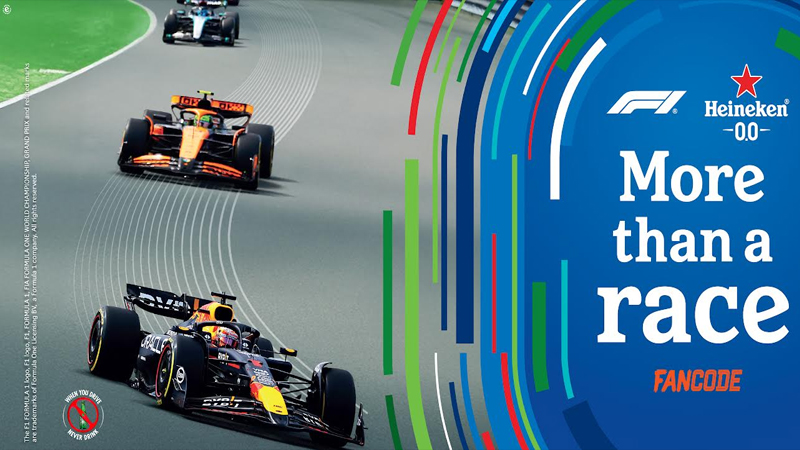
    MUMBAI: Talk about putting the pedal to the metal. Heineken 0.0 and Fancode are shifting Indian Formula 1 fandom into top gear with a new partnership designed to bring race-day thrills closer to home.

    The showstopper is The Ultimate F1 Fan Park at UB City Amphitheatre in Bengaluru, where the Singapore Grand Prix will be screened live on 5 October. Expect cheering crowds, roaring engines on the big screen and a festival-style buzz right in the city centre.

    India is no pit stop when it comes to Formula 1 passion. According to Nielsen NFI, the country now boasts nearly 79 million fans, a 41 per cent surge since 2019, making it one of the sport’s fastest-growing markets. Heineken, with its global F1 legacy, is seizing the moment to fuel that growth.

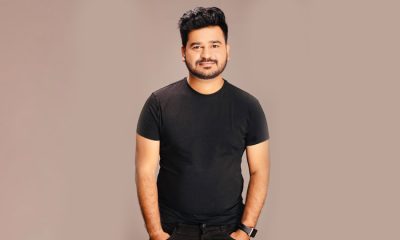
    Beyond Bengaluru, more than 200 curated screenings will light up pubs and sports bars across Mumbai, Pune, Goa, Kolkata, Hyderabad and Bengaluru. Adding extra horsepower, actors Siddhant Chaturvedi, comedian Rohan Joshi and creator Rizwan Bachav will rev up the digital experience with exclusive content around the Singapore Grand Prix.

    Fancode, the official F1 broadcaster in India, will also put fans in the driver’s seat with live race coverage, behind-the-scenes stories and digital exclusives.

    “Heineken 0.0 has always stood for innovation and responsible enjoyment. With F1’s popularity soaring in India, we’re excited to create inclusive fan experiences that make the sport part of everyday culture,” said Heineken Company chief corporate affairs officer Joanna Price.

    For United Breweries, Heineken’s India partner, the move is about more than just screenings. “Formula 1 gives us the perfect stage to bring fans together and shape a culture of community, passion and responsibility,” said chief marketing officer Vikram Bahl.

    Fancode co-founder Yannick Colaco summed it up, “F1 has grown from a niche to one of the fastest-rising fan cultures in India. Fan parks like this strengthen that community spirit.”

    With engines revving and fans rallying, it seems India’s love affair with Formula 1 is only just leaving the starting grid.

  • Nielsen adds Big Data muscle to new weekly TV rankings with sports flair

    Nielsen adds Big Data muscle to new weekly TV rankings with sports flair

    MUMBAI: Nielsen is giving TV viewership a fresh scoreboard with the launch of its revamped weekly ranking reports, now supercharged by Big Data plus Panel measurement.

    Unveiled for the first official week of the new broadcast season (starting 22 September), the reports don’t just track traditional programming anymore. Two new lists are in play:Top 25 Live Sports Events and the Top 250 Total Scheduled Programmes across broadcast, cable, streaming and syndication.

    Sports wasted no time making a splash in the inaugural rankings, with college football, Major League Baseball, the NFL, Ryder Cup and the WNBA all scoring spots in the Top 25.

    The refreshed Nielsen rankers now span broadcast, cable, syndication and streaming, giving a more holistic view of evolving TV habits. The reports shift to total day viewing and cover demographics from households to coveted age brackets like 18–49 and 25–54.

    At the heart of this is Nielsen’s Big Data plus Panel system, which blends the company’s long-standing representative panel with viewing data from 45 million households and 75 million devices, including set-top boxes, smart TVs and first-party streaming data. The result? A richer, more precise picture of who’s watching what, when and where.

    Beyond advertising, these insights can influence content programming, licensing, and TV distribution deals. Nielsen is also folding the new rankings into its website’s Top 10 lists, while continuing to flex its lead in streaming measurement through tools like streaming content ratings and The Gauge.

    With Big Data now in play, Nielsen isn’t just reporting on TV, it’s rewriting the playbook for how viewing is measured. 

  • Raj Kamble takes the chair as ANDYs’ first Indian Asia head

    Raj Kamble takes the chair as ANDYs’ first Indian Asia head

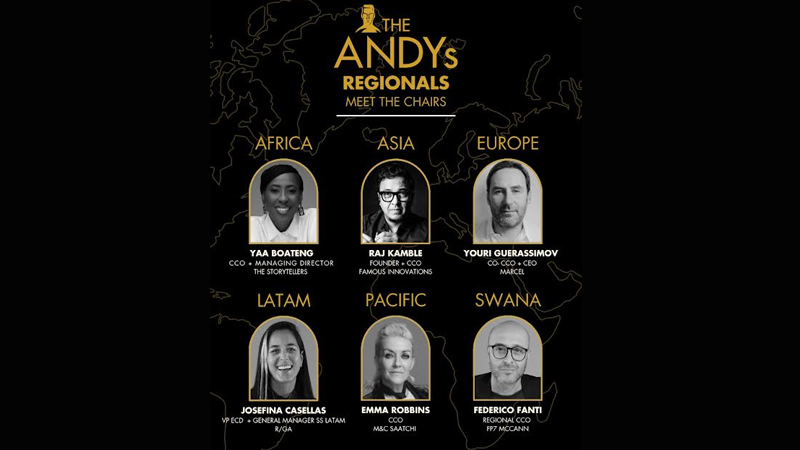
    MUMBAI: When it comes to big ideas, Raj Kamble now has the best seat in the house. The founder & CCO of Famous Innovations has been named the Asia Chair for the 2026 ANDYs Regionals, a first for India in the award show’s history.

    Joining Kamble on the global roster of Regional Chairs are Yaa Boateng (Africa), Youri Guerassimov (Europe), Josefina Casellas (LATAM), Emma Robbins (Pacific) and Federico Fanti (SWANA), forming a jury line-up that spans every creative corner of the globe.

    Far from a run-of-the-mill awards programme, the ANDYs Regionals flip the script: entry is free, with fees kicking in only if the work is shortlisted for the global show. And the track record is enviable 90 per cent of ANDYs-winning ideas later go on to win at Cannes Lions, D&AD, The One Show, Clios and other heavyweight festivals.

    “I’m thrilled to be chairing the Asia Jury at this year’s ANDY Awards Regionals. The ANDYs have always stood for fearless creativity and bold ideas. With 90 per cent of this jury having served as Jury Presidents at shows like Cannes Lions, D&AD and The One Show, we have the chance to not only recognise but also advocate for groundbreaking work from Asia. Let’s push creative boundaries together and make waves on the global stage,” said Famous Innovations founder & CCO Raj Kamble.

    By design, the ANDYs are more than a gong show, they’re an advocacy platform for creativity, ensuring winning work doesn’t just get applauded regionally but also gains momentum globally. With Kamble at the helm for Asia, expect some bold ideas from the region to earn their rightful place on advertising’s world stage.

  • Jane Goodall, primatologist who transformed our understanding of chimpanzees, dies at 91

    Jane Goodall, primatologist who transformed our understanding of chimpanzees, dies at 91

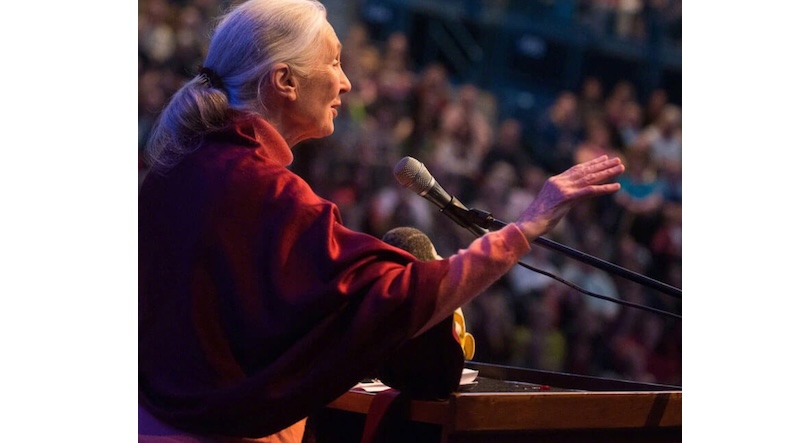
    LOSA ANGELES: Jane Goodall, the pioneering primatologist – who was the subject of two dozen documentaries and films and many more books  and  whose ground breaking observations of wild chimpanzees revolutionised both scientific understanding and public consciousness about humanity’s closest relatives, passed away  on 1 October 2025 in Los Angeles. She was 91.

    Goodall’s death, from natural causes during a speaking tour in America, ends a remarkable life that began in 1934 in Hampstead and led to the forests of Tanzania, where her patient, meticulous work upended long-held assumptions about what separates humans from other animals.

    Her discoveries were elegant and devastating to human exceptionalism. In 1960, watching a chimpanzee she had named David Greybeard fishing for termites with a modified grass stalk, she documented tool use in a species other than our own—a finding that prompted her mentor, Louis Leakey, to declare: “We must now redefine man, redefine tool, or accept chimpanzees as human.”

    More uncomfortable revelations followed. Goodall observed chimpanzees hunting and eating other primates, engaging in brutal inter-group warfare, and committing infanticide. “I had believed that the Gombe chimpanzees were, for the most part, rather nicer than human beings,” she reflected. “Then suddenly we found that chimpanzees could be brutal—that they, like us, had a darker side to their nature.”

    Her approach was as revolutionary as her findings. At a time when scientific objectivity demanded emotional distance and numerical designations for research subjects, Goodall named her chimpanzees and spoke openly of their personalities, emotions and relationships. The scientific establishment initially recoiled at such “anthropomorphism.” History vindicated her instincts.

    Born Valerie Jane Morris-Goodall, she arrived in Kenya in 1957 with no formal training but an abiding love of animals. Working as a secretary, she telephoned Leakey on a friend’s advice. He recognised her potential and, after she spent time at Olduvai Gorge, sent her to Gombe Stream National Park in 1960. Her mother accompanied her—a requirement imposed by nervous colonial authorities.

    Cambridge University later admitted her to pursue a doctorate despite her lack of undergraduate degree, making her the eighth person granted such an exception. She became the only human ever accepted into chimpanzee society, developing bonds that would last decades.

    In 1977, Goodall founded the Jane Goodall Institute, which grew into a global conservation force with 19 offices worldwide. Its youth programme, Roots & Shoots, now operates in over 100 countries. By 2004, she had largely abandoned field research to become a tireless advocate, travelling nearly 300 days a year to speak on behalf of chimpanzees and the environment.

    She was an outspoken vegetarian who became vegan in 2021, a critic of factory farming and animal testing, and a vocal proponent of recognising ecocide as an international crime. Her activism earned her a damehood in 2003, a United Nations Messenger of Peace appointment in 2002, the Templeton Prize in 2021, and the Presidential Medal of Freedom from Joe Biden in January 2025.

    Goodall was married twice—first to wildlife photographer Baron Hugo van Lawick, with whom she had a son, then to Derek Bryceson, a Tanzanian parliamentarian who died of cancer in 1980. She remained single thereafter, devoting herself to her work.

    Tributes poured in following her death. Prince Harry and Meghan called her “a visionary humanitarian, scientist, friend to the planet.” Leonardo DiCaprio described her as “a true hero for the planet.” United Nations secretary-general António Guterres  praised her “extraordinary legacy for humanity and our planet.”

    Goodall lived to see primatology transform from a male-dominated field into one with near gender parity—a change she helped inspire. Her insistence on treating animals as individuals with rich emotional lives influenced not just science but popular culture, ethics and law.

    She once said she saw no contradiction between science and spirituality, describing a “great spiritual power” she felt most keenly in nature. That sensibility—empirical yet reverent, rigorous yet compassionate—defined both her work and her life.

    Jane Goodall showed the world that to understand our closest relatives was to understand ourselves more clearly. In doing so, she changed what it means to be human.

  • TV Asahi to celebrate Doraemon’s French return with party at Mipcom 2025

    TV Asahi to celebrate Doraemon’s French return with party at Mipcom 2025

    PARIS: TV Asahi is throwing a Dorayaki Party at Mipcom on 14 October to celebrate the return of Doraemon, Japan’s time-travelling robotic cat, to French screens after a 10-year hiatus. Voice actors Emmanuel Curtil and Brigitte Lecordier will dish behind-the-scenes stories about reviving the beloved animation series at the Cannes event.

    The party marks the launch of 13 freshly dubbed episodes hitting French audiences from 3 October—the first French-language version since 2015. The new season drops first on YouTube France before rolling out across Anime Digital Network, Amazon Prime Video and Pluto TV.

    Paris-based distributor Soupir is orchestrating the multi-platform push, backed by a promotional blitz dubbed Bonjour Doraemon featuring voice cast videos, YouTube Shorts and exclusive previews.

    Curtil—the French voice of Jim Carrey and Disney’s Goofy—leads the cast as Doraemon. He’s joined by Lecordier, famous for voicing Son Goku in Dragon Ball, who plays Nobita Nobi and co-directs the dubbing alongside Louis Lecordier.

    “I hadn’t come across Doraemon before, but I had the pleasure of dubbing it alongside my long-time friend and collaborator, Brigitte Lecordier,” says Curtil. “I am very happy to bring this cheerful and intrepid little hero to life.”

    Lecordier calls the blue cat “a legendary figure throughout the world of animation” and says she feels “so lucky” to work on the series.

    Created by Fujiko F. Fujio, Doraemon debuted as manga in 1970 and hit Japanese television in 1979. The series has since spawned over 2,000 episodes and become a cultural juggernaut across Asia.

    TV Asahi head of animation sales and development Maiko Sumida says Japan and France share “a deep cultural affinity.”

    Soupir founder Charles Courcier, reckons the new dub will help Doraemon become “as beloved in France as it is around the world.”

  • Ram Charan takes aim at India’s Archery Premier League

    Ram Charan takes aim at India’s Archery Premier League

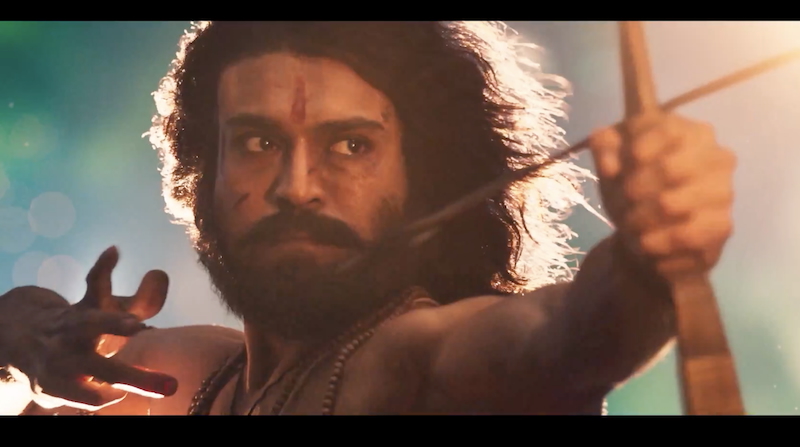
    NEW DELHI: Ram Charan, the pan-Indian film star whose performance in RRR helped secure an Oscar for the blockbuster, will be present at  the opening ceremony of the Archery Premier League (APL) on 3 October  at Yamuna Sports Complex in New Delhi. The appearance marks a bold bet by organisers that  glamour can fire up interest in a sport that has long languished in India’s crowded sporting landscape.

    The actor, celebrated for powerhouse performances in Rangasthaman, Magadheera and RRR, is lending his considerable star power to the nation’s first franchise-based archery tournament. It is a marriage of precision sport and mass entertainment that the league’s backers hope will transform archery from niche pursuit to mainstream spectacle.

    “I am proud to be part of the Archery Premier League, an extraordinary initiative that combines passion, precision and sportsmanship,” Charan said. “Archery is a sport that teaches focus and resilience, qualities we all aspire to. I believe my involvement with APL will encourage the youth to embrace this beautiful sport and support our athletes on this exciting journey.”

    An APL spokesperson struck a more ambitious tone: “We couldn’t be happier to have Ram Charan join us in shaping this important sporting calendar that will be foundational and remembered for years to come. Ram Charan brings more than fame—he brings narrative, influence and belief. With his support, APL is not just launching a league; we are launching a legacy.”

    The league, hosted by the Archery Association of India, aims to blend high-performance competition with fan engagement, bringing together India’s finest archers alongside international talent. Charan’s recent global recognition—RRR won the Oscar for best original song with Naatu Naatu—adds prestige to an initiative that organisers hope will elevate archery’s profile nationwide.

  • NDTV’s longest-running health campaign Banega Swasth India launches AI chatbot and loyalty cards for children

    NDTV’s longest-running health campaign Banega Swasth India launches AI chatbot and loyalty cards for children

    NEW DELHI: Banega Swasth India is back for a 12th season, and this time it means business. NDTV and Dettol’s flagship health campaign will launch an AI-powered hygiene chatbot, a gamified loyalty card programme for children, and an accessibility curriculum for disabled youngsters when it takes to the airwaves on 2 October 2025.

    The telethon, fronted by actor Ayushmann Khurrana, will rally Indians around the theme “I Am the Change” and the call to action Mere Dus Gaz Se Viksit Bharat Tak (From My Ten Yards to a Developed India). The ambition is bold: transform every citizen into an agent of health change.

    The star attraction is Hygieia, India’s first hygiene chatbot, which will dispense health guidance in 22 Indian languages and four global ones. It sits alongside the Swasth Bharat Champ Hygiene Loyalty Card Programme—India’s first non-financial hygiene loyalty scheme for children, designed to build lifelong healthy habits through gamification and rewards.

    Breaking new ground on inclusion, Dettol will unveil what it claims is the world’s first digital accessibility curriculum for children who are blind, deaf, mute or autistic. Awards will honour maternal and child health tech accelerators focused on the critical first 1,000 days of life.

    President Droupadi Murmu will grace the event, joined by Uttar Pradesh governor Anandi Ben and Odisha chief minister Vishnu Deo Sai,  Malaika Arora, Nimrat Kaur and Jasmine Sandlas will perform.

    NDTV chief executive & editor in chief Rahul Kanwal said the campaign has evolved into a movement that inspires citizens to contribute to the nation’s health journey. “With innovations like Hygieia and inclusive programmes for every child, the campaign demonstrates that purposeful individual action can transform communities—and collectively, guide India towards a Viksit Bharat by 2047.”

    Reckitt executive vice-president for south Asia  Gaurav Jain said the partnership was driving meaningful change in millions of lives. “By leveraging innovative solutions, we’re empowering individuals and communities to take charge of their health and hygiene. Our commitment to health equity and inclusivity is reflected in our Dettol Accessibility Curriculum, which ensures that no child is left behind.”

    The campaign has reached over 26 million children and enabled more than 38 billion handwashing occasions. Its architects believe individual responsibility and collective resolve will propel India’s health transformation. Change, they insist, begins with me.

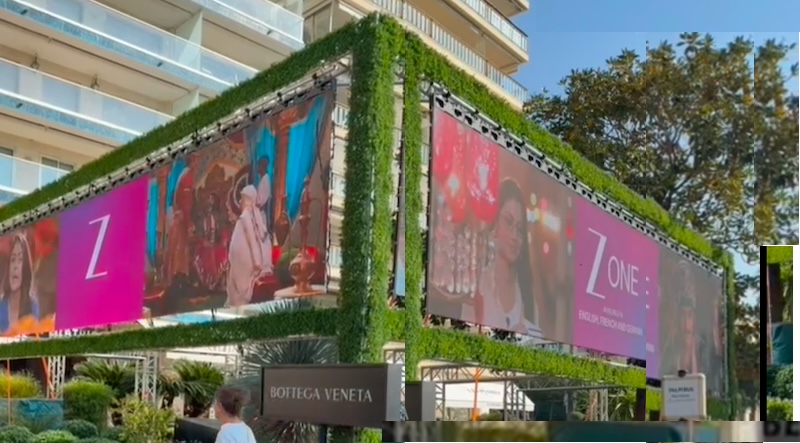
  • Z marks 33 years since launching India’s private satellite television

    Z marks 33 years since launching India’s private satellite television

    MUMBAI: Thirty-three years ago, on  1 October 1992, Zee TV became India’s first private general entertainment satellite television channel. On its anniversary, Zee Entertainment Enterprises is reminding everyone that it got there first—and that the industry it spawned now turns over Rs 2.5 trillion annually and employs 2.8 million people – through a press release.

    The numbers tell a story of explosive growth. What began as a single channel has mushroomed into 908 private satellite channels, over 70 streaming platforms, close to 40,000 artists, music directors, lyricists and an industry producing 3,400 feature films each year. The media and entertainment sector, Zee notes, has attracted nearly Rs 1 lakh crore in foreign direct investment and is projected to grow 7 per cent to reach Rs 3.07 trillion by 2027.

    “The journey of ‘Z’ is inseparable from the story of India’s M&E industry,” says Zee Entertainment chief executive officer Punit Goenka. The company, he argues, has not merely entertained but “empowered” the nation, whilst creating an ecosystem for artists, creators and technicians across television, digital, films and live entertainment. 

    “As pioneers of this robust industry, we at ‘Z’ view this celebration as a stimulus to power ahead
    and create a robust growth path for the future. We remain committed to shaping the entertainment industry in the years to come, by nurturing an ecosystem that enhances creativity and generates opportunities for progressive growth,” emphasises Goenka.

    Zee Punit Goenka

    The self-congratulation is not entirely unwarranted. Zee pioneered culturally rooted, vernacular content at a time when India’s entertainment landscape was dominated by state broadcaster Doordarshan. Its success paved the way for competitors and transformed how Indians consumed media.

    Yet the sector Zee helped create is now fiercely competitive. Streaming platforms have upended traditional television economics, forcing legacy players to adapt or perish. Zee itself has faced turbulence—regulatory scrutiny, a collapsed merger with Sony, and leadership controversies have clouded its recent years.

    The company says  it is “staying ahead of the curve” by entering short-form content and pursuing an “omni-channel approach.” Whether that proves sufficient in an era of Netflix, Amazon Prime and JioStar remains to be seen. But on its 33rd birthday, Zee is at least entitled to remind the industry who opened the door.

  • Zee turns 33 as satellite TV pioneer keeps India’s screens buzzing

    Zee turns 33 as satellite TV pioneer keeps India’s screens buzzing

    MUMBAI: From Zee-ro to hero, India’s private satellite television industry has come a long way since Zee TV first flickered onto screens in 1992. Thirty-three years later, Zee Entertainment Enterprises Ltd. (‘Z’) is celebrating not just its own journey, but the meteoric rise of an entire industry that now fuels a ~Rs 2.5 trillion economy and supports 2.8 million livelihoods.

    Back then, the story began with a single satellite channel. Today, India boasts 908 private satellite channels, 70 plus OTT platforms, nearly 40,000 artists, lyricists and music directors, and more than 3,400 feature films churned out each year, a content explosion that has transformed living rooms and lifestyles alike.

    Zee Entertainment Enterprises Ltd. CEO Punit Goenka marked the occasion with pride, “The journey of ‘Z’ is inseparable from the story of India’s M&E industry. Collectively, we have entertained and empowered our Nation, engaging and inspiring billions of consumers on every screen. Our success over the last 33 years is not defined only by numbers but by the immense value we have generated and the moments of togetherness we’ve created. As pioneers, we view this celebration as a stimulus to power ahead and nurture an ecosystem of creativity and growth.”

    Over the decades, Zee has mirrored the M&E sector’s transformation from being a catalyst for authentic, multilingual storytelling to enabling a networked ecosystem spanning TV, film, music, digital, and live entertainment. Its latest move: venturing into short-form content to capture evolving consumer habits.

    The industry’s economic footprint is only set to expand. With nearly Rs 1 lakh crore in FDI already attracted and an expected 7 per cent growth to Rs 3.07 trillion by 2027, India’s entertainment sector is being hailed as one of the country’s strongest instruments of soft power.

    As Zee celebrates 33 years of keeping audiences glued, its story is more than a corporate milestone, it’s a chapter in how India learned to tell, stream, and scale its stories for the world.

  • NSE chief backs startups to drive India’s next wave of growth

    NSE chief backs startups to drive India’s next wave of growth

    MUMBAI: When the bell rings at the National Stock Exchange (NSE), it doesn’t just mark the opening of trade, it signals the heartbeat of India’s entrepreneurial dreams. And on Friday, those dreams took centre stage as Ideabaaz, the country’s first integrated startup-investor marketplace, debuted at NSE.

    NSE, MD & CEO Ashishkumar Chauhan used the occasion to underline how the bourse has become both the launchpad and the lighthouse for Indian enterprise. “NSE has always been a catalyst in India’s growth journey. By hosting the launch of Ideabaaz, we reaffirm our commitment to nurturing the entrepreneurial spirit of the country. We look forward to the day when many startups born on this platform will stand here, ringing the bell as listed companies,” Chauhan said.

    For the man who oversees India’s largest fintech, the NSE, the world’s first automated screen-based trading system, statistics tell the story. Today, NSE boasts access to 12 crore unique investors holding 23.5 crore accounts, covering 99.85 per cent of India’s market. Over 2,800 companies are listed on the exchange, whose market capitalisation has swelled 125 times in 30 years to Rs 460 lakh crore (5.2 trillion dollars). That makes India the fourth-largest economy and capital market globally.

    And the IPO bells are clanging louder than ever. NSE led the world in listings last year with 268 IPOs in 2024, raising Rs 1.67 lakh crore (19.5 billion dollars). Chauhan framed it as proof of India’s surging “trust market,” built on the belief of its 140 crore people in the power of entrepreneurs.

    “In India, the biggest achievement since independence is the trust of its people in its entrepreneurs,” he said. “That is why we also call this a trust market. To enable aspirations of 1.4 billion Indians, it is our time to turn ideas into shared prosperity.”

    Drawing parallels between icons and today’s founders, he added: “Many times I say on public platforms, what is the similarity between Dhirubhai Ambani, Ratan Tata and Nandini Letharia? They were in different businesses, came from different backgrounds but they became billionaires by listing on NSE. So you must come and list on NSE. We look forward to the day when all of you, startups, come here and become billionaires.”

    Chauhan also reminded the audience that India is no stranger to enterprise, with roots going back to ancient guilds and trade networks. Today, with the world’s third-largest startup ecosystem, rising incomes, favourable policies, and a vast domestic market, the stage is set. “Integration is how we convert youthful energy into innovation, livelihoods and opportunities,” he said.

    As Ideabaaz takes its first steps, NSE is promising to be a steady partner from the first cheque to the IPO bell. Chauhan closed with a wish for every founder: “May your ideas find the right champions, may your ventures scale with purpose, and may you return to this stage as market leaders and nation builders. NSE will stand by you today, tomorrow and at every stage of your journey.”

    From startups to stalwarts, the message was clear: at NSE, every idea has the potential to make history, one bell at a time.