Category: Software

  • Pay-TV revenue growth slowing down

    Pay-TV revenue growth slowing down

    MUMBAI: The days of rapid growth in pay-TV revenues are over, according to a Digital TV Research report, which predicts that global revenues from subscriptions and on-demand TV and movie services will rise just 3.2 per cent this year, with growth rates slowing to below 2 per cent from 2015 onwards.

    In 2018, Digital TV Research expects pay-TV revenues to be $203 billion, just $19 billion higher than the 2012 levels. In 2018, DTH will be the dominant platform by revenues, generating $96.7 billion, followed by $79 billion for digital cable and $21.3 billion for pay IPTV. This year marks satellite moving ahead of cable for the first time, accounting for 45.9 per cent of revenues.

    The US will remain the DTH market leader, accounting for 43.5 per cent of satellite TV revenues last year. This is expected to slip to 38.7 per cent in 2018. The biggest gains in DTH revenues are expected in Brazil and India. Cable, meanwhile, peaked in 2012 with revenues of $86.9 billion this is expected to drop to $82.6 billion in 2018.

    While pay-TV revenues will more than double in 18 markets between 2012 and 2018 largely in – Africa, plus Indonesia and Vietnam – they will fall in 15 countries, including the US.

  • Asianet switches from GlobeCast to Dish in US; adds a new channel to US bouquet

    Asianet switches from GlobeCast to Dish in US; adds a new channel to US bouquet

    BENGALURU: Dish, a leading pay-TV provider in the US announced the launch of Asianet, Asianet Plus, Asianet News and Asianet Movies to its lineup. Additionally, Dish‘s broadcast of Asianet Movies marks the US premiere of the Malayalam film channel. Earlier, three of Asianet‘s channels were available in the US on the France Telcom subsidiary GlobeCast.

    Industry sources reveal that Asianet‘s agreement with GlobeCast ends on June 30 and the association will be terminated. “Dish is a one stop shop for the Indian, no, Asian diaspora. Be it Vijay TV or the Star Network channels, or other bigwigs of Indian television broadcasting like the channels of Zee or Sony, all are on Dish, so it makes sense for Asianet to be on the Dish platform. It‘s a win-win situation for all,” explained the source about Asianet‘s shift.

    Asianet Communications MD K. Madhavan statement in a press release seems to endorse this fact, “When Asianet entered the US market in 2003, our overarching goal was to expand the presence of our special programming. Partnering with Dish to launch the Asianet channels allows us to realize this dream of providing yet another incredible addition to the lineup of Malayalam content in the United States”.

    “We are pleased to exclusively offer this programming on satellite and proud to debut Asianet Movies for the first time in the U.S. Dish has long offered an impressive South Asian channel lineup, and we are dedicated to the consistent pursuit of the best news and entertainment tailored to a variety of language groups,” said Dish director of international programming Sruta Vootukuru.

    As the US leader in international programming with more than 280 ethnic channels in 29 languages, Dish is the exclusive satellite pay-TV platform to offer this leading Malayalam-language content.

    The Malayalam Asianet programming package is now available to customers for $24.99 per month. Effective June 20, all Malayalam: Mega Pack or Surya a la carte customers will be eligible to subscribe to Asianet as an add-on package for a monthly price of $15.

  • Satellite woes bog down Tata Sky’s Harit Nagpal

    Satellite woes bog down Tata Sky’s Harit Nagpal

    MUMBAI: Tata Sky Managing director Harit Nagpal is extremely irate. The reason: he has not been able to expand his DTH service’s offerings for sometime now. And for no fault of his or his company’s, he says.

    Eight years ago, his company had contracted to use the government owned Indian Space Research Organisation’s (ISRO) satellite Insat 4A, with a proviso thrown in that if he needed more capacity, the satellite organisation would make the transponders available to him within two years of his request.

    In 2007, his organisation wrote in asking for more capacity. By then, Tata Sky was having about two million subscribers with dishes pointing in the sky towards where the Insat 4A satellite is located in orbit.

    Isro was slated to launch its Gsat-10 satellite with communications capabilities and Tata Sky had booked 12 transponders on it. The launch was delayed on account of something or the other. It finally, got into space in September 2012 off an Arianespace launch vehicle from Kourou in French Guiana.

    The launch gave him some relief, but what has dumbfounded him, is the fact that the transponders have not been made available to him almost eight months since launch.

    Since then, it has been a constant to and fro for his company. “We have been in touch with ISRO for a long time. We have written 100 emails to the ISRO chairman, met at least three to four times in the past six months. I know he wants to move things,” says Nagpal. “But despite his wanting nothing is.”

    Nagpal has been told Tata Sky’s allocation is stuck with the Space Commission currently. Prior to that, it was held up with the Insat Coordination Committee for a few months. He has even written to the Prime Minister’s Office which has then forwarded his request to ISRO. And the yo-yoing has been going on since.

    “It’s extremely frustrating,” says Nagpal. “I am a customer with a contract that entails me to pay Rs 50-60 lakh a month per transponder to the government as a rental. And I don’t have the government sticking to its contractual obligations.”

    But why is this happening? “I guess it is inertia,” says Nagpal. “Like everything has been stuck in bureaucracy. Even on this front no one is taking a decision as yet. Our contract is stuck in bureaucratic limbo.”

    Each of the 12 Ku-band transponders on GSat-10 have 36 MHz usable bandwidth with a footprint covering the Indian mainland with a power of 51.5 dBW. It is located at 83.0 degrees east in the same orbital location as Insat 4A and another Isro satellite GSAT-12.

    “I am open to other options. If officials are worried, then let them throw Insat GSAT-10 open for tender,” highlights Nagpal. “There will be no takers for it. Tata Sky is the only DTH provider, which has 10 million dishes nationally pointing towards the same zone in the sky that GSat-10 is at currently. Imagine you have an expensive bird in the sky costing $300-400 million and it is not being used productively.”

    Nagpal says he is days away from approaching the law of the land to force the government to stick to its commitments. “It’s not the ideal way,” he says. “I have been waiting for six years for my satellite transponders to be given to me. It has gone on long enough. There are no problems with my application; everything is sorted out. I am one of their main customers; so why such an extended delay?” he asks.

    Is somebody in government listening? Or in Isro?

    Indiantelevision.com called Isro chairman K. Radhakrishnan. And at that the time of writing was still awaiting a response from him. Keep watching this space for updates!

  • Dream Works Animation to boost its television and digital presence

    Dream Works Animation to boost its television and digital presence

    MUMBAI: The Californian Animation giant Dream Works Animation (DWA) is reportedly on the move to revamp and re-position itself as a television power. The company told analysts that it will produce 1,200 TV episodes over the next five years, which CEO Jeffrey Katzenberg says “will give us a significant footprint across the global TV landscape”.

    He commented that DWA is now on the path to becoming one of the biggest producers and distributors of television following the multi-year agreement with Netflix to create 300 hours of original content for the online streaming platform. DWA has also made a deal with Germany‘s Super RTL to make up to 1,100 half-hours of programming.

    Katzenberg adds that the company should see $100 million in revenues from TV this year, about half of which will come from titles in the Classic Media library which include characters like Casper, The Rocky and Bullwinkle Show, Mr. Peabody & Sherman and George of the Jungle Classic Media was bought last year by DWA.

    Adding details to this, DWA also revealed that it is projecting at least $200 million in TV revenue per year with gross profits of around 30 per cent, close to what it sees from its films post 2015. Revenue from the Netflix and Super RTL deals won‘t vary depending on the performance of different titles.

    The numbers don‘t include benefits from sales of licensed merchandise, the library value of shows, or progress from its recently acquired online video service AwesomenessTV. The company isn‘t ready yet to create a separate business line for television, but will consider the change.

  • Dolby Surround Sound ties up with the ICC Champions Trophy 2013

    Dolby Surround Sound ties up with the ICC Champions Trophy 2013

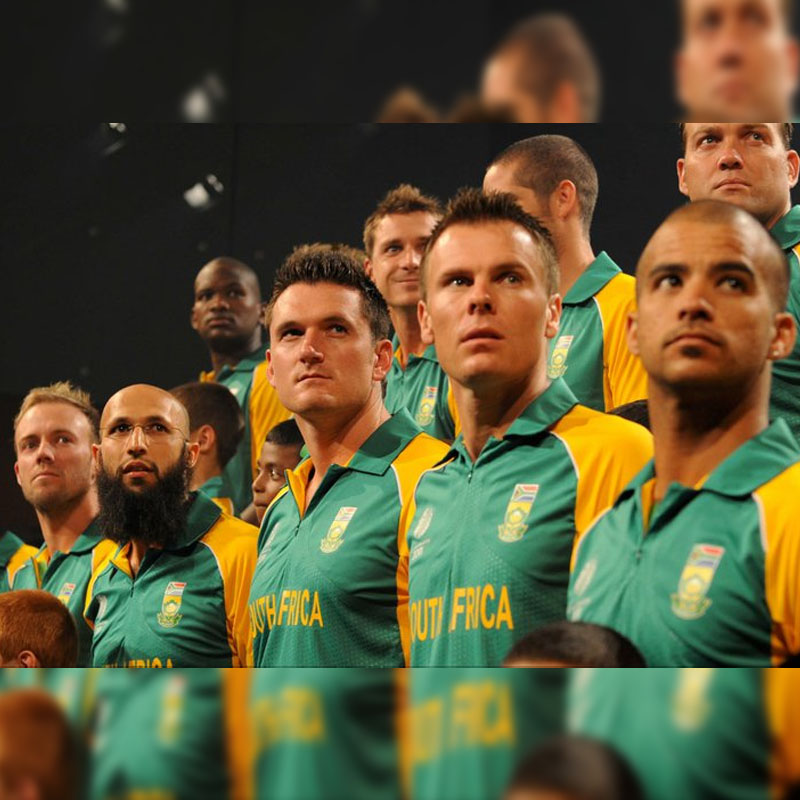
    MUMBAI: Dolby Laboratories (DLB) has announced that Star TV has selected Dolby Digital Plus as the surround sound format for the broadcast of the ongoing ICC Champions Trophy being aired on Star Cricket HD.

    Using Dolby Digital Plus, the audiences have been able to enjoy an enhanced sports entertainment experience in Dolby surround sound for the first time, right in their homes.

    “The ICC Champions Trophy is a true test of cricketing excellence with the top eight ODI teams going head to head to be crowned – Champions. We are leaving no stone unturned to make this tournament an unprecedented viewing experience. We intend to take the fan engagement to a newer level by redefining the way international cricket has been showcased till date. We are very excited to offer cricket, India‘s favourite sport, in Dolby Surround Sound, starting with ICC Champions trophy 2013. STAR Cricket HD is now offering the best audio experience, completing the HD experience for viewers by immersing them in the action happening in the field and the stadium,” said ESPN Software India COO Vijay Rajput.

    Dolby Digital Plus has been adopted by some of the world‘s leading broadcasters and claims to offer a complete digital surround sound and stereo sound in a single audio stream, making it ideal for bandwidth-constrained environments such as HD broadcasting.

    DLB India country manager Pankaj Kedia said, “We are thrilled to be extending our collaboration with Star TV, the leading broadcaster in the country. Dolby and Star TV share a common vision of bringing the very best television experience into every household.” He added, “Cricket in India has a strong following and this collaboration enables Star TV to efficiently deliver a premium surround sound experience to its audiences, making the whole experience richer, more realistic, and enveloping.

  • MIB cancels licences of 20 MSOs

    MIB cancels licences of 20 MSOs

    MUMBAI: The Information and Broadcasting Ministry (MIB) has cancelled the licences of 20 Multi System Operators (MSOs) for not meeting the conditions for providing digitised cable services.

    The ministry is working towards a switchover of the cable services from analogue to digital by 2014-end across the country.

    The deadline for phase II of the digitisation in 38 cities ended on 1 April and the disqualified MSOs were not providing services under the new digital regime.

    An official said that setting up a digital head-end was one of the conditions for MSOs to comply and the MSOs whose licenses were cancelled did not meet these conditions.

    MSOs in broadcasting are entities which receive the signal from broadcasters and then pass it on to local cable operators.

    Here is the complete list of the 20 MSOs

  • TRAI extends last date for comments on interconnect agreement draft order

    TRAI extends last date for comments on interconnect agreement draft order

    MUMBAI: For all those in the cable and satellite TV industry, you can take a breather. The Telecom Regulatory Authority of India (TRAI) which had issued the draft digital addressable system (DAS) interconnect agreement regulations on 5 June 2013 has extended the last date that they can send their comments.

    At the time of issuing the order, the last date was 18 June 2013, that is today. Under the extension, industry stakeholders can send their written comments in by 26 June 2013.

    The Draft Interconnection agreement for DAS seeks to do away with carriage fees under the must-provide clause, forces MSOs to telecast channels under the must carry provision; compliance of MSOs with the twin conditions as specified in the earlier versions of the same order.

  • TRAI reduces roaming charges for calls and SMSs

    TRAI reduces roaming charges for calls and SMSs

    MUMBAI: Telecom Regulatory Authority of India (TRAI) on Monday announced reducing the national mobile phone roaming charges. The regulator said there would be no free national roaming as of now, but it had come out with conditional free national roaming plans to bring down cellphone roaming charges, reports said.

    “TRAI has reduced ceilings for national roaming calls and SMS and instituted a new regime for providing flexibility to telecom service providers to customise tariffs for national roamers through STVs (Special Tariff Vouchers) and Combo Vouchers,” the regulator said.

    It has also mandated two types of free national roaming plans to be provided by all telecom service providers. These changes will come into effect from 1 July 2013, it said.

    “Mandating a fully free roaming regime is simply not practicable at this juncture. Compelling a transition to a fully free national roaming regime would result in telecom service providers not being able to recover their costs from roamers,” the regulator said.

    In turn, telecom service providers would pass these costs on to all consumers (predominantly non-roamers) through higher tariffs, it added.

    In 2007, TRAI had prescribed the ceiling tariffs of Rs 1.40 per minute for outgoing local calls and Rs 2.40 per minute for outgoing STD calls while on national roaming. These ceilings were reduced to Rs 1 per minute and Rs 1.50 per minute respectively, it said.

    Similarly, the ceiling tariffs for incoming calls while on national roaming have been reduced from Rs 1.75 per minute to Rs 0.75 per minute, it said.

    Tariffs for outgoing SMS while on national roaming, which were earlier under moderation, have now been capped outgoing SMS (local) at Rs 1 per SMS and outgoing SMS (STD) at Rs 1.50 per SMS. Incoming SMS will remain free of charge, TRAI said.

  • Airtel Digital TV DTH adds Freemium PPV movie service in its kitty

    Airtel Digital TV DTH adds Freemium PPV movie service in its kitty

    MUMBAI: Though the concept of pay per view (PPV) isn‘t new to direct to home (DTH) operators in India, Airtel has tweaked that idea further. The service, known as Freemium PPV is essentially the ad-supported version of the PPV, while giving the customers the option of viewing the content without paying for it, or to pay for it and remove the advertisements.

    The free movie viewing will be available on 3/4 screen space, while L-shaped advertisements will be placed on the remaining 1/4th part. Anyone who wants to view the movie in full screen can do so, by paying the particular fee applicable for that particular movie. Airtel has timed the launch of this service to coincide with the celebrations for 100 years of cinema, and is the first DTH operator in India to launch such a service.

    The Freemium PPV service is available on channel no 155 on the Airtel Digital TV DTH platform, on standard, high definition and high definition recorder set top boxes.

    This is the first of its kind service, which gives customers the flexibility of either viewing the movie for free, or paying for it and getting an ad-free experience. If a consumer does watch it for free, the broadcaster still gets revenue for the advertisement, and the brand that is advertising gets its placement.

    At the moment, other operators like Tata Sky offer PPV movie channels, where you pay for a movie, or the viewing is blocked. Videocon d2h, on its part, runs three movie channels at a flat monthly subscription price, including d2h Cinema that shows relatively recent Bollywood releases.

  • Hathway’s HD rush; launches Fox International Channels in Bengaluru

    Hathway’s HD rush; launches Fox International Channels in Bengaluru

    MUMBAI: It‘s getting hot on HD. One of India‘s leading MSOs Hathway Cable & Datacom is looking at taking its HD subscriber base to 200,000 in a year‘s time and has just signed a deal to roll out Fox International Channels (FIC) HD channels into its HD packages.

    The service provider has currently launched the FIC channel HD bouquet only in Bangalore initially but will be extended to Hyderabad soon and then to the rest of the country by end of the year.

    Hathway currently caters to a modest HD subscriber base of approximately 25,000 nationwide (out of which most number of subscribers reside in metros).

    Says Hathway CEO Jagdeesh Kumar: “We have currently launched the HD zapper box only in Bengaluru because we are using the city as a test case to gauge response. But we will soon unveil the DVR box as well in the next six to eight months.”

    The HD service costs Rs 4,500 and comes with a set top box (STB) with a package of 20 HD channels that excludes the recently acquired Fox International Channel (The set includes: National Geographic Channel (NGC), FOX Traveller, Nat Geo Wild, Nat Geo Adventure, Nat Geo Music and Baby TV in HD.)

    “We have plans to carry 35 HD channels,” adds Kumar. “We aim to get in a bulk of the DTH subscribed audience back to cable in time to come, and we are confident of doing so as we have more bandwidth at our disposal hence giving a better picture to our subscribers. We can deliver consistent and better quality pictures and our viewers would not have to worry about interruptions in signals during torrential rains.”

    For Bengaluru, Kumar is pushing a promotional campaign to sign up HD subscribers early. Says he, “We are trying to keep very competitive prices and offer a good discount for early bookings. We are confident that with our superior quality and better clarity, we would be able to deliver the best for our viewers.”

    All the content available with FIC is being shot in HD and Ultra HD and the channel currently has close to 100 hours of content to showcase. The group banks on its prime property NGC, being the oldest channel in the cluster, to get in the viewers and to build a loyal fan base.

    “We are delighted to partner with Hathway in offering a better viewing experience to our audience; our channels would be available in enhanced picture quality across Hathway‘s extensive network,” says NGC Network India and Fox International Channels MD Keertan Adyanthaya. “We are currently looking at activation plans and thus do not have many advertisers on board to boast of, but we are sure that once we start getting an audience, the advertisers will follow.”