Category: Software

  • STB market continues to thrive, expected to peak in 2015

    STB market continues to thrive, expected to peak in 2015

    MUMBAI: Even though the pay-TV industry has been shifting toward delivering services to computers, smartphones and tablets, the traditional set-top box (STB) continues to thrive, with market shipments forecast to hit record highs this year, according to IHS.

    Global shipments of STBs used for cable, satellite, terrestrial and IPTV digital TV services are predicted to reach 269 million units this year, which is eight per cent higher than last year. This is expected to grow another six per cent, to 286 million, in 2014, and a further one per cent, to 290 million, in 2015. However, 2015 is expected to be the peak of the market for the foreseeable future. After that, IHS predicts that STB shipments will decrease by five per cent in 2016 and by another two per cent in 2017.

    “STBs are facing a mounting challenge to their role at the dominant pay-TV video consumption device because of operators‘ growing emphasis on supporting multiscreen devices,” said Daniel Simmons, the senior principal analyst for TV technology at IHS. “However, operators are continuing to deploy STBs in order to manage the compatibility between their delivery networks and the consumer electronics devices that consumers are increasingly using to view content now.”

    “As pay-TV operators rush to accommodate changes in delivery platforms and in video formats – including the adoption of HD – STB shipments will continue to rise, hitting record levels for the next few years”, adds Simmons.

  • Satellite broadcasting companies given final opportunity to give networth details and balance sheet for 2011-12

    Satellite broadcasting companies given final opportunity to give networth details and balance sheet for 2011-12

    NEW DELHI: Over forty broadcasting companies have been asked by the Information and Broadcasting Ministry to give by 15 July certain details relating to their balance sheet for the year 2011-12, networth, and details of the satellite being used by them for beaming their television channels.

    Noting that this is the ‘last and final opportunity’, the Ministry has warned that the details are not given in the proforma drawn up by the Ministry, then appropriate action will be taken ex-parte in accordance with the extant guidelines. 

    The notice also wants the composition of the Board of Directors of the company, the shareholding pattern including foreign investment, renewal details along with the renewal fee paid, details of Teleport and satellite from which Uplinking/Downlinking is being done, and operational Status of the channel including WPC validity and NOCC Certificate.

    lf the channels is not operational, then the status of PBG submission/encashment etc. has to be submitted.

    The Ministry had called meetings in batches of different channels to learn about their status, and has attached a list of 44 companies which did not attend the meetings. However, it has said that this list is not exhaustive and whichever company has not given the details according to the format should do so by 15 July.

    The list of 44 companies which failed to attend the meetings includes Broadcast Worldwide, Hindustan Broadcasting, Indo-Asian News Channel, Music Choice India , TVC Skyshop and UTV Entertainment Television.

  • KPSE-TV pulled from Time Warner Cable lineup

    KPSE-TV pulled from Time Warner Cable lineup

    MUMBAI: Negotiations failed between Journal Broadcast Group and Time Warner Cable, which means only one thing that the cable provider will no longer air KPSE-TV, My13.

    “It is unfortunate that Journal Broadcast Group has decided to pull their programming from our customers‘ lineups,” spokesman Dennis Johnson said in a statement. “Journal is demanding more than a 200 per cent increase over previous compensation without delivering more value.”

    Opposing sides had been negotiating for weeks to reach a deal that would allow Time Warner to continue airing Palm Desert-based KPSE and KMIR, Channel 6, which are owned by Journal Broadcast Group.

    KPSE programming was taken off Time Warner at midnight Wednesday, but KMIR cannot be removed during a sweeps period as per Federal Communications Commission rules.

    If a deal isn‘t reached by 24 July when the sweeps period ends, KMIR could also be removed, Johnson said.

    Television viewers would still be able to watch KMIR via other cable providers or with antennas.

  • Time Warner Cable, CBS at loggerheads over distribution deal

    Time Warner Cable, CBS at loggerheads over distribution deal

    MUMBAI: Although neither side is taking shots at each other publicly, there is an undercurrent of tension between Time Warner Cable (TWC) and CBS Corp as the two companies attempt to negotiate a new distribution deal.

    TWC‘s agreement to carry CBS-owned TV stations including KCBS in Los Angeles, the basic cable channels CBS Sports Network and Smithsonian, and the pay network Showtime expired at the end of June. Since then, there have been a couple of extensions, the latest one running to a few days before the end of the month.


    CBS is looking for a hefty increase. Chief executive Leslie Moonves has not been shy about making the case that the network should be getting more than popular cable channels.TNT, for example, gets over $1 per-subscriber, per-month, according to industry consulting firm SNL Kagan.

    CBS has yet to have a so-called retransmission consent negotiation reach the point where its signal went off a pay-TV distributor because of a contract dispute.

    Another component complicating these talks is Showtime. Because it is a premium channel, consumers opt to subscribe to it rather than having to take it as part of their pay-TV package. It is unlikely that Showtime would be yanked along with CBS‘ other channels as such a move would take money out of both companies‘ pockets.

    Neither side is commenting publicly on the negotiations.

  • TRAI: Activation of VAS only on second confirmation

    TRAI: Activation of VAS only on second confirmation

    NEW DELHI: With the aim of reducing complaints relating to value added services (VAS) offered by telecom service providers, the Telecom Regulatory Authority of India (TRAI) on 10 July said any will be activated only after receiving a second confirmation from the customer.

    In the directions issued by it, TRAI says the service provider has to provide a system which takes a second consent from the customer before providing a value added service through any means – OBD, IVRS, WAP, Mobile Internet, USSD, SMS, Tele-calling or any other mode of activation.

    The first offer of a service is on the service providers‘ platform and a second confirmation from the customer is through a dedicated consent gateway which is owned by a third party and not by the service provider.

    At the outset, TRAI said activation of VAS by service providers has been the cause of many customer complaints. The Authority has been addressing, from time to time, consumer issues, which have come to its notice through consumer complaints, relating to activation of value added service through different modes, without the explicit consent of the consumer. These directions essentially prescribe the manner in which the explicit consent of the consumer is to be obtained for activation of value added services through different modes. While issuing these directions, the Authority has also considered the interests of the service providers and growth of value added service industry.

    In partial modification of existing directions, TRAI has directed all Service providers to implement a uniform procedure for taking explicit consent of the consumer for activation of value added service and for deactivation of value added service.

    A Common de-activation procedure using toll Free Common Short Code 155223 has been provided and all requests for de-activation have to be completed in four hours).

    VAS activation procedure will henceforth include all forms of activations and scenarios – OBD, IVRS, WAP, Mobile Internet, USSD, SMS, Tele-calling and any other mode of activation.

    The deactivation procedure should be publicised through advertisements in newspapers, updation in the website and SMS blasts.

    A full 24 hours before auto renewals of the VAS services, information about renewals to be provided to the customers, through SMS and Outbound Dialing (OBD).

    In case of wrong activation, the amount will be refunded within 24 hours of the customer‘s request. Such customer requests should be within 24 hours for VAS with validity of more than one day and within 6 hours for VAS with validity of one day.

    In case of USSD and SMS mode of activation, no activation response time should be more than 10 seconds and 60 minutes respectively and in case of non-response, the same should be treated as ‘no activation required‘.

    Upon activation of VAS service, the de-activation number, the validity of the VAS service and charges for renewal should be explicitly informed.

    A Monthly report on activations, de-activations and complaints received and their redressal to be submitted to TRAI.

    The directions for obtaining explicit consent of consumers for subscribing, renewing and deactivation of Value added services are available on TRAI website http://www.trai.gov.in

  • India to have highest IP traffic growth in four years

    India to have highest IP traffic growth in four years

    NEW DELHI: India is set to have the highest Internet Protocol (IP) traffic growth rate with a 44 per cent compound annual growth rate from 2012-2017 followed by Indonesia (42 per cent CAGR) and South Africa (31 per cent CAGR) over the forecast period, a new study has revealed.

    The Cisco Visual Networking Index (VNI) Forecast (2012-2017) projects that global IP traffic will grow three-fold between 2012 and 2017.

    By 2017, the highest traffic-generating countries will be the United States (37 exabytes per month) and China (18 exabytes per month), says the report.

    At the regional level, the Middle East and Africa (MEA) will continue to be the fastest growing IP traffic region from 2012-2017 (five-fold growth, 38 per cent compound annual growth rate over the forecast period); MEA was the fastest growing region last year as well (10-fold growth, 57 per cent compound annual growth rate for 2011- 2016 forecast period) in this category, the report said.

    Asia-Pacific (APAC) will generate the most IP traffic by 2017 (43.4 exabytes/month), maintaining its leadership from last year.

    According to the report, by 2017, there will be about 3.6 billion Internet users – more than 48 per cent of the world‘s projected population (7.6 billion). In 2012, there were 2.3 billion Internet users – about 32 per cent of the world‘s population (7.2 billion).

    By 2017, there will be more than 19 billion global network connections (fixed/mobile personal devices, M2M connections), up from about 12 billion connections in 2012.

    Global network users will generate 3 trillion internet video minutes per month, that is six million years of video per month, or 1.2 million video minutes every second or more than two years worth of video every second.

  • Google revamps Android Maps app, drops Latitude

    Google revamps Android Maps app, drops Latitude

    MUMBAI: Google has overhauled its Maps app for Android smartphones and tablets, giving it some new search, navigation, and discovery features. The changes will also soon be making their way to the company‘s iPhone and iPad apps.

    “Today‘s update is an exciting step forward for Google‘s maps – one that we hope will make it faster and easier for you to explore and discover places you want to go,” Google Maps director Daniel Graf wrote in a blog post Wednesday.

    For starters, the revamped app aims to help in navigating around traffic a little easier. In addition to current traffic conditions, one can also see reports of problems on the road and tap to see incident details. While driving, Google Maps will now alert if there‘s a better route, and more quickly reroute the driver to his destination.

    There‘s also a new Explore feature, which offers up places one might like to eat, drink, sleep, and shop. On tapping the search box, a list of suggested places without even having to type anything can be seen.

    To help one decide on where to go, the app includes a new 5-star rating system that will give the user an idea of how the user‘s friends and others have rated places like restaurants, bars, and coffee shops. Zagat badges and curated lists are also now integrated into search results, so one can quickly spot expert-approved places.

    This is also Google‘s first dedicated Maps app for Android tablets and iPads.

    “A dedicated tablet design brings all the features of this new app to Android tablets

    and iPads, which makes exploring the world from the comfort of your living room much more fluid, smooth and fun,” Graf said.

    But alongside all the new goodies, some older features are going away, including Latitude and check-ins, which is no longer part of the new Google Maps app and will be retired from older versions on 9 Aug. Google, is instead pushing the newly added location-sharing and check-in features of Google+ for Android. My Maps is also not included in this release, but will return in future versions of the app, Google said.

    Finally, the offline maps feature for Android is also no longer available. You can still access maps offline, however, by entering “OK Maps” into the search box when viewing the area you want for later.

    The new Google Maps app is compatible with devices running Android Ice Cream Sandwich and Jelly Bean, as well as iOS 6 and above.

  • No more extensions on CAFs, expect phased switch-offs

    No more extensions on CAFs, expect phased switch-offs

    MUMBAI: The Telecom Regulatory Authority of India (TRAI) has put its foot down this time on the issue of non collection of customer application forms (CAFs). The decision taken by the regulator is: no more extensions for CAFs in the DAS areas of Mumbai and New Delhi.

    As is known, the meeting between TRAI and leading MSOs was scheduled today. And Indiantelevision.com learns that the regulator has mandated the switch-off of all the non-complying customers.

    “We will be complying with the law of the land” says Hathway Cable CEO Jagdish Kumar. “Starting tomorrow we plan to downgrade all those subscribers who haven‘t submitted the forms. We will only be providing them with free-to-air channels till 15 July and post that we will be disconnecting those who don‘t send in their forms even after that warning completely by switching off their service.”

    The cat and mouse game between the regulator and leading MSOs has finally come to an end. The final decision is: no slack from the local cable operators and customers would be entertained anymore. There is a grace period of five days that the LCOs have to make the final round of collections, post which the switch-offs would commence.

    DEN Networks COO MG Azhar says: “We have collected 86 per cent CAFs in Delhi, but starting tomorrow we will be downgrading the non-complying customers to base packs.”

    The phased switch-offs begin from tomorrow. Apparently, digitisation‘s progress cannot be stalled any further.

  • Explore India’s history with the ANS Navigator app for iPhone

    Explore India’s history with the ANS Navigator app for iPhone

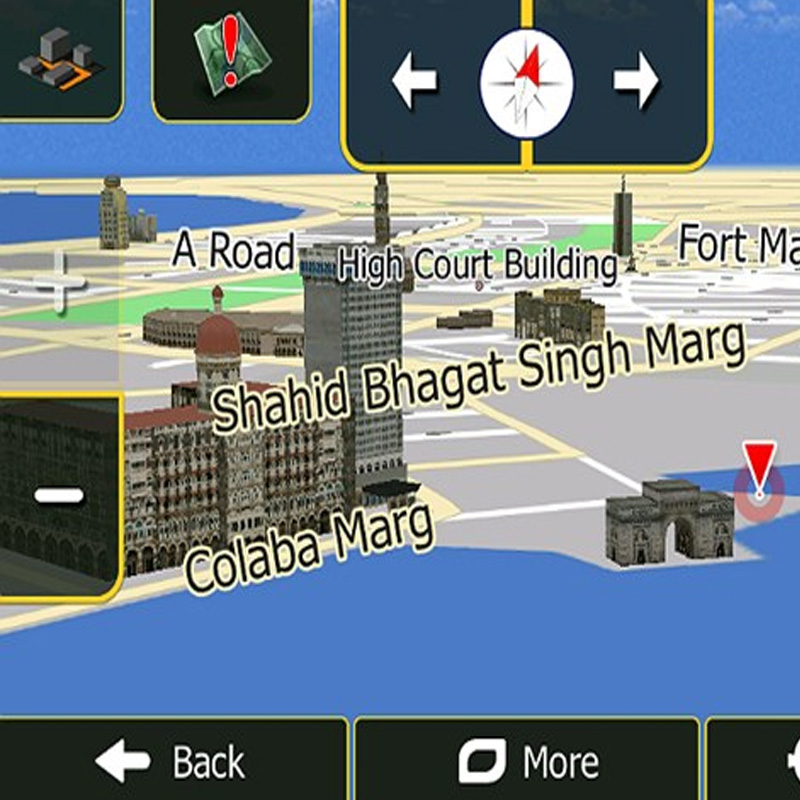
    MUMBAI: Powered by the iGO Navigation Engine, the ANS Navigator app for iPhone now includes the historical monuments content package.

    With this application upgrade, the ANS Navigator enables the user to explore India like never before. Know more of India‘s iconic heritage spanning 1000 years of history, and discover India‘s ancient temples, caves, governmental buildings and much more in almost 1,000 cities and settlements. The historical monuments database with more than 3,700 items not only unfolds the vast cultural heritage of India, but also allows one to visualise & understand the significance of the monuments by means of richer content such as descriptions, pictures and visiting times.

    Built from authentic sources such as the Archaeological Survey of India, historical monuments is the virtual passport to almost 3700 historical sites that constitute India‘s rich heritage.

    If you‘re looking for a taste of India‘s world class highlights, and want to explore some of its hidden gems, this app will lead the way and eliminate the hassle associated with travelling so that you can experience incredible India.

    The ANS Navigator App, which is designed to guide users to their destination faster and safer by offering a set of advanced and location-specific features, runs on NNG‘s renowned iGO Navigation Engine which has proven to be one of the most popular navigation applications globally.

  • Hungama app introduces its new version with adaptive streaming

    Hungama app introduces its new version with adaptive streaming

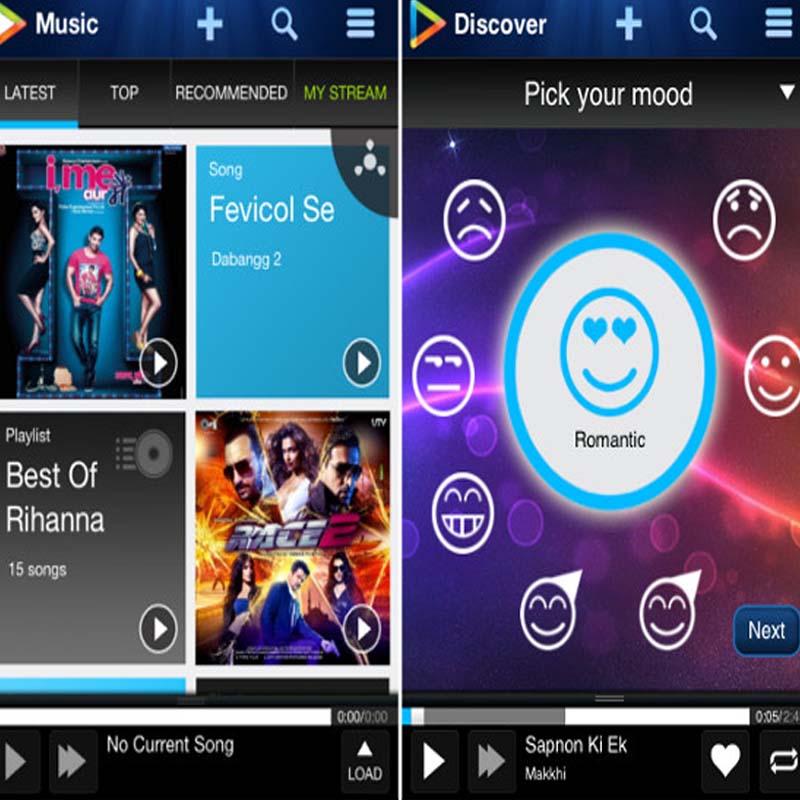
    MUMBAI: Hungama‘s next generation music app, with over a million downloads has been receiving rave reviews by users; now the app is set to engage its users with a musical experience.

    Keeping in mind the popular user demand via reviews for adaptive streaming, the app has added yet another enhancement by upgrading its version for iOS & Android with adaptive streaming for audio & video, airplay for iOS and compatibility with iPhone 5.

    With requests pouring in from consumers from various consumers outside India to facilitate a download & pay option for Android, the new build has addressed this request with Google Wallet integration.

    The Hungama app has a one of a kind, loyalty feature that rewards the user for every action on the app. The user can earn (and redeem) points every time he watches videos, play/share music, invite friends or even create playlists.

    Its innovative Mood Discovery finds and plays music to match the user‘s mood. This feature allows you to discover music based on user preferences – Mood, Tempo, Language, Genre or Era.