Category: Software

  • The final word on cable TV digitisation

    The final word on cable TV digitisation

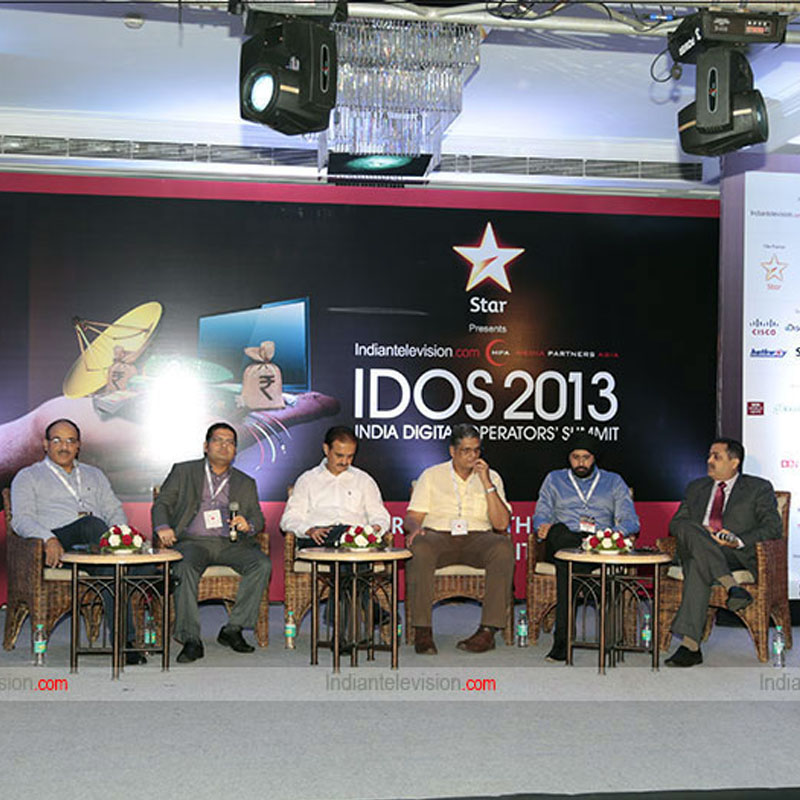
    GOA: With phase I and phase II on the cusp of completion, what are the lessons the digitising cable TV ecosystem has learned from their efforts? And how can this be put to use when industry moves into phase III and phase IV? This was the focus of the last session of the well-attended (it was houseful even on day two) IDOS 2013 in Goa.

    DEN Networks CEO SN Sharma said that his cable TV network was willing to take the punt and had enough investment to push into the territories it was targeting. “It won’t be easy but we are totally committed to doing it. Additionally, a lot of phase II was also done by local MSOs.  We see consolidation. In UK it happened. Five MSOs consolidated and are feeding around 90 per cent of the population there.”

    Hathway president Milind Karnik said that the last mile owner in many parts of phase III and phase IV has already upgraded and has awareness of and has already done some upgradation of infrastructure. “They will form cooperatives and consolidate and do what is needed. We too are going to move ahead forging relationships with local cable operators there, apart from serving some communities with our own headends.”

    Telecom Regulatory Authority of India (TRAI) principal advisor N Parameswaran said: “We expect like the telecom sector there will be some sharing of infrastructure.  We have learnt from phase I and phase II and there are many things we could have done better and will put those learnings in practice. There has to be some hygiene brought in terms of transparency and every other part of the process. Bill has to be generated to the subscriber. Service has to be provided. There will not be any looking back after that.”

    He urged MSOs and other players to understand that the dividends from phase I and phase II will start coming in with the addition of broadband delivery to subscribers. He further said a model has to be worked out between the MSOs and LCOs and TRAI would facilitate that.

    Also, in the wake of the continued depreciation of the Indian rupee against the dollar, the MSOs and LCOs feel that the government should give some subsidy to local manufacturers who are interested in setting up local units in the county to give a fillip to the industry.

    “We have got to come together. It has to be done together to resolve all the issues,” said Indian Broadcasting Foundation secretary general Shailesh Shah.

    Shah further added that the stakeholders would have to think how they can go deeper while addressing infrastructure problems. Carriage issue would also get resolved in a phased manner.

    Magnaquest CMO Ramakrishna Mashetty felt the landscape for the next phase of digitisation is different as compared to phase I and II as the cities are fragmented and low markets are there in the chart. “Most of the LCOs and market are unorganised,” he said.

    Telecom and Media lead analyst Rajiv Sharma said if the digitised headends start delivering incremental revenues in terms of services and ARPUs go up, return on investment (ROI) will improve. “Lot of external foreign investors are watching the space carefully,” he stated, adding that this imperative that some element of broadband be built in to the set top box so that the incremental revenues start accruing very quickly.

    Chrome Data Analytics & Media founder and MD Pankaj Krishna said the campaign in phase III and IV would be different. “The first two phases communicated and played on the principle of fear of blackout for consumers. The communications to the consumer during the third and fourth phase should focus on the benefits that a box can provide to users.”

    Parameswaran also addressed the issue of entertainment tax. “We have been working on understanding taxation levels which are a state subject versus a federal TDS or income tax,” he said. “But we are not averse to once again address this issue.”

    But what added spark to the panel discussion was the disclosure that the ministry of information and broadcasting was working with the department of telecommunications and MSOs to enable them to use already existing government and other infrastructure to help them as things start moving into phase III.

    The other good news is that bills – especially in Delhi – are slated to go out to subscribers in October, and online bills will follow later but interests of the LMO will be kept in mind.

    Parameswaran had the final word. Said he: “Digitisation will go ahead as planned. We are totally committed to it.”

  • Hathway selects Dolby Digital Plus as audio codec for HD STBs

    MUMBAI: Hathway Cable & Datacom has selected Dolby Digital Plus as the audio codec for its HD set-top boxes. Using Dolby Digital Plus, Hathway HD subscribers will be able to experience the magic of up to 7.1 channels of surround sound, designed to transform the way people can enjoy their favorite sports, movies, and television programmes.


    Dolby Digital Plus has been adopted by the world leading TV and set-top box manufacturers, as well as broadcasters and operators, to provide consumers with full digital surround sound and stereo sound in a highly bandwidth-efficient single audio stream solution.


    Talking about the collaboration, Hathway Cable & Datacom managing director & CEO Jagdish Kumar said, “With digitisation, the broadcast industry in India is evolving at a fast pace by delivering better and more enhanced quality of services to consumers. Our association with Dolby is a great opportunity for us to combine the great visual experience with unmatched Dolby Digital Plus surround sound, delivering pulsating cinema-inspired experiences to audiences at home. The collaboration reinforces our commitment to provide the best of in-home entertainment services to Hathway subscribers across 140 cities and towns in India.”


    Dolby Digital Plus unlocks the full audio potential of HD broadcast and ensures that consumers hear audio precisely as it was intended. Dolby Laboratories India country manager Pankaj Kedia commented, “Dolby brings superior entertainment experiences through innovative technology. Our collaboration with Hathway, is yet another exciting opportunity for Dolby to bring people a fantastic entertainment experience—their favourite sports, drama, reality TV, and movies—right in their living rooms and movies.”

  • Indegene announces launch of IndegeneConnect™

    Mumbai: Indegene, a provider of R&D, commercial, and marketing solutions to pharmaceutical and healthcare organisations globally, has announced the launch of IndegeneConnect™ — a cloud-based digital asset production, collaboration, and workflow management platform.


    The platform will enable global teams to significantly reduce wasteful creative and design costs arising from duplication, lack of information, and conflicting communication between stakeholders during the digital production lifecycle.
    IndegeneConnect™ promises to increase productivity across the existing ecosystem comprising numerous agencies of record (AoR), local agencies, and brand teams that are managed across multiple geographies.


    The platform creates a catalytic ecosystem through which a brand or a digital factory can manage all of its creative assets, the entire production workflow including internal and external stakeholders, promote collaboration and sharing, and cut wasteful cost from the budgets, all the while maintaining regulatory and audit compliance.

    Indegene president Rajesh Nair said, “Indegene is committed to developing transformational technology and platforms that serve the pharmaceutical and life science industry. IndegeneConnect™ is a revolutionary way to effectively manage digital production at the enterprise level, while significantly empowering local and regional teams. This represents a significant addition to Indegene’s intellectual property portfolio.”

  • Are the fruits of digitisation really being harvested?

    GOA: The first session was on how digitisation has progressed and how it is no longer just a goal but the means to a critical end and a sweet spot for the convergence of national economic benefit, advanced infrastructure and content democratisation coverage.


    The panel for addressing this topic had TRAI principal advisor N Parmeshwaran, DEN Networks chairman and CEO Sameer Manchanda, Tata Sky CEO Harit Nagpal and Star India president & general counsel Deepak Jacob. The session was moderated by Anil Wanvari and Vivek Couto.


    “The entertainment and media space is doing much better as compared to earlier times and is a booming sector now just like how the IT sector was in the early 90s,” says Parmeshwaran.


    According to a recently released CII-PwC report the media and entertainment industry in India was valued at Rs 96,500 crore in 2012 witnessing a rise of nearly 20 per cent from the Rs 80,500 crore in the preceding year (2011).


    Says Parmeshwaran, “TRAI has been doing its bit to help out in bringing systems in order by passing various recommendations, consultation papers on interconnect agreements and also streamlining the distribution process.”


    Over the past few months the regulator has really been pressing for the completion of phase II of digitisation, setting strict deadlines for submission of CAFs and also instructing the MSOs to maintain proper subscription management systems (SMS). But the idea is not just to install boxes and collect forms.


    Nagpal says, “The idea is to bring in processes, understand consumer behavior and more importantly focus on the content being provided, rather than just giving numbers of boxes installed and CAFs collected.”


    TRAI has also been trying to address issues on direct billing, the segmentation of aggregators and broadcasters and also regarding media ownership along with giving its recommendation on the TV ratings system.


    “TRAI is open to helping out anyone who is looking out for helping improve the media and entertainment segment. We have enhanced the FDI limit to 100 per cent for carriage fees and 49 per cent for the news and FM radio segment recently,” stresses Parmeshwaran.


    The DTH segment has certainly made progress as far as numbers go with nearly 26.7 million STBs being installed by 31 March 2013 and this number is expected to reach a huge number of 135 million STBs by end of December 2014.


    Manchanda feels that in the next five years these numbers will witness a phenomenal change. “The current situation is causing pain to everyone – broadcasters, aggregators, MSOs and consumers – but looking at the bigger picture is important and progress will be made accordingly.”


    The need of the hour is for all the stakeholders to come together and nourish the ecosystem and the change will come in the next 12 to 24 months. “Currently everyone is trying to save their own bedrock, but what is needed is to go that extra mile and cater to the needs of the consumers, the consumer is just looking for the best quality to experience and once we do that, ARPUS will no longer be an issue,” adds Manchanda.


    There is a problem that is faced by DTH service providers wherein they are forced to carry many of the channels that they do not really wish to but have to because of the aggregators, “even the consumer doesn’t really see the need to see these channels, so why should I carry it?” argues Nagpal.


    TRAI had recently issued a consultation paper asking for comments from stakeholders on the matter of unbundling channels from the same network in the bouquets provided by the aggregators  and received more than 100 comments and is still in the process of going through all the comments to reach a decision on the matter.


    Speaking on the prospect of meeting the phase III and IV deadlines Jacob opines, “There were 35 million STBs installed and CAFs collected during phase I and II put together and there are another 30-35 million STBs and CAFs to be accounted for in just the next three months, it’s going to be chaotic and will leave no time for LCOs and MSOs to breathe.”

    So with phase II of digitisation being completed and on the cusp of nearing the phase III and IV, it is yet to be seen how things progress and how India can meet the dream of becoming a completely digitised country.

  • Vertical integration dominates panel discussion

    GOA: “The issue of how distribution pipes develop in India is important, just like other parts in the world – do you want to be a dumb pipe or an intelligent pipe?” asked Star India president and general counsel Deepak Jacob “so one of the important things the regulators need to be careful about on cross media ownership for instance is not to discourage vertical integration but encourage the process.”


    “This benefits the consumer in the long-term especially if there is effective competition at the last mile; look at the US, where Comcast has ownership of NBC, for instance, or other markets, where vertical integration has helped provide real differentiation for the consumer, “ added Jacob.


    “Differentiated and local pipes are important,” said DEN chairman Sameer Manchanda. “Look, we in cable have an enormous advantage in our strength of locality and we need to capitalise on this.”


    “In DTH, I don’t see us as just a technology pipe – we curate, package and run a very modern and innovative HD business, providing real estate for lots of content and lots of new services,” said Tata Sky CEO Harit Nagpal.


    “I also don’t think the regulators have created too many stumbling blocks; the main issue is that we as an industry should not run to the regulator to solve our problem. It impedes business models. We need to work out our own solutions.”

    TRAI principal advisor M Parameswaran concluded: “Look, we at TRAI do not want to be a micro regulator; we want the industry to enable its own business models.”

  • IDOS 2013: Summit shows the way forward for broadcasting

    GOA: Opening the summit Indiantelevision.com founder, CEO and editor-in-chief Anil Wanvari stated: “This year the theme is harvesting the fruits of digitisation. The seeds for this harvest and fruits were sown when the skies were opened up nearly 23 years ago.”

    A lot more transparency needs to come in amongst the various players in the value chain, says Indiantelevision.com founder, CEO and editor-in-chief Anil Wanvari

    Wanvari stated that fruits are beginning to make their appearance with the potential to be picked by everyone in the television ecosystem, whether it is the government or the broadcaster or the MSO or the LMO or the satellite operator and finally the customer. “The customer has already plucked some of these fruits in terms of quality of content and signals; ability to choose what he wants to watch. But there are plenty more, especially low hanging fruits that have not yet been plucked such as local content which cable can really capitalise on in Phase III and IV.”

    Wanvari reiterated a lot more transparency needs to come in amongst the various players in the value chain and an atmosphere of trust built amongst themselves for the time to harvest to be speeded up. “Let us look at how each of the ecosystem players can add value to their toplines and their earnings in the coming months and years and work together with each other,” he concluded.

    Media Partners Asia executive director Vivek Couto said that Asia and the India economies have been going through tough times.  Foreign direct investment has slowed down in the first quarter of this financial year. The stock prices of listed entities in this space have also plummeted.

    Asia and the Indian economies have been going through tough times, but there are interesting times ahead, says Media Partners Asia executive director Vivek Couto

    “But there are interesting times ahead and the green shoots are just beginning to emerge,” said Couto.

    Amongst these include: The fact that DTH players have been able to increase the amount they charge for the set top boxes and the gross subscriber numbers have risen to 60 million. And the fact is that more than 25 million digital set top boxes have been installed by the MSOs as part of phase I and phase II.  

    Couto also stated that direct billing systems have also started being implemented by cable operators whether in partnership with LCOs (i.e. Siticable) or across MSOs. And, the DTH increase has significantly reduced its free viewing period and started to increase entry pack tiers.

    Finally, a number of launches this year including Zee Anmol, Star Movies Premiere HD, AXN and Romedy now bodes well for the sector.

    TRAI principal advisor M Parameswaran stated that digitisation has taken its time  and it’s a process which is evolving thanks to the efforts of everyone in the ecosystem. “We have focused on three consultation papers – the ratings one, the MSO monopoly one and the need for aggregators,” he says. This we believe will help the industry move forward.”

    Parameswaran emphasised the need now for a business model to evolve, one that helped grow the pie for all the stakeholders. “What the industry needs is to move forward on billing,” he stated. And he pointed out that broadcasters can take decisions on pricing their content in the digital ecosystem, adding that the analogue pricing cap will soon no longer be relevant.

    DEN Networks chairman Sameer Manchanda said that he was an optimist, which is what prompted him to launch his cable TV MSO six years ago. He gave examples of the media ecosystem in the US where there is tremendous scale and profit across cable, DTH and broadcast businesses, highlighting significant potential for India.
    Overall Manchanda was extremely positive that the cable TV sector can only grow and grow positively. He added that his network had enough funds to meet the challenge of phase III and phase IV.

    Tata SKY managing director Harit Nagpal recalled that while entering the business, he was surprised to see arguments in the sector about pricing being 25 per cent or 42 per cent. “For me the business was funny. It’s like Hindustan Lever giving away its soap to retailers and expecting advertising on the wrapper to pay for it,” he said. “It was an untenable business model.”

    Nagpal conceded that the industry has come a long way over the past three years with digitisation and stronger rationalisation and business sense in DTH. However, he said the industry had a long way to go, especially in terms of pushing the boundaries of pricing and packaging and ensuring that consumers pay higher value for aggressively windowed content broadcast in SD and HD formats.

    Click here for more pictures of IDOS 2013, Goa

  • Tata Communications trials video distribution with Formula one using global fibre network

    MUMBAI:  Tata Communications successfully showcased its next generation capability for video distribution by relaying content from the 2013 Formula one Singtel Singapore Grand Prix directly to Formula One management’s Biggin Hill headquarters in the UK.


    The live video feed was sent using Tata Communications’ video connect service on its wholly-owned fibre network in what was Tata Communications’ first live video contribution demonstration for Formula One management and a group of leading broadcasters.


    The capability demonstration included the supply of JPEG 2000 quality video live from the race circuit as well as multiple programme feeds – all made possible due to the use of its fibre network and media management services.


    Tata Communications F1 business managing director Mehul Kapadia said, “When Tata Communications signed the deal to become the official connectivity provider of Formula one last year we knew we were starting an exciting journey with the sport. This video capability demonstration was an important milestone as it allowed us to showcase our capabilities in the delivery of content of the highest quality video feeds over fibre, and give a glimpse into the potential future of sports broadcasting.”


    Using fibre, broadcasters have the opportunity to manage content in ways not possible via satellite – giving them options on what video feeds they share with the viewer for consumption.


    When the partnership with Tata Communications was announced, a Formula one management spokesperson stated that the deal was “the most significant moment for F1 since the advent of satellites.”


    After Friday’s capability demonstration, Formula one management chief technical officer John Morrison said: “We are constantly looking at how we improve the delivery and number of options for our media partners, and ultimately the end consumer. This game changing trial from Tata Communications around the capability of its world-class connectivity infrastructure allows us to evaluate new means of delivering the immersive live race experience around the world. FOM is already using connectivity provided by Tata Communications to facilitate a radical rethink of our live event coverage by remoting an increasing number of associated activities to our remote operations centre at Biggin Hill.”


    Consumer demand for quality, live content across different platforms is now the norm and with the emergence of bandwidth-hungry production workflows such as Ultra HD, quick turnarounds and availability of content across multiple platforms is becoming a hygiene factor for content owners. Tata Communications’ portfolio of media services and its leading fibre network helps media companies streamline its workflows to enable better collaboration, without large investments in hardware.

  • Zee Media to launch ‘I Am IN’

    Zee Media to launch ‘I Am IN’

    MUMBAI: Good governance begins with active citizens seeking accountability from their chosen representatives at every level – from the Parliament to the legislative assembly, from the local corporation to the graam panchayat.

    People who feel passionately about local issues and want to do something about it, then ‘I Am IN’ is a destination for you. ‘I Am IN – dna of India’ is a technology enabled initiative, that promises to enlighten, engage and empower citizens of India in getting involved in the cause for better governance. It gives power to the people to be vocal about local issues, to report news, connect with governance representatives and like-minded fellow citizens and more.

    ‘I Am IN’, is India‘s first multilingual, hyper-local, pan-India digital platform that encompasses – (over the next few months) – over 500 local circles and neighbourhoods across the country, enabling people to subscribe to and engage with, others in their locality.

    The digital platform aims at strengthening the DNA of India to influence better governance. People can join as either a volunteer for their locality / neighbourhood and be the face of the community, or be an active citizen by signing up, staying informed and helping the community find solutions to problems.

    The hunt to find volunteers for around 200 localities / neighborhoods that the platform is launching with, has already begun. Those interested need to give a citizen DNA test, prove why they deserve to be a volunteer and demonstrate the passion to be one.

    Zee Media chairman Subhash Chandra exults: “I believe in India, and I have faith in the ability of my fellow citizens to make India a better country. We keep complaining about India, we keep saying we don’t know what to do and how to do it. We try to look at the big picture, not realising that it is made up of smaller problems. Solve the smaller problems and the big problem will be solved.”

    He further goes on to say that the change in India has to be ground up, and what we aim to do is to empower and enable Indians to do just that. He adds: “Gandhiji said “be the change you want to see in society”, today with the launch of ‘I Am In – dna of India’ we hope that can be achieved, enabled by technology and powered by the desire of 1.2 billion plus Indians who want a better tomorrow.”

    Zee Media group CEO Bhaskar Das says: “Today, in India, we see a lot of energy. A desire to do ‘something’ more for the country’. If that energy is not tapped, that desire to do ‘something’ not see outcome – then it is easy to become despondent and negative. It is this spiral into negativity that needs to be avoided and it can be done by harnessing the power of good intention.”

    “‘I am IN – DNA of India’ is an initiative that taps into the desire of Indians across the length and breadth of the country who want to live in a better, cleaner, safer locality/neighbourhood.  The power of hundreds of hyper local networks, each made of thousands of people, all of who act in a focused manner to improve their locality can surely bring the much needed qualitative change in our country,” he rounds off.

  • Will Kolkata go the Mumbai way?

    Will Kolkata go the Mumbai way?

    KOLKATA: Digital marketing may have caught on in a big way in metros like Mumbai and Delhi but in Kolkata, it is struggling to play catch-up, largely due to skepticism around its success as a promotional strategy.

    This, despite the recent example of Bengali film Aborto garnering over 30,000 Facebook likes, not to mention huge pre-release awareness simply by paying Facebook Rs 832 per day for a period of 25 days before the movie hit theatres.

    Let’s Assist Digital Services CEO Prasit Bhattacharya opined that digital marketing is being adopted by both small and medium sized businesses

    City-based digital advertising agencies are positive that all businesses stand to benefit by deploying new methods of advertising, moreso those related to travel, real estate and e-commerce.

    In fact, with the number of internet users having multiplied, most businesses that have been following traditional advertising methods (TV, radio and newspaper ads) are expected to divert some portion of their ad budget to digital platforms.

    And yet, there’s agreement on the fact that it would take some more convincing before the City of Joy gets into serious digital space.

    In a bid to understand the situation at ground zero, this correspondent spoke to a cross-section of industry.

    Inter Action owner Prantar Chaudhuri said: “Apart from Facebook and Twitter, the next most used digital platforms are Instagram and LinkedIn. But FB and Twitter are priority.” However, he did say they had done a short-term Facebook plan for a client called Call Buddy, which is into customised gifts and novelties.

    While Let’s Assist Digital Services CEO Prasit Bhattacharya opined that digital marketing is being adopted by both small and medium sized businesses. “The growth rate of digital advertising is almost 50 per cent and it will keep growing as the number of internet users increases. While social media marketing (SMM) finds a niche market here, we are seeing more activity in this space than before,” he said.

    Bhattacharya said that with people searching for more and more information online, sites such as Tumblr and SlideShare were now featuring in people’s priority lists and companies were targeting applications advertising to reach out to more clients on their phones and tablets. “We are also developing a website with iOS and Android Apps, where people can create landing pages and websites by themselves, do A/B spilt testing and get detailed analytics reports on their digital marketing efforts in real time,” he added.

    However, The Webspidy MD Avishek Tarafdar said that around 80 per cent of the people in Kolkata use facebook and the remaining 20 per cent use Google ppc. Going by 2013-14 social media trends, mobile/video ads on YouTube/Vimeo were the main platforms. The size of the advertising industry is $7.3 billion in India, of which, digital ad spend is only around six per cent, Tarafdar pointed out.

    The Webspidy MD Avishek Tarafdar said that around 80 per cent of the people in Kolkata use facebook and the remaining 20 per cent use Google ppc

    Even Bhattacharya was quick to point out the challenges associated with digital advertising. “Making clients understand the lifespan and reach of each campaign and ad can be challenging. While newspaper ads have a lifespan of one day, online ads can be strictly ROI focused if measured properly,” he said.

    A media planner said: “Clients only want to spend on print media now. They like TT (The Telegraph) for space in Sunday magazine and pay for three months. But they are not sure what they want to put in that space.”

    Another player said on condition of anonymity: “In Kolkata, mid-segment clients do not differentiate between advertising, brand building and propaganda. What most clients do is propaganda and not brand building.”

    A third player rued: “To the Kolkata client, it will start only when some Mumbai agency comes and tells them.” A Delhi-based agency felt most Kolkata brands go digital because everyone else is going that way. Yet another source opined that Kolkata clients do not want to take a risk with new methodology until and unless they’re sure about its acceptability even among competitors.

    The source added: “Moreover, ad budgets in east Indian cities like Kolkata are less than in Mumbai or Delhi. Besides, Kolkata-based clients are not very clear about SMM marketing. They think they can simply open a FB page and voila… they are doing SMM.”

    Worth mentioning here is the initiative by Advertising Standards Council of India (ASCI) chairman Partha Rakshit, who is working to liaison with Google and Twitter for a tighter monitoring of digital ads. Ads that are in serious breach of the ASCI’s code, and that includes digital ads, will be withdrawn immediately.

    So, given this scenario, will digital advertising take flight in Kolkata? It’s something only time will tell…

  • TRAI gives final deadline for filling CAFs, SMS

    TRAI gives final deadline for filling CAFs, SMS

    New Delhi: Multi System Operators (MSOs) can now collect duly filled consumer application forms (CAFs), along with choice of channels and services and entry of complete details in their subscriber management systems (SMS) in 38 cities covered under phase-II of DAS implementation, by 15 November.

    Extending the deadline, the Telecom Regulatory Authority of India (TRAI) said ‘this is the last and final extension.’ The earlier deadline set by TRAI was 20 September. 

    A meeting was held in TRAI with leading MSOs on 25 September to review the progress in this regard. The authority observed that there is still substantial pendency on this account. The MSOs cited the enormity and complexity of the task involved as the prime reason for the pendency and requested for an extension in the time -line for completion of the task. 

    The extension is being given to achieve full coverage by 15 November, and ‘with a view to minimise consumer inconvenience that could result from MSOs disconnecting set top boxes immediately’.

    Consumers were requested by TRAI to cooperate and submit the CAFs, complete in all respect, to the respective cable operator/ MSOs in accordance with the revised deadline of 15 November, as ‘this is truly the very last opportunity’.

    In event of failure to do so, MSOs will have no option but to switch off the signal to those consumers who have not submitted their CAF, otherwise such MSOs would be in breach of the law.