Category: Software

  • RahmanIshq music smartphones launched by Celkon Mobiles

    RahmanIshq music smartphones launched by Celkon Mobiles

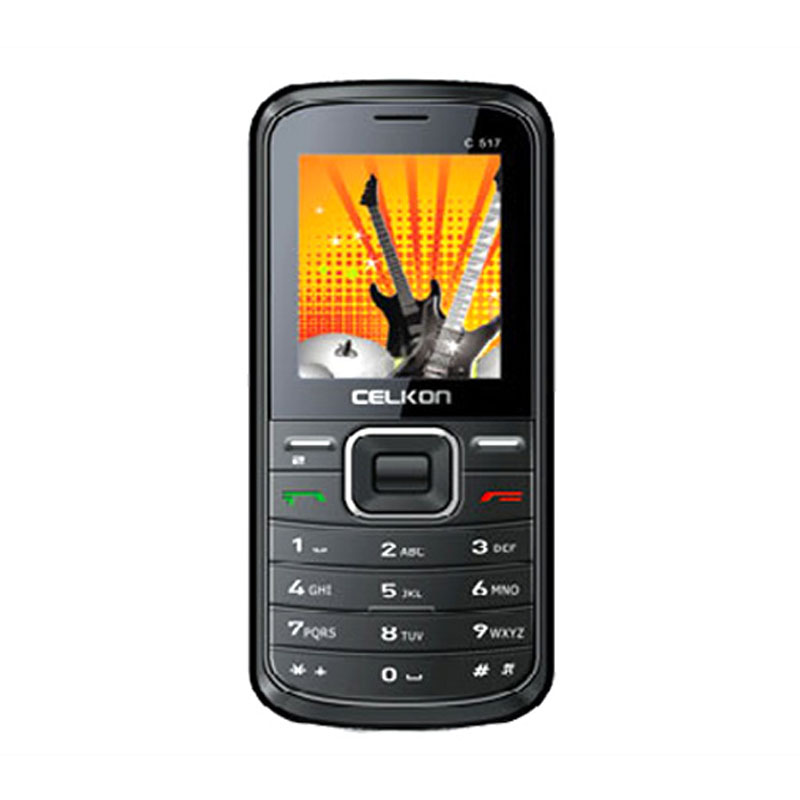
    MUMBAI: Celkon Mobiles has unveiled its latest offering, ‘RahmanIshq’ series phone at the announcement launch in Kolkata. The highlight of the event comprised of the novel use of augmented technology with the very first of its kind 4D holographic launch of RahmanIshq smartphone-AR45. The event was graced by the Oscar winning music maestro, A.R. Rahman, Celkon Mobiles chairman and MD Y Guru and Celkon Mobiles ED Murali Retineni.

    Commenting on the launch and association with RahmanIshq Guru said, “We are committed to our promise of extending unparalleled services to millions of consumers across the country. Partnering with the ‘Mozart of Madras’ for RahmanIshq is a noteworthy achievement for the company. We are proud to share that our customers can also enjoy the special tune composed by the veteran himself for RahmanIshq that will be used extensively for the RahmanIshq smartphones. Affordable innovation is the genesis of RahmanIshq. We at Celkon Mobiles would continue to build on our promise to efficiently deliver to our consumers with novelties that directly cater to their needs.”

    Chief Guest of the event, A.R. Rahman said, “I always believe that technology is very important in the world of music. RahmanIshq stands testimony to this and is a concept dedicated to spreading awareness of how technology needs to blend seamlessly with music for optimum output.  It is wonderful to partner with such an innovative brand for my first road tour. Thank you for all the support extended.”

    Epitomising sleekness and simplicity with AR45 is one of the smartphones from the ‘RahmanIshq’ series from Celkon Mobiles. It supports 4.5 inch display with Android Jelly Bean 4.2.2 OS and 1.2 GHz dual core A7 processor. AR45 comes with dual speakers with K-class amplifier to give its users a never before musical experience.

    Equipped with a 5MP rear camera with a smile detector, AR455 promises the users an outstanding shooting experience. Another innovative feature is Shake & Transfer, which enables the users to experience the data transfer with just a shake in no time, could be the most fastest and smartest ever data transfer App enabled on a smartphone.

    Apart from 3G, video calling and 4GB ROM, AR45 supports the interactive gaming, in which two people can play games like Soccer or ice-hockey with each other. It also has a customised music player to give the user an enhanced musical experience with multiple preset equaliser option. Celkon Mobiles for the first time in India has leveraged on the customisation of Android O.S and built a new user interface to get a different look and feel to the way contacts, messages and call log are viewed and also many more features like power-saver, data meter and security center are added as a bonus feature. A variety of themes are enabled in the handset while unlimited themes are also available for download by the user.

    AR45 would be available October onwards for Rs 7,999 at all leading retail outlets.
    Elaborating on the product Retineni said, “With the launch of RahmanIshq series, we are raising the bar for affordable innovation especially for the music lovers. AR45 has a full display touch screen and a 5MP rear camera with a novel feature of smile detector. RahmanIshq smartphones are power packed with pre-installed A.R. Rahman’s chartbusters.”

    The series launch was to mark the commencement of the global tour of the music legend, A.R. Rahman, a unique road tour where music meets technology that the world icon will embark upon after 20 years.
  • IT sector granted ‘Authorising Nation’ status under the CCRA

    IT sector granted ‘Authorising Nation’ status under the CCRA

    NEW DELHI: India has been recognised as the ‘Authorising Nation’ under the international Common Criteria Recognition Arrangement (CCRA) to test and certify Electronics and IT products with respect to cyber security. Thus, India has become the 17th nation to earn such recognition. This international arrangement has 26 member countries. USA, UK, Germany, South Korea, France, Japan, Canada, Australia, Turkey, Malaysia etc. are the other countries who have this recognition. 

    So far India was having the status of ‘Consuming Nation’ with respect to certification of electronics and IT products. The status of ‘Authorising Nation’ will enable India to test IT and electronics products and issue Certificates which will be acceptable internationally. The recognition would also remove the bottleneck which as of now had prevented international companies from submitting their products for testing and certification in India. 

    The recognition would also enable investment in setting up infrastructure and labs in public and private sectors in India for testing electronics and IT products. 

    Standardisation Testing and Quality Certification (STQC) Directorate of the Department of Electronics and Information Technology (DeitY) has been operating Common Criteria Certification (CC Certification) scheme in India for the last five-six years. Under it STQC undertakes certification of electronics and IT products after evaluation of the products at its lab in Kolkata. The Certificates issued by STQC Directorate shall now be acceptable internationally by all CCRA member countries.

  • TRAI issues DTH licensing consultation paper; Dish TV given extension

    TRAI issues DTH licensing consultation paper; Dish TV given extension

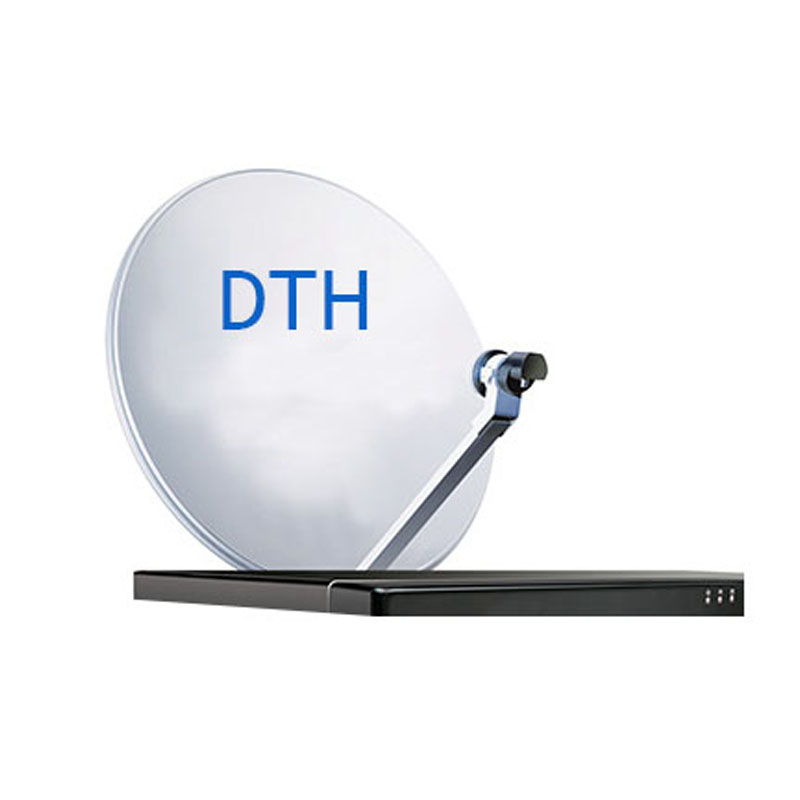
    NEW DELHI : Currently, India has six pay DTH operators, apart from the free-to-air DD Direct Plus operated by Doordarshan. Dish TV, was the first DTH licencee which got the wireless operating licence (WOL) for starting its DTH services on 1 October 2003. The other five DTH operators got the WOLs during 2006 to 2008. Dish TV‘s licence was due to expire on 30 September 2013. The DTH Guidelines are silent on the course of action to be adopted after expiry of the 10 year licence period.

    As the time left before the due date of expiry of the licence period for the first licencee (Dish TV) was ‘simply not sufficient for TRAI to follow the due consultation process,‘ it suggested some interim measures on 11 September to the Minister for the protection of the interests of consumers and keeping in view the large subscriber base of the said licencee.

    It was suggested that, in the interim, the Ministry may consider allowing Dish TV to continue its operations/services on the existing terms and conditions subject to Dish TV renewing the existing bank guarantee and a suitable undertaking that once the final policy in this regard is laid down by the government, the said DTH operator will comply with that policy for the interim period also. Any financial obligations arising from the change in policy shall also be honoured.

    The existing DTH Guidelines provide for the issue of a licence for 10 years. They do not explicitly provide for an extension or a renewal, implying that at the end of the 10-year period of validity, the licence expires.

    TRAI has noted that ‘starting a DTH business entails a huge investment of resources. It would, therefore, be a reasonable expectation on the part of DTH licencees that, on the expiry of the initial 10 year licence, they would be eligible to apply for issue of a new licence so that they can continue their business.‘

    DTH broadcasting services were opened up in the country in 2001. On 15 March 2001, the government issued the ‘Guidelines for obtaining licence for providing Direct-to-Home (DTH) broadcasting service in India’ (hereinafter referred to as ‘DTH Guidelines’). These guidelines prescribe the eligibility criteria, the procedure for obtaining the licence to set up and operate DTH services in India, and the basic terms and conditions/obligations reposed in the operators.

    After a company applies for a licence, the Ministry obtains the security clearance from the Home Ministry and clearance for usage of satellite from the Department of Space. Once the clearances are obtained, the player is asked to pay the entry fee of Rs 10 crore. On payment of the entry fee, the Ministry communicates its intent to the applicant to issue a licence, after which it needs to approach the Wireless Planning and Coordination (WPC) for Standing Advisory Committee for Frequency Allocation (SACFA) clearance. Once the SACFA clearance is obtained, the company has to give a bank guarantee of Rs 40 crore and sign the licence agreement with the Ministry.

    After this, the company has to apply to WPC for obtaining the WOL. The duration of the DTH licence is 10 years from the date of issue of the WOL. Licences to establish, maintain and operate the DTH platform are granted under Section 4 of the Indian Telegraph Act 1885, and the Indian Wireless Telegraphy Act, 1933.

  • Maharashtra’s LMOs to blackout TV on 2 Oct

    Maharashtra’s LMOs to blackout TV on 2 Oct

    MUMBAI: A mid- week holiday is always welcome and is a good time to catch up with friends and family as well as your favourite TV shows and channels. However, this Gandhi Jayanti will see a different type of revolt on television in the west Indian state as the Maharashtra Cable Operators Federation (MCOF) has decided to put their foot down on the alleged “harassment” that they have been facing from the MSOs.

    From 6:00 pm to 9:00 pm tomorrow, 2 October, about 3,000 cable operators under the MCOF have decided to blackout their screens opposing the ‘high-handed’ behavior that MSOs have adopted towards LMOs (Last Mile Operators), as MCOF president Arvind Prabhoo puts it. This includes the areas of Mumbai, Pune, Pimpri-Chinchwad, Nasik and Indore in MP where DAS I and II have been implemented. Approximately 15-20 lakh customers in Maharashtra alone will not get to see their favourite shows during prime time. LMOs in Gujarat have also been approached and a response is awaited from them.

    Arvind Prabhoo feels that it is time to start treating LMOs as equals and respect their demands

    The federation says that its intention is not to harass customers but just demonstrate that cable operators are united and it is high time MSOs give them their due credit in the cable TV chain. Communications to customers have already started in the form of SMSes and emails as well as leading papers – both English and Marathi – are being used to inform people about the flash blackout.

    “If the MSOs and broadcasters sit and talk with us there is no need to do this but no one is listening to us,” stresses Prabhoo. He does not even feel that the two will reach out to the LMOs before evening of tomorrow. Initially the plan was to shut it down for a whole day but due to legal regulations, it was reduced  to three hours.

    This isn’t the end as well. If nothing comes out of this then more such days will see blackouts with increased hours especially during festive times.

    There is a possibility that MSOs may take legal action against MCOF for this move but it is ready to fight the biggies. “This is exactly what we are opposing. When an MSO switches off channels on its own, no one questions its decision but the local guy is questioned. No legal action is taken but we have to bear all the brunt from both the MSOs as well as the customers,” adds Prabhoo. Recently, InCable had decided to switch off signals to all sports channels, right before the Champions Trophy T20, a way to bully the LMOs to cough up more cash, claims the federation.

    The issues that LMOs have been grappling with are many. Prabhoo points out that last minute decisions taken by MSOs lead to chaos which has to be resolved by local operators. This happened during DAS Phase I when STBs (Set Top Boxes) were being installed in homes. Unending trips to customers to fill forms is a burden on them as well, discloses Prabhoo. MSOs have the power to switch off signals to channels arbitrarily as well as make channels unavailable on a-la-carte rates so that only packages exist. “They should talk business, not superiority or inferiority,” adds Prabhoo.

    For now, the impending blackout is on the cards for tomorrow. Unless discussions take place soon, cable TV viewers in Maharashtra could well be in for more evenings of just looking at a blank TV set or one with a flickering static-riddled picture.

  • Twitter Conference on Mahatma shows increasing use of social media by government

    NEW DELHI: With increasing dependence on online social media by the government, a Twitter conference to discuss the life and message of Mahatma Gandhi is to be held to mark the 144th Birth Anniversary Celebrations of the Mahatma. 


    National Innovation Council chairman and the adviser to the Prime Minister on Public Information Infrastructure to Improve Governance & Public Services Sam Pitroda will lead it from his Twitter handle @pitrodasam. 


    The Twitter Conference to be held between 7.00 p.m. and 8.00 p.m. (Indian standard time) tomorrow is open to everyone. The hash tag for the conference is #Gandhi. The Twitter Conference is expected to be joined by Sabarmati Ashram Trustee Kartikeya Sarabhai, other Gandhians and several other people from across the globe. 


    Prime Minister Manmohan Singh had recently launched a Gandhi Heritage Portal and it is now available at www.gandhiheritageportal.org. The Portal developed by the Sabarmati Ashram under the aegis of the Culture Ministry hosts Gandhi’s Autobiography in 22 languages. It also has placed the ‘Collected Works of Mahatma Gandhi’ in three languages: English 100 volumes, Hindi 97 volumes and Gujarati 82 volumes. In all, the Portal presents more than five lakh pages, 21 films, 72 audio speeches of Gandhi and over a 1,000 photographs. 

  • Arkadin becomes an official provider of Tata Comm’s jamvee video service

    MUMBAI: Tata Communications has announced an agreement with Arkadin, one of the world’s largest and fastest growing collaboration service providers. Arkadin becomes an official APAC provider of Tata Communications’ recently launched jamvee conferencing – an on-demand unified communication service which enables, anyone, anywhere, to instantly access a business video meeting on any device – be it desktop, laptop, tablet, smartphone, Telepresence or video conferencing rooms.


    Connecting via video across multiple devices and platforms will be made easier. Delivered through the world’s only fibre optic cable ring around the globe, jamvee is a global video conferencing tool for enterprises that makes video conferencing – both within and between companies – as easy as making an audio conferencing call.


    Arkadin Asia Pacific MD & EVP Serge Genetet said: “With demand for video conferencing exploding, we’re confident jamvee will be popular with enterprises that need a simple on-demand service with business-grade quality that also offers the flexibility to use existing video equipment. We’re thrilled to partner with Tata Communications and certain the alliance will help strengthen our value proposition for providing customers with advanced collaboration and unified communications solutions.”


    The jamvee software application is compatible with Windows, OSX software-based devices, iPhone, iPad and Android devices. Users of Lync and other video conferencing software, as well as those with access to standard video conferencing systems such as Telepresence, can also meet using jamvee. Up to 46 participants can join each conference at the touch of a button, bringing globally-dispersed teams in fast-moving businesses closer together than ever before as the bring-your-own-device (BYOD) culture continues to gather pace.


    Tata Communications unified communications & collaboration senior VP Anthony Bartolo said, “Our mission is to create the world’s richest open video ecosystem. The partnership with Arkadin enforces this strategy which will enable true unified communication for enterprises operating in today’s mobile, always-on and global environment. Using jamvee is as easy as making an audio conferencing call and together with Arkadin’s expertise in delivering collaboration services with dedicated local-language teams; we will enable more businesses to experience the benefit that true video collaboration brings.”


    The partnership agreement with Arkadin will first roll-out in Australia and New Zealand followed by the rest of the Asia Pacific region.


    Frost & Sullivan APAC ICT Research VP Andrew Milroy said, “Frost & Sullivan attributes Tata Communications’ Managed Video Collaboration Service Provider of the Year award win to the depth of its managed video service portfolio, particularly the most recent launch of the video collaboration service – jamvee, its customer centric approach and continued execution of its video strategy. Tata Communications has built strong branding around its video strengths and is well recognised across multiple industries for its success in video collaboration. It is widely perceived to be an expert in the Asia Pacific video collaboration service market.”

  • Hathway seeks to shave off debt

    MUMBAI: India‘s leading MSO Hathway Cable & Datacom says it will be using the Rs 100 crore it has raised from the sale of its equity shares to alternative asset manager Steadview Capital Mauritius Ltd (SCML), LTR Focus Fund, and Massachusetts Institute of Technology (MIT) SCM to retire some of its debt.


    Says Hathway Cable & Datacom MD and CEO Jagdish Kumar G. Pillai: “Most of the money raised will be used to reduce our debt and to make our debt-equity ratio better. With Phase III and IV coming up soon we are open to opportunities, but at this point of time we are well funded.”


    One of the stars of the digitisation of cable TV rollout in India, Hathway today informed the BSE that it had preferentially allotted 35,21,000 Rs 10 face value shares to the three entities at a price of Rs 284 each. The company‘s board had got shareholder approval on 26 September for the same during the course of an extra ordinary general meeting.


    “Most of the money raised will be used to reduce our debt and to make our debt-equity ratio better,” says Hathway Cable & Datacom MD and CEO Jagdish Kumar G. Pillai

    The break-up of the allotment is as follows: Steadview Capital Mauritius Limited (12,00,000 equities), LTR Focus Fund (8,01,000 equities) and MIT SCM (15,20,000 equities) totting up to Rs 99.99 crore.


    The company‘s equity capital has increased to 15,19,98,900 shares from 14,84,77,900 prior to the allotment. SCML‘s holding in the company has jumped from 0.0008 per cent to 0.79 per cent; similarly for LTR from 0.0004 per cent to 0.53 per cent and the shareholding of MIT SCM has risen from 0.0008 per cent to one per cent. The investment has a lock in period of one year from the date of receipt of trading approval.


    The promoter holding has in tandem fallen from 48.63 per cent to 47.51 per cent of the expanded share capital.


    The stock market reacted positively to the news with the share closing at Rs 285.70 following its opening of Rs 270.70 and an intra-day high of Rs 288.

  • How will DTH drive value in future?

    How will DTH drive value in future?

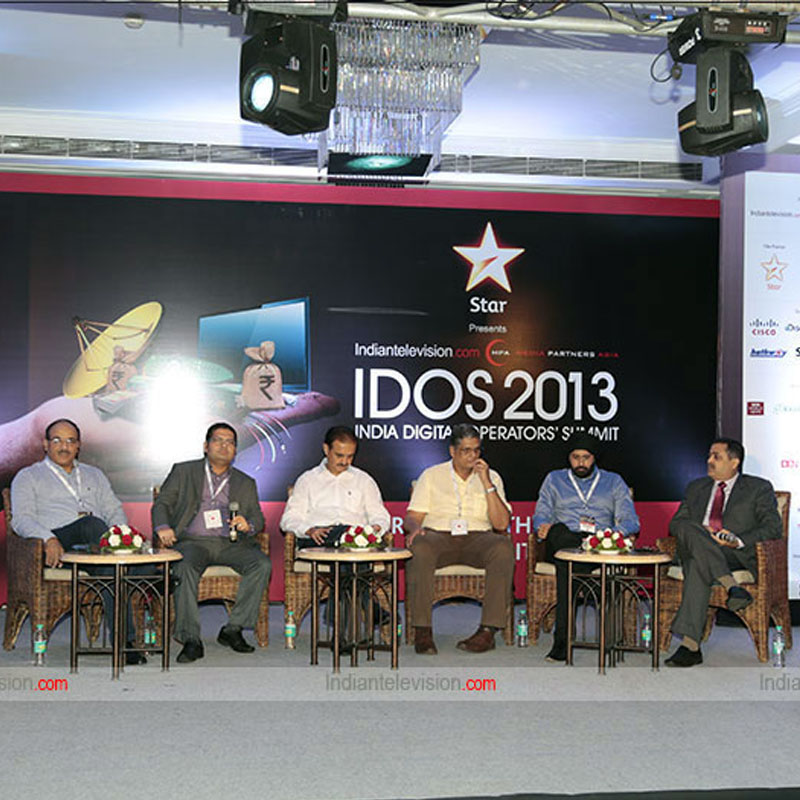
    GOA: Thus far, DTH has not been able to create the kind of consumer base it rightly deserves. Reason being: DTH players have been faced with several obstacles including subscriber leakage on ground, high levels of cash burn and the perennial issue of satellite capacity. What then are the key ingredients required for DTH’s value creation story, going forward? Exactly the question this session tried to address.

    Moderated by Vivek Couto, the panel comprised Videocon D2H CEO Anil Khera, Dish TV executive vice-president and strategy Gaurav Goel, MEASAT Vishal Mathur, Kotak Securities senior analyst Amit Kumar and Macquairie capital senior VP Ausang Shukla.

    “The major challenge that we face is to correct pricing of STBs from Rs 1600-1700 to just Rs 400-500, thus preventing rotational churn,” voiced Khera.

    Goel supported this problem adding: “The pre-paid model is tough, as the subscriber pays for let’s say only for two months in a year as the existence of analogue in 50-60 per cent households is still a hindrance and we end up having a loss in revenue.”

    Addressing capacity and investment-related issues faced by DTH players, Tata Sky CEO Harit Nagpal said: “I am writing my own destiny and thus investing Rs 900 crore on the conversion of old MPEG-2 services to MPEG-4. We have already done it for a million subscribers and soon will look at changing it for six million more.”

    The panel observes that the DTH sector will see positive development only once it stops chasing additional subscribers and looks at the bigger picture of catering to consumer needs instead. In the past three to four years, DTH players have realised that with more channel carrying capacity, their prices are also headed north and that will cater to better ARPUs.

    Said Kumar: “The key issue to address is the pricing of packages and the fact that they are offering 200 channels now as compared to 80-100 channels earlier and still haven’t seen a change in their ARPUS.”

    Shukla agreed: “The major problem with the DTH sector getting investments is that there hasn’t really been much growth witnessed in terms of either subscription growth or cash flow.”

    Another revelation is how dealing with capacity is a major problem although there is demand for HD and Indians are easily influenced by the experience of watching a cricket match or their favourite movie in HD. With 4K technology coming into live events with FIFA, more than capacity, the need of the hour is having a back-up satellite.

    “What Sun Network experienced in 2009 was a real sorry affair, as it witnessed a complete blackout because of satellite failure, that could have been avoided if it had a back-up satellite,” said Mathur.

    Also, no thought has been given to other avenues like using a BSS (Broadcast Satellite Service) band along with the FSS (Fixed Satellite Service) band – which is already in use. The difference between the two is that even as FSS can carry channels between 14-17GHz, the BSS band can carry an equal number of channels on a 12 GHz signal.

    Added Mathur: “The issue is that there are seven DTH players who among them share 70 transponders with each of them requiring eight to ten transponders.”

    The panel felt that there has to be some logic behind the consolidation of platforms as there is only a 25 per cent churn and with consolidation, there will be a further reduction in the number of subscribers.

    So the panel agreed that consolidation of DTH platforms is not the panacea for getting investors. Rather, they have to focus on catering to subscribers’ needs.

  • Arvind Prabhoo shares LMO perspective at IDOS 2013

    Arvind Prabhoo shares LMO perspective at IDOS 2013

    GOA: In this special session, the Maharashtra Cable Operators Federation president Arvind Prabhoo addressed some dire issues currently being faced by the last mile owners (LMOs).

    Prabhoo thanked Telecom Regulatory Authority of India (TRAI) for pushing digitisation as he feels that the cable industry has been stagnant for nearly 10-12 years. He went on to introduce how the cable industry has been blossoming in India. “Let’s go back to 1989 when we first started to replace nearly eight million fixed line phones with cable and the process was completed in merely two years.”

    He elaborated on how the LMOs have been investing and re-investing to improve the quality of signals that have been transmitted to their consumers and this without any financial backing or infrastructure provision.

    “Let me demystify an LMO for you – we are entrepreneurs to the core, self-motivated and self-learned men. We have the highest SLA track record among service providers,” he added.

    Prabhoo further spoke on the LMOs’ contribution towards the progress of DAS, he said that nearly 95 per cent of the STBs of the two crore boxes have been installed by LMOs in individual houses. “Contrary to common belief, it was us who purchased the boxes from MSOs at subsidised rates and installed in our customers’ homes.”

    There is no argument that cable is a preferred medium for better quality of picture and sound, “LMOs are the roots, so strengthen us to face the storms ahead as the economy is going through tough times now.”

    He further elaborated on the implementation of DAS and the fact that customers are still to enjoy the benefits of DAS roll out. “The benefits are still invisible for the consumers, there is still no clarity on the ownership of STBs, the consumer has already lost nearly Rs 200 crore in one year alone because of not having the option of just going in for FTA channels (which according to Prabhoo nearly 30 per cent of the customers would prefer watching) and to add to that extra cost charged as entertainment tax… so where are the benefits? And who is gaining out of this?” questioned Prabhoo.

    So what is the way ahead for LMOs: Prabhoo expounded, “It’s going to be tough for us, we only stand to lose out customer base and revenue, there will be marginalisation in customer care and the most pressing issue remains the lack of settlement mechanism between MSOs and LMOs.”

    What the LMOs are really wishing for is G’NOC’OLISED (globalised, nationalised and localised) content and to work in a mutually beneficial manner with the MSOs and bring about a revolutionising change to the way cable is being perceived today.

    “A-la-carte is the way forward, and the customer will always be the one whom we cater to,” ended Prabhoo.

  • Monetising the sports arena through Pay-TV

    Monetising the sports arena through Pay-TV

    GOA: After a fruitful day one of IDOS 2013, day two kicked off with a presentation by Media Partners Asia executive director Vivek Couto on ‘Sports and Pay TV: The path to value creation’. “The idea is to bring value to sports and to bring it to markets that have the passion for sports,” he said.

    The sports market is very different in the US and Australia as against Europe and Asia. The US and Australian markets have higher mark-up value and is a profitable proposition for the operators as the major part of the revenue is earned through subscription fees as against advertising revenue. But, the scenario is just reverse in case of European and Asian markets where advertising revenue drives the broadcasters.

    “The big difference in the markets is the availability of multi-platform rights from the broadcasters in the US and Australian markets which makes life easier for the operators,” Couto added.

    In the European and Asian markets, the problem is abstaining from providing better interactive services to the consumers rather than focusing on just raising advertising revenues. This has also resulted in the death of ESPN as a sport major in the European market as is the case in Asia (except India).

    One of the various reasons that have really driven ARPUs in the US and Australian markets is the focus on packaging rather than exclusivity. “The US market is very vertically integrated, so there is no exclusivity of ‘live’ event coverage and the focus is more on better production and packaging of content to attract the attention of the viewers and build a bigger and loyal fan base,” explained Couto.

    This is one of the biggest reasons for DirecTV having made such a big impact on viewers globally. The focus on this platform is on the kind of coverage given rather than just focus on exclusivity of the content carried. This has slowly encouraged all broadcasters to focus more on how they package and present their content to their viewers.

    The US market currently has a very profitable sports ecosystem, so much so that almost all the leading operators provide a good bouquet of sports channels right from the basic packs to the premium packs. With leading players like Comcast also adding sports channels to its basic packs only goes onto show the power of sports globally.

    Sports has really been a battering ram for both subscription and ARPUs, so what are the takeaways for the Indian market? “Well firstly, focus on, slowly making the move from SD-HD-HD ad free and finally take it to multi-screen availability. Also the ads need to move from CPRT to CPT to make the content more incentivised and finally give more access to the consumers by tying up with mobile and online services,” ended Couto.

    The way forward is certainly bright for the Indian market, but a lot more can be done by covering more of local sports and create greater traction with the local population by getting local cable operators to cover smaller events in a bigger way and promote more sports rather than being just a one sport nation.