Category: Software

  • Cloud Force partners Corpus Media for TV internet applications on pay-TV providers

    MUMBAI: New York City and Hartford, CT-based software and services company Cloud Force Digital Media has selected Corpus Media Labs as its applications development partner.

    Cloud Force Digital, a US subsidiary of Cloud Force Global, is one of the first companies focused on building, distributing, and monetising TV Internet applications for the pay TV operators. Corpus Media is an established video technology company that helps in simplifying video OTT journey by providing end-to-end multi-screen streaming solutions.

    Corpus Media is aligned to the right blend of critical thinking and engineering curiosity to help customers ‘turns ideas into revenue’ with a unique mix of product, services and systems integration. Corpus Media aligns with one of the first companies focused on delivering next-generation interactive video services through TV internet applications launched on global pay TV operators.

    Corpus is the leader in managing end-to-end digital video life-cycle by providing customised OTT solutions and video monetisation services.

    “Collaboration with Corpus Media for its application development services will provide an edge to our content partners with the opportunity of building their TV internet applications. Corpus Media will allow a financial added value to our content customers and the TV Internet App Technology will assist in growing their distribution within the U.S. and globally,” said Cloud Force founder and CEO E.J. Klein.

    On the partnership, Corpus Media COO Dave Maan said: “We are extremely excited to partner with Cloud Force Digital Media in providing business-changing cloud interactive platforms to broadcasters, content owners and networks. We believe that our partnership will accelerate innovation in the TV internet industry and Cloud Force will set higher benchmarks by addressing the need of its customers using our past experience in application development services.”

  • CTV audience measurement: YuMe, Nielsen tie up for programmatic platform

    MUMBAI: YuMe, Inc., a proven partner for video advertising leadership and innovation, today announced that it is working with Nielsen to bring to market the first programmatic platform-based campaign-based audience composition measurement offering for Connected TV (CTV) campaigns. This unique offering allows YuMe to provide clients with campaign-level audience measurement data across its vast network of app publishers within the CTV marketplace, including TVs that are connected to the Internet via OTT devices, Blu-ray players, streaming boxes or sticks (like Roku and Apple TV), and gaming consoles, or have built-in internet capabilities (i.e., a Smart TV).

    “At the Dentsu Aegis Network, our goal is to implement buys using consumer insights combined with the latest tools to meet our clients’ brand goals,” said Dentsu Aegis Network EVP managing director – video investments Michael Law. “We look forward to continuing our partnership with YuMe to obtain more insightful CTV audience data to further improve our video campaigns across mobile, linear TV, CTV and desktop.”

    According to a recent eMarketer report, connected TV users are estimated to reach 202.1 million by 2020, and represent 60.4% of the US population, up from 56.1% in 2016.

    “As the CTV market continues to grow and become a focal point in cross-screen strategies, marketers need a solution that allows them to compare audiences across all screens – and optimize their campaigns based on this crucial data,” said YuMe chief revenue officer Michael Hudes. “Our relationship with Nielsen allows us to not only deepen the level of audience reporting we provide on CTV campaigns, but also align these insights across a brand’s mobile, linear TV and desktop initiatives.”

    Brands that run CTV campaigns with YuMe may be eligible for audience composition reporting that offers demographic breakouts based on Nielsen’s audience data.

    “Audience measurement is paramount to effective media strategies, and we’re excited to be working with YuMe to bring connected television campaign level audience measurement into the programmatic space,” said Nielsen senior VP – digital platform client solutions Thomas Eaton.

    “Rising CTV device ownership is one of the video ad industry’s biggest remaining measurement challenges,” said Eicoff VP/Director Amy Bickers. “We look forward to leveraging the insights to make smarter CTV and cross-screen campaign investment decisions.”

    YuMe’s new custom audience composition campaign measurement offering is available now.

  • Next-gen TV transmission standard proposed by US panel, to foster innovation

    MUMBAI: The Federal Communications Commission (U.S.) has sought comment on a proposal that would allow television broadcasters to use the “Next Generation” broadcast television transmission standard, called “ATSC 3.0,” on a voluntary, market-driven basis.

    ATSC 3.0 has the potential to greatly improve broadcast signal reception on mobile devices and television receivers without outdoor antennas. It is also intended to enable broadcasters to offer enhanced and innovative new features to consumers, including Ultra High Definition picture and immersive audio, more localized programming content, an advanced emergency alert system capable of waking up sleeping devices to warn consumers of imminent emergencies, improved accessibility options, and interactive services.

    A coalition of broadcast and consumer electronics industry representatives petitioned the Commission to allow the use of the new standard. The upgraded technology is intended to merge the capabilities of overthe-air broadcasting with the broadband viewing and information delivery methods of the Internet using the same 6 MHz channels presently allocated for digital television (DTV).

    Notice of Proposed Rulemaking (NPRM) proposes and seeks comment on rules that will allow broadcasters the flexibility to deploy ATSC 3.0-based transmissions while minimizing the impact on – and costs to – consumers and industry stakeholders. Among other things, the NPRM:

    Voluntary Use: Proposes to authorize voluntary use of ATSC 3.0 transmissions and to incorporate the relevant portions of the new standard into the Commission’s rules. The NPRM tentatively concludes that a Next Gen TV tuner mandate for new television receivers is not necessary at this time.

    Local Simulcasting: Proposes to require “local simulcasting” for stations that choose to deploy Next Gen TV so broadcasters can continue to provide DTV service using the current ATSC 1.0 standard at the same time that they offer ATSC 3.0. This approach will minimize disruption to consumers by ensuring that they will still be able to use their existing TV sets, which have only current-generation DTV and analog tuners.

    MVPD Carriage: Proposes to require that MVPDs continue carrying broadcasters’ DTV signals, using ATSC 1.0, but not to require them to carry ATSC 3.0 signals during the period when broadcasters are voluntarily implementing ATSC 3.0 service. The NPRM also asks about issues related to the voluntary carriage of ATSC 3.0 signals through retransmission consent.

    Service and Interference Protection: Asks for comment on whether Next Gen TV transmissions will raise any interference concerns for existing DTV operations or for any other services or devices that operate in the TV bands or in adjacent bands.

    Consumer Protection and Education: Tentatively concludes that television stations offering ATSC 3.0 should be subject to the public interest obligations that currently apply to television broadcasters and asks for comment on whether broadcasters should be required to provide on-air notifications to educate consumers about Next Gen TV service deployment and ATSC 1.0 simulcasting.

    Taken together, the proposal starts the rulemaking process to facilitate private sector innovation and promote American leadership in the global broadcast industry.

    Also Read:

    TRAI extends time for views on opening up DTT to private players

    Small US broadband businesses relieved from needless regulation, piracy protection mooted


  • Processing video from linear to live, OTT & VR: Verizon launches Exponent for global carriers

    MUMBAI: Verizon has globally launched Exponent, a new business and technology venture offering a portfolio of software and internet platforms designed to enable carriers around the world to quickly deploy and launch next-generation solutions. Exponent offers a foundation for carriers to fuel their digital transformation and compete with a range of new digital service providers by expanding their Big Data and Artificial Intelligence, Internet of Things (IoT), Media Services and Internet Services Delivery platforms.

    Exponent combines Verizon’s cutting edge innovation with the operating know how of running one of the most advanced networks on the planet, to provide carriers with the right expertise and capabilities to accelerate growth, optimize performance, and monetize assets.

    “As carriers around the world seek to compete with new, emerging technology players and OTT service providers, Exponent provides a cost-effective way for them to leverage Verizon’s investment and experience to diversify and help grow their revenue streams while relying on our tradition of innovation, reliability and excellence,” said Verizon chief product officer Guru Pai.

    Exponent platforms provide a broad range of business and technical benefits to carriers including:

    Big Data and Artificial Intelligence Platform – designed to assist carriers to unlock and monetize their wealth of data through the application of advanced machine learning techniques, deep analytics, and artificial intelligence. This new groundbreaking platform enables services providers to utilize their unique data sets in the marketplace and open new business opportunities.

    IoT Platform – from silicon to vertical solutions, this platform eliminates many of the limitations carriers have traditionally faced in managing the known complexities of its IoT growth business. By integrating a wide set of capabilities, from managing all end user devices and connections to a developer and customer marketplace, carriers are empowered to accelerate their IoT use cases.

    Media Services Platform – through cross-platform video and advanced media services across multiple networks with different end point devices, this platform reduces complexity to a simple integrated end-to-end next-generation video technology, handling everything from content ingestion to the final user screen. These solutions allow carriers to easily process at scale any type of video content from linear TV feeds to live streaming, OTT and emerging formats such as 360 video and VR, at a very convenient cost structure, while delivering a rich and customizable user experience.

    Internet Services Delivery Platform – with the goal of managing the ever-increasing infrastructure demand, this platform provides a powerful and flexible real-time flow-based solution that helps operators launch revenue-generating internet services, create value-based pricing and consumer engagement plans, and deliver dynamic network optimization capabilities through a simple management interface.

    Cloud Computing and Storage Platform – designed and built with carrier-sized deployments in mind, this container-based architecture allows carriers to rapidly deploy new services with a focus on scale and security, all while optimizing for both performance and cost.

    Exponent’s platforms were designed to bring the flexibility and openness of internet technologies with the scale and consistency of carrier-grade solutions, leveraging open source software, comprehensive application programming interfaces (APIs) and micro-services architectures. The platforms interoperate seamlessly with existing carrier’s assets to maximize their utilization and give the customer the ability to scale as their business model evolves.

    “Exponent’s approach to designing and deploying platforms with an open architecture model offers carriers an innovative and much-needed entry into new growth areas while mitigating the required investment and resources to get started. There is significant value for both sides in this model,” said IDC Research group VP Courtney Munroe.

    Created by a carrier, for carriers, Exponent has the potential to change the carrier landscape by helping to generate new revenue streams, reduce investment risk, and embrace tomorrow’s business opportunities.

    “Our launch of Exponent demonstrates our commitment to providing best-in-class experiences and services to the carrier community. After many years of hard work, we are ready to launch and share our learnings, and we welcome all services providers globally to partner with us,” said Exponent VP and GM Brian Higgins.

    Learn more about Exponent at the Verizon Operator Marketplace Speaker Series at Mobile World Congress in Barcelona on February 27, 2017. Over the four days of Mobile World Congress, Verizon will be hosting a dynamic Operator Marketplace and an engaging speaker series, showcasing products and solutions that are disrupting the technology industry. See firsthand and learn from top leaders about how innovation in platforms, content, and advertising will shape the future on a global scale.

  • Masstech announces key management promotions

    MUMBAI: Masstech – the trusted provider of innovative workflow and media asset management solutions – has announced two key management promotions. Savva Mueller has been named the company’s Vice President of Product Management and Marketing, while Joseph French has been promoted to Director of North American Sales. The advancements reinforce Masstech’s proven dedication to addressing customers’ evolving needs, while readying the company for accelerating growth.

    In his new role, Savva is responsible for developing and overseeing the company’s product roadmap, as well as its out-facing marketing communications strategy. He will work closely with customers and Masstech’s sales and support teams to ensure that the company’s existing and future solutions continue to improve users’ operational experiences. A widely recognized expert in media asset management and newsroom computer systems, Savva joined Masstech in 2012 from Avid Technology, where he managed the product lifecycle for Avid’s popular newsroom editorial system. He previously held roles at Tektronix and two Wisconsin television stations.

    Joseph’s promotion will see him assembling and managing an expanded sales team to meet the dynamic needs of broadcasters and media organizations across the U.S. and Canada. A seven-year Masstech veteran, he first helped launch Masstech’s spot and program aggregation system – then known as CatchBlue – before playing a critical role in bringing the company’s archive and media management solutions into North American newsrooms. Managing all U.S. call-letter station accounts since 2012, Joseph was a key contributor to many significant, group-level broadcast sales. Prior to Masstech, he spent three years as an analyst on Wall Street for Lehman Brothers.

    “Over the past few years, Savva and Joseph have been instrumental in defining our award-winning solutions and bringing them to market,” said Masstech president and CEO Joe French. “Both have worked tirelessly to develop a deep, insightful understanding of the industry’s needs, and to help our customers achieve their own unique goals. Their promotions will help us build on our momentum as we launch new innovations and expand our market presence in 2017 and beyond.”

    Masstech’s innovative software solutions enable efficient, automated workflows that simplify operations and deliver exceptional ROI while letting media companies maximize the value of their content. Bridging diverse systems and reducing complexity within a facility or across multiple sites, Masstech solutions span applications including media asset management, newsroom content archiving and exchange, archive management, syndicated content aggregation, disaster recovery and more.

    Masstech’s industry-leading solutions will be showcased in booth number SU3202 at the upcoming 2017 NAB Show, April 24-27 in Las Vegas.

  • Triple Play targets cable & net subs, deploying Conax-secured, multi-DRM

    Triple Play targets cable & net subs, deploying Conax-secured, multi-DRM

    MUMBAI: Conax, part of the Kudelski Group, and a leader in total service protection for pay-TV and digital entertainment services worldwide via broadcast, broadband and connected devices, has announced that Indian pay-TV operator Triple Play has selected technology from Conax and Corpus to help drive expansion in the triple-play arena.

    The new solution includes a Conax-secured multi-DRM offering based on the Conax CaaS cloud-based platform, combined with pre-integrated middleware from partner Corpus, with system integration by Corpus. The operator will initially target its current cable and internet subscriber base including a mix of high and low ARPU consumers. The contract represents the first deployment of the joint Conax/Corpus offering and the first launch of Conax’ cloud-based multi-DRM platform in the Indian market.

    Triple Play is one of the largest triple play service provider working over FTTH (Fiber to the Home) in India through GPON (Gigabit passive optical network) Technology that enables the optical fiber to perform as a neutral-cum-independent network to carry multiple service providers to enhance & ensure higher level of subscriber satisfaction.

    The flexible architecture behind the Conax CaaS cloud-based platform and benchmark multi-DRM solution reduces CAPEX and leverages the Conax “pay-as-your-business-grows” principle creating a natural migration path, reduced time-to-market, simplified operations and scalability for adding new services. The value-added, pre-integrated partner ecosystem offers Triple Play a competitive edge in attracting new market share by leveraging Corpus’ comprehensive middleware solution providing smooth integration, and an enhanced user experience.

    Triple Play CEO Navneet Sethi “We chose Conax and Corpus to partner on our expansion into the triple-play arena based on a strong history of trust and competency for securing content in the Indian market and complex distribution environments, along with local presence and experience as well as a strong track record deploying advanced middleware and VOD solutions on both HD and SD STB’s even in the most challenging ecosystems.”

    Conax president & CEO Morten Solbakken “With a consumer market eager to adapt the latest choices for accessing desired content, we are pleased to be selected to support Triple Play as it moves to an enhanced service offering within the multi-DRM space. In addition, the joint cooperation cements our growing relationship with the skilled team at middleware partner, Corpus, in establishing the Conax multi-DRM footprint in India as well as the first deployment of the Conax CaaS cloud-based platform.”

    Corpus CEO Sachin Tummala “Corpus is pleased to partner with Conax in deploying its first cloud-based multi-DRM platform in the Indian market. We believe this will strengthen service providers’ ability to add more and more popular content and value added services. This will also enable us to continue to invest and enhance our technologies to adapt changes in the OTT space, while providing the best viewing experience to the end-consumer.”

    Conax provides the ultimate flexibility in securing content across technologies and multiscreen devices – all based on a single unified security hub. With support for Common Encryption and MPEG DASH, Conax’ unique back-end simplifies content protection of TV everywhere services with market-leading DRM technologies (including Widevine, PlayReady, FairPlay Streaming and NAGRA PRM) without compromising usability for end users. In addition, Conax removes the operator burden in negotiating separate contracts for various DRM technologies, offering a one-stop-shop solution to starting multi-DRM operations.

  • Wipro middleware powers integration-ready Hisense 4K; supports HD-PVR features

    Wipro middleware powers integration-ready Hisense 4K; supports HD-PVR features

    MUMBAI: Wipro Limited, a leading global information technology, consulting and business process services company, announced that its Digital TV Middleware solution has successfully enabled Hisense 4K TVs in Japan. Hisense Co. Ltd. is a multinational white goods, brown goods and electronics manufacturer.

    The Wipro solution supports Hisense 4K TV product features- ISDB-T/S Broadcast and HD-PVR- to enable a premium viewing experience for customers.

    Wipro was selected by Hisense as the middleware partner for its 4K TV segment in Japan. As a part of its engagement with Hisense, Wipro integrated its market-ready software stack with Hisense’s 4K TV product portfolio. It also helped the company accelerate the product development lifecycle of its recently launched product variants of 4K LCD TV.

    Wipro’s middleware solution is fully compliant with the latest Japanese Association of Radio Industries and Businesses (ARIB specifications) (ISDB-T/S) and is Integration-Ready for Android TV, Linux, QNX and other operating systems. Wipro’s solution enables key Smart TV features such as Hybrid Multi-Tuner (Terrestrial & Satellite), Antenna Diversity, One and Full Segment Services, BS/CS, BCAS Verifier, support for Fixed and Mobile Receivers, and Advanced HD-PVR scenarios.

    Wipro senior vice president and global head, product engineering services Anita Ganti said, “The successful deployment is a testament to the best-in-class quality of our Digital TV Middleware Solutions and reinforces our commitment to become a partner of choice for the global media industry.”

    Wipro’s expertise in providing Digital TV Middleware solutions based on ATSC, DVB, ISDB and other interactive standards have been leveraged by partners, worldwide. Wipro’s middleware solutions have been powering Digital TV, Set-Top-Box and Automotive Infotainment devices across the globe for over fifteen years.

  • Wipro middleware powers integration-ready Hisense 4K; supports HD-PVR features

    Wipro middleware powers integration-ready Hisense 4K; supports HD-PVR features

    MUMBAI: Wipro Limited, a leading global information technology, consulting and business process services company, announced that its Digital TV Middleware solution has successfully enabled Hisense 4K TVs in Japan. Hisense Co. Ltd. is a multinational white goods, brown goods and electronics manufacturer.

    The Wipro solution supports Hisense 4K TV product features- ISDB-T/S Broadcast and HD-PVR- to enable a premium viewing experience for customers.

    Wipro was selected by Hisense as the middleware partner for its 4K TV segment in Japan. As a part of its engagement with Hisense, Wipro integrated its market-ready software stack with Hisense’s 4K TV product portfolio. It also helped the company accelerate the product development lifecycle of its recently launched product variants of 4K LCD TV.

    Wipro’s middleware solution is fully compliant with the latest Japanese Association of Radio Industries and Businesses (ARIB specifications) (ISDB-T/S) and is Integration-Ready for Android TV, Linux, QNX and other operating systems. Wipro’s solution enables key Smart TV features such as Hybrid Multi-Tuner (Terrestrial & Satellite), Antenna Diversity, One and Full Segment Services, BS/CS, BCAS Verifier, support for Fixed and Mobile Receivers, and Advanced HD-PVR scenarios.

    Wipro senior vice president and global head, product engineering services Anita Ganti said, “The successful deployment is a testament to the best-in-class quality of our Digital TV Middleware Solutions and reinforces our commitment to become a partner of choice for the global media industry.”

    Wipro’s expertise in providing Digital TV Middleware solutions based on ATSC, DVB, ISDB and other interactive standards have been leveraged by partners, worldwide. Wipro’s middleware solutions have been powering Digital TV, Set-Top-Box and Automotive Infotainment devices across the globe for over fifteen years.

  • IoT conversations will promote interoperability: NASSCOM, Georgia Tech tie up

    IoT conversations will promote interoperability: NASSCOM, Georgia Tech tie up

    NEW DELHI: The National Association of Software and Services Companies (NASSCOM) and the Georgia Tech Advanced Research Corporation (GTARC) joined to advance Internet of Things (IoT) and fostering IoT-based innovation through the development of a conducive ecosystem in India.

    The partnership will also help drive conversations around IoT that will promote interoperability across industry and geographic markets. Both the COE-IoT and the GTARC will also get the opportunity to showcase their individual efforts to raise awareness on the subject.

    An MoU between the two provides for both NASSCOM and GTARC cooperating to address technological and non-technological challenges that surround the adoption of IoT technologies, creating an amiable environment for all organizations in the industry.

    The agreement between NASSCOM’s Center of Excellence on the Internet of Things (COE-IoT) based out of Bangalore and GTARC’s Centre for the Development and Application of Internet of Things Technologies (CDAIT) will see both organizations combine their individual efforts to raise awareness on IoT and drive topic related events for the purpose of developing a vibrant global IoT ecosystem facilitating the effective and efficient adoption of IoT technologies.

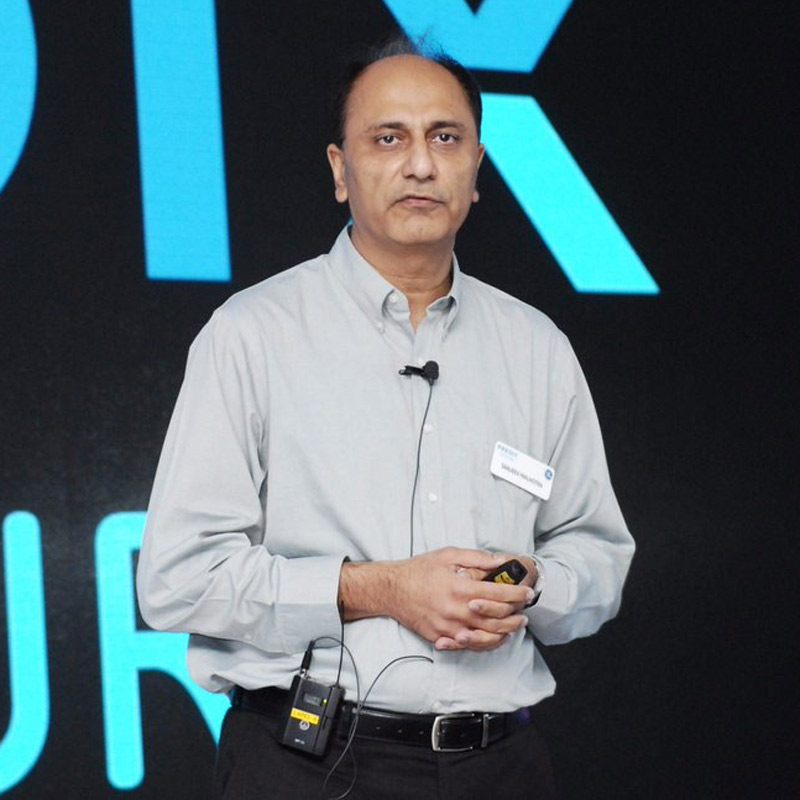
    NASSCOM COE-IoT CEO Sanjeev Malhotra said: “The disruptive nature of IoT will have a major impact in all areas of the consumer’s life – across all industries including industrial, healthcare, agriculture and smart homes. IoT will also be used across these industries to improve productivity with minimum usage of natural resources. We are happy to be partnering with GTARC, a leading institute with a focus on emerging technologies, leading to a mutually beneficial agreement that will help us combine GTARC’s advanced technology research along with the thriving innovation ecosystem in India.”

    Centre for the Development and Application of Internet-of-Things Technologies (CDAIT), GTARC, MD Alain Louchez said: “In close cooperation with NASSCOM’s IoT center, we intend to explore ways to leverage IoT technologies to accelerate and optimize the pace of digital transformation throughout the economy.”

    Through its COE-IoT located in Bangalore, NASSCOM is focusing on systemically expanding the technology ecosystem, with the Center providing a platform to address challenges such as the lack of understanding that leads to low adoption levels and security issues faced by the industry. The CoE – IoT is a joint initiative between the Department of Electronics and Information Technology (DEITY), Education and Research Network (ERNET) and NASSCOM and features laboratory that provides IoT focused startups the usage of various facilities that help them develop IoT solutions in application areas like Agriculture, Automobile, Telecom, Healthcare and Consumer IoT.

  • IoT conversations will promote interoperability: NASSCOM, Georgia Tech tie up

    IoT conversations will promote interoperability: NASSCOM, Georgia Tech tie up

    NEW DELHI: The National Association of Software and Services Companies (NASSCOM) and the Georgia Tech Advanced Research Corporation (GTARC) joined to advance Internet of Things (IoT) and fostering IoT-based innovation through the development of a conducive ecosystem in India.

    The partnership will also help drive conversations around IoT that will promote interoperability across industry and geographic markets. Both the COE-IoT and the GTARC will also get the opportunity to showcase their individual efforts to raise awareness on the subject.

    An MoU between the two provides for both NASSCOM and GTARC cooperating to address technological and non-technological challenges that surround the adoption of IoT technologies, creating an amiable environment for all organizations in the industry.

    The agreement between NASSCOM’s Center of Excellence on the Internet of Things (COE-IoT) based out of Bangalore and GTARC’s Centre for the Development and Application of Internet of Things Technologies (CDAIT) will see both organizations combine their individual efforts to raise awareness on IoT and drive topic related events for the purpose of developing a vibrant global IoT ecosystem facilitating the effective and efficient adoption of IoT technologies.

    NASSCOM COE-IoT CEO Sanjeev Malhotra said: “The disruptive nature of IoT will have a major impact in all areas of the consumer’s life – across all industries including industrial, healthcare, agriculture and smart homes. IoT will also be used across these industries to improve productivity with minimum usage of natural resources. We are happy to be partnering with GTARC, a leading institute with a focus on emerging technologies, leading to a mutually beneficial agreement that will help us combine GTARC’s advanced technology research along with the thriving innovation ecosystem in India.”

    Centre for the Development and Application of Internet-of-Things Technologies (CDAIT), GTARC, MD Alain Louchez said: “In close cooperation with NASSCOM’s IoT center, we intend to explore ways to leverage IoT technologies to accelerate and optimize the pace of digital transformation throughout the economy.”

    Through its COE-IoT located in Bangalore, NASSCOM is focusing on systemically expanding the technology ecosystem, with the Center providing a platform to address challenges such as the lack of understanding that leads to low adoption levels and security issues faced by the industry. The CoE – IoT is a joint initiative between the Department of Electronics and Information Technology (DEITY), Education and Research Network (ERNET) and NASSCOM and features laboratory that provides IoT focused startups the usage of various facilities that help them develop IoT solutions in application areas like Agriculture, Automobile, Telecom, Healthcare and Consumer IoT.