Category: Software

  • MSOs, LCOs could soon face anti-monopoly regulations

    MSOs, LCOs could soon face anti-monopoly regulations

    MUMBAI: There could soon be caps on market shares of multi-system operators (MSOs) and local cable operators (LCOs) in a city, district, state and the country.

    The Information and Broadcasting (I&B) Ministry is keen that competition emerges in some states where monopolies have got created in the absence of any market share regulations and such monopolies do not form in other states, through reasonable restrictions on MSOs and LCOs.

    The Information and Broadcasting (I&B) Ministry on Thursday asked the Telecom Regulatory Authority of India (Trai) for its views on imposing of restrictions to prevent monopolies and the measures to prevent monopolistic operations by MSOs and LCOs.

    The I&B Ministry said it has asked Trai to provide its recommendations based on the following: “In order to ensure fair competition, improved quality of service, and equity, should any restriction be imposed on MSOs/LCOs to prevent monopolies/accumulation of interest? If yes, what restrictions should be imposed and what should be the form, nature and scope of such restrictions?”

    The ministry has asked Trai to also suggest amendments required in the Cable Television Networks (Regulation) 1995 Act and Rules framed thereunder.
    The ministry said it has observed that cable TV distribution is virtually monopolised in some states as operation of the entire cable TV network is dominated by a single entity in those states. At present, there are no restrictions on the issue of accumulation of interest in terms of market share in a City, District, State or country by individual MSOs and LCOs in the cable sector.

    MSOs and LCOs are currently free to operate in any area or areas of their choice after obtaining registration from the ministry.

    The ministry feels such monopolies may not be in the interest of cable TV consumers and may have serious implications in terms of competition, pricing and healthy growth of cable TV sector in that market.

    MSOs and LCOs are required to be registered with local Post Offices to be able to operate in the permitted areas of registration. However, as per recent amendments in the Cable Television Networks (Regulation) Amendment Rules 2012, it has become mandatory for MSOs to get registration from the I&B Ministry to operate in areas which are notified for analogue switch off and transition to digital cable TV delivery.

  • Expanding teledensity and broadband services major challenges: PM

    Expanding teledensity and broadband services major challenges: PM

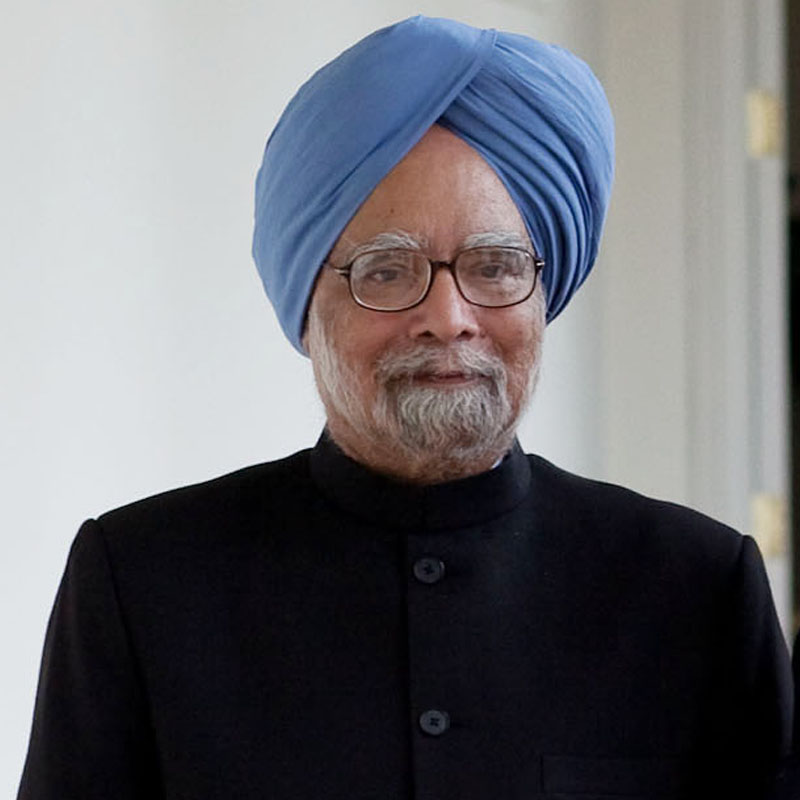
    NEW DELHI: Prime Minister Manmohan Singh today flagged off three major challenges for the industry and the Government to take the Telecom revolution to the next level: deepening penetration of basic telecom services, providing affordable and accessible broadband services, and strengthening domestic manufacturing capabilities across the entire value chain in telecom and electronics.

    Addressing the Seventh edition of India Telecom under the theme ‘New Policy Framework: Envisioning the Next Telecom Revolution‘, Dr. Singh said: “The Indian telecom sector has seen phenomenal growth over the past decade or so. With around 965 million telephone connections, India is the second largest telecom market in the world as a whole. The telecom sector has also been the driver of foreign direct investment and FII flows into our country. It has contributed in a major way to the dynamism of our economy.”

    The three-day ‘India Telecom‘ is organised by FICCI in association with the Department of Telecommunications, Communications and Information Technology Ministry. This is the biggest telecom event in the Indian subcontinent and has been the forum for emerging knowledge center, inspiring innovation, technology transfer, exchange of innovative ideas and joint ventures in telecom sector since 2006.

    The Prime Minister said during the last one year, the government had taken a number of initiatives in the telecom sector. “We have announced the New Telecom Policy-2012. We have attempted to clarify the policy positions on a number of complex issues. We have attempted to ensure adequate availability of spectrum and its allocation in a transparent manner through market-related processes. I am confident that the futuristic policy regime that we are now putting in place will address, and address effectively, the concerns that have been worrying investors and will provide a new impetus to the growth of telecommunication industry in our country,” remarked Dr. Singh.

    He listed three broad aspects which should guide the collective efforts in telecommunications in the years to come.

    The first issue is the penetration of basic telecom services in our rural economy. The exponential growth of the telecom sector has been primarily driven by growth in the use of telephones in urban areas. The full potential of telecommunications in enabling higher growth will not be realised until the use of telephones spreads much wider in the rural economy of India as well. While urban India has today reached a teledensity of 169 per cent, the teledensity in rural India stands at only 41 per cent. Not only this, the bulk of the 59 per cent people who do not use phones in rural areas is perhaps from the socially and economically backward sections of our society.

    He added, “We must address this rural-urban divide if we have to achieve our goal of socially inclusive growth. Today, network coverage is there in most parts of our country and the bulk of the population is already covered. It is possible that there are economic or other barriers preventing the spread of telephone usage. There is also an economic case for investing in business at the bottom of the pyramid. I urge industry, which has shown great innovation in the telecom sector, to come up with strategies to expand teledensity in rural areas. I also urge the Department of Telecommunications to think big and think creatively to see how the resources available to it, either through the USO Fund or otherwise, are better used to achieve this purpose. We cannot and we should not have an India where lack of a phone is a hindrance to inclusive growth. The New Telecom Policy-2012 envisages 70 per cent rural penetration by 2017 and 100 per cent by 2020. We should all work together to achieve these targets and in fact do better than what we have promised.”

    On the issue of availability of broadband services,Singh said broadband improves the lives of people by providing affordable access to information and knowledge. Many Information and Communication Technology applications such as e-commerce, e-banking, e-governance, e-education and telemedicine require high speed Internet connectivity. Studies show that there is a direct correlation between an increase in broadband connectivity and growth in a country‘s GDP.

    “The advent of smart phones and tablets at reasonable prices along with wide availability of telecom infrastructure across our country would provide an opportunity for us to ensure an equitable spread of broadband services. We must, therefore, seize this opportunity. Recognizing the significance of broadband connectivity as a tool for empowering our rural masses, our government has launched the National Optical Fibre Network project to provide broadband connectivity to all our Panchayats. This unique project will usher a new era in telecommunications by establishing information highways across the whole length and breadth of our country, particularly in rural areas,” said Singh. In this context, he urged all government departments and the private sector to work creatively to ensure that this infrastructure is efficiently used to make broadband services truly affordable and accessible.

    “I would also like to reflect on the thinning down of our domestic manufacturing capabilities in telecom in particular and in electronics in general over the past two decades. We need to strengthen our domestic manufacturing capabilities across the entire value chain in telecom and electronics. The new Telecom and Electronics Policies lay down the regime for enabling this to happen. Now it is for the captains of our industry, particularly in the private sector that they have to seize this unique initiative. As a major automobile buying country, we have developed a strong automotive sector. I believe this can be and must be replicated in telecom and electronics as well. We need leaders in telecom and electronics manufacturing who can break new ground and create the ecosystems to enable India to be a major producer of hardware,” stated Dr. Singh.

    Telecom Minister Kapil Sibal announced that nationwide Mobile Number Portability (MNP) is expected to be rolled out by February next year, which will allow users to retain their numbers even if they move from one state to another.

    Sibal said, “For the timely implementation of the National Telecom Policy (NTP) 2012, the Department of Telecom has finalised broad agenda for next three months from December 2012 to February 2013.”

    Some of the key initiatives to be completed by February 2013 mentioned by him were approval of spectrum assignment and pricing, unified licensing regime, M&A guidelines, finalisation of guidelines for spectrum sharing, creation of fund for R&D and manufacturing and MNP on a nationwide basis.

    Minister of State for Telecom Milind Deora pointed out that the telecom sector is at a nascent stage and technologies and policies are still evolving. “We need to create a data ecosystem and all Indians must have access to voice services, high-speed internet connection at affordable prices and New Telecom Policy 2012 aims to achieve this target by 2020. Also, unified license which is approved by the Cabinet will further help in penetrating rural India,” Deora explained.

    FICCI President R V Kanoria said the New Telecom Policy 2012 will provide a platform for socially inclusive growth of the telecom sector. “It will help in formulating the next step to sustain this growth and ensure affordable telephony, impact the services, delivery and will empower rural India,” he added.

  • Ping Digital’s internet food channel launched

    Ping Digital’s internet food channel launched

    MUMBAI: Mumbai-based Ping Digital Broadcast has officially launched its online cooking channel India Food Network.

    Ping Digital Broadcast, an online content producer, will produce and distribute original content through a network of channels hosted on YouTube. These channels will span the knowledge, utility & lifestyle genres.

    The company recently raised its first, angel round of funding from two investors, Ashwin Dhamera, former Founder of Travelguru, and Ankur Daga, CEO of Angara.com, a New York based precious stones e-commerce venture.
    Ping Digital Broadcast Founder Govindraj Ethiraj said, “India’s online video viewership is growing at a dramatic pace. As an early Google partner in this space, we are excited with the manner in which digital television is getting organised and institutionalized with consumers and advertisers.

    "We are already connecting and interacting with global audiences with our food network even as we focus on expanding Indian audiences, with an eye on upcoming developments like 4G. We are also rolling out more genres in coming months."

  • IndiaCast collaborates with iStream to carry its content online

    IndiaCast collaborates with iStream to carry its content online

    MUMBAI: IndiaCast, the joint venture between TV18 and Viacom18, has entered into a multi-year licensing deal with online TV service provider iStream.com.

    The deal will give iStream.com access to IndiaCast’s library of content from a bouquet of the network’s 20 channels for its streaming and video on demand services online and Internet-enabled devices including smart phones and tablets.

    It will also allow IndiaCast to broaden its audience base by distributing its content on the fast growing digital platform.

    iStream.com audience will now have access to content from Viacom 18’s leading entertainment channels like Colors and MTV, TV18’s leading news channels like CNN IBN, CNBC TV18, CNBC Awaaz, IBN 7 and IBN Lokmat, History 18 from A&E 18 and the entire bouquet of regional channels from the ETV channels.

    “This is one of the most important deals we have signed so far. IndiaCast brings to the table, some of the most-watched TV networks in the country, giving us access to one of the largest libraries of news, entertainment and regional content," said iStream.com founder & CEO Radhakrishnan Ramachandran.

    IndiaCast Group CEO Anuj Gandhi Added, “With the digital space becoming more main stream and evolving with the speed of every second, it is imperative for us to take our content from television to online and give access to our viewers across all platforms. We are excited to collaborate with iStream as we see a team that has the expertise and capabilities to ensure that our content reaches out to the right audiences in the right format, broadening our audience base.”

    iStream.com will have dedicated landing pages for each of these channels and will showcase some of the reality shows like Bigg Boss and India’s Got Talent, fiction shows like Balika Vadhu & Uttaran, popular youth shows like MTV Roadies and Splitsvilla.

    Besides, with ETV’s bouquet of channels, regional audiences can have their own share of fiction and reality shows, like the hugely popular Abhiskekam and the Rasoi show.

    iStream.com adds hundreds of new videos every day to its library of over 200,000 clips of news, shows and movies in five Indian languages from over 80 channels. It also streams 26 news channels live in English, Hindi, Tamil, Kannada, Telugu and Malayalam.

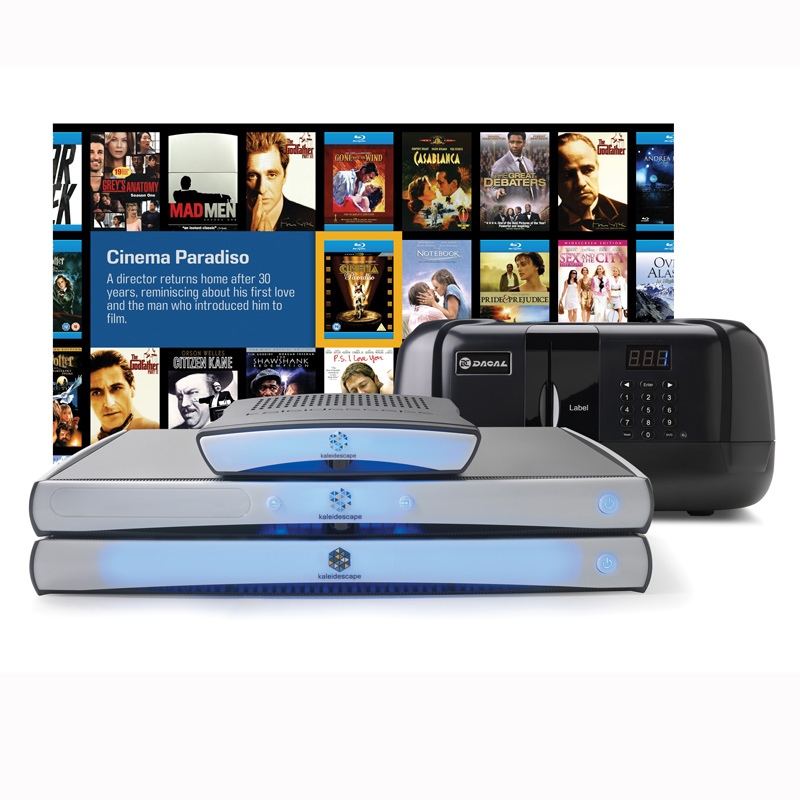
  • Kaleidescape to offer films from Warner Bros. Digital Distribution

    Kaleidescape to offer films from Warner Bros. Digital Distribution

    MUMBAI: Kaleidescape has announced it has signed a multi-year agreement with Warner Bros. Digital Distribution to offer films for purchase. In addition, the company will upgrade all Warner Bros. titles purchased through the Kaleidescape Store to UltraViolet in March 2013 – giving users a way to enjoy their collection across their various devices.

    This agreement also enables a Kaleidescape owner to convert Warner Bros. titles that were previously imported to their Kaleidescape movie server to UltraViolet or to upgrade their Warner Bros. titles from standard definition to high definition – both for a small fee.

    UltraViolet is an industry wide initiative that was launched last year in the US. It gives consumers the ability to buy and collect movies and TV shows from any authorized retailer, and download or stream the content to a wide range of connected devices such as compatible Internet-connected TVs, Blu-ray players, smartphones and tablets. Over seven million consumers have registered for UltraViolet to unlock their digital film and television libraries and enjoy a more convenient and accessible entertainment experience.Kaleidescape develops movie servers that it says redefine how film enthusiasts purchase, organize and enjoy their movie collections. It has a user interface that gives viewers flexibility and control over the movies they watch.

    Kaleidescape founder, chairman, CEO Michael Malcolm said, "We couldn‘t be more excited about working with Warner Bros. and offering this extensive catalogue of well-known and well-loved titles to our customers. In addition, the inclusion of UltraViolet in our service will give owners of Kaleidescape movie servers a whole new way to enjoy their content."

    Through this licensing agreement, Kaleidescape System owners will initially have the ability to buy thousands of Warner Bros. titles via the Kaleidescape Store including the ‘Harry Potter‘ series and ‘The Lord of the Rings." When UltraViolet functionality is launched in March 2013, available titles that are purchased now will be automatically upgraded to UltraViolet at no additional charge. These titles can then be easily accessed through UltraViolet compatible applications including Flixster – a movie discovery application. With over 60 million downloads of the app to date, Flixster makes finding, managing and enjoying movies and TV shows simple.

    Warner Bros. Digital Distribution president Thomas Gewecke said, "Kaleidescape is well-known for its user-friendly system that lets consumers access and watch movies from their home collections with the touch of a button. Now their users have the same one-touch simplicity with purchasing new movies electronically. UltraViolet will extend its ease-of-use further, with automatic upgrades for purchased titles and even more ways to watch movie libraries both at home and on the go."

  • Dish TV, History TV18 to telecast concert for Hurricane Sandy

    Dish TV, History TV18 to telecast concert for Hurricane Sandy

    MUMBAI: Zee Network‘s DTH company Dish TV India will air the global event ‘12-12-12 Concert‘ to contribute to the Hurricane Sandy Relief Efforts.

    The Concert for Sandy Relief will take place at the Madison Square Garden, New York City December 12, 2012. It is expected to run for over four hours.

    Big names in the music industry have come together for the concert. It will be aired online as well as on-air. Bon Jovi, Eric Clapton, Dave Grohl, Billy Joel, Alicia Keys, Chris Martin, Bruce Springsteen and the E Street Band, Eddie Vedder, Roger Waters, Kanye West, The Who and Paul McCartney will take part. Also on the bill are actors and comedians including Billy Crystal, Jon Stewart, Leonardo DiCaprio, Kristen Stewart, Chris Rock, Susan Sarandon, Adam Sandler, Jake Gyllenhaal, Jimmy Fallon, Steve Buscemi and Quentin Tarantino.

    The event will be telecast on 13 December 2012 from 5:30 am onwards (IST) and the repeat will telecast at 8 pm on the same day. It will be available to all Dish TV customers free of cost.

    Dish TV COO Salil Kapoor said, "Being the pioneer and industry leader Dish TV has always endeavored to stand strong with the global community in times of need. We are extremely pleased to be a part of the Relief Efforts organized by Robin Hood Relief Fund for the victims of Hurricane Sandy. By broadcasting this concert to be held on the historic date of ‘12-12-12‘, we are glad to take a step towards spreading awareness among Indian masses about the relief campaign for the hurricane victims."

    Robin Hood organisation is organising this concert at 7:30 pm (EST). This four-hour concert is expected to reach over 1 billion people worldwide, while Dish TV will be broadcasting the entire event for its customers in India on channel no. 90 for HD subscribers and channel no. 252 for SD subscribers.

    Infotainment broadcaster History TV18 will also air the concert on 13 December at 5:30 pm. The concert will also be live streamed on Youtube, Hulu, AOL, iHeartRadio and Time brands‘ websites.

  • Global home audio equipment market to reach $20 bn by 2018

    Global home audio equipment market to reach $20 bn by 2018

    MUMBAI: The global home audio equipment market is marked by rapid developments in digital technology. Changing media consumption habits and tastes have resulted in a paradigm shift in the home audio equipment market towards alternative and non-traditional solutions such as soundbars and speaker docks for audio playback.

    Driving forces propelling growth in the market include incessant developmental cycle of innovative products with technologically advanced features and growing consumer preference for high quality content.

    The average unit price of audio products is on a continuous decline mainly due to the availability of advanced technologies that simplify the production process and attributed to general reduction in production costs. The global market for consumer electronics is being driven by the growing demand for home audio equipment, home theater systems, MP3 players, camcorders, digital cameras, flat panel televisions, and in-car audio aftermarket equipment.

    Increasing levels of disposable income and consumer acceptance of innovative technology developments is helping expand the market for electronic products, especially digital consumer electronic goods.

    Global Information presents two market research reports covering the global home audio equipment and electric household appliances markets from its premium research partner Global Industry Analysts.

    The global market for home audio equipment is forecast to reach $20 billion by the year 2018. Home audio equipment represents the next big market after television in the overall consumer electronics industry. Several experts consider the consumer electronics (CE) industry, of which Home Audio Equipment is a part, to be relatively recession proof. CE products such as MP3 players, computers, Blu-ray players and video games provide economic sources of entertainment for families stressed by the growing economic uncertainties originating as a result of the global economic meltdown.

    Several electronic devices have become an almost essential part of general living, particularly in the developed world. Growth in the industry is being fueled by rocketing sales of new technologies such as Blu-ray and resurgence in the Home-Theatre-in-a-Box (HTiB) market.

    The global market for home audio equipment is characterized by intense competition. Suppliers and manufactures of Home Audio Equipment are constantly altering product ranges by making them more user-friendly and less visually intrusive in order to enhance market position. Products with high appeal, aesthetic design and innovative features are likely to win the race. Apart from adding additional product features, manufacturers need to design and implement effective marketing strategies to position their products appropriately in consumer mind set.

    Players profiled in the report include Bose, Boston Acoustics, Harman International Industries, Philips Electronics , LG, Panasonic, Pioneer, Samsung, Sharp and Sony.

  • DAVP gets Golden Icon Web Ratna Award

    DAVP gets Golden Icon Web Ratna Award

    NEW DELHI: The Directorate of Advertising and Visual Publicity (DAVP) has been conferred the prestigious Web Ratna 2012 Golden Icon Award for Innovative use of Technology.

    The award was received by DAVP director general A P Frank Noronha from Communication and Information Technology Minister Kapil Sibal at a function in New Delhi.

    Under a project headed by Noronha, the DAVP Website (http:/davp.nic.in/) has enabled a complete change from the manual mode to the online mode where the media plans are made and released for the end users. The website with several user friendly features is the only advertising agency in the country which releases its designs, Release orders, and payments online.

    The site has added a great deal of transparency to the entire system in its billing as well as other procedures which have not only helped the organisation but also its stakeholders. DAVP also keeps as much information as possible on the website for public scrutiny and information.

    The entire chain has contributed a great deal of efficiency to the DAVP’s operation and vastly improved the satisfaction levels of the client ministries as well as newspapers, channels and other agencies.

    The Web Ratna awards, constituted by the Communication and Information Technology Ministry, acknowledge exemplary initiatives/practices in the realm of e-governance. In order to promote more innovative e-governance initiatives, the Web Ratna Awards have been instituted under the ambit of the National Portal of India.

  • Online TV market growing in Germany: Study

    Online TV market growing in Germany: Study

    MUMBAI: According to a new study on Internet TV, there are currently 1,424 online-TV services in Germany, with 194 million daily video hits.

    The number of people accessing videos has increased by about 17 per cent compared to the previous year.

    The study also points out that the mobile use of online TV has also increased with every fifth video hit occurring via mobile devices.

    Having grown quantitatively, particularly in the past few years, the online-TV market is consolidating and gains continuing professionalism. In this context, providers rely on in-house-produced content. On average, 78 per cent of the videos of an online-TV channel are in-house productions.

    Key Findings

    • Currently 1,424 online-TV services in Germany
    • Online-TV services: share of corporate TV and sub-brands of the traditional media increased
    • Online-TV usage: viewing records at live sports events
    • Distribution channels for online TV: mobile access significantly growing, via Smart TV still slow
    • Social TV: three out of four online-TV providers have a Facebook site
    • Economic situation: online-TV channels see higher marketing opportunities
    • In order to make the market structure of the online-TV world more transparent, Berlin strategy consultant Goldmedia was commissioned by BLM, the Bavarian Regulatory Authority for Commercial Broadcasting, to produce "Web TV Monitor 2012".

    The study‘s examination of the growth and use of online TV in Germany is based on a survey of primary data research on all German online-TV providers and the annual study is being published for the third year.

    Compared to 2011, the share of online-TV providers has not changed drastically (0.4 per cent). The traditional media‘s video and online portals are still the category with the highest number of services, with a 46 per cent market share. About one third (31 per cent) are online-TV channels that are produced exclusively for the Internet – so-called "Internet-only channels". Other online-TV services include corporate TV and video-shopping sites (11 per cent), non-commercial online-TV channels (five per cent), media stores and video centers (combined four per cent), and video-sharing platforms (two per cent).

    While the number of Internet-only channels and online services of the traditional media, which increasingly include video content, has declined between 2010 and 2012, the number of corporate TV providers and sub-brands from traditional TV brands has grown.

    Online-TV usage: viewing records at live sports events: The number of video hits has increased significantly. The services included in Goldmedia‘s survey for "Web TV Monitor 2012" achieved a total of about 194 million video hits per day, or about six billion per month. At live sports events, such as the Olympic Games or the European championship 2012, new viewing records with live-streaming and catch-up TV could be recorded in the web.

    According to the estimations of the surveyed online-TV providers already 451 million daily hits are expected in 2016, the rise in use infringing all platforms. In the field of Video on Demand (VoD) experts predict a stronger growth than the growth in linear online TV.

    Furthermore, the average viewing duration has increased. For VoD it has risen from nine minutes (2011) to currently 11 minutes, for live-streaming from 25 minutes to 28 minutes. This can be traced back to a growing number of long video content offered and the higher stability and therefore fewer interruptions during broadcasting.

    Meanwhile, every second online-TV provider has a mobile app or an optimised site for mobile devices. Two thirds of the surveyed providers for the study think that online TV will be accessed via mobile devices in the future. Currently, according to provider information, 18 per cent of the video hits are achieved via tablets and smartphones compared to only 11 per cent in 2011. Until 2016, the providers expect a significant rise and a 38 per cent share of hits.

    Hybrid TV via home TV is also gaining significance for the market. While the number of total hits of online-TV services via smart or hybrid TV was merely two per cent in 2011, there was a five per cent share in 2012. The providers themselves predict a rise to 16 per cent, which can be traced back to the spread of devices.

    As part of the growing spread of internet-capable TV-sets, more and more online-TV providers enter the market with their own smart TV app. According to "Web TV Monitor 2012", 23 per cent of the suppliers provide a smart TV app.

    Social TV: three out of four online-TV providers have a Facebook site

    Still, the online-TV website itself is the most important point of contact for video users. While in 2011 three quarters (72%) of all videos of an online-TV channel were seen via this way, it is only 67 per cent in 2012. Until 2016, online-TV providers expect a further decline to 61 per cent.

    The declining significance of channel websites goes along with the increasing importance of social networks, particularly YouTube and Facebook. Altogether, they generated about 25 per cent of the total hits in 2012 (status as of the beginning of October 2012). Until 2016, the providers expect an increase in hits to 29 per cent via social networks.

    Therefore, it is important for the online-TV providers to be present on all platforms. Merely 15 per cent of the providers are not present on any of the social networks.

    Online-TV channels see higher marketing opportunities. Currently, the online-TV channels‘ degree of cost covering is 71 per cent (details for 2011). With this, the relation of total sales and total costs is still highly negative.

    95 per cent of all recorded online-TV services are available for free. Only 61 per cent of the online-TV services are financed by advertising. As a consequence, 34 per cent are financed by alternative sources, partly by marketing budgets. On average, video ads contribute 37 per cent to the total ad sales.

    The marketing opportunities of online TV will continue to grow due to the increasing professionalisation of its content. However, the surveyed providers see the highest growing potential in the revenues of paid services. These should rise by 66 per cent in 2016, in contrast to the ad revenues of the online-TV channels with a growth of only 52 per cent per year.
  • Disney acquires South Korean game developer Studio Ex

    Disney acquires South Korean game developer Studio Ex

    MUMBAI: The Walt Disney Company has acquired South Korean game developer Studio Ex, according to a report in the Hollywood Reporter. Studio Ex is a start-up whose main focus is multiplayer, free-to-play online and mobile games which is a lucrative sector in Korea since it has one of the highest mobile phone gaming and social media penetration in the world.

    Studio Ex has yet to actually launch any game which has led to speculation that the Disney acquisition is likely a talent grab considering David Moon was director of game services at NHN.
    "Through a stock purchase agreement, Studio Ex is now a wholly-owned subsidiary of The Walt Disney Company reporting into Disney Interactive," Disney said in a statement confirming the buy.