Category: Software

  • TV viewing experience being enriched by social media: Study

    TV viewing experience being enriched by social media: Study

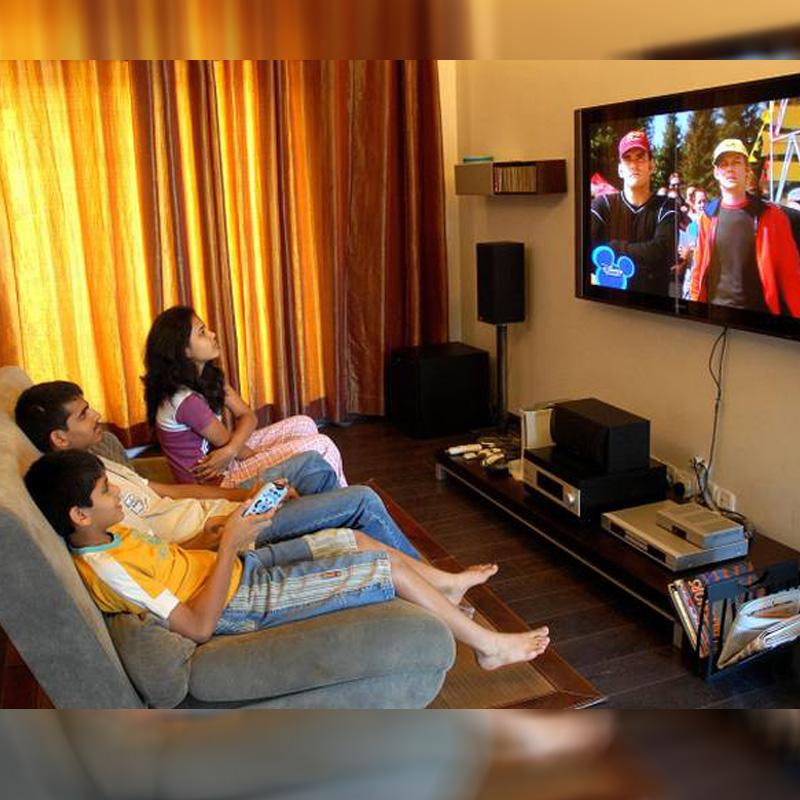
    MUMBAI: Contrary to predictions that the digital age would drag people away from television, people are watching more TV than ever and people‘s viewing experience is being enriched rather than eroded by social networks and dedicated social TV apps like Zeebox. Increasingly, the assumption that a laptop, and a tablet or mobile are the "second" and "third" screens will be eroded.

    It will not be enough to simply broadcast a hashtag and flag a few tweets on the television screen. Telling stories through multiple screens (and elsewhere) will begin to supplant the notion of broadcasting something on the first screen and people reacting and responding to it on disconnected supplementary screens. What does this mean for brand owners?

    Millward Brown, a global research agency, has released its annual top 10 digital and media predictions, highlighting growing trends in the media sector.

    Among other trends, Millward Brown‘s Futures Group believes that the emergence of "mobile as remote" will make it a central pillar of smart communication plans; that omnichannel marketing will help brands build on meaningful moments of engagement; and that social TV will grow up and become part of the narrative rather than a conversation about the narrative.

    Duncan Southgate, Global Brand Director for Digital at Millward Brown, commented, "We expect 2013 to be another dynamic year for online display, mobile and social media.

    onsumers have ever higher expectations of intelligent digital advertising approaches, and marketers will need to deliver more sophisticated campaigns to keep pace with what works."

    The emergence of ‘mobile remote‘: With increased power and capabilities, mobile devices become the remote controls of our lives allowing not only active control of electronics, but seamless integration of the world around us. The new functionality of our mobile "remotes" utilizes advanced technology to simplify lives. Anything that needs a processor to operate can use a smartphone as the "brains."

    Brands need to start developing communication plans that adapt to this world. With mobile as the hub, information gathering becomes more centralised as consumers trade personal information for convenience and access to events, offers and premium content.

    Omnichannel marketing and brand building : Omnichannel marketing is about being present or available across the consumer‘s behavioral path: each potential contact point integrated with all others. The digital arena will represent the first stage of more brands adopting an omnichannel mindset as social and mobile data sources are blended with offline brand experiences.

    In 2013 the green shoots of omnichannel strategies will involve companies turning existing datasets into active targeting engines. As mobile ad-serving platforms mature, this will transition from social apps into ads running across any mobile content. As well as receiving location data, mobiles have the potential to inform nearby digital screens – Minority Report-style tailored out of home ad content may not be so far away.

    So what is the implication for marketers? Start building the infrastructure to deliver an integrated experience in the omnichannel world or face being left behind.

    Other predictions include:

    •  Real-time planning will become an essential feature of digital campaign delivery and evaluation
    • Better alignment of online display formats with objectives
    • Wider availability of high impact Facebook advertising will provide richer opportunities for brands
    • More paywalls on premium sites will lead to a scarcity of ‘premium eyeballs‘
    • In-app advertising spend will be driven by greater use of rich media
    • In Africa, brands will take advantage of huge mobile marketing opportunities
    • Social media listening will evolve from monitoring to insight generation as brands give more weight to social data in business decisions
  • Content monetisation opportunities for MSOs in digital era

    Content monetisation opportunities for MSOs in digital era

    MUMBAI: Multi-system operators (MSOs) can line up several content monetisation avenues in a digitised cable TV environment.

    The probability of commercial exploitation is more in the areas of niche, idle and local content.

    According to IndusInd Media and Communications Ltd (IMCL) SVP Subhashish Mazumdar, the taps can be opened immediately with MSOs sourcing archival content from broadcasters and movies that do not find their way to release on theatres. MSOs can also launch server-based channels.

    Cable operators will also gain more revenue from a digital economy by augmenting their channel carriage capacity. Citing HBO‘s decision to launch two ad free channels as a good model, Mazumdar said this is what is needed. "This is good for the pay TV market. You monetise the audience in a segmented manner."

    Mazumdar also spoke of broadband as being a further step to unlock revenue. "The operator will be in a position to charge more for advanced technology. Cable operators and MSOs can generate revenue in a step wise manner," he said.

    The other revenue streams are video-on-demand, gaming and e-learning VOIP is a revenue stream that MSOs needed to open up, though there is a limited possibility now as regulations do not allow for a national level voice communication, Mazumdar added.

    MSOs will have to focus on branding as the digitisation wave deepens. "There is low level branding now," admits Mazumdar.. "But top-of-the-mind branding will be needed at some stage," he added.

    HSBC Securities and Capital Markets associate director telecom and media Rajiv Sharma emphasised on the need of the MSOs to convince their local cable operators (LCOs) to push for broadband so that they can make money beyond just television. "MSOs will have to invest in network infrastructure. Broadband, no doubt, will require capex investments but the margins can be higher than the video services," he said.

    Consumer-facing two-way cable networks will have a better ability to raise funds, Sharma added. Strategic and private equity investors will also look at scalable models.

    Speaking at the Broadcast Digitisation Summit organised by Telecom Lead, Assocham national council chairperson on media and entertainment Sujata Dev stressed on the need to develop digital content. "Producing content in digital will grow. Rural india will also lead the digital push," she said.

    Dev noted that for money earners in the family and for the youth, the television set is just one device to consume content. Which is why broadcasters are trying to see how their content can travel across devices.

    "That is why producing content in digital is important. It is also important to note that the consumer expectations will rise and they will be demanding as they pay for the channels they subscribe to watch," Dev said.

  • Jayalalithaa steps in as Arasu fails to get licence

    Jayalalithaa steps in as Arasu fails to get licence

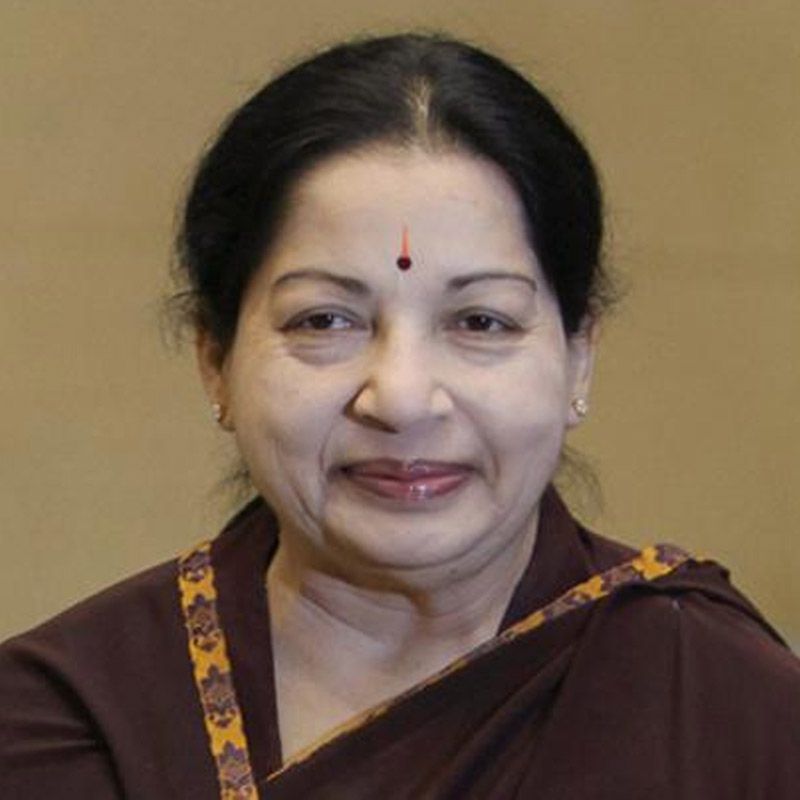
    MUMBAI: Tamil Nadu Chief Minister J Jayalalitha has urged Prime Minister Dr Manmohan Singh to expedite the matter of giving Digital Addressable System (DAS) licence to Tamil Nadu government-owned Arasu Cable TV Corporation for operating in the Chennai metropolitan region.

    In the letter dated 16 December, Jayalalitha said that the issue of DAS licence to Arasu Cable has been hanging fire for than five months now despite taking up the issue with Information & Broadcasting ministry several times.

    AIADMK MPs had called on the PM on 29 November to look into the matter. However Arasu is yet to receive a DAS licence even as the Madras High Court has refused to grant further extension on digitisation deadline.

    Arasu, which is Tamil Nadu’s biggest multi system operator (MSO), had applied for DAS licence on 5 July. The government has so far given licence to nine MSOs in Chennai.

    “The Tamil Nadu Arasu Cable TV Corporation Ltd. had applied for the Digital Addressable System licence to the Ministry of Information and Broadcasting on 5.7.2012. The issue of the licence is still pending,” Jayalalitha said in her letter to the PM.

    “It is learnt that the Ministry of Information and Broadcasting has issued the Digital Addressable System licence to nine other multi system operators in Tamil Nadu, including those who applied after the Tamil Nadu Arasu Cable TV Corporation Ltd.”

    Jayalalitha said that a delegation led by her party MP Dr M. Thambidurai had taken up the issue with former I&B minister Ambika Soni and her successor Manish Tewari but Arasu failed to get a DAS licence despite assurances.

    “A delegation led by Dr. M. Thambidurai, M.P., met Smt. Ambika Soni, the then Union Minister for Information and Broadcasting on 26.10.2012, who promised to issue the licence immediately. Afterwards, senior officials of the Government of Tamil Nadu also met the Secretary to the Government of India, Ministry of Information and Broadcasting, several times,” she alleged.

    “As the issue of licence was further delayed, on my direction a delegation led by Dr. M. Thambidurai, M.P. met Shri. Manish Tewari, Union Minister of State for Information and Broadcasting, on 27.11.2012, and requested him to expeditiously issue the Digital Addressable System licence as digitalization has to be completed within a time frame.”

    She said that the Corporation has placed orders for the supply of Set Top Boxes, Conditional Access System and Subscriber Management System and erection of Head End at a cost of about Rs 500 million.

    “Hence, I urge you to intervene in the matter and direct the Ministry of Information and Broadcasting to issue the Digital Addressable System licence to the Tamil Nadu Arasu Cable TV Corporation Ltd immediately,” Jayalalitha averred.

    The Madurai Bench of the Madras High Court, she said, had passed orders on 6 December that “the process of issue of licence to Tamil Nadu Arasu Cable TV Corporation may go on and the licence may also be issued."

    The Arasu, which was lying defunct under the DMK regime, was revived by AIADMK government after it stormed to power in April last year.

    It commenced cable TV services in all the 31 Districts of Tamil Nadu on 2 September, 2011 barring Chennai, which was a conditional access system area.

    Arasu Cable is providing 100 channels to the subscribers at a cost of Rs 70 per month per subscriber. It has 23,000 local cable operators with a subscriber base of six million availing of the services of this corporation.

  • A+E Networks launches video watch apps

    A+E Networks launches video watch apps

    MUMBAI: US infotainment media company A+E Networks has launched the company‘s first ever video watch apps for iPad® today.

    A&E, History and Lifetime network apps are available for free from the App Store.

    The apps enable users to watch full episodes, full movies and exclusive clips of their favorite A+E Networks programming, including current and previous seasons of ‘Storage Wars‘ and ‘Duck Dynasty‘ on A&E; ‘Pawn Stars‘ and ‘Swamp People‘ on History and ‘Dance Moms‘ and ‘Project Runway‘ on Lifetime.

    Users who sign in to verify Xfinity TV from Comcast as their video provider will have access to even more content, including full previous seasons of some of their favourite series. The app will support additional distributors in early 2013.

    A+E Networks executive VP of digital media, business development Dan Suratt said, "By offering the A&E, History and Lifetime watch apps, we are giving fans of our networks an opportunity to consume our leading libraries of original quality content wherever and whenever they want it".

    A+E Networks president of distribution David Zagin said, "With our new apps, A+E Networks will be on the forefront of supporting the industry‘s efforts toward TV Everywhere. We are looking forward to partnering with our distributors in the future to bring their customers more of our great programming."

    Comcast Cable senior VP, digital and emerging platforms Matt Strauss said, "In partnering with A+E Networks, Comcast continues to build on its industry-leading TV Everywhere offerings, and yet again positions Xfinity TV customers at the forefront to access great programming on multiple devices. We‘re pleased to be the first provider to offer our customers A+E Networks‘ compelling content on its app, and also online at Xfinity.com/TV."

    The apps, powered by Bottle Rocket feature a video offering. The watchlist in the app offers "Continue Watching" and "Queue" functionality for a seamless viewing experience between visits. Users who start watching a video and have to step away will see all videos in progress in the "Continue Watching" section of the watchlist. If they add a series to their "Queue" in the watchlist, all new full episodes for their favorite series automatically appear as they are published to the app.

    iPhone and iPod touch versions of all three apps will launch in January 2013 and an Android version is expected to be out some time in the first quarter. The A&E, HISTORY and Lifetime apps are available for free from the App Store on iPad® or at www.itunes.com/appstore.

  • Amazon’s instant video app for iPhone & iPod

    Amazon’s instant video app for iPhone & iPod

    MUMBAI: Online retail major Amazon.com has introduced the Amazon Instant Video App, enabling customers to stream or download Amazon Instant Video movies and TV episodes from their video library directly on their iPhone or iPod touch.

    The app also makes more than 30,000 titles from Prime Instant Video available to Prime members such as TV shows like ‘American Horror Story‘, ‘Downton Abbey‘ and ‘Fringe‘, as well as movies such as ‘Hugo‘, ‘Thor‘ and ‘Goodfellas‘, to stream instantly on their iPhone or iPod touch at no additional cost.

    Amazon announced the Amazon Instant Video app for iPad earlier this year. With this launch, Amazon Instant Video is now available across iOS mobile devices.

    Amazon.com VP for video Anthony Bay said, "Our customers tell us they want the convenience of being able to watch all of their movies and TV episodes, wherever they are. Today we‘re excited to extend our ‘buy once, enjoy everywhere‘ approach to iPhone and iPod touch users, giving customers the chance to enjoy more than 140,000 titles from Amazon Instant Video and more than 30,000 titles from Prime Instant Video anytime, anywhere."

    To watch movies or TV episodes from Amazon Instant Video on iPhone and iPod touch, customers can simply search for the content they‘ve already rented or purchased from Amazon Instant Video-including the latest hit movies like The Dark Knight Rises, Brave and The Amazing Spiderman and the latest episodes from TV series like The Walking Dead, Sons of Anarchy and The Vampire Diaries.

    The Amazon Instant Video App for iPhone and iPod touch offers features including:

    " "Your Watchlist" feature that lets customers make a list of all the movies and TV episodes they want to watch in the future, regardless of whether they own the video or not, making it easy to keep track of specific videos for later viewing.

    " "Your Video Library" feature that gives iPhone and iPod touch customers access to purchases and rentals from Amazon Instant Video on the web.

  • TV revenue sees fastest growth in communications sector: Ofcom

    TV revenue sees fastest growth in communications sector: Ofcom

    MUMBAI: Global communications sector revenues, the total of TV, radio, telecom and post sectors, grew in 2011 by 3.7 per cent to touch ?1,322 billion, according to a report by UK media watchdog Ofcom.

    In terms of percentage growth, television revenues grew fastest among the communications industries, by 6.6 per cent in 2011 to ?258 billion.

    Global advertising expenditure grew by 3.8 per cent in 2011 to ?298 billion, the highest total spend since 2007. While expenditure on internet advertising grew at a compound annual rate of 16 per cent between 2007 and 2011 to ?48 billion, the compound annual growth rate of newspaper advertising was in the negative at 6.9 per cent to drop to ?60 billion, while for magazines it was a 6.8 per cent fall to ?28 billion.

    In the television and radio sectors, subscriptions generated the largest and fastest-growing proportion of total revenues in 2011. Television subscription revenues grew by 10.5 per cent in 2011 to ?133 billion and at a compound annual rate of nine per cent between 2007 and 2011. Radio subscription revenues grew by 12.5 per cent in 2011 to ?2 billion and at a compound annual rate of 8.5 per cent between 2007 and 2011.

    Telecom sector generated the largest absolute rise in revenues in 2011, up by ?31 billion to ?936 billion.

    The number of fixed-line voice connections remains relatively resilient in the UK, with more fixed-line voice connections per 100 people than in the other markets covered. Although this number fell between 2006 and 2011 in all of the countries which Ofcom surveyed, the fall in the UK was among the smallest. Tablet take-up is highest in Spain and Australia (it is 24 per cent in both). Italy and the US have the next-highest claimed ownership (23 per cent and 20 per cent) while in the UK take-up is 19 per cent.

    In nearly all comparator countries, consumers say they have reduced face-to-face communication and fixed telephone calls with friends and family. In all eight countries, use of post declined. In contrast, preferences for online communications increased, particularly in the UK and Italy, which showed large increases in the use of email and social networking.

  • BBC World News, BBC America expand distribution in the US

    BBC World News, BBC America expand distribution in the US

    MUMBAI: BBC America and BBC World News today announced wider expansion in Time Warner Cable systems for the BBC‘s 24-hour global TV news channel BBC World News in the US and increased distribution for BBC America, the home of acclaimed series ‘Doctor Who‘, ‘Copper‘, ‘Luther‘, Top Gea‘r and ‘The Hour‘.

    BBC Worldwide America executive VP network distribution Sandy Ashendorf said, "It‘s been a record-breaking year for BBC America, as our iconic sci-fi series Doctor Who has reached new heights and we‘ve created new original programming including ‘Copper‘, our highest-rated series premiere ever. We‘re excited to expand BBC America‘s partnership with Time Warner Cable and launch BBC World News, which has seen record distribution growth in the past year."

    BBC World News will be added to the digital basic package in most Time Warner Cable systems before the end of December 2012. It will see increased distribution in several cities. By year-end, BBC World News will be carried in top US markets including New York City, Los Angeles, Chicago, Boston, Philadelphia, Washington DC, and San Francisco.

    As a result of its expanded relationship with Time Warner Cable and other multichannel operator deals over the past two years, BBC World News will have grown its reach by over 10 million new homes in 2012 and in total, BBC World News will reach 25 million full time homes in the US following the Time Warner Cable launches.

    GN COO Jim Egan said, "I‘m delighted to see BBC World News coming to Time Warner Cable – this is another important foothold for our global news channel in the highly competitive US market. We are really pleased by the growing demand in the US for a global news network which is both non-partisan and non-sensational in approach. BBC World News is about serious news; with on the ground reporting and analysis from different parts of the world and a mandate to inform and provide a balanced view. We know that audiences around the world value the channel‘s distinctive world view and we are pleased that more US viewers now have access to it."

    Time Warner Cable also will increase BBC America‘s reach. In January, BBC America will debut new drama ‘Ripper Street‘, set in London in the aftermath of Jack the Ripper, and new original series ‘Wild Things with Dominic Monaghan‘. New episodes of ‘Doctor Who‘, ‘Copper‘, ‘Luther‘, ‘Top Gear‘, ‘The Graham Norton Show‘, ‘Being Human‘, ‘The Thick of It‘ plus new original drama ‘Orphan Black‘ and mini-series ‘Spies of Warsaw‘ have also been announced for next year.

    The past two years have been an important breakthrough period for BBC World News as it continues to expand its distribution. The BBC is investing heavily in new programs and facilities as it seeks to build on recent successes growing audiences and reputation around the world. This will include the launch of new state of the art studios for the channel in January 2013, at the BBC‘s new building in central London.

    BBC World News has the largest audience of any BBC channel in the world, reaching over 350 million households and broadcasting in over 200 countries and territories worldwide, with access to more than 70 international newsgathering bureaus. Its programming includes the Emmy©-winning daily newscast, BBC World News America, anchored by Katty Kay from the BBC‘s studio in Washington DC. Broadcasting 24-hours a day, the channel offers US audiences high-quality global news from the BBC‘s network of global correspondents, as well as documentaries and current affairs programming, in an HD format.

    Within the US, BBC Global News is an international multimedia provider of news and current affairs programming across broadcast and digital platforms. Alongside the 24 hour TV news channel BBC World News, more than 500 local public radio stations in the US broadcast BBC World Service content – mainly news and current affairs programming, including the flagship global newscast ‘Newshour‘.

  • Kolkata to go completely digital from 28 December

    Kolkata to go completely digital from 28 December

    MUMBAI: Kolkata‘s cable television will go completely digital from 28 December.

    The Information and Broadcasting (I&B) ministry has cracked the whip for switching off of all analogue television signals in the West Bengal state capital by 27 December.

    The multi-system operators (MSOs) will begin the process of switching off of analogue signals from 16 December. The second genre-wise switch off will be on 20, followed by 23 and finally 27 December when the Bengali language channels also go dark on analogue cable.

    "The I&B ministry has said that from 16 December onwards till 27 December all the analogue channels should go off air and only digital should be activated (from 28 December)," Siti Cable Kolkata director Suresh Sethia told Indiantelevision.com.

    Cable television networks in Mumbai and Delhi have already gone totally digital. According to a TAM survey, set-top boxes (STBs) required for digital reception have been deployed in 93 per cent of cable TV homes in Mumbai, 97 per cent in Delhi and 70 per centin Kolkata.

    The I&B had mandated compulsory switch to digital delivery of cable television in the four metros of Mumbai, Delhi, Kolkata and Chennai from 1 November. The ministry did not push for switching off of analogue signals along with Mumbai and Delhi as a large number of homes in Kolkata were still on analogue then. The situation has now changed. Over 75 per cent of cable TV homes in Kolkata now have STBs installed.

    Sethia said almost 85 per cent of Siti Cable‘s subscribers now have STBs installed.

    Manthan Broadband services, a regional multi-system operator, is also pushing for digitisation. "We have received a communication from the I&B ministry and will be switching off analogue signals completely by the deadline specified. We have also worked out a lower-priced package for those subscribers who hold a BPL (below poverty line) card as desired by the West Bengal state government," said Manthan business head Samrat Sen.

    Chennai is the only city still to go digital as the Madras High Court is hearing a petition filed by associations of cable operators. The court has scheduled a hearing in the last week of this month.

  • HITS can get active in 2nd phase of digitisation

    HITS can get active in 2nd phase of digitisation

    MUMBAI: The second phase of digitisation across 38 cities will offer an opportunity for Headend-In-The-Sky (HITS) operators as the presence of national multi-system operators (MSOs) is not adequate enough to cater to this entire television viewing population, said Digicable Network chief strategy officer Sisir Pillai.

    Tapping into this market will be a few HITS operators. "We will see a couple of big players launching HITS service," said Pillai.

    Hinduja Group, which has interests in cable TV distribution business through IndusInd Media and Communications Ltd, is planning to launch HITS platform for smaller cable TV operators to offer digital service. It has already applied to the Information and Broadcasting ministry for a licence.

    The HITS business will be under Grant Investrade, an investment arm of the Hindujas. Grant Investrade holds 6 per cent stake in IMCL.

    Jain TV Group-owned NSTPL (Noida Software Technology Park Limited) has also got plans to get aggressively active in HITS. It has christened its HITS platform as Jain HITS.

    Earlier, Siticable had started HITS service before the government had mandated digitisation of cable TV networks also the country but the project failed to make much ground and was finally shelved off.

    "HITS can be a cheaper and faster option to grab the market in the second phase. MSOs will need to invest Rs 160-200 million on a digital head-end in each city they want to reach out to as there is a requirement to build a capacity for carrying 500 channels," said Pillai.

    Since in the first phase the national MSOs were having a strong base, there was no need gap for a HITS service, Pillai added.

    Even in the third phase, Pillai expects HITS to have a strong potential to grow.

    Cable operators will be able to also offer broadband services through their fibre optic co-axial cable, despite receiving video signals from the HITS provider via satellite. "The bundling of broadband with video services will also be possible even if cable operators take to HITS for offering digital service. So the advantage over DTH will continue to prevail. Direct-to-home service providers can‘t offer broadband and satellite bandwidth is very costly," said Asianet Satellite Communications Ltd president and COO G Sankaranarayana.

    Building a HITS platform will, however, involve huge investments as it requires transponder space on satellite, encryption systems and digital set-top boxes. NSTPL is planning to invest Rs 15 billion over five years in its HITS project.

  • Digital content, smart marketing needed for digitisation to succeed

    Digital content, smart marketing needed for digitisation to succeed

    MUMBAI: For digitisation to succeed, technology and content have to be matched. Digital content needs to be there. Television sets should be in high definition. Server based channels can be a source of revenue for MSOs and cable operators in a digital world.

    These points were made at a session during the Telecom Lead B2B Summit on Broadcast digitisation: Challenges and opportunities. The session in question was how cable, DTH players and TV channels can monetize by utilising customer demands and technologies.

    Assocham national council chairperson on media and entertainment Sujata Dev made the point that technology and content have to be matched in a digital world. Producing content in digital will grow. She expects rural India to lead the digital push.

    "Acceleration will happen here. The 80:20 principle applies here. 80 per cent of viewership will go to 20 per cent of channels. The smaller channels will need differentiated content to survive."

    She noted that for money earners in the family and for the youth the television set is just one media avenue to consume content. They use many devices and the television set is just one device. That is why broadcasters are trying to see how their content can travel across devices. "That is why producing content in digital is important. It is also important to note that the consumers expectations will rise along with subscription fees growth. People buy content not technology."

    She also noted that marketing of content will be important. Earlier it was the distributors who were doing this. Now channels will be able to communicate directly with the viewers. The distribution chain is taking a new trend. Ratings is another area whose dynamics will change. Homes will have set top boxes which can act as peoplemeters reducing the issue of inadequate sampling. She also touched on the broadband issue noting the Bharat Broadband Network initiative to connect 700,000 villages. "This will help erase the digital divide."She also noted that telecom companies could get into media given that there is no cross-ownership rules for media.

    Indusindia Media and Communication senior VP Subhashish Mazumdar spoke about the different levels at which cable operatiors can gain more revenue from a digital economy. The first avenue is charging more for more channels. Instead of only getting 100 channels the consumers can now get 300. He also praised HBO for launching ad free chanels saying that this is what is needed. "This is good. You monetize the audiebnce in a segmented manner. Server based channels can unlock value. For instance around 600 movies are not seen theatrically. Some of it is regional content. This can be exploited right now. Broadcasters have archival content which can also be used. The good thing is that the consumer has a choice of whether or not to take it. It is not being pushed down his/her throat."

    He also spoke of broadband as being a further step to unlock revenue. This would moving away from Docsis ADSL to G pon. "The operator will be in a position to charge more for advanced technology. Cable operators and MSOs can generate revenue in a step wise manner." VOIP is another part of the revenue stream./ This is because VOIP networks can be linked.

    At the same time MSO branding will be important. Right now people are aware of who their MSO is but they are not ware of the various services that digital cable can offer. This is where efforts have to be made by the players and by the industry. "There is low level branding in existence in terms of who the MSO is. But top of the mind branding is important. People need to know what services are being offered." The good news for him is that in a digital world due to the subscriber management system an operator can know where customers are located and offer services accordingly.

    HSBC Securities and Capital Markets associate director telecom and media Rajiv Sharma also made a point about broadband saying that MSOs wil have to convince LCOs about it. They need to understand that they can make money beyond just television. "MSOs will have to invest in network infrastructure. It can be customized. It is a capex model. Margins can be high as there is no broadcast fee to be paid. MSOs have a better ability to raise funds as foreign investors prefer two way networks and a consumer facing business."