Category: Software

  • StarHub launches IPTV on Fibre service

    StarHub launches IPTV on Fibre service

    MUMBAI: Singaporean pay TV operator StarHub TV commercial customers will get to enjoy a new TV viewing experience with the launch of StarHub TV on Fibre on 18 March.

    An Internet Protocol Television (IPTV) pay TV service, StarHub TV on Fibre offers businesses access to crystal clear high-definition content and over three times as many TV channels as the existing Digital Terrestrial Television (DTTV) platform. The service will be initially available only to commercial customers such as offices, restaurants and pubs.
     
    Delivered over the island-wide Next Generation Nationwide Broadband Network (NGNBN), StarHub TV on Fibre will be able to reach current DTTV customers and beyond, effectively covering commercial customers all over Singapore. StarHub TV on Fibre customers will also enjoy prioritised, managed IPTV access as the service utilises discrete ports on the optical network terminal. With IPTV access independent of broadband activity, StarHub TV on Fibre promises a superior viewing experience in terms of picture quality, speed and navigation.

    StarHub VP of home solutions Lin Shu Fen said, “While DTTV has served our commercial customers well, we have capitalised on the NGNBN roll-out to provide an even better service to this segment of customers. StarHub TV on Fibre marks an important milestone in our pay TV business. Compared to DTTV, we can offer our commercial customers a significantly improved breadth and depth of content, delivered with the assurance of our trademark reliability.

    “We expect the new user interface to provide our customers with a smoother and seamless journey when interacting with the content. In addition, it will bring a new level of interactivity and personalisation to TV viewing with features such as Facebook profile integration and the ability to set unique user accounts. We will have over 100 TV channels at launch and we are constantly working with content providers to bring more channels to the service.”
     
    StarHub TV on Fibre commercial customers will have access to viewing options currently unavailable to DTTV customers. In addition to DTTV mainstays such as BBC World News, Bloomberg Television and CNN, new channels introduced include kids, entertainment, education and sports genres like Cartoon Network, Diva Universal, History and NBA TV; and high-definition options such as Fox HD, Sports HD, Discovery HD World, National Geographic Channel HD and Nat Geo Wild HD.

    Making use of IPTV‘s two-way network, StarHub TV on Fibre‘s interactive features include Facebook profile integration, user account log-ins, an aggregated user rating system and informative apps such as the Singapore Exchange, Yahoo! News and Weather which are especially useful to corporate clients.

  • CBS launches streaming app for iPad, iPhone

    CBS launches streaming app for iPad, iPhone

    MUMBAI: US broadcaster CBS has announced the launch of the new CBS App for iPhone and iPad users, offering full-episode streaming of CBS programming from primetime, daytime and late night.

    The new app further extends the reach of the shows‘ audience, providing more flexibility and opportunity for catch-up viewing and opens yet another monetisation window for the company‘s industry-leading content.
     
    The CBS App is available for immediate download from the App Store, and offers original and second-screen features for CBS‘ shows such as ‘NCIS‘, ‘The Good Wife‘, CSI: Crime Scene Investigation‘, ‘How I Met Your Mother‘ and ‘The Young And The Restless‘.

    Daytime and late night programming will be available within 24 hours after initial airing, while most primetime programmes will be available on the eighth day after broadcast.CBS also announced it would introduce similar full-episode streaming apps for all major mobile and tablet platforms later this year, including Android and Windows 8.

    CBS president, CEO Leslie Moonves, said “We have been methodically and strategically finding new ways to satiate the appetite for our content on new platforms, while tapping into the tremendous revenue provided by doing so. Our announcement today achieves both of these objectives, while protecting our very healthy current ecosystem. In addition, by making our shows available on all the leading mobile devices out there, we are confident we will bring a whole new set of viewers to the CBS Television Network and build upon our standing as the #1 network in the business.”

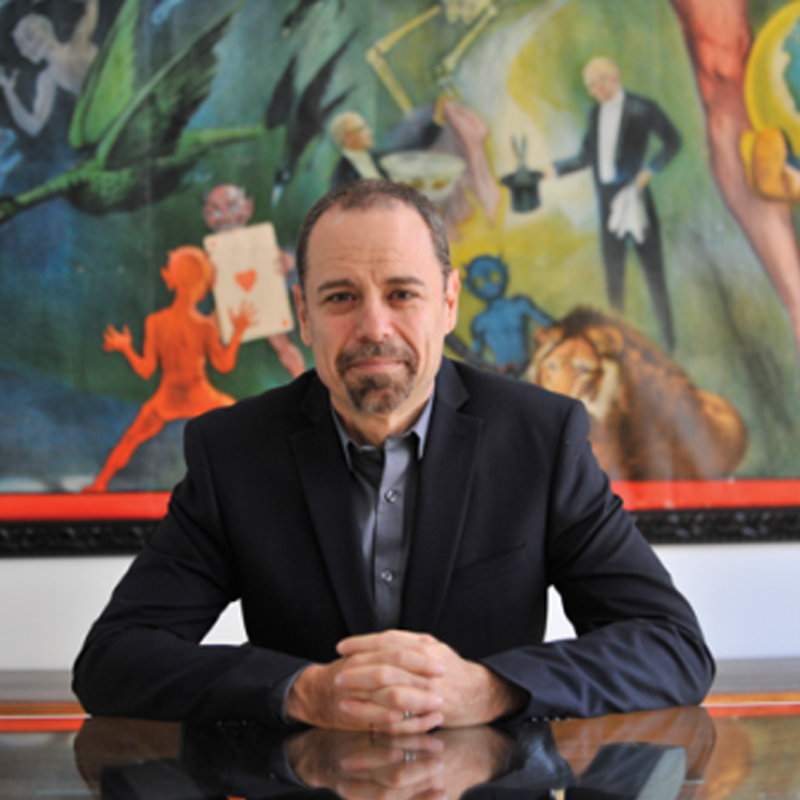
    CBS Interactive president Jim Lanzone said, “Our online viewers not only want to watch their favourite shows on multiple devices, they want deeper engagement with the programs they love. The new CBS app gives them the best of both worlds, letting people watch CBS shows on the best screen available for them, with a host of extra features that give them a richer viewing experience whenever and wherever they tune in.”

    The new CBS App will integrate the existing CBS Connect App experience by the start of the Fall TV season. At that time, the CBS App will offer integrated social feeds; live events that allow fans to engage directly with talent; and second-screen experiences synched to the broadcast with additional content for select shows like ‘CSI: Crime Scene Investigation‘, ‘Criminal Minds‘ and ‘Hawaii Five-O‘.

    Buick is the official launch partner for the new CBS App, bringing users CBS programming with reduced commercial interruption for the first several weeks after launch.

  • Higher import duty on STBs will help local manufacturers: Manish Tewari

    Higher import duty on STBs will help local manufacturers: Manish Tewari

    NEW DELHI: Information and Broadcasting Minister Manish Tewari feels the higher import duty levied on set top boxes (STBs) announced in the Union Budget will give an opportunity for domestic manufacturers to benefit and not set back the digitisation process.

    “It is important that when such a huge exercise is undertaken, which involves a revenue of about $4 to $5 billion, essentially paid by the people of India and the multi-system operators, there should be certain tangible benefits which must accrue to Indian manufacturers.” he added while addressing the delegates of Ficci Frames in Mumbai via video-link from New Delhi.
     
    He has said digitisation is a major project that will ensure transparency and bring benefits to all in the long run. While the digitisation process has been set in motion following a legal remit, “there is also a social contract which calls upon all stakeholders in this, whether they are broadcasters, MSOs or cable operators to sort out the issues inter-se, because eventually, it needs to be a win-win situation for the broadcasters and the consumers.”

    He added that “If any section within this large family feels short changed, then obviously there‘s a cause of concern.”
     
    Tewari reiterated the firm backing of the government for the growth of the media and entertainment industry and said “this industry is not only a huge economic multiplier, but it also has the potential of absorbing creative intellect of young people. It is therefore incumbent upon government to put in place appropriate mechanisms which try and play the role of a facilitator and an enabler.”

    Digitisation was a dominant topic of discussion at the media and entertainment industry‘s mega event Ficci Frames 2013 held in Mumbai from 12 to 14 March, with policy makers, industry leaders and experts deliberating on various aspects of the process.

  • Court passes landmark judgement to protect digital sports rights holders against telcos

    Court passes landmark judgement to protect digital sports rights holders against telcos

    NEW DELHI: In a landmark judgment that will have long term effects on revenue sharing and monetisation, the Delhi High Court has said mobile phone companies cannot provide to their subscribers live match updates for sporting content for which Star India has the rights.

    Mobile operates can offer updates of cricket scores with a lag of 15 minutes or by obtaining a license from Star.

    The Court upheld the petition by Star India against Crickbuzz, On Mobile and Idea Cellular.

    “We had moved the court against these companies and the verdict could be a harbinger of change in monetising digitised content,” Star India CEO Uday Shankar said.

    Star India paid Rs.38.51 billion in 2012 for exclusive media rights to cricket matches organised by the Board of Cricket Control in India (BCCI) between 2012 and 2018. This included all international cricket matches in India and domestic competitions including the Ranji Trophy and the Irani Cup. The Star deal also includes Internet and mobile rights and covers 96 matches.

    Shankar said this was the first time that such an order had come and it would lay the foundation on how the rights can be exploited and monetised on mobile platforms.

    “When we bid for the cricket rights last year, our idea was to create a homogenous high quality consumer experience. We had bid for all rights, including mobile and digital, where there was no monetisation. We pay Rs 5 million per match for the digital rights, but have not monetised so far”.

    Shankar added that the lack of clarity on this was severely compromising the ability of rights owners to invest to create great experiences for sports fans. “This decisive verdict finally creates clarity on who owns the rights and a mechanism for monetisation and fair revenue share. For me, this is a huge boost to the entire digital and mobile space.”

    In his judgment, Justice M L Mehta issued a limited interim injunction restraining the defendants from disseminating contemporaneous match information in the form of ball-by-ball or minute-by-minute score updates/match alerts for a premium without obtaining a license from the plaintiff.

    At the same time, the Judge said: “There shall be no restriction upon the defendants to report ‘noteworthy information’ or ‘news’ from cricket matches, as and when they arise, because ‘stale news is no news’.”

    Furthermore, there will be no requirement for the license if the telecom operators ‘do it gratuitously or after a time lag of 15 minutes’, he added.

    The Court reiterated that ‘there is a difference between contemporaneous dissemination of match information in the form of ball-by-ball or minute-by-minute score updates/match alerts and reporting noteworthy information or news.’

    While hearing Star India’s petition, the High Court also observed that providing live score updates prevents Star India from effectively monetising its exclusive rights.

    “It would be just and reasonable for the defendants to either obtain a license and gain equal rights to their subscribers, or make them wait for some time, in order to not prejudice the right of the plaintiff (Star India) to earn revenue from the match information,” the court said in its order.

    “Those who do not obtain a license from the plaintiff, may not disseminate the score update or match alert before 15 minutes from the moment such score update or match alert is telecasted or broadcasted by the plaintiff (Star India).”

    The Court rejected the argument that the moment the match goes live on television, it is in the public domain. “I find that match information has not entered ‘public domain’ that is, it is not readily available to the class of persons who do not have access to TV/radio, who also happen to be the target consumers.”

    However, he said there was ‘considerable merit’ in the argument that the operators had a fundamental right to disseminate such information as demanded by the public.

    But he said that “it is imperative for this Court to balance the right of the organiser of an event to monetize his own event as against the right of the public to receive information regarding such event and the right of the media to provide access to such information demanded”.

  • Govt firm on Phase 2 deadline, claims 60% digitisation in 38 cities

    Govt firm on Phase 2 deadline, claims 60% digitisation in 38 cities

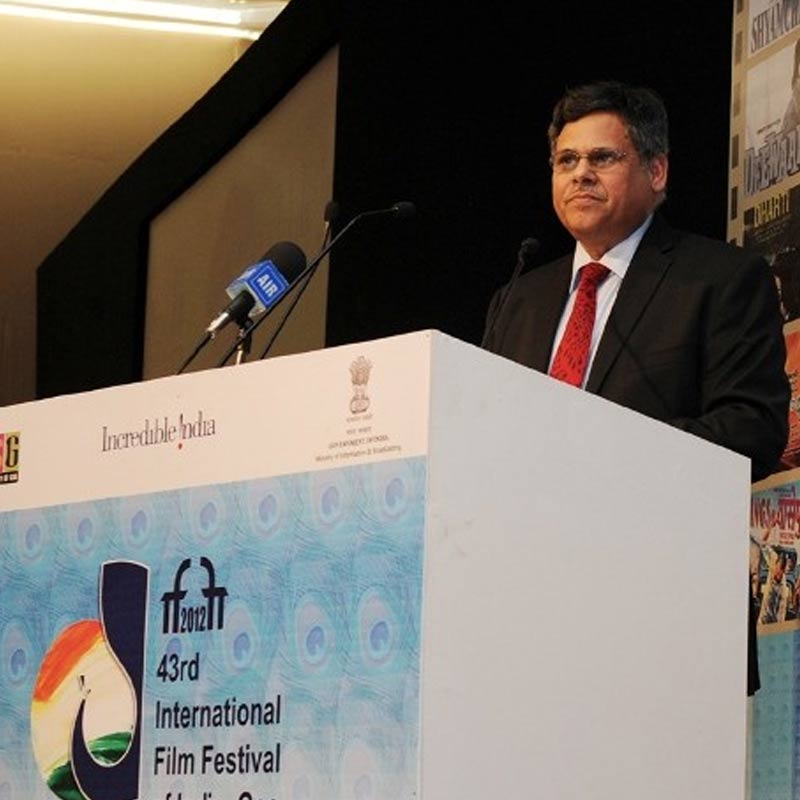
    MUMBAI: The Information & Broadcasting secretary Uday Kumar Varma has asserted that the government is firm on 31 March deadline.

    Giving a keynote at the Valedictory session of Ficci Frames, Varma said that the second phase of digitisation is on track with 60 per cent of households already going digital.

    "Digitisation is happening smoothly. We have achieved 60 per cent digitisation in the second phase. Subsequent to 31 March, the process will be irreversible," Varma said.

    Out of the 38 cities that are going digital in the second phase, as many as 10 cities have achieved 75 per cent digitisation.

    Four cities have been slow in implementing digitisation, Varma added. These include Ranchi, Srinagar and one in Tamil Nadu, where the state government is vehemently opposed to digitisation.

    "Out of 16 million STBs that are to be installed, 10 million have already been installed while six million are yet to be installed. However, we are confident that these will be installed within the deadline period," Varma asserted.

    Varma also said that the industry needs to keep the spirit of alignment to take the digitisation to its logical conclusion. However, he hastened to add that digitisation is still an incomplete task as even in phase 1 only set-top box (STB) has been installed and other aspects like Subscriber Management System (SMS) and billing are yet to be put in place.

    Digitisation, Varma said, will correct the aberrations of business model in the broadcasting industry and usher in an era of transparency.

    He also said that the role of state government is important for effective implementation of digitisation.

    He reiterated that the government can step in to provide guidelines for an independent television audience measurement system should the industry ask for it.

    "We need a robust and healthy ratings measurement agency," he said.

  • Digitisation to fuel revenue growth models: Manish Tewari

    Digitisation to fuel revenue growth models: Manish Tewari

    NEW DELHI: Information and Broadcasting Minister Manish Tewari has said that the ongoing digitisation process would help in building transparency in the system and enable the growth of revenue models in the broadcasting industry.

    The process would also help broadcasters in identifying a balanced growth model through the increased share from the subscription revenues.

    Delivering the key note address at the Seema Nazareth Award function for excellence in print media here today, the Minister said there was urgent need for key stakeholders within the media to introspect in view of the trends that had emerged as a result of corrosive discourse on one side and responsible discourse on the other.

    Referring to the challenges that had emerged because of the growth of social media, Tewari said these tools had created an unprecedented potential to connect with target audience for the dissemination of news and information.

    The impact of this medium was so profound that it had also integrated with the print media in the dissemination mechanism. The changing paradigm in the media landscape had resulted in creating opportunities for the journalistic fraternity.

    Tewari said the institution of the Seema Nazareth Award had provided an ideal platform to encourage and inspire young journalists in the print media. He conferred the Award on Sushmi Dey and two Special Mentions on Shelly Walia and Debolina Sengupta. The Seema Nazareth Award has been instituted by Business Standard.

  • App monetisation remains a challenge

    App monetisation remains a challenge

    MUMBAI: App monetisation remains a challenge in India, experts at Ficci Frames 2013 said here today, while outlining factors that could trigger growth in the sector.

    An important change is the explosion of connected devices which could transform India from being the largest consumer market for apps to also one of the largest revenue generators.

    “What will help the app market is the fact that phones are getting cheaper and the technology is getting better. Mobile will be a game changer from a data perspective,” said DisneyUTV MD Digital Vishal Gondal.

    With advertising being the main business model, monestisation is a challenge. There is also the issue of operators taking away 70 per cent of revenue. "Vodafone changed this by taking only 30 per cent and giving the rest to the app developer," Gondal stated.

    Oovoo.com CEO Jay Alan Samit feels that voice calls will go the way of the fax machine and become extinct. "People today prefer sending text messages. If it is somebody they love and care about, then they will use video," he said.

    Samit also noted that apps are viral and can come from anywhere. Angry Birds, for instance, comes from Finland. "Also celebrities will use apps if they connect people. This was seen during the Oscar awards where stars like Hugh Jackman used apps to reach out to fans," he averred.

    India has a base of 2.5 million app developers. "This gives us strength. Our plan is to ensure that an app is present regardless of whether a user has a smartphone or a feature phone," said Nokia India marketing director Viral Oza.

    But what are the challenges the app market faces in India? The absence of a venture funding system for apps is surely one major deterrent. The other challenge is that innovations in the user interface are not happening outside of the US, Samit said.

    The fact is that many users discard an app after using them just once. Oza touched on the importance of app quality. Nokia, for instance, has a filtering system before an app is put on the Nokia Store. "About 50 per cent of apps downloaded in India are from a Nokia store. This shows that apps have quality as well as stickiness,” he said.

  • Eurocinema, Miramax enter VoD film pact

    Eurocinema, Miramax enter VoD film pact

    MUMBAI: On the heels of its successful TV partnership with “My French Film Festival,” Eurocinema®, North America’s VOD movie network, has announced a multi-year agreement with Miramax making European films of all time available on demand.

    Beginning on 15 March, Eurocinema will debut some of the most exciting films from Miramax’s extensive international catalog. Popular Miramax foreign titles featured this month will be highlighted by the leading ladies of the big screen including Malena with Monica Bellucci, About Adam with Kate Hudson, Daughter of D’Artangnan (Revenge of the Musketeers) with Sophie Marceau, and Dirty Pretty Things with Audrey Tatou.

    Eurocinema chairman, CEO Sebastien Perioche said, “Eurocinema’s partnership with Miramax is unprecedented. Never before will such a high quality and diversified collection of world screen gems be available in one place and on demand. Eurocinema has become the go-to destination for fans of European cinema.”

    Eurocinema is currently available to over 35 million subscribers via cable and telco systems, on such major providers as Comcast, Cablevision, Charter and Verizon, among others.

    New Miramax titles will be made available each month, adding to Eurocinema’s already robust offering of films on demand. Titles will be available to view for $3.95-$4.99.

  • Industry needs to come together to put all systems in place for Phase 2: Parameswaran

    Industry needs to come together to put all systems in place for Phase 2: Parameswaran

    MUMBAI: The multi system operators (MSOs) might have successfully installed set top boxes (STBs) in majority of homes in phase 1 of digitisation but the government feels that is just one aspect of the drive and other aspects like subscriber management system (SMS) and billing system need to be put in place if the real benefits of digitisation have to be realised.

    The Telecom Regulatory Authority of India (Trai) wants the industry to set things right for Phase 2 of cable TV digitisation. Trai consultant N Parameswaran said Tuesday that the stakeholders need to work towards having all the systems in place in order to implement digitisation in letter and spirit.

    “Digitisation has not happened in a manner that we wanted to. It’s not a regulatory issue. The industry has to come together and ensure that that all the systems are in place from day one for phase 2,” he said.

    According to Parameswaran, the real benefits of digitisation have not reached people. "The subscriber management system is not in place. What has happened is only set top boxes have been installed,” Parameswaran said, while taking part in a panel discussion on digitisation at Ficci Frames 2013.

    Parameswaran said that the Trai had recently issued notices to MSOs and LCOs (Local Cable Operators) to make their SMS operational in DAS areas to ensure things fall in place.

    While commending the industry for achieving digitisation in a short span of time, Den Networks CMD Sameer Manchanda assured that the SMS and billing system will fall in place in 60 days.

    “We should have all things in place in 60 days. Putting eight million STBs was a herculean task. Digitisation has taken years in other countries,” Manchanda said.

    IndiaCast Group CEO Anuj Gandhi said the ARPUs (Average Revenue Per User) will increase gradually. The key is to segment existing channels and create packages accordingly. A case in point, Gandhi said, was having a South Indian channel package for Mumbai.

    Gandhi urged the industry to take one step at a time. The immediate priority, he said, was to get back-end systems in place. “For broadcasters, it’s a scary thought that the customers are getting more channels for the same price,” averred Gandhi.

    According to Multi Screen Media (MSM) CEO Man Jit Singh, government should continue to play the facilitators role like it did in the first phase. He also said that STBs have installed, subscribers are getting digital signals but little has changed apart from that.

    “What we have shown in first phase is that we came together as an industry to implement digitisation. The government also has a critical role to play. It should continue to play the facilitators role to bring together different stakeholders in the industry,” Singh said.

    He added, “Tiering and ARPU is incremental to drive the market together by understanding the consumer needs and expectations. The burden of expansion has to be shared by the Local Cable Operator (LCO), Multi System Operator (MSO), broadcaster and the consumer.”

    IBM Global Business Services India/SA Director & Partner, Industry Leader – Media & Entertainment Raman Kalra said that it is important for the industry to keep parallel strategy in place as the business model is evolving continuously.

    “Consumer is willing to pay but the industry should know how to extract it. The key is to know your customers to facilitate micro-segmentation and then work on the content strategy accordingly,” Kalra said.

    Reliance Broadcast Network Limited (RBNL) CEO Tarun Katial said the advent of digitisation has made things easier for new channels as the carriage and placement is not a big problem anymore.

    He also said that the availability of more channels has meant that consumers are sampling more channels which is good for niche channels. He also felt that dynamics will change as advertisers will now have to shell out more for advertising on television as subscription revenues go up and advertising duration is cut down.

    Times Television Network (TTN) MD & CEO Sunil Lulla said, “The current economics are not adequate for the success of Phase 2 of digitisation. There is an urgent need for industry transformation and an effective change in consumer experience. We are sitting at the cusp of change where widespread and deep digitisation will happen on the back of consumers, regulators and government working together.”

  • Cartoon Network, Pogo launch on Sri Lankan IPTV platform Peo TV

    Cartoon Network, Pogo launch on Sri Lankan IPTV platform Peo TV

    MUMBAI: Sri Lankan IPTV provider Peo TV has inked a carriage deal with Cartoon Network and Pogo.

    The channels bring series such as ‘Ben 10‘ and ‘Scooby Doo‘ to even more viewers and fans on the island nation. Both channels are available in English.

    Turner International India senior director network and content distribution, South Asia Troy Lobo said, “Sri Lanka is a key market for Turner and we are happy to announce this strategic move to strengthen our presence here. The ever-evolving kids’ entertainment genre has huge potential in Sri Lanka, allowing us partner with SLT PEO TV to broadcast both Cartoon Network and Pogo.”

    SLT VisionCom CEO Malraj Balapitiya said, “We are excited to launch Cartoon Network and POGO – the two leading kids’ channels dedicated to young viewers. The launch is in response to our viewer preferences, which we at SLT PEO TV pay a lot of attention to. Every audience segment is important to us and we thrive in providing a varied choice to every single member of the family.”