Category: Software

  • ‘Game of Thrones’ breaks online piracy records in many countries

    ‘Game of Thrones’ breaks online piracy records in many countries

    MUMBAI: The season premiere of ‘Game of Thrones’ is breaking records on multiple fronts, with a million downloads on BitTorrent in less than a day and proving that never before have so many people shared a file at the same time with more than 160,000 simultaneous peers.

    Data gathered by TorrentFreak further shows that Australia has the highest piracy rate of the popular download destinations, while London tops the list of pirate cities.

    One of the reasons cited for the popularity among pirates is the international delay in airing. Outside the US, fans of the show sometimes have to wait a while before they can see the latest episode. HBO is trying to close these gaps as best it can.

    The new season premiere of ‘Game of Thrones’ has, as expected, generated quite a bit of activity on various BitTorrent sites.

    Thousands of downloaders went out to grab a copy of the show, breaking the record for the largest BitTorrent swarm ever in the process. A few hours after the first torrent of the show was uploaded, the OpenBitTorrent tracker reported that 163,088 people where sharing one single torrent. A total of 110,303 were sharing a complete copy of that particular torrent while 52,786 were still downloading.

    Previously, the record for the largest BitTorrent swarm belonged to the season premiere of the TV-show ‘Heroes’ with 144,663 peers.

    Counting all the different releases, it is estimated that the latest ‘Game of Thrones’ episode has been downloaded over a million times already.

    Delays are just part of the problem though. The fact that the show is only available to those who pay for an HBO subscription does not help either. This explains why many people from the US prefer to use BitTorrent.

    The US comes out on top, followed by the UK and Australia. The number three spot for Australia is impressive and with a population of just over 22 million people it has the highest piracy rate. Looking at other cities, most downloads come from London, before Paris and Sydney.

    But according to HBO, piracy is not killing the show. While HBO would prefer if everyone paid for ‘Game of Thrones’, their programming President Michael Lombardo does not fear piracy. He sees it as a compliment and does not believe it negatively impacts DVD-sales.
  • Govt gives 15 days grace for phase II cable TV digitisation

    Govt gives 15 days grace for phase II cable TV digitisation

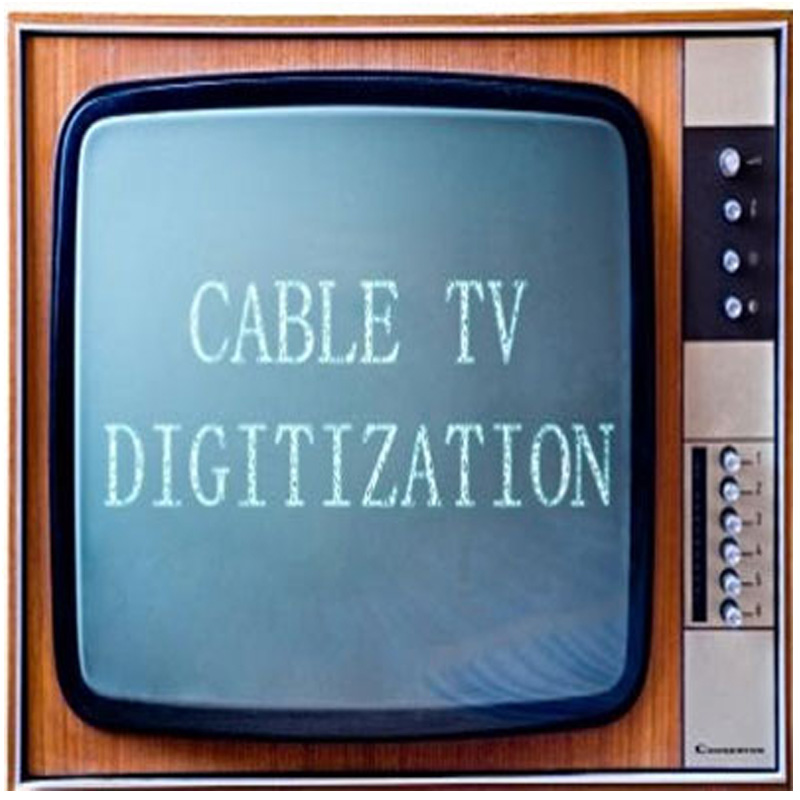
    NEW DELHI: Ever since the ministry of information and broadcasting ministry announced that it was enforcing 31 March 2013 for Phase II cable TV digitization and switch-ff of analogue signals in 38 cities in 14 states, there have been yelps from state government chief ministers and cable TV operators, and MSOs all over.

    Media reports were that a large number of viewers in these cities are grappling with blank TV screens as cable TV operators have not been able to speedily provide the set top boxes (STBs) needed to digitize. Some state governments went so far as to ask for a six-month extension to the digitization deadline. A couple of high courts – in Karnataka and Gujarat – had already agreed to a week long postponement in late March and on 1 April

    Late last night, according to a PTI report, the government heard the protesters’ pleas and said it would go slow on enforcing the black out of analogue signals. While categorically stating that the deadline was not being extended, information & broadcasting secretary Uday Kumar Varma, said that the industry was being given “a transition time of 10 to 15 days depending on the ground level situation so that there is no inconvenience to the people.”

    Reports are that almost 25 per cent of the 16 million households in these cities missed the deadline to switchover to digitized cable TV. The ministry has hence told MSOs and cable TV operators “to switch off the signals in a phased manner and depending on the situation in various cities.”

    Says the head of a leading MSO: “It’s good to hear that the government has given us this grace period. During the day there were ghastly reports that nodal officers and SDMs in various cities were threatening cable TV operators and MSOs with arrests if they did not switch off analogue TV signals. This should come as a relief to all of them. As it is we have not been able to sign digital agreements with a majority of broadcasters for these cities. Hopefully we will be able to do something soon.”

    Sources indicate that the ground situation in various cities is varied and that the I&B ministry officials would coordinate with the local nodal officers in order to decide the timing and extent of analogue TV switch offs in order to avoid blank TV screens.

    Data available with the I&B ministry has revealed that towns which are facing a problem include: Vishakapatnam with 12.8 per cent digitization (out of 500,000 TV homes); Srinagar with 20 per cent, Coimbatore with 28.89 per cent, Jababalpur with 34.87 per cent and Kalyan Dombivili (38.59 per cent). Seven of the 38 cities had achieved 100 per cent plus digitization: Ludhiana, Hyderabad, Faridabad, Allahabad, Amritsar, Chandigarh and Jodhpur — reported 100 per cent digitisation while three others — Thane, Meerut and Jaipur — had 90 per cent plus.

    Varma’s announcement came a little after indiantelevision.com reported that cable TV operators had got a reprieve in the Andhra Pradesh high court too. Justice M V Ramanna had directed DAS to be stayed for two weeks and the case is expected to be heard on 15 April. The order came on a petition by the Greater Hyderabad Cable TV Operators Association which took the position that there was no clarity regarding the availability of STBs.

  • Brothers Ambani sign telecom deal

    Brothers Ambani sign telecom deal

    MUMBAI: The news shook the corporate world, though it had been speculated about for some time. The brothers Ambani – Mukesh and Anil – who had reportedly been warring for a few years kissed and made up today.

    The duo announced that elder brother Mukesh’s Reliance Jio Infocomm (a unit of Reliance Industries) will be sharing younger sibling Anil’s Reliance Communications 120,000 km nationwide fibre optic network to help roll out his fourth generation broadband and telecom services in India.

    The filing with the Bombay stock exchange says that the deal is worth Rs 12 billion which is being paid as a one time indefeasible right to use (IRU) fee for sharing the fibre optic network. It allows Reliance Communications to reciprocally share Reliance Jio’s fibre optic network infrastructure too.

    The fibre optic network was built by Mukesh when Reliance was one entity, but was then handed over to Anil when the brothers split the empire their father built.

    The deal is likely to help both companies, say analysts. It will accelerate the pace at which Reliance Jio Infocomm gets to market with 4G. It will also help Reliance Communications, which has been saddled with debt in excess of $6 billion (Rs 37,000 crore).

    Both companies say that the deal is the first of many such arrangements they could end up signing.

  • DTH Assn’s Harit Nagpal: “We can plug the shortfall in STBs in Phase II”

    DTH Assn’s Harit Nagpal: “We can plug the shortfall in STBs in Phase II”

    MUMBAI: They are being pretty direct. DTH TV operators have categorically stated that they can definitely fill the gap should there be any shortage of set top boxes in any city under phase II of the government mandated digitsation of cable TV.

    “Digitisation does not need to be postponed,” says DTH Association of India president Harit Nagpal emphatically “ We have been digitizing the TV industry for the past seven years. We have national contracts with the broadcasters, which we keep working on with them. We have adequate stocks of STBs and trained manpower to meet any demand which crops up in any city should cable TV operators not be in a position to deliver the set top boxes to their customers.”


    He is pretty confident that this can be done overnight. “At Tata Sky we have about 1.5 million set top boxes in stock,” he reveals. “I am speaking for all DTH operators: If there is a colony or a ward or a pincode which is feeling the shortage, we can rush boxes there overnight to plug the shortage.”

    Nagpal believes that media reports claiming that 50 per cent of homes in some cities are facing a TV blackout could be attributable to independent cable TV operators in these cities not clearly reporting the number of STBs they have installed. “I think it is a reporting problem,” he says. “The number of TV homes not receiving signals is much lower. Some anomalies like this are bound to occur on an exercise of this scale.”

    DTH today accounts for about 27-28 per cent of the entire pay TV base in this country with about 40 million active subscribers according to the DTH association.

    Also, according to MIB reports almost 40 per cent of the digitization that has been achieved in the 38 cities has been done by DTH players, among which figure Tata Sky, Airtel, Videocon d2H, DishTV, Sun, DDDirect, Big TV.

  • InMobi introduces App Publish Distribution platform

    InMobi introduces App Publish Distribution platform

    MUMBAI: Bangalore-based InMobi, an independent mobile ad network, has announced the launch of App Publish, an Android app store distribution platform.

    The free-to-use tool will allow Android developers to publish their apps across global app stores in just a few clicks.

    According to the company while app discovery on Google Play is a challenge for developers and users alike, alternative channels such as GetJar, Mobango, Slide Me and several third-party app stores based in China are estimated to drive billions of downloads every year.

    While these outside sources help developers reach millions of users in new markets, publishing to each app store independently presents several significant challenges like- Navigating complex international laws, various platforms‘ widely varied aesthetic and informational requirements, difficulties tracking and reporting download and install figures, the challenges of collecting revenue from smaller or international platforms in a timely manner.

    InMobi‘s App Publish platform will allow developers to avoid these and other pain points that come from deploying an Android app globally, using proven intelligent technology to reduce the cost and effort to submit to multiple app stores.

    InMobi head of product management for developer platforms Girish Prabhu said, “Paying for position and app discovery on Google Play is becoming increasingly expensive and ultra-competitive. The launch of App Publish serves to meet the mass desire from app developers to compete in multiple channels in a simple, profitable way. Early beta testers of App Publish have seen 30 per cent more downloads through these new app store channels.”

  • Measat appoints Jarod Lopez VP – Broadcast Sales

    Measat appoints Jarod Lopez VP – Broadcast Sales

    MUMBAI: Measat Satellite Systems (Measat) has appointed Jarod Lopez as Vice President – Broadcast Sales.

    In this role, Jarod leads all the broadcast distribution sales activities across the Measat and Africasat fleet of satellites. Jarod is also supporting the expansion of the Measat business into the African region.

    Prior to assuming this role, Jarod was Measat‘s Senior Director of Sales and Marketing. Jarod has been with Measat since 2006

    and holds a Bachelor of Engineering degree from University of Northumbria at Newcastle, UK.

  • I&B sec Varma: “DAS Phase II roll-out smooth”

    I&B sec Varma: “DAS Phase II roll-out smooth”

    NEW DELHI: India‘s historical march towards cable television digitisation has taken a giant leap forward with the government expressing satisfaction over the implementation of Digital Addressable System (DAS) that covered 38 cities and towns in phase II.

    Speaking to Indiantelevision.com, Information & Broadcasting (I&B) ministry Secretary Uday Kumar Varma said that analogue signals had been switched off in 33 of the 38 towns at the stroke of midnight of 31 March.

    A confident Varma expressed that the success of the first and second phase of digitisation has strengthened his resolve that government‘s digitisation initiative was on track to be completed before the 31 December 2014 deadline.

    Five cities in Gujarat and Karnataka have been left out since there was a stay by Gujarat and Karnataka High Courts on DAS. Overall 75 per cent of the television homes in these 38 cities have been digitised, said Varma.

    In Gujarat, digitisation in Ahmedabad, Surat, Vadodara and Rajkot has reached 50 per cent with Vadodara leading the pack with 70 per cent digitisation.

    Varma also asserted that seven cities including Hyderabad, Amritsar, Chandigarh and Allahabad out of the 38 had 100 per cent digitisation, while another nine had achieved over 75 per cent.

    However, he did confess that towns like Srinagar, Vishakhapatnam and Coimbatore were slow in seeding of STBs. Around 12 million of the 16 million TV households had been digitised, he said.

    He said the Ministry was keeping a watch on the situation with regard to STBs and said his information was that there were enough STBs at present for all the 38 cities in fourteen states and one union territory.

    “It was a mammoth task and I am happy that the switch-over had been smooth, without any law and order problems,” he said in a candid conversation.

    Asked about the 48-hour cable TV blackout in Delhi, Varma brushed it aside by saying that it has been an abject failure. He, however added that the Telecom Regulatory Authority of India (Trai) will look into the grievances of the LCOs.

  • Bigflix.com pockets Viacom18’s film catalogue

    Bigflix.com pockets Viacom18’s film catalogue

    MUMBAI: Over the top service provider Reliance Entertainment Digital’s BigFlix announced today that it has added to its catalogue of films for viewing online. The move on demand service said it has acquired internet rights to stream 55 films from Viacom18 Motion Pictures through Indiacast Media Distribution (a TV18 and Viacom18 JV).

    “Our new acquisitions include some of Viacom18 Motion Pictures top grossing releases like Jab We Met, Singh Is King and Golmaal3 ,and some which are scheduled to be released in the next 12-15 months,” says BigFlix Business Head Shreyash Sigtia.

    BigFlix has a catalogue of around 2000 titles in which Bollywood comprises of 600 titles while there are around 200 Hollywood titles. The remaining 1200 movies are regional with Tamil, Telugu and Malayalam having the major numbers. Sigtia refused to comment on latest consumption statistics on Bigflix.com. But according to its website, it has 20,000 plus active subscribers, and more than a million visitors have been served so far. According to Alexa.com users are spending an average of about 3 minutes on Bigflix.com daily.

    BigFlix allows users to watch unlimited movies online for Rs 249 per month. The user can watch 10 minutes of a movie free of cost, after which a subscription has to be purchased.

    Talking about how the deal will help BigFlix Sigtia said, “It will help us in bringing fresh titles like Oh My God, Special 26, Aiyaa and Inkaar and also movies that have higher repeat value therefore helping in increasing consumption. We expect our subscriber base to double with this acquisition.”

    BigFlix aims to have a secured screening, and claims that the content is protected on DRM. “Users can’t rip of any movie from the site and this helps us monetise more effectively,” Sigtia added.

    IndiaCast group chief executive officer Anuj Gandhi said, “There is a growing base of movie viewership on digital as more and more people are tuning in to watch films online. This association between IndiaCast and BigFlix acts as a value addition for both parties. In Bigflix, we have found the right partner that not only has a huge base of film enthusiasts but also operates in a secured, controlled and authorized environment.”

  • DAS Phase II: Karnataka HC extends hearing to 5 April, stay to continue in Bengaluru

    DAS Phase II: Karnataka HC extends hearing to 5 April, stay to continue in Bengaluru

    BENGALURU: Bengaluru will have to wait for DAS (Digital Addressable System) for another four days in the least, with the Karnataka High Court extending the interim stay till 5 April.

    Hearing a petition by Karnataka Cable TV Operators Association President V S Patrick Raju seeking postponement of the analogue switch off date for the garden city beyond 31 March as there was no clarity about set top boxes was put off by Justice Nazeer as another petition by a multi-system operator was filed today.

    The newly licensed MSO stated that he had not been given enough time to acquire STBs and install them in subscriber homes.

    Additionally, a DTH operator representative present at the hearing also stated that his company would not be able to meet the demand for STBs.

    Meanwhile, the Court also decided to hear on 5 April a case by Mysore Cable TV Operators Association which has wanted extension on digitisation deadline due to shortage of STBs.

  • DAS Phase II commences as analogue TV switched off

    DAS Phase II commences as analogue TV switched off

    NEW DELHI: The second phase of Digital Addressable System (DAS) in India marched on even as the month of March 2013 came to and end as envisioned by the Information & Broadcasting (I&B) Ministry. Analogue television signals in 36 cities all over India were clipped even as stay orders were imposed by high courts in Ahmedabad and Bengaluru.

    However, I&B Ministry sources told Indiantelevision.com that the level of digitisation achieved as on 30 March was 70 per cent in phase II towns, and admitted there was a likelihood of viewers facing blank TV screens in some places.

    The sources said that these problems primarily existed in Srinagar which has just 4,300 set top boxes (STBs) installed. The situation in Coimbatore and Vishakapatnam was more serious with almost zero STB deployment on 20 March.

    They also added that the estimates had been made based on information received from multi-system operators (MSOs) and making a provision of 20 per cent for multiple TVs in households and TVs in offices/showrooms.

    While the seeding of STBs and switch-off of analogue was being overseen by nodal officers in all the cities, the sources said teams would be dispatched to all these cities in the coming days to study the impact and ensure implementation. They insisted that there were ample digital STBs available.

    However, Uttar Pradesh Chief Minister Akhilesh Yadav in a letter to I&B Minister Manish Tewari over the weekend requested for an extension of six months in the seven cities in the state that were to switch over to digital addressable system from today: Agra, Allahabad, Ghaziabad, Kanpur, Lucknow, Meerut, and Varanasi.

    While the Gujarat High Court in Ahmedabad stayed the introduction of DAS till 9 April in Ahmedabad, the Karnataka High Court issued the stay till 1 April in Bengaluru. The Karnataka High Court will hear cases relating to both Bengaluru and Mysore on 1 April.

    Ministry sources confirmed that both High Courts had issued notices to the Union government and the I&B Ministry.

    In both case, the petitioners Cable Operators Association of Gujarat through its president Pramod Pandya andKarnataka Cable TV Operators Association president V S Patrick Raju, have said there is confusion about availability of STBs and MSOs are also helpless. Raju has also raised the issue of who owns the STB that is installed at the home of a subscriber – the customer or the LCO.

    For the second phase, the 38 specific cities and towns in fourteen states and one union territory which have been listed in the notification are – Bangalore, Hyderabad, Ahmedabad, Pune, Surat, Kanpur, Jaipur, Lucknow, Nagpur, Patna, Indore, Bhopal, Thane, Ludhiana, Agra, Pimpri-Chinchwad, Nashik, Vadodara, Faridabad, Ghaziabad, Rajkot, Meerut, Kalyan-Dombivali, Varanasi, Amritsar, Navi Mumbai, Aurangabad, Solapur, Allahabad, Jabalpur, Srinagar, Visakhapatnam, Ranchi, Howrah, Chandigarh, Coimbatore, Mysore and Jodhpur.

    A high-level Monitoring Committee has also been set up to oversee the digitisation process in the entire country, which is expected to be achieved by the end of next year.

    In order to facilitate digitization, the Ministry has already issued provisional registration to 30 Independent MSOs to operate in Phase II cities. This would enable these MSOs to operate in their respective cities to provide digital cable TV services.

    The Ministry has set up a Task Force exclusively for Phase II cities to oversee and monitor the digitization process. A public awareness Committee has also been constituted in the Ministry for spearheading awareness campaign and all TV channels ran a scroll informing consumers about the deadline for cable TV digitization, as well as an animated commercial.

    All India Radio has also started broadcasting radio jingles on its national and regional networks to get the DAS message across. Several other initiatives like an SMS campaign, video spots and prints are on the anvil. The state governments/UTs have already nominated nodal officers in 38 cities of Phase II. The Ministry had recently conducted a workshop for them.

    Workshops have been held at some places to take stock of preparedness in Phase II cities and sensitize local MSOs, cable operators and other stakeholders.

    The Ministry had set up a Control Room during Phase I, which has continued to function to address the queries of consumers, cable operators and others. The Control Room which also has a toll free number has been receiving a number of calls from consumers of Phase II cities.