
Category: Software

  • When AI Gets Real Mphasis adds meaning to machine intelligence

    When AI Gets Real Mphasis adds meaning to machine intelligence

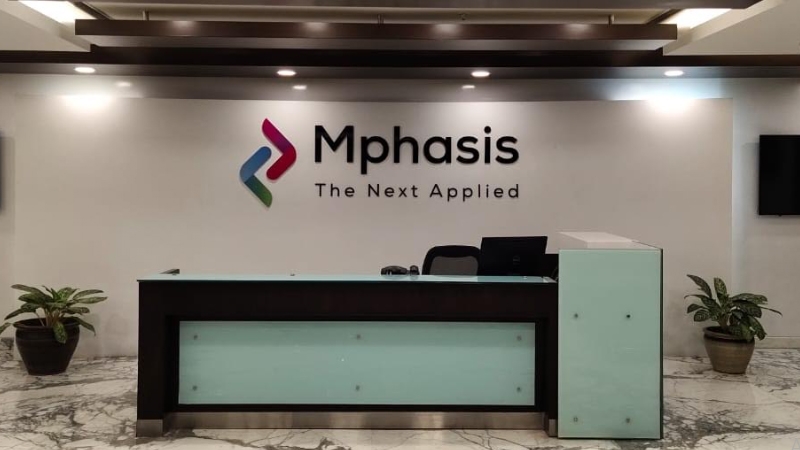
    MUMBAI: Artificial Intelligence may be the buzzword of the decade but Mphasis wants to remind the world that without intelligence, it’s just artificial. With its new global campaign, AI Without Intelligence Is Artificial, the Bengaluru-headquartered technology firm is calling out the hype and bringing focus back to context-driven, human-centred innovation.

    The campaign, which marks the global launch of Mphasis NeoIP, redefines what it means to make AI “real” for business. NeoIP is a next-generation platform that combines enterprise knowledge, contextual data, and automation into a continuous, intelligent process helping companies evolve instead of endlessly reinventing themselves.

    The global AI industry may be booming McKinsey estimates that generative AI could add up to 4.4 trillion dollars in annual global productivity yet many companies are still struggling to translate that promise into profit. “In a market flooded with AI-centric solutions, Mphasis asks a critical question, what happens when intelligence is missing from AI?” said Mphasis global chief marketing officer and head of hyperscalers & strategic partnerships Veda Iyer. “True AI must evolve with business needs. AI without context is simply not enough.”

    At the heart of the new campaign is a challenge to stop viewing AI as a shiny new tool and start treating it as a thinking partner. NeoIP does just that, fusing Mphasis’ proprietary solutions with third-party technologies and client systems to create an AI ecosystem that is intelligent by design, secure by default, and scalable by nature. The approach reduces the constant reinvestment typical of traditional digital transformation efforts.

    Set to roll out across digital, social, and experiential platforms, the campaign targets decision-makers across banking, healthcare, insurance, and hi-tech industries. The tone is provocative yet purposeful showing how contextual intelligence, not just code, drives measurable transformation.

    Iyer explained that Mphasis’ approach is rooted in intelligent engineering, where AI doesn’t just automate, it adapts, optimises, and learns. “Our goal is to help businesses build AI systems that think ahead systems that are not static, but evolve continuously to drive long-term success,” she added.

    Through NeoIP, Mphasis is already working with leading financial institutions to modernise infrastructure, enhance security, and future-proof operations. The results echo the core philosophy behind the campaign that AI must be intelligent by design to create real, lasting impact.

    As the world races to embrace automation, Mphasis’ message lands with timely precision: intelligence is the soul of AI without it, all that’s left is an empty buzz.

  • Made in Bharat goes global as HiTech Animation powers a mythic leap

    Made in Bharat goes global as HiTech Animation powers a mythic leap

    MUMBAI: Once upon a timeline not in Hastinapur, but in Kolkata, a creative revolution took root. What began as a modest dream inside a small studio in 2012 has today turned into one of India’s most compelling success stories in animation. HiTech Animation Studios, the homegrown powerhouse behind Kurukshetra, is showing the world that the next wave of visual storytelling is proudly Made in Bharat.

    From the land known for art, music and literature, HiTech emerged with a clear vision to create world-class animation from India, for the world. Over the past decade, the studio has worked with some of the biggest names in entertainment, including Sony Yay, Nickelodeon, Byju’s, Cartoon Network, and Pogo. Each project honed its craft, blending technical precision with creative flair, and proved that Indian animators could hold their own against global giants.

    The studio’s crowning glory arrived this year with Kurukshetra, a two-part animated epic that reimagines the Mahabharata through the eyes of 18 warriors. Released on Netflix on 10 October and 24 October 2025, and produced in collaboration with Tipping Point, the digital arm of JioStar, the series took three years and over 250 artists and technicians to create.

    Rendered in cutting-edge 3D animation, motion capture, and photorealistic visual design, the 18-episode series is available in 34 global languages and streaming in 190 countries. For Indian storytelling, Kurukshetra is more than a milestone, it’s a declaration of creative intent, proving that homegrown myth and modern technology can together craft a cinematic spectacle with universal appeal.

    “Our focus has been on building an integrated ecosystem, where talent development, technology, and production excellence work in sync to deliver content that creates impact beyond borders,” said HiTech Animation managing director and founder Subrata Roy. “We’ve always approached animation as both a creative pursuit and a scalable industry.”

    HiTech’s rise mirrors a larger cultural moment India’s transformation from a content service hub into a storytelling powerhouse. By combining state-of-the-art infrastructure with its own in-house training programmes, the studio not only creates premium content but also shapes the next generation of animators powering India’s creative economy.

    Roy believes that the foundation for this artistic growth lies deep within India’s culture itself. “Art and craft have always been integral to our education and identity. Combine that with our socio-cultural diversity, and we have the stories and the talent to captivate audiences across countries and cultures something the global success of Kurukshetra clearly shows,” he said.

    From a single floor in Kolkata to the world’s biggest streaming platform, HiTech Animation’s journey is a story of vision meeting velocity, of tradition reimagined through technology. As Kurukshetra takes Indian mythology to millions of screens worldwide, one truth stands tall when Bharat dreams in pixels, the world watches in awe.

  • Oppo’s got the Mind Space to make AI more personal with Google

    Oppo’s got the Mind Space to make AI more personal with Google

    MUMBAI: Oppo is giving artificial intelligence a human touch and a safe space to think. The smartphone maker has joined forces with Google to take mobile AI beyond the buzzword, with a partnership designed to make smart devices not just intuitive, but also private, personal, and powerful.

    The collaboration centres on creating what Oppo calls “personalised and secure mobile AI”, blending the company’s software finesse with Google’s Gemini ecosystem. The goal? To deliver next-gen AI experiences that understand users better while keeping their data off-limits to everyone else.

    “Working closely with partners like Google allows us to integrate next-generation AI experiences that are not only powerful but also highly personalised and secure,” said Oppo president of software engineering Kai Tang. “Our goal is to provide users with an AI assistant that truly understands their needs and is worthy of their trust.”

    At the heart of this collaboration lies Mind Space, a smart productivity app debuting on the upcoming Find X9 Series. Think of it as a digital diary that remembers everything for you. With a simple three-finger swipe, users can save text, images, or web pages into one unified hub. Mind Space then auto-categorises and stores the content, so your ideas, plans, and to-dos live in one tidy corner of your phone.

    But the real power play begins when Mind Space meets Gemini. The integration allows Gemini to draw from saved information with the user’s permission and help take action. Planning a vacation? Just stash your notes and articles in Mind Space and ask Gemini to whip up an itinerary. Need a reminder for tomorrow’s meeting or a follow-up email draft? Gemini’s got it covered.

    The collaboration doesn’t stop there. Users can now chat with Gemini across Oppo’s suite of apps, use Gemini Live to ask questions about what’s on their screen or camera, and even edit photos using Gemini’s new AI model, Nano Banana. With a simple prompt, Nano Banana can retouch, enhance, or creatively transform images, turning quick snaps into scroll-stopping visuals.

    And while Gemini is the brain of the operation, Oppo’s AI Private Computing Cloud (PCC) ensures it all runs in a locked vault. Built on Google Cloud’s confidential computing technology, PCC encrypts and processes data in a secure environment invisible even to Oppo itself. Core AI features like AI Mind Space, AI Search, AI Recorder, AI Call Summary, AI VoiceScribe, and AI Writer all operate under this privacy-first architecture.

    This powerful blend of intelligence and integrity will first roll out with Oppo’s Find X9 Series and ColorOS 16 flagship devices. To sweeten the deal, buyers of the Find X9 or X9 Pro will receive a complimentary three-month subscription to Google AI Pro offering early access to premium Gemini features and 2TB of cloud storage.

    By combining Oppo’s design sensibilities with Google’s AI muscle, the partnership is setting the stage for smartphones that don’t just think fast, they think for you, with you, and about you. Because in Oppo’s world, the smartest AI is the one that minds your space.

  • Thomas Cook India partners Gen s Life to expand senior travel portfolio

    Thomas Cook India partners Gen s Life to expand senior travel portfolio

    MUMBAI: As India’s silver economy shines brighter, Thomas Cook (India) Limited is strengthening its focus on the growing community of senior travellers. The company is expanding its senior travel segment through product innovation and strategic tie-ups, recognising the increasing aspirations of India’s 55 plus population.

    According to the Pwc-Asli senior care report 2024 and Unfpa 2023, India’s senior population (aged 60 and above) is projected to reach 347 million by 2050, accounting for 21 per cent of the total population. With higher disposable incomes and more leisure time, this demographic is emerging as a powerful travel segment that values comfort, safety and meaningful experiences.

    To engage this audience, Thomas Cook India has partnered with Gen s Life, a leading lifestyle and community platform for the 55 plus demographic. As part of the collaboration, the two brands will host a free educational webinar titled “Making pilgrimage travel easy & enjoyable for 55 plus” on 29 October at 11 am on Zoom.

    The session will feature choreographer and traveller Sandip Soparrkar, along with Thomas Cook’s expert tour managers, sharing travel insights, health guidance and destination tips tailored for senior travellers. Attendees will also gain exclusive access to customised pilgrimage packages and special senior group offers.

    Drawing from its extensive spiritual circuits across India and the subcontinent including Varanasi, Ayodhya, Mathura, Bodh Gaya, Pokhara, Tirupati and Rameswaram, Thomas Cook India aims to make pilgrimages more comfortable and enriching. Features include guided tours, vip darshans, AC transfers, and aerial Char Dham helicopter journeys that complete the pilgrimage in four days, reducing fatigue compared to traditional road trips.

    The brand’s ‘Pilgrimage plus’ portfolio reimagines spiritual travel as a holistic experience, blending darshans with cultural immersion, from sunset views on the Ganges to local culinary trails and artisan village visits.

    In addition, Thomas Cook India is set to launch specialised group tours for seniors to international destinations, offering elder-friendly hotels, porterage, curated meals, entertainment evenings and easy-access transport.

    “In India, the silver economy is expanding rapidly with rising longevity, digital inclusion and higher discretionary income,” said Thomas Cook (India) Limited MICE, Visa president & country head, holidays Rajeev Kale. “Seniors today are confident and eager to explore. Our partnership with Gen S Life combines our travel expertise with their understanding of senior lifestyles to create inclusive and empowering experiences.”

    Gen s Life founder Meenakshi Menon added, “For many seniors, a pilgrimage is deeply personal, but logistics can be a deterrent. This partnership brings together safety, convenience and community, enabling seniors to travel with confidence.”

    With over 40,000 app downloads and 15,000 plus registered users, Gen s Life provides curated services for the 55 plus community, covering health, finance, wellness, safety and travel. The collaboration with Thomas Cook aims to ensure that India’s senior travellers continue to explore the world, comfortably, confidently, and with a sense of connection.
     

  • Sanjay Dutt gives digital payments a Vega boost with Getepay launch

    Sanjay Dutt gives digital payments a Vega boost with Getepay launch

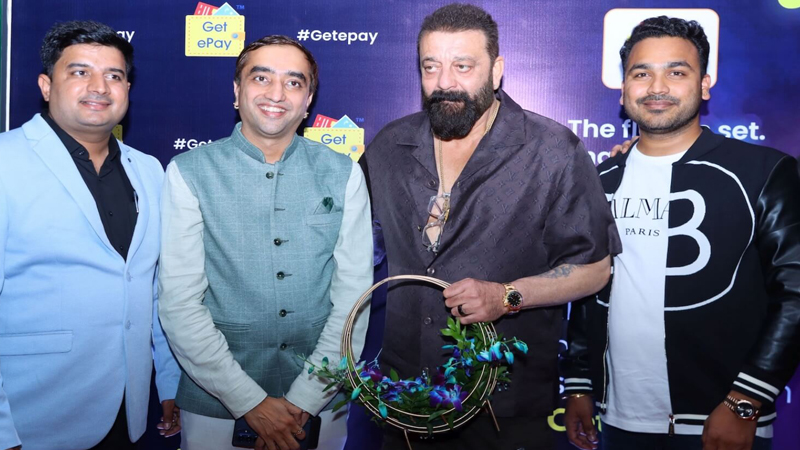
    MUMBAI: When Sanjay Dutt says something’s “solid,” you know it packs a punch. And this time, the star wasn’t talking about a movie but about Vega, the indigenously developed payment switch from Getepay that promises to change how India transacts.

    At a glittering launch event at Taftoon Lounge, BKC, Mumbai, Dutt joined hands with Pravin Sharma, founder and managing director of Getepay, to unveil Vega, a homegrown, next-gen payment switch that’s as fast as it is secure. Headquartered in Jaipur, Getepay has steadily built its reputation as a digital payments enabler, and with Vega, it’s now aiming for the big league.

    “I’ve always believed in backing things that are real, solid, and made with heart and that’s exactly what Vega is,” Dutt said, cheering for a platform designed to empower India’s entrepreneurs, from local shopkeepers to small-town retailers. “This is about giving every entrepreneur the confidence to go digital. That’s the Bharat I want to cheer for.”

    Built on a microservices-based architecture, Vega delivers high-speed, high-volume transaction processing while ensuring real-time settlements and automated reconciliation. Think of it as the invisible engine powering India’s cashless ambitions routing transactions seamlessly even when networks are jammed.

    For Getepay’s Sharma, the launch marks a milestone moment. “Vega is not just a technological leap, it’s a bridge for millions of micro and small entrepreneurs powering India’s economy. With Vega, we aim to simplify digital payments for banks and merchants alike,” he explained. “Sanjay Dutt was the perfect fit, he represents strength, resilience, and relatability, just like our users across Bharat.”

    Under the hood, Vega connects banks and fintechs through a future-ready framework, ensuring compliance with Indian regulatory standards while maintaining top-notch reliability. Its modular design enables faster deployment, giving financial partners a smooth upgrade to modern infrastructure without business disruption.

    Beyond its tech prowess, Vega underscores Getepay’s commitment to Make in India, financial inclusion, and digital empowerment. The company envisions a future where even the smallest entrepreneur whether a tea stall owner or a kirana shop operator can accept digital payments with the same ease and confidence as a corporate giant.

    In a digital economy where speed, trust, and scalability are everything, Vega may well be the switch that powers Bharat’s next leap. And with Sanjay Dutt playing cheerleader, the digital revolution just found its blockbuster moment.


  • Hybrid’s Work Culture Gets a Great Upgrade with GPTW Certification

    Hybrid’s Work Culture Gets a Great Upgrade with GPTW Certification

    MUMBAI: Looks like Hybrid Adtech just got a workplace upgrade no software patch required. The adtech company has officially been certified by Great Place To Work, the global benchmark for workplace culture, cementing its reputation as a people-first organisation that’s as driven by passion as it is by performance.

    The certification, based entirely on employee feedback, highlights Hybrid’s success in creating a culture where collaboration, trust, and innovation thrive. A majority of its workforce vouched for an environment that encourages growth not just in KPIs and conversions, but in careers and confidence.

    Hybrid INSEA CEO Shreyas Sathe called the recognition a milestone moment. “Earning the Great Place To Work Certification validates our efforts in building a workplace where innovation and people go hand in hand. Our employees are our biggest strength,” he said, underscoring the company’s belief that culture and creativity are intertwined.

    Echoing that sentiment, Hybrid country head for India Gandharv Sachdeva said, “At Hybrid, people are at the centre of everything we do. This certification reflects the trust, transparency, and teamwork that define our culture. We’re proud to be creating not just a successful business, but a space where everyone belongs.”

    Hybrid’s culture isn’t built on buzzwords, it’s reinforced by initiatives that empower employees to grow both professionally and personally. From skill development and wellness programmes to collaborative opportunities across teams, the company continues to invest in its people as much as in its tech.

    According to Great Place To Work research, job seekers are 4.5 times more likely to find a great boss at Certified workplaces. Employees in such organisations also report higher job satisfaction, fairer pay, and better access to advancement opportunities, all signs of a workplace where people genuinely look forward to Mondays.

    With its new badge of honour, Hybrid Adtech has proven that being a “great place to work” isn’t just about perks and policies, it’s about people who power possibilities.

    Would you like me to make the headline slightly more playful (for example, using a pun like “Hybrid Works Wonders with Great Place to Work Win”)?
     

  • Truecaller launches AI-powered platform ‘advantage’ that boosts smarter ad targeting

    Truecaller launches AI-powered platform ‘advantage’ that boosts smarter ad targeting

    MUMBAI: When AI meets communication, magic happens. Truecaller, the global communications platform, has unveiled advantage, an AI-powered recommendation engine designed to revolutionise how businesses engage users in high-attention moments.

    Built on a central intelligence hub that continuously learns from user interactions, adVantage tailors messages across business messaging, contextual advertising, and enterprise solutions. By analysing anonymised, aggregated data in real time, the platform delivers highly personalised, privacy-safe experiences for consumers while helping businesses optimise engagement and drive growth.

    “Relevance is the new currency,” said Truecaller global CEO Rishit Jhunjhunwala. “advantage ensures businesses don’t just reach users, they understand them and provide value at every touchpoint. It’s central to our strategy of building scalable growth engines and redefining how businesses create impact.”

    The platform’s pilot phase showed impressive results: open rates jumped 400 per cent on Truecaller’s messaging platform, with up to a 50 per cent lift in click-through rates across high-intent sectors like automotive, fintech, edtech, and e-commerce. The framework reaches over 200 million users, transforming brand awareness into measurable outcomes.

    Advantage operates through three modules: Discover: Identifies new, relevant audience segments and expands visibility; engage: ee-targets users to boost mid-funnel performance and guide conversions; perform: optimises key business outcomes such as leads, app installs, and direct commerce automatically.

    “Truecaller advantage gives businesses a real edge,” said advantage lead  Liniker Seixas. “Multiple AI models continuously learn and optimise campaigns, ensuring every investment drives stronger results.”

    By harnessing Truecaller’s ecosystem, advantage empowers brands to reach the right audience, deepen engagement, and accelerate conversions, all while staying privacy compliant.


  • Trade Desk opens Audience Unlimited to put data back in the driver’s seat

    Trade Desk opens Audience Unlimited to put data back in the driver’s seat

    MUMBAI: For years, third-party data in digital advertising has been like the pricey side dish everyone admired but few ordered. Now, The Trade Desk (NASDAQ: TTD) is serving it up in a new format Audience Unlimited, an AI-powered marketplace upgrade designed to make precision targeting cheaper, smarter, and easier.

    Traditionally, advertisers who dared to dip into third-party data often forked out nearly 20 per cent of their media costs on it, only to wrestle with the uncertainty of which segments were worth the spend. Audience Unlimited aims to sweep away those hurdles by scoring thousands of curated data segments from hundreds of privacy-conscious providers, then offering them in bulk at transparent, inclusive pricing.

    “Audience Unlimited is going to transform the way marketers think about the value and cost of third-party data,” said The Trade Desk chief strategy officer Samantha Jacobson. “By securing bulk pricing for data, we can pass on savings to advertisers, while our AI helps them understand relevance and layer in as much as they need to optimise performance.”

    The upgrade isn’t just about cheaper data. It’s tied to new Koa Adaptive Trading Modes, powered by agentic AI, that let advertisers pick their level of automation:

    ●   Performance Mode: Koa acts as a full co-pilot, dynamically optimising bids, allocations and performance across The Trade Desk’s suite of innovations, from Audience Unlimited to Predictive Clearing and Identity Alliance. Here, Audience Unlimited is included at no extra cost.

    ●   Control Mode: Traders take the wheel, manually managing campaigns but still benefiting from AI recommendations. Here, Audience Unlimited comes at a tiered cost of 3.3 per cent or 4.4 per cent of impression spend, with the option to use a la carte data pricing.

    Early adopters are already buzzing. Dstillery CEO Michael Beebe said, “By embedding AI-powered audience selection directly into campaign strategy, it transforms data from an afterthought into a core driver of performance.”

    Liveramp SVP of commercial partnerships Anne Acker echoed the sentiment, “Solutions like Audience Unlimited take the guesswork out of building high-quality segments. With AI in the mix, marketers can extract even more value and efficiency.”

    Audience Unlimited and Koa Adaptive Trading Modes will roll out to select agencies on The Trade Desk’s Kokai platform in late 2025, with a full launch in early 2026.

    If third-party data once felt like a gamble, The Trade Desk is betting that with AI scoring, predictable pricing, and flexibility, advertisers will now treat it as the ace up their sleeve.

  • Huawei dives deep to surface seamless submarine terrestrial networks

    Huawei dives deep to surface seamless submarine terrestrial networks

    MUMBAI: When it comes to the internet’s undersea highways, Huawei wants to make sure the data doesn’t hit traffic when it surfaces on land. At Submarine Networks World 2025 in Singapore, the company pulled back the curtain on its vision for Submarine-Terrestrial Synergy, Optical-Intelligent Orchestration, a bold reimagining of how submarine cables and terrestrial networks can work as one.

    For decades, the two domains have operated in silos, with limited interoperability and cumbersome management. Huawei’s new strategy looks to smash those barriers, promising cross-domain visualised management, coordinated scheduling, intelligent O&M, and end-to-end ultra-broadband services. The pitch: a network that’s not only faster, but smarter and greener too.

    Huawei unveiled the industry’s first DC-oriented 100T submarine-terrestrial integrated platform, the OptiX OSN 9800 K series. The specs are ambitious:

    .  Integrated architecture: One unified platform bridging submarine and terrestrial networks.

    .  Ultra-large capacity: 4T service processing per slot, 100T plus per chassis, and up to 96T per fibre.

    Ultra-high energy efficiency: Power consumption slashed to 0.1 W/Gbit, 65 plus lower than the industry average.

    .  Ultra-strong intelligence: Digital twin-powered O&M, boosting operational efficiency by 40 plus.

    Also showcased was Huawei’s latest 1.6T board for submarine SLTE systems. With adjustable rates from 300G to 1.6T and transmission distances stretching 11,000 km, the board promises to push submarine cables’ performance to new depths while ensuring flexibility for operators.

    Huawei president of optical transmission domai Gavin Gu summed up the ambition: “Huawei plans to build an integrated submarine-terrestrial network architecture featuring ultra-broadband, high reliability, agility and intelligence, enabling seamless transmission while significantly enhancing network O&M efficiency and service quality through intelligence.”

    With global digitalisation and AI adoption surging, submarine cables already carrying more than 95 plus of the world’s international data traffic are facing unprecedented demand. Huawei, with 30 years of optical transmission expertise, is positioning itself as a key architect of the next-generation internet backbone.

    By linking the deep sea to the data centre with a seamless, intelligent bridge, Huawei is betting that the future of connectivity lies not just in laying more cable, but in making every bit smarter, faster, and greener.

  • Brands navigate trust, AI and culture to thrive in today’s media landscape

    Brands navigate trust, AI and culture to thrive in today’s media landscape

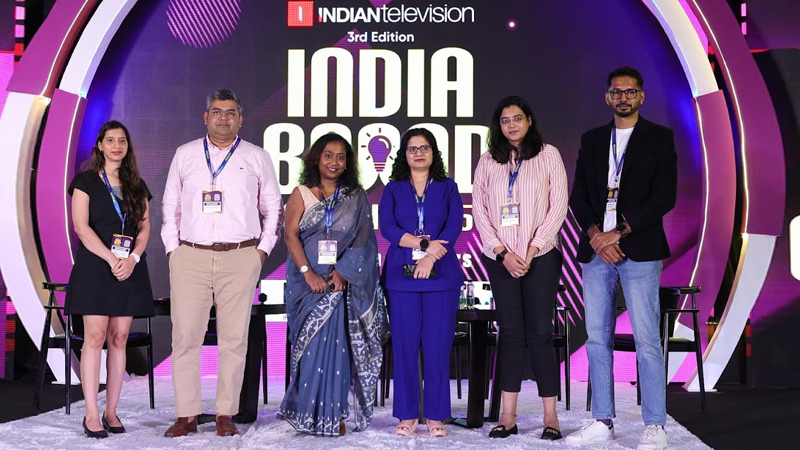
    MUMBAI: If marketing is war, then the battlefield is shifting from loud campaigns to sharper trust-building, from chasing clicks to curating culture. That was the resounding theme at the session “Driving Performance and Brand Reputation in a Dynamic Media Landscape” at the 3rd India Brand Summit 2025, where five marketing heavyweights unpacked what it takes to stay relevant when algorithms, attention spans, and authenticity collide.

    On stage were Harshita Hemnani (Bharti AXA Life Insurance), Argho Bhattacharya (Payu), Sayantani Das (Jumboking Burgers), Ritu Mittal (Bayer South Asia), and Anita Subramanian (JLL), with Abhishek Pujar of IAS steering the discussion.

    The conversation quickly zoomed in on artificial intelligence not as a futuristic buzzword but as an everyday reality. Mittal argued, “AI-generated content is a broad term not all of it is bad. If brands use AI to scale authentic storytelling and create contextual variations, it’s a powerful ally. But when AI content becomes clutter or poor quality, that’s when reputations get dented.”

    Das agreed that authenticity must rule over noise. “The brand will win not by shouting the loudest, but by being contextual and authentic,” she said, pointing out how creative variations and asymmetric segmentation now matter more than ever in cutting through digital saturation.

    Culture, too, emerged as a defining battleground. “You can’t drop a generic festive message and expect it to resonate,” said Hemnani. “Brands need to mirror the cultural mood whether it’s Diwali, Pongal or Christmas and be seen in environments reflecting joy, togetherness, and Indianness.”

    For Subramanian, real estate marketing offers lessons in nuance: “Trust is everything. Technology can scale, but human-led experiences are irreplaceable. That’s where AI works best augmenting, not replacing, authenticity.” She highlighted how launches today are often creator-led, citing international examples where communities turn content into commerce.

    Bhattacharya, from PayU, brought in the customer lens. “Consumers don’t care about brands, they care about what you can do for them. Value is the keyword, whether it’s price, quality, or convenience. Festivals amplify this tendency to spend, but the trick is to stay transparent, relevant, and valuable.”

    When the debate turned to balancing short-term performance with long-term reputation, the panel agreed there’s no either/or. “It’s not performance versus brand anymore, it’s about balance,” said Mittal. “Whether that’s 70-30 or 50-50 depends on your category and consumer priorities, but both are critical for sustainable growth.”

    Looking ahead, panellists predicted disruption from agentic AI, niche AI tools for smaller cohorts, and experience-driven marketing that fuses data with human insight. As Mittal summed up: “Responsible AI, trust, and personalisation will define the winners. In the long run, transparency and authenticity will separate brands that thrive from those that fade.”

    With over 300 delegates in attendance, the session reinforced a striking truth: in an era where algorithms increasingly decide visibility, the ultimate differentiator remains deeply human trust, culture, and value.