Category: Technology

  • Eureka Mobile Advertising takes on a new avatar

    Eureka Mobile Advertising takes on a new avatar

    MUMBAI: Eureka Mobile Advertising, which monetises the idle screen of the mobile phone, today released an exciting new upgrade to its application that transforms it into the world’s first live customer engagement platform. Marketers can now engage consumers with Timed content in an enhanced and intuitive HTML 5 format, while the application’s Live Voting facility can help collate real-time user feedback. For users, this means greater relevance and ease, while for brands, this translates into a never-seen-before platform that allows live customer engagement, feedback collection and real-time analysis.


    Commenting on this development, Rahul S Jayawant, Founder and CEO, Eureka Mobile Advertising, said, “We are really excited to introduce a slew of never-seen-before offerings which make us a Live Customer Engagement platform. This holds a sea of opportunities for brands to engage with consumers and help them make informed decisions, using authentic, measurable user data in real time. The feedback we have received so far in our pilot phase has been fantastic, and we believe that this is going to be a game-changer in the mobile advertising space.”


    Eureka successfully launched its live voting functionality at the recently concluded Mood Indigo (MoodI), Asia’s largest youth festival. This was the first introduction to the upgrade along with HTML 5 and timed ads anywhere in the world. There has also been a lot of early excitement seen amongst Marketers and Agencies for this Live Engagement Platform and the potential it holds.


    Yogesh Sholapurkar, Co-Founder and CTO, Eureka Mobile Advertising said, “Innovation is part of the company’s DNA. Our Live Customer Engagement basket of products is architected keeping in mind scalability and a user experience that is intuitive but simple.”

  • Videocon Industries plans new STB capacity by end-2014

    Videocon Industries plans new STB capacity by end-2014

    MUMBAI: The Indian government last year raised the import duties of set top boxes (STBs) from five per cent to 10 per cent in a bid to encourage Indian entrepreneurs to start making them indigenously. To no avail, Indian MSOs, DTH players, continued importing the boxes from China, Korea and Taiwan to meet the government mandate of digitising India’s cable TV sector.

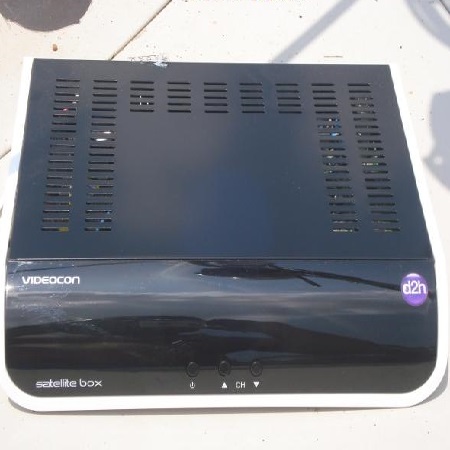
    At least one player yesterday announced that it had taken up the gauntlet: electronics major Videocon Industries. Director Anirudh Dhoot told Press Trust of India that his company is planning to set up a one million STB manufacturing plant by end-2014. Dhoot told PTI that the plant is likely to be set up in either Punjab or Madhya Pradesh. 


    The Videocon group also runs Videocon d2h – one of the fastest growing DTH players in India. 


    The digitisation of cable TV in phase III and phase IV towns is expected to require around 80 million STBs; of which 60 million will likely be rolled out this year itself, totting up to a business potential of an estimated  Rs 7,500 crore at factory prices. The second and third phases of digitisation are scheduled to be completed by end 2014, but everyone in the industry expects a delay of about three to six months. If Videocon manages to get its plant to start churning out STBs by end this year, it could meet some of that demand. 


    The Indian cable TV industry has deployed around 22 million STBs during the first and second phase of digitisation; even as DTH players have deployed around 45-50 million STBs collectively over the years since DTH launched in India.


    Most of these were imports. Videocon, on its part, upped the capacity at its existing STB plant from 700,000 per annum to one million during the festival season last year. Now it plans to set up a new plant. Other players who are involved in the manufacture of STBs domestically include: Noida-based Dixon Technologies and Kortek Electronics.

  • Adobe wins Emmy Award for video recommendations system

    Adobe wins Emmy Award for video recommendations system

    NEW DELHI: Adobe announced the National Academy of Television Arts and Sciences will recognise the company with a 2013 technology and engineering Emmy award for the role of its technology in personalised recommendations for video discovery.


    Adobe is receiving the award for developing the first recommendations system, which outlined the fundamental concepts of personalising information for consumers as they search for and discover video content. The company will be honored during a ceremony at the International Consumer Electronics Show.


     “Today’s consumers count on and expect their interactions with brands to be extremely relevant and personal regardless of the channel or device,” said Adobe Marketing Cloud and Primetime engineering vice president Pritham Shetty. “This Emmy recognises the key role Adobe technology played in helping pave the way for recommendation systems, which enable the personalisation of video content across the Web and mobile devices.”


    John B Hey conceived and deployed the first content and video recommendation system, later acquired by Adobe, in the mid-to-late 1980s. That work is credited with outlining the fundamental concepts of “collaborative filtering”, a pioneering technique that analyzes data on user behaviour and stated preferences  in order to predict how a consumer will react to video content. Today, personalised recommendation systems for video are prevalent and drive tens of millions of streams each day.


    Adobe has been honoured twice before by the National Academy of Television Arts and Sciences. Adobe Pass was presented with an Emmy Engineering Plaque in 2012, in recognition of outstanding engineering achievements for emerging technologies. In 2006, Adobe Flash Video was recognized with a Technical and Engineering Emmy Award for Streaming Media Architecture & Components.

  • Rovi announces guide solution for SD and HD digital terminal adapters in North America

    Rovi announces guide solution for SD and HD digital terminal adapters in North America

    MUMBAI:  Rovi Corporation ROVI +0.07%  , a global leader in entertainment discovery, today announced the launch of a guide solution for standard definition (SD) and high definition (HD) digital terminal adapters (DTAs) devices for North American cable operators. With the addition of this new guide, Rovi now offers discovery solutions that span across the array of cable platforms – from basic DTAs and advanced digital video recorders (DVRs) to second screen devices – that can help cable-TV service providers improve the user experience across their entire subscriber footprint.


    Frequently used for secondary televisions not connected to an advanced digital set-top and in homes that subscribe only to basic cable services, DTAs are basic cable boxes used to enable cable operators to upgrade their systems to an all-digital environment. In North America, cable companies are transitioning to all-digital in order to support bandwidth intensive services such as HD channels, multi-screen devices, and high speed data that are becoming increasingly popular with subscribers. DTAs provide cable operators with opportunities to more easily expand their service offerings, optimize the use of bandwidth, and enhance the experience for consumers by introducing a guidance experience on more set tops across their subscriber-base in North America.


    The capabilities included in the Rovi DTA Guide are the ability to find out what’s on TV, tune channels directly from the program grid, set parental controls, and set language options for the guide and audio. Rovi DTA Guide, anticipated to be broadly available to North American cable operators in early 2014, supports the growing market for DTA set-top boxes in this industry-wide transition to an all-digital environment. Rovi is currently working with many DTA providers, such as Cisco, Evolution Digital and Pace, to test and pre-port Rovi DTA guides.


    “For many cable TV subscribers, the guide has been designated as ‘only for the advanced DVR.’ Now that it is available on lower-end devices in addition to the premium set top box, cable TV subscribers including Basic and Expanded Basic households, can enjoy a better experience on every TV in their home,” said Michael Buchheim, senior vice president of product management for Rovi. “The guide experience is no longer limited to the premium digital subscribers, and cable operators will be able to use it to show the added value that they bring to their customers.”


    Rovi plans to demonstrate DTA Guides for industry executives in a private suite at Caesars Palace during the CES tradeshow in Las Vegas, January 7-10. Invited attendees can view Rovi services and technologies driving entertainment discovery and monetization, and learn first-hand how Rovi works with leading brands to unlock the full value of their entertainment offerings.

  • Gefen’s New Wireless for HDMI 60 GHz Extender

    Gefen’s New Wireless for HDMI 60 GHz Extender

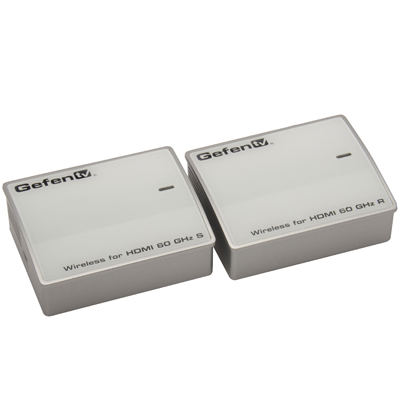
    MUMBAI:  Gefen’s new Wireless for HDMI 60 GHz is designed for any in-room transmission of high quality, 1080p full HD video up to 33 feet (10m). It delivers 3DTV, is plug and play and supports all audio formats including the new lossless High Bit Rate (HBR) 7.1 channel Dolby True-HD and DTS-HD Master Audio. The ability to pass through uncompressed video, lossless audio and 3DTV is ideal for cutting-edge, high performance commercial or residential installations.


    This extender uses the best technology currently available for an impeccable method of wireless extension that takes full advantage of the WirelessHD specification, which is based on the 60 GHz EHF (Extremely High Frequency) radio band. This high quality method of extension eliminates the need to run cables, making it a great solution for retrofits or any environment that wants to streamline cabling.


    The editors of Electronic House magazine gave a formal nod to this new extender from Gefen by awarding it a Product of the Year award for 2014. Endowed by a panel of distinguished industry leaders and the editors of Electronic House and CE Pro, Gefen joins an exclusive group of products deemed the most noteworthy. Announced on January 7, 2014 at the International CES in Las Vegas, Nevada, the GefenTV Wireless for HDMI 60 GHz was selected as best in the A/V cables and interconnects category. 


    Due to its in-room transmission and use of the uncluttered 60 GHz frequency band, this extender can perform seamlessly alongside other wireless devices in adjacent rooms with zero interference. It is very easy to install, requiring a connection of the video source to the sender and of the display or projector to the receiver.  Content is transported wirelessly at 4Gbps from source to display. This extender also features a small footprint and a compelling MSRP. Included is a risk-free warranty backed by Gefen’s reputation and well-regarded customer support team.

  • KCCL launches Cardless security solution from Conax including latest chip technology from ALi

    KCCL launches Cardless security solution from Conax including latest chip technology from ALi

    MUMBAI: Conax, a leading global provider of solutions for securing digital video content distribution on all networks and devices, today announced that Kerala Communicators Cable Ltd has entered a pilot project to deploy the new Conax Cardless solution launched in September at IBC Expo. KCCL is a consortium of over 3000 independent cable TV networks in Kerala, South India. The pilot project includes an upgrade of KCCL’s existing Conax Contego™ security back-end to include support for the new Conax Cardless secure CA client. The solution consists of Conax Cardless CA and uses Coship STBs with secure chipsets from ALi Corporation, seamlessly complementing the existing card-based STB population. Coship is one of the vendors in a portfolio of licensed STB partners for the Conax Cardless offering.


    KCCL operators represent 70% of cable TV services in the southwestern Indian state of Kerala – a region with a population of 33 million people. The enhanced Conax Contego security hub will empower KCCL network operators to easily operate both Smart Card and Cardless clients and differentiate between security requirements of diverse consumer groups and content. Now KCCL will be able to offer a cost efficient solution for targeting low ARPU segments and enabling rapid digitization – as well as reducing churn.


    Through a strategic partnership with ALi Corporation, the Conax solution will provide KCCL with a highly secure Cardless solution utilizing a unique combination of hardware (security) and software security; for a revolutionary level of protection not available in pure software solutions. The secure software is executed within a purpose-built hardware protected environment (Secure Execution Environment) within the ALi chipset, the main CPU in the set-top-box level of protection. KCCL has chosen to deploy Conax security evaluated set-top-boxes from Coship. To enable rapid development of the cardless set-top-boxes from Coship and other STB vendors, Conax and ALi are providing a reference design with an embedded Conax Cardless security core.


    -Mr. Nassir Hassan Anwar, Director, KCCL, “We are pleased  to further strengthen our relationship with security partner Conax based on the Conax brand value, long experience and reliability in India, 24/7 support, flexibility of operations and open policy for STB selection. Upgrading KCCL’s security back-end to include Conax Cardless, using Ali chipsets and Coship STBs, will allow member operators to easily create new product offerings using cards or cardless clients based on varied consumer groups. The Conax solution will continue to enable KCCL operators with a future-proof, secure roadmap.”


    The combined solution will enable KCCL to capture new business in the next phase of digitization in South India, while expanding their platform for additional business models and content offerings. The Conax Contego solution will also provide KCCL with easy upgrade for integrating future offerings such as VOD, multiscreen and over-the-top content viewing.

    -Tom Jahr, EVP Products & Partner, Conax, “Conax is very proud that KCCL, a forward-thinking consortium with a unique business model and vision for the future, has chosen to partner in the Conax Cardless pilot deployment.  Our aim is to enable KCCL to benefit from the best of both worlds, employing the cardless solution for low-end video content and smart card security for premium content. With the new solution, Conax is providing KCCL with the comprehensive and flexible tools for developing secure business models and capturing future growth.”


    -Tony Chang, General Manager of International Business Unit, ALi Corporation, “Only a few months after the launch of Conax Cardless security solution at IBC including the latest generation of ALi’s secure cable STB SoC, we are proud that KCCL has chosen Conax Contego supporting both Smart Card and Cardless clients with ALi’s secure chipsets. Using the reference design provided by ALi and Conax, we are pleased that Coship was able to rapidly deploy a cardless STB, thus together we are enabling KCCL to rapidly respond to different market needs. This also further confirms the technical leadership of ALi’s secure chipset solutions in both standard and high definition, as well as the partnership with Conax on delivering cost effective cardless solutions to the low APRU segment.”


    Technical recap:

     
    · Conax Cardless is fully supported as one of the client options for the Conax Contego™ security back-end, making it easy for KCCL to expand their security hub to include cardless content distribution


    · Utilizing a dedicated security core in the new chipset technology from ALi, Conax combines hardware security and software security to place a cardless security client within the ALi chipset integrated in the STBs from Coship. As the security of the solution relies on both software and hardware security, Conax Cardless has a significant market advantage over competitors’ software solutions.

  • Cable TV prediction: US to phase out STBs by 2015

    Cable TV prediction: US to phase out STBs by 2015

    MUMBAI: The year 2013 was a big year for the Indian cable TV industry. The country that was till now running on analogue signals opened up to digitization, even if it was in few regions. While we can celebrate this achievement as we enter into 2014 and also gear up for the phase III and phase IV of digitisation, there is some food for thought coming from the US cable industry for the Indian cable TV industry. 

    According to the CEO of TV Predictions, Inc Phillip Swann, the Americans will see phasing out of cable TV set top boxes (STBs) by 2015 and witness an upsurge in USB dongle or CableCard like products that can be connected to a TV and signals can be received from the operator’s facility. And all this to reduce the expenses incurred due to huge sums paid to the box manufacturers.

    The predictions suggest that consumers would anytime prefer the simplicity and convenience of cable dongle over the set top boxes. That apart, the cable TV operators will also appreciate the savings.

    When the Google Chromecast Net TV device was launched, it was surely a step ahead in the cable TV industry. The dongle is one of the best-selling electronic products at Amazon.com currently.
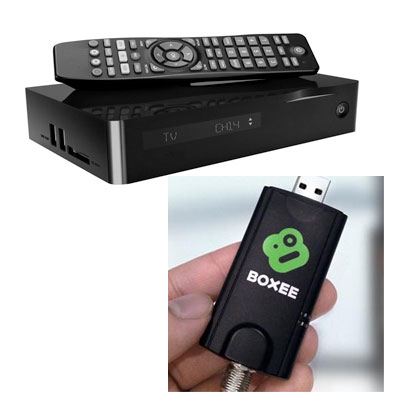
    Some of the dongles available in the market currently are Boxee’s Live TV dongle and TBS USB DVB-C TV Stick amongst others.

    The predictions make it pretty obvious that the Americans are moving at a faster pace in the sector. Another point to ponder over here is that while in India the cable TV operators are still struggling to seed the STBs, another country is in the process of its phase out and switch to a compact technology.

    It’s not that in India, technology hasn’t improved. The direct-to-home (DTH) operators by introducing new and better facilities like recording as per preference, authority to choose channels with their high-definition (HD) boxes has already become a threat to the Indian cable TV operators who have just started seeding the standard definition STB with no added feature.

    With the world shrinking, it would not take the consumers much time to get exposed to the advancement happening in the TV/Cable industry the world over. The Indian consumers would soon wish for a compatible technology like the dongle. The New Year seems to be an alarm for the cable operators to start preparing for the huge shift.

  • NationalChip’s STB solutions for Indian digitisation

    NationalChip’s STB solutions for Indian digitisation

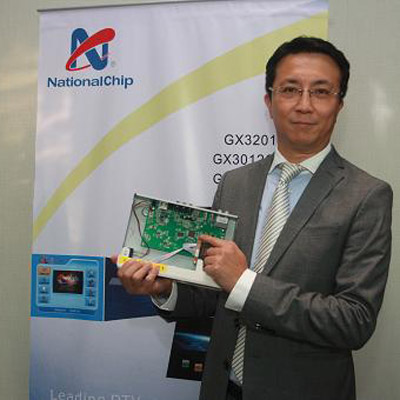
    MUMBAI: When it comes to technology, China is one of the leading Asian countries in the world that comes to mind. So it’s no surprise when leading China based IC developer and manufacturer of digital TV solutions, NationalChip, launched new set top box chips (system-on-chip) for the Indian market.

    The company is looking to increase its market share in India’s fast-growing set-top box (STB) chip manufacturing market. As part of its growth plans, NationalChip has launched new set-top box chips (system-on-chip) for the Indian market.

    The company’s new HD STB chip is based on GX3201 that delivers HD content at over 1000 MIPS CPU performance, 1080P HD decoding and security implementation. To cater to the mid to lower end subscribers that forms the major chunk of the Indian cable TV universe, the company has launched SD STB chip based on GX3001R or GX3012Q that offers high speed CPU for user experience as well as true colour display for enhanced picture quality.

    According to NationalChip, these chips can support advanced security implementation that are demanded by most prominent conditional access vendors (CAS) and MSOs.

    “India has nearly 6,000 MSOs whereas there are only 300 MSOs in China. There is a huge opportunity for us to tap into this large cable TV market and we have the resources, the name and the technological advancement to cater to it,” says NationalChip VP Patrick Dou.

    NationalChip’s HD solution also supports OTT application that will allow subscribers to access online video content through home network internet. Currently the chip allows the viewer to use Wi-Fi connectivity to access sites such as YouTube to experience HD videos on their larger screens.

    “We are telling the MSOs here that they can secure subscription revenue and at the same time provide value added services to their subscribers with our HD solution that supports OTT application,” adds Dou.

    After having been in the industry since its inception in 2001 the chip manufacturer is looking to expand into new markets. It has identified India as one of the key markets apart from southeast Asia and Europe, Middle East & Africa (EMEA). NationalChip, which began operations in India from 2011, is working with local Indian STB manufacturers by providing them with software support to develop STBs locally.

    The company claims that its chips have been officially authorised by many CAS companies including NDS (Now under Cisco), Sumavision, NSTV, ABV, Logic Eastern, Ensurity, E-CAS, and Only One CAS. With the new product offering, the STB chip manufacturer is looking to work with other major CAS vendors in the Indian market.

    “We have a leading product lineup, turnkey solutions, track record and technical capability to support sustainable development of the Indian market,” says an optimistic Dou. On the business front, Dou says that the company has shipped 1.5 million chips to the Indian market in the last two years.

    “This might not seem like a big number but for a company which has been in the market for just two years, it’s quite an achievement,” stresses Dou. Dou is looking to up NationalChip’s market share to 30-35 per cent in the next four years, up from the current five per cent share.

    However, that will be a tough task as the STB chips market is currently dominated by big players like French Italian MNC STMicroelectronics, America’s Broadcom, and Taiwan’s ALi Corporation.

    To achieve this growth, the company is expanding to other cities in the country. Currently having its office only in Delhi it soon has plans to branch out to Mumbai, Pune, Hyderabad, Bengaluru, Ahmadabad and Chennai. The company currently has Pune-headquartered Millennium Semiconductors as its only distributor in India.

    “We have been in this business for nearly two decades now and have the right know how to take NationalChip and its advanced technology to the leading MSOs in the country. We are sure that with its advanced security feature as well as great capability to showcase HD content all leading MSOs will be more than willing to join hands with NationalChip and us,” says Millennium Semiconductor Sr.GM Technical Operation Sunil Deshmukh.

    Being the first local Chinese company to develop digital TV IC solutions since 2001, NationalChip is also the first and only Chinese IC company to achieve big deployment to support digitalisation phases in India.

  • LinkedIn unveils trio of mobile apps

    LinkedIn unveils trio of mobile apps

    MUMBAI: LinkedIn on Wednesday showed three mobile apps that aim to boost productivity of mobile professionals and capture on-the-go audiences.

    The professional network unveiled a new app called LinkedIn Intro along with a redesigned Pulse and LinkedIn iPad app. LinkedIn Intro is a mobile email product that allows users to have people’s LinkedIn account connected with popular email accounts so that they can immediately identify people.

    LinkedIn Intro works on iPhones and is available for download at Intro.LinkedIn.com and will hit Apple’s App store in coming months.

    “This adoption of smartphones over the last decade or so has really changed the way we think about products,” said LinkedIn senior VP of products and user experience Deep Nishar.

    LinkedIn is experiencing explosive growth in users coming to its services from mobile devices, much like Facebook, Google and Twitter. About 38 per cent of its members visit from mobile.

    LinkedIn senior VP of products and user experience Deep Nishar

    For recruiting professionals, often out at job fairs and networking events, mobile apps that replace desktop functions are important tools.

    LinkedIn acquired Pulse in April for $ 90 million in stock and cash. Pulse’s popular news reader, started by two students while at Stanford University, had quickly become a sensation for its slick interface on touch screens ideal for flicking through news feeds. Under its relaunch, LinkedIn meshed many of its desktop features into Pulse, such as integration of its Influencer blogs.

    LinkedIn’s redesigned Pulse app will be available for download on iOS and Android for both smartphones and tablets in the coming week.

    Last week, LinkedIn unveiled ‘Recruiter Mobile’ and ‘Mobile Work With Us’, two popular desktop services adapted into apps for on-the-go use.

    ‘Recruiter Mobile’ will enable recruiting professionals to search for candidates, allowing them to send InMails, call or text. Also, recruiters can take notes on candidates and forward prospects to hiring managers.

    Recruiter is LinkedIn’s primary subscription service and is responsible for the largest portion of the company’s revenue. The product is used by more than 20,000 companies.

    LinkedIn’s new ‘Mobile Work With Us’ gives employers the ability to show job openings on the profiles of employees at their company. These job advertisements will appear at the top of member profiles.

    LinkedIn acquired CardMunch in January 2011 for an undisclosed sum. CardMunch’s mobile app allows people to take photos of business cards and convert them into their mobile contacts.

  • Exset BV promotes PK Acharya; makes him the India director

    Exset BV promotes PK Acharya; makes him the India director

    MUMBAI: Exset India has got a new director. Exset BV, the Netherlands based broadcast solutions company, today announced that it has promoted its regional director- South Asia, PK Acharya to director Exset, India. Based in New Delhi, Acharya in his new role will be responsible for Exset’s business activities in India and will be reporting to Exset BV CEO in Netherlands.

    “The Indian market is very crucial for the Exset’s Global market share. Acharya with his vast experience in the Indian broadcasting market brings on board his understanding of India’s digital TV market. Along with his team he is expected to establish Exset’s business foot-print in India,” said Exset BV CEO Alex Borland.

    A graduate in Economics and MBA in marketing, Acharya has over 25 years’ experience in the communication and Cable TV industry. His network includes long standing personal and professional relationships with policy makers, all India distribution channel and the last mile owners in the Cable TV and internet data space.

    In the past, Acharya has been associated with companies like NG Technologies (NIG), Midas Communication Technologies, Sky Merchants, Hotwire, Genus Power Infrastructure, DEN Networks and Tripleplay Telecom. 

    “India holds great opportunity for me. Exset is a dynamically thinking company with unique solutions in Digital Monetisation System (DMS) very applicable to the Indian broadcast industry which will enable the operators to increase their ARPU. Exset has a great product in DMS and a great support team, which we will expand over the next few months. I look forward to contributing to the industry with whom I have worked over the past 25 years,” said Acharya.