Category: Technology

  • Vh1 Supersonic and Hungama.com announce strategic partnership

    Vh1 Supersonic and Hungama.com announce strategic partnership

    MUMBAI: Hungama.com, one of India’s largest digital entertainment portals, has announced a strategic partnership with Vh1 Supersonic. The alliance will launch exclusive content from both the brands across Hungama’s digital properties over the first quarter of 2015.


    As a result of the partnership, Hungama.com, which has the largest catalogue of Bollywood and regional content, will be able to build a new user base and also offer international music with fresh and youth-centric content.


    Beginning the partnership with the Vh1 Supersonic Goa Fest in December 2014, the alliance will also entail 30 club events and 30 college events till March 2015. Hungama.com will play the role of the digital partner for Vh1 Supersonic Goa 2014 and will conduct on-ground and social media contests. Gratification, in the form of pass upgrades and merchandize, etc. will be given out to the winners.


    A supersonic radio station, featuring EDM music’s best hits and most favourite artists, will also be established across Hungama.com’s digital properties. Over the past year alone, EDM as a genre has grown immensely with significant performances, music and events. Within the first quarter of 2015, this joint venture will witness the brands providing curated content for EDM lovers across digital platforms.


    Integrated Network Solution senior vice president and business head Jaideep Singh said, “Live Viacom18 has evolved in the last two years as a creator of brand engagement for consumers across platforms. While we strive to create memorable on-ground experiences for the audience, it is imperative for us to reach to digital audiences as well. The Indian Dance Music scene is constantly evolving creating demand among today youth, who spend most of their time on the internet. Addressing the need of today’s youth, we look forward to partner with Hungama to cater to the ever rising demand for Dance Music.”


    Commenting on the partnership, Hungama.com CEO Siddhartha Roy said, “As the leading platform for digital entertainment, at Hungama we constantly strive to look for content that appeals to the dynamic listening choice of our users, especially the youth. EDM is one of the most popular music genres at present. We are glad to partner with Supersonic, and bring some of the best tracks from the genre to our subscribers.”

  • Ranbir Kapoor’s ‘Roy’ music exclusively on Hungama.com

    Ranbir Kapoor’s ‘Roy’ music exclusively on Hungama.com

    MUMBAI: Hungama.com will be launching the music and videos of Ranbir Kapoor’s upcoming movie Roy, exclusively for all its users in India and abroad, who will then be able to access the music through Hungama’s web, WAP or mobile applications.

    Roy’s music and videos will be available on Hungama’s platforms across devices. On the Hungama mobile applications, users will see a splash screen on the launch of the album and receive push notifications. On Hungama’s WAP platform, users will be given options to download individual singles from the movie along with an exclusive showreel of videos from Roy.


    Produced by T-Series, the music of the movie has been given by Pritam and Ankit Tiwari.


    Commenting on the release, Hungama.com CEO Siddhartha Roy said, “Roy is one of the most anticipated movies of 2015, and it gives us great pleasure to be the first to bring their music to our consumers. With our long-standing partnership with T-Series, we will continue to introduce several such launches in 2015 for our users.”


    In order to make it simpler and easier for users to find songs from the upcoming movie, Hungama has categorised the film’s music under various sections including Editor Pick’s, New Releases, etc. The music will also be added to the playlists for the stars like Ranbir Kapoor, Jacqueline Fernandez and Arijit Singh. The music from Roy will also feature in artist radio sections across Hungama’s platforms. 


    Given the initial buzz around the song ‘Sooraj Dooba Hain Yaaron’ sung by Arijit Singh, Hungama will also be adding to song to the categories – ‘Top Song’ and ‘Bollywood Top 40’ playlists. 


    As a part of the promotions of Roy’s music in the digital space, Hungama will be communicating to its users with email campaigns as well as connecting with its highly engaged social media community of fans such as on Facebook and Twitter.


  • Hungama and Aircel join hands to launch ‘Hungama-Pro’

    Hungama and Aircel join hands to launch ‘Hungama-Pro’

    MUMBAI: Aircel has partnered with Hungama to offer the premium music app called ‘Hungama-Pro’, a service that would enable customers to listen to music and view full length HD quality music videos for free for the first two months.

    Hungama Pro, serves as a-one-stop destination for all music lovers, giving Aircel customers exclusive and free access to one of the biggest music libraries offering Indian, international and regional music.

    In its commitment to provide ground-breaking products and services to its customers, this tie-up makes Aircel the first mobile service provider to present such an exclusive service to its customers through Hungama. The partnership is set to transform the music-listening and content viewing experience on a mobile handset by many folds.

    The Hungama app also has a multi-lingual transliteration feature which makes it the first in its category to be available in five languages viz. English, Hindi, Tamil, Telugu and Punjabi, allowing users to interact with the app in their preferred language. The Hungama Pro is the upgraded subscription of the ad-supported Hungama app and is a paid mobile subscription, which will be available free to all Aircel customers with unmatched HD quality music videos and can also be accessed offline without any internet charges. It is also an ad-free app, which further makes for a hassle-free experience.

    Aircel chief marketing officer Anupam Vasudev said, “At Aircel, all our efforts revolve around what our customers need. We understand that music connects with people from across demographics, and especially with the youth that has been increasingly using smartphones to access video based entertainment content. Hungama-Pro offers all that our customers need – a hassle-free music experience with high-quality content from varied genres and languages, and we’re happy to offer this package exclusively to our subscribers. Hungama and Aircel share a common promise of going beyond limits to benefit customers, and we’re glad to tie-up with them for this truly user-friendly product.”

    The mobile app is available for download from the Google Play Store and the iOS App Store, to which Aircel customers receive free subscription for the first two months. The service will later be made available to the users at a price of Rs 120 per month.

    Hungama.com CEO Siddhartha Roy said, “Both Aircel and Hungama are strong brands in their respective segments, and this partnership aims to create a seamless experience between Hungama’s large catalogue of music videos and songs on Aircel’s robust data network. I am sure this will not only enhance the entertainment quotient for the end-users but also help both brands create a larger community of engaged users. The partnership between Aircel and Hungama aims to offer users access to the music they love on one of India’s best data networks. I am sure consumers will enjoy the seamless experience of our large catalogue of music videos and songs on Aircel’s robust data network.”


  • Saavn and Twitter create tweet-powered internet radio station

    Saavn and Twitter create tweet-powered internet radio station

    NEW DELHI: Digital streaming service Saavn has launched @SaavnRadio in collaboration with Twitter India.

     
    The new station, available for streaming globally on Saavn Radio, is the first in a series of upcoming social media and sharing integrations for Saavn. The partnership reflects Twitter’s continued efforts to create opportunities for artists on Twitter to be discovered, as well as to surface amazing music content that fans in India and around the world can enjoy.

     
    The @SaavnRadio lineup will be curated via interactions between Saavn users and Twitter, and will refresh every few minutes.

     
    To directly influence the station’s programming, users worldwide can tweet @SaavnRadio to request a song from Saavn’s robust catalog of Indian music. In India, users can request tracks from English-language artists, as well. The station will also update based on Saavn users’ shared listening activity on Twitter. Explicit requests will be prioritized over shared songs in each refresh interval.

     
    Saavn co-founder and CEO Rishi Malhotra said, “Social is more than a feature, it’s part of the DNA of streaming music, so this is an extremely powerful partnership for us. Our listeners regularly tweet their Saavn activity and playlists. We worked with the great team at Twitter to develop the user-generated radio station, completely driven by real time activity across the globe.  We’ve always pushed the limits to deliver a great product experience to millions of users daily, so we’re truly honored to be the company that’s delivering this experience with Twitter.”

     
    The technical integration will include a Twitter handle to confirm user requests.  Users will also receive a @mention alert when their requests are played.

     
    “Twitter always has and will continue to encourage innovation in the way the world experiences music. Saavn is the perfect company to work with as we look to contribute to music accessibility and music discovery for our international users, particularly in the Asian market, in an age where social sharing has no borders,” said Twitter business development India and south east Asia director Arvinder Gujral.


  • ISE 2016 to become a four day exhibition

    ISE 2016 to become a four day exhibition

    MUMBAI: Integrated Systems Events has announced today that its 2016 event will take place over four consecutive days at the RAI exhibition centre in Amsterdam – an increase of one day on previous exhibitions held at the venue.


    This decision, stated ISE Managing Director Mike Blackman, was largely due to the exhibition’s “rapid rise in size and prominence.”


    ISE is widely recognised as the world’s most popular event for professional AV and electronic systems integration. With 950+ exhibitors already booked into ISE 2015, attendance is confidently expected to rise above the 51,000 people that came to the 2014 edition.


    “This move has largely been driven by the demands of our exhibitors and attendees,” Blackman commented. “Quite simply, the extremely high attendance at the show, particularly on the first two days, saw increasing requests from exhibitors to have more time to spend with attendees.


    “For attendees, we need to ensure that the show remains comfortable to attend,” he explained. “This announcement allows us to meet both objectives.”


    Blackman said that the 2016 event will continue to evolve to deliver an increasing mix of pre-show and on-site events to compliment the vibrant exhibition halls. “There will a lot of exciting developments,” he said, “The extra day will allow ISE to become an even more rewarding experience for everyone at the show.”


    At ISE 2015 a wide range of events will be taking place before and during the show. Pre show on the 9 February visitors can attend the third annual Smart Building Conference, which will explore the continued evolution of smart building technology in the commercial and residential sectors.


    On the same day the keynote address will be presented by renowned futurist Lars Thomsen. Thomsen specialises in advising businesses strategically on anticipated 10 year shifts in society and markets. The keynote will explore: 520 Weeks into The Future: Trends and Tipping Points in the Electronic Systems Industry.


    During the show, The Capital Summit conference on 11 February will bring together AV/IT industry entrepreneurs seeking investment capital with financial and business professionals from the worlds of investment, mergers and acquisition.


    The popular ISE Theatres will return to the show floor with the addition of the Unified Communications Theatre. The Theatres will complement the wide range of training courses being hosted by ISE co-owners InfoComm and CEDIA.


    ISE 2015 will also see a host of first time exhibitors. These include: Microsoft; Intel; Dolby Atmos; Ricoh; Outline; AEQ; Oblong Industries Siedle, Outline, Ledcom and Fibar Group amongst others.


  • Hungama.com’s ‘Zindagi Ka Sound Track’ campaign creates a digital wave

    Hungama.com’s ‘Zindagi Ka Sound Track’ campaign creates a digital wave

    MUMBAI: One of India’s on-demand digital entertainment storefront, Hungama.com recently carried out a brand campaign which features a voiceover by Bollywood actor Hrithik Roshan. The brand campaign titled ‘Zindagi Ka Sound Track’, has lead the Hungama.com app to the number one position across Android and iOS app stores, says the platform.


    Speaking on the success of the brand campaign, Hungama.com CEO Siddhartha Roy said, “The digital campaign to amplify Hungama.com’s social media outreach was a resounding success and has helped fortify the brand’s presence across platforms. The campaign has helped create an opportunity for us to interact with our audience and strengthen our relationship with them. With this campaign’s integral message, we promise to continue to engage our audience across digital platforms with innovative and exclusive content.”


    The 360 degree campaign was conceptualised and executed by Scarecrow Communications. The campaign took off with a TVC launch, which was amplified across OOH, digital, radio and in-cinema advertising. The agency simultaneously carried out a social media contest with the hashtag #HungamaMusic. Along with the social media run, a twitter contest was also carried out wherein they called in all the twitteratis to complete the sentence ‘Music #Zindagika’. With over 30k tweets, the contest saw celebrity participation too.


    The outreach of the campaign across facebook had an average reach per campaign-related post which was over one lakh and a total 40 lakh people approximately influenced. “With interactions going over 2.5 lakh across all social pages and over one million views on YouTube within 30 days of the launch of the campaign, it has got an overwhelming digital response,” the release said.  

  • JustEat.in launches new Android app, offers hAPPy hour to its customers

    JustEat.in launches new Android app, offers hAPPy hour to its customers

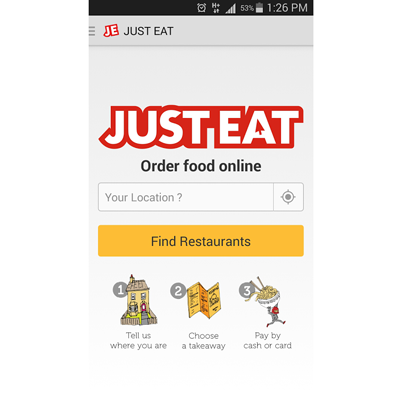
    NEW DELHI: JustEat.in, India’s leading online food ordering portals, has introduced a sexy new user interface for its stellar Android app that beautifies the food ordering process. Ordering yummy grub is now just a couple of taps away. To make things all the more exciting, JUST EAT is also offering a ‘hAPPy hour’ to its customers from 24th November 2014. Get attractive deals and discounts every week by placing orders between 4 pm and 5 pm on the new app between Monday to Thursday.

    With the new app’s seamless experience it is now easier to order food with a few taps than call a restaurant.  The hAPPy hour on the new Android app now lets customers enjoy weekly offers like a flat 50% discount or a Rs. 160 off on every order of Rs. 300 among others.

    Ritesh Dwivedy, CEO JustEat.in stated, “At JustEat.in, we are committed to developing superior technology to enhance user experience and constantly bring in path-breaking innovations in the food ordering industry. With the new app, we aim to further reinforce our market leadership position. The hAPPy hour acts as an invitation for more consumers to come on board and discover the benefits of ordering food conveniently through their mobile device.”        

    The Android app also allows users to view their order history with a tap. It features an enhanced scroll experience through the menu pages of various restaurants. An exciting addition is the fact that one can search for specific items on the menu instead of scrolling through each page individually. Searching for ordering options has also become easier as the cuisine filter enlists the various restaurants serving that cuisine. Overall, the new app ensures that less time is spent on searching for and ordering the perfect meal and more time on relishing it!

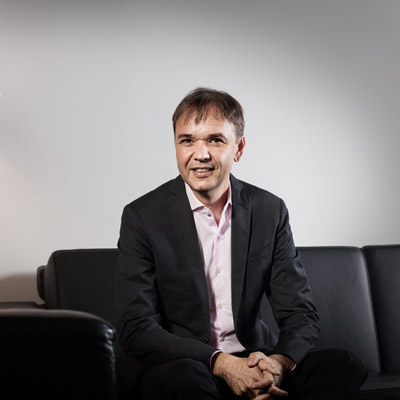
  • “Traditional STBs can no longer handle complex requirements of innovative operators”: Matthias Greve

    “Traditional STBs can no longer handle complex requirements of innovative operators”: Matthias Greve


    IPTV is moving from a pure linear product to a complete TV experience with live TV, on demand services and third party content. This new world of connecting the TV to the Internet means both, opportunities and challenges for operators, developers and integrators.


    ABOX42, is one of the leading provider of hybrid, IPTV and OTT DVB smart set top boxes (STBs), with five years expertise and knowledge in end-user mass-market products and a deployment of over 120 OTT applications. ABOX42 developed a new generation of smart STBs for the global market. The ABOX42 smart STB platform is the ideal solution for any IPTV and OTT content providers, cable-operators and ISPs, who are aiming to provide an own STB for its services to its customers. The platform was designed for fast moving OTT providers, cable operators, IPTV providers and internet service companies. With its powerful smart SDK, the Smart SaaS Services and additional Smart Solutions, the ABOX42 platform offers its customers a short project cycle, short lead times in production and includes lifecycle management for ongoing software maintenance and service updates.


    ABOX42 is taking a new approach with the ABOX42 Smart Platform and its advanced customised IPTV, OTT and Hybrid Smart STBs to solve the most important key challenges by providing the solid hardware foundation and the software features for a unique TV proposition with least cost and low development effort. In an interview, ABOX42 founder and CEO Matthias Greve answers essential questions about the rapidly changing market.


    Excerpts:


    What role do STBs play now and in future, considering Smart TVs and cloud based services?


    Modern STBs like the ABOX42 M-series are designed for local TV applications as well as for emerging cloud based TV services. Since on one hand the operators need to control the user experience and on the other hand need to be ahead of competition with the introduction of new TV features, it will be more than ever mandatory to have a modern, flexible and scalable Set Top Box platform for the first screen TV experience of paying end-users. Smart TVs offer a certain range of OTT applications, but will not replace the main Set Top Box device in end-users home, which provide a unified, rich TV experience on the first and second screen.


    Do you see a “SetTopBox-less” future for operators?


    There is currently some talk from operators about virtual STBs as SmartTV apps or STBs as CI+ modules. Since there is today no standard for the virtual STB applications and the vast majority of the installed flat screen TV in the household do not support these new applications, the operator still needs to focus on its core STB. This is the device, which can be shipped to all subscribers regardless of the type or age of the TV set.


    What view should an operator take on the virtual STB?


    The best way to view these issues is to treat the virtual STB like the operator would treat an App on iPad, XBOX or PlayStation. It is an add-on but not the core of the operators TV solution.


    What are the challenges of virtual STBs as apps?


    With the virtual STB apps within SmartTV, the operator does not have the same freedom on the user interface side. Also the quality of service cannot be guaranteed over the live time of the app. It is out of the operators´ control, how for example future software updates of the SmartTV manufacture might affect the compatibility and proper functioning of the operators TV service.


    Also Virtual STB apps are not free of charge and need costly maintenance. If you support different manufactures and different version of TV sets it quickly sums up to 5 to 10 new platforms which have to be supported each year.


    What is the major shift in the STB market?


    Traditional closed STB platforms are not any longer able to handle the complex requirements of innovative operators. The market will move from old integrated, proprietary STB products to modern SmartSTB platforms where the focus has moved to the software layer. This is a similar shift like we experienced in the last few years with the move from traditional feature phones to modern Smart phones. The same trend we see in the TV middleware segment, where operators want to move from closed propriety systems to open solutions based on modern internet technologies and open standards.


    What are the specific operator challenges solely advanced STBs are able to match?


    The biggest challenge for operators today is to understand what the difference of new IPTV & OTT solutions is and how the operator can in an effective way get to the target solution in least time.


    Basically almost all Cable and Satellite Pay TV operators want to deliver new services like network PVR, VOD and want to add OTT delivery of specific channels to free up bandwidth in their traditional DVB networks. IPTV operators who started several years ago need to upgrade their user experiences from inflexible first and second-generation STB platforms to latest (third) generation. This new generation STB platforms allow the fast development of modern user interfaces, compelling services and the integration of third party services based on HTML5. In addition these new Smart STB platforms are upgradable and much more future proof than legacy STBs.


    Do SmartSTBs already match operators´ current and future demands?


    SmartSTBs have arrived and delivery of HD live TV channels over the internet with OTT technologies is a market proven technology deployed in the mass market already. A new concept of OTT DVB, allows not only live TV signal delivery over the internet, but to also include multiple audio tracks, classical TeleText, DVB Subtitle as well as modern HbbTV application via HLS streaming.


    Will future trends in the operator area be in favour of STBs?


    There are two major trends increasing the demand for STBs. Operators who already run an older generation IPTV service plan to upgrade to a latest generation IPTV & OTT solution which is modern and scalable, which can be integrated seamlessly and offers new compelling features (additional OTT services, HbbTV, nPVR, Smart TV applications) and multi-screen capabilities.


    Operators without an existing installation who want to move into the TV space with a modern IPTV (or even more often OTT) solution which is easy to role out, does not require long integration work and offers a great first screen experience combined with multi-screen capabilities.


    What are the unique possibilities given with OTT solutions and STBs?


    OTT is a great opportunity for new players to enter the TV market, or for existing operators and internet service providers to reach new customers and add new features. ABOX42 has been an innovator in the advanced Set Top Box platform field for quite a while and we recognise that our solution is picked by both traditional operators who want to move to a future proof, modern and complete solution, as well we are serving new OTT operators who are entering the TV field with compelling new product offerings and disruptive business models. We see a major increase of our business and getting more and more request from traditional operators.


    What distinguishes the new STB generation from the preceding models?


    The new SmartSTBs will be able to handle many different standards side by side, such as streaming protocols, DRM and CAS systems. This new SmartSTB generation is HTML5 browser based and much more easier for development. A new focus will become the management of the software lifecycle and cloud services to manage the SmartSTB during the entire lifecycle, like we are all used nowadays with e.g. the iPhone.


    What are characteristic innovations in the area of OTT and IPTV technologies?


    ABOX42 as innovator in the IPTV & OTT segment is already delivering products, which offer all the latest innovations. This includes support of all major DVB features in both IPTV & OTT, supporting HbbTV services, other OTT services and third party applications with different streaming formats, different DRM systems side by side on the platform. More efficient streaming with H.265 will for sure boost the video quality especially for OTT and will allow more efficient content delivery for operators.


    Do SmartSTBs and especially ABOX42 solutions meet the customers´ demands?


    ABOX42 is supporting all demanded new features with its Smart SDK and Smart mobile Toolkit for the advanced ABOX42 STB platform. We see this as one of our competitive advantages to provide a broad compatibility to OTT services, streaming formats, DRM systems as well as the support of various TV Middleware solutions.

    This way a network operator can flexibly and easily upgrade all existing customers (digital and analog TV watchers) with new OTT and interactive services such as Catch-Up TV, Video on Demand and many more. ABOX42 offers short project cycles, short production lead times and includes lifecycle management, ongoing software maintenance and service updates.


    What are currently the typical demands of ABOX42´s customers?


    Depending on legal requirements in a certain country, cloud based recording (network PVR & network timeshift) is the most compelling feature. But also HbbTV offers a great set of additional features and on demand content which is supported by more and more countries / operators. Last but not least ‘Multi-Screen’ applications are getting more and more popular since it is not only about ‘on demand’, but about ‘any place, any time’ nowadays. In general it is all about high quality content and an intuitive user interface. This is what end-users like on the new TV experience.


    What are the prospects for a retail market as a channel for multiple services and devices?


    We believe the operators including new OTT operators are in the driver’s seat to deploy compelling multi screen solutions to their customers. Most markets are dominated by pay TV offerings by operators. Looking into the hardware devices, already today lots of retail devices (iOS or Android based) can be enabled as a second screen device, where the operator controls the application for these devices (for OTT services). For the main screen (e.g. IPTV), the operator will control and provide as well the hardware device (STB).
  • Ali Corporation aims to sell 20 million chipsets by December 2016

    Ali Corporation aims to sell 20 million chipsets by December 2016

    KOLKATA: Taiwan-headquartered Ali Corporation, a set top box (STB) solution provider, is looking at an order size of between 15 to 20 million chipsets by the end of December 2016.


    “India is a big market and we are looking at it keenly. Compared to other countries, it is different because branding which is important here. Our focus is to build around the brand and the technology in India. In phase III and IV of digitisation, we are eyeing between 15 million and 20 million chipsets,” Ali Corporation country manager Shivani Pratap Singh exclusively told indiantelevision.com.


    Singh was extremely gung-ho about the potential in India as the country’s television ecosystem digitises fully by December 2016.


    With India’s transition from analogue to digital service, many consumers need new, full-featured set-top boxes (STBs) for home viewing. This represents a major opportunity for regional operators and STB manufacturers, as only a portion of the roughly 100 million STBs in consumers’ homes have already been digitised according to published government figures.


    Adding to the STB growth is the trend of consumers placing more than one TV in their homes, as well upgrading from standard definition to high definition.


    The government had previously set a target of digitising the cable TV services in the entire country by December 2014. However Information and Broadcasting Ministry recently issued a notification as per which the deadline for the areas which came in phase III was extended from 30 September 2014 to 31 December 2015 and phase IV for December 2016 as was also first broken by indiantelevision.com.


    “By December 2014, we were looking at 5 million chipsets. Due to the delay in digitisation, the clients also delayed it,” he said. If an order of 2 lakh had been placed, clients have picked up nearly 10000 to 20000 chipsets and left the remaining for later.


    Demand had grown down due to digitisation delay but Singh says that it is always balanced by the international market demand.


    The company supplies chipsets to most of the big players in the industry.


    “We at Ali, have our own system in place; our chip sets are reliable, cost effective and when the technology is upgraded, we keep on updating ourselves,” concluded Singh.

  • Digitisation to offer great opportunity for advanced services, says CDAC

    Digitisation to offer great opportunity for advanced services, says CDAC


    MUMBAI: With the new government focusing on connecting every village with broadband and digitisation of analog cable TV, Centre for Development and Advanced Computing (CDAC) has come up with a number of opportunities for advanced interactive services.

    Set up in 1988, CDAC already provides a number of products and services catering to a large market ranging from health care systems, datawarehousing, multimedia and multilingual technologies, networking solutions to technical consultancy, training and e-governance solutions.

    The company set up a Graphics and Intelligence based Script Technology (GIST) group soon after its origin which built the Indian Language Computing Solutions. Porting of Indian languages onto the video medium with subtitles, this technology is being used by tickers and banners on TV stations, news channels, cable operators, etc.

    Now with the onset of digitisation in India, CDAC-GIST is coming up with new services to broaden the reach of channels by supplementing content in local languages.

    Speaking at Broadcast India conference, CDAC- GIST technical officer Shubhanshu Gupta said, “Digitisation has offered us a great opportunity for advanced services that will offer the viewers day to day information as and when it comes. Our main aim is to enrich the experience of Indian viewers in the grassroot level.”

     “Multilingual subtitle and caption will address the viewers with diverse linguistic background. We plan to transfer television into a multi-lingual university and provide a solution to educate the country in the most cost-effective way. The device will do sub-titling for national as well as some private channels.” he added.

    The company is also planning to facilitate distance learning, public information and alerts, health education on television.

    With a lot of education content already online on various platforms available for e-learning, CDAC will provide a way to re-use the content and disseminate it through television.

    “Our technology will provide the already available content on television through set top boxes. It would also include test whose results could be given to UGC for evaluation and analysis,” revealed Gupta.

    “We also propose getting information regarding the diseases, new medicine, and latest news in the health sector on television with the press of a button to improve the quality of healthcare in the country and keep the citizens more informed,” he added.

    Recently, Doordarshan launched a new channel, DD Kisan, dedicated to farmers, as an extension to their daily programme, Krishi Darshan. It provides full time updates on the latest news on farming. Gupta reckoned that CDAC-GIST will enable interactivity on the programmes.

    “Our technology will give the farmer all relevant information like local market prices, weather information etc in their local languages to help enhance the reach and to incentivize them to use the channel more,” he opined.
    “We are also doing pilot of our Language Independent Programme Subtitles (LIPS) on air digital at four Doordarshan metro DD centres to proliferate Indian language through broadcast media,” he adds.

    LIPS Live technology has made it possible to subtitle movies and programs in Indian languages. Several products like MOVE CG 2001 simplify the titling of video programs with high resolution aesthetic fonts.  

    Another CDAC product MultiPrompter is a solution for teleprompting in Indian languages for TV channels that are mushrooming in the Indian subcontinent.

    CDAC also helped government in launching the bharat domain name in devanagri script covering several languages including Hindi, Bodo, Dogri, Mailthali, Marathi, Konkani, Nepali and Sindhi.

    If a person from Maharashtra opens the website, the home page will automatically open in Marathi while if a person from Tamil Nadu tries, it will open in Tamil, he reveals.

    C-DAC has also helped in establishing standards such as ISCII, Unicode, ISFOC, etc. for Indian language applications on computers and electronic media. It is also working for standardization of W3C (Languages on Web), Internationalized Domain names, Governance, linguistics formats, storage, input, display fonts, etc.

    C-DAC was set up to built Supercomputers in context of denial of import of Supercomputers by USA. Since then C-DAC has been undertaking building of multiple generations of Supercomputer starting from PARAM with 1 GF in 1988.

    It set up National Centre for Software Technology (NCST) in 1985 that initiated work in Indian Language Computing around the same period.

    Similarly C-DAC started its education & training activities in 1994 as a spin-off with the passage of time and it grew to large efforts to meet the growing needs of Indian Industry for finishing schools.