Category: Technology

  • Ad it your way as creative variety beats Star Power in new Appsflyer report

    Ad it your way as creative variety beats Star Power in new Appsflyer report

    MUMBAI: Turns out, your next great ad might need less movie magic and more messy tutorials. The 2025 edition of Appsflyer’s State of Creative Optimization report is here, and it’s throwing a curveball at every coin-flipping, celeb-splurging marketer in mobile advertising. Based on a whopping 1.1 million video creatives across 1,300 apps, the report reveals a shifting tide in what actually drives engagement, retention, and ROI and it’s not always the obvious crowd-pullers.

    While top-performing creatives still rake in serious budgets (53 per cent of gaming ad spend comes from just 2 per cent of creatives), the tide is turning. In Non-Gaming, that figure drops to 43 per cent, signalling a broader pivot toward creative diversity and fatigue-fighting variety. Non-Gaming apps, especially, are turning up the volume clocking an 18 per cent year-on-year surge in creative output and even outpacing Gaming’s growth by 80 per cent.

    “We’re seeing a clear shift in creative strategy, with marketers not just scaling top performers, but scaling variety,” said Appsflyer director of product gaming Adam Smart. “In Gaming, high spenders still dominate production, with apps spending 7M plus dollars per quarter to generate nearly 3x more creatives than those in the $4-$7M range. But in Non-Gaming, growth is more evenly distributed across tiers, suggesting creative scale is no longer just for the biggest players but that it’s becoming a strategic imperative for everyone.”

    But perhaps the biggest shocker? Celebrity ads aren’t always the crown jewel. While movie stars bag over 80 per cent of celebrity ad spend, it’s TV stars and music artists who lead on performance metrics. In Gaming, TV personalities delivered 2x the IPM (Installs per 1,000 Impressions) of movie stars, while music-led ads generated 50 per cent higher Day 7 user retention, all on a fraction of the budget.

    The data also drops some sharp truths about formats. In both Finance and Social Media apps, UGC tutorials and review-style content outperformed testimonials on every key metric. Finance-focused tutorial ads saw 37 per cent higher retention, while Social tutorials brought in 45 per cent more installs and 17 per cent better retention yet both formats continue to receive less spend.

    Emotion-driven narratives are also punching above their budget. “Failure-to-Success” arcs in Hypercasual games produced a whopping 78 per cent higher IPM, while receiving 40 per cent less spend than standard “Success” stories. The same applies to Challenge and Competition narratives in casual and mid-core games high retention, low attention from marketers.

    For Dating apps, sincerity wins. “Serious relationship” creatives outperform “casual” ones by 15 per cent, despite fewer appearances. Meanwhile, GenAI apps found success in flashy transformations (think before-and-after edits), but those fizzled fast, delivering strong IPM but the lowest Day 7 retention. UGC testimonials in this space delivered 36 per cent better retention, proving that substance still trumps sizzle.

    And then there’s storytelling in Social, a hidden hero. Despite making up just 6 per cent of total ad spend, ads with narrative arcs and emotional hooks achieved the highest Day 7 retention at 8.4 per cent. Social proof-based ads followed closely, especially when aligned with trending content.

    AppsFlyer’s global dataset, covering 2.4 billion dollars in ad spend between Q1 2024 and Q1 2025, makes one thing clear: Creative impact isn’t just about who shouts loudest, it’s about who resonates longest.

    So as marketers look to optimise for attention, it may be time to ditch the glitz and embrace the grit because in the age of creative overload, real, relatable, and resonant might just be the most powerful ad currency of all.
     

  • Cyber switch as Tenable taps ex-Google exec Eric Doerr for product power play

    Cyber switch as Tenable taps ex-Google exec Eric Doerr for product power play

    MUMBAI: Tenable just made a heavyweight addition to its cybersecurity war room and it’s a Doerr-opener. The exposure management company has roped in Eric Doerr as its new chief product officer, betting big on his two decades-plus of experience at Microsoft and, most recently, Google Cloud.

    The move comes at a strategic inflection point for Tenable, which is gearing up to roll out a major expansion of its flagship Tenable One platform. Doerr will now be in charge of global product strategy and innovation, as the company sharpens its focus on unified visibility, prioritisation, and remediation the trifecta of modern cybersecurity.

    “Tenable has a clear and compelling vision for the future of cybersecurity, one that unifies visibility, prioritisation and remediation across the modern attack surface,” said Tenable co-CEO, Steve Vintz. “Eric’s deep expertise in cloud-native security, threat intelligence, and large-scale product innovation makes him the ideal leader to advance our exposure management vision and accelerate our impact across the enterprise.”

    Doerr’s résumé reads like a cybersecurity masterclass. At Google Cloud, he oversaw security products including Chronicle (now Google Secops) and Google Threat Intelligence, and played a pivotal role in integrating Mandiant. Before that, he was a Microsoft veteran holding key positions like General Manager of Microsoft Account and corporate VP of Cloud Security and the Microsoft Security Response Center (MSRC).

    “Tenable is transforming how organisations think about and reduce cyber risk,” said Doerr. “Its forward-thinking approach to exposure management and its rapid innovation in cloud security make this an incredibly exciting time to join. I’m thrilled to be part of a team that’s building the future of cybersecurity.”

    Doerr replaces Shai Morag, who will remain during the transition. The company acknowledged Morag’s contributions to product growth during his tenure.

    With cyber threats multiplying and attack surfaces expanding, Tenable’s timing is no coincidence. And with Doerr at the helm of product strategy, the company is doubling down on building not just the tools to respond but the vision to stay ahead.

    In the battle for digital security, Tenable’s latest move signals it’s not just playing defence, it’s drawing up a bold new offence.
     

  • AI and cloud are running the show-and broadcasters are just catching up

    AI and cloud are running the show-and broadcasters are just catching up

    MUMBAI: Once upon a broadcast, it was enough to air a show and call it a day.

    Not anymore.

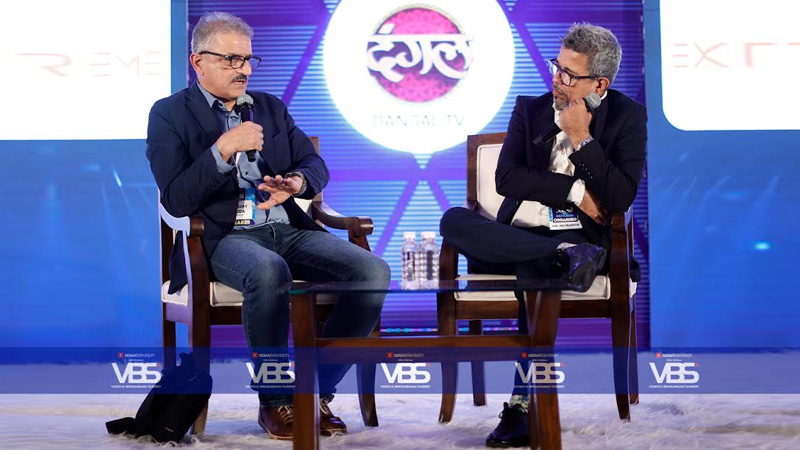
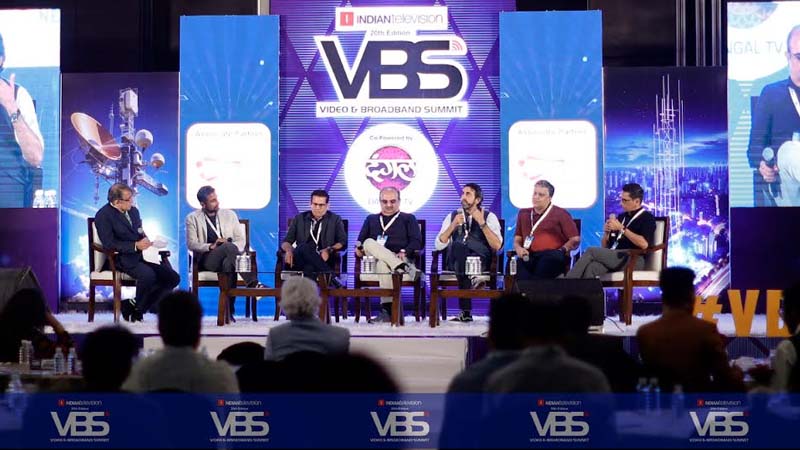
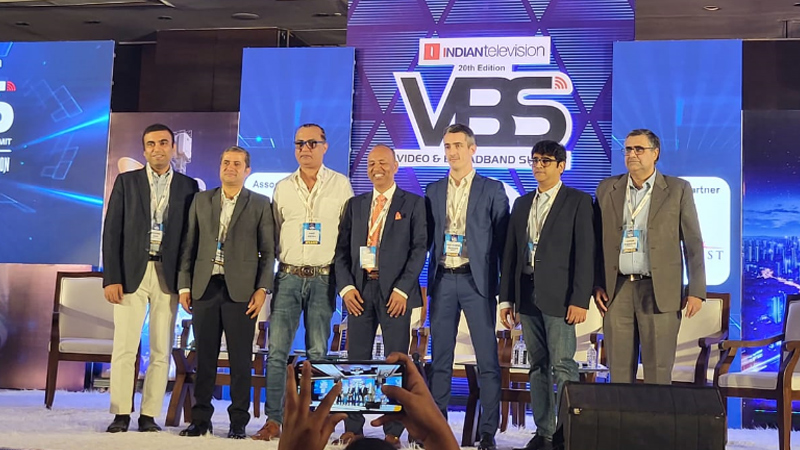
    As screens multiply and viewers scatter, broadcasters are strapping in for a digital arms race-armed with AI, automation, and the all-powerful cloud. At Indiantelevision.com’s Video and Broadband Summit 2025, the panel “The Smart Broadcast / OTT Revolution” unpacked this high-speed transformation, one data stream at a time.

    Moderated by Amagi SVP (sales) – APAC Jay Ganesan, the discussion featured heavyweights from JioStar, Zee Entertainment, MX Player and Live Times, who shared how they’re reimagining production, distribution and monetisation in a world where content has to be everywhere, all at once.

    JioStar executive director – BTO Paritosh Saha noted that their cloud-first workflow had been ahead of the curve. “Right from production, proxies, approvals to collaborative workflows—it was all built on cloud. And now AI has supercharged it,” he explained. Real-time highlight reels, AI-driven tagging, and cross-platform promotions are becoming the new norm. “The moment the match ends, the highlights are ready,” he said, adding that even commentators have AI-fed stats “right in front of them”.

    Zee Entertainment Enterprises Ltd SVP – content tech Anil Tanwade spoke of the shift from traditional broadcasting to fragmented digital ecosystems. “Unless you make the whole ecosystem one, you can’t bring true efficiency,” he said. Tanwade championed hybrid models—using local systems for content creation and cloud for management and scaling. The key, he said, lies in syncing creativity with tech.

    Amazon MX Player head of product & business analytics Shreyans Shrimali took the spotlight on AI’s role in localisation and marketing. From automatic dubbing and subtitles to AI-generated posters, trailers, and social promos, Shrimali laid out a future where algorithms cut down grunt work. “You can generate 100 tweets out of a single trailer”, he pointed out, underscoring how automation is powering faster audience engagement.

    But it wasn’t just entertainment in the spotlight. Live Times founder Dilip Singh spoke from a news-first perspective. “India is a powerful emerging story. If you’re building media from India, it can’t just be local—it has to be global,” he said. Singh has built an infrastructure spanning satellite and IP-based delivery, employing AI for everything from content validation to fact-checking in an age of ‘WhatsApp University’. “80 per cent AI, 20 per cent human intelligence,” he said, describing his editorial formula for trust in an ocean of misinformation.

    The discussion also touched on ad innovation. Customised ad breaks—350 versions of the same spot—are already being deployed. “It’s not just about making money, it’s about keeping the consumer engaged,” said the panellists. Embedded commerce, branded integrations and sponsorships are all being layered into the broadcast feed.

    The conversation ended on a sober note. “Ten years ago, you earned $100 doing one thing. Now, you have to do 20 different things to earn the same $100,” the moderator quipped. Cloud and AI aren’t silver bullets—but they are proving to be jet fuel in an industry fighting for scale, speed and sustainability.

  • Nikon Z5II goes full throttle on video with N-RAW, low-light beast mode, and blazing autofocus

    Nikon Z5II goes full throttle on video with N-RAW, low-light beast mode, and blazing autofocus

    MUMBAI: Nikon just gave creators a reason to ditch the tripod and hit record. At a buzzing launch event held at New Delhi’s Eros Hotel on 23 April, Nikon India pulled the wraps off the Z5II—a full-frame mirrorless camera that aims to put professional-grade video in more hands without frying budgets.

    The Z5II brings to the table a 24.5 MP BSI CMOS sensor, 4K/60p video, and full HD 120p slow motion—ticking every box for filmmakers, wedding shooters, and street-style documentarians alike. But its real claim to fame lies under the hood: blazing 3.5x faster autofocus and low-light AF down to -10EV, which means your shoot doesn’t have to stop when the lights go out.

    “With the introduction of the Z5II, Nikon is once again elevating the standards of professional-grade photography, making top-tier innovation more accessible to all creators,” said Nikon India Pvt. Ltd MD Sajjan Kumar.

    Armed with in-camera 12-bit N-RAW and 10-bit N-Log, the Z5II caters to video pros who love tinkering in post-production. The EXPEED 7 engine drives intelligent autofocus, while a 5-axis in-body vibration reduction system ensures every handheld take looks like it was shot on rails.

    Its vari-angle touchscreen helps shooters nail tricky angles, and a bright 3,000 cd/m² EVF outshines the competition. For run-and-gun creators, the Z5II’s high-speed burst at 14 fps, paired with 3D-tracking AF, is a ticket to freeze-frame wizardry.

    “‘Truly Together’, the Z5II is crafted for hybrid creators who demand flexibility and performance in every frame,” Kumar added.

    The camera also features AI-driven subject detection, capable of spotting nine types-from pets to sports cars. It seamlessly works with Nikon’s Z Mount lens ecosystem and supports USB-C, HDMI, and Picture Control customisation, giving creators more control without the learning curve.

    Priced at Rs 1,49,995 (body only), the Nikon Z5II hits stores on 24 April 2025. As hybrid creators blur the lines between filmmaker and photographer, Nikon seems ready to roll.

  • Hitachi Vantara flexes its storage muscle with triple-threat guarantee for enterprises

    Hitachi Vantara flexes its storage muscle with triple-threat guarantee for enterprises

    MUMBAI: In the unglamorous world of data storage, where blinking boxes keep the digital world from collapsing, Hitachi Vantara just turned up the drama. The company launched a triple-play of service guarantees on 21 April 2025, giving its Virtual Storage Platform One (VSP One) a serious shot of swagger—with built-in promises for cyber resilience, performance, and sustainability. No more crossed fingers or desperate prayers to the server gods.

    The new features arrive as IT teams around the globe scream into the digital void. They’re juggling fragmented systems, drowning in ransomware anxiety, and praying their monthly power bill doesn’t resemble the GDP of a small country. Hitachi Vantara has finally decided enough is enough, pitching its upgrades as the antidote to modern IT headaches.

    “IT complexity, cyber threats and sustainability challenges continue to put enterprises under extreme pressure,” said Hitachi Vantara chief product officer Octavian Tanase. “With VSP One’s latest enhancements, we are eliminating those roadblocks by delivering a unified, automation-friendly platform with guaranteed performance, resilience and efficiency built in. This is more than just data storage—it’s a smarter, more sustainable way to manage enterprise data at scale.”

    So what’s in this triple scoop of enterprise storage goodness? First, a performance guarantee promises that applications will run like greased lightning—or at least predictably fast—with minimal fiddling. The company backs it with Everflex service credits if speeds don’t meet the bar.

    Then comes the cyber resilience guarantee, loaded with AI-driven ransomware detection powered by Cybersense and immutable snapshots. Translation? If ransomware comes knocking, your data won’t run off to join it. And if all else fails, Hitachi promises up to 100 per cent credit for the affected storage volume.

    Finally, the sustainability guarantee adds a little green to the grey server room. Hitachi claims VSP One can cut carbon footprints by up to 40 per cent, with power-efficient architecture and SLA-driven energy tracking.

    VSP One’s new features don’t exist in a vacuum. They slot neatly alongside Hitachi’s other crowd-pleasers, including a 100 per cent data availability guarantee, a 4:1 data reduction promise, and non-disruptive controller upgrades under its modern storage assurance guarantee. Because who wants to buy the same terabytes twice?

    Unlike many storage vendors slapping together software layers like digital lasagne, VSP One comes fully integrated. No awkward API speed-dating or twelve different dashboards to babysit.

    “Ransomware continues to threaten the viability of today’s enterprises,” said Index Engines VP – strategic partnerships Jim McGann. “The addition of VSP One’s Cyber Resilience Guarantee, including Ransomware Detection powered by CyberSense, equips organizations with the intelligence and automation needed to strengthen their cyber resilience. By integrating advanced tools like VSP One and CyberSense, IT teams can streamline recovery workflows, minimise downtime and validate the integrity of critical data with greater confidence to minimise the impact of an attack.”

    Whether you’re a midsize IT manager who just wants to sleep at night or a global enterprise exec tired of apologising for downtime, Hitachi Vantara seems to be saying: we’ve got your back, your data, and your carbon bill.
     

  • Skyworth Digital appoints new vice president to lead expansion

    Skyworth Digital appoints new vice president to lead expansion

    MUMBAI: After steering Skyworth Digital’s India operations for seven years, Jayaprakash Thulasiraman has been tapped to lead the company’s new business strategy as vice president. The television and broadband equipment maker announced the appointment on LinkedIn, where it outlined the veteran’s remit: emerging business incubation, strategic partnerships, government affairs and “special assignments that call for experience, insight—and a spark of bold thinking”.

    Thulasiraman brings three decades of experience from technology and telecommunications heavyweights including Reliance, Vodafone, Motorola and Huawei. During his tenure as Skyworth’s general manager for India, the firm secured a coveted position among Tata Play’s top three partners in 2025.

    The appointment comes as Skyworth seeks to shore up its position in the broadband-focused digital television market. Under Thulasiraman’s leadership as country manager, the firm expanded its portfolio beyond traditional set-top boxes to include broadband customer premise equipment and fixed wireless access devices—a strategic pivot to capture the growing convergence of television and internet services.

    Before joining Skyworth in 2018, Thulasiraman held leadership roles at Optiva, Amdocs and Huawei, where he managed accounts for major Indian telecoms. Earlier in his career, he oversaw Vodafone India’s terminal business, orchestrating the first official iPhone launch in the country in 2007.

  • Kore.ai plugs into Inception to power AI surge across UAE and the global south

    Kore.ai plugs into Inception to power AI surge across UAE and the global south

    MUMBAI: When the AI gold rush kicks off in the Gulf, you don’t show up with a shovel. You show up with a full-blown intelligent automation arsenal—which is exactly what Kore.ai just did.

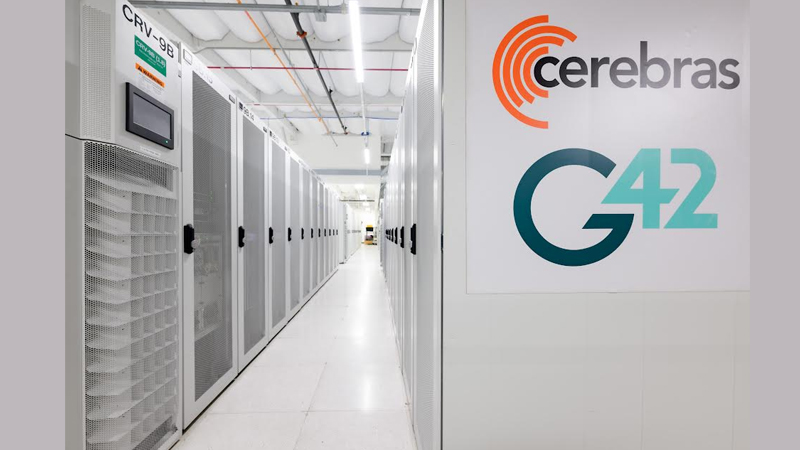
    The Hyderabad-headquartered enterprise AI giant has inked a partnership with Inception, a G42 company based in Abu Dhabi, to co-develop and deploy a suite of AI-native applications for enterprise customers across the UAE and beyond. The deal is as strategic as it gets—aligning Kore.ai’s conversational AI clout and global distribution muscle with Inception’s model-building firepower and deep regional ties.

    “Our collaboration with Inception represents a significant opportunity to accelerate AI adoption across global markets in alignment with our vision to help businesses drive tangible value through AI,” said Kore.ai CEO & founder Raj Koneru. “By combining our industry-leading AI platforms/solutions and broad market reach with Inception’s deep expertise in AI models and product development and domain-specific solutions, we deliver AI-powered solutions that will transform business operations.”

    The UAE has gone all in on AI, with a national plan to become a top-tier global AI player by 2031. Abu Dhabi alone is dropping $13 billion on digital transformation—and the big names are circling.

    Microsoft.

    NVIDIA.

    Now Kore.ai.

    Under the new partnership, the companies will co-develop apps on Inception’s AI platform using Kore.ai’s technology, targeting sectors like government, finance, energy, healthcare, retail, and telecom. Kore.ai will also open the global floodgates, pushing these apps through its sprawling partner ecosystem and customer base.

    Inception will take the reins on go-to-market execution in the UAE, while also deploying these AI solutions across G42’s enterprise portfolio. Think of it as AI with GPS coordinates: precise, strategic, and hardwired into local infrastructure.

    “Partnering with Kore.ai aligns perfectly with our mission to develop AI-powered solutions that drive real business value to the customers in UAE and rest of the world,” said Inception CEO Andrew Jackson. “Our joint expertise will allow us to accelerate the AI adoption, deployment of AI-powered solutions and address critical business challenges, enhance decision-making, and drive real business outcomes for the companies in the region.”

    The endgame?

    Serious ROI for clients via cost savings, sharper decision-making, and customer experiences that actually feel intelligent. Whether it’s streamlining procurement, automating processes, or making chatbots sound like they’ve read a book, this collab is setting a new bar for enterprise AI in emerging markets.

  • Singleinterface unleashes AI beast to turn every storefront into a smart-selling machine

    Singleinterface unleashes AI beast to turn every storefront into a smart-selling machine

    MUMBAI: Who says storefronts can’t be sexy? In a world where every “near me” search feels like roulette, Singleinterface has decided to load the dice.

    The Asia-based retail tech giant has flipped the switch on its next big thing: a full-stack AI platform called Singleinterface AI—designed to give every single store location across the country a neural upgrade.

    Launched in New Delhi on 16 April 2025, the AI suite is packed tighter than a Diwali sweet box with modules like Presence AI, Pages AI, Reviews AI, Engagement AI, Campaigns AI, Interactions AI, Audience AI, Competition AI and the all-seeing Insights AI. If you’re a brand juggling hundreds of branches, it’s like getting a thousand digital managers for the price of one software.

    “We believe the future of hyperlocal marketing and commerce is AI-native. It’s transforming how every storefront shows up in ‘near me’ searches, responds, and grows. With Singleinterface AI, we’re embedding enterprise-grade intelligence into every hyperlocal brand interaction,” said Singleinterface co-founder & CEO Tarun Sobhani.

    So what does this beast actually do?

    It makes brands smart—really smart. Presence AI keeps store listings up to date across Google, Apple Maps, car nav systems, and your grandma’s voice assistant. Pages AI whips up microsites faster than a barista pours your flat white. Reviews AI reads customer emotions (yes, really) and helps brands respond without sounding robotic.

    Then there’s Engagement AI, which fuses CRM data with real-time messages so your Whatsapp replies are less generic and more Jedi. Campaigns AI makes sure your ads don’t die of fatigue and actually speak to the locals. Interactions AI transcribes every customer convo and tells you where you lost them (or won them). Audience AI finds your next big buyers based on movement patterns and weirdly smart behavioural tracking.

    Competition AI, meanwhile, scopes out how your outlet stacks up to the chaiwala next door in “near me” wars. And finally, Insights AI pulls it all together in a 360° digital chakra view.

    With over 400 multi-location brands on board—from F&B and telcos to education, finance and healthcare—Singleinterface is not just talking disruption. It’s bringing enterprise-level intelligence to every corner store and clinic with a pin code.

  • Kia expands AI voice Assistant to Europe with smarter in-car experience

    Kia expands AI voice Assistant to Europe with smarter in-car experience

    MUMBAI: Kia is now bringing its generative AI-powered voice recognition system, AI Assistant, to European customers via an Over-the-Air (OTA) update.

    The cutting-edge system transforms how drivers interact with their vehicles, enabling smooth, natural conversations and offering intuitive responses based on context and intent. From casual questions to detailed feature guides, Kia’s AI Assistant brings a new level of intelligence and personalisation to the driving experience.

    Designed to go far beyond traditional voice control, the AI Assistant understands follow-up queries, provides thoughtful suggestions, and evolves continuously with OTA updates. These enhancements ensure users always have access to the latest features and improvements without needing to visit a dealership.

    Users can activate the AI Assistant by pressing the voice recognition button on the steering wheel or simply saying, ‘Hey Kia.’ Once active, the system can answer open-ended questions, offer local recommendations, and even assist with travel or cultural tips.

    For example, users might ask,

    – ‘I am going camping tomorrow, what items should I take?’

    – ‘What are the advantages of an EV compared with an ICE car?’

    – ‘I am going to meet a Spanish friend tomorrow are there any important table manners or customs I should be aware of?’

    More than just an infotainment upgrade, the AI Assistant also boosts driving convenience. If a driver encounters traffic, they might say, ‘Hey Kia, let me know about any driving assistance systems that can make driving easier in heavy traffic.’ In response, the Assistant might suggest Highway Driving Assist and explain how to activate and use it.

    Kia has already integrated the AI Assistant into the Kia K4 (U.S.) and Kia EV3 (Korea), and now it’s standard on European-spec EV3 models built from March 2025. Earlier vehicles will receive the update via OTA rollout. Future models featuring Kia’s connected car Navigation Cockpit system will also benefit from the AI Assistant.

    “This technology could, for example, enable users to ask for the location of restaurants selling specific foods,” Kia noted. “The possibilities are endless.”

    As the AI evolves and drivers grow more accustomed to its capabilities, Kia’s AI Assistant aims to redefine the connection between humans and their cars one conversation at a time.

  • Star power goes green as Shailesh Singh and Virral Patel join iline

    Star power goes green as Shailesh Singh and Virral Patel join iline

    MUMBAI: In a bold and eco-savvy move, acclaimed producer Shailesh R. Singh and actor-entrepreneur Virral Patel have officially been named co-founders of iline, India’s first electric vehicle (EV)-only logistics platform. Founded in 2024, Iline is already making clean waves across Delhi NCR and Gurgaon and now, it’s driving full speed ahead with a mission to transform last-mile delivery into a sustainable powerhouse.

    At a time when urban logistics is one of the biggest culprits behind carbon emissions, iline’s all-EV fleet is more than just a green alternative, it’s a solution. For every kilometre driven by an iline vehicle, nearly 350 grams of carbon emissions are eliminated. That’s not just mileage, it’s meaningful impact.

    Welcoming the new leadership team iline.AI,CEO Prakarsh Dwivedi said, “iline is redefining the future of last-mile delivery in India. With Shailesh R. Singh’s strategic insight and Virral Patel’s tech-first thinking, we’re creating a delivery ecosystem that’s intelligent, sustainable, and people-focused. This collaboration sets the stage for iline’s evolution from a bold startup to a catalyst for nationwide green mobility and inclusive growth.”

    Shailesh R. Singh said, “As a producer, I have always believed in the power of purpose. With iline, we are combining purpose with performance – creating logistics solutions that are clean, smart, and built for the future.”

    Virral Patel added, “We started iline to prove that technology can serve both business and the planet. With AI at the core and EVs on the ground, we’re making logistics not just faster, but better for the environment.”

    The iline platform is built around a dual-app ecosystem, a customer app that offers booking, real-time tracking, and AI-powered ETAs, and a pilot app for delivery partners to manage rides, monitor battery health, and view earnings. Going a step greener, iline also offers unique incentives like a CO₂ savings tracker and a green rewards system.

    The company’s catchy motto “Kam Pollution, Zyada Solution” is more than just a line. It’s a philosophy. iline is building a robust network of EV drivers and using AI to optimise delivery infrastructure for sectors like e-commerce, food delivery, hyperlocal services, and retail.

    As India charges toward its green future, iline’s leadership and innovation could turn it into a national model for clean, inclusive growth. And with Bollywood at the wheel, the journey’s bound to be a blockbuster.