Category: Technology

  • World’s First Narrowband IoT Open Lab opens to provide a Test Bed for manufacturers and application developers

    World’s First Narrowband IoT Open Lab opens to provide a Test Bed for manufacturers and application developers

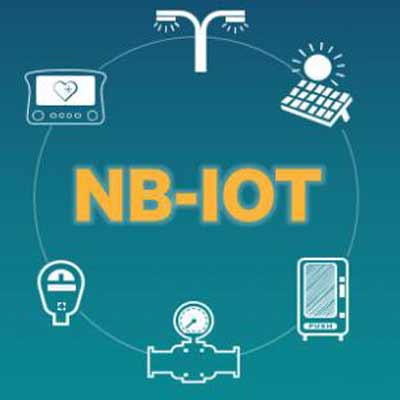
    NEW DELHI: Global information and communications technology (ICT) solutions provider Huawei and Vodafone Group have opened an Open IoT Lab to work on the development of products and applications relating to Narrowband Internet of Things (NB-IoT) technology.

    The lab will provide a pre-integration testing environment for application developers and device, module and chip manufacturers. The facility, which is the first of seven that Huawei plans to open, will also offer support to developers and partners. They will work with both companies to explore cutting edge developments including network solution verification, new application innovation, device integration, and product compliance certification. 

    Vodafone Group R&D Director and Chairman of the GSMA NB-IoT Forum Luke Ibbetson said: “As one of the founding members of the GSMA NB-IoT forum, we are delighted that the first lab is up and running. Over the past twelve months we’ve made significant progress establishing industry standards for the technology and the new labs will be critical to the next phase of development, which is to build a vibrant NB-IoT ecosystem.”

    Huawei Wireless Product Line President David Wang said: “With our decade-long strategic partnership with Vodafone, the creation of this lab is another important milestone in our long term relationship. Working with Vodafone, we have accelerated standardization of the technology and carried out successful pre-commercial trials.  This facility will be crucial in supporting the deployment of NB-IoT globally and contribute to the promotion of its ecosystem.”

    “The GSMA’s Mobile IoT initiative has been instrumental in aligning the industry behind three complementary technologies in NB-IoT, Extended Coverage GSM For IoT (EC-GSM-IoT) and Cat-M that will underpin a diverse range of solutions in the burgeoning LPWA market,” said GSMA Head of Connected Living Programme Graham Trickey. “There are already a number of pilots taking place around the world and we welcome the work of the GSMA NB-IoT Forum that will help to accelerate the availability of commercial solutions in licensed spectrum.”

    The narrowband technology provides significantly improved network coverage for Internet of Things communications, supports deeper coverage, a large number of connections, while lowering power consumption. 

  • FEN Learning selects TO THE NEW to support its technology overhaul

    FEN Learning selects TO THE NEW to support its technology overhaul

    New Delhi: April 26, 2016: FEN Learning, one of the world’s leading online family and teacher community has selected TO THE NEW to support its technology revamp plan across its entire business.

    Primarily, TO THE NEW will help FEN Learning in revamping and migrating its web properties to a new CMS platform with an aim to provide engaging experience to its users and improve efficiency in content management. In addition, TO THE NEW will also provide social media marketing and content amplification services to support FEN’s long term marketing strategy.

    Abhi Arya, President of FEN Learning says, “We compared a range of technology companies but TO THE NEW stood out for its in-depth experience in CMS ecosystem, technology upgradation and building business critical applications. Their expertise will help us rebuild a scalable and flexible infrastructure to support our future vision and deliver unparalleled customer experience.”                                

    “We are delighted to have been selected by FEN Learning to work on this crucial initiative. In this fast paced digital world, online businesses need Agile operations to stay competitive and ahead of the curve. We are confident that we will be able to drive value for FEN Learning through our strong understanding of technology and digital marketing. We look forward to deliver our best to FEN Learning”, said Deepak Mittal, CEO of TO THE NEW.

  • FEN Learning selects TO THE NEW to support its technology overhaul

    FEN Learning selects TO THE NEW to support its technology overhaul

    New Delhi: April 26, 2016: FEN Learning, one of the world’s leading online family and teacher community has selected TO THE NEW to support its technology revamp plan across its entire business.

    Primarily, TO THE NEW will help FEN Learning in revamping and migrating its web properties to a new CMS platform with an aim to provide engaging experience to its users and improve efficiency in content management. In addition, TO THE NEW will also provide social media marketing and content amplification services to support FEN’s long term marketing strategy.

    Abhi Arya, President of FEN Learning says, “We compared a range of technology companies but TO THE NEW stood out for its in-depth experience in CMS ecosystem, technology upgradation and building business critical applications. Their expertise will help us rebuild a scalable and flexible infrastructure to support our future vision and deliver unparalleled customer experience.”                                

    “We are delighted to have been selected by FEN Learning to work on this crucial initiative. In this fast paced digital world, online businesses need Agile operations to stay competitive and ahead of the curve. We are confident that we will be able to drive value for FEN Learning through our strong understanding of technology and digital marketing. We look forward to deliver our best to FEN Learning”, said Deepak Mittal, CEO of TO THE NEW.

  • Transparent e-enabled accessible IPR ecosystem being created

    Transparent e-enabled accessible IPR ecosystem being created

    NEW DELHI: The Department of Industrial Policy and Promotion (DIPP) secretary Ramesh Abhishek said today that the department was committed towards creating a highly transparent, e-enabled, efficient and accessible IP ecosystem in India that would provide legal certainty to the industry.
     
    Inaugurating a conference on ‘Intellectual Property: A Key Enabler for Strengthening India’s Business Landscape’ organized here today to commemorate the World Intellectual Property Day 2016, he said the patent rules were being amended and start-ups were being given a heavy discount in patent fees and provided with free consultation to encourage entrepreneurship in the country.
     
    The conference was organized by the Federation of Indian Chambers of Commerce and Industry (FICCI) in association with DIPP and Intellectual Property Office (IPO).  
     
    Abhishek said IP was a critical element for protecting creativity and innovation. A strong IPR regime would create a suitable climate for foreign investors and would give them the much-needed assurance that their patents, designs and trademarks were being protected. India had received a record FDI in the last year; hence, a resilient IPR regime would attract more investors to the country. He added that a robust IPR system would also encourage new technology to come to India. 
     
    DIPP joint secretary Rajiv Aggarwal said that IP and IPR had the power of unshackling the barriers faced by the economies around the globe. DIPP was committed towards ensuring a robust IPR regime for the country with a balanced outlook. He added that the IPR regime in India is being developed keeping in mind the interest of the businesses and the needs of the society.
     
    FICCI secretary general A Didar Singh,  said the year 2016 marked a step forward for India in its IP history with the Indian leadership adequately recognizing the crucial role that intellectual property played in fostering innovation, accelerating growth and enhancing business competitiveness. Initiatives such as Make in India, Start-up India, Imprint India, and Digital India are further reinforcing this vibrant vision.
     
    Patents, Designs and Trademark controller general O P Gupta chaired a session on ‘Securing IP Edge for Business Growth and Competence’. The session focused on Startup India, Launch of (SIPP) Scheme for Start-Ups; IP audits, Patent Mapping, IP sensitive business models; and Identifying modes of Commercializing such as licensing, pooling, trading, prototyping, acquisitions and mergers.
     
    As a part of the World IP Week, FICCI had organized an annual slogan and poster making competition for all age groups across the country from 13 to 20 April. The objective of the youth-focused competition was to instill respect for copyright among the youngsters by showcasing the issue of piracy which is eating away the genuine revenue of the copyright industry, thereby affecting the culture of creativity.Awards were given away to two winners in each of the two categories: above and below 18 years.
  • Transparent e-enabled accessible IPR ecosystem being created

    Transparent e-enabled accessible IPR ecosystem being created

    NEW DELHI: The Department of Industrial Policy and Promotion (DIPP) secretary Ramesh Abhishek said today that the department was committed towards creating a highly transparent, e-enabled, efficient and accessible IP ecosystem in India that would provide legal certainty to the industry.
     
    Inaugurating a conference on ‘Intellectual Property: A Key Enabler for Strengthening India’s Business Landscape’ organized here today to commemorate the World Intellectual Property Day 2016, he said the patent rules were being amended and start-ups were being given a heavy discount in patent fees and provided with free consultation to encourage entrepreneurship in the country.
     
    The conference was organized by the Federation of Indian Chambers of Commerce and Industry (FICCI) in association with DIPP and Intellectual Property Office (IPO).  
     
    Abhishek said IP was a critical element for protecting creativity and innovation. A strong IPR regime would create a suitable climate for foreign investors and would give them the much-needed assurance that their patents, designs and trademarks were being protected. India had received a record FDI in the last year; hence, a resilient IPR regime would attract more investors to the country. He added that a robust IPR system would also encourage new technology to come to India. 
     
    DIPP joint secretary Rajiv Aggarwal said that IP and IPR had the power of unshackling the barriers faced by the economies around the globe. DIPP was committed towards ensuring a robust IPR regime for the country with a balanced outlook. He added that the IPR regime in India is being developed keeping in mind the interest of the businesses and the needs of the society.
     
    FICCI secretary general A Didar Singh,  said the year 2016 marked a step forward for India in its IP history with the Indian leadership adequately recognizing the crucial role that intellectual property played in fostering innovation, accelerating growth and enhancing business competitiveness. Initiatives such as Make in India, Start-up India, Imprint India, and Digital India are further reinforcing this vibrant vision.
     
    Patents, Designs and Trademark controller general O P Gupta chaired a session on ‘Securing IP Edge for Business Growth and Competence’. The session focused on Startup India, Launch of (SIPP) Scheme for Start-Ups; IP audits, Patent Mapping, IP sensitive business models; and Identifying modes of Commercializing such as licensing, pooling, trading, prototyping, acquisitions and mergers.
     
    As a part of the World IP Week, FICCI had organized an annual slogan and poster making competition for all age groups across the country from 13 to 20 April. The objective of the youth-focused competition was to instill respect for copyright among the youngsters by showcasing the issue of piracy which is eating away the genuine revenue of the copyright industry, thereby affecting the culture of creativity.Awards were given away to two winners in each of the two categories: above and below 18 years.
  • How 4K video bearer networks will pan out: Huawei’s view

    How 4K video bearer networks will pan out: Huawei’s view

    NEW DELHI: Video services will account for as much as 80 per cent of network traffic in the future, and 4K video, as a leading factor in the development of video services, has already become the strategic high ground on which telecom operators and online OTT video content platforms are striving to attract customers and obtain competitive advantage.

    In a white paper called The Experience-driven 4K Bearer Network released at its 2016 Global Analysts Summit in Shenzhen, Huawei said many mainstream telecom operations and OTT content providers around the world have already released 4K service strategic plans.

    Compared with traditional video services, 4K video services require higher bandwidth, lower latency, and reduced packet loss rates. With the rapid growth of 4K video traffic, however, the expansion of telecom operators’ networks is unable to meet fast growing bandwidth requirements, and the dilemma between providing a good video experience and ensuring return on network investment is becoming more distinct. The question of how to build a video service bearer network that can monitor user experience, allow service fault identification and demarcation, guarantee service quality, and benefit all parties is now of critical importance for the development of 4K services.

    The white paper focuses on two issues that have drawn considerable attention from telecommunications operators: how to ensure a good user experience for 4K video and how to bear the service. The paper presents an end-to-end target network architecture and evolution solutions for various deployment scenarios. As the industry’s first technical document to systematically set forth 4K bearer network solutions, the white paper should be of interest to telecom operators considering deployment of online 4K services  as well as establishment of  a positive business cycle in the 4K industry.

    The White Paper is claimed to be the first to systematically introduce the User, Unified, Ubiquitous-Mean Opinion Score for Video (U-vMOS) benchmark, which objectively quantifies end-user experience. It offers a guide to build an end-to-end best-experience 4K bearer networks architecture helping operators to simplify network layers, deploy gigabit access efficiently, and improve capabilities in intelligent acceleration, network perception, as well as big data analytics. Based on this proposal, operators can effectively solve problems in commercial applications of 4K videos, such as long loading time, pixelation, stalling, and even difficulties in locating reported faults.

    Creating a best-experience 4K bearer network can alleviate user experience degradation, as well as difficulties in service fault identification and demarcation. Telecom operators can provide 4K video themselves, gaining a competitive edge by their ability to offer differentiated services, or they can work together with OTT video content providers, providing them with a video distribution network that features BoD, quantifiable user experience, and manageable quality. End-users will enjoy not only top-quality 4K video, but also smooth online playback and carrier-class troubleshooting service.

    As an advocate for experience-centric network construction, Huawei says that it has actively invested in 4K UHD video bearer networks and carried out joint innovation with industry-leading operators to create 4K bearer network solutions that provide the best user experience. Huawei has also supported operators in successfully providing 4K video services and increasing the value of their fixed broadband networks. At present, Huawei’s best-experience 4K bearer network is already widely used at China Telecom, China Mobile, China Unicom and British Telecom.


  • How 4K video bearer networks will pan out: Huawei’s view

    How 4K video bearer networks will pan out: Huawei’s view

    NEW DELHI: Video services will account for as much as 80 per cent of network traffic in the future, and 4K video, as a leading factor in the development of video services, has already become the strategic high ground on which telecom operators and online OTT video content platforms are striving to attract customers and obtain competitive advantage.

    In a white paper called The Experience-driven 4K Bearer Network released at its 2016 Global Analysts Summit in Shenzhen, Huawei said many mainstream telecom operations and OTT content providers around the world have already released 4K service strategic plans.

    Compared with traditional video services, 4K video services require higher bandwidth, lower latency, and reduced packet loss rates. With the rapid growth of 4K video traffic, however, the expansion of telecom operators’ networks is unable to meet fast growing bandwidth requirements, and the dilemma between providing a good video experience and ensuring return on network investment is becoming more distinct. The question of how to build a video service bearer network that can monitor user experience, allow service fault identification and demarcation, guarantee service quality, and benefit all parties is now of critical importance for the development of 4K services.

    The white paper focuses on two issues that have drawn considerable attention from telecommunications operators: how to ensure a good user experience for 4K video and how to bear the service. The paper presents an end-to-end target network architecture and evolution solutions for various deployment scenarios. As the industry’s first technical document to systematically set forth 4K bearer network solutions, the white paper should be of interest to telecom operators considering deployment of online 4K services  as well as establishment of  a positive business cycle in the 4K industry.

    The White Paper is claimed to be the first to systematically introduce the User, Unified, Ubiquitous-Mean Opinion Score for Video (U-vMOS) benchmark, which objectively quantifies end-user experience. It offers a guide to build an end-to-end best-experience 4K bearer networks architecture helping operators to simplify network layers, deploy gigabit access efficiently, and improve capabilities in intelligent acceleration, network perception, as well as big data analytics. Based on this proposal, operators can effectively solve problems in commercial applications of 4K videos, such as long loading time, pixelation, stalling, and even difficulties in locating reported faults.

    Creating a best-experience 4K bearer network can alleviate user experience degradation, as well as difficulties in service fault identification and demarcation. Telecom operators can provide 4K video themselves, gaining a competitive edge by their ability to offer differentiated services, or they can work together with OTT video content providers, providing them with a video distribution network that features BoD, quantifiable user experience, and manageable quality. End-users will enjoy not only top-quality 4K video, but also smooth online playback and carrier-class troubleshooting service.

    As an advocate for experience-centric network construction, Huawei says that it has actively invested in 4K UHD video bearer networks and carried out joint innovation with industry-leading operators to create 4K bearer network solutions that provide the best user experience. Huawei has also supported operators in successfully providing 4K video services and increasing the value of their fixed broadband networks. At present, Huawei’s best-experience 4K bearer network is already widely used at China Telecom, China Mobile, China Unicom and British Telecom.


  • India enters niche STB global market with indigenously designed CAS system, funded by DeiTY

    India enters niche STB global market with indigenously designed CAS system, funded by DeiTY

    New Delhi: ByDesign India Pvt Ltd of Bangalore has successfully completed development of Conditional Access System (CAS) for Set Top Boxes (STBs) and enabled India to enter a niche market hitherto dominated by five big global companies.

    The Communications and Information Technology Ministry said in a note today that the CAS had been developed under a project funded by the Department of Electronics and Information Technology (DeitY) for promotion of Electronics design and manufacturing in the country.

    Prasar Bharati sources told indiantelevision.com that Doordarshan’s free-to-air DTH Freedish has also adopted a version of this design for raising the number of channel slots on the platform from 64 to 112.

    The global STB market is estimated to be about 250 Million (25 crore) STBs per annum and the CAS market is expected to be nearly $2 billion ($200 crore) per annum. The projected demand in India for completing the digitization of broadcasting network is nearly 100 Million (10 crore) STBs, thereby signifying an attractive domestic market. 

    ByDesign India Pvt Ltd, Bangalore, was selected and awarded the task for development and implementation of Indian Conditional Access System (iCASTM) in association with Centre for Development of Advanced Computing (C-DAC) in November 2014 with technical specifications that were the best in the world.

    C-DAC was responsible for design review, code review, monitoring, testing and validation of the entire project. The Development Stage of iCASTM was successfully completed on 14.11.2015 within the specified time. 

    The developed iCASTM already supports seven Indian Languages and will support fifteen more languages in the near future. The iCASTM has been tested at the Cryptography Verification Labs, accredited by NIST in the United States and has also been widely field tested under Indian conditions. 

    ByDesign is required to tie up with at least five Operators and install STB with iCASTM in atleast 2,50,000 STBs. The implementation of iCASTM in the cable networks has already started.

    More than 25,000 STBs with iCASTM have already been deployed across the country in the last two months, from Haldwani in the North to Madurai in the South and Durgapur in the East to Satara District in the West. 

    iCASTM exemplifies successful collaboration between industry and Government for R&D and IPR generation in Electronics design and manufacturing. The iCASTM is also beneficial to domestic STB manufacturers because it is available to them at a price of $ 0.5 license for a period of three years as against market price of $ 4 to 5 license for other competing products. 

  • India enters niche STB global market with indigenously designed CAS system, funded by DeiTY

    India enters niche STB global market with indigenously designed CAS system, funded by DeiTY

    New Delhi: ByDesign India Pvt Ltd of Bangalore has successfully completed development of Conditional Access System (CAS) for Set Top Boxes (STBs) and enabled India to enter a niche market hitherto dominated by five big global companies.

    The Communications and Information Technology Ministry said in a note today that the CAS had been developed under a project funded by the Department of Electronics and Information Technology (DeitY) for promotion of Electronics design and manufacturing in the country.

    Prasar Bharati sources told indiantelevision.com that Doordarshan’s free-to-air DTH Freedish has also adopted a version of this design for raising the number of channel slots on the platform from 64 to 112.

    The global STB market is estimated to be about 250 Million (25 crore) STBs per annum and the CAS market is expected to be nearly $2 billion ($200 crore) per annum. The projected demand in India for completing the digitization of broadcasting network is nearly 100 Million (10 crore) STBs, thereby signifying an attractive domestic market. 

    ByDesign India Pvt Ltd, Bangalore, was selected and awarded the task for development and implementation of Indian Conditional Access System (iCASTM) in association with Centre for Development of Advanced Computing (C-DAC) in November 2014 with technical specifications that were the best in the world.

    C-DAC was responsible for design review, code review, monitoring, testing and validation of the entire project. The Development Stage of iCASTM was successfully completed on 14.11.2015 within the specified time. 

    The developed iCASTM already supports seven Indian Languages and will support fifteen more languages in the near future. The iCASTM has been tested at the Cryptography Verification Labs, accredited by NIST in the United States and has also been widely field tested under Indian conditions. 

    ByDesign is required to tie up with at least five Operators and install STB with iCASTM in atleast 2,50,000 STBs. The implementation of iCASTM in the cable networks has already started.

    More than 25,000 STBs with iCASTM have already been deployed across the country in the last two months, from Haldwani in the North to Madurai in the South and Durgapur in the East to Satara District in the West. 

    iCASTM exemplifies successful collaboration between industry and Government for R&D and IPR generation in Electronics design and manufacturing. The iCASTM is also beneficial to domestic STB manufacturers because it is available to them at a price of $ 0.5 license for a period of three years as against market price of $ 4 to 5 license for other competing products. 

  • FY-2015: Technicolor reports improved numbers

    FY-2015: Technicolor reports improved numbers

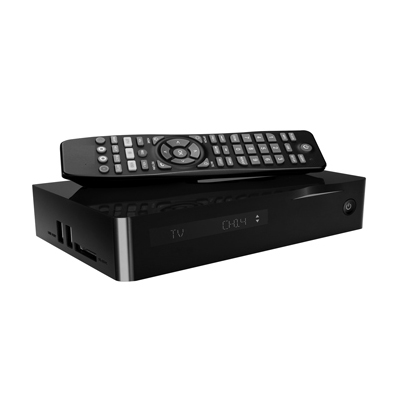
    BENGALURU: Technicolor revenues increased 12 per cent at current currency and 4.7 per cent at constant currency for the year ended 31 December, 2015 (current year, FY-2015). The company says that its growth reflects growth across the Entertainment Services and Technology segments and broadly stable Connected Home revenues. Technicolor revenue for the current year was €3,652 million as compared to €3,332 million in FY-2014.

    Technicolor CEO Frederic Rose said, “In 2015, our teams closed successfully, and in parallel, a number of large acquisitions, while remaining focused on delivering a very strong free cash flow. Moving forward, Technicolor is a much more balanced company built on three leading operating businesses and a core licensing business underpinning our material upgrade of Drive 2020 objectives.”   

    Adjusted EBITDA from continuing operations reached €565 million in FY-2015, up 3.1 per cent at constant currency compared to 2014, representing a margin of 15.5 per cent, down by one point year-on-year (YoY). Technicolor says that the adjusted EBITDA increase reflected a solid Licensing revenue performance, combined with strong organic growth in Production Services, partially offset by a weak DVD Services performance in the first half, the impact of unfavourable € versus US$ exchange rate fluctuations on procurements for Connected Home in the second half, as well as a lower contribution from exited activities.

    Segment performance

    Connected Homes

    Connected Homes segment revenues totalled €1,451 million in FY-2015, up five per cent at current currency and, and up 0.3 per cent as compared to the reported €1,382 million in FY-2014. Excluding Cisco Connected Devices (CCD), revenue declined 1.2 per cent as reported and declined 5.7 per cent at constant currency in FY-2015 to €1,3,65 million as compared to $1,382 million in the previous fiscal.

    Technicolor says that even without the contribution of CCD, Connected Home continued to outpace the global CPE market despite adverse business conditions experienced in some regions, driven by a number of new awards and customer wins, including high-end products. The segment achieved in particular a sustained performance in Europe, Middle-East & Africa and Asia-Pacific, both regions reporting a double digit YoY growth in revenues, benefiting notably from a mix improvement associated with the introduction of new products and a further ramp up in the value chain. Connected Home faced however lower levels of activity in both North and Latin America, primarily reflecting cautious customer approach towards product orders and inventory management, due to pending industry consolidation in the US and unfavourable macroeconomic conditions in Brazil.

    Adjusted EBITDA reached €76 million in FY-2015 compared to €77 million in FY-2014, with a negative forex impact of €6 million. At constant currency, adjusted EBITDA was €82 million, up by 5.8 per cent compared to 2014, with a margin of 5.9 per cent, up by 0.3 point YoY.

    Entertainment Services

    Entertainment Services revenue, excluding exited activities, was €1,639 million, up 10 per cent YoY in FY-2015 at constant currency, resulting from strong organic growth, the contribution from recent acquisitions in Production Services and solid revenues recorded by DVD Services.

    Production Services recorded a strong double-digit increase in revenues in FY-2015 compared to FY-2014 says Technicolor. Revenues expanded by almost 40 per cent YoY at constant currency, as a result of a strong double digit organic revenue growth, mostly due to a record level of activity in Visual Effects for feature films, and the additions of Mr. X, OuiDo Productions, Mikros Images and The Mill.

    The company says that VFX for commercials and Animation activities also recorded higher revenues, resulting from increased levels of activity across facilities, while Postproduction revenues improved year-on-year.

    Technicolor provided VFX and/or Postproduction services to 10 of the top-16 grossing films of the year worldwide, including some of the best box office performers such as Furious 7 (Universal), Avengers: Age of Ultron (Disney), Spectre (Sony) and The Hunger Games: Mockingjay – Part 2 (Lionsgate).

    DVD Services revenues were generally stable at constant currency in FY-2015 compared to FY-2014, driven by resilient total Standard Definition DVD, Blu-ray and CD disc volumes, which were down less than one per cent YoY, reflecting a marked improvement compared to the 11 per cent volume decline recorded in FY-2014. Blu-ray disc volumes were up by eight per cent in FY-2015 compared to FY-2014, supported by the aforementioned factors and the ongoing growth in Xbox One games volumes, while Standard-Definition discs declined by five per cent YoY. Overall FY-2015 volume trends in Europe continued to be generally better than in North America, mostly due to regionally specific promotional activity for selected studio customers, as well as to the ongoing adoption of Blu-ray in this region (as compared to the more mature and stable US Blu-ray market).

    Total Games volumes declined by 11 per cent YoY, with ongoing erosion in prior generation video game console demand outpacing growth for the current generation Xbox One platform. Going forward, prior generation video games volumes have now reached an immaterial level and should not influence future trends to the same degree.

    Excluding exited activities, Adjusted EBITDA was €190 million, down 2.1 per cent at constant currency YoY, as the stronger Production Services contribution was almost fully offset by lower DVD Services performance. However, the free cash flow generation in DVD Services was stable year-over-year notwithstanding the adjusted EBITDA decline says the company.

    Technology

    Technology revenues excluding M-GO, which was sold in early January 2016 to Fandango, a business unit of NBCUniversal, amounted to €490 million, up 3.3 per cent year-over-year at constant currency, primarily driven by higher revenues from the MPEG LA pool, which represented 59 per cent of total Licensing revenues in FY-2015 compared to 45 per cent in FY-2014. The Group’s direct licensing programs recorded a solid performance in the first half, particularly for Digital TV, which benefited from the strong level of new contracts and contract renewals in the course of 2014. In the second half, direct licensing programs posted a lower performance as the Group did not sign any major contract renewal or new contract as some ongoing discussions with manufacturers were delayed to leverage the joint licensing program with Sony in Digital TV (DTV) and Computer Display Monitor (CDM) that was announced in September.

    Excluding M-GO, Adjusted EBITDA reached €389 million, up 3.4 per cent at constant currency year-on-year, driven by the strong contribution of the MPEG LA patent pool.