Category: Technology

  • Samsung introduces Galaxy Tab iris in India

    Samsung introduces Galaxy Tab iris in India

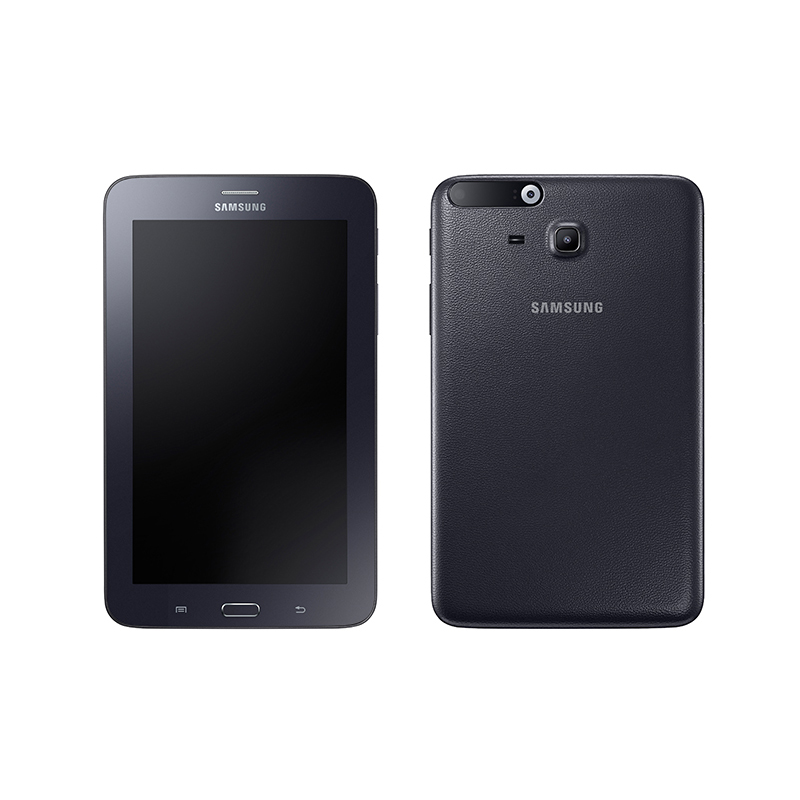
    MUMBAI: Samsung India on 25 May 2016 announced the launch of Galaxy Tab Iris featuring iris-recognition technology that is ready for Aadhar authentication through an integrated and highly secure biometric device. The Galaxy Tab Iris will provide cashless and paperless services in various applications such as banking, eGovernance services such as passport, taxation, healthcare and education.

    The easy-to-use biometric technology, currently incorporated in the Galaxy Tab Iris will help India spread its Digital India vision of providing technology so that every citizen of the country can have access to financial inclusion benefits. The solution will support government benefit programs and enable banks and financial institutions to streamline the process of an individual’s authentication, regardless of language and literacy barriers.

    The device is Aadhar-compliant and STQC-certified. Galaxy Tab Iris is yet another Make for India innovation from Samsung. Embedded in a secure device, the advanced iris-recognition technology will provide an integrated solution that will help to solve the hassles of using separate devices for biometric identification.
     “We’re excited to offer biometric-based services to the billion plus people enrolled in Aadhar,” said Samsung India R&D corporate vice president & CTO Dr. Aloknath De  “Our India R&D team has made significant investments in biometric technology research and we built this product leveraging our knowledge in hardware design, biometrics and security for a high speed scan, greater accuracy and high reliability.”

    “Along with the device, we are providing an Identity SDK for application developers to build financial inclusion, payments and authentication solutions. This will encourage our start-up ecosystem to rapidly build relevant apps and services. We strongly believe this overall offering will in turn strengthen government programs such as Jan-Dhan Yojana and E-Citizen services under the Digital India initiative,” he said.

    Announcing the launch, Samsung India Electronics Vice President Mr. Sukesh Jain, said, “This is another example of Samsung’s pursuit for meaningful innovations. We see great potential for the iris-technology solution to be used as a means of directly facilitating greater inclusion in the Digital India programme. The biometric authentication can also act as an enabler in facilitating integration of financial services with the ‘Aadhar’ initiative. The Galaxy Tab Iris addresses consumer pain points across platforms such as banking, finance, education and various citizen services by bringing enhanced usability, versatility and reliability all through one device.”

    Embedded Iris Solution for Advanced Data Security

    With embedded iris technology in Galaxy Tab Iris, Samsung has initiated the use of contactless technology that provides unmatched security for authentication. Aadhar serves as an important database for majority of government projects such as Pradhan Mantri Jan-Dhan Yojana (PMJDY), National Health Mission (NHM), eHospital program, DigiLocker and more under the Digital India initiative to provide welfare services to citizens. Further, enterprises, banks, education and financial institutions are aggressively adopting Aadhaar authentication in accessing citizen-based services

    Developing a Robust Ecosystem 
    The Samsung Galaxy Tab Iris powered by iris technology will enable users to access services remotely by embedding Aadhar iris-biometric authentication capabilities. This alignment will provide a more secure authentication and verification process and help the country transition away from traditional authentication processes. It is a breakthrough technology as E-KYC can be carried out in seconds whereas the traditional KYC takes up to two to seven days.
     
    Unique Identification Authority of India (UIDAI)
    The Galaxy Tab Iris is UIDAI compliant. It can be used for child enrolment program where biometrics of the parent is used to authenticate children for Aadhar enrolment. The tablet will negate the need for multiple pieces of equipment by providing an integrated solution for the child enrolment process.

    Financial Inclusion
    Biometrics is playing a major role in the banking sector to improve speed and security. The capability of the Galaxy Tab Iris is to function as an authentication device enabling banks and financial institutions to easily authenticate an individual’s data for account integration with their Aadhar numbers as well as provide an additional layer of security for banking services such as locker access, fixed deposits, where authentication is required. The iris-recognition technology will also further reduce the need for cumbersome paperwork, allowing people to enroll for banking and financial services in a more efficient paperless manner. With the majority of these processes being digitized with the use of the Galaxy Tab Iris, language and literacy barriers will no longer be an issue, allowing a larger section of the society to available services, promoting inclusion and financial security.

    Accessing Citizen Services
     The Galaxy Tab Iris can be used for accessing citizen services for purposes ranging from E-PDS (Electronic Public Distribution system), MNREGA (Mahatma Gandhi National Rural employment Guarantee Act) payments, pension schemes, various subsidy programmes and entitlements distribution. Multiple citizen services such as income tax filing, passport issuance/renewal, car registration, property registration, railway/airport passenger verification can be made paperless with the use of the Adhaar based Iris technology.

    Versatile Product with a More Powerful Technology
     The Galaxy Tab Iris is a sleek, compact tablet with a robust design and powerful technology. The dual-eye scanner provides for a contactless scan and greater security. The tablet also sports a vivid 7.0-inch display providing precise details for a good screen experience, along with a 5-megapixel auto focus rear camera for clicking brighter pictures and scanning documents. It delivers true value and is complemented by its extremely light, easy-to-carry 327g weight and slim 9.7mm profile. USB OTG Host ensures extra attachments support while Bluetooth 4.1 low energy offers optimum connectivity. The tab surpasses the language barrier with support of 14 local languages and a host of other useful features. The device comes with an 8GB memory, up to 200GB expandable memory and a strong 3600mAh battery.

    Price 
    The Samsung Galaxy Tab Iris is priced at INR 13,499.

    Samsung Galaxy Tab Iris specifications:

    Galaxy Tab Iris
    Display    7.0” WSVGA(1024×600)
    Processor    1.2 Ghz Quad Core
    Bearer    2G : GSM900, DCS1800
    3G : B1(2100), B8(900)
    OS    Android 5.0 Lollipop
    Camera    5MP AF (Rear)
    IR    Iris Camera & Subsystem
    RAM    1.5GB (LPDDR3)
    ROM    8GB (up to 200 GB microSD)
    Dimension    193.4 x 116.4 x 9.7mm
    Weight    327g
    Battery    3,600mAh
    Connectivity    802.11 b/g/n 2.4GHz, BT4.1, USB2.0 with Host

     

  • India Tablet shipments sluggish in Q1 2016: International Data Corporation

    India Tablet shipments sluggish in Q1 2016: International Data Corporation

    New Delhi: According to International Data Corporation (IDC),Indian tablet market in CY Q12016 remained flat over previous quarter with total shipments of 0.86 million units (including slate and detachable form factors). However, shipments grew by a marginal 1.3 percent over the same period last year. Declining consumer interest in the slate tablet form factor and rapid growth of large screen smartphones (phablets) causing the tablet market to slow down.

    Detachables traction continued in Q1 2016 with triple digit year-over-year growth, although it was on low base as uptake in this form factor began mainly from Q2 2016.“Windows based detachables continue to account over 70 percent share, however Apple’s recent foray into this segment has garnered them to clock decent numbers given the premium price of their products. Although, continued long-term success may prove challenging as it plays inhigher entry price pointand iOS is yet to prove its enterprise-readiness unlike Microsoft”says,Karthik J, Senior Market Analyst, IDC India.

    Micromax continued to leaddetachables category accounting for more than one-third oftotal shipments in Q1 2016.“Smartphone vendors constitute more than half of detachables. Their strong understanding of mobile ecosystem and the volume achieved from their smartphone product lines would allow them to aggressively compete in this new computing segment”, adds Karthik.

    Datawind: Datawind withstood its top position with 27.6 percentage share as shipment grew at a healthy 33.5 percent over previous quarter. Vendor’s shipments doubled year-on-year showing a sharp trajectory in last one year. Vendor’s television channel partners played pivotal role in this quarter’s growth through their aggressive marketing and selling during mid-quarter.

    Samsung: Samsung sustained its 2nd place with vendor share of 15.2 percentage in Q1 2016. Shipments dipped marginally by 3.7 percent over previous quarter but grew 5.1 percent over Q1 2015. Entry level Galaxy Tab models continue to be volume runners for Samsung in Slate tablets. However, vendor began to face stiff competition in premium detachable segment from Apple and Microsoft in Q1 2016. 

    Lenovo: Lenovo being the only PC vendor in Top 5 moved up to 3rd position in Q1 2016 with a market share of 13.6 percentage. Q1 2016 shipment grew at a healthy 30.5 percent over the same period last year while dipped marginallyover Q4 2015. While commercial segment continued to drive volumes for the vendor, its new product Phab saw some healthy shipments in consumer segment.

    Micromax: Micromax slipped to 4th place as shipments dip further in Q1 2016 by 27 percentover previous quarter to hold themarket share of 11.3 percentage. However, vendor managed to post 16.2 percent growth over the same period last year owing to healthy contribution from its Laptab detachable. 

    iBall: iBall manages to be in Top 5 with vendor share of 8.7 percentage in Q1 2016. iBall shipments dip approximately by 12 percentage both sequentially and year-on-year. While the vendor was one of the first few who introduced low cost detachables in the Indian market, it has somewhere lost out opportunity to capitalizethe growth in detachable category.
    IDC India Forecast:

    Tablet market in CY 2016 is expected to be stagnant in India but is likely to witnesschanging trends like healthy growth in commercial segment, migration to higher screen slate tablets and increase in adoption of 4G based tablets.

    “Detachables are expected to ramp upswiftly with majority traction coming from affordable windows based devices. Also, with Apple launching iPad pro 9.7, iOS is likely to gain share in detachables category this year”, says Navkendar Singh, Senior Research Manager, IDC India.


  • India Tablet shipments sluggish in Q1 2016: International Data Corporation

    India Tablet shipments sluggish in Q1 2016: International Data Corporation

    New Delhi: According to International Data Corporation (IDC),Indian tablet market in CY Q12016 remained flat over previous quarter with total shipments of 0.86 million units (including slate and detachable form factors). However, shipments grew by a marginal 1.3 percent over the same period last year. Declining consumer interest in the slate tablet form factor and rapid growth of large screen smartphones (phablets) causing the tablet market to slow down.

    Detachables traction continued in Q1 2016 with triple digit year-over-year growth, although it was on low base as uptake in this form factor began mainly from Q2 2016.“Windows based detachables continue to account over 70 percent share, however Apple’s recent foray into this segment has garnered them to clock decent numbers given the premium price of their products. Although, continued long-term success may prove challenging as it plays inhigher entry price pointand iOS is yet to prove its enterprise-readiness unlike Microsoft”says,Karthik J, Senior Market Analyst, IDC India.

    Micromax continued to leaddetachables category accounting for more than one-third oftotal shipments in Q1 2016.“Smartphone vendors constitute more than half of detachables. Their strong understanding of mobile ecosystem and the volume achieved from their smartphone product lines would allow them to aggressively compete in this new computing segment”, adds Karthik.

    Datawind: Datawind withstood its top position with 27.6 percentage share as shipment grew at a healthy 33.5 percent over previous quarter. Vendor’s shipments doubled year-on-year showing a sharp trajectory in last one year. Vendor’s television channel partners played pivotal role in this quarter’s growth through their aggressive marketing and selling during mid-quarter.

    Samsung: Samsung sustained its 2nd place with vendor share of 15.2 percentage in Q1 2016. Shipments dipped marginally by 3.7 percent over previous quarter but grew 5.1 percent over Q1 2015. Entry level Galaxy Tab models continue to be volume runners for Samsung in Slate tablets. However, vendor began to face stiff competition in premium detachable segment from Apple and Microsoft in Q1 2016. 

    Lenovo: Lenovo being the only PC vendor in Top 5 moved up to 3rd position in Q1 2016 with a market share of 13.6 percentage. Q1 2016 shipment grew at a healthy 30.5 percent over the same period last year while dipped marginallyover Q4 2015. While commercial segment continued to drive volumes for the vendor, its new product Phab saw some healthy shipments in consumer segment.

    Micromax: Micromax slipped to 4th place as shipments dip further in Q1 2016 by 27 percentover previous quarter to hold themarket share of 11.3 percentage. However, vendor managed to post 16.2 percent growth over the same period last year owing to healthy contribution from its Laptab detachable. 

    iBall: iBall manages to be in Top 5 with vendor share of 8.7 percentage in Q1 2016. iBall shipments dip approximately by 12 percentage both sequentially and year-on-year. While the vendor was one of the first few who introduced low cost detachables in the Indian market, it has somewhere lost out opportunity to capitalizethe growth in detachable category.
    IDC India Forecast:

    Tablet market in CY 2016 is expected to be stagnant in India but is likely to witnesschanging trends like healthy growth in commercial segment, migration to higher screen slate tablets and increase in adoption of 4G based tablets.

    “Detachables are expected to ramp upswiftly with majority traction coming from affordable windows based devices. Also, with Apple launching iPad pro 9.7, iOS is likely to gain share in detachables category this year”, says Navkendar Singh, Senior Research Manager, IDC India.


  • CommunicAsia2016, EnterpriseIT2016 and BroadcastAsia2016 to unveil solutions from innovations for smart homes and cities

    CommunicAsia2016, EnterpriseIT2016 and BroadcastAsia2016 to unveil solutions from innovations for smart homes and cities

    MUMBAI:  Digital transformation has given rise to smart technologies, disrupting the way we work, live and play. Bringing to life new innovations, this year’s CommunicAsia2016, EnterpriseIT2016 and BroadcastAsia2016 returns to Marina Bay Sands Singapore from 31 May – 3 June 2016.

    “From sensors, wearables to intelligent ecosystems, Asia Pacific will see 8.6 billion connected devices by 2020[1]. Hyper-connectivity heightened automation and opened new possibilities for enhanced productivity with innovations including artificial intelligence, robotics and more. CommunicAsia2016, EnterpriseIT2016 and BroadcastAsia2016 continue to deliver value through insights and exhibitions of new Internet of Things (IoT) manifestations, unveiling thought leadership and best of breed innovations at the region’s leading technology event,” said Singapore Exhibition Services project director of communications events Victor Wong.

    “We are very eager for visitors to see what we have in store, especially at the new and improved NXT@CommunicAsia on Level 3, which will focus on IoT and Smart City innovations,” he further added.

    Highlighting the importance of smart technologies by companies in Singapore and beyond, Singapore Manufacturing Federation Secretary General Lam Joon Khoi added, “BroadcastAsia, CommunicAsia and NXT will see the convergence of multiple establishments showcasing their latest innovative technologies. We encourage all visitors and exhibitors to visit the Singapore Pavilion and network among the frontrunners of the industry. Trade shows like these are excellent platforms for collaborative partnerships to take flight, not only within the domestic market but international markets as well.”

    New technologies to drive Smart Cities

    Gartner highlighted the emergence of the ‘robo’ trend fueled by artificial intelligence and smart technologies driving changes in the way businesses and cities operate. The Asia Pacific region has seen adoption of robotics from food delivery to logistics management, as businesses look to new ways of working. Giving attendees a flavor of what they can expect, here are a couple of exhibitors that will be featured at this year’s event:

    • Air quality monitoring for cities and home: Singapore company MobiQuest will launch an environment monitoring platform, iSenseair, to help cities, businesses and consumers track air quality to enhance quality of life. With increasing environmental and health concerns from the region’s haze and smog concerns, solutions like this showcase how Big Data can enable better city and environmental maintenance for sustainable and liveable cities building.  

    • Enhancing communications with robotics: OTSAW Digital Inc. will be showcasing the new ground-breaking teleconferencing robot, Double, which can be remotely controlled by a mobile teleconferencing system. Remotely controlled by a mobile teleconferencing system, this device enables employees with faster and more engaging interactions, wherever they are at the time of their choice.

    From Kitchen to Security: Bringing Smart Homes to Life
    How would consumers envision smart homes of the future? This year’s event showcases the manifestations of Smart Home technologies from the kitchen to enhancing lifestyles of today’s connected consumer. The following innovations showcase automation in today’s urban home spaces:

    • Kitchen of the future: SousChef is founded by four Singapore University of Technology and Design (SUTD) students. It is a unique multi-functional kitchen-top device that is equipped with an inbuilt memory for recipe storage allowing users to create pre-entered recipes for ingredient dispensing and automated cooking of their favorite dishes. 

    • Home security at your fingertips: Device Electronics will showcase a first of its kind App-controlled surveillance robot for home use. Targeted at families with young children or elderly parents, the device provides consumers with the ability to remotely manoeuvre robots for easy home monitoring.

    Creating new content experiences to engage today’s consumers  

    New, on-demand content and delivery have changed the broadcasting and production industry. Brands need to create engaging and innovative content to capture today’s multi-screen audience. The event also unveils latest innovations including:

    • Redefining content experience 360 degrees: Expandore Electronics brings to the region the new KODAK PIXPRO, enabling today’s content creators to film 360 degree virtual reality videos, bringing images and video viewing experiences to the next level.

    • Capturing moments with fast deploying drones: Singapore company, Cathay Photo, in partnership with Taiwan-based Cheng Seng Group, will be launching the adaptable and ready-to-fly system drone, the Freefly ALTA 6 Camera Drone which can unpack and be ready to shoot in less than 5 minutes

    All the solutions from innovations for smart homes and cities will be showcased at CommunicAsia2016, EnterpriseIT2016 and BroadcastAsia2016, Asia’s largest and most integrated ICT and broadcasting industry event.

  • CommunicAsia2016, EnterpriseIT2016 and BroadcastAsia2016 to unveil solutions from innovations for smart homes and cities

    CommunicAsia2016, EnterpriseIT2016 and BroadcastAsia2016 to unveil solutions from innovations for smart homes and cities

    MUMBAI:  Digital transformation has given rise to smart technologies, disrupting the way we work, live and play. Bringing to life new innovations, this year’s CommunicAsia2016, EnterpriseIT2016 and BroadcastAsia2016 returns to Marina Bay Sands Singapore from 31 May – 3 June 2016.

    “From sensors, wearables to intelligent ecosystems, Asia Pacific will see 8.6 billion connected devices by 2020[1]. Hyper-connectivity heightened automation and opened new possibilities for enhanced productivity with innovations including artificial intelligence, robotics and more. CommunicAsia2016, EnterpriseIT2016 and BroadcastAsia2016 continue to deliver value through insights and exhibitions of new Internet of Things (IoT) manifestations, unveiling thought leadership and best of breed innovations at the region’s leading technology event,” said Singapore Exhibition Services project director of communications events Victor Wong.

    “We are very eager for visitors to see what we have in store, especially at the new and improved NXT@CommunicAsia on Level 3, which will focus on IoT and Smart City innovations,” he further added.

    Highlighting the importance of smart technologies by companies in Singapore and beyond, Singapore Manufacturing Federation Secretary General Lam Joon Khoi added, “BroadcastAsia, CommunicAsia and NXT will see the convergence of multiple establishments showcasing their latest innovative technologies. We encourage all visitors and exhibitors to visit the Singapore Pavilion and network among the frontrunners of the industry. Trade shows like these are excellent platforms for collaborative partnerships to take flight, not only within the domestic market but international markets as well.”

    New technologies to drive Smart Cities

    Gartner highlighted the emergence of the ‘robo’ trend fueled by artificial intelligence and smart technologies driving changes in the way businesses and cities operate. The Asia Pacific region has seen adoption of robotics from food delivery to logistics management, as businesses look to new ways of working. Giving attendees a flavor of what they can expect, here are a couple of exhibitors that will be featured at this year’s event:

    • Air quality monitoring for cities and home: Singapore company MobiQuest will launch an environment monitoring platform, iSenseair, to help cities, businesses and consumers track air quality to enhance quality of life. With increasing environmental and health concerns from the region’s haze and smog concerns, solutions like this showcase how Big Data can enable better city and environmental maintenance for sustainable and liveable cities building.  

    • Enhancing communications with robotics: OTSAW Digital Inc. will be showcasing the new ground-breaking teleconferencing robot, Double, which can be remotely controlled by a mobile teleconferencing system. Remotely controlled by a mobile teleconferencing system, this device enables employees with faster and more engaging interactions, wherever they are at the time of their choice.

    From Kitchen to Security: Bringing Smart Homes to Life
    How would consumers envision smart homes of the future? This year’s event showcases the manifestations of Smart Home technologies from the kitchen to enhancing lifestyles of today’s connected consumer. The following innovations showcase automation in today’s urban home spaces:

    • Kitchen of the future: SousChef is founded by four Singapore University of Technology and Design (SUTD) students. It is a unique multi-functional kitchen-top device that is equipped with an inbuilt memory for recipe storage allowing users to create pre-entered recipes for ingredient dispensing and automated cooking of their favorite dishes. 

    • Home security at your fingertips: Device Electronics will showcase a first of its kind App-controlled surveillance robot for home use. Targeted at families with young children or elderly parents, the device provides consumers with the ability to remotely manoeuvre robots for easy home monitoring.

    Creating new content experiences to engage today’s consumers  

    New, on-demand content and delivery have changed the broadcasting and production industry. Brands need to create engaging and innovative content to capture today’s multi-screen audience. The event also unveils latest innovations including:

    • Redefining content experience 360 degrees: Expandore Electronics brings to the region the new KODAK PIXPRO, enabling today’s content creators to film 360 degree virtual reality videos, bringing images and video viewing experiences to the next level.

    • Capturing moments with fast deploying drones: Singapore company, Cathay Photo, in partnership with Taiwan-based Cheng Seng Group, will be launching the adaptable and ready-to-fly system drone, the Freefly ALTA 6 Camera Drone which can unpack and be ready to shoot in less than 5 minutes

    All the solutions from innovations for smart homes and cities will be showcased at CommunicAsia2016, EnterpriseIT2016 and BroadcastAsia2016, Asia’s largest and most integrated ICT and broadcasting industry event.

  • Nagra highlights new growth opportunities and IP strategies for pay-TV at Communicasia 2016

    Nagra highlights new growth opportunities and IP strategies for pay-TV at Communicasia 2016

    Comprehensive showcase of latest content protection and cloud/IP technologies enable a secure, engaging and everywhere pay-TV experience for consumers

    Cheseaux, Switzerland And Singapore – May 24, 2016 – Nagra, a Kudelski Group (SIX:KUD.S) company and the world’s leading independent provider of content protection and multiscreen television solutions, will be at Communicasia 2016, From May 31-June 3 In Singapore, highlighting new growth opportunities and IP-based strategies designed to help the region’s pay-TV operators deliver a secure, engaging and everywhere experience to consumers. Nagra will be located on booth 1H-214, along with Kudelski Group subsidiaries Conax and Smardtv, at the Marine Bay Sands convention.

    “Pay-TV Operators, particularly in the asia-pacific region, are at the crossroads of exciting new opportunities to reach consumers on any screen, anytime and anywhere, as well as engage into a more interactive viewer relationship,” said Stéphane Le Dréau, Nagra’s general manager for Southeast Asia. “Largely driven by the accelerated adoption of IP-based delivery networks, these opportunities also bring about new technical challenges – from content protection to the consumer experience – where Nagra is uniquely positioned to help. We look forward to unveiling our latest innovations and demonstrating how service providers can embrace the new IP environment.”

    Nagra’s technology showcase will feature the award-winning intuiTV solution, a managed cloud-based platform that can be configured with a full line-up of premium content and advanced TV services featuring live TV, VOD, SVOD services (like Netflix and YouTube), PVR/nPVR, social TV and other standard TV features such as search and recommendation (including voice) – all accessible via an innovative streaming device, ‘swipe-to-tune’ user interface and a contextual, programmable e-ink remote control. 

    Visitors will also learn about Nagra’s growing footprint in the Asia-Pacific region and see latest deployments of the MediaLive Suite, including OpenTV 5 connectware and Nagra’s set-top box reference solution for Netflix which was recently deployed at StarHub in Singapore. Such innovations have enabled operators to deploy next generation services – from basic to more advanced – and expand their offering by enabling them, for instance, to seamlessly integrate SVOD services in their content line-up through a single user interface and TV input.

    New developments in content protection will complement the showcase and feature anyCAST’s unique adaptive security concept which comprehensively addresses all devices and use cases for a new generation of enhanced content, featuring connected security, 4K content protection and watermarking. Nagra anyCAST gives pay-TV service providers the industry’s largest and most trusted range of conditional access (CAS) and digital rights management (DRM) solutions. Using a single Security Services Platform, Nagra anyCAST seamlessly controls an entire range of cardless, card-based, embedded and two-way connected secure clients as well as 3rd-party DRMs, enabling any service provider to create the perfect security solution for their network or combination of networks.


  • Nagra highlights new growth opportunities and IP strategies for pay-TV at Communicasia 2016

    Nagra highlights new growth opportunities and IP strategies for pay-TV at Communicasia 2016

    Comprehensive showcase of latest content protection and cloud/IP technologies enable a secure, engaging and everywhere pay-TV experience for consumers

    Cheseaux, Switzerland And Singapore – May 24, 2016 – Nagra, a Kudelski Group (SIX:KUD.S) company and the world’s leading independent provider of content protection and multiscreen television solutions, will be at Communicasia 2016, From May 31-June 3 In Singapore, highlighting new growth opportunities and IP-based strategies designed to help the region’s pay-TV operators deliver a secure, engaging and everywhere experience to consumers. Nagra will be located on booth 1H-214, along with Kudelski Group subsidiaries Conax and Smardtv, at the Marine Bay Sands convention.

    “Pay-TV Operators, particularly in the asia-pacific region, are at the crossroads of exciting new opportunities to reach consumers on any screen, anytime and anywhere, as well as engage into a more interactive viewer relationship,” said Stéphane Le Dréau, Nagra’s general manager for Southeast Asia. “Largely driven by the accelerated adoption of IP-based delivery networks, these opportunities also bring about new technical challenges – from content protection to the consumer experience – where Nagra is uniquely positioned to help. We look forward to unveiling our latest innovations and demonstrating how service providers can embrace the new IP environment.”

    Nagra’s technology showcase will feature the award-winning intuiTV solution, a managed cloud-based platform that can be configured with a full line-up of premium content and advanced TV services featuring live TV, VOD, SVOD services (like Netflix and YouTube), PVR/nPVR, social TV and other standard TV features such as search and recommendation (including voice) – all accessible via an innovative streaming device, ‘swipe-to-tune’ user interface and a contextual, programmable e-ink remote control. 

    Visitors will also learn about Nagra’s growing footprint in the Asia-Pacific region and see latest deployments of the MediaLive Suite, including OpenTV 5 connectware and Nagra’s set-top box reference solution for Netflix which was recently deployed at StarHub in Singapore. Such innovations have enabled operators to deploy next generation services – from basic to more advanced – and expand their offering by enabling them, for instance, to seamlessly integrate SVOD services in their content line-up through a single user interface and TV input.

    New developments in content protection will complement the showcase and feature anyCAST’s unique adaptive security concept which comprehensively addresses all devices and use cases for a new generation of enhanced content, featuring connected security, 4K content protection and watermarking. Nagra anyCAST gives pay-TV service providers the industry’s largest and most trusted range of conditional access (CAS) and digital rights management (DRM) solutions. Using a single Security Services Platform, Nagra anyCAST seamlessly controls an entire range of cardless, card-based, embedded and two-way connected secure clients as well as 3rd-party DRMs, enabling any service provider to create the perfect security solution for their network or combination of networks.


  • PitchVision ties up with Jain University to adopt state-of-the-art PV coaching systems in college

    PitchVision ties up with Jain University to adopt state-of-the-art PV coaching systems in college

    MUMBAI: PitchVision, ground breaking cricket coaching system that manages to successfully combine the passion of millions with the endless potential of the internet today announced its association with Jain University, Bengaluru. PitchVision cricket training technology is endorsed by some of the biggest names in cricket such as MCC Lords, Cricket South Africa, England and the Wales Cricket boards, and the International Cricket Council facility in Dubai. Its dynamic training tool PV/One system will be a part of the Universities cricket coaching program.

    Commenting on the development, PitchVision CEO Rohan Timblo said, “We are very excited to announce our association with Jain University, Bengaluru. Our state of the art PV cricket coaching system will assist coaches to capture and document every aspect of the cricketer’s game. All the data captured is available for the coach and players to review on our proprietary platform PitchVision.com and the PV app.  This allows for coaches and players to continuously interact and share their videos and comments with each other even from remote locations. Enabling the university to track, monitor and improve their students cricketing prowess. 

    The simplicity of the product is that PitchVision technology can be deployed anywhere in the university premises where cricket is potentially played. The PV/One takes about 10 minutes to set up and instantaneously delivers over 25 detailed reports and graphical analyses of each delivery bowled. It captures the critical data like batsmen’s strong and weak zones as well as the bowlers foot position, trajectory, line, length and beehive of the pitch map etc. The system is also equipped with a complete video analyses tool, where the videos are instantly generated and automatically edited and tagged to the player’s profile. All videos and player related data is permanently stored and can be accessed by coach and player on www.pitchvision.com or the PV App.  

    A delighted Jain Group of Institutions chairman Chainraj Roy Jain said, “Knowing PitchVision’s technological expertise, I am excited with this association. I am confident that this coaching system will help assist our coaching team to train youngsters in a more structured manner. Besides the hardware, PVone.com is also the largest online platform of player generated cricket content in the world with 200,000 unique videos uploaded every month. It’s great to know that these boys will now be registered on the same platform and will be exposed to cricketing content from other coaches from across the world. I strongly believe in outcome based training and I feel that this technology will definitively add value to our education system as a whole.”

  • PitchVision ties up with Jain University to adopt state-of-the-art PV coaching systems in college

    PitchVision ties up with Jain University to adopt state-of-the-art PV coaching systems in college

    MUMBAI: PitchVision, ground breaking cricket coaching system that manages to successfully combine the passion of millions with the endless potential of the internet today announced its association with Jain University, Bengaluru. PitchVision cricket training technology is endorsed by some of the biggest names in cricket such as MCC Lords, Cricket South Africa, England and the Wales Cricket boards, and the International Cricket Council facility in Dubai. Its dynamic training tool PV/One system will be a part of the Universities cricket coaching program.

    Commenting on the development, PitchVision CEO Rohan Timblo said, “We are very excited to announce our association with Jain University, Bengaluru. Our state of the art PV cricket coaching system will assist coaches to capture and document every aspect of the cricketer’s game. All the data captured is available for the coach and players to review on our proprietary platform PitchVision.com and the PV app.  This allows for coaches and players to continuously interact and share their videos and comments with each other even from remote locations. Enabling the university to track, monitor and improve their students cricketing prowess. 

    The simplicity of the product is that PitchVision technology can be deployed anywhere in the university premises where cricket is potentially played. The PV/One takes about 10 minutes to set up and instantaneously delivers over 25 detailed reports and graphical analyses of each delivery bowled. It captures the critical data like batsmen’s strong and weak zones as well as the bowlers foot position, trajectory, line, length and beehive of the pitch map etc. The system is also equipped with a complete video analyses tool, where the videos are instantly generated and automatically edited and tagged to the player’s profile. All videos and player related data is permanently stored and can be accessed by coach and player on www.pitchvision.com or the PV App.  

    A delighted Jain Group of Institutions chairman Chainraj Roy Jain said, “Knowing PitchVision’s technological expertise, I am excited with this association. I am confident that this coaching system will help assist our coaching team to train youngsters in a more structured manner. Besides the hardware, PVone.com is also the largest online platform of player generated cricket content in the world with 200,000 unique videos uploaded every month. It’s great to know that these boys will now be registered on the same platform and will be exposed to cricketing content from other coaches from across the world. I strongly believe in outcome based training and I feel that this technology will definitively add value to our education system as a whole.”

  • ‘India doesn’t have enough developers to meet industry’s demand’: Instappy founder Ambika Sharma

    ‘India doesn’t have enough developers to meet industry’s demand’: Instappy founder Ambika Sharma

    MUMBAI: The explosion of smart mobile phones in India and the penetration of internet has led to a boom in several innovative business proposals that explore the digital platform. With India leading the startup scene, everyday new ideas are turning from just business plans in a ppt file to an actual revenue generating business, backed by an aggressive venture capitalists.

    At the same time, it has pushed several small and medium enterprises to go online, as their customers have already made the shift. It not only means a booming in the digital market, it also means more demand for technology to sustain its rapid growth — right from hardware to software. The Mobile App industry is estimated at $ 143 billion and counting.  As more businesses start thinking mobile in their digital marketing initiatives, traditional agencies too are realising the need to include application development skilsl in their portfolio to sustain clients.

    As per Gartner’s  IT Spending Forecast, by 2017 the demand for enterprise mobile apps will exceed the supply available, especially in India — which comes as an opportunity for cloud-based Mobile app creation platform Instappy.

    “Though India is one of the largest base for developers, globally the number of developers required and the apps in which are in demand has a gap of 1:5 and by 2017 this gap is only going to  grow. A good application requires at least five developers working on it and needs a time period of at least  45 to 60 days  on a an average. Whereas the number of enterprises and small businesses who want an application is far more than that. Had the pool of developers grown at the same rate that the SMEs are shifting to digital, this gap would have been avoided, but the mobile industry has seen a rapid boom and the developers aren’t keeping up,” explained  Instappy, founder and MD Ambika Sharma

    Instappy’s business model is based on this simple ratio, as well as the fact that SMEs prefer a platform that helps them get an app without going through complicated technical discussions with developers.

    Observing the current trend in the market, Sharma shared that the small and medium enterprises jumping the digital bandwagon understand the importance of mobile and how it is going to build on their revenue in the long run.

    While Instappy does get an occasional request of ‘an ola app’, or a ‘zomato app’, for the most part users are fairly well aware of keeping their app identity unique, though certain features may be replicated as reference.

    “The only area that SMEs need to be educated about is building an application is not the end of it, it needs constant maintenance, software updates and improvements. Technology is changing fast and the business owners need to be updated for the most part as well,” she added.

    Non technology savvy business owners and marketers often shy away from getting themselves an application to avoid dealing with the technical specifications because they are overwhelmed by the complexity. Therefore the cloud based platform thrives amongst  Small and Medium Sized enterprises, making it a more democratised playing field for all businesses.

    On an average the platform sees anything between 35 to 40 users building apps every week. Barring the first free trial month, the subscribers start off at Rs 30,000 to be on the platform, and the rates go higher depending on the services a user claims. Apart from this Instappy also entertains clients who ask for a more  customized application for their businesses,  which commands premium rates.  But that is nothing compared to the ongoing rates if a professional team of developers are hired for the job.

    For a basic application that serves a simple purpose, a business enterprise will have to pay a small group of developers anything between Rs 15 to Rs 20 lacs and the price can go up to crores if well known developers are hired and difficult coding is required.

    “We are currently getting requests from across industry, but the ones that stand out are travel, learning and education,  retail and stationery and beauty services business. Interestingly mass manufacturing industry, which is very traditional in its nature has also come on board with us to get an application out,” she shared.

    The sudden rush to get an application has also brought in its own set of challenges for the development market. While most businesses want to go digital to expand their market online and open new ways to interact with the consumer, there are also some who want an app just for the sake of it. Sharma stayed  clear of them.

    “No smart business will create a app just for the sake of it or due to herd mentality. While it’s a trend, the applications have to serve a business purpose for them. It is very difficult to develop an app that covers all the needs of a business, while keeping the functionality in mind, and without going overboard with features. It takes almost 30 days to even figure out what all they want  in it, and most of the time a specialised team has to step in to keep the businesses updated about the latest features they can avail or offer their customers through the app. Half the time businesses lack clarity on exactly what they want from an app.That is where the support team comes in and guides them based on their requirement,” Sharma pointed out, adding that Instappy mostly works with businesses who have their content ready.

    To reach out to fresh new users, Instappy has a very active digital marketing strategy that banks on content marketing as well. “As a B2B portal that targets businesses online, without platform being on digital, our marketing spends are also largely inclined on digital campaigns with an occasional print advertisement,” Sharma said.

    Launched in December 2015 in India, and in the European market in March 2016, the platform is already seeing positive acceptance from both the markets.

    When asked about its yearly targets, Sharma said, “At this point we want to have at least  500 applications pushed out in the next 18 months time. Any business takes time when marketing dynamics are changing. We already making money with a revenue increase on a week – on week basis. Keeping in mind that we constantly  want to invest in the platform from the technology standpoint to ready on demand features for customers, we cant put a date on when we will break even, but it shouldn’t take longer than two years for sure.