Category: Technology

  • PC-TV interface maker DekTec appoints Bernie Rietkerken as sales & marketing director

    PC-TV interface maker DekTec appoints Bernie Rietkerken as sales & marketing director

    MUMBAI: As part of DekTec’s expansion program for its growing range of OEM and test and measurement products, the company today announced the appointment of Bernie Rietkerken to the position of director of sales and marketing. In his new role, Rietkerken will be responsible for overseeing and maintaining DekTec’s worldwide distributor network, developing OEM sales, and contributing to the company’s overall marketing and sales strategy. He will take over these duties for vice president of sales Nilesh Mandalia, who will now focus on expanding the company’s United Kingdom branch.

    Rietkerken brings 20 years of experience in the digital video domain to DekTec. He began his career at Philips Digital Video Systems, where he started as a systems architect before moving into product management and sales roles. Previously, he has also held management roles at Teleste and Irdeto. He comes to DekTec from SeaChange International, where he was responsible for sales and account management in Benelux, the Nordic region, the Baltics, and Ireland.

    “With his proven track record in sales and project delivery at some of the main players in the industry, along with a deep understanding of broadcast technology, Bernie is an ideal addition to our management team,” said Sito Dekker, CEO of DekTec. “We look forward to leveraging his expertise and international experience as DekTec continues to grow in areas like enabling PCs in video-over-IP solutions.”

    “Having seen DekTec grow into an established worldwide supplier to the digital video industry, it’s exciting to be joining the team as it strives to improve customer satisfaction, expand the company’s market presence, and increase sales volume,” said Rietkerken. “I look forward to leading DekTec’s sales and marketing efforts and working closely with its existing distributors and sales teams in the United States and the UK.”

    Rietkerken is located in Hilversum, the Netherlands, and reports to Sito Dekker.

  • NI announces mmWave software defined radio

    NI announces mmWave software defined radio

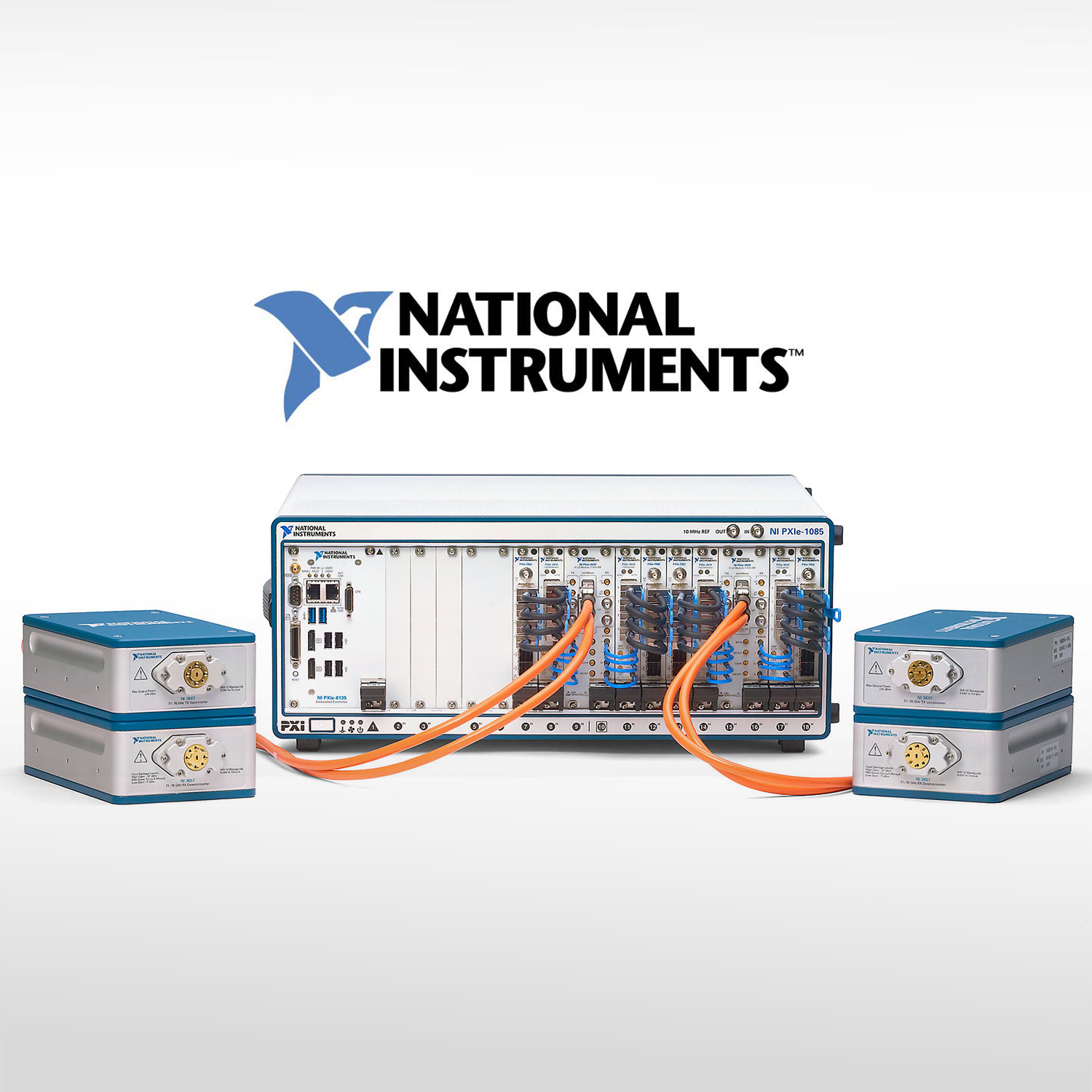
    MUMBAI: NI, the provider of solutions that enable engineers and scientists to solve the world’s greatest engineering challenges, announced today the world’s first software defined radio (SDR) for the millimeter wave (mmWave) spectrum. The new NI mmWave Transceiver System is a full transceiver that can transmit and/or receive wide-bandwidth signals at an unprecedented 2 GHz real-time bandwidth, covering the spectrum in the E-band, 71-76 GHz. Engineers and scientists have used SDRs ubiquitously in the spectrum below 6 GHz for years. However, with companies investing in mmWave as a potential core technology for 5G, researchers now have a full-featured SDR platform to drive initiatives based on this technology.

    The mmWave transceiver system includes new PXI Express modules that collectively function as an mmWave access point for a user device. Because of the unprecedented flexibility, users can develop mmWave communication prototyping systems or perform channel measurements –necessary exercises for wireless researchers to understand the characteristics of a new spectrum – using the same system.

    The mmWave baseband software delivers a complete mmWave physical layer including channel coding in LabVIEW virtual instrument (VI) source code to expedite system development while alleviating many of the system integration tasks. Researchers can also use the mmWave transceiver system baseband with the E-band mmWave heads or other third-party RF front ends to offer maximum flexibility for exploring other mmWave and microwave frequency bands.

    As a key participant in NI’s RF/Communications Lead User program, Nokia has been working with early versions of the mmWave transceiver system in its 5G research initiatives for over a year.

    “NI’s mmWave transceiver system has been a key research platform for our mmWave research,” said Nokia Bell Labs head of mobile radio research Tod Sizer. “The platform delivers the right combination of hardware and software necessary to expedite our research and has given us confidence that mmWave will indeed be a critical technology for 5G. At this year’s Brooklyn 5G Summit, we are demonstrating a high data rate mmWave system using phased array @ 60 GHz using NI’s platform, thus making 5G a commercial reality.”

    “There’s no doubt that 5G will include frequencies above 6 GHz,” said NI vice president of RF and wireless communications product marketing Charles Schroeder. “The mmWave transceiver system is an essential platform for understanding the propagation models of higher frequency signals and for building real-world prototypes of these new generation 5G systems.”

  • NI announces mmWave software defined radio

    NI announces mmWave software defined radio

    MUMBAI: NI, the provider of solutions that enable engineers and scientists to solve the world’s greatest engineering challenges, announced today the world’s first software defined radio (SDR) for the millimeter wave (mmWave) spectrum. The new NI mmWave Transceiver System is a full transceiver that can transmit and/or receive wide-bandwidth signals at an unprecedented 2 GHz real-time bandwidth, covering the spectrum in the E-band, 71-76 GHz. Engineers and scientists have used SDRs ubiquitously in the spectrum below 6 GHz for years. However, with companies investing in mmWave as a potential core technology for 5G, researchers now have a full-featured SDR platform to drive initiatives based on this technology.

    The mmWave transceiver system includes new PXI Express modules that collectively function as an mmWave access point for a user device. Because of the unprecedented flexibility, users can develop mmWave communication prototyping systems or perform channel measurements –necessary exercises for wireless researchers to understand the characteristics of a new spectrum – using the same system.

    The mmWave baseband software delivers a complete mmWave physical layer including channel coding in LabVIEW virtual instrument (VI) source code to expedite system development while alleviating many of the system integration tasks. Researchers can also use the mmWave transceiver system baseband with the E-band mmWave heads or other third-party RF front ends to offer maximum flexibility for exploring other mmWave and microwave frequency bands.

    As a key participant in NI’s RF/Communications Lead User program, Nokia has been working with early versions of the mmWave transceiver system in its 5G research initiatives for over a year.

    “NI’s mmWave transceiver system has been a key research platform for our mmWave research,” said Nokia Bell Labs head of mobile radio research Tod Sizer. “The platform delivers the right combination of hardware and software necessary to expedite our research and has given us confidence that mmWave will indeed be a critical technology for 5G. At this year’s Brooklyn 5G Summit, we are demonstrating a high data rate mmWave system using phased array @ 60 GHz using NI’s platform, thus making 5G a commercial reality.”

    “There’s no doubt that 5G will include frequencies above 6 GHz,” said NI vice president of RF and wireless communications product marketing Charles Schroeder. “The mmWave transceiver system is an essential platform for understanding the propagation models of higher frequency signals and for building real-world prototypes of these new generation 5G systems.”

  • Clove Digital introduces gTag – GPS schoolchild locator

    Clove Digital introduces gTag – GPS schoolchild locator

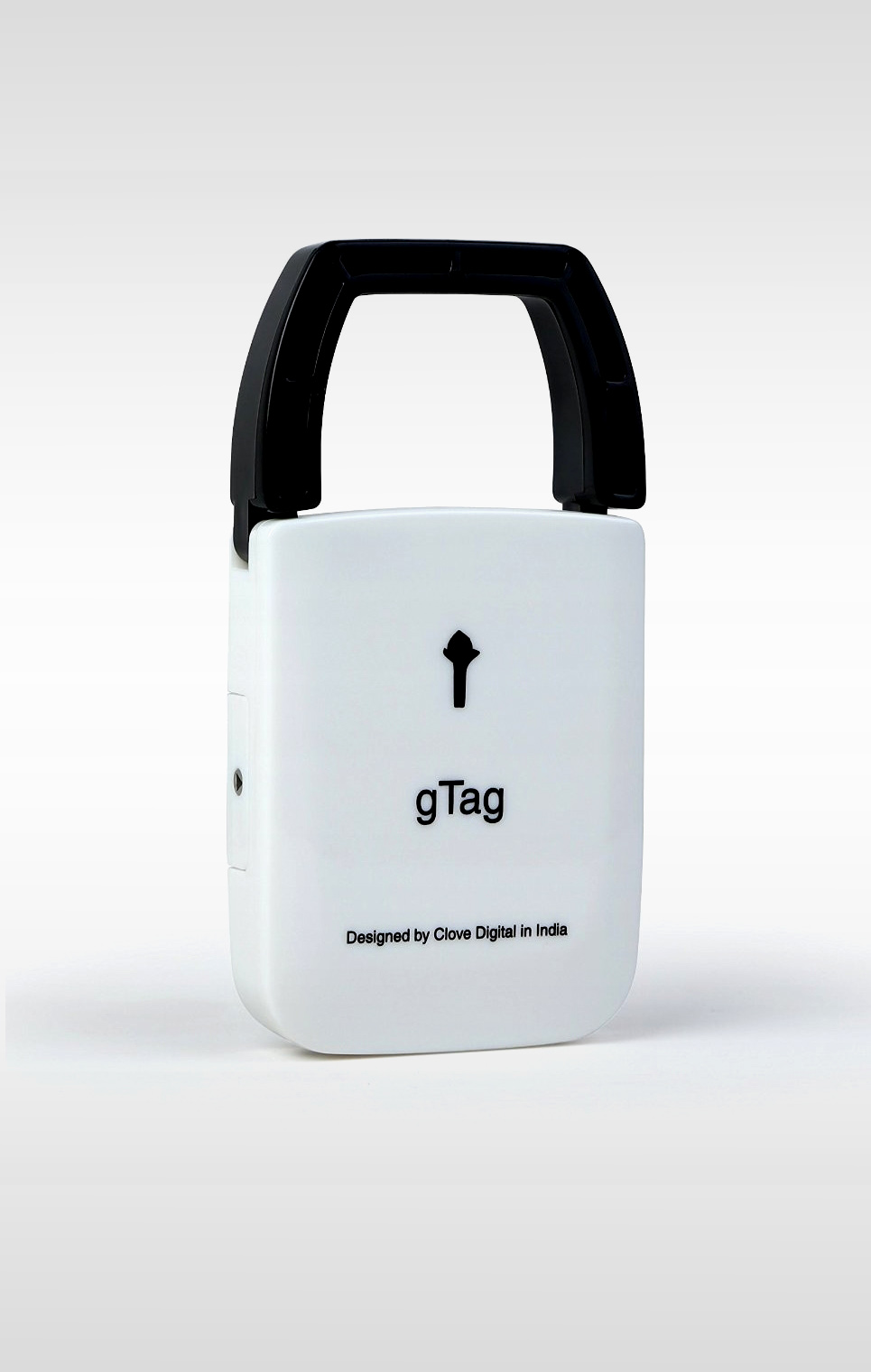
    MUMBAI: Clove Digital introduced gTag, a GPS schoolchild locator, that comes in strong ABS + Polycarbonate design with locking features and white colour glossy finish. gTag offers innovative tool to locate schoolchild in a device that’s taggable to bag, with GSM SIM choice and with no subscription charges.

    “gTag is an innovative product that will provide visibility of schoolchild’s outdoor movements to parents. gTag is a hardware device plus an android app which gives instant updates as to when the child reaches or leaves places marked by parents,” said Anuraag Renjith, Clove Digital’s founder.

    “gTag is handy and easily taggable to a child’s school bag. Freedom to choose GSM SIM helps parents identify right network with coverage in child’s route. In today’s chaotic times with traffic woes growing on a daily basis, to have a device that can help parents know their child’s exact location while travelling is a great help. We are sure more and more parents will endorse this product in the coming months.” added Anuraag.

    gTag provides reassurance to parents by throwing more light into the outdoor movements of children. Parents can mark up to 6 places in regular route taken by child and be informed when child reaches or leaves marked places. gTag empowers parents with complete real-time information on child out of home.

    In case of an emergency, parent can choose to see real-time location of the child on map view using gTag android app.

    How does the device work? once a parent buys the gTag, they need to insert an active data SIM and charge the gTag. An account atwww.clovedigital.com needs to be created or via the android app gTag from play store. After signing in, the parent can add child with the gTag ID printed inside the box. It allows them to mark places like school, home, road junctions en route, etc. in the map and receive instant notifications on the child’s movement in or out of these places.

  • Clove Digital introduces gTag – GPS schoolchild locator

    Clove Digital introduces gTag – GPS schoolchild locator

    MUMBAI: Clove Digital introduced gTag, a GPS schoolchild locator, that comes in strong ABS + Polycarbonate design with locking features and white colour glossy finish. gTag offers innovative tool to locate schoolchild in a device that’s taggable to bag, with GSM SIM choice and with no subscription charges.

    “gTag is an innovative product that will provide visibility of schoolchild’s outdoor movements to parents. gTag is a hardware device plus an android app which gives instant updates as to when the child reaches or leaves places marked by parents,” said Anuraag Renjith, Clove Digital’s founder.

    “gTag is handy and easily taggable to a child’s school bag. Freedom to choose GSM SIM helps parents identify right network with coverage in child’s route. In today’s chaotic times with traffic woes growing on a daily basis, to have a device that can help parents know their child’s exact location while travelling is a great help. We are sure more and more parents will endorse this product in the coming months.” added Anuraag.

    gTag provides reassurance to parents by throwing more light into the outdoor movements of children. Parents can mark up to 6 places in regular route taken by child and be informed when child reaches or leaves marked places. gTag empowers parents with complete real-time information on child out of home.

    In case of an emergency, parent can choose to see real-time location of the child on map view using gTag android app.

    How does the device work? once a parent buys the gTag, they need to insert an active data SIM and charge the gTag. An account atwww.clovedigital.com needs to be created or via the android app gTag from play store. After signing in, the parent can add child with the gTag ID printed inside the box. It allows them to mark places like school, home, road junctions en route, etc. in the map and receive instant notifications on the child’s movement in or out of these places.

  • End-to-End NB-IoT Solution by Huawei to go commercial by December 2016

    End-to-End NB-IoT Solution by Huawei to go commercial by December 2016

    NEW DELHI: An end-to-end Narrow-band IoT (NB-IoT) Solution developed by Huawei to help global operators expand their IoT services into new markets will be made available from September this year.

    Introducing the system at Internet of Things (IoT) Summit today in during Mobile World Congress Shanghai, Huawei said it plans to conduct a large commercial trial in the fourth quarter of this year and release the solution for large-scale commercial use in late December 2016.

    The Solution includes Smart Device Solution enabled by Huawei LiteOS and NB-IoT Chipset; eNodeB base stations that can smoothly evolve to NB-IoT; the IoT Packet Core that supports flexible deployment of Cone in a Box and network functions virtualization (NFV); and a cloud-based IoT Connection Management Platform with big data capabilities.

    It is designed to meet operators’ requirements for IoT services with low-power and wide-area (LPWA) coverage. Developed based on 3GPP standards, the solution underpins flexible networking under various industry and use scenarios. In addition, the solution’s devices and platform can be made easily accessible to NB-IoT device and application partners, which makes it possible to rapidly achieve business innovation and scenario-based customization.

    Huawei’s Products and Solutions division Marketing & Solutions Department VP Jiang Wangcheng said: “The number of cellular IoT connections worldwide will grow seven-fold over the next three to four years. NB-IoT will be a key driver for this trend – it will also be one of the key untapped markets for operators.” In 2015, Huawei launched the ‘1+2+1’ IoT ICT Strategy.”

    Wangcheng added that Huawei was building a robust ecosystem where aimed at exploring new business areas together with customers and partners.

    In addition to pursuing technological innovation and developing leading solutions, Huawei has proactively built a strong NB-IoT ecosystem as part of its goal to drive a thriving IoT industry. So far, Huawei has helped operators build NB-IoT open labs to accelerate the development of smart NB-IoT devices and applications. In the third quarter of 2016, Huawei will launch SoftRadio, a software suite that allows developers to access NB-IoT labs via the Internet for remote innovation and commissioning.

  • End-to-End NB-IoT Solution by Huawei to go commercial by December 2016

    End-to-End NB-IoT Solution by Huawei to go commercial by December 2016

    NEW DELHI: An end-to-end Narrow-band IoT (NB-IoT) Solution developed by Huawei to help global operators expand their IoT services into new markets will be made available from September this year.

    Introducing the system at Internet of Things (IoT) Summit today in during Mobile World Congress Shanghai, Huawei said it plans to conduct a large commercial trial in the fourth quarter of this year and release the solution for large-scale commercial use in late December 2016.

    The Solution includes Smart Device Solution enabled by Huawei LiteOS and NB-IoT Chipset; eNodeB base stations that can smoothly evolve to NB-IoT; the IoT Packet Core that supports flexible deployment of Cone in a Box and network functions virtualization (NFV); and a cloud-based IoT Connection Management Platform with big data capabilities.

    It is designed to meet operators’ requirements for IoT services with low-power and wide-area (LPWA) coverage. Developed based on 3GPP standards, the solution underpins flexible networking under various industry and use scenarios. In addition, the solution’s devices and platform can be made easily accessible to NB-IoT device and application partners, which makes it possible to rapidly achieve business innovation and scenario-based customization.

    Huawei’s Products and Solutions division Marketing & Solutions Department VP Jiang Wangcheng said: “The number of cellular IoT connections worldwide will grow seven-fold over the next three to four years. NB-IoT will be a key driver for this trend – it will also be one of the key untapped markets for operators.” In 2015, Huawei launched the ‘1+2+1’ IoT ICT Strategy.”

    Wangcheng added that Huawei was building a robust ecosystem where aimed at exploring new business areas together with customers and partners.

    In addition to pursuing technological innovation and developing leading solutions, Huawei has proactively built a strong NB-IoT ecosystem as part of its goal to drive a thriving IoT industry. So far, Huawei has helped operators build NB-IoT open labs to accelerate the development of smart NB-IoT devices and applications. In the third quarter of 2016, Huawei will launch SoftRadio, a software suite that allows developers to access NB-IoT labs via the Internet for remote innovation and commissioning.

  • Yatra launches cutting edge technology

    Yatra launches cutting edge technology

    MUMBAI: Yatra.com strengthened their travel booking offering by launching a series of exciting new features. These innovative technological solutions cater to different touch points in their business and further ease the booking process. The features launched – a Facebook chat bot to enable booking tickets, a self serve platform to address customer queries, and a market place chat platform to enable travellers to chat in real time with the sellers – are leading edge technology features that are a first for the Indian travel Industry.

    Yatra.com president Sharat Dhall says, “It has been our constant endeavour to stay in touch with the pulse of the traveller and up-grade our products accordingly. Today we are excited to unveil the chat bot for Facebook Messenger, a first in the Industry and a convenient way for travelers to quickly see travel options and make bookings. Facebook has a wide user base, and this chat option will enable travellers to experience Yatra in a seamless fashion without moving out of Facebook. Also the self serve and market place chat tools help ease the booking process and improve the overall customer experience.”

    Today’s traveller, thanks to the internet, is very well informed and believes in thorough research before deciding on their travel. Facebook is the largest social network and a number of travellers also take advice from friends before making travel plans. In addition, Yatra has a vast reach of almost 1.5 lakh Facebook followers who are looking to make bookings and enquiring about best deals. To leverage this audience, Yatra has launched an intelligent chat bot which helps customers search and book flights directly from their FB messenger. Itis an intuitive platform which helps consumer search in natural language and can handle even complicated queries. Chat bots let users perform tasks within messenger apps that would otherwise be done in a separate app. The company can use these bots to target users on platforms they frequent rather than making them download the company’s app to book.

    Yatra had earlier launched a holidays marketplace, as it enabled a wide range of packages and the best prices as buyers and sellers could directly interact and complete the transaction with no intermediaries. The marketplace chat platform that has just been launched serves as a direct connect between the customer and the re-seller. It has been built with the ability to have text based chats or direct voice calls. Customers can also share attachments via the chat. Discreetness is given due importance with customer privacy being completed maintained.

    Yatra has also introduced a self serve platform that can answer customer queries as it works like an automated FAQ machine, where responses to generic queries are pre-fed. In addition, based on the kind of queries posted by customers, the base of responses can be enhanced making the tool all the more powerful and efficacious.

  • Yatra launches cutting edge technology

    Yatra launches cutting edge technology

    MUMBAI: Yatra.com strengthened their travel booking offering by launching a series of exciting new features. These innovative technological solutions cater to different touch points in their business and further ease the booking process. The features launched – a Facebook chat bot to enable booking tickets, a self serve platform to address customer queries, and a market place chat platform to enable travellers to chat in real time with the sellers – are leading edge technology features that are a first for the Indian travel Industry.

    Yatra.com president Sharat Dhall says, “It has been our constant endeavour to stay in touch with the pulse of the traveller and up-grade our products accordingly. Today we are excited to unveil the chat bot for Facebook Messenger, a first in the Industry and a convenient way for travelers to quickly see travel options and make bookings. Facebook has a wide user base, and this chat option will enable travellers to experience Yatra in a seamless fashion without moving out of Facebook. Also the self serve and market place chat tools help ease the booking process and improve the overall customer experience.”

    Today’s traveller, thanks to the internet, is very well informed and believes in thorough research before deciding on their travel. Facebook is the largest social network and a number of travellers also take advice from friends before making travel plans. In addition, Yatra has a vast reach of almost 1.5 lakh Facebook followers who are looking to make bookings and enquiring about best deals. To leverage this audience, Yatra has launched an intelligent chat bot which helps customers search and book flights directly from their FB messenger. Itis an intuitive platform which helps consumer search in natural language and can handle even complicated queries. Chat bots let users perform tasks within messenger apps that would otherwise be done in a separate app. The company can use these bots to target users on platforms they frequent rather than making them download the company’s app to book.

    Yatra had earlier launched a holidays marketplace, as it enabled a wide range of packages and the best prices as buyers and sellers could directly interact and complete the transaction with no intermediaries. The marketplace chat platform that has just been launched serves as a direct connect between the customer and the re-seller. It has been built with the ability to have text based chats or direct voice calls. Customers can also share attachments via the chat. Discreetness is given due importance with customer privacy being completed maintained.

    Yatra has also introduced a self serve platform that can answer customer queries as it works like an automated FAQ machine, where responses to generic queries are pre-fed. In addition, based on the kind of queries posted by customers, the base of responses can be enhanced making the tool all the more powerful and efficacious.

  • Private broadcasters, DD, telcos and the terrestrial TV dilemma

    Private broadcasters, DD, telcos and the terrestrial TV dilemma

    MUMBAI: There was once a treasured medium. Everyone – 300 million when it started and -800-odd million two decades ago – flocked to it everyday. Every evening and more so on Sunday mornings they gathered around the one eyed God in their homes. They switched it on manually – and later with a remote device – waited for the picture to appear on the glass screen to be transported to another universe. Where they could laugh, learn, cry, enjoy unencumbered. In the comfort of the home.

    For years, terrestrial television run by the state owned broadcaster Doordarshan – and later by its parent Prasar Bharati – was our main source of information, entertainment, and education. We Indians used to carp and crib that it gave us one sided information, did not entertain us enough, delivered low quality images, was too rigidly controlled. But the reality is it did engage the nation – at least three generations – during different periods since 1960 when TV was flagged off in India – in internet-before times, in prior-to- liberalisation times.

    And yes it did present a platform to a preferred few, to churn out content, which would become the opium for many. Allegations of nepotism, favouritism, corruption were hurled at the powers that be in the portals of Doordarshan and in the ministry of information and broadcasting as a few producers became rich. As did the paanwala below Mandi House who directed and passed on the scripts and proposals of producers to the higher ups or so it was rumoured

    Doordarshan was a God supreme. Impenetrable. Ubiquitous. And all pervasive. It reached out to every nook and cranny of this nation of ours thanks to the lavish spread of transmitters. In TV set and electricity poor regions of heart land India, its magnetic appeal was so great, that villagers would bring out a generator, which would crank out power, and supply it to a single TV as an entire community sat enthralled before it. In urban India, streets used to be deserted as cities’ denizens huddled around it in worship like awe.

    The Doordarshan of today has the same reach. But not the appeal. The terrestrial network has over the years become a very poor shadow of its earlier muscular self. Indians have fled to cable TV, DTH TV, online and OTT linear services on their mobile phones. A new crop of Gods has emerged – Star India, Zee TV, Sun TV, Sony Pictures, Viacom18, Youtube, Facebook, Hotstar, Voot, dittoTV, Netflix – and they are obsessing a nation wanting to be entertained.

    An archaic government diktaat – passed under the Cable TV Regulations Act- forces both cable TV and DTH networks to carry DD channels at no cost to government, even as other services struggle to pay top dollar to get carriage.

    The spectrum that Doordarshan occupies for its terrestrial transmissions nationally is extremely valuable. And the Modi-led government probably realizes this. Hence, the recent release of the consultation paper by the Telecom Regulatory Authority of India that seeks to understand how private players could be allowed in the terrestrial broadcasting space. Auctioning it or allowing public private sector participation could provide tens of thousands of crore to the exchequer. And possibly to the ailing Doordarshan, which depends on government dole and tax payer money for its continued existence. Prasar Bharati CEO Jawahar Sircar has been tearing his hair out but has admitted that he has found it very difficult to bring a sense of discipline to its vast employee force nationally. He has said that he is sitting on a gold mine with Prasar Bharati but he has confessed the culture in the organization has made it very difficult to mine and yield profits.

    Globally, broadcasters in most markets have migrated to digital using one of the four technical standards: DVB-T (European), ATSC (American), ISDBT (Japanese), and Chinese (DTMB). DD has been tentative about the migration; it has stayed put in standard analog mode with its 1,400 transmitters standing tall. It has installed only some 20-odd DVB-T transmitters; another 40-odd are planned; altogether 600 odd digital transmitters are to replace the current analog ones.

    The cost of this migration is going to run into tens of thousands of crore as old archaic transmitters and analog work flows are converted to digital. It’s something which Prime Minister Narendra Modi would definitely like to be done. But the question is: does it make economic sense under Doordarshan and Prasar Bharati?

    DD is taking the slot sale route once again and inviting private producers to create content, sell the advertising air time, and pay it a flat fee. Sounds interesting, but it’s not something that’s attracting successful private sector producers by the truck load. Most of them are tied up with productions on private channels like ZeeTV, Sony, Star and Colors. The risk factor of producing something on DD is proving daunting for them. So only time will tell whether DD’s private slot sale scheme will work or not. The previous attempt was a sheer disaster as at that time DD dished out oodles of cash to producers who did not really care about what they put out on air. They only pocketed their high margins, which they made, according to DD sources.

    Does DD have a future on its own? Yes, its FreeDish DTH service has caught on like wildfire because of its low cost. But research has shown that some viewers are not staying loyal to it; they are rotating the small dish around to catch signals from other private providers. Also, overall, churn in the DTH space is pretty high as consumers have been service-hopping to avoid paying the high tab each of the operators is charging.

    An issue that the government could think about is: why not privatise the analogue DD as well instead of just selling out slots? The reasons governments at the Centre in the past have held on to the public caster is because they wanted to have a media outlet through which their viewpoint could be heard, and also provide public service programmes to help those in the rural heartlands. But of what use is a network that fewer and fewer viewers are opting for is something those in power need to think about. Private newspapers and TV news channels are anyway behaving like handmaidens of the Narendra Modi-led government. And it could easily sell most of the DD network to private players while retaining some time slots for itself to propagate its views. Additionally, it could mandate leading Indian broadcasters to do really good public service TV programmes on their more popular channels even while paying them to do so. That could prove a cheaper proposition, than running a unwieldy behemoth.

    So does it make sense to privatize the digital terrestrial television space? And who else apart from Doordarshan could venture into it? Prima facie it does: the world over DTT is holding its own against cable and satellite television. Of course, in India’s case, the impact of mobile has been humungous with nearly a billion subscribers, and around 250 million mobile internet users.

    The 4G LTE revolution has yet to hit India. The era of fast cheaper data and internet access is knocking on its doors. Things will change drastically when it does arrive. Among the major players in this segment everyone has been watching to turn on the data juice are: Reliance, Airtel, Idea, Vodafone. 4G LTE and DTT can easily be married to each other thus allowing users to watch terrestrial television on their tablets and phones while on the move. All it requires is a dongle or a chip to be inserted into the smart HD-ready handsets. And viola, you could get a clutch of digital channels.

    And that brings us to the answer of who could get into DTT – obviously the telcos, and primarily Reliance Industries, which is bidding to revolutionise India’s mobile habits.Yes, its Jio venture is heavily laden with debt, but even that is a drop in the ocean, compare to what the megacorp makes from its oil and gas businesses. Then possibly Airtel; the company is already in the DTH platform space. The Tata group: it operates a platform along with Rupert Murdoch’s Sky. The ZeeTV-Essel group which has a strong presence in cable TV, DTH, OTT, and broadcasting. Star India, which has stuck to being a content creator, but its parent Twenty First Century Fox has deep and rich experience in DTH, and terrestrial TV.

    However, a note of caution here: they will get in only if it is economically feasible. On the face of it, the RoI will take a long time – a very long time. Unless innovative models are resorted to. One of these could be to have the private sector bid for either cities, states or regions. This will help distribute the capital risk among several players, each of who could take up a city or a region for their individual DTT service.

    The DTT solution could take some time finding. And it may well be buried because of the rapid strides that online content consumption is making. But at least a start has been made.