Category: Technology

  • VBS 2024: The FAST TV Phenomenon: The Next Growth Phase

    VBS 2024: The FAST TV Phenomenon: The Next Growth Phase

    Mumbai: India is in the grips of seisnic changes regarding video and broadband consumption. Pay TV cord-cutting is rampant even as free TV subscriptions are on the rise and OTT buy-ins are churning with the signs up for certain platforms stagnating even as others are seeing rapid increases and some are seeing cataclysmic drops. Aggregators of OTTs are popping up on the horizon promising cheap bundles along with value-added services for cable TV and DTH. There’s a rush to set up free advertising-supported TV channels by TV set manufacturers and smart TV device makers. There’s the Jio factor where it seeks to convert most pay TV customers to free streaming of video content by offering free access to consumers at no cost. The consumer continues to demand bandwidth higher than ever imagined even as prices drop. Margins are under pressure as every player goes one-up on each other to acquire and retain customers.

    The video and broadband distribution landscape has not been as vibrant as it is now.. How long will this pot-boiling continue? What will the magic potion of video and broadband look and taste like? And what’s the end game? Indiantelevision.com has held the 20th edition of Video and Broadband Summit better known as VBS at Sahara Star Hotel, Mumbai.

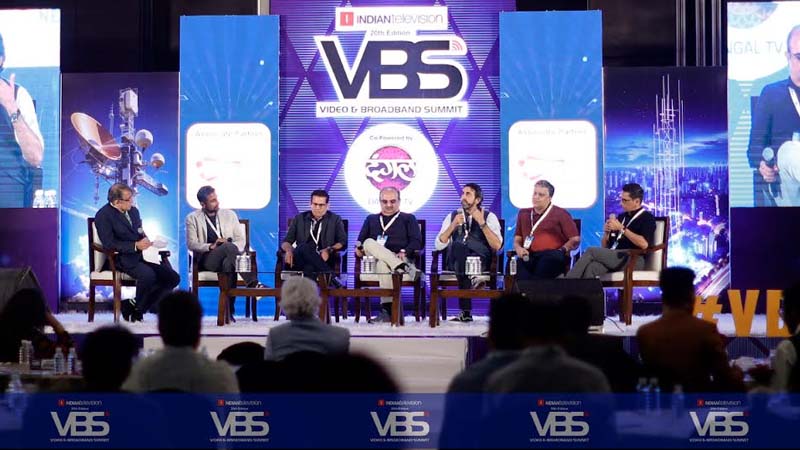
    The session chair for this panel was The Linus Adventures founder & chief evangelist Sunil Lulla along with the panelists: Travelxp co-founder  & CEO Prashant Chothani, DistroScale APAC head Vikas Khanchandani, Jioads CEO Gulshan Verma, Samsung Plus TV head of partnerships Kunal Mehta, Planetcast digital COO Venugopal Iyengar, Amagi SVP (Sales) Jay Ganeson

    Lulla began the session by saying how the marketplace is being built, how highly competitive it has been over the years, and also the emergence of FAST TV.

    To which Iyengar replied, “ The distribution landscape has been changed which we talked about on the morning session options. For media owners, there are hundreds of options which is great news but there is a complexity of how to manage not only distributing your content without too much conflict of interest or conflict of revenue. Secondly, also, how do you create a differentiated proposition for the viewer there’s no point doing a live channel and then you know, which is paid. So those two challenges are, of course, being dealt with by the media owners and the distributors like I was talking about, is really about figuring out how to manage this experience for the user, personalizing it and making it important.”

    Verma said, “ So I think the short answer right now is people want to watch a lot of content, and they want the variety that and they are willing to watch as in exchange for a more variety. And this is not just an Indian phenomenon, because we’re in India, if you look at the US, for example, you take something like Hulu TV, you know, they have two plans.1299 a month with no ads and 799 a month with ads. 95% of users taking seminar time without space. So, they will always be interested in FAST.”

    Khanchandani replied, “A lot of genres are getting pushed out of traditional distribution. So if you look at categories like English movies, and English entertainment, many other categories are feeling the heat. These guys are getting pushed out of traditional distribution. FAST is becoming a great place for them to land. Just allowing them to reach the right audience and build viewership.”

    Chothani said, “Fast helped us to graduate people to go on to pay TV and then get into the spot. So fast is when you say what is fast? It’s DD Free Dish on steroids. Because you can monetize it better. And it’s not that the television advertising budget is going down, the growth has slowed down. So nobody’s going away, everything is going to be there, we need to be a leader. That the key takeaway we understood when in the West when they entered FAST and it’s not that it took away from our pay TV audience or into coming from our OTT offering. So consumer is also consuming as part of certain transitions that the consumer is watching everything everywhere. So it’s not this or that. It’s this and that, and that.”

    Mehta said, “There is a need for other genres also to start, you know, investing in the content investing in FAST. About 80% of my consumers today watch some ad-supported streaming content on our FAST TV. So that just shows you how powerful the medium is whether it be TV plus or YouTube or any other VR OTT application on the platform.”

    Ganesan at the end summed up the by saying, “There are going to be four key players in any strategy from the consumer who’s eventually watching, who’s ready to watch an ad for getting the free content, they see value in FAST because on AVOD there is so much content, you just end up when you have what I have a lean back experience, you just don’t know what to watch what you want to watch.”
  • VBS 2024: The Churning Video Distribution Ecosystem – What’s next?

    VBS 2024: The Churning Video Distribution Ecosystem – What’s next?

    Mumbai: India is in the grips of seisnic changes regarding video and broadband consumption. Pay TV cord-cutting is rampant even as free TV subscriptions are on the rise and OTT buy-ins are churning with the signs up for certain platforms stagnating even as others are seeing rapid increases and some are seeing cataclysmic drops. Aggregators of OTTs are popping up on the horizon promising cheap bundles along with value-added services for cable TV and DTH. There’s a rush to set up free advertising-supported TV channels by TV set manufacturers and smart TV device makers. There’s the Jio factor where it seeks to convert most pay TV customers to free streaming of video content by offering free access to consumers at no cost. The consumer continues to demand bandwidth higher than ever imagined even as prices drop. Margins are under pressure as every player goes one-up on each other acquire and retain customers.

    The video and broadband distribution landscape has not been as vibrant as it is now.. How long will this pot-boiling continue? What will the magic potion of video and broadband look and taste like? And what’s the end game? Indiantelevision.com has held the 20th edition of Video and Broadband Summit better known as VBS at Sahara Star Hotel, Mumbai.

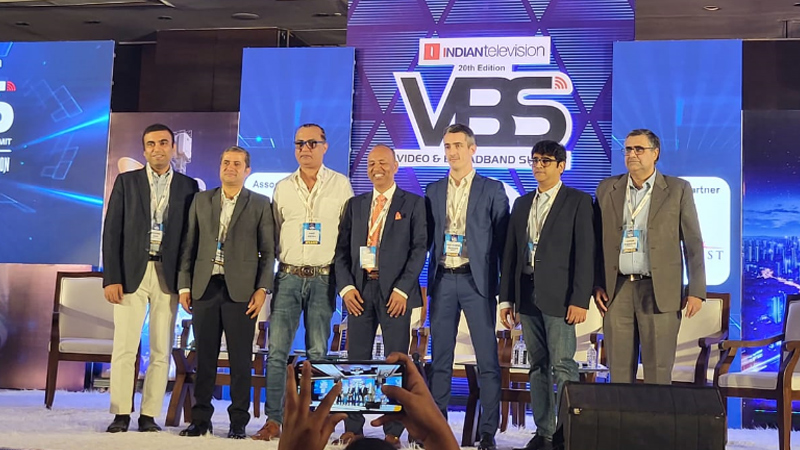
    The session chair for this panel was Ernst and Young LLP partner, media & entertainment advisory services Ashish Pherwani along with panelists: Fastway group CEO Prem Ojha, IndiaCast president Amit Arora, Dish TV CEO Manoj Dobhal, Warner Bros. Discovery & Eurosport South Asia head of distribution Ruchir Jain, Shemaroo Entertainment COO-broadcasting business Sandeep Gupta and Harmonic EMEA-APAC streaming market development director Alexandre Paugam

    Pherwani started off by saying by 2028, the TV world be breaking up into three largely equal partners and will have about 70 to 80 million pay TV and 65 to 70 million free-to-air services.

    Jain said, “We are very hopeful about the future right now. If you look at this, what’s going to happen is one is that the entire set of consumers are increasing in number. So I’m talking about how pay TV is gonna grow, connected TVs, and also about the free-to-air services, etc, so it’s the number of people coming into the media, who is going to invest. So that’s one big factor, the second big factor is the time scale

    Ojha opined that, “Our job is to keep the ground ready so that all this beautiful content and all these absorbing content can reach out to consumers the way they want it today.”

    Arora said, “So it is select all 3 platforms to seem to be consuming a lot of common content assets and that is going to change in the future formats will change may be the price point. I agree with that.”

    Dobhai said, “ We are brands with long-run legacies. And new ones coming up. Fortunately, unfortunately, I’m on the receiving end of it because we are the ones who showed the word of it all the country that you know what experience it brings when you watch an immersive content technology, upgraded version of it, satellite, and all that.”

    Gupta added that for Shemaroo, Gujarati is like building our own Prime Video. Because we are devoted ourselves to Gujrati. We are trying to expand on more areas as well. Other than that Shemaroo and ShemarooMe are mostly devoted to Gujarati.

    Lastly, Paugam replied, “Coming from the technology, part of things, especially the broadcast infrastructure, I think we see a big trend, and DTH cable stays strong. And for us, it stays at a huge part of our business helping protesters and operators distribute their content through those networks and optimize it. But the big growth is in streaming. And we’ve seen a tipping point globally, the number of subscribers from pay TV subscribers, being outpaced by the number of streaming subscribers. We’re moving from sending a unified feed and broke it down to everyone to sending unique guests and a unique feed to the end user. That gives us the ability to customize this unique feed. I think a lot of innovation and new technology that are emerging are around how do we leverage that streaming vessel to have the experience as personalized as possible.”

  • QuackQuack surpasses 30 million users

    QuackQuack surpasses 30 million users

    Dating apps are the new normal. Online dating has been gaining traction in the past decade, and keeping up with the trend, India’s most downloaded dating app, QuackQuack, proudly announces the attainment of a significant milestone: 30 Million users. The momentous achievement underscores QuackQuack’s unparalleled dedication to fostering genuine connections, constantly updated and cutting-edge features, and a user-centric approach. On the occasion, the app’s Founder and CEO, Ravi Mittal, commented, “As we celebrate this 30 million milestone, we are truly humbled by the overwhelming support and trust placed in us by our users. We are excited to see the impact QuackQuack has made in fostering genuine connections and reshaping the terrain of online dating.  We witnessed an average of 24,000 app downloads daily, a 24% rise in female users, and a surge in users from Tier 2 and 3 Indian cities. It only makes us more committed to constantly enhancing the user experience and ensuring that our app remains the preferred choice for millions seeking love and friendship.”

    Over the past month, the indigenous dating app has experienced an exhilarating surge in activity, with an impressive 77 profile views transpiring each second. This swell in engagement is reflected in the platform’s staggering download rate, demonstrating its widespread appeal and unwavering popularity among young daters across the nation. Having captured and made a secure footing on the romance and friendship market in Tier 1 and 2 Indian cities, QuackQuack is now locked in on succeeding in Tier 3 cities, aiming to make online dating readily available in remote corners of the country.

    The desi dating app also witnessed a flurry of interactions, with an average of 1064 chats exchanged per minute. It highlights the platform’s efficacy in facilitating meaningful conversations and its role as a catalyst for forging genuine connections. QuackQuack has logged more than 120 screenviews per second, with more than 25 million app downloads. Among many remarkable displays of enthusiasm, a user set a new record by sending 21,000 likes in a single day, underscoring the platform’s appeal among its user base.

    With almost 432,000 matches in a month, QuackQuack has set a new benchmark. The app has also emerged as a favorite for India’s Gen Z demographic, with the average age of new joiners between 24 and 25. There has also been a constant effort to keep the platform clean and safe with diligent monitoring, a robust verification process, and cutting-edge technology; famed for its security measures, QuackQuack has seen a rise in female users, and the Hyderabad-based app also revealed that they are currently witnessing a higher login rate among females than males, emphasizing the app’s safety endeavors. Ravi further added, “Besides upgrading our safety features, we have bigger plans for this year. We intend to expand our app’s services to every crevice of the country and make the dating experience easier for all. For the same, we are focusing on more vernacular ads for better understanding and wider reach. We have also added a more exhaustive filter for users to find the most compatible match. Going beyond conventional location-based matching, we are introducing advanced filters that will enable users to find matches based on shared interests, hobbies, preferred educational qualifications, professions, and even educational institutions. We believe meticulous and informed decisions when finding a partner result in a successful relationship. This year, we have also hit a few milestones on social media platforms. We are dedicated, now more than ever, to propel QuackQuack further ahead in the dating arena without skipping a beat.” 

  • Mobikasa’s business vertical makes digital assets accessible to users with disabilities

    Mobikasa’s business vertical makes digital assets accessible to users with disabilities

    Mumbai: Mobikasa, a top-rated web and app development company, demonstrates its dedication to promoting digital inclusivity via its digital accessibility vertical. This initiative focuses on making digital assets, such as websites, mobile apps, and PDFs accessible to people with disabilities. Clients can benefit from a range of tools and methods provided by Mobikasa for accessibility audits and remediation, including checks for keyboard, contrast, zoom, and other essential parameters.

    Mobikasa adapts emerging trends in digital accessibility that promise a future wherein the internet is genuinely inclusive. AI-powered solutions, coupled with the rise of immersive technologies such as AR/VR, are at the forefront of these trends. Automatic image descriptions using computer vision, haptic feedback, sensory interfaces, spatial audio design, and voice user interfaces (VUIs) are all set to transform the digital landscape, making it intuitive and accessible for users with varying abilities.

    Mobikasa provides accessibility training and consultation services to help organisations become digitally inclusive. Experts certified by the International Association of Accessibility Specialists (IAAP) develop brand-specific code playbooks and offer guidance and technical training. The company actively engages with industry experts through participation in global conferences, seminars, forums, etc.

    Mobikasa managing partner Prateek Sachdev emphasised the company’s commitment to digital inclusivity. He stated, “Our dedicated business vertical aims to empower corporations to make their digital assets accessible to users with disabilities. Our comprehensive accessibility testing and remediation solutions, underscore our determination to create a truly inclusive digital world.”

    Mobikasa’s accessibility experts stand out for their technical knowledge, accessibility guidelines adherence, and user-centered approach. They function as accessibility advocates, not just auditors, providing clients with comprehensive digital accessibility solutions.

    Mobikasa remains at the forefront of digital accessibility, ensuring that its digital experiences are inclusive for all users.

  • happn’s Sunday Sharing Sessions bridges the gap between dating and mental health

    happn’s Sunday Sharing Sessions bridges the gap between dating and mental health

    Mumbai: The leading real-life dating app, happn, joined forces with The Alternative Story, a mental health service provider, to introduce an awe-inspiring initiative- Sunday Sharing Sessions. Through this collaboration, happn provided users with free counselling sessions, offering a safe space to discuss various topics, including digital dating nuances, identifying red flags, practising self-love, and coping with emotional burnout.

    During the month-long association, which consisted of four Sundays, the initiative received an overwhelming response, with over 34,000 users visiting the Sunday Sharing Sessions website and over 735 successful counselling sessions. While the conversations were completely confidential, the therapists revealed that the major concerns were around societal expectations, guilt, loneliness and other such dilemmas.

    The initiative also sheds light on specific situations which are especially challenging for people to deal with. These range from experiencing loneliness while living away from home, struggles of building new connections, intimacy issues including guilt about masturbation, attraction to perceived inappropriate individuals, and dealing with break-ups.

    While women candidly shared their expectations for finding the right partner and family pressure regarding marriage, most men confessed to having trouble being vulnerable outside romantic relationships, highlighting the need for deeper connections and emotional support networks.

    Through Sunday Sharing Sessions, happn and The Alternative Story provided a safe and supportive space for singles to explore their thoughts, feelings, and experiences related to dating and relationships.

    As happn continues its commitment to fostering meaningful connections and supporting the mental health and well-being of its users, this partnership stands as a testament to the power of community, empathy, and collaboration in creating positive change.

  • ACT Fibernet relaunches its ACT Super app

    ACT Fibernet relaunches its ACT Super app

    Mumbai: ACT Fibernet, a leading player in the broadband and digital services industry, is happy to announce the relaunch of its mobile app with groundbreaking features that redefine the customer experience in the industry. Committed to valuing its customers’ time and delivering seamless solutions to internet-related queries, ACT Fibernet has introduced the ACT Super App, designed to provide quick, easy,  and accessible solutions at the fingertips of its users.

    Keeping up with the changing technologies and expansion in the user base, the broadband brand has completely revamped the mobile app. The new mobile app has been designed and launched after undertaking extensive research and feedback from users to understand the scope of improvement. The ACT  Super App has a different look and feel, making it easier for users to pay bills and raise tickets, track accounts,  set reminders, chat with customer care, upgrade plans, etc.

    With industry-first features, the ACT Super App sets a new standard for convenience, efficiency, and innovation in customer service. A few key features of the app include instant query resolution, where users can now enjoy real-time solutions to their internet-related queries through self-help content like videos and  FAQ section on the app, ensuring a swift and hassle-free experience. They can also now easily monitor their data, speed and the number of devices connected to the Wi-Fi through the analyzer. They can set bill  reminders, subscribe and unsubscribe to value-added services etc. Other unique features that make the app easy to use include dark/light mode and font adjustments.  

    ACT Fibernet chief marketing and customer experience officer Ravi Karthik expressed his enthusiasm for the relaunch, and said, “At ACT Fibernet, we aim to deliver superior customer experience across all our interaction points. Our revamped app, is along the same lines, providing simplified UI, and significantly enhanced features on account management and self-care that aim to make customer’s life simpler and more convenient. With this, I am sure that our customers will feel the ACT advantage and adopt  the new app quickly.”  

    As part of the relaunch, the broadband company is also launching a nationwide campaign to raise awareness about the new Super App. Its marketing efforts include reaching out to the audiences through different channels like email, SMS, and WhatsApp. ACT Fibernet will also release videos and creatives on its social media about the latest updates in the app. To maximize its visibility on the app store and improve conversion rate to generate the maximum volume of organic downloads, the relaunch campaign will also comprise fresh content related to updates on the app store.

  • IAB Tech Lab releases in-depth analysis of Google’s Privacy Sandbox

    IAB Tech Lab releases in-depth analysis of Google’s Privacy Sandbox

    Mumbai: IAB Tech Lab, the global digital advertising technical standards-setting body, has released a comprehensive analysis shedding light on the challenges associated with the industry’s adoption of Google’s Privacy Sandbox. The analysis, conducted by IAB Tech Lab’s Privacy Sandbox Taskforce, explores the implications of Google’s plan to eliminate third-party cookie-based tracking from its Chrome browser while replacing it with the Privacy Sandbox. IAB Tech Lab is inviting industry stakeholders to participate in a 45-day period for public comments, which will remain open until 22 March 2024.

    “Embracing Google’s Privacy Sandbox is a seismic shift in the advertising landscape, departing from the industry’s trajectory over the past 25 years,” said IAB Tech Lab CEO Anthony Katsur. “Our findings highlight that the industry isn’t ready yet and identify multiple challenges to implementation due to limitations in accomplishing key advertising objectives. Chrome is focused on providing discrete components that support aspects of use cases, but which ultimately cannot be assembled into a whole that provides a viable business foundation.”

    The analysis identified several key issues that underscore the challenges media companies, advertisers, and the broader industry face in adapting to the changes mandated by Privacy Sandbox. For instance:

    ●  Essential event-based metrics: Essential event-based impression and click counting are only temporarily supported, later moving to aggregated reporting. Bid loss analysis is impossible, making revenue reconciliation and troubleshooting extremely difficult.

    ●  Brand safety concerns: The landscape introduces brand safety concerns, prompting advertisers to navigate potential threats to the integrity of their advertisements and ensuring alignment with desired contexts and values.

    ●  On-browser computing implications: Google’s implementation of an ad exchange and ad server within the Chrome browser necessitates significant re-tooling of the programmatic advertising ecosystem. This affects addressability, reporting mechanisms, ad rendering processes, bidding decisioning capabilities, and concerns around scaling the Privacy Sandbox as it ramps, challenging publishers and advertisers to innovate within these limitations.

    ●  Lack of consideration for commercial requirements: With Chrome acting as an active participant in a financial transaction (the ad auction) and delivery of goods (serving the ad), it poses great concern if Privacy Sandbox neglects legal and business requirements. Failure to incorporate these considerations can result in legal penalties and loss of trust from customers and partners.

    Compiled by senior technical, operational, and data science leaders representing a diverse range of entities, including publishers, agencies, Supply-Side Platforms (SSPs), Demand-Side Platforms (DSPs), measurement companies, and other ad tech players across over 65 companies over 6 months, the analysis aims to foster a collective understanding within the industry, bringing together stakeholders to assess the functionality and implications of Google’s Privacy Sandbox.

    This evaluation focuses on the Chrome browser’s Protected Audience APIs (PAAPI) but also touches on topics, private state tokens, attribution reporting, and fenced frames to determine how they support foundational advertising use cases and provide guidance on their utilization for specific scenarios.

    “The Privacy Sandbox and its associated processes suffer from a lack of transparency for publishers. Its aim to replicate the efficacy of third-party cookies has not been realized. This shortfall undermines publishers’ capabilities to execute numerous vital advertising scenarios and support significant first-party use cases,” said Axel Springer general manager advertising & e-commerce Robert Blanck. “The efforts of the IAB Tech Lab are greatly valued, as they gather industry expertise to scrutinize these shortcomings in this complex technical environment.”

    The analysis emphasizes that the changes mandated by Privacy Sandbox will require substantial development and infrastructure investment costs for both buy and sell-side technology companies. Additionally, operational, business, financial, and legal processes for brands, agencies, and media companies will need extensive reworking.

    As the industry grapples with this transformative shift, the report serves as a crucial resource for understanding the challenges and implications associated with Google’s Privacy Sandbox.

    “The Tech Lab welcomes the Chrome team’s feedback on this analysis,” said Katsur. “We look forward to their clarification of the Task Force’s understanding of critical use cases and working with the industry to find solutions to the key issues we’ve surfaced.”

  • Cosmofeed launches 1:1 bookings feature

    Cosmofeed launches 1:1 bookings feature

    Mumbai: With an aim to provide a transparent platform for interaction between content creators and fans, all-in-one creator platform Cosmofeed, has launched its novel 1:1 bookings feature. Through this online scheduling tool, creators and fans will be able to interact seamlessly and it will also ensure sustainable monetisation for creators.

    Cosmofeed, which has over 25,000 creators on board, offers unique tools that help them build deeper engagement with their audiences. Its solutions are tailored to help creators launch, grow and monetise their content effectively.

    The novel 1:1 booking feature helps content creators create a dedicated booking page to optimise the scheduling and execution of personalised sessions. The booking page can be aligned to each content creator’s personal brand. It empowers creators to configure and showcase a diverse array of sessions, including consultations, coaching calls, and exclusive workshops for their fans. The user-friendly interface allows creators to set up their availability and enables fans to select suitable times and dates in order to schedule calls with creators of their choice.

    The USP of 1:1 bookings feature is that it is customisable and creators have control over scheduling of sessions, their availability and how many sessions they can handle each day or week. This structured scheduling helps them manage their time and also ensures that fans get special and well-organised access. If used effectively, beta results show that the 1:1 Bookings feature can show a 300 per cent increase in return on investments for creators.

    “The 1:1 Bookings feature is a strategic move towards enhancing the way creators connect with their audience. Our data shows a 30 per cent increase in engagement and a 20 per cent rise in revenue among beta users. We are looking at bookings as the future of creator-fan relationships, and it’s about both interaction and sustainable monetization,” Cosmofeed co-founder Vivek Yadav said.

    The company processed earnings worth over Rs 100 crore for more than 5,000 creators in FY23 and closed calendar year 2023 with a mega Rs 200 crore turnover. The aim of the platform is to help more creators effectively monetise their content and therefore solutions offered by Cosmofeed are to ensure that each creator stands out in this crowded space.

  • Kapture CX launches LLMs to revolutionise industry-specific customer interactions

    Kapture CX launches LLMs to revolutionise industry-specific customer interactions

    Mumbai: Kapture, a leading enterprise SaaS customer experience (CX) automation platform has taken a leap in its advanced CX solutions by announcing the launch of its in-house LLMs (Large Language Models) tailored to specific industry verticals. With this innovation, the platform’s cutting-edge technology revolutionises contextual customer interactions and support across various channels including emails, chats, and social media.

    As every business enterprise is actively strategising marketing, sales and customer retention, creating an impactful CX becomes imperative in establishing a personal rapport with customers. With the strategic move to create its own LLMs, Kapture plays an instrumental role in providing real-time customer support, reverting and resolving customer queries promptly.

    Transcending beyond the one-size-fits-all approach, Kapture’s LLMs are trained on industry-specific vertical data, offering a competitive edge over the widely implemented horizontal approach in the present market landscape.

    For vertical specific information extraction, Kapture built and embedded vertical suite of LLMs for unparalleled capabilities in understanding customer intent and extracting critical information from natural language communications. Subsequently, this enhances customer experience while also driving efficiency in handling customer queries.

    Commenting on the idea of building in-house LLMs, Kapture co-founder & CPO Vikas Garg said, “At Kapture CX, we are committed to leveraging the LLMs to provide industry-leading solutions in customer support and interaction. Our LLMs are more than just models; they are integral components in our quest to redefine customer experience and business insights.”

    Additionally, the augment of the vertical LLM suite enables a robust response recommender system. It is designed to auto-generate contextual responses based on various factors such as communication channels, customer intent, transaction history, and customer persona. This not only streamlines response generation but also significantly improves customer support metrics.

    Kapture has over a decade of experience in enhancing customer experience management for large enterprises. This has further helped the company pioneer the development of LLMs specifically for profanity detection and sarcasm understanding. The model plays a critical role in detecting profanities and understanding sarcasm further augments the idea of maintaining the decorum of customer interactions and in automatic correction of responses.

    “Our LLMs are adept at discerning customer intent and extracting relevant information, ensuring that every customer interaction is contextual, insightful and productive,” he added.

    For a vigorous post-interaction analysis, Kapture has employed multiple features to analyse customer conversations. This includes generating automatic quality assurance scores and tagging conversations based on issues, products, and locations. These insights provide pinpointed feedback, enhancing both business strategies and customer support effectiveness.

    Currently, 60 per cent of Kapture CX’s enterprise clients use LLMs. In the coming quarters. The Kapture CX platform projects to deploy in-house LLMs for over 90 per cent of customers.

  • Veera unveils an innovative engagement-based rewards program

    Veera unveils an innovative engagement-based rewards program

    Mumbai: Veera, the pioneering mobile-only internet browser in India, is excited to introduce its unique rewards program. This initiative is designed to celebrate and appreciate users for their loyalty and engagement on the Veera platform. This is the first time a browser has launched its own rewards program, in India.

    Veera’s rewards program sets a new standard in user-centric innovation by offering a seamless and gratifying browsing experience. As users explore the internet using the Veera browser, they will accumulate ‘Veera Points’, unlocking a realm of exciting possibilities for instant redemption or future use.

    The key features of the rewards program include:

    – Earn as You Browse: Users will be rewarded for their browsing activities, creating a dynamic and interactive experience that goes beyond traditional internet usage. – Flexible Redemption Options: Veera users can choose from a variety of redemption options, including tangible rewards such as Vouchers, Discounts or even opt for direct monetary rewards deposited directly into their accounts.

    – Instant Gratification: The program enables users to redeem their points instantly, providing a real-time acknowledgement of their loyalty and engagement.

    Veera co-founder & CEO Arjun Ghose “Everyone’s internet journey begins with a browser; it serves as the gateway to the vast expanse of the internet. Veera was meticulously crafted to redefine the user’s digital experience, offering innovation and seamlessness in every click. The introduction of a rewards program for Veera was a deliberate choice, a way to reciprocate the

    loyalty of our users who invest their time exploring the digital realm through Veera. I am genuinely thrilled to unveil this one-of-a-kind rewards program as it signifies our commitment to enhancing and appreciating the user journey in the digital space.”