Category: Technology

  • “Whilter.ai is planning a global expansion targeting the US and European markets:” Pankaj K Arora

    “Whilter.ai is planning a global expansion targeting the US and European markets:” Pankaj K Arora

    Mumbai: In a world where digital interactions have become the norm, brands are increasingly challenged to create meaningful, personalised connections with their audiences. The age of one-size-fits-all marketing is fading, giving rise to a new era where every engagement feels unique and tailored. This shift is driven by advancements in technology, and one of the leaders in this transformation journey is Whilter.ai.
    Founded in 2023 by Pankaj K Arora and Prashant Yadav, Whilter.ai is revolutionizing the way brands communicate through the power of Generative AI, offering a cutting-edge solution that creates hyper-personalized videos at scale, setting a new standard in digital storytelling.

    Indiantelevision.com caught up with Whilter.ai co-founder Pankaj K Arora to delve deeper into their business model, offerings, future plans and more…

    Edited Excerpts:

    On the inspiration behind starting Whilter.ai, and on envisioning it transforming B2C communication

    The inspiration to start Whilter.ai came from recognizing a significant gap in how businesses communicate with their consumers. Traditional marketing methods often felt impersonal and failed to engage the audience effectively. We envisioned Whilter.ai as a transformative tool that leverages the power of Generative AI to create personalised, interactive video content. This not only enhances engagement but also builds a stronger emotional connection between brands and their consumers, ultimately transforming B2C communication into a more dynamic and personalized experience.

    On the major challenges that you faced while developing Whilter.ai, and how you overcame them

    Entering a new market with an innovative concept like Whilter.AI required us to be agile and adaptive. We faced challenges in educating the market, establishing the value of personalized videos, and overcoming initial skepticism from potential clients. However, by showcasing tangible results on customer engagement and conversion rates, we were able to build credibility, gradually expanding our client base.

    Secondly, balancing the creative aspects of video production with the technical demands of automation and personalisation was a delicate task. We fostered close collaboration between our creative and technical teams. This synergy ensured that our AI-generated content maintained a high standard of creativity and relevance, meeting the aesthetic and emotional expectations of end consumers.

    On Whilter.ai’s use of generative AI setting it apart from traditional video marketing solutions

    Whilter.ai stands out from traditional video marketing solutions through its innovative use of Generative AI. Unlike conventional methods that rely on pre-recorded or manually edited content, our platform generates personalised videos at scale, tailored to each viewer’s preferences and behaviours. This level of customization ensures that the content resonates more deeply with the audience, leading to higher engagement and better overall performance. Generative AI allows for real-time adjustments and creativity that static video solutions simply can’t match.
    On smart video technology works and the role of GenAI in it; and the user-friendliness of your platform
    Prashant: Our smart video technology at Whilter.ai harnesses the power of generative AI (GenAI) to create hyper-personalized videos at scale. Here’s a breakdown of how it works:

    We begin by gathering and analyzing  data which is crucial in understanding the unique characteristics and needs of each customer. GenAI comes into play by generating personalized content based on the analyzed data. Our platform, then dynamically assembles the video components, ensuring that each video is unique and specifically tailored to the individual recipient. Once the videos are created, they can be distributed through various channels, such as email, social media, or websites. We continuously monitor performance and use AI-driven insights to optimise future video campaigns.

    User-friendliness: Currently, our platform is accessible only to direct customer teams. We are actively collecting direct market feedback to improve our product. In the near future, we plan to launch a DIY version that will allow any creator or D2C brand to use the platform. One particular use case we’re focusing on is festive greetings. A DIY, user-friendly platform to send festive greetings on your brand’s behalf is a frequently requested feature from our customers. We’re excited to make this a reality soon.

    On the measurable results that your clients have seen in terms of engagement, conversions, and brand recall

    Clients using Whilter.ai have reported significant improvements in various key metrics. Engagement rates have increased substantially due to the personalised nature of the videos, leading to longer view times and higher interaction levels. Conversion rates have also seen a notable boost, as personalized content tends to drive more effective calls-to-action. Additionally, brand recall has improved, with audiences remembering and resonating with the customized messages far better than traditional, generic advertisements.

    On your scalable pricing model making personalised video creation accessible to businesses of all sizes

    Our scalable pricing model is designed to democratise access to high-quality, personalised video creation. By offering flexible pricing tiers, we cater to businesses of all sizes, from startups to large enterprises. This ensures that even smaller businesses can leverage the power of personalised video marketing without the burden of prohibitive costs. Our model allows clients to scale their usage and investment based on their specific needs and growth, making it a practical and cost-effective solution for any marketing budget.

    On Whilter.ai’s plans for global expansion, and how do you see the company evolving in the next few years

    Whilter.ai is planning a global expansion targeting the US and European markets. Our goal is to establish a strong international presence by offering affordable, scalable, and hyper-personalised video communication services. We are currently enhancing our platform to support multiple languages and transitioning towards a self-serve model, making it easier for brands and producers to leverage our technology.

  • The use of AI in education and its impact on the future

    The use of AI in education and its impact on the future

    Artificial Intelligence (AI) has quickly established itself as the key to the future of education. Today, even in its nascent stages, AI has already been integrated into the education landscape to personalise learning experiences, streamline administrative tasks, and provide real-time feedback, among other tasks. As AI is increasingly adopted into fields like healthcare, marketing, and financial services, it is imperative that professionals in education also move ahead with the times. This technology can affect the future of education in a myriad of ways.

    1.  Personalisation and adaptive learning: One of the most significant impacts of AI in education is its ability to provide personalised learning experiences. Traditional teaching methods often struggle to cater to the diverse needs of individual students, but AI-powered systems can effectively analyse students’ learning patterns and help teachers develop customised learning plans for them. In fact, 64.87 per cent of educators recognise the potential of generative AI in transforming learning experiences and personalised education.  These systems can be designed to be adaptable real-time, offering additional resources or adjusting the difficulty level of tasks to ensure optimal learning. This AI-led personalised approach not only enhances student engagement but also fosters more impactful learning.

    2.  Streamlining administrative tasks: AI also plays a crucial role in reducing the administrative burden on educators. It can automate or streamline time-intensive activities that detract from instructional time like grading assignments, managing attendance, and organising lesson plans. For instance, AI-powered grading systems in a language class can easily be used to identify areas for improvement in punctuation, spelling, grammar, and more.

    3.  Real-time feedback and assessment: Another transformative aspect of AI in education is its ability to provide real-time feedback and assessment. Traditional assessment methods often involve delayed feedback from teachers, which can hinder a student’s ability to learn and improve. AI systems can offer immediate feedback on assignments and quizzes, helping students to promptly identify and correct mistakes. This real-time feedback loop enhances the learning process, ensuring that students fully grasp concepts before moving on to more advanced topics.

    Smart classrooms: The future of learning

    The future of education lies in smart classrooms — learning environments that integrate AI and advanced technology to create an enhanced educational experience. Featuring  digital displays, tabs, AI-driven software, assistive listening devices, and other audio/visual components, smart classrooms have the power to transform the way students learn and teachers instruct. Smart classrooms offer numerous benefits, including enhanced student engagement and improved learning outcomes. The smart classroom can be made even smarter with AI-powered education tools like intelligent tutoring systems, chatbots, natural language processing (NLP) powered tools, gamified learning systems, etc. With the use of AI, every smart classroom can be a one stop shop for cohesive and immersive learning. Additionally, these technologies facilitate collaboration among students, encouraging peer-to-peer learning and teamwork.

    Bridging the educational divide

    The integration of AI in education is still in its early stages, but the potential is immense. As AI technologies continue to evolve, the education sector can expect even more innovative applications that will further enhance the learning experience. The global market for AI-led education technology is expected to exceed $150 billion by 2027. It is essential that this technology also be used to provide students from all walks of life with a quality education.

    Implementing AI and smart classroom technologies in government and government-aided schools is particularly significant in bridging the educational divide. Access to quality education is a fundamental right, yet many students in underprivileged areas lack the resources and opportunities available in more affluent regions. By introducing advanced educational technologies such as AI, schools can level the playing field, providing students in these areas with the tools and resources they need to succeed. However, it is essential that governments and educational institutions prioritise the sustainability and maintenance of technological infrastructure in schools, especially in rural areas, which is crucial for long-term success.

    AI is also transforming curriculum design through advanced data analytics and customised learning pathways. By aligning educational content with individual student needs, it enhances engagement and stimulates critical thinking. The use of AI in education has the power not only to transform how students learn, but it is an opportunity to streamline the education landscape and make it more accessible to all. By personalising learning experiences, streamlining administrative tasks, and providing real-time feedback, AI is creating more efficient, engaging, and inclusive educational environments. As smart classrooms continue to gain popularity, students are not only being prepared for the future but also being equipped with skills to survive in today’s digital world.

    The article has been authored by Volksara Techno Solutions founder Saily Lad.

  • Duolingo & Sony Music partner to add hit songs to music course

    Duolingo & Sony Music partner to add hit songs to music course

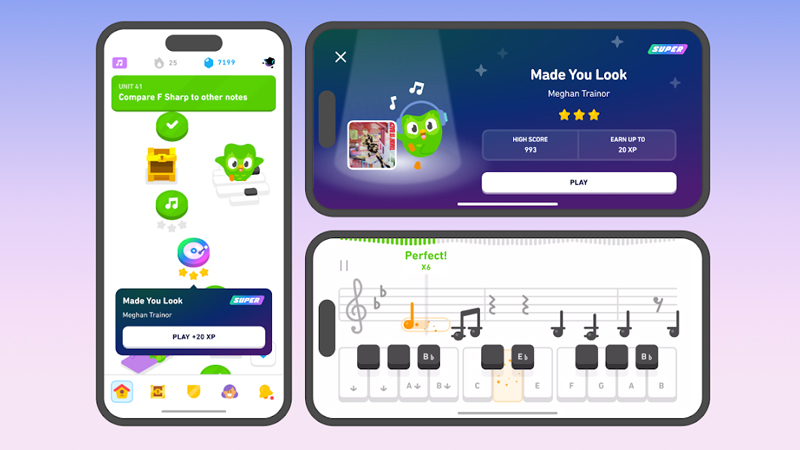
    Mumbai: Duolingo, a mobile learning platform, has announced a partnership with Sony Music that brings popular songs to its music course. This new feature is designed to make learning music more fun and engaging by incorporating well-known songs into the curriculum.

    More than 60 songs from Sony Music artists, like Hozier, Meghan Trainor, Whitney Houston, and more, are now available so learners can study the foundations of music and practice their music theory skills, such as reading music, understanding note lengths, and differentiating notes by sound, sight, and key on a digital mobile piano.

    “At Duolingo, we’re constantly looking for ways to make learning more effective and entertaining,” said Duolingo head of business development George Audi. “We’re partnering with Sony Music, a leader in the music industry, to bring our learners a library of chart-topping songs they can learn to read and play.”

    “Partnering with Duolingo gives us the opportunity to bring our artists’ music to a new platform that promotes learning and cultural exchange,” said Sony Music senior vice president, sync licensing Jessica Shaw. “Music has the power to unite and inspire, and this partnership will help learners engage with music education in a meaningful and enjoyable way.”

    By integrating popular songs from more than 40 artists into the lesson experience, Duolingo aims to enhance learning retention and comprehension while making learning to read and play music more delightful for millions of learners worldwide.

    To get a closer look at the updates to the music course, tune into Duocon, the brand’s flagship global event, on 24 September 2024. Register for Duocon here.

  • Prime Focus Technologies debuts Clear AI Agents at IBC 2024

    Prime Focus Technologies debuts Clear AI Agents at IBC 2024

    Mumbai: Prime Focus Technologies (PFT), AI-powered technology solutions, unveils CLEAR AI Agents at IBC 2024 in Amsterdam. These are designed to assist & co-work with professionals within Media & Entertainment (M&E) enterprises to execute specific tasks across content management, postproduction, and marketing. The agents seamlessly handle repetitive tasks, freeing teams to focus on strategic and creative tasks. Their round-the-clock availability and autonomous capabilities in select areas ensure timely task execution, enhancing the overall user experience. Most importantly, the agents drive scale, contributing to efficiency gains and monetisation, ultimately helping content meet revenue.

    Meet CLEAR AI Agents:

       Converse – A personal assistant that helps you engage with and utilise the content in your library to its full potential.

       Search – Use AI-powered semantic search equipped with the power of reasoning, to find contextual results quickly.

       Content Highlights – Automatic generation of highlight reels from long-form videos.

       Social – Generate social media posts and hashtag recommendations to create compelling social narratives.

       Synopsis and Thumbnails – Generate titles, thumbnails, and synopsis for clips and highlights.

       Reframe – Automatically convert horizontal videos into square and vertical formats for multiple platforms.

       Dedup – Compares assets and eliminates redundant versions, ensuring a clean and cost-effective content library.

       Localize – Translate and transcreate content into the language of choice and expand into newer markets.

       ImageGen – Generate custom images to build concept art and pre-visualizations during production.

    The CLEAR AI platform now features enhanced support for agent-driven workflows, offering a new level of integration that drives impactful results across the industry.

    The launch of AI Agents underscores the pivotal role generative AI plays in making these intelligent agents a reality,” said PFT founder & global CEO Ramki Sankaranarayanan “They are the culmination of seven years of investment in AI, combining Gen AI with the small language models reflecting our commitment to fundamentally reshape the M&E industry. These agents illustrate AI’s ability to drive significant change by enhancing productivity and driving new revenue streams. Get ready to meet your agents at IBC.”

  • Samagra and Dhiway partner to build developer community for CORD

    Samagra and Dhiway partner to build developer community for CORD

    Mumbai: Samagra Development Associates Pvt Ltd (“Samagra”), engaged in implementing Code for GovTech (C4GT) to build and sustain developer communities, has joined hands with Dhiway, a provider of enterprise Web 3.0 open trust infrastructure, to create communities of innovation around the open-source layer one blockchain framework CORD.

    Dhiway and Samagra will offer structured mentorship and outreach engagement programmes for community members to build innovative solutions to solve complex nation-scale challenges using the CORD blockchain.

    This partnership will also foster engagement with industry stakeholders, government agencies and regulatory bodies to help build awareness and engagement around open trust infrastructure.

    Samagra SVP and head of product Nitin Kashyap stated, “India is making remarkable strides in building DPGs and DPI. As we set new benchmarks, it becomes crucial to ensure the adoption, maintenance, and sustainability of DPGs and open-source technology for the public good. Achieving population-scale impact requires a comprehensive, whole-of-system approach. Through initiatives like C4GT, we aim to unite organizations and contributors to drive this mission as a community. Our collaboration with Dhiway marks a significant step forward in strengthening this community.”

    Dhiway co-founder & chief strategy officer K P Pradeep emphasised, “Today it is critical that developers acquire the habit, discipline and knowledge for building at scale using the CORD Blockchain framework. The multiplier effect of open standards, open source software, open protocols, and open trust infrastructure will unlock the potential to solve challenges for India and the world. Samagra’s focus on enabling DPGs that fit within a DPI complements our vision of reshaping the digital future.”

  • coto’s 24/7 live consultation, a new frontier to empower and support women users

    coto’s 24/7 live consultation, a new frontier to empower and support women users

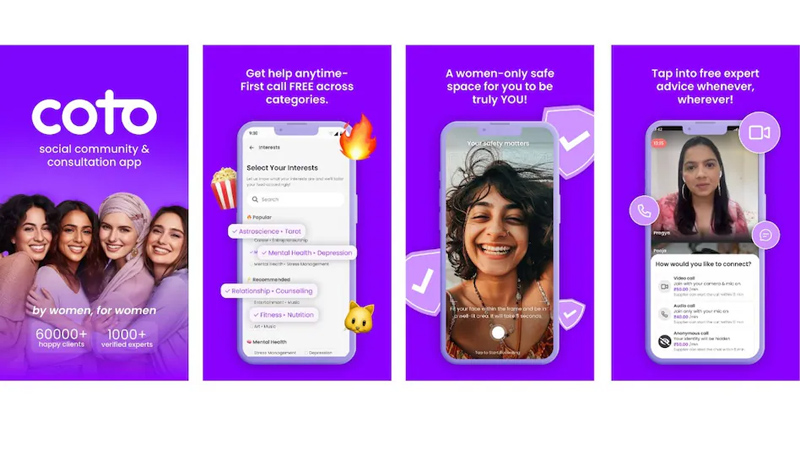
    Mumbai: Digital media has become an important part of people’s lives, allowing them to stay connected, learn, seek advice, and monetize. To meet this demand, coto, a social community app for women, having more than 7000 vibrant communities with over 1 million conversations, has introduced live consultations on its platform. This new offering aims to encourage women users to seek knowledge and guidance from experts on diverse topics, creating a supportive environment to connect experts from different walks of life.

    coto’s live consultation which integrates the AI-powered Q&A feature, enables women users to take 1:1 sessions using live chat, audio, and video features with the experts, combining community support with digital convenience. This progression and enhancement of engagement beyond communities offers a range of exclusive benefits without being limited by geographic boundaries. Users will have 24*7 access to expert guidance across time zones on taboo topics like mental health & wellness, relationships, astrology, and tarot, amongst others.

    To experience the value of expert advice, users can also avail of initial free sessions, and conveniently pay for live consultations through coto wallets.  coto’s unique Pay Only When Happy  allows users to pay for consultations only when they are satisfied with the services. This policy encourages users to seek help without worrying about financial risks. Maintaining a strong emphasis on privacy and safety, coto caters to the confidentiality and security of users by providing an option to join the live session anonymously.

    Expressing her excitement around the launch, coto co-founder Aparna Acharekar stated, “At coto, our commitment is to always empower women by providing a safe and unbiased online space, free from any judgment. Our new live consultation feature further reinforces this commitment by offering 24×7 expert guidance and support whenever needed. With this launch, we aim to address women’s challenges, foster growth and promote entrepreneurship within a supportive community.”

    Commenting on the announcement, coto chief technology officer Zeebee Siwiec said, “Furthering its commitment towards enhancing user experience and boosting engagement on the platform, coto is addressing specific and personal challenges of users by combining community support with expert consultations through AI-driven solutions. By using large language models, the app is identifying individual challenges, efficiently matching them with tailored services, and continually improving the quality of consultations. With a focus on advanced new age tools like LLMs and Vector Stores, coto uplifts the nature of content, conversations, and consultations, making the social community platform a more interactive and expressive user interface.”

    Expressing her excitement, coto chief astrologer Dr. Gunja Mehta Ahuja said, “With the launch of live consultation, interest among women in the age group of 25-45 is being witnessed. They are majorly seeking advice about their relationships, marriage, finances, and careers, amongst others. This showcase of enthusiastic participation indicates that it’s paving the way for success for coto.”

    Adding on to that, coto chief psychologist Dr Mona Gujral said, “The live consultations on coto will help women better understand the different kinds of issues women across the country face. Having kickstarted live consultations, the commonly asked questions so far have revolved around relationships and marriage. During my sessions, while multiple interactions take place with women who engage, the conversations tend to be beneficial and enlightening for those merely attending, too. This gives them the courage to open up about their own struggles, along with the hope that help is available out there, should they ever need it.”


  • Evertz highlights satellite ground infrastructure digitisation at IBC 2024

    Evertz highlights satellite ground infrastructure digitisation at IBC 2024

    Mumbai: At IBC 2024 (2.B51), Evertz will present its advanced digital IF conversion and processing technology, which is transforming satellite ground infrastructure and improving workflows for broadcast and media professionals globally.

    As a key player in media and broadcast solutions, Evertz is actively involved in the digital IF interoperability consortium (DIFI), an international non-profit organisation focused on enhancing interoperability in satellite and ground systems networks. This initiative aims to set new industry standards, similar to the transition from SDI to IP, where Evertz has shown considerable expertise. These advancements are set to revolutionize business structures and aid in developing network transport for digitized IF signals.

    Evertz recently participated in the second DIFI PlugFest in the UK, where nine vendors tested compatibility with version 1.2 of the IEEE-ISTO 4900-2021 Standard and functionality of version 1.1. Out of 178 test cases, 93 per cent were at least partially compliant and 75 per cent fully compliant. Evertz provided the necessary RF and IP routing infrastructure for seamless signal routing and distribution.

    At IBC 2024, Evertz will feature the modular and hot-swappable 7880RFIP platform, offering up to 28 bi-directional conversions in a 3RU frame or up to eight bi-directional conversions in a 1RU frame. This platform can digitize up to 1GHz of instantaneous IF bandwidth per channel, enhancing spectrum management. For European customers, it improves spectrum efficiency, crucial for navigating regulations and limited spectrum availability. The digitized IF is transported over WAN networks using IP, overcoming distance limitations associated with dark fiber. This development enables new workflows and strategic placement of satellite dish farms, reducing operational costs and increasing efficiency. The platform’s scalability and flexibility make it suitable for European broadcasters, telecom operators, satellite operators, government agencies, and research institutions, preparing them for future technological advancements and industry changes.

    Additionally, Evertz will showcase the 670WSP channeliser, which provides flexible spectrum management to reduce IP bandwidth requirements and support dynamic workflows. Evertz will also highlight the integration with its MAGNUM-OS orchestration system, simplifying complex digital IF or hybrid workflows. MAGNUM-OS abstracts the underlying architecture, mitigating failure and providing status updates on hardware. Coupled with VUE, it offers a user-friendly interface that can be scaled and optimized for operational needs.

    For more information on Evertz’s range of RF products, please visit Hall 2, stand B51 at IBC 2024, or visit www.evertz.com.

  • Industry leaders chart a course for AI innovation and digital trust

    Industry leaders chart a course for AI innovation and digital trust

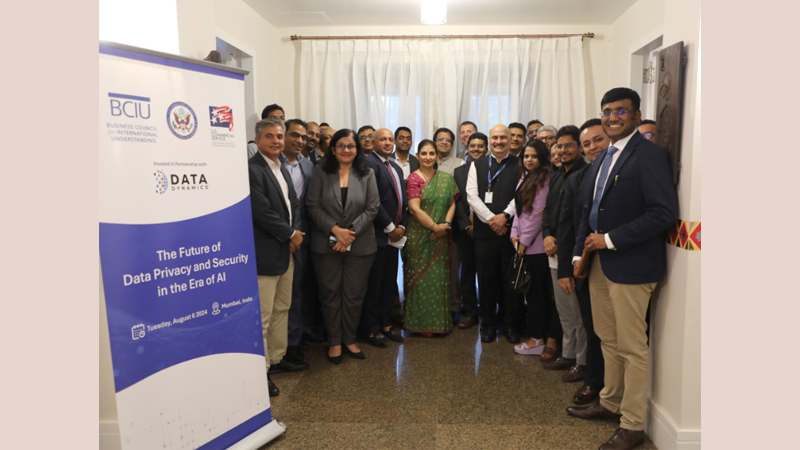
    Mumbai: As India emerges as a global AI frontrunner, the intricate interplay between data innovation, data sovereignty and robust privacy safeguards has become a paramount concern, especially given the rise of AI. To address this critical challenge, Data Dynamics and the Consulate General of the United States in Mumbai convened a high-level roundtable on “The Future of Data Privacy and Security in the Era of AI”.

    Hosted by Consul General Mike Hankey, the event brought together a distinguished gathering of government officials and industry leaders. Home secretary of Maharashtra Sujata Saunik and Maharashtra Cyber’s special inspector general of police Yashasvi Yadav lent their expertise to the discussions.

    Key decision-makers from India’s corporate landscape, including top-tier CISOs, CIOs, and CTOs from BSE, LIC, HSBC, Citi Bank, HDFC Life Insurance, CAMS, ICICI Lombard, Glenmark Pharmaceuticals, Apollo Hospitals, Alkem Laboratories, Kenvue, L&T Technology Services, and Hitachi Vantara, participated for in-depth discussions on data privacy for AI, data sovereignty, consumer trust, the evolving regulatory landscape, and the practical implications for businesses.

    US Consul general Mike Hankey delivered the keynote address stating, “As AI technology rapidly advances, safeguarding data privacy and security becomes increasingly crucial. The roundtable highlighted the need for robust frameworks that foster innovation while ensuring the ethical development and deployment of AI solutions. Through international cooperation and adherence to ethical standards, we can empower societies and economies to fully leverage AI’s potential while protecting individual rights and freedoms.”

    “Ensuring digital trust is foundational to our nation’s digital aspirations. This is defined by a commitment to data privacy, ethical AI, data sovereignty and security while complying with social and environmental regulations. It is imperative that we build a data ecosystem that is not just secure but also equitable and inclusive. This requires a collaborative effort between the government, industry, and civil society to establish India as a global leader in data governance and innovation while safeguarding the interests of its citizens. India has the potential to be a global data powerhouse, but realizing this potential requires a delicate balance between fostering innovation and protecting individual privacy rights,” said Data Dynamics CEO Piyush Mehta.

    The roundtable delved into the complexities of navigating India’s data landscape, where the potential to harness data for economic growth is immense. Based on an Ericsson Mobility Report, India is set to become the world’s largest mobile data consumer by 2028, surpassing even developed nations. With average monthly data consumption projected to reach 62GB per user, India’s appetite for data will outpace those of the US, Western Europe, South Korea, and China. This surge is fuelled by exceptionally low data costs, rapid 5G expansion, and increasing smartphone affordability.

    Additionally, a Nasscom-BCG report has stated that India’s AI market is expected to touch $17 billion by 2027. This creates an urgency for enterprises to strike a balance between data innovation, usage, accessibility, and privacy while ensuring regulatory adherence and digital trust. However, a key challenge lies in the management of this very data—given that 80 per cent of enterprise data today is unstructured (Gartner)—which will continue to grow due to the advent of AI.

    The roundtable discussion called for a comprehensive national data strategy that addresses data privacy, security, and sovereignty. While emphasizing the need for industry-wide adoption of best practices and standards for data management, critical topics discussed included:

    1    Navigating the complexities of data privacy in the world of AI

    The rapid advancement of AI has introduced new challenges and opportunities for data privacy. The roundtable delved into the implications of AI-driven data processing and emphasized the importance of responsible AI development and deployment, underscored by robust data governance frameworks.

    2    Emphasising consent management with the Digital Personal Data Protection (DPDP) Act:

    The Digital Personal Data Protection (DPDP) Act was a central theme of the discussions. Industry leaders explored the potential impact of the legislation on businesses, consumers, and the overall digital economy. While acknowledging the importance of data protection, participants also highlighted the need for a regulatory environment that fosters innovation.

    3    Building a trust-based digital ecosystem:

    To ensure the successful implementation of data protection measures, the roundtable emphasized the importance of collaboration between the government, industry, and academia. A key focus was on the role of cybersecurity in protecting data from emerging threats such as ransomware and supply chain attacks.

    4    Data sovereignty and localisation:

    The roundtable underscored the critical role of data sovereignty in India’s digital future. Participants emphasized the need for a strategic approach to data localization that balances national security with fostering a vibrant data economy, one that adheres to the DPDP Act’s guidelines. By establishing clear and predictable data governance policies, India can position itself as a global leader in data management while safeguarding its digital autonomy.

    The roundtable closed with a renewed resolve to foster open dialogue and collaboration, laying the groundwork for a robust data ecosystem in India. With a shared commitment to responsible data management and privacy, India is poised to emerge as a global leader in the AI era.

    Data Dynamics remains dedicated to empowering organisations with data-driven insights while upholding the highest standards of privacy and security. With a proven track record of serving over 300 enterprises—including 28 Fortune 100 companies—for the past 12 years, Data Dynamics has established itself as a trusted partner in driving data democratisation and digital trust.

  • How AI-enabled tools simplify data management

    How AI-enabled tools simplify data management

    Artificial Intelligence (AI) has truly changed the game when it comes to data management. From my perspective, the integration of AI into these processes has been nothing short of revolutionary. By automating complex tasks, enhancing data quality, and providing insightful analytics, AI has made data management more efficient and effective. AI technologies like machine learning algorithms and natural language processing (NLP) are now essential for handling, processing, and analyzing data. They excel at tasks such as data integration, data cleansing, data classification, and data governance.

    Enhancing data quality

    One of the biggest challenges organisations face is poor data quality, which, according to Gartner, costs an average of $15 million per year. From my experience, data profiling—analyzing data to understand its structure, content, and quality can be transformative. AI tools elevate this by automatically examining datasets to uncover patterns, anomalies, and inconsistencies. AI-powered data cleaning tools use machine learning algorithms to detect and fix errors, remove duplicates, and resolve inconsistencies, ensuring the data is accurate and complete. These tools also standardize data formats, promoting consistency across various sources. This results in high-quality data that organizations can depend on for their analytics and decision-making processes.

    Automating data integration and data pipeline

    Data integration, which involves combining data from various sources into a unified view, can be incredibly complex and time-consuming. AI simplifies this process by automating the extraction, transformation, and loading (ETL) of data. AI-driven ETL tools recognize patterns in data and adapt to changes in data sources, minimizing the need for manual intervention. For example, traditional data mapping requires extensive manual effort to match data fields from different sources. AI-powered tools automatically map data fields by understanding the context and relationships between them. Additionally, AI automates various stages of the data pipeline, from data ingestion to transformation and storage, reducing manual intervention, minimizing errors, and accelerating data processing. This end-to-end automation enhances the efficiency and reliability of data pipelines, which I’ve seen make a significant difference in operational productivity.

    Facilitating data classification and tagging

    One of the most tedious tasks in data management is data classification and tagging. AI-enabled tools have made this much simpler by automating the process, making it easier to locate and retrieve relevant information. These tools use NLP and machine learning algorithms to analyze the content and context of data, assigning appropriate tags and categories. For instance, in the healthcare industry, AI can classify and tag patient records based on diagnosis, treatment, and other criteria. This enables healthcare providers to quickly access necessary information, improving patient care and operational efficiency. In my opinion, this capability is transformative for any industry dealing with large amounts of data.

    Strengthening data governance

    Data governance is another area where AI has made a significant impact. AI enhances data governance by providing real-time monitoring and enforcement of data policies. AI-driven tools can detect and flag potential data breaches, compliance violations, and other issues, allowing organizations to take immediate action. Additionally, AI helps maintain data lineage, tracking the origin, movement, and transformation of data. This is particularly important for industries with stringent regulatory requirements, such as finance and healthcare. By maintaining a clear record of data lineage, organizations can ensure transparency and accountability in their data management practices. From my perspective, this level of oversight is invaluable.

    Industry examples of AI-enabled data management

    Looking at real-world examples, it’s clear that AI-enabled tools are making a significant difference across various industries. For instance, JPMorgan Chase uses AI to analyze and categorize vast amounts of financial documents, significantly reducing the time and effort required for manual processing. The Mayo Clinic employs AI to streamline data integration from various sources, enhancing patient care. Walmart uses AI to manage its extensive inventory data, ensuring timely restocking and minimizing stockouts. These examples illustrate how AI can be leveraged to improve efficiency and effectiveness in data management.

    In conclusion, AI-enabled tools are transforming data management by automating processes, improving data quality, and providing actionable insights. These advancements not only enhance efficiency but also enable organizations to make more informed decisions based on accurate and reliable data. From my experience, adopting AI in data management is not just beneficial but essential for staying competitive in today’s data-driven world.

    The article has been authored by Compunnel Inc’s director of data strategy and data architecture, Bhupendra Kumar Verma.

  • SalesCode.ai announces the launch of ‘CPG CXO Conclave’

    SalesCode.ai announces the launch of ‘CPG CXO Conclave’

    Mumbai: SalesCode.ai, an advanced AI-powered platform for consumer packaged goods (CPG) sales, has announced the launch of its flagship event – the ‘SalesCode CPG CXO Conclave’ on the occasion of its tenth anniversary.

    With “10 Years Future Forward with AI” as its theme, the first-of-its-kind conclave is scheduled for 23 August 2024 at the Grand Hyatt in Gurugram.

    ‘SalesCode CPG CXO Conclave’, focused on future defining trends and disruptions that will shape the next 10 years of the CPG sector, is already attracting a lot of attention and anticipation from the senior leaders of the industry.

    Some of the notable special guests and industry leaders attending the event are Coca-Cola India and SouthWest Asia, president, Sanket Ray; ITC TM&D Division, CEO, Sandeep Sule; Britannia, CEO, Rajneet Kohli; DFM Foods, CEO & MD, Vipul Prakash; Avaana & Board of Directors, Nestle, founding partner, Anjali Bansal; Nexus, ex co-founder, Sandeep Singhal; G.O.A.T Brand Labs, founder, Rishi Vasudev; OTP Ventures, founder, Suhail Sameer (former CEO – BharatPe); Accenture, head of AI/Gen AI, Prashant Kumar (founder & CEO, Entropia); RP Sanjiv Goenka Group, president FMCG, Rajeev Khandelwal.

    The upcoming event will bring together 200 plus global corporate leaders, including CEOs, CXOs, start-up founders, and investors, to explore how sales and RTM (route to market) technologies developed in the last 30 years will be reinvented with AI and eB2B in the next three years.

    SalesCode.ai CEO and co-founder Ranjeet Kumar said, “There is a huge future defining disruption happening in CPG sales and RTM, with AI and eB2B. This has made it imperative for CPG companies to adopt these innovations to ensure future growth and competitiveness. However, while many companies are aware of this change, only a few can envision its impact and the risk of not taking action in the near future.”

    “With ‘SalesCode CPG CXO Conclave’, we intend to provide all the stakeholders with a platform to converge and discuss the changing dynamics, identify opportunities, and address challenges. This conclave is an extension of our commitment to make an impact and define the future of sales for the CPG industry. We will continue to deliver on our mission to empower CPG companies by reinventing Sales and RTM processes with AI and eB2B and guaranteeing sales uplift,” he added.

    Key topics and highlights:

    1    Coming of AGI and super intelligence! What Business Leaders must do!

    2    Unveiling industry-defining, future-ready technologies for sales

    3    NextGen Sales Team and RTM with GenAI and eB2B

    4    CEO and CXO Panel discussions on future defining trends and disruptions that will shape the next 10 years (AI, eB2B, D2C, Q-Comm, B2B2C)

    The conclave will commence with a grand opening reflecting on SalesCode.ai’s transformative journey over the past decade and its ambitious vision for the next ten years. Additionally, attendees will witness a series of innovation showcases and panel discussions featuring prominent CEOs and CXOs, providing deep insights into the transformative trends impacting the CPG sector.

    Among those, two key panel discussions are focused on the ‘NextGen Sales Team & RTM with GenAI and eB2B’ and ‘Future Defining Trends & Disruptions’. These discussions will delve into how technologies like AI and eB2B are accelerating change in the CPG industry, the evolving role of sales teams, and how parallel forces such as D2C, QCommerce, and B2B2C are reinventing traditional processes and shaping the future of CPG firms.