Category: Technology

  • Sony and LiveU zoom in on future with bonded IP breakthrough at IBC 2025

    Sony and LiveU zoom in on future with bonded IP breakthrough at IBC 2025

    MUMBAI: When Sony meets LiveU, the broadcast world gets a sharper focus. At IBC 2025, the two tech titans announced a first-of-its-kind collaboration that promises to change how stories get from the field to the newsroom fast, reliable, and without the usual workflow headaches.

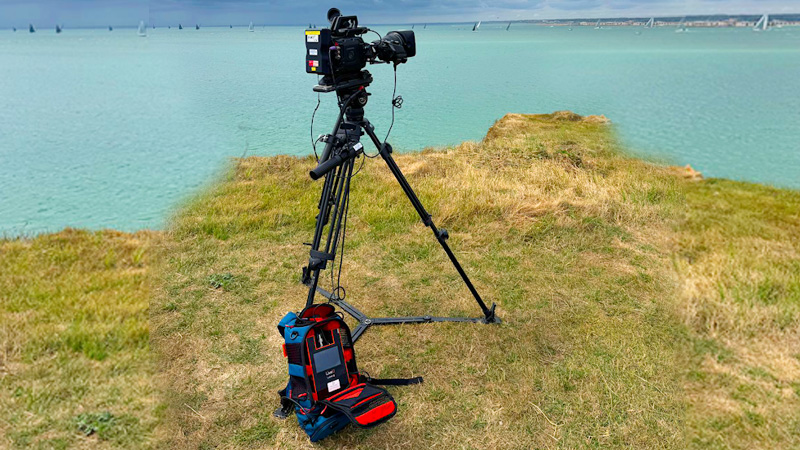
    The star of the show? The new LiveU TX1, a compact transmission unit built specifically for Sony’s professional camera range. Think of it as a tiny powerhouse: it clips neatly onto cameras like Sony’s freshly launched PXW-Z300, turning them into mobile broadcast hubs. With its small form factor, TX1 slashes production timelines by offering ultra-fast file transfers and bonded IP connectivity on the go.

    At its core is LiveU’s patented LRT (LiveU Reliable Transport) protocol, famed for keeping live feeds smooth, stable, and sharp even in tricky conditions. By combining multiple network connections, TX1 ensures resilient video performance that broadcasters can actually trust for mission-critical operations.

    “Our customers want to be able to deliver files shot on camcorders from wherever the story takes them, back to their galleries, easily, swiftly and reliably,” said Sony Corporation head of media solutions business Masakazu Murata. “Through our collaboration with LiveU, the leading company in video-over-bonded-IP transmission, we are now able to offer customers a workflow integrated with Sony’s ecosystem even for mission-critical operations that require bonding. We look forward to working with LiveU to further streamline workflows and make a significant contribution to the broadcast industry.”

    LiveU CEO and co-founder Samuel Wasserman said, “We are proud to announce this important collaboration with Sony, the global leader in electronics, gaming, entertainment, and imaging technologies. This partnership represents a strong vote of confidence in LiveU’s cutting-edge technology and the innovation we bring and will continue to bring to the market. I would like to thank the Sony team for their professional and collaborative spirit and wish us all great success on our shared journey.”

    The deal signals more than just a shiny new gadget. It’s the start of a broader roadmap where Sony’s camera heritage and LiveU’s connectivity know-how combine to shape the next phase of broadcast production. Journalists, content creators, and live producers can expect fewer cables, faster turnaround, and workflows that keep pace with the news cycle.

    While the TX1 made its debut at IBC 2025, broadcast professionals will need a little patience: the unit will be available through Sony’s accredited distributors and resellers, with release details scheduled for 2026.

    For now, though, one thing is clear, when it comes to capturing the moment and sending it back in real time, Sony and LiveU are keeping the world’s broadcasters firmly in the picture.

  • Harman plugs Sound United acquisition; expands product portfolio

    Harman plugs Sound United acquisition; expands product portfolio

    ONNECTICUT: Harman’s $350 million swoop for Sound United is a seismic play in the global audio rivalry, vaulting Samsung’s prized subsidiary to the very top of the premium audio hierarchy. Overnight, the deal delivers Harman an army of industry icons: Bowers & Wilkins, Denon, Marantz, Definitive Technology, Polk Audio, HEOS, Classé, and Boston Acoustics—all famed not just for pedigree or hi-fi bravado, but cult customer devotion across the globe. 

    Sound United’s arrival telescopes Harman’s reach across every lucrative audio battleground—home audio gear, amplifiers, AV receivers, headphones and automotive audio now all under a single, thundering umbrella. By merging marque names, Harman becomes master of a 21-brand constellation, boosting its chances to dominate both traditional and emerging markets—from living room soundscapes to next-gen connected cars and wearables.

    Importantly, Sound United will run as a standalone strategic business unit, preserving each brand’s authenticity and loyal following even as it benefits from Harman’s vast distribution, R&D clout and Samsung’s global hardware ecosystem. The strategy: capitalise on fresh growth while leaving beloved products and sound signatures unspoiled, reassuring audiophile and casual buyers alike.

    For Harman, the move is about more than scale; it’s about future-proofing. Plugging Sound United’s legendary R&D and boutique appeal into Harman’s tech and supply chains means a faster track to innovation—from smarter, immersive hi-fi systems to AI-driven sound and car audio.

    “This is a bet on unmatched experience, quality and the next wave of audio technology,” says Harman lifestyle division president Dave Rogers.

    Analysts predict the expanded Harman will use its new firepower to take on both established peers and disruptors, targeting a global audio market expected to pass $75 billion by the end of the decade. For consumers and audiophiles, it signals more choice, greater technology trickle-down, and the lasting power of classic brands standing tall—with a turbocharged engine behind them.

  • Brands navigate trust, AI and culture to thrive in today’s media landscape

    Brands navigate trust, AI and culture to thrive in today’s media landscape

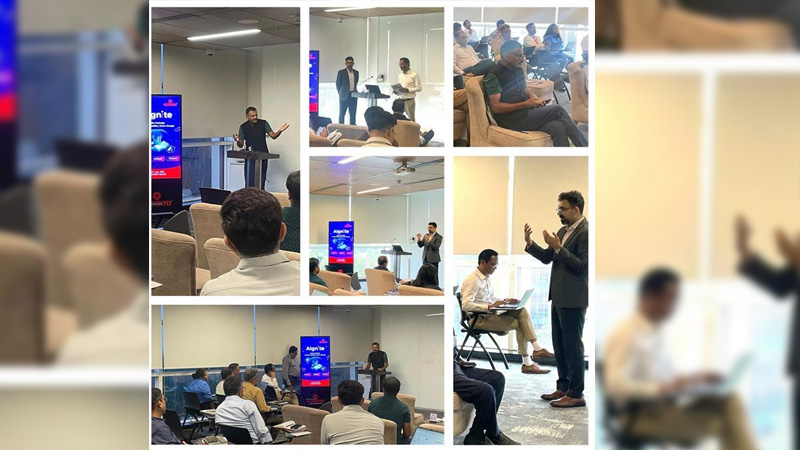
    MUMBAI: If marketing is war, then the battlefield is shifting from loud campaigns to sharper trust-building, from chasing clicks to curating culture. That was the resounding theme at the session “Driving Performance and Brand Reputation in a Dynamic Media Landscape” at the 3rd India Brand Summit 2025, where five marketing heavyweights unpacked what it takes to stay relevant when algorithms, attention spans, and authenticity collide.

    On stage were Harshita Hemnani (Bharti AXA Life Insurance), Argho Bhattacharya (Payu), Sayantani Das (Jumboking Burgers), Ritu Mittal (Bayer South Asia), and Anita Subramanian (JLL), with Abhishek Pujar of IAS steering the discussion.

    The conversation quickly zoomed in on artificial intelligence not as a futuristic buzzword but as an everyday reality. Mittal argued, “AI-generated content is a broad term not all of it is bad. If brands use AI to scale authentic storytelling and create contextual variations, it’s a powerful ally. But when AI content becomes clutter or poor quality, that’s when reputations get dented.”

    Das agreed that authenticity must rule over noise. “The brand will win not by shouting the loudest, but by being contextual and authentic,” she said, pointing out how creative variations and asymmetric segmentation now matter more than ever in cutting through digital saturation.

    Culture, too, emerged as a defining battleground. “You can’t drop a generic festive message and expect it to resonate,” said Hemnani. “Brands need to mirror the cultural mood whether it’s Diwali, Pongal or Christmas and be seen in environments reflecting joy, togetherness, and Indianness.”

    For Subramanian, real estate marketing offers lessons in nuance: “Trust is everything. Technology can scale, but human-led experiences are irreplaceable. That’s where AI works best augmenting, not replacing, authenticity.” She highlighted how launches today are often creator-led, citing international examples where communities turn content into commerce.

    Bhattacharya, from PayU, brought in the customer lens. “Consumers don’t care about brands, they care about what you can do for them. Value is the keyword, whether it’s price, quality, or convenience. Festivals amplify this tendency to spend, but the trick is to stay transparent, relevant, and valuable.”

    When the debate turned to balancing short-term performance with long-term reputation, the panel agreed there’s no either/or. “It’s not performance versus brand anymore, it’s about balance,” said Mittal. “Whether that’s 70-30 or 50-50 depends on your category and consumer priorities, but both are critical for sustainable growth.”

    Looking ahead, panellists predicted disruption from agentic AI, niche AI tools for smaller cohorts, and experience-driven marketing that fuses data with human insight. As Mittal summed up: “Responsible AI, trust, and personalisation will define the winners. In the long run, transparency and authenticity will separate brands that thrive from those that fade.”

    With over 300 delegates in attendance, the session reinforced a striking truth: in an era where algorithms increasingly decide visibility, the ultimate differentiator remains deeply human trust, culture, and value.

  • Sony cards speed past limits with blazing 1800 MB/s read and 1700 MB/s write

    Sony cards speed past limits with blazing 1800 MB/s read and 1700 MB/s write

    MUMBAI: When it comes to speed, Sony just hit fast-forward. The tech giant has launched its Cfexpress 4.0 Type A cards in India, promising blistering performance for professional creators with read speeds up to 1800 MB/s and write speeds up to 1700 MB/s more than double their predecessors.

    The new CEA-G1920T (1920 GB, Rs 97,490) and CEA-G960T (960 GB, Rs 59,990) cards, along with the MRW-G3 card reader (Rs 17,990), hit stores and e-commerce platforms on 20 August 2025. Built for Sony’s Cinema Line and Alpha cameras, the cards are designed to handle the ever-demanding world of high-bitrate 4K and above video, long shoots, and instant data transfer.

    The upgrades aren’t just about speed. With a minimum sustained write speed of 400 MB/s, these cards guarantee uninterrupted recording of cinematic-quality footage. Their durability has also been levelled up, the reinforced resin body is five times stronger than previous models and can survive drops from 7.5 metres. Bend resistance has been enhanced to withstand forces up to 150 newtons, making them ready for the chaos of on-location shoots.

    The compact design means portability without compromise, supporting lightweight camera bodies while packing in serious storage muscle. Meanwhile, the MRW-G3 reader, built exclusively for Cfexpress Type A, supports USB 40 Gbps transfer speeds, ensuring that even massive files fly from card to system in record time. With its heat-dissipation design, the reader is also engineered for stability during prolonged workflows.

    For photographers, videographers, and filmmakers juggling huge files under pressure, Sony’s latest launch isn’t just storage, it’s a workflow accelerator. With capacity, speed, and ruggedness in one pocket-sized package, these cards ensure creators spend less time waiting and more time making.


  • Pocket FM turns page with AI, unlocking new era of storytelling in India

    Pocket FM turns page with AI, unlocking new era of storytelling in India

    MUMBAI: Once upon a time just got an upgrade. Pocket FM is putting the ‘AI’ into imagination, unlocking a new chapter in storytelling for Indian writers and listeners alike.

    The world’s largest audio series platform has flung open the studio doors, letting anyone with a tale to tell see their words transformed into a fully produced audio show within minutes. Already, more than 30,000 AI-powered series are live, a number set to double by the end of the year.

    At the heart of this revolution is Pocket FM’s AI creator suite, a tool that whisks text into audio magic at lightning speed. Built in collaboration with Elevenlabs, the AI voices can slip seamlessly between drama, comedy, fantasy and romance, no more scratchy robots, just finely tuned emotion. For writers, the impact is staggering: What once took weeks now takes hours, with stories delivered 10 times faster.

    “This is not just a content shift but the rise of a new writer economy,” said Pocket Entertainment, co-founder, Prateek Dixit. “When human imagination meets AI innovation, the possibilities multiply. Writers can now share their work instantly, globally, and sustainably.”

    And it’s not just career writers reaping the rewards. Every month, more than 33,000 Indian listeners-turned-authors are publishing their own series on Pocket FM. Some are even cashing in top creators who are projected to cross Rs 10 lakh in earnings this year. Smash hits such as King of Dragon, Darshi: A Rebirth Story and Divya Yoddha Daksh show the appetite for AI-driven storytelling.

    For Nitesh Kumar Dayama, writer of King of Dragon, the experience was life-changing. “I didn’t have the money for editors or publishers,” he said. “Suddenly, I had a production team in my pocket. My words became an audio series in hours, and when I saw millions listening… and that I could earn from it, it felt like a breakthrough.” His series has racked up over 200,000 plays in under a month.

    Pocket FM isn’t stopping there. With plans to roll out its creator suite in multiple Indian languages and 200,000 new AI audio series on the horizon, the platform is doubling down on contests, contracts, and cash prizes worth up to Rs 15 lakh to nurture the next wave of storytellers.

    For India’s aspiring authors, this could be the ultimate happily ever after.

  • Dalet calls on Dalia as AI agent rewrites rules of media operations

    Dalet calls on Dalia as AI agent rewrites rules of media operations

    MUMBAI: In an industry where seconds can make or break a story, Dalet has decided it’s time to give newsrooms, broadcasters and content creators a smarter sidekick. Meet Dalia not just another chatbot, but the new agentic AI brain unifying the entire Dalet ecosystem.

    Announced ahead of IBC 2025 (Hall 7, Stand 7.A43), Dalia sits at the heart of Dalet Flex, Pyramid, Instream, Brio and Amberfin, offering media professionals a single conversational-style interface to handle the messy sprawl of ingest, production, rights management, distribution and archiving. Think less dashboard juggling, more “just ask and it’s done.”

    “From day one, we’ve pushed ourselves to deliver a truly user-centric experience,” said Dalet chief product & Technology Officer Stephen Garland. “What we’re unveiling isn’t just another tool. It’s intelligence beyond an agent, an assistant that unifies our entire ecosystem under one natural conversation.”

    Unlike generic LLM chatbots, Dalia is “media aware” trained not on customer data but on Dalet’s own orchestration and media engine. That means secure, task-specific smarts: it can search, clip, transcode, package or trigger review workflows without users leaving the chat. Early trials show that complex operations once requiring multiple tools can now be executed end-to-end in a single request.

    The roots of this breakthrough lie in Dalet’s in-house “Skunk Works” experiment, led by Erwan Kerfourn with Matteo De Martinis and Aaron Kroger. Operating like a startup within the company, the team moved at “breakneck speed”, turning bold ideas into a production-ready innovation without derailing day-to-day operations.

    “Dalia feels less like software and more like a savvy colleague,” said Kerfourn. “It eliminates friction from workflows and gives customers new freedom to create, sell, distribute and publish faster than ever.”

    The launch comes as the media sector wrestles with increasingly fragmented workflows. A recent survey found that comms and media professionals juggle an average of 11 different tools daily, with 68 per cent citing fragmentation as their biggest productivity killer. Dalet is betting that its AI-driven assistant can reclaim both time and sanity by collapsing silos into one conversational layer.

    For media companies, the implications are huge: streamlined operations, faster time-to-air, and a new way of working that feels less like fighting software and more like talking to a trusted colleague.

    With Dalia, Dalet isn’t just plugging AI into media, it’s inviting media to talk back.

  • AI joins the comms party as M37Labs launches Ebic.ai to fix workflow chaos

    AI joins the comms party as M37Labs launches Ebic.ai to fix workflow chaos

    MUMBAI: When brands lose the plot, it’s often not the story but the spreadsheet. M37Labs has unveiled Ebic.ai (Enterprise Brand Intelligence Console), a first-of-its-kind vertical AI platform designed to overhaul the 100 billion dollars global marketing, PR, and communications industry by unifying its notoriously fragmented workflows.

    The numbers tell the story: industry research shows communications professionals juggle an average of 11 different tools daily, with 68 per cent citing disjointed workflows as their top productivity hurdle. Ebic.ai claims to end this chaos by consolidating everything from monitoring to narrative-building into a single adaptive console.

    Early deployments across enterprise clients in India and Malaysia have been striking. Teams reported up to 15x productivity gains and 3x time savings thanks to unified dashboard management. In just two months of use, Ebic.ai’s predictive algorithms identified and helped avert three potential brand crises, shifting communications from reactive firefighting to proactive strategy.

    At its core, the platform integrates four AI-driven modules:

    ●    Real-time Omnichannel Brand Monitoring: A contextual AI co-pilot that delivers global updates and enables 3x faster strategic decision-making.

    ●    Predictive Crisis Detector: Scans millions of data points to flag risks early; in trials, it spotted emerging threats weeks before reputational damage could occur.

    ●    Strategic Narrative Engine: Uses reinforcement learning to co-create compelling content while maintaining brand voice, with users reporting 3x more efficient output.

    ●    Intelligence Hub: Goes beyond mention tracking with competitor positioning and opportunity mapping.

    “The biggest bottleneck in communications isn’t ideas, it’s execution trapped in disconnected systems. EBIC.AI is the intelligent co-pilot that finally unifies these workflows,” said M37Labs co-founder & CEO Prashant Shivram Iyer.

    Adding to this, M37Labs CAIO & co-founder Zorawar Purohit noted: “Other tools monitor; Ebic.ai comprehends and acts. It learns from every interaction, continuously protecting and enhancing brand value. This isn’t an incremental step, it’s a new operating model for brand management.”

    Built by a world-class developer team out of India for global adoption, Ebic.ai runs on a cloud-native, multi-language architecture. Its early success with multinational clients underscores both its scalability and its ambition: to replace the patchwork of single-point services with a single, intelligent hub for enterprise brand management.

    In a world where attention spans are shrinking and crises can explode in minutes, Ebic.ai is pitching itself as the difference between scrambling and strategising and for an industry fuelled by reputation, that’s a shift worth more than a headline.

  • Dish TV switches on VZY Smart TVs to stream into the future of home viewing

    Dish TV switches on VZY Smart TVs to stream into the future of home viewing

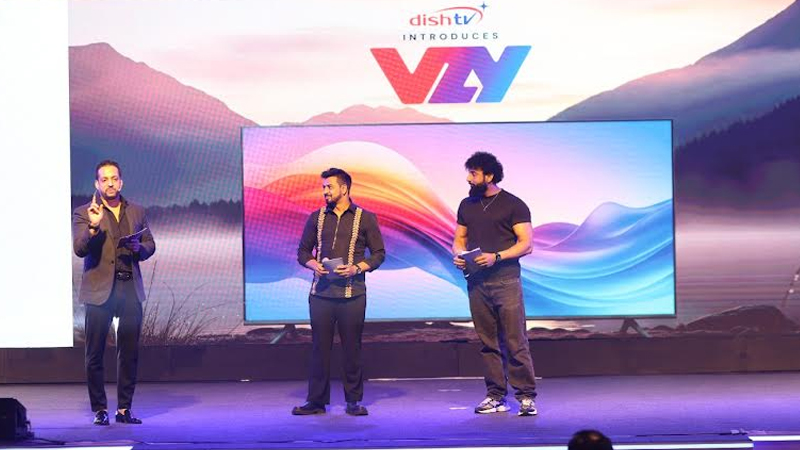
    MUMBAI: Dish TV has flipped the channel on its future and this time, it’s not just about broadcasting. The country’s leading DTH provider, trusted in Indian homes for over 22 years, has launched VZY Smart TVs, marking its grand entry into the integrated Smart TV segment.

    Standing for Vibe, Zone & You, VZY is pitched not as “just another TV” but as a full-blown entertainment universe. It blends Dish TV’s legacy in live television with cutting-edge streaming, creating what the company calls an all-in-one screen where DTH meets OTT.

    “For over two decades, Dish TV has been a trusted name in millions of Indian homes, built on innovation and customer focus. With VZY, we are building an entertainment universe that converges live TV, OTT, smart features, and immersive design,” said Dish TV India CEO & executive director Manoj Dobhal.

    What’s inside the box? Plenty of tech wizardry. VZY Smart TVs will be available in sizes from 32” HD to 55” 4K UHD QLED, with premium features such as Dolby Vision, HDR10, up to 350 nits brightness, and a bezel-less design. For audio, all models feature Dolby Audio, with select premium models stepping up to Dolby Atmos.

    Running on Google TV 5 (Android 14), the TVs come loaded with streaming staples like Netflix, Prime Video, and Youtube. Add to that voice-enabled remotes, Chromecast, Airplay, and in select models, an inbuilt DTH set-top box, offering instant access to both live TV and streaming apps.

    “The modern Indian family is digital-first and experience-driven. VZY goes beyond being just a television to deliver an immersive, curated experience,” added Dish TV India chief revenue officer Sukhpreet Singh.

    For performance, the range supports up to 2GB RAM and 32GB storage, ensuring smooth navigation and app usage. To make the smart shift easier on the wallet, Dish TV is offering Rs 0 down payment and 0 per cent EMI financing options.

    The VZY Smart TV range will hit retail shelves nationwide and will also be available through online platforms, reaching metros as well as Tier 2 and Tier 3 markets.

    With this move, Dish TV isn’t just selling a new screen, it’s making a play to own the living room once again, this time with a smarter, sleeker, and more immersive avatar.

  • LiveU makes a quantum leap with LU900Q for next-gen live transmissions

    LiveU makes a quantum leap with LU900Q for next-gen live transmissions

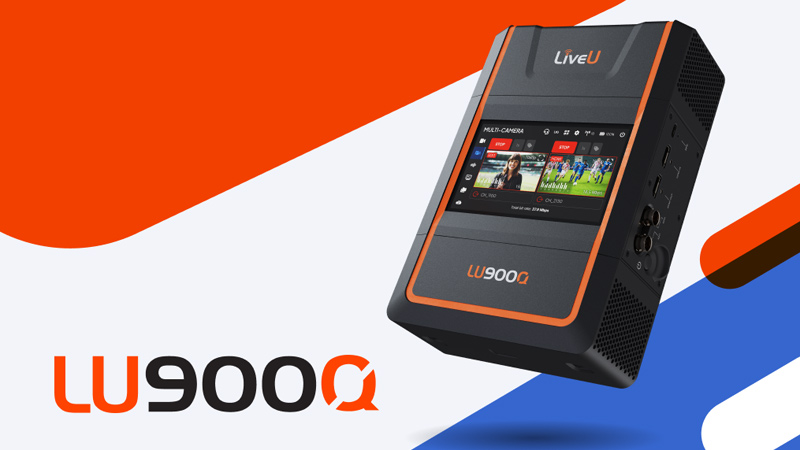
    MUMBAI: LiveU, the global leader in IP-video solutions, today unveiled the LU900Q – its next-generation field unit that delivers a quantum leap in live transmission and production performance. The LU900Q is the first unit to natively integrate LiveU IQ (LIQ™), powered by AI-driven decision-making, advanced eSIM technology and seamless dynamic connection switching – all within an advanced 5G architecture. The LU900Q transforms how broadcasters approach remote live news and sports productions by combining this breakthrough connectivity intelligence with unparalleled operational flexibility.

    A Quantum Leap in Performance

    The LU900Q is built from the ground up for the beyond-5G era. Combined with LIQ, it includes 5G next-generation modems with a MIMO antenna array, delivering dramatically enhanced speed, stability, and throughput.

    “Our goal is to give broadcasters and other storytellers the confidence to transmit from any location whether a packed stadium or remote mountainside,” said Samuel Wasserman, CEO and Co-founder, LiveU. “The LU900Q is a game changer, not just a new product, it’s a smart, multi-tool powerhouse designed to support diverse production needs, from fast-paced breaking news to complex live productions, all while delivering a new level of business agility. Customers can scale their storytelling with unmatched resiliency, quality, and efficiency – equipped with a robust yet affordable field unit and the flexibility to add extra features, including on demand.”

    The unit comes in an ergonomic backpack with a super long battery, with the potential to provide over seven hours of runtime for double endurance. It is also engineered for any climate with a rugged, shock-absorbing frame and advanced cooling, which means that the LU900Q is always good to go.

    Versatile Smart Multi-Tool for Streamlined Workflows

    With limitless production possibilities, the LU900Q acts as an intelligent multi-tool that breathes new life into existing production equipment. It seamlessly integrates with SDI, HDMI, and IP production gear – from ENG cameras and PTZ systems to drones and beyond. This protocol agnostic approach allows crews to pull any combination of gear in their workflow to suit the needs at hand.

    Another key development is the introduction of dual video return and dual intercom, bringing the benefits of the studio to reporters in the field. The unit also offers single or dual camera production workflows, transforming rigid broadcast setups into dynamic, adaptable production environments, and includes key new features, such as native analytics.

    For high-end productions, it delivers 10-bit HDR 4:2:2 encoding with up to 32 audio channels, providing the uncompromising performance with accurate geolocation required for main sports feeds, moveable sports and critical backup applications.

    For file-based workflows, the LU900Q accelerates faster file uploads directly to media asset management (MAM) systems, integrated with the LiveU Ingest automatic recording and story metadata logging solution. The unit also supports uploading full folders or full SD cards, as well as file by file.

    Business Agility Redefined

    The LU900Q introduces a new paradigm in broadcast and sports economics through software-defined capabilities that can be adapted to production needs in real time. All the advanced features the LU900Q brings to the table are easily activated via a dynamic software license that can be activated on-demand or as a subscription, making it the most modular mobile encoder out there. Customers can start with a basic hardware configuration and add software modules to match capabilities to requirements – delivering unprecedented cost-effectiveness and operational flexibility.

    This platform-like approach means broadcasters can ramp their storytelling capabilities up or down based on immediate needs, eliminating the traditional barriers between different production workflows and budget constraints.

    “We’re proud to unveil the latest evolution in our product portfolio – purpose-built to meet the fast-changing demands of modern live production. At LiveU, we introduce many hardware products, but this one is truly special,” said Gideon Gilboa, Chief Product Officer, LiveU. “It’s built on an entirely new technology stack that’s designed to be future-proof, allowing us to continue enhancing this device with many more software releases over the next five years. But it’s not just about future readiness – this device reflects the voices of the tens of thousands of users we have in the field. We’ve worked hard to incorporate the most requested and mission-critical features from our incredible customer base, which includes some of the largest and most advanced broadcasters in the world.”

    Be the first to see the LU900Q close up. Schedule a demo at the LiveU stand, Hall 7, Stand 7.C19: https://get.liveu.tv/ibc-2025/


  • Acer flexes Predator power with AI laptops, monster desktops and more

    Acer flexes Predator power with AI laptops, monster desktops and more

    MUMBAI: Gamers, creators and AI developers, brace yourselves Acer just dropped a tech arsenal that roars as loud as its name. From AI-powered laptops to monster desktops, lightning-fast monitors and even a keyboard that can outlast your weekend grind, the Predator lineup is here to push the limits of power, speed and play.

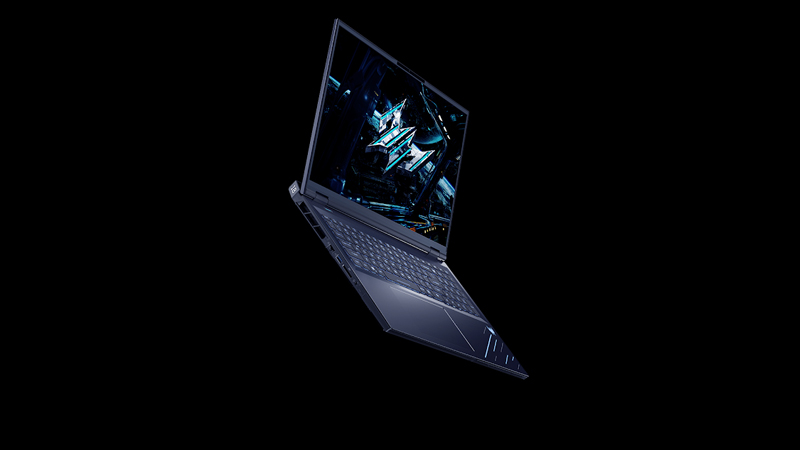
    Leading the charge is the Predator Helios 18P AI, a hybrid beast that blends gaming brawn with workstation brains. Powered by up to an Intel Core Ultra 9 Processor 285HX with Intel vPro, the system supports a jaw-dropping 192 GB EEC memory critical for error-free performance where every byte counts. Graphics duty falls to the Nvidia Geforce RTX 5090 Laptop GPU with DLSS 4, paired with 6 TB PCIe Gen 5 SSD storage, Thunderbolt 5, and Wi-Fi 7. Its 18-inch Mini LED 4K panel hits 1,000 nits HDR brightness and covers 100 per cent of the DCI-P3 colour gamut, perfect for creators. Keeping the monster cool are Acer’s 6th Gen Aeroblade fans and liquid metal thermal grease. Price tag? 3,999 dollars in North America and EUR 4,999 in EMEA, starting early 2026.

    For desktop warriors, the Predator Orion 7000 is a liquid-cooled powerhouse, packing up to an Intel Core Ultra 9 285K CPU with integrated AI acceleration, paired with an Nvidia RTX 5090 GPU. Gamers get access to Nvdia NIM Microservices for cutting-edge AI assistant development. Cooling is handled by the Cyclonex 360 system, improving efficiency by 15 per cent and cutting motherboard temps by 9°C, while up to 128 GB DDR5 RAM and 6 TB SSD storage keep things screaming fast. Prices start at EUR 3,999 in EMEA and AUD 8,199 in Australia. Its sibling, the Predator Orion 5000, offers a slightly leaner build with an Intel Core Ultra 7 265F, NVIDIA RTX 5080 graphics, up to 2 TB SSD and 4 TB HDD storage, starting at EUR 2,999. Both sit inside ARGB-lit, eco-friendly 45L recycled-plastic chassis.

    Display junkies can feast their eyes on the Predator X27U F8 monitor. At 720 Hz refresh rate, it’s one of the fastest on the planet. The 26.5-inch OLED IPS panel runs at WQHD (2560×1440) and switches to 1280×720 at 720 Hz for pro-level esports. HDR 500 True Black and 99% DCI-P3 colour ensure visuals pop, while AMD FreeSync Premium Pro smooths the ride. Launch prices: 1,299 dollars in North America, 1,199 euros in EMEA, and RMB 9,999 in China.

    And for the finishing touch, Acer introduced the Predator Aethon 550 TKL keyboard, priced at USD 129 / EUR 129. With tri-mode connectivity (wired, Bluetooth, 2.4 GHz), a battery life of 150 hours, hot-swappable switches, and customisable per-key RGB, it’s built for both precision and flair.

    Acer’s Predator lineup isn’t just flexing, it’s redefining what next-gen gaming and AI machines can do. Whether you’re dropping headshots, training models, or cutting 4K edits, this is hardware that doesn’t just keep up; it dares you to push harder.